KHN’s ‘What The Health?’ Health Care Politics, Midterm Edition

https://khn.org/news/podcast-khns-what-the-health-health-care-politics-midterm-edition/

Image result for KHN’s ‘What The Health?’ Health Care Politics, Midterm Edition

The 2018 midterm elections were supposed to be a referendum on President Donald Trump, not about issues such as health care. Still, voters, Democrats and, to a lesser extent, Republicans seem to be keeping health care on the front burner.

The news from Medicare’s trustees that its hospital trust fund is on shakier financial footing than it was last year, hefty premium increases being proposed in several states and activity on Medicaid expansion all take on a political tinge as the critical elections draw closer.

Also this week, an interview with Matt Eyles, president and CEO of America’s Health Insurance Plans, the health insurance industry trade group.

This week’s panelists for KHN’s “What the Health?” are Julie Rovner of Kaiser Health News, Stephanie Armour of The Wall Street Journal, Alice Ollstein of Talking Points Memo and Rebecca Adams of CQ Roll Call.

Among the takeaways from this week’s podcast:

  • Outside Washington, concerns about health care accessibility and prices remain a big issue.
  • Democrats, looking toward the midterm elections in the fall, think that health care can be a potent issue for them. But many also believe that they can’t just run on complaints that the Republicans are sabotaging the Affordable Care Act. They are seeking to find a message that looks to the future.
  • Republicans see the plans by the White House to implement new regulations that allow expansion of association health plans and short-term health plans as a strong action that will thwart complaints that they haven’t fixed the ACA.
  • The states are beginning to release the initial requests from health insurers for premium increases. They vary substantially, but many appear to be partly attributed to the decision last year by Congress to repeal the penalty for people who don’t get insurance.
  • The report this week by the Medicare trustees that the hospital trust fund is closer to insolvency has ignited Democratic criticism of changes in health care law that were part of the GOP tax cut last year.
  • Arkansas has begun implementing its work requirements for healthy adults covered by the Medicaid expansion. It’s the first state to do that. But critics point out that those adults will have to register their work hours online only — and many do not have access to computers.


Let the ACA rate hikes begin

Image result for ACA Rate Hikes

Get ready for about six more months of headlines like this: Insurers in Maryland are proposing premium hikes as high as 91% for coverage sold through the Affordable Care Act.

This will keep happening, nationwide. Proposed increases have been steep in Maryland and Virginia, the first two states to release them. But all signs point to steep hikes across the country, especially in rural areas. Some insurers also will likely decide to simply quit offering coverage in some parts of the country.

The latest: Insurers in Maryland’s individual market are seeking rate hikes for next year that range from 18% (for the biggest plan in the state) to 91% (for the smallest). They average out to roughly 32%.

  • These rates are still preliminary — Maryland can approve or reject proposed increases, and it’s also pursuing a reinsurance program that would help bring these increases down.

Why you’ll hear about this again: More preliminary rates will trickle out until the summer, as will any insurers’ decisions to pull up stakes in some markets. After negotiations with state regulators, rates will be finalized a few weeks before the midterms.

  • Expect to hear Democrats making hay of these increases as they accuse Republicans of “sabotaging” the ACA.
  • There’s really no denying that the repeal of the ACA’s individual mandate, coupled with some of the Trump administration’s regulatory moves, is a big driver — though not the only driver — of these staggering increases.

The other side: Expect the Trump administration to cite these same figures as it finalizes regulations that would loosen access to options outside the ACA’s exchanges, saying they’re providing new options to people who simply can’t afford ACA coverage.

  • Don’t forget, though, that some of those options would only benefit the healthiest consumers.

Why health care costs are making consumers more afraid of medical bills than an actual illness

https://www.cnbc.com/2018/04/22/why-health-care-costs-are-making-consumers-more-afraid-of-medical-bills-than-an-actual-illness.html

Image result for Why health care costs are making consumers more afraid of medical bills than an actual illness

  • Health care costs are spiraling higher, but patient visits to a doctor have been on the decline.
  • A growing number of consumers are staying away out of fear of big bills.
  • However, “untimely visits or delay of visits to the physician ultimately leads to the increased cost of care,” the Cleveland Clinic’s CEO told CNBC.


As health care costs keep rising, more people seem to be skipping physician visits.

It’s not fear of doctors, however, but more of a phobia about the bills that could follow. Higher deductibles and out-of-network fees are just some of the out-of-pocket costs that can hit a consumer’s pockets.

U.S. health care costs keep rising, and hit more than $10,000 a year per person in 2016. According to a recent national poll, over the past 12 months, 44 percent of Americans said they didn’t go to the doctor when they were sick or injured because of financial concerns. Meanwhile, 40 percent said they skipped a recommended medical test or treatment.

Also, the study found most people who are delaying or skipping care actually have health insurance. Some 86 percent of those surveyed said they’re covered either through their employer, have insurance they purchased directly, or through government programs like Medicare and Medicaid.

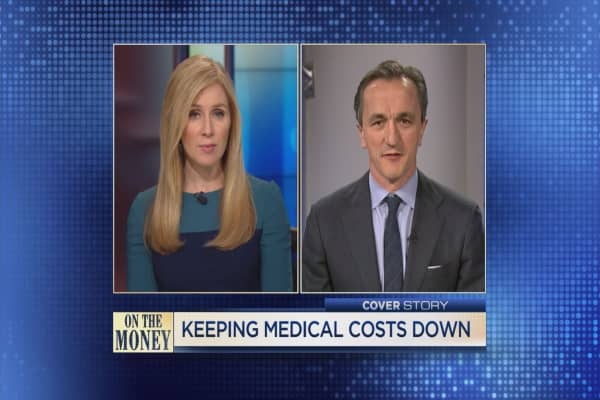
“There have been so many changes in the health care landscape in the United States that this news is not entirely surprising,” Cleveland Clinic president and CEO Tom Mihaljevic told CNBC’s “On the Money” in a recent interview. However, Mihaljevic warned that skipping visits or treatment can be counterproductive.

“One of most important consequences of skipping medical care or delaying care ultimately impacts the quality of care, impacts the outcome,” he said. “Untimely visits or delay of visits to the physician ultimately leads to the increased cost of care.”

However, the poll, conducted by the University of Chicago and the West Health Institute, found Americans fear large medical bills more than they do serious illness. The data showed 33 percent of those surveyed were “extremely afraid” or “very afraid” of getting seriously ill. About 40 percent said paying for health care is more frightening than the illness itself.

“Part of problem here is healthcare tends to be very complex, and every patient typically requires a number of procedures and tests to be done, so it’s really difficult to estimate the upfront cost of care, ” Mihaljevic told CNBC.

Additionally, the survey found 54 percent of those polled received one or more medical bills over the past year for something they thought was covered by their insurance. And 53 percent received a bill that was higher than they expected.

Mihaljevic acknowledged the range of different fees for the same services should be made clearer for consumers. “There is an absolute need for increased transparency when it comes to cost and this is one of mandates for our industry as a whole,” he said.

How technology can help

To combat rising health costs, Mihaljevic explained that the Cleveland Clinic is focused on the “standardization of care.”

“When we reduce the variability of the way we take care of patients, we manage to decrease the cost and at the same time improve the quality of care that we provide,” he added.

In addition, the health system is also pushing ahead with advances in medical technology, which may help bring down costs in the future. “We firmly believe digital technology is going to have a transformative effect,” Mihaljevic said. Among the initiatives is a partnership with IBM Watson to use big data to help clinical decision making.

And through the Cleveland Clinic’s Express Care Online, 25,000 virtual doctor visits were completed in 2017. Although virtual visits are billed as more cost effective,new data suggest otherwise.

“We are constantly looking how to make our care more accessible more affordable and of higher quality,” Mihaljevic added.

Trump administration issues rule further watering down Obamacare

https://www.reuters.com/article/us-usa-healthcare-regulation/trump-administration-issues-rule-further-watering-down-obamacare-idUSKBN1HG384

Image result for Trump administration issues rule further watering down Obamacare

The Trump administration took additional steps to weaken Obamacare on Monday, allowing U.S. states to relax the rules on what insurers must cover and giving states more power to regulate their individual insurance markets.

The Centers for Medicare and Medicaid Services issued a final rule that allows states to select essential health benefits that must be covered by individual insurance plans sold under former President Barack Obama’s healthcare law. The 2010 Affordable Care Act requires coverage of 10 benefits, including maternity and newborn care and prescription drugs. Under the new rule, states can select from a much larger list which benefits insurers must cover.

That could lead to less generous coverage in some states, according to Avalere Health, a research and consulting firm.

President Donald Trump’s administration has used its regulatory power to undermine Obamacare after the Republican-controlled Congress last year failed to repeal and replace the law. About 20 million people have received health insurance coverage through the program.

The new CMS rule also allows states the possibility of modifying the medical loss ratio (MLR) formula, the amount an insurer spends on medical claims compared with income from premiums that is also a key performance metric. A state can request “reasonable adjustments” to the medical loss ratio standard if it shows that it could help stabilize its individual market.

Insurers could also have an easier time raising their rates under the new rule. Obamacare mandated that premium rate increases of 10 percent or more in the individual market be scrutinized by state regulators to ensure that they are necessary and reasonable. The new CMS rule raises that threshold to 15 percent.


California Aims To Tackle Health Care Prices In Novel Rate-Setting Proposal

California Aims To Tackle Health Care Prices In Novel Rate-Setting Proposal

Backed by labor and consumer groups, a California lawmaker unveiled a proposal Monday calling for the state to set health care prices in the commercial insurance market.

Supporters of the legislation, called the Health Care Price Relief Act, say California has made major strides in expanding health insurance coverage, but recent changes haven’t addressed the cost increases squeezing too many families.

To remedy this, Assembly Bill 3087 calls for an independent, nine-member state commission to set health care reimbursements for hospitals, doctors and other providers in the private-insurance market serving employers and individuals.

The bill faces formidable opposition from physician groups and hospitals.

“No state in America has ever attempted such an unproven policy of inflexible, government-managed price caps across every health care service,” Ted Mazer, president of the California Medical Association, said in a statement.

At a press conference Monday, Assembly member Ash Kalra (D-San Jose) and other sponsors of the bill said the commission would use Medicare reimbursements as a benchmark and then factor in providers’ operating costs, geography and a reasonable amount of profit to establish rates. More details on the legislation are expected during committee hearings.

Across the country, some employers have tried a similar approach by mostly sidestepping insurers and instead paying providers 125 to 150 percent of the Medicare price for any service. Proponents of this idea say it eliminates the worst abuses in billing, reduces administrative costs and promotes price transparency.

The California legislation envisions a system similar to the rate-setting done for public utilities.

The proposal also borrows from Maryland, which has set prices for hospital services since the 1970s.

“We have given free rein to medical monopolies — to insurers, doctors and hospitals — to charge out-of-control prices,” said Sara Flocks, policy coordinator at the California Labor Federation, which is co-sponsoring the bill, at the Monday news conference. “It’s not that we go to the doctor too much. It’s because the price is too much.”

Kalra, the assemblyman who introduced the bill, said consumers deserve relief now because soaring medical costs are eating up workers’ wages and contributing to income inequality.

“The status quo is unacceptable and unsustainable. Californians struggling to keep up demand action rather than politics as usual,” Kalra said at the news conference.

Health care providers immediately slammed the proposal, saying it would reduce patients’ access to care and drive medical providers out of the state.

Mazer countered that the bill would cause “an exodus of practicing physicians, which would exacerbate our physician shortage and make California unattractive to new physician recruits.”

Chad Terhune, a senior correspondent at California Healthline and Kaiser Health News, discussed the latest proposal and its future prospects with A Martinez, host of the “Take Two” show on Southern California Public Radio.


Consolidating California: Concentrated Provider Markets and Rising Prices

http://www.healthleadersmedia.com/finance/consolidating-california-concentrated-provider-markets-and-rising-prices?utm_source=edit&utm_medium=ENL&utm_campaign=HLM-FIN-SilverPop_04092018&spMailingID=13279518&spUserID=MTY3ODg4NTg1MzQ4S0&spJobID=1380773897&spReportId=MTM4MDc3Mzg5NwS2#

A UC Berkeley study suggests that provider and insurer consolidation is increasing, reducing competition in regional markets, and leading to higher healthcare prices across California.

In the midst of a nationwide consolidation trend, California is witnessing a swell of mergers among health providers and insurers, resulting in higher prices for consumers and large-scale employers across the state.

A recent study found most counties in California, especially those in the rural northern portion of the state, have highly concentrated hospital markets, noting provider consolidation rose as average insurer consolidation decreased statewide.

The report, released last month by the Nicholas C. Petris Center on Health Care Markets and Consumer Welfare School of Public Health at the University of California, Berkeley, concluded that Californians pay for healthcare services that are “considerably above what a more competitive market would produce.”

Of the 54 counties surveyed, 44 were highly concentrated hospital markets and six were moderately concentrated. According to the study, seven of these counties warrant “concern and scrutiny” by the Department of Justice and the Federal Trade Commission.

The report found from 2010 to 2016, there was a 15% increase in physicians working for a foundation owned by a hospital or health system rather than physician practices, due in part to health system mergers, as well as a 13% increase for primary care physicians, and a 29% increase for specialist physicians.

Additionally, the study found 42 counties surveyed for commercial health plans were highly concentrated while 16 were moderately concentrated. The study also recommended federal agencies review the concentration levels of the insurer market in seven counties.

Breeding anticompetitive behavior

Bill Kramer, MBA, executive director for national health policy at the Pacific Business Group on Health, told HealthLeaders Media the consolidation trend in California is a “serious problem” that employers have been dealing with for years.

Kramer said large health systems, physician groups, and health plans recognize that consolidation leads to increased market power, which in turn provides the opportunity to raise healthcare service prices above what is allowed in a competitive marketplace.

Two weeks ago, California Attorney General Xavier Becerra sued northern California’s Sutter Health, for anticompetitive practices. Sutter, a health system with $12.4 billion in operating revenue in 2017, is charged with foreclosing price competition on its competitors, imposing prices for healthcare services exceeding a competitive market value, and restricting negotiations with insurers to an “all-or-nothing” basis.

Since 2014, Sutter has also been the focus of a class-action lawsuit filed by a grocery worker’s health plan alleging violation of antitrust and unfair competition laws.

“When a provider or any other healthcare entity gains significant market share, it can use that power to negotiate higher prices,” Kramer said. “But they also can put in place mechanisms that strengthen their market power further. That’s what [Becerra] and complainants in this other lawsuit have alleged, that anticompetitive behavior further strengthens their market power and their ability to raise prices. It’s all part of the same picture.”

State and federal blocks on insurers, not providers

Becerra’s lawsuit against Sutter is not the first time state or federal officials have stepped in to address concerns in California’s healthcare industry.

In June 2016, California Insurance Commissioner Dave Jones requested the federal government block the proposed Aetna-Humana merger, citing concerns about an “already heavily concentrated commercial insurance” market. A federal judge agreed with his request and blocked the move in January 2017.

Despite recent and growing recognition among state and federal officials that action must be taken, Kramer says provider consolidation remains an issue without a simple solution. Efforts to enact antitrust statutes against health system mergers in recent years have not always been successful, and are often looked at as the “nuclear option” by industry watchers.

A potential path to offsetting provider consolidation is greenlighting insurer consolidation, though Kramer says there is mixed evidence about whether that would be effective. He said some argue that two large industries competing against each other can result in lower prices, while others claim there is no guarantee that consumers will see lower prices if savings are secured by insurers.

The Berkeley report recommends legislative and regulatory action to address “significant variation” in prices and Affordable Care Act (ACA) premiums across the state, specifically suggesting the implementation of reference pricing by public marketplaces and private employers.

Kramer says the consolidation dilemma is not unique to California, which offers state officials a chance to adopt proactive measures taken by other states to address rising healthcare costs associated with consolidation.

In 2011, Massachusetts Attorney General Martha Coakley authored a report similar to the Berkeley study that analyzed the rise in high prices due to health system mergers. The study ultimately led to the creation of the Health Policy Commission in 2012, with the purpose of monitoring healthcare prices in the state.

NoCal versus SoCal

Another important aspect of the consolidation trend in California is the divide between the rural northern counties and the more populous southern metropolitan area.

Northern California is a sparsely populated region dominated by large health systems, giving insurers less leverage to negotiate prices. A 2017 study from the Bay Area Council Economic Institute (BACEI), the Center for Health Policy at Brookings, and The Nelson A. Rockefeller Institute of Government found that the hospital concentration in northern counties, where only two insurers cover the entire region, is five times higher than the Inland Empire.

Micah Weinberg, PhD, president of BACEI, told HealthLeaders Media the consolidation trend is not tied to one particular factor such as geography.

BACEI’s report cited the consolidation of a few health systems in northern California as a “perennial concern” and driver of rate variation between regions. However, Weinberg said that when low-price, for-profit systems in southern California are removed from the equation, there is a fair amount of parity between prices charged there compared to those charged in northern California.

Related: 3 Reasons Why Health Insurers and PBMs Are Merging

According to Weinberg, another aspect to California’s healthcare market that affects prices has been the implementation of a “very successful experiment” in managed competition through the state exchange. In 2010, California became the first state to create its own insurance marketplace under the ACA.

He argues that Covered California, the state’s insurance marketplace, has standardized healthcare products, instituted financial incentives for providers to embrace limited networks, and fostered competition.

“What that does is it emphasizes the importance of not only payers and providers, but of the structure of the marketplace, in which consumers are making choices across different provider groups linked to particular insurance plans,” Weinberg said.

The BACEI report did cite the ACA as an unintended driver of increased regional consolidation among providers, which has made achieving profitability in northern California a challenge for insurers such as UnitedHealth Group Inc., which exited the statewide ACA marketplace entirely in 2016.


The politics of ACA rate hikes will be 2016 in reverse

https://www.axios.com/politics-aca-rate-hikes-2016-in-reverse-63e401ef-03b7-4c11-a2b3-7410e1322c63.html

Protester holds sign saying "ACA Saves Lives"

We are about to see a replay of the 2016 election fight over premium increases, but this time in reverse. Last time, it was the Republicans hammering Democrats for the rate hikes. This time, it will be Democrats accusing Republicans of driving up premiums by sabotaging the Affordable Care Act.

What to watch: It’s going to be a balancing act for the Democrats. They can (and will) score political points by blaming Republicans for the coming premium increases, but another campaign debate about rising premiums could also undermine the ACA by focusing on its continuing problems.

In 2016, fear of rising premiums jumped the individual market, and a majority of Americans came to believe that rising premiums were somehow affecting them when only a small share of the public was impacted. That undermined the ACA and may have affected the election.

This time, Democrats will be on the offensive, buttressed by polling that shows the public sees Republicans and President Trump owning the ACA’s problems. Democrats are sure to call out Republicans and the administration for steps they have taken to undermine the law.

These include:

  • Eliminating the penalty for not buying insurance.
  • Failing to pass stabilization legislation.
  • Developing regulations to allow the sale of short-term policies and the wider sale of association health plans.

Taken together, these actions provide more options for the healthy, but will drive up rates overall.

Reality check: Last year, far more Americans came to believe they were affected by premiums increases than the relatively small number of unsubsidized people in the non-group market who were actually affected.

Our August 2017 tracking poll showed that fully 60% of the American people believed they were negatively affected by the premium increases, when in reality, just a sliver of the public — the unsubsidized people in the individual health insurance market — were actually affected.

The numbers that matter, per Kaiser Family Foundation estimates:

  • Affected: 6.7 million
  • Unaffected: 319 million

No doubt the broader public’s fears about rising premiums fueled cynicism about the ACA. Some political scientists say it contributed to the Republican victory in 2016.  In fact, premiums for most Americans with private coverage have been growing at a 3% clip, a historically moderate level.

The bottom line: As the midterms approach, Republicans’ first impulse may be to attack the law to rev up their base as they have done before. The tradeoff they face is that they now own the ACA in the eyes of the public, including the problem of rising premiums which they will have helped to create.

And Democrats now have a chance to score political points on the ACA for the first time — but the risk is a disproportionate public reaction, much like in 2016, that undermines the law they worked so hard to pass.


Consumers are paying less for ACA plans, even as premiums continue to rise

https://www.fiercehealthcare.com/payer/consumer-satisfaction-exchange-enrollment-up-but-premiums-continue-to-rise?mkt_tok=eyJpIjoiWlRReU4yTXdZelF5TUdJMyIsInQiOiJqbDN6cndBd1YwOHFvQkV3NGNvXC9xVWh3bVpNYzJ0djZyaXJOakFGaU5nQWdETG0wWE1nWDhTck5XK2JIVTZkanFidU85clo2akpIT0VvXC9MWjFjOExsUm5kUEpRZk9IQ0tYNWFQeGJaQmhJMWNTdnkweFBtTGRJME1KNzJvaTRFIn0%3D&mrkid=959610

Healthcare.gov site on computer

The Centers for Medicare & Medicaid Services (CMS) proclaimed its 2018 open enrollment period a success, citing relatively stable enrollment on reduced costs of outreach and a tightened enrollment period.

The agency’s final report on 2018 enrollment data provides insight on the 11.8 million individuals who enrolled or renewed coverage through the exchanges in 2018. That number includes approximately 8.7 million who signed up through HealthCare.gov, where the average premium rose 30% from $476 last year to $621 this year. A solid majority of consumers opted for the middle-tier silver plans, with 29% choosing bronze plans and only 7% purchasing gold plans.

CMS Administrator Seema Verma lauded the agency’s efforts on Twitter, but pointed to the 30% jump in premiums as an indication that “more affordable options are needed,” particularly for those that don’t qualify for tax credits.

Despite delivering the most successful consumer experience to date, Americans continue to experience skyrocketing premiums and limited choice on http://Healthcare.gov .

Despite higher premiums, consumers that qualified for the tax credit actually saw a 16% decline in their final cost, with average monthly costs dropping from $106 in 2017 to $89 in 2018.

“The reduction in price that consumers paid was staggering,” Josh Peck, co-founder of Get America Covered and former chief medical officer of Healthcare.gov under President Barack Obama, told FierceHealthcare.

“To be totally honest, enrollment would have been far higher had they tried,” he added.

While the total number of enrollees dipped slightly year over year, they remained relatively stable given the shortened time frame rolled out by the Trump administration. Verma also pointed to consumer satisfaction scores of 90%, up from 85% last year, as proof the agency had met its primary goal of ensuring “a seamless experience” for consumers.

Critics, however, lashed out at CMS for doing little to educate the public about open enrollment options.

Lori Lodes@loril

Really weird (and gobsmacking) to see @SeemaCMS take credit for 11.8 million people signing up for health care when she refused to do anything to educate people about Open Enrollent. https://twitter.com/SeemaCMS/status/981250136344088576 

The agency also touted the cost effectiveness of the enrollment period, after CMS slashed its advertising spending from approximately $11 per enrollee last year to just over $1 per enrollee in 2018. Those cuts spurred increased advertising dollars from private insurers in an attempt to make up the gap.

The majority of consumers using the exchanges continues to rely on premium subsidies. The age mix among consumers trended older, as enrollees aged 55 and over ticked up two percentage points to 29%, while the share of those aged 18-34 declined slightly.

Final Exchange Enrollment Report also shows most consumers on the Exchanges relied on premium subsidies. Approximately 83% of consumers nationwide had their premiums reduced by tax credits.

In a statement, Verma said she was pleased with the rise in customer satisfaction, but expressed concerns about the future. “Even with the success of this year’s open enrollment, the individual market continues to see premiums rise and choices diminish,” she said.


Poll: 44% Of Americans Skip Doctor Visits Because Of Cost

https://www.forbes.com/sites/brucejapsen/2018/03/26/poll-44-of-americans-skip-doctor-visits-due-to-cost/#31398d56f57e

Because of the high cost of healthcare, 44% Americans didn’t go see a physician last year when they were sick or injured, according to a new survey.

The West Health Institute/NORC at the University of Chicago national poll comes as policymakers and health insurance companies are predicting a jump in health premiums and out-of-pocket costs, particularly for Americans with individual coverage under the Affordable Care Act. The $1.3 trillion spending bill signed into law last week by President Donald Trump didn’t include reinsurance programs and money to restore Obamacare funds to help Americans pay co-payments and deductibles despite bipartisan support in the Senate.

Cost continues to be a barrier to treatment with 40% of Americans who say they “skipped a recommended medical test or treatment in the last 12 months due to cost.” Another 32% were “unable to fill a prescription or took less of a medication because of the cost,” the West Health/NORC poll of more than 1,300 adults said.

“The high cost of healthcare has become a public health crisis that cuts across all ages as more Americans are delaying or going without recommended medical tests and treatments,” West Health Institute chief medical officer Dr. Zia Agha said in a statement accompanying the poll results. The survey is being released at this week’s American Society on Aging 2018 Aging in America Conference in San Francisco.

The West Health-NORC poll is the latest national survey showing Americans continued frustration with high healthcare costs even as the U.S. spends more than $3.3 trillion annually on healthcare.

Several recent polls have indicated healthcare is back on the top of voters’ concerns as they head to the polls this November for mid-term Congressional and statewide general elections. A Kaiser Health Tracking poll published earlier this month ranked “health care costs as the top health care issue mentioned by voters when asked what they want to hear 2018 candidates discuss.”


Republicans release new plan to lower health premiums, stabilize Obamacare markets

https://www.usatoday.com/story/news/politics/2018/03/19/republicans-release-new-plan-lower-health-premiums-stabilize-obamacare-markets/439216002/

Image result for Republicans release new plan to lower health premiums, stabilize Obamacare markets

 Sen. Lamar Alexander and other congressional Republicans are pressing forward with their latest plan to stabilize Obamacare health insurance markets and help provide coverage for patients with high medical costs.

But while previous versions have had bipartisan support, Democrats are refusing to back the latest bill.

Alexander and three key Republicans filed legislation Monday that they said could provide coverage for an additional 3.2 million individuals and lower premiums by as much as 40 percent for people who don’t get their health insurance through the government or their employer.

Beginning in 2019, the bill would reinstate for three years the government subsidies paid to insurers that provide health-care coverage to low-income clients. It also would provide $30 billion in funding – $10 billion a year over three years – to help states set up high-risk insurance pools to provide coverage for people with high medical costs.

The proposal also would revise the Obamacare waiver process so that states will have more flexibility to design and regulate insurance plans. In addition, it would require the Department of Health and Human Services to issue regulations allowing insurers to sell plans across state lines.

“Our recommendations are based upon Senate and House proposals developed in several bipartisan hearings and roundtable discussions,” the proposal’s Republican sponsors said in a statement.

The bill is sponsored in the Senate by Alexander, who chairs the Senate Health, Education, Labor and Pensions Committee, and Sen. Susan Collins, R-Maine. The sponsors in the House are Rep. Greg Walden, R-Ore., who chairs the House Energy and Commerce Committee, and Rep. Ryan Costello, R-Penn.

The lawmakers are hoping to include the bill in a massive spending package that Congress is expected to take up by the end of the week. President Donald Trump told Alexander and Collins in a conference call over the weekend that he wants money to lower health insurance premiums included in the spending package.

The bill marks the latest attempt by lawmakers to offer short-term fixes that could bring some stability to the volatile health insurance markets created under the Affordable Care Act and help offset the higher insurance premiums expected to result from the repeal of the Obamacare requirement that most Americans buy insurance.

Alexander and the Senate health committee’s top Democrat, Sen. Patty Murray of Washington, struck a deal last fall to extend the cost-sharing subsidies for two years. Trump has halted the payments, established under the Affordable Care Act, which are worth around $7 billion each year.

But Murray and other Democrats are refusing to sign onto the latest proposal because it includes language that they say would expand the restrictions on federal funding of abortions.

“Senator Murray is disappointed that Republicans are rallying behind a new partisan bill that includes a last-minute, harmful restriction on abortion coverage for private insurance companies instead of working with Democrats to wrap up what have been bipartisan efforts to reduce health care costs,” said Murray’s spokeswoman, Helen Hare.

Murray “hopes the unexpected release of this partisan legislation isn’t a signal from Republicans that they have once again ended ongoing negotiations aimed at lowering families’ health care costs in favor of partisan politics, and that they come back to the table to finally get this done,” Hare said.

Republicans, meanwhile, pointed to an analysis by health care experts at the management consulting firm Oliver Wyman that compared the new proposal to what people in the individual market will pay if Congress fails to act.

The analysis showed that the package would reduce premiums by up to 40 percent in the individual market for farmers, small business owners and others who don’t buy their insurance from the government or their employer.

A self-employed plumber making $60,000, for example, may be paying $20,000 for health insurance now, but over time that insurance bill could be cut up to $8,000, the lawmakers said.

Preliminary projections from the Congressional Budget Office indicated that the plan could be adopted without adding to the federal debt.