Reforming Stark/Anti-Kickback Policies

Reforming Stark/Anti-Kickback Policies

Image result for Reforming Stark/Anti-Kickback Policies

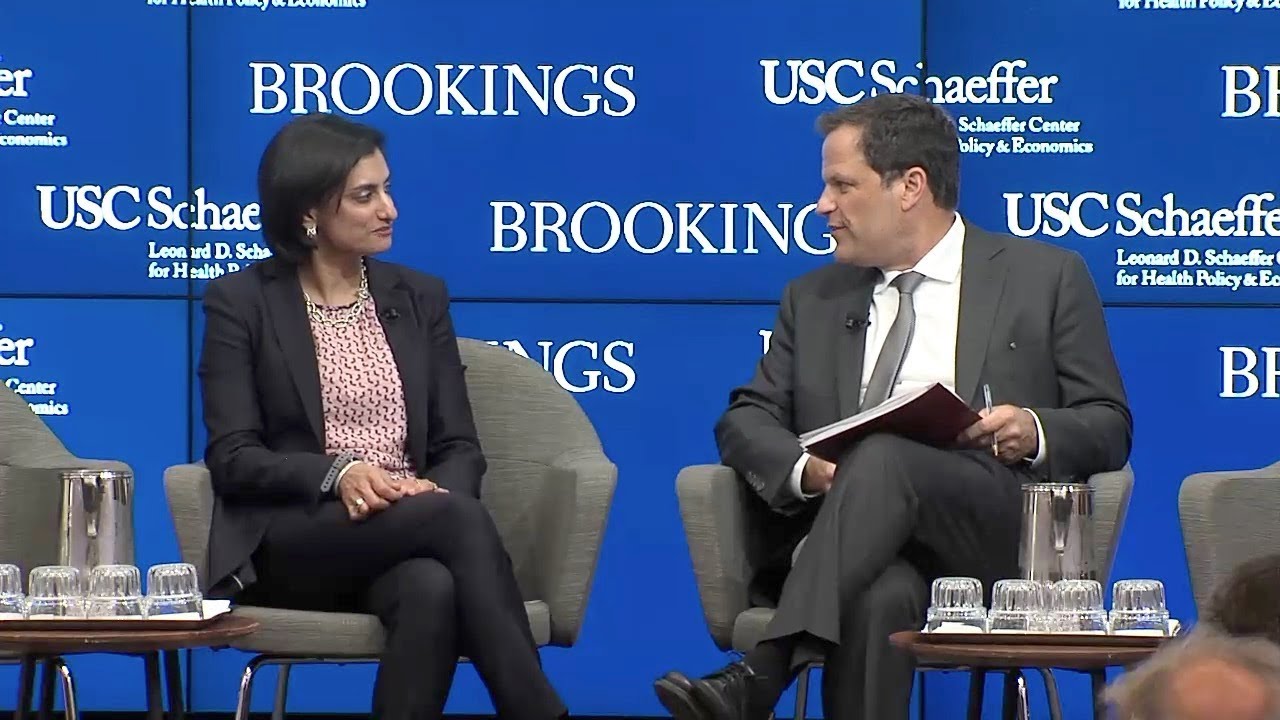
An event from the USC-Brookings Schaeffer Initiative for Health Policy

In recent years, the health care system has accelerated experimentation into new payment and delivery models that reward care coordination, integration, and value.  However, observers and market participants have expressed concerns that long-standing anti-fraud rules in Medicare and Medicaid prevent innovation and hold back potentially promising new arrangements.  In 2018, the Trump administration sought stakeholder feedback on how the regulations implementing those laws might be modified to promote value-based, coordinated, integrated care delivery while protecting taxpayers and beneficiaries from fraud.

On January 30, 2019 the USC-Brookings Schaeffer Initiative for Health Policy will host Eric Hargan, the Deputy Secretary of Health and Human Services, for a discussion about this effort. Following his presentation, experts in health care payment and delivery system reform will discuss the issue and the path forward.


38 hospitals sue HHS over site-neutral payment rule

https://www.healthcarefinancenews.com/news/38-hospitals-sue-hhs-over-site-neutral-payment-rule?mkt_tok=eyJpIjoiT0RrNVpXSmpZV1UzTTJVdyIsInQiOiJNNFh6MElhd0lmVE5Zc09kZTl5d3BPc1h3ZkRpZGNIbWhHSE9RNVp5NkN1MFwvXC9kK3h6WHh5KzRHTWdsQTlWZ203aitRRnhUYWZ5QTVScVZcL01HaTkyUm5LNDRvanVuY0NUdVN4Y0czMzRkMzdNZzMrdVp6WjlmV2N5WHYxMEkrNCJ9

Hospitals named in the suit include Vanderbilt Medical Center, Atrium Health, Rush University Medical Center, Ochsner Clinic Foundation, Montefiore.

A month and a half after several hospital advocacy groups joined together to sue the U.S. Department of Health and Human Services over it’s finalized site-neutral payment policy, 38 hospitals have followed, filing suit against HHS Secretary Alex Azar for a policy they say will deprive hospitals of hundreds of millions of dollars and could compel them to cut patient services due to loss of reimbursement.

The complaint argues that medical services provided in hospital outpatient departments are more “resource-intensive”–and therefore more costly–than those performed in an independent physician’s office. It also sharply criticized Secretary Azar, saying he “has blatantly disregarded a specific and unambiguous statutory directive, acted well beyond his authority and nullified that statutory exemption” that would have had hospital outpatient centers reimbursed for services at the higher grandfathered rate previously legislated.

The hospitals suing include Vanderbilt Medical Center, Atrium Health hospitals, Rush University Medical Center, Ochsner Clinic Foundation, Montefiore Health System and many others.

THE IMPACT

The outpatient prospective payment system seeks to equalize what physician offices and hospital outpatient departments are paid for certain clinical visits, a change that will be phased in over two years. The new rule cuts payments for hospital outpatient clinic visits at off-campus provider- based facilities in order to level them out against what is paid to physician offices. Half of the total reduction, $380 million, will take effect in 2019 and the remaining cuts will be phased the next year.

THE TREND

The Bipartisan Budget Act of 2015 amended the Social Security Act such that Medicare pays the same rates for medical services regardless of whether they are provided in a physician’s office or in an “off campus” hospital department. At the time, Congress provided an exemption from the rule for all off-campus hospital outpatient departments that were providing services before the enactment.

The AHA, in the suit they are part of, said the Azar’s reversal on the grandfathered exemption exceeds the administration’s legal authority. The AHA previously called the OPPS final rule  “unsupportable analyses and erroneous policy rationales,” and said it will have “negative consequences” for patients, with those in rural and vulnerable communities getting hit especially hard. The AHA and other hospital associations are already challenging the 340B policy included in the current outpatient rule.

ON THE RECORD

“The Secretary’s unlawful rate cut directly contravenes clear congressional directives and will impose significant harm on affected off-campus hospital outpatient departments and the patients they serve. Accordingly, this Court should declare the Secretary’s Final Rule to be ultra vires and enjoin the agency from implementing any payment methodology other than OPPS rates for all E/M services provided by excepted off-campus PBDs,” the complaint states.

Mark Polston, a partner with King & Spalding, the firm representing the plaintiffs: “Our clients’ mission is to provide high-quality healthcare. They have relied for years upon their off-campus departments to expand access to care and bring hospital services directly to their communities, many of which are underserved by other providers. Congress preserved their ability to do that work when it excepted them from the changes contained in Section 603 of the Bipartisan Budget Act of 2015. But the Secretary overstepped his bounds when he took that away. We are asking the court to reinstate the decision Congress made to preserve our clients’ ability to bring the best possible care to their patients.” Mark Polston, a partner with King & Spalding, the firm representing the plaintiffs:


Medicare Advantage industry sees slower growth for 2019

https://www.modernhealthcare.com/article/20190116/NEWS/190119927/medicare-advantage-industry-sees-slower-growth-for-2019

Image result for Medicare Advantage industry sees slower growth for 2019

Medicare Advantage insurers added 1.4 million members to their rosters for 2019 coverage, as they looked to grow membership in a market known for being politically safe and predictably lucrative. But Advantage membership is growing at a slower pace compared with previous years. 

According to the latest federal data showing enrollment as of this month, 22.4 million people are enrolled in Medicare Advantage for 2019 coverage—an alternative to the traditional Medicare program in which private insurers contract with the federal government to administer program benefits. That’s an increase of 6.8% since January 2018. Health insurers, however, managed to grow their Advantage membership base by more than 1.5 million in both 2016 and 2017.

Some industry experts were expecting more. “The formula was there: Health plans were aggressive, they got nice rate increases, the rules around benefit design relaxed a little bit,” explained Jeff Fox, president of Gorman Health Group, which provides technology and other services to Medicare Advantage plans.

Fox expected Advantage enrollment to increase by double-digits over the past year, as health plans invested heavily in marketing and the federal government provided one of the biggest rate increases for the plans in years at 3.4%. The Trump administration also granted Advantage plans the flexibility to provide more supplemental benefits in 2019, such as transportation and in-home care.

But Fox said distraction from the craziness of the November midterm elections may have kept some seniors from enrolling during the annual open enrollment that lasted from Oct. 15 to Dec. 7, 2018. While the CMS data captures some of the sign-ups from open enrollment, figures out next month are likely to be higher.

Despite the slower pace, many Advantage insurers still experienced big enrollment increases as they picked up more market share. About half of all members are covered by just three companies. UnitedHealth held onto the top spot, adding nearly 500,000 Advantage members in the past year for a total 5.7 million. UnitedHealth holds more than a quarter of the total Medicare Advantage market share.

Humana remained the No. 2 Advantage insurer with 3.9 million members, an increase of 10.4% over January 2018. But thanks to its acquisition of Aetna, CVS Health took the No. 3 spot with 2.2 million Advantage enrollees. Kaiser Foundation Health Plan and Anthem rounded out the top five insurers with the most Advantage members.

On a percentage basis, Anthem and Aetna grew membership the fastest. Anthem’s Medicare Advantage membership spiked 53% to 1.1 million members compared with the same time last year. The Indianapolis-based insurer has long focused on serving employers, but recently turned its sights to growing Medicare Advantage rolls through acquisitions and expansions in places where it already operates.

Anthem bought Florida-based Medicare plans HealthSun in December 2017 and America’s 1st Choice in February 2018, together giving Anthem about 170,000 more Advantage members. Anthem CEO Gail Boudreaux told investment analysts in July that the company would focus on selling group Medicare Advantage plans and serving medically complex dual-eligible members in 2019.

CVS Health, meanwhile, grew its Medicare membership by 26.7% in 2018 to 2.2 million through its acquisition of Aetna. The deal is still technically awaiting a federal judge’s approval. In a research note Monday, Barclays equity analyst Steve Valiquette noted that Aetna’s membership growth was driven by its expansion into about 360 new counties. Valiquette wrote that the growth experienced by some public health insurers during the annual enrollment period for 2019 coverage was driven more by market share gains than by industry growth.

Medicare Advantage enrollment is climbing as the baby boomer generation ages rapidly into Medicare. Those seniors are used to employer-sponsored managed-care plans and are choosing Advantage over traditional Medicare more often than previous generations did. Seniors also often get more benefits, including dental care, eyeglasses and gym memberships, with an Advantage plan. 

Medicare Advantage also enjoys support from both political parties and is able to weather swings from one federal administration to the next, whereas insurers that sell plans in the individual market, for example, may have to deal with more volatility.

Moreover, Medicare Advantage margins tend to hover between 4% to 5%, whereas Medicaid margins come in at 2% to 3% and the individual market historically has had even lower margins, S&P analyst Deep Banerjee told Modern Healthcare in August. The group employer business has higher margins, but that market isn’t growing like Medicare Advantage is.


Health Care Costs 101: A Continuing Economic Threat

Click to access HealthCareCosts18.pdf

2018 Edition — Health Care Costs 101

Image result for california healthcare foundation

US health spending reached $3.3 trillion in 2016, or $10,348 per capita, and accounted for 17.9% of gross domestic product (GDP). Health spending slowed somewhat in 2016, following the coverage expansions of 2015 and 2014. National health spending increased 4.3% in 2016, down from 5.8% in 2015 and 5.1% in 2014. Despite this slowdown, 2016 health spending grew 1.5 percentage points faster than the economy (GDP grew at a rate of 2.8%).

Looking ahead, health spending is projected to grow at an average rate of 5.5% per year (1.0 points faster than the economy) between 2017 and 2026. At this rate, health care would consume a growing portion of the economy, totaling $5.7 trillion and accounting for one-fifth of GDP by 2026.

Health Care Costs 101: A Continuing Economic Threat (PDF), which relies on the most recent data available, details how much is spent on health care in the US, which services are purchased, and who pays.

Key findings include:

  • Per capita health spending increased 3.5% in 2016 and crossed the $10,000 per capita threshold for the first time.
  • Prescription drug spending declined dramatically from 8.9% in 2015 to 1.3% in 2016, driven in part by fewer new medications on the market, slower brand-name drug spending, and reduced spending on generic drugs.
  • Households and the federal government each accounted for 28% of health spending in 2016.
  • As ACA coverage expansion matured in 2016, the rate of increase in federal spending slowed to 3.9%, lower than private business (5.0%) or households (4.6%).
  • Federal subsidies for ACA marketplace (individual coverage) premiums and cost sharing totaled $33 billion, accounting for 3.5% of federal health spending and 3.0% of private health insurance spending.
  • Public health insurance, including Medicare and Medicaid, paid the largest share of spending (41%) in 2016. Private health insurance paid for a third of health spending and consumers’ out-of-pocket spending accounted for 11%.

The full report, a quick reference guide, and all of the charts found in the report are available under Related Materials. Also available are the datafiles and previous years’ reports.  These materials are part of CHCF’s California Health Care Almanac, an online clearinghouse for key data and analyses describing the state’s health care landscape.


Supreme Court hears case over disproportionate share hospital payments

https://www.healthcarefinancenews.com/news/supreme-court-hears-hospital-case-over-disproportionate-share-hospital-payments?mkt_tok=eyJpIjoiWW1KbFlXUTRPV1V6WlRjeSIsInQiOiJ1VTVCYWtvaUMwRXRLbGd2N1BTSlhLVjYrT0VjdEpVdUlKc0hhaEVYZ3d1UjdORUp3RzkrNWd6Zjl0elwvSkwyMlwvMkxDSjZxN3I0alVzV1ZwbjZ0R0xBU3o4QWZpUlhsdkl0czMxMWY5MUVuV1hpWUxNeDhEXC9rcjg2Y01nYXA5VCJ9

Hundreds of millions of dollars in reimbursement are at stake; $3-4 billion from 2005 to 2013.

The Supreme Court was expected to hear oral arguments today over notice and rulemaking requirements for Medicare reimbursement.

The outcome of Azar vs. Allina Health Services could greatly affect reimbursement for hospitals that serve a disproportionate share of low-income patients. The DSH payment calculation is based on the percentage of low-income patients served.

The government wants to add Part C, or Medicare Advantage beneficiaries into the calculation, a move hospitals fear would decrease payments based on their belief that MA members are, on average, wealthier than Medicare Part A beneficiaries.

But the lawsuit is about how the Department of Health and Human Services went about attempting to implement its rule.

The hospitals in the lawsuit argue that HHS is required to conduct notice and comment rulemaking before providing the instructions to a Medicare administrative contractor that makes the initial determinations of payments due under Medicare. Medicare uses private contractors to administer its reimbursements to providers.

The case went to the District of Columbia Circuit Court, which vacated the rule. The hospitals argue that after the circuit court’s decision, CMS simply tried to make the same change without undertaking notice and comment.

The judge in the District of Columbia Circuit Court case was Brett Kavanaugh, who as Supreme Court Justice, is recusing himself in the HHS case Azar vs. Allina Health.

WHY THIS MATTERS

CMS’s proposed rule changes affect hundreds of millions of dollars in reimbursement for hospitals. The government estimates that the DSH payments from 2005 to 2013 totaled $3 to $4 billion, according to SCOTUSblog.

Hospitals suing HHS said the Centers for Medicare and Medicaid Services “botched” attempted rulemaking in 2004, when the department tried to change the standard governing Medicare payment to hospitals nationwide for services furnished to low-income patients.

The Medicare Act requires the agency to engage in notice-and-comment rulemaking, the hospitals argue.

HHS disagrees, saying the Medicare Act does not require HHS to issue formal notice-and-comment rulemaking prior to changing the DSH calculation formula. Doing so would cripple the Medicare program, requiring the agency to use rulemaking for any change in its lengthy and detailed operations manuals, it argues.

The hospitals involved in the lawsuit are Allina Health System and its affiliated hospitals, Abbott Northwestern, United, and Unity; Florida Health Sciences Center; Montefiore Medical Center; Mount Sinai Medical Center, New York-Presbyterian/Queens; New York Presbyterian Brooklyn Methodist Hospital; and New York and Presbyterian Hospital.

ON THE RECORD

“The agency botched that rulemaking: the final rule was not the ‘logical outgrowth’ of the proposed rule, and the D.C. Circuit vacated it,” Allina and other health systems said.

HHS Secretary Alex Azar said in court documents, “As the government has explained, respondents’ theory, if adopted, has the potential to substantially undermine effective administration of the Medicare program, not least because its rationale would encompass not just the Medicare fractions at issue here but nearly every instruction to the agency’s contractors, including those contained in the Provider Reimbursement Manual.”


How seniors are being steered toward private Medicare plans

https://www.axios.com/medicare-advantage-tilting-scales-7db28dd2-25af-4283-b971-21a61fa59371.html

Illustration of a wheelchair on one side of a seesaw with a hand pressing down the other side.

Today is the final day when seniors and people with disabilities can sign up for Medicare plans for 2019, and consumer groups are concerned the Trump administration is steering people into privately run Medicare Advantage plans while giving short shrift to their limitations.

Between the lines: Medicare Advantage has been growing like gangbusters for years, and has garnered bipartisan support. But the Center for Medicare Advocacy says the Trump administration is tilting the scales by broadcasting information that “is incomplete and continues to promote certain options over others.”

The big picture: The government has talked up the benefits of Medicare Advantage plans in emails to prospective enrollees during the past several weeks, the New York Times recently reported. Enrollment is approaching 22 million people, and there are reasons for its popularity.

  • Many MA plans offer $0 premiums and extra perks that don’t exist in standard Medicare, like vision and hearing coverage and gym memberships. MA plans also cap enrollees’ out-of-pocket expenses.
  • Traditional Medicare, by contrast, has higher out-of-pocket costs that usually require people to buy supplemental medical policies, called Medigap plans, as well as separate drug plans.

Yes, but: Federal marketing materials rarely mention MA’s tradeoffs.

  • MA plans limit which doctors and hospitals people can see, and they require prior approval for certain procedures. Provider directories also are loaded with errors.
  • MA plans spend less on care, yet continue to cost taxpayers more than traditional Medicare. Coding is a major problem.
  • People who enroll in MA often can’t buy a Medigap plan if they later decide to switch to traditional Medicare. And others, especially retirees leaving their jobs, may not even realize their employers are enrolling them in Medicare Advantage.

Where it stands: The Affordable Care Act slashed payments to MA insurers, but other Obama administration policies bolstered the industry. And now the Trump administration is helping it even more.

  • Obama officials built the chassis for today’s bonus system, which has been lucrative for plans (and likely wasteful, according to federal auditors).
  • A bipartisan 2015 law that adjusted Medicare payments to doctors killed the most popular Medigap plans, starting in 2020 — a move experts say could indirectly drive more people to MA.
  • HHS championed MA in a new policy document this week, on the heels of positive marketing.

What we’re hearing: Wall Street is beyond bullish on the major MA insurers like UnitedHealth Group and Humana. Supporters of MA like the idea of treating Medicare more like a marketplace, where people have to shop for a plan every year, but experts are worried about how it will affect the average enrollee.

“We know people don’t” actively engage in health insurance shopping, said Tricia Neuman, a Medicare expert at the Kaiser Family Foundation who recently wrote about MA. “It’s just too hard.”


More Than One-Quarter of High-Cost Medicare Patients Have Persistent High Costs Over Three Years

https://www.commonwealthfund.org/publications/journal-article/2019/jan/high-cost-medicare-patients-persistent-three-years

Medicare high costs of outpatient care and medications

The Issue

It has been well documented that a small portion of Medicare patients — just 10 percent — account for more than half the program’s spending in any given year. But how many of these patients continue to incur high costs over time? Using three years of Medicare claims data (2012–2014), Commonwealth Fund–supported researchers sought to determine the share of patients with persistently high costs, as well as the key traits that differentiate them from those who incur high costs in only one or two years — or never.

What the Study Found

  • More than one-quarter (28%) of patients who had high costs in 2012 remained persistently high-cost over the subsequent two years, while 72 percent were transiently high-cost — for one or two years.
  • Persistently high-cost patients were younger (66.4 years) than either the transiently high-cost (73.3 years) or never high-cost (70.5 years) patients. They were also more likely to be members of racial and ethnic minorities, eligible for Medicaid in addition to Medicare, and qualify for Medicare because of end-stage renal disease.
  • On average, in the first year, persistently high-cost patients spent $64,434, compared with $45,560 for the transiently high-cost and $4,538 for the never high-cost.
  • Persistently high-cost patients spent more in all categories of spending. Notably, they spent more than four times as much as transiently high-cost patients did in outpatient settings ($16,148 v. $4,020) and on drugs ($15,467 v. $3,841).

The Big Picture

The 28 percent of Medicare beneficiaries with persistently high costs represent slightly less than 3 percent of the overall Medicare population but account for nearly 20 percent of Medicare spending for the three years studied. Only 5 percent of their total spending was related to potentially preventable hospitalizations, suggesting that it may be of little benefit to focus efforts on reducing such incidents.

The Bottom Line

Medicare patients who incur high costs over several years spend more on outpatient care and medications than those with lower costs. Targeting interventions on those two areas could help reduce overall spending.


AHA: Medicare underpaid hospitals by $53.9B in 2017

https://www.beckershospitalreview.com/finance/aha-medicare-underpaid-hospitals-by-53-9b-in-2017.html

Image result for underpayment

Medicare underpaid hospitals by $53.9 billion in 2017, and Medicaid underpaid hospitals by $22.9 billion, according to the latest data from the American Hospital Association’s Annual Survey of Hospitals.

Underpayment occurs when the reimbursement hospitals receive is less than the amount paid for personnel, technology, and other goods and services required to provide care.

In 2017, hospitals received payment of 87 cents for every dollar they spent caring for Medicare and Medicaid patients, according to the AHA.

Access the AHA underpayment by Medicare and Medicaid fact sheet here.


Senior House Democrats’ New Bill Ramps Up the Medicare Expansion Debate

Image result for Medicare Expansion Bill
Earlier this week, Congresswomen Rosa DeLauro (D-CT) and Jan Schakowsky (D-IL) introduced legislation, the Medicare for America Act, that would greatly expand Medicare coverage while maintaining employer-sponsored health insurance for those who have it and want to keep that coverage, employers would have an option to pay for their employees to be in the new system.

Under the proposal Medicare plan beneficiaries would still be required to pay premiums and insurance deductibles however, those costs would be capped, with premiums set at a maximum of 9.69 percent of the individual’s income. The plans would also be required to cover prescription drugs, dental, vision, and hearing services, as well as long-term supports and services for seniors and Americans with disabilities.

The bill is funded by phasing out the GOP tax cuts put in place last year as well as creating a 5 percent capital gains tax on high income earners, raising Medicare payroll and net investment income taxes, and increasing taxes on goods like tobacco, beer, liquor and sugar-sweetened drinks. Additionally, states would be required to pay into the system.

Click here for the legislation, and here for a summary.


Misconceptions About Health Costs When You’re Older

Misconceptions About Health Costs When You’re Older

Image result for Misconceptions About Health Costs When You’re Older

Some significant expenses decline as we age: Most mortgages are eventually paid off, and ideally children grow up and become self-supporting.

But health care is one area in which costs are almost certain to rise. After all, one of the original justifications for Medicare — which kicks in at age 65 — is that older people have much higher health care needs and expenses.

But there are a few common misunderstandings about health costswhen people are older, including the idea that money can easily be saved by reducing wasteful end-of-life spending.

Half our lifetime spending on health care is in retirement, even though that represents only about 20 percent of a typical life span. Total health care spending for Americans 65 and older is about $15,000 per year, on average, nearly three times that of working-age Americans.

Don’t expect Medicare to provide complete protection from these expenses.

Traditional Medicare has substantial gaps, leaving Americans on the hook for a lot more than they might expect. It has no cap on how much you can pay out of pocket, for example. Such coverage gaps can be filled — at least in part — by other types of insurance. But some alternatives, such as Medicare Advantage, aren’t accepted by as many doctors or hospitals as accept traditional Medicare.

On average, retirees directly pay for about one-fifth of their total health care spending. Some spend much more.

One huge expense no Medicare plans cover is long-term care in a nursing home.

Over half of retirement-age adults will eventually need long-term care, which can cost as much as $90,000 per year at a nursing home. Although most who enter a nursing home don’t stay long, 5 percent of the population stays for more than four years. You can buy separate coverage outside the Medicare program for this, but the premiums can be high, especially if you wait until near retirement to buy.

Although Medicare is thought of as the source of health care coverage for retirees, Medicaid plays a crucial role.

Medicaid, the joint federal-state heath financing program for low-income people, has long been the nation’s main financial backstop for long-term care. Over 60 percent of nursing home residents have Medicaid coverage, and over half of the nation’s long-term care is funded by the program.

That isn’t because most people who require long-term care have low incomes. It’s because long-term care is so expensive that those needing it can frequently deplete their financial resources and then must turn to Medicaid.

recent working paper from the National Bureau of Economic found that, on average, Medicaid covers 20 percent of retiree health spending. The figure is larger for lower-income retirees, who are more likely to qualify for Medicaid for more of their retirement years.

A widely held view is that much spending is wasted on “heroic” measures taken at the end of life. Are all the resources devoted to Medicare and Medicaid really necessary?

First, let’s get one misunderstanding out of the way. The proportion of health spending at the end of life in the United States is lower than in many other wealthy countries.

Still, it’s a tempting area to look for savings. Only 5 percent of Medicare beneficiaries die each year, but 25 percent of all Medicare spending is on individuals within one year of death. However, the big challenge in reducing end-of-life spending, highlighted by a recent study in Science, is that it is hard to know which patients are in their final year.

The study used all the data available from Medicare records to make predictions: For each beneficiary, it assigned a probability of death within a year. Of those with the very highest probability of dying — the top 1 percent — fewer than half actually died.

“This shows that it’s just very hard to know in advance who will die soon with much certainty,” said Amy Finkelstein, an M.I.T. economist and an author of the study. “That makes it infeasible to make a big dent in health care spending by cutting spending on patients who are almost certain to die soon.”

That does not mean that all the care provided to dying patients — or to any patient — is valuable. Another study finds that high end-of-life spending in a region is closely related to the proportion of doctors in that region who use treatments not supported by evidence — in other words, waste.

“People at high risk of dying certainly require more health care,” said Jonathan Skinner, an author of the study and a professor of economics at Dartmouth. “But why should some regions be hospitalizing otherwise similar high-risk patients at much higher rates than other regions?”

In 2014, for example, chronically ill Medicare beneficiaries in Manhattan spent 73 percent more days in the hospital in their last two years of life than comparable beneficiaries in Rochester.

“There absolutely is waste in the system,” said Ashish Jha, director of the Harvard Global Health Institute. But, he argues, waste is present throughout the life span, not just at the end of life: “We have confused that spending as end-of-life spending is somehow wasteful. But that’s not right because we are terrible at predicting who is going to die.”

Of course, beyond any statistical analysis, there are actual people involved, and wrenching individual decisions that need to be made.

“We should do all we can to push waste out of the system,” Dr. Jha said. “But spending more money on people who are suffering from an illness is appropriate, even if they die.”