Cleveland Clinic details hits to operating margin

http://www.healthcaredive.com/news/cleveland-clinic-details-hits-to-operating-margin/425703/

  • The Cleveland Clinic’s latest financials show the hospital system ended the first half of 2016 with a significantly lower operating margin than at the same time in 2015, landing at 1.2% after the six-month period that ended June 30, 2016 vs. 5.6% in June 2015.
  • Although the system’s revenue went up 17% during this period compared to last year, reaching $3.93 billion, that revenue failed to keep pace with a 23% increase in expenses.
  • The system had anticipated a smaller margin this year, Cleveland Clinic chief financial officer Steve Glasstold Modern Healthcare, partly as a result of increased investments in new care-delivery models and consultants to manage those projects, as well as providing raises to medical and other employees to retain in-demand clinicians.
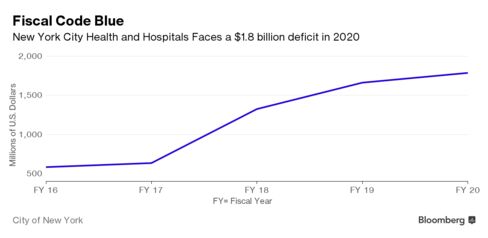

New York Hospitals Facing Fiscal Code Blue

http://www.bloomberg.com/politics/articles/2016-08-22/new-york-city-hospitals-seen-unwilling-to-take-stronger-medicine?utm_campaign=KHN%3A+Daily+Health+Policy+Report&utm_source=hs_email&utm_medium=email&utm_content=33278487&_hsenc=p2ANqtz–Ua5Q-PC5Hs3i1ni8bTaDNOfHhzF8R8meSEL9ZdWL6LejSQMUC3wLCDN9J_cuBB9IHRmZmF7BdmyqhMlNtFPa8KBOrzA&_hsmi=33278487

New York City’s public hospitals are in critical condition with rising costs and plummeting revenue. There’s no dispute about that diagnosis. The problem is with Mayor Bill de Blasio’s proposed cure, according to health policy makers, hospital administrators and budget watchdogs.

As NYC Health + Hospitals President Ram Raju describes it, the largest U.S. municipal-healthcare provider is an ailing system of 11 hospitals that’s losing revenue because of increased competition from non-profit hospitals for Medicaid patients and drastic cuts in federal and state aid for indigents.

His prescription: shift its 40,000-plus employees into a system of neighborhood clinics and transform campuses into affordable housing and long-term care, build enrollment of its MetroPlus insurance plan and persuade federal and state governments to spend more. That aid is projected to fall by almost $1 billion -– from $2.2 billion in FY16 to $1.4 billion in 2020.

Fitch: Health insurer credit metrics hit hard in first half of 2016

http://www.beckershospitalreview.com/payer-issues/fitch-health-insurer-credit-metrics-hit-hard-in-first-half-of-2016.html

Debt Buying FirmsDebt Buying Firms

Higher leverage ratios from acquisition-related debt combined with declining revenue growth and declining interest coverage ratios contributed to deteriorating credit metrics for publicly traded health insurers in the first half of 2016, according to a Fitch Ratings report.

The weakened credit picture has led Fitch to take several negative rating actions. The rating agency downgraded Louisville, Ky.-based Humana’s senior notes, revised Minnetonka, Minn.-based UnitedHealth Group’s rating outlook to negative and placed ratings of Hartford, Conn.-based Aetna, Indianapolis-based Anthem and St. Louis-based Centene on negative watch.

Allina Health’s bottom line takes $20.4M hit from nurse strike

http://www.beckershospitalreview.com/finance/allina-health-s-bottom-line-takes-20-4m-hit-from-nurse-strike.html

Minneapolis-based Allina Health saw revenues increase in the first six months of 2016, but the 13-hospital health system’s operating income and net income fell in the first half of the year.

Allina revenues increased 4.1 percent year over year to nearly $2 billion in the six months ended June 30, according to bondholder documents. The financial boost was attributable to increased patient volume. Allina said inpatient admissions were up 0.5 percent and outpatient hospital admissions were up 3.1 percent in the first half of this year, compared to the same period of 2015.

The system said operating income decreased by 40 percent year over year to $54 million in the first six months of 2016. The decrease was largely due to strike expenses. Allina said it incurred $20.4 million of expenses related to the seven-day strike in June called by the Minnesota Nurses Association.

The nurses association authorized the strike after Allina nurses overwhelmingly rejected an offer by the health system that would have eliminated union-backed health insurance and moved the workers to plans that other health system employees receive. During the strike, Allina brought in 1,400 replacement nurses.

Kaiser sees operating income dip 35.4% in Q2

http://www.beckershospitalreview.com/finance/kaiser-s-operating-income-dips-35-4-in-q2.html

Kaiser Permanente said operating revenue for its nonprofit hospital and health plan units increased in the second quarter of 2016, but the Oakland, Calif.-based system reported lower operating income and net income than in the same period of the year prior.

How rural healthcare organizations are faring in non-Medicaid expansion states.

http://www.healthleadersmedia.com/community-rural/risky-business-rural-hospitals?spMailingID=9321746&spUserID=MTMyMzQyMDQxMTkyS0&spJobID=980628370&spReportId=OTgwNjI4MzcwS0

Hospitals in rural areas of the country are feeling a sharp financial pinch in states that have not expanded their Medicaid programs under the Patient Protection and Affordable Care Act.

Community hospitals in rural counties of Tennessee, one of the states that have opted not to embrace Medicaid expansion, are facing financial pressure that could be relieved if more of their low-resource patients had Medicaid coverage. “In our health systems, they manage it. They have figured it out. Where it’s really hitting is our rural hospitals,” says Craig Becker, president of the Tennessee Hospital Association. “We’ve lost six rural hospitals in the last year, and we’re going to lose another one this year.”

In economically disadvantaged Tennessee communities, many nonelderly adults are either reliant on Medicaid for their health coverage or fall into the “self-pay” category, Becker says. “We only get about 5% of payment for self-pay patients.”

Medicaid is a public form of medical insurance jointly funded by the states and the federal government. Under the PPACA, states can expand their Medicaid programs with federal financial assistance to include all adults in families with incomes below 138% of the federal poverty level.

As Hospital Chains Grow, So Do Their Prices For Care

http://www.healthleadersmedia.com/finance/hospital-chains-grow-so-do-their-prices-care

As health care consolidation accelerates nationwide, a new study shows that hospital prices in two of California’s largest health systems were 25 percent higher than at other hospitals around the state.

For Hospitals, Prestige Leads To Profits

http://www.healthleadersmedia.com/finance/hospitals-prestige-leads-profits

Market Power

Many of the hospitals best-positioned to earn profits are non-profits. They are the largest hospitals, and the ones with the most prestige.