

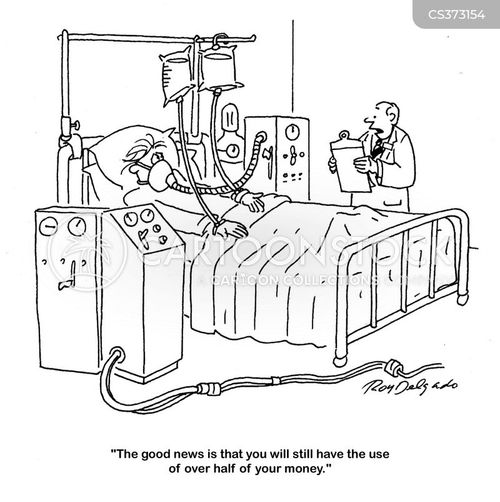
Cartoon – The Good News

In Eleven States, 3 in 10 Non-Elderly Adults Would Likely Be Denied Individual Insurance Under Medical Underwriting Practices.
A new Kaiser Family Foundation analysis finds that 52 million adults under 65 – or 27 percent of that population — have pre-existing health conditions that would likely make them uninsurable if they applied for health coverage under medical underwriting practices that existed in most states before insurance regulation changes made by the Affordable Care Act.
In eleven states, at least three in ten non-elderly adults would have a declinable condition, according to the analysis: West Virginia (36%), Mississippi (34%), Kentucky (33%), Alabama (33%), Arkansas (32%), Tennessee (32%), Oklahoma (31%), Louisiana (30%), Missouri (30%), Indiana (30%) and Kansas (30%).
States with the most people estimated to have the conditions include: California (5,865,000), Texas (4,536,000), and Florida (3,116,000).
Using data from two large government surveys, the analysis estimates the total number of nonelderly adults in each state with a health condition that could lead to a denial of coverage in the individual insurance market, based on pre-ACA field underwriting guides for brokers and agents. The results are conservative because the data don’t include some declinable conditions. The estimates also don’t include the number of people with other health conditions that wouldn’t necessarily cause a denial, but could lead to higher insurance costs based on underwriting.
https://khn.org/news/podcast-khns-what-the-health-health-care-politics-midterm-edition/

The 2018 midterm elections were supposed to be a referendum on President Donald Trump, not about issues such as health care. Still, voters, Democrats and, to a lesser extent, Republicans seem to be keeping health care on the front burner.
The news from Medicare’s trustees that its hospital trust fund is on shakier financial footing than it was last year, hefty premium increases being proposed in several states and activity on Medicaid expansion all take on a political tinge as the critical elections draw closer.
Also this week, an interview with Matt Eyles, president and CEO of America’s Health Insurance Plans, the health insurance industry trade group.
This week’s panelists for KHN’s “What the Health?” are Julie Rovner of Kaiser Health News, Stephanie Armour of The Wall Street Journal, Alice Ollstein of Talking Points Memo and Rebecca Adams of CQ Roll Call.
Among the takeaways from this week’s podcast:


President Trump is expected to soon address the nation about the rising cost of prescription drugs. But Americans are worried about more than drug prices. New findings from the Commonwealth Fund Affordable Care Act Tracking Survey show that consumers’ confidence in their ability to afford all their needed health care continues to decline.
Last week, we reported that the survey indicated a small but significant increase in the uninsured rate among working-age adults since 2016. In this post, we look at people’s views of the affordability of their health care. The Affordable Care Act Tracking Survey is a nationally representative telephone survey conducted by SSRS that tracks coverage rates among 19-to-64-year-olds, and has focused in particular on the experiences of adults who have gained coverage through the marketplaces and Medicaid. The latest wave of the survey was conducted between February and March 2018.1
In each wave of the survey, we’ve asked respondents whether they have confidence in their ability to afford health care if they were to become seriously ill. In 2018, 62.4 percent of adults said they were very or somewhat confident they could afford their health care, down from a high of nearly 70 percent in 2015 (Table 1). Only about half of people with incomes less than 250 percent of poverty ($30,150 for an individual) were confident they could afford care if they were to become very sick, down from 60 percent in 2015 and about 20 percentage points lower than the rate for adults with higher incomes. There were also significant declines in confidence among young adults, those ages 50 to 64, women, and people with health problems. Declines were significant among both Democrats and Republicans.
We asked people with health insurance how confident they were that their current insurance will help them afford the health care they need this year. Majorities of adults were somewhat or very confident in their coverage; those with employer coverage were the most confident. More than half (55%) of adults insured through an employer were very confident their coverage would help them afford their care compared to 31 percent of adults with individual market coverage and 41 percent of people with Medicaid (Table 2). The least confident were adults enrolled in Medicare. Working-age adults enrolled in Medicare were the sickest among insured adults and the second-poorest after those covered by Medicaid (data not shown).2
We asked people whether, over the past year, their health care, including prescription drugs, had become harder for them to afford, easier to afford, or if there had been no change. The majority (66%) said there had been no change, one-quarter (24%) said it had become harder to afford, and 8 percent said it had become easier (Table 3). People with individual market coverage were significantly more likely than those with employer coverage or Medicaid to say health care had become harder to afford. About one-third of adults with deductibles of $1,000 or more said health care had become harder to afford, twice the share of those who had no deductible. About one-third of those enrolled in Medicare and 41 percent who were uninsured also reported that their health care had become harder to afford.
Accidents and other medical emergencies can leave both uninsured and insured people with unexpected medical bills, which usually require prompt payment. We asked people if they would have the money to pay a $1,000 medical bill within 30 days in the case of an unexpected medical event. Nearly half (46%) said they would not have the money to cover such a bill in that time frame (Table 4). Women, people of color, people who are uninsured, those covered by Medicaid or Medicare, and those with incomes under 250 percent of poverty were among the most likely to say they couldn’t pay the bill.
Fourteen percent of adults said that health care was their biggest personal financial concern, after mortgage or rent (23%), student loans (17%), and retirement (17%) (Table 5). Those most likely to cite health care as their greatest financial concern were people who could potentially face high out-of-pocket costs because they were uninsured or had high-deductible health plans.
Uninsured adults are the least confident in their ability to pay medical bills. But the risk of high out-of-pocket health care costs doesn’t end when someone enrolls in a health plan. The proliferation and growth of high-deductible health plans in both the individual and employer insurance markets is leaving people with unaffordable health care costs. Many adults enrolled in Medicare for reasons of disability or serious illness also report unease about their health care costs. An estimated 41 million insured adults have such high out-of-pocket costs and deductibles relative to their incomes that they are effectively underinsured. As this survey indicates, the nation’s health care cost burden is felt disproportionately by people with low and moderate incomes, people of color, and women.
The ACA’s reforms to the individual insurance market have doubled the number of people who now get insurance on that market to an estimated 17 million, with approximately half receiving subsidies through the ACA marketplaces. The ACA also has made it possible for people who were regularly denied coverage by insurers — older Americans and those with health problems — to get insurance. They are now entitled by law to an offer should they want to buy a plan.
But as this survey suggests, the ACA’s reforms did not fully resolve the individual market’s relatively higher costs for all those enrolled, compared to employer coverage or Medicaid. Moreover, recent actions by Congress and the Trump administration, including the repeal of the individual mandate penalty and loosened restrictions on plans that don’t comply with the ACA, are expected to exacerbate those costs for many. In the survey, people with individual market coverage are more likely than those with employer coverage or Medicaid to say that their health care, including prescription drugs, has become harder to afford in the past year. They express less confidence than those with employer coverage that their insurance will help them afford their care this year. As explained in the first post, there are a number of policy options that Congress can pursue that would improve individual market insurance’s affordability and cost protection. In the absence of bipartisan Congressional agreement on legislation, several states are currently pursuing their own solutions. But if current trends continue, the federal government will likely confront growing pressure to provide a national solution to America’s incipient health care affordability crisis.
Gubernatorial Hopefuls Look To Health Care For Election Edge

California’s leading gubernatorial candidates agree that health care should work better for Golden State residents: Insurance should be more affordable, costs are unreasonably high, and robust competition among hospitals, doctors and other providers could help lower prices, they told California Healthline.
What they don’t agree on is how to achieve those goals — not even the Democrats who represent the state’s dominant party.
“Health care gives them the perfect chance to crystalize that divide” between the left-wing progressives and the “moderate pragmatists” of the Democratic Party, said Thad Kousser, a political science professor at the University of California-San Diego.
Consider the top two Democratic candidates, who both aim to cover everyone in the state, including immigrants living here without authorization.
Lt. Gov. Gavin Newsom — billed as a liberal Democrat — supports a single-payer health care system. That means gutting the health insurance industry to create one taxpayer-funded health care program for everyone in the state.
But former Los Angeles Mayor Antonio Villaraigosa has called single-payer “unrealistic.” He advocates achieving universal health coverage through incremental changes to the current system.
Under California’s “top-two” primary system, candidates for state or congressional office will appear on the same June 5 ballot, regardless of party affiliation. The top two vote-getters advance to the November general election.
A poll in late April by the University of California-Berkeley Institute of Governmental Studies puts Newsom in first place with the support of 30 percent of likely voters, followed by Republicans John Cox, with 18 percent, and Travis Allen with 16 percent. Trailing behind were Democrats Villaraigosa, with 9 percent, John Chiang with 7 percent and Delaine Eastin with 4 percent. Thirteen percent of likely voters remained undecided.
Health care is in the forefront of this year’s gubernatorial campaign because of recent federal attempts to repeal the Affordable Care Act, which would have threatened the coverage of millions of Californians, said Kim Nalder, professor of political science at California State University-Sacramento. California has pushed back hard against Republican efforts in Congress to dismantle the law.
“There’s more energy in California around the idea of universal coverage than you see in lots of other parts of the country,” Nalder said. Democrats and those who indicate no party preference make up almost 70 percent of registered voters. Those voters care more about health coverage than Republicans, she said.
“Whoever is most supportive [of universal health care] is likely to win the votes,” she said.
The top Republican candidates, Cox and Allen, are not fans of increased government involvement, however. They favor more market competition and less regulation to lower costs, expand choice and improve quality.
“Governments make everything more expensive,” said Cox, a former adviser to former House Speaker Newt Gingrich during his presidential run. “The private sector looks for efficiencies.”
California Healthline reached out to the top six candidates based on the institute’s poll, asking about their positions on health insurance, drug prices, the opioid epidemic and hospital consolidation.

Get ready for about six more months of headlines like this: Insurers in Maryland are proposing premium hikes as high as 91% for coverage sold through the Affordable Care Act.
This will keep happening, nationwide. Proposed increases have been steep in Maryland and Virginia, the first two states to release them. But all signs point to steep hikes across the country, especially in rural areas. Some insurers also will likely decide to simply quit offering coverage in some parts of the country.
The latest: Insurers in Maryland’s individual market are seeking rate hikes for next year that range from 18% (for the biggest plan in the state) to 91% (for the smallest). They average out to roughly 32%.
Why you’ll hear about this again: More preliminary rates will trickle out until the summer, as will any insurers’ decisions to pull up stakes in some markets. After negotiations with state regulators, rates will be finalized a few weeks before the midterms.
The other side: Expect the Trump administration to cite these same figures as it finalizes regulations that would loosen access to options outside the ACA’s exchanges, saying they’re providing new options to people who simply can’t afford ACA coverage.
https://khn.org/news/medicare-beneficiaries-feel-the-pinch-when-they-cant-use-drug-coupons/

This week, I answered a grab bag of questions about drug copay coupons and primary care coverage on the health insurance marketplace.
Q: My doctor wants me to take Repatha for my high cholesterol, but my Medicare drug plan copayment for it is $618 a month. Why can’t I use a $5 drug copay coupon from the manufacturer? If I had commercial insurance, I could. I’m on a fixed income. How is this fair?
The explanation may offer you little comfort. Under the federal anti-kickback law, it’s illegal for drug manufacturers to offer people any type of payment that might persuade them to purchase something that federal health care programs like Medicare and Medicaid might pay for. The coupons can lead to unnecessary Medicare spending by inducing beneficiaries to choose drugs that are expensive.
“The law was intended to prevent fraud, but in this case it also has the effect of prohibiting Part D enrollees from using manufacturer copay coupons … because using the coupon would be steering Medicare’s business toward a particular entity,” said Juliette Cubanski, associate director of the Program on Medicare Policy at the Kaiser Family Foundation. (Kaiser Health News is an editorially independent program of the foundation.)
The coupons typically offer patients with commercial insurance a break on their copayment for brand-name drugs, often reducing their out-of-pocket costs to what they would pay for inexpensive generic drugs. The coupons help make expensive specialty drugs more affordable for patients. They can also increase demand for the drugmaker’s products. If patients choose to use the coupons to buy a higher-cost drug over a generic, the insurer’s cost is likely to be more than what it would otherwise pay.
In addition, consumers should note that the copay cards often have annual maximums that leave patients on the hook for the entire copayment after a certain number of months, said Dr. Joseph Ross, associate professor of medicine and public health at Yale University who has studied copay coupons.
The coupons may discourage patients from considering appropriate lower-cost alternatives, including generics, said Leslie Fried, a senior director at the National Council on Aging.
According to a 2013 analysis co-authored by Ross and published in the New England Journal of Medicine, 62 percent of 374 drug coupons were for brand-name drugs for which there were lower-cost alternatives available.
Q: Last year, my marketplace plan covered five primary care visits at no charge before I paid down my $2,200 deductible. This year, it doesn’t cover any appointments before the deductible, and I had to pay $80 out-of-pocket when I went to the doctor. Is that typical now? It makes me think twice about going.
Under the Affordable Care Act, marketplace plans are required to cover many preventive services, including an annual checkup, without charging consumers anything out-of-pocket. Beyond that, many marketplace plans cover services such as some primary care visits or generic drugs before you reach your deductible.
The likelihood of having a plan that offers some cost sharing for primary care before you reach your deductible (rather than requiring you to pay 100 percent of the cost until you hit that amount) varies significantly depending on whether you’re in a bronze, silver or gold plan, according to a recent analysis by the Robert Wood Johnson Foundation.
In 2018, 77 percent of silver-level plans offered some cost sharing for primary care visits before enrollees had paid off their typical deductible of $3,800, the analysis found. In most cases, that means people owe a copayment or coinsurance charge for each visit until they reach their deductible. A small number of plans offered a limited number of no-cost or low-cost visits first, and then people using more services either had to pay the full charge for each visit or owed cost sharing until the deductible was met.
Bronze plans were much stingier in what they offered for primary care before people reached their deductible, which was $6,400 or higher in half of plans. Only 38 percent of bronze plans offered any primary care coverage before the deductible, and generally patients still had to pay a copayment or coinsurace. A smaller percentage of bronze plans offered limited visits at no cost or low cost before the deductible.
The share of people who chose bronze plans grew from 23 percent in 2017 to 29 percent this year, said Katherine Hempstead, a senior policy adviser at the Robert Wood Johnson Foundation. While premiums are typically significantly lower in bronze plans than other “metal”-level plans, it can be worthwhile to check out how plans handle primary care services before the deductible, she said.

A recent Supreme Court decision on patents — Oil States v. Greene’s Energy Group — marks an understated victory, with far-reaching consequences that will positively impact families and communities across America. This case has deep implications for basic economic fairness, with the judiciary recognizing the importance of keeping critical checks in systems that have become far too imbalanced.
In the national media, this case is being held up as a victory for Silicon Valley and the wealthy tech elites. Perhaps this makes sense: The decision handed down April 24 preserves a process for disputing and overturning unmerited patents, helping curb the glut of patent trolls polluting the industry. But this is not just a victory for the ensconced Palo Alto bubble — working families are silent winners of this week’s Supreme Court decision.
In 2011, Congress created within the U.S Patent Office a body called the Patent Trial and Appeal Board (PTAB). While the patent office examines and grants patents, which are akin to giving a monopoly power for a period of time for an invention, the PTAB serves as an appeal body when such rights are disputed. This week’s SCOTUS decision affirmed that the PTAB can continue its role in ensuring that monopoly rights given through a patent can be reversed.P
Why is this important for ordinary Americans? Abuse of the patent system is directly tied to skyrocketing drug prices.
Americans of all political stripes are united on one thing: Drug prices have spiraled out of control. One in 4 Americans cannot fill their prescriptions because they can’t afford them. Nineteen million Americans are forced to go overseas to buy their drugs because companies don’t price fairly. And pharmaceutical companies get away with their exorbitant pricing by abusing our patent system.
In order to maintain monopolies on life-saving treatments, pharmaceutical companies often file dozens of unmerited patents on their drugs, blocking the generic competition that lowers prices. For example, Celgene has applied for over 100 patents on just one cancer drug, Revlimid. As a result, Celgene will likely make an extra $45 billion while Americans should have been able to access cheaper alternative generic options years ago.
The PTAB can curb that abuse and help restore integrity to our patent system, stopping drug companies from holding a wrongly issued monopoly for years or even decades more. In fact, roughly half of the pharmaceutical patents challenged through the new PTAB reviews are found to be unmerited. This includes patents on expensive drugs: The blockbuster multiple sclerosis drug Copaxone, for example, is one drug the PTAB found to have been wrongly granted patents, thus allowing cheaper versions of the medicine to enter the market.
But more broadly, this Supreme Court decision offers a bit of respite and a rare moment of bipartisan consensus in an increasingly fractured America. The decision strikes at the heart of basic economic unfairness and the ways in which power has become concentrated in the hands of industries — like the pharmaceutical industry which works hard to lobby and advocate and influence to ensure that no checks and balances exist to curb their unfettered power. The Supreme Court upheld a basic mechanism to curb that power.
There is more work to be done. Congress must continue to improve upon the system it built in 2011. We must work to ensure our patent system rewards true invention and allows healthy competition, rather than encouraging frivolous patenting that rewards corporations at the expense of everyday Americans.
But the Oil States decision offers a glimmer of hope for patients and communities who are struggling to get medical treatment. This week’s Supreme Court decision makes it possible to believe that those families may have a shot at affording the medicines they so desperately need.
https://www.wsj.com/articles/health-cares-new-skinny-plans-winners-and-losers-1524654000

New, more-limited health plans may draw consumers away from Affordable Care Act coverage and drive up prices on insurance sold in the health law’s marketplaces. These “skinny” plans offer lower premiums, making them an attractive alternative for young, healthy buyers.
New, more-limited health plans may draw consumers away from Affordable Care Act coverage and drive up prices on insurance sold in the health law’s marketplaces.
These “skinny” plans offer lower premiums, making them an attractive alternative for young, healthy buyers.
 HENRY KOTULA