Virginia’s Electoral Changes Boost Medicaid Expansion Odds

https://www.nytimes.com/aponline/2017/11/09/us/ap-us-medicaid-expansion.html?_r=0&utm_campaign=KHN%3A%20First%20Edition&utm_source=hs_email&utm_medium=email&utm_content=58310492&_hsenc=p2ANqtz-8FETd55dWOAkXIqN9VEtDM5B0mIguwSbSdPof0YgErwa4jr8wshN4WOfBp1I5pAQyyzUMjVyOy3fpdQpPQ1XKv3bg5rQ&_hsmi=58310492

Related image

This week’s groundswell of political change in Virginia has improved the odds of Medicaid expansion becoming law there. The long-stalled liberal priority gained new life after Democrats nearly wiped out Republicans’ overwhelming majority in the House of Delegates.

For years Medicaid expansion, a key part of former President Barack Obama’s health care law, has been a non-starter in the Old Dominion. Republicans, who controlled two-thirds of Virginia’s House seats, have fiercely rejected expansion. Democrats have only made perfunctory pushes on the issue since 2014, when they lost a months-long showdown with the GOP.

That all changed Tuesday as Democrats won at least 15 House seats. Control of the chamber is still up in the air as a couple of close races have yet to be called — an outcome few but the most optimistic Democrats were expecting.

Democratic House Leader David Toscano said the election has “totally changed the dynamic” on Medicaid expansion, shifting it from a lost cause to something with serious momentum.

“It’s not dead on arrival anymore,” he said.

Toscano said expansion is by no means guaranteed but he believes Democrats could swing the needed handful of Republicans even if the GOP maintained slight control of the House.

Democratic Gov.-elect Ralph Northam, who made Medicaid expansion a part of his campaign platform, said Wednesday he’s eager to work with GOP lawmakers to get it approved. Republican state Sen. Emmett Hanger has previously expressed support for expansion. That theoretically provides enough votes to get it passed in the narrowly spilt state Senate.

But Republican leaders in both chambers said Thursday the election has not changed their opposition to the expansion. They say it would be fiscally irresponsible, even with the federal government promising to cover most of the new costs.

“Free and guaranteed money from Washington is neither free nor guaranteed,” said Parker Slaybaugh, a spokesman for Republican House Leader Kirk Cox.

Supporters of Medicaid expansion, including the state’s hospitals and much of the medical community, say it will boost the state’s economy in addition to helping poor people. Julian Walker, spokesman for the Virginia Hospital and Healthcare Association, said his group “stands ready to work” with lawmakers “to enhance coverage and alleviate the impact of uncompensated care of the state.”

The issue is gaining traction outside of Virginia.

In a public referendum Tuesday, Maine voters defied their state’s Republican governor and decided they wanted to expand Medicaid to some 70,000 citizens. Maine would join 31 other states in expanding the program. Similar referendum campaigns are planned in at least three other states.

At the federal level, Republicans have had little success trying to undo Medicaid expansion, despite President Donald Trump’s campaign promises to “repeal and replace” his predecessor’s law. GOP bills that would have repealed Medicaid expansion and limited future federal financing for the entire Medicaid program failed to pass Congress and drew opposition from some Republican governors.

Overall, about 11 million people in the country have gotten health coverage through the expansion of Medicaid.

Maine Medicaid expansion vote seen as ‘Obamacare’ referendum

https://www.apnews.com/59f70b01af374560baccce244cca0b3d/Maine-Medicaid-expansion-vote-seen-as-‘Obamacare’-referendum

Image result for maine

The roiling national debate over the government’s proper role in health care is coming to a head in a state more commonly known for moose, lobster and L.L. Bean.

On Nov. 7, voters in Maine will decide whether to join 31 other states and expand Medicaid under former President Barack Obama’s Affordable Care Act. It is the first time since the law took effect nearly four years ago that the expansion question has been put to voters.

The ballot measure comes after Maine’s Republican governor vetoed five attempts by the politically divided Legislature to expand the program and take advantage of the federal government picking up most of the cost.

It also acts as a bookend to a year in which President Donald Trump and congressional Republicans tried and failed repeatedly to repeal Obama’s law.

Activists on both sides of the issue are looking at the initiative, Maine Question 2, as a sort of national referendum on one of the key pillars of the law, commonly known as Obamacare. Roughly 11 million people nationwide have gained coverage through the expansion of Medicaid, the state-federal health insurance program for lower-income Americans.

Republican consultant Lance Dutson called Maine’s initiative a national bellwether in which the needs of the people could trump political ideology.

A pillar of former President Barack Obama’s health care law faces a test in Maine, where voters will decide whether to expand Medicaid. If voters pass the initiative, Maine would become the 32nd state to accept the expansion. (Oct. 31)

“People believe there are good parts to Obamacare and bad parts to Obamacare. And without taking Medicaid expansion, we are leaving one of the good parts on the table while still suffering from the bad parts of it,” said Dutson, who supports Question 2.

Maine may not be the last state to put the Medicaid question before voters. Expansion proponents in Idaho and Utah have launched similar efforts in those states aimed at the 2018 ballot.

If the initiative passes, an estimated 70,000 people in Maine would gain health coverage. The issue is personal to many in an aging, economically struggling state with a population that is smaller than the city of San Diego.

Nature painter Laura Tasheiko got dropped from Medicaid three years ago after successfully battling breast cancer. Since then, she has relied on the charitable services of a hospital near her home in Northport, a seaside village of less than 2,000 people about 100 miles northeast of Portland.

She worries about having another serious health problem before she is eligible for Medicare when she turns 65 next year.

“Some of the after-effects of the chemo can be severe, like heart failure,” she said. “Having no insurance is really scary.”

Maine’s hospitals support the Medicaid expansion and say charity care costs them over $100 million annually. The initiative’s supporters have reported spending about $2 million on their campaign, with hundreds of thousands of dollars coming from out-of-state groups. By comparison, the lead political action committee established to oppose the measure has spent a bit less than $300,000.

Among those who say Maine will benefit from the expansion is Bethany Miller. She said her adult son, Kyle, needed Medicaid because he couldn’t afford subsidized monthly insurance premiums even though he was working.

She remembers watching as her son’s eyes went hollow and his body turned skeletal in the weeks before he died, at age 25, from a diabetic coma a year ago.

“He had a job, but he didn’t make enough money to pay for his basic needs and his insulin, and he couldn’t live without his insulin,” said Miller, who lives in Jay, a small paper mill town about 70 miles north of Portland.

LePage, a Trump supporter, is lobbying furiously against the initiative. He and other critics warn that the expansion will be too costly for Maine, even with the federal government picking up most of the tab. After 2020, the state’s share of paying for the expansion population would be 10 percent.

LePage warns that he would have to divert $54 million from other programs — for the elderly, disabled and children — to pay for Medicaid expansion.

“It’s going to kill this state,” he said.

LePage said he considers Medicaid another form of welfare and wants to require recipients to work and pay premiums.

Maine currently serves about 268,000 Medicaid recipients, down from 354,000 in 2011. LePage credits the drop to his administration’s tightened eligibility restrictions.

If Question 2 passes, the Medicaid expansion would cover adults under age 65 with incomes at or below 138 percent of the federal poverty level. That’s $16,643 for a single person or $22,412 for a family of two.

State Rep. Deborah Sanderson, a Republican, said Maine is already struggling to serve its rapidly aging population as nursing homes shutter and rural hospitals struggle.

“I get accused on occasion of trying to pit one population of folks against another,” she said. “It’s a case of only having a certain amount of resources to take care of a large number of needs.”

Finances are a concern in a state marked by factory closures and sluggish wage growth.

But with more people living on the margins, advocates of the expansion say that is all the more reason to extend the benefits of Medicaid. About 8 percent of Maine residents do not have insurance, a little less than the national percentage.

Democratic Sen. Geoffrey Gratwick, a retired rheumatologist, said he has seen many patients throughout his career who did not have health insurance and came to him with a disease already in its late stages. He voted for all five Medicaid expansion attempts.

“They are just as good people as you or I, but their lives will be shorter and they will be sicker,” he said. “Compassion, common sense and our economic interest demand that we get them the health care they need.”

Nathalie Arruda and her husband, Michael, are in that group that is sometimes without insurance. They live in the farming community of Orland, halfway between New Hampshire and the state’s eastern border with New Brunswick, Canada.

The couple run a computer business and rely on herbal teas and locally grown greens to stay healthy as they fall in and out of Medicaid eligibility. LePage restricted Medicaid eligibility for adults with dependents, like the Arrudas.

“There have absolutely been times when my husband or I have put off getting something looked at that we probably should have because we didn’t have coverage,” Arruda said.

In Miller’s view, her son would still be alive if LePage had signed one of the Medicaid expansion bills sent to him by the Legislature.

When Kyle turned 21, he was one of thousands who lost MaineCare coverage under the governor’s reforms. She said he juggled construction jobs but couldn’t afford his $80 subsidized monthly premium for private insurance.

He struggled to pay medical bills from emergency room visits, Miller said.

Before Kyle died last November, he had landed a steady job at a plastics factory that promised health insurance. He didn’t live long enough to get the coverage, falling into a diabetic coma.

“He started rationing his insulin so he could buy food,” his mother said. “And it cost him his life.”

Researchers suggest delusion may be at the heart of Obamacare Critics

http://www.latimes.com/business/lazarus/la-fi-lazarus-healthcare-republican-delusion-20171103-story.html

Image result for delusion

This week’s open enrollment for Obamacare once again made me wonder: How can conservatives be so convinced of the healthcare law’s failure when the opposite is demonstrably clear? Obamacare is far from perfect, but it’s in no way a “disaster,” a “catastrophe” or “imploding.”

In 2010, the year the Affordable Care Act was signed into law, nearly 50 million people in this country were uninsured. As of 2016, that number had dropped to about 29 million, according to the National Center for Health Statistics.

People with preexisting conditions could no longer be charged more or denied coverage by insurers. Young people could remain on their parents’ plans up to age 26.

Yet Republican politicians and voters remain determined to do away with Obamacare, regardless of the shortcomings of their proposed replacements.

Those are fancy ways of saying conservatives are more willing than liberals to accept what their leaders say as true and have little appetite for rocking the boat.

“This underlying difference helps to explain why conservatives resist new consumer offerings that represent dramatic change — for example, Obamacare,” he said.

The Australian academics delved into complaint databases run by America’s Consumer Financial Protection Bureau, National Highway Traffic Safety Administration and Federal Communications Commission. They inferred political leanings with county-level data from the 2012 U.S. presidential election.

According to the paper, research on right-wing authoritarianism “shows that conservatives are more likely than liberals to yield to authority figures.”

At the same time, it says, conservatives are more willing to “justify potential failings of the existing social system and its institutions.” Such system justification aims to legitimize the status quo, “seeing it as ‘good, fair, natural, desirable and even inevitable.’”

This reflects conservatives’ belief that people should act “in ways to preserve either societal orderliness or its illusion.”

Note that last bit: societal orderliness or its illusion.

That goes a long way in explaining why so many Republicans are willing to accept a party line that U.S. healthcare was much better before former President Obama tinkered with things, despite the Affordable Care Act’s obvious improvements.

“Obamacare is a total and complete disaster,” President Trump said at a campaign rally in February 2016.

He tweeted in March: “Obamacare is imploding. It is a disaster and 2017 will be the worst year yet, by far!”

In June he said that “we’re going to come out with a real bill, not Obamacare. And the results are going to be fantastic … and everybody is going to be happy.”

Republicans never passed such a bill. In October, Trump resorted to an executive order slashing subsidies for Obamacare, which most experts said would, yes, cause the program to implode.

Marketers have long understood that political ideology can shape consumer behavior.

“Messages appealing to individuality were more effective for liberal than conservative consumers, while those appealing to a sense of duty to the group were more effective for conservative than liberal consumers,” the Australian researchers found.

Obviously there are pitfalls in generalizing people’s attitudes. So I contacted Joseph Antos, a resident scholar at the conservative American Enterprise Institute who focuses on health policy.

He laughed when I described the Australian study’s conclusions and said it was “quite comical” that conservatives would be characterized as having a knee-jerk aversion to change.

“Any normal human being is going to be concerned about changes where the impact is unclear,” Antos said. “Ordinary people don’t care about the Affordable Care Act. They care about their insurance and the cost of healthcare.”

Fair point. And, yes, premiums on the Obamacare exchanges have climbed much more than expected.

However, that’s not the disaster Trump makes it out to be. It’s primarily a factor of insurers failing to anticipate a surge in claims as millions obtained coverage, as well as a too-weak mandate that allowed healthier people to avoid buying insurance, thus raising costs for everyone else.

These are problems awaiting solutions from reasonable people capable of having grown-up discussions.

I find the Aussie researchers’ work reassuring. The dysfunction of our pre-Obamacare health system was so profound that it’s hard to imagine anyone thinking those were the good old days. Again: 50 million uninsured, coverage denied to people with preexisting conditions.

Not to mention annual and lifetime caps on insurance payouts, women paying more than men, premiums in the individual market rising by 10% annually, skimpy coverage for many plans, a very real fear of being uninsured if you lose your job.

If Republicans can build on Obamacare’s advances, they should do so — there’s certainly room for improvement. What we’ve gotten instead has been dozens of votes to repeal the law without a viable alternative to replace it.

The party’s most recent healthcare bill, known as Graham-Cassidy, would have slashed Medicaid spending by $1 trillion, stripped insurance from millions of people and eliminated consumer protections for many with preexisting conditions.

“Graham-Cassidy Bill is GREAT!” Trump said in a tweet.

As the Aussie researchers found, conservatives “act in ways to preserve either societal orderliness or its illusion.”

That’s a polite way of saying these people are deluding themselves.


Trump and the Essential Health Benefits

Trump and the Essential Health Benefits

Image result for essential health benefits

On Friday, HHS released a proposed rule that would make a number of adjustments to the rules governing insurance exchanges for 2019. The rule is long and detailed; there’s a lot to digest. Among the most noteworthy changes, however, are those relating to the essential health benefits. They’re significant, and I’m not convinced they’re legal.

By way of background, the ACA requires all health plans in the individual and small-group markets to cover a baseline roster of services, including services falling into ten broad categories (e.g., maternity care, prescription drugs, mental health services). Taken as a whole, the essential health benefits must be “equal to the scope of benefits provided under a typical employer plan, as determined by the Secretary.”

The ACA’s drafters anticipated that HHS would establish a national, uniform slate of essential health benefits. Instead, the Obama administration opted to allow the states to select a “benchmark plan” from among existing plans in the small group market (or from plans for state employees). The benefits covered under the benchmark were then considered “essential” within the state.

At the time, Helen Levy and I concluded that HHS’s approach brushed up against the limits of what the law allowed. We noted, among other things, that the ACA tells HHS to establish the essential health benefits—not the states. And it’s black-letter administrative law that an agency can’t subdelegate its powers to outside entities, states included.

At the end of the day, however, Helen and I concluded that the Obama-era regulation passed muster. Our rationale bears repeating:

Although a federal agency cannot delegate its powers to the states, it “may turn to an outside entity for advice and policy recommendations, provided the agency makes the final decisions itself.” Here, the secretary gave the states a constrained set of options (e.g., choose a benchmark plan from among the three largest small-group plans in the state) and retained the authority to select a benchmark for any state that either does not pick a benchmark or chooses an inappropriate one. As such, the secretary remains firmly in control. Nothing in the ACA prevents her from deferring to states that select benchmark plans from among the few options she has provided. That choice to defer is itself an exercise of her delegated powers.

The Trump administration’s proposed rule would vastly enlarge this Obama-era subdelegation. For starters, the rule would allow a state to adopt another state’s benchmark, or part of a state’s benchmark, as its own. Michigan, for example, could borrow Alabama’s benchmark plan wholesale, or it could incorporate Alabama’s benchmark for mental health and substance use disorder treatment. More significantly, the rule would allow a state to “selec[t] a set of benefits that would become the State’s EHB-benchmark plan.”

You read that right: if the rule is adopted, each state can pick whatever essential health benefits it likes. No longer will it be choosing from a preselected menu; it’ll be picking the essential benefits out of a hat. In so doing, the proposed rule looks like it would unlawfully cede to the states the power to establish the essential benefits.

This extraordinary subdelegation of regulatory authority is subject only to the loosest of constraints: benefits can’t be “unduly weighted” toward any one benefit category or another, and the benchmark must “[p]rovide benefits for diverse segments of the population, including women, children, persons with disabilities, and other groups.” The selected benefits also can’t be more generous than the state’s 2017 benchmark (or any of the plans the state could have selected as its benchmark), but that’s a ceiling, not a floor, so states have lots of room to pare back.

The only meaningful constraint is that the benefits covered by the state’s benchmark must be “equal to the scope of benefits provided under a typical employer plan.” But another portion of the proposed rule would hollow out that requirement:

[W]e propose to define a typical employer plan as an employer plan within a product (as these terms are defined in §144.103 of this subchapter) with substantial enrollment in the product of at least 5,000 enrollees sold in the small group or large group market, in one or more States, or a self-insured group health plan with substantial enrollment of at least 5,000 enrollees in one or more States.

In other words, HHS is saying it will treat as “typical” any employer plan, in any state, that covers more than 5,000 people.

This looks like an innocuous change. It’s not. If the rule is adopted, it means that a single outlier plan can now count as typical, even if it’s way stingier than any other plan in the market. It also makes me wonder if HHS already has in mind some large employer with an unusually narrow health plan—maybe some hospital-based “administrative services only” plan, as Dave Anderson speculates. If so, voilá, the states can all ratchet down their essential benefits to that plan’s level.

I don’t think that’s legal. To know if a slate of health benefits is typical, you have to know something about how many health plans cover those benefits and how many don’t. The proposed rule eschews that comparative inquiry, and instead defines typicality with reference to the number of people who are covered by a single plan. Some random self-insured plan that excludes appendectomies could be treated as typical, even if it’s the only plan in the nation that does so.

In other words, HHS wants to define a “typical employer plan” to include atypical plans—which the agency emphatically cannot do. Yes, plans that enroll 5,000+ people are less likely to be outliers than smaller ones. But in a country as big and complicated as ours, there are bound to be some idiosyncratic quirks even in large plans. Those quirks would all be considered typical under HHS’s rule.

This definitional change, combined with the choose-your-own-adventure option to devise a benchmark, means that states will have wide authority to water down the essential health benefits requirement. Whether that’s good or bad is hard to say. Requiring plans to cover lots of services assures comprehensive coverage, but it also raises the cost of insurance. Because there’s no single “best” way to strike the balance, I think there’s a lot to be said for giving states the freedom to choose for themselves.

Wise or not, however, I’m skeptical that the Trump administration’s effort to hollow out the rule governing essential health benefits is legal. If HHS presses ahead with the rule, it could face tough sledding in the courts.

Trump suggests repealing ObamaCare mandate in tax bill

Trump suggests repealing ObamaCare mandate in tax bill

Related image

President Trump on Wednesday suggested using the GOP tax bill to repeal ObamaCare’s individual mandate.

“Wouldn’t it be great to Repeal the very unfair and unpopular Individual Mandate in ObamaCare and use those savings for further Tax Cuts,” Trump tweeted.

The idea is being pushed by Sen. Tom Cotton (R-Ark.) and also has the backing of House Freedom Caucus Chairman Mark Meadows (R-N.C.).

Meadows said Wednesday he supports repealing the mandate in tax reform and thinks “ultimately” it will be included because he is going to push for it. He said he has been talking to Cotton about it.

A Cotton spokeswoman told The Hill that Cotton and Trump spoke by phone about the idea over the weekend and “the President indicated his strong support.”

Senate Finance Committee Chairman Orrin Hatch (R-Utah) this week said that he wouldn’t rule out including repeal of the mandate in the tax legislation.

But other top Republicans have rejected the idea, including House Ways and Means Committee Chairman Kevin Brady (R-Texas), Senate Majority Whip John Cornyn (R-Texas) and Sen. John Thune (R-S.D.). They fear adding the ObamaCare change would jeopardize tax reform.

“Look, I want to see that individual mandate repealed,” Brady said during an interview with radio host Hugh Hewitt on Tuesday. “I just haven’t seen, no one has seen, 50 votes in the Senate to do it.”

Brady added that he would be open to adding a repeal of the mandate to the House bill if the Senate passed it first.

Asked Wednesday about the president’s tweet, Senate Majority Whip John Cornyn (R-Texas) threw cold water on the idea.

“I think tax reform is complicated enough without adding another layer of complexity,” Cornyn told The Hill.

Thune, meanwhile, said mandate repeal is “not currently a part of our deliberations.”

But Thune added that some members have expressed interest in the idea and said he was “somewhat” interested in it because of the revenue implications.

Sen. Mike Rounds (R-S.D.) on Tuesday also dismissed adding a repeal of the mandate to tax reform.

“If there was a way to do it, I’d be open to it, but I’m not going to pitch it because I want to focus on taxes in the tax reduction plan,” Rounds told reporters.

The Congressional Budget Office has estimated that repealing the mandate would save the government $416 billion over a decade.

The mandate requires people, with some exceptions, to pay a fine to the IRS if they do not have health insurance.

Experts have said repealing the mandate would result in massive premium spikes and a major increase in the number of uninsured people.

It could also send ObamaCare exchanges into a “death spiral” because it would discourage healthy younger individuals to sign up for insurance.

Asked about it on Wednesday after Trump’s tweet, Hatch again did not rule out the move, but cautioned that he wants to keep health care separate from tax reform, a point echoed by GOP aides.
“I think we ought to do tax reform. If they want to do something on health care they can do that separate,” Hatch said. It was not clear who “they” referred to.
“I’d have to really look at all sides of that. I’ve never been very excited about the individual mandate,” Hatch said.

Republicans go toe-to-toe, again, with competing ACA bills

https://www.axios.com/vitals-2501052572.html?utm_source=newsletter&utm_medium=email&utm_campaign=newsletter_axiosvitals&stream=health-care

Image result for aca repeal


Now the Senate has two competing plans to fund the ACA’s cost-sharing subsidies — which could mean it won’t be able to pass either one. Senate Finance chair Orrin Hatch and House Ways and Means chair Kevin Brady outlined a new proposal yesterday as an alternative to the bipartisan ACA bill led by Sens. Lamar Alexander and Patty Murray.

The details: It’s hard to call these competing ACA stabilization bills. Although they’d both fund cost-sharing reduction (CSR) subsidies for two years, Hatch-Brady would also waive the law’s individual mandate for five years — effectively replacing one source of rising premiums with another.

  • Conservatives are not happy with Alexander-Murray. They’ve argued that if they’re going to keep the law’s cost-sharing payments flowing, they should be able to extract severe regulatory reforms in exchange.
  • Hatch-Brady is definitely more conservative than Alexander-Murray. The big unknown is whether its presence will stop more Republicans from accepting Alexander-Murray as “The Bill” — especially in the House, where its standing is weaker than in the Senate.
  • What they’re saying: “Sad attempt at relevancy by health care staff on Finance who are upset that their boss is entirely focused on tax reform, as he should be,” a senior GOP aide told my colleague Caitlin Owens.

The odds: 100% of the available evidence, from the entire Trump administration to date, suggests very strongly that Republicans are not capable of passing a health care bill on their own. They couldn’t do it with 50 votes in the Senate, and either one of these bills would need 60.

  • Alexander-Murray has 60 votes in the Senate.
  • Hatch-Brady would have an extremely hard time getting there. Waiving the individual mandate will be too much to ask from most, if not all, Democrats.
  • Leadership will likely face a choice between passing Alexander-Murray, with only minor modifications; or not passing anything at all.
  • All of this still probably comes down to December, when lawmakers have to deal with a host of thorny must-pass bills.

Gallup: Uninsured rate climbs to 12.3% in Q3

http://www.healthcaredive.com/news/gallup-uninsured-rate-climbs-to-123-in-q3/507951/

Related image


Dive Brief:

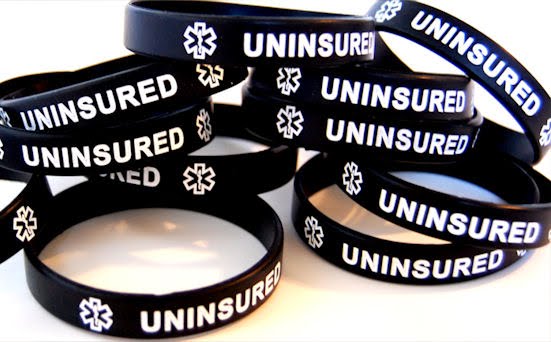
  • The share of U.S. adults who lack health insurance inched up 0.6 percentage points to 12.3% in the third quarter of 2017 over the previous quarter, a new Gallup poll shows.
  • The uninsured rate — 1.4 points higher than at the end of last year (3.5 million more Americans) — is now the largest since the 2014 fourth quarter when it was 12.9%.
  • The biggest decline is among individuals with self-paid plans, which fell 1.3 points to 21.3% since the end of 2016. The poll — part of the Gallup-Sharecare Well-Being Index — draws on interviews with 45,000 U.S. adults between July 1 and Sept. 30.

Dive Insight:

The numbers are somewhat alarming given the record low 10.9% uninsured rate in the second half of last year. Still, the current rate is well below the 18% high seen in Q3 2013, before the Affordable Care Act’s (ACA) insurance exchanges and individual mandate took effect.

After adults with self-paid plans, the biggest change is among Americans with Medicare coverage, down 0.5 percentage points to 7.1%.

Factors contributing to the recent rise in uninsured, according to Gallup, include the lack of competition and rising premiums as payers exit the exchanges, and uncertainty about the ACA’s future.

With President Donald Trump and Republican lawmakers attempting to sabotage the ACA, the number of uninsured is likely to continue to rise. Earlier this month, Trump signed an executive order loosening health plan benefit requirements and said he would discontinue cost-sharing paymentsto insurers. The combined moves will undermine the exchanges and allow payers to offer skimpier plans with more out-of-pocket costs.

Congress also let pass it Sept. 30 deadline for reauthorizing the Children’s Health Insurance Program (CHIP), which provides coverage for nearly 9 million children. While Congress has vowed to pursue legislation, states are concerned a delay in reauthorization could cause federal funds, which pay for most of the program, to run dry.

The Gallup findings are somewhat in line with a recently released National Center for Health Statistics survey, which found the percentage of all uninsured Americans dropped to 8.8% in the first quarter of this year versus a year ago. Among adults between 18 and 64, the uninsured rate was 12.1%, 5.3% of children were uninsured.

Hospitals, many of them already struggling, are bracing for more uncompensated care as Trump and Republicans angle to roll back Medicaid expansion. A new formula for calculating uncompensated care payments is also fueling industry concerns. The formula, part of the Medicare Inpatient Prospective Payment System, would increase disproportionate share hospital payments to $6.8 billion, or about $800 million more than in fiscal year 2017, but the American Hospital Association has called the worksheet used to calculate the payments confusing and not always accurate.

In addition, the CMS has said FY2018 uncompensated care payments for all hospitals will be $2 billion below the current level. Between 2018 and 2025, uncompensated care payments are expected to decline by $43 billion.

ACA Alterations Will Jolt Health Exchanges for 2018

http://www.healthleadersmedia.com/health-plans/aca-alterations-will-jolt-health-exchanges-2018?spMailingID=12171449&spUserID=MTY3ODg4NTg1MzQ4S0&spJobID=1261586415&spReportId=MTI2MTU4NjQxNQS2#

Image result for wrecking ball hospital

The end of cost sharing reductions has insurers trying to raise premiums even higher than planned. Those high premiums and other changes to the Affordable Care Act may drive consumers away from the exchanges.

The loss of cost sharing reductions (CSR) and the presidential executive order altering the Affordable Care Act will combine to significantly shake up the insurance market for 2018, one analyst says.

The effect is likely to include raising rates so high that the number of healthcare consumers who do not purchase coverage will skyrocket.

Health plans are scrambling to raise their rates even higher than already planned, responding to President Donald Trump’s announcement that insurers will no longer receive the subsidies.

Insurers were forced to submit rates for next year while the fate of CSRs was still uncertain—one set of rates is for if the subsidies continued and the second is for a higher rate to be used if they did not.

Some insurers are asking for a chance to revise the rates already submitted, says Julius W. Hobson Jr., an attorney and healthcare analyst with the Polsinelli law firm in Washington, D.C.

The CSR termination comes right after President Trump issued a new executive order he says is designed to increase competition and choice. Critics say it would seriously weaken the ACA, and some say that’s intentional.

President Trump says the order will give millions of Americans more access to affordable coverage and make it easier for people to obtain large-group coverage. Others worry that it could lure healthy young Americans away from the ACA exchanges, leaving those who remain to pay higher premiums.

“The combination of the executive order and the CSR termination wreaks havoc on the health insurance market for all of 2018,” Hobson says. “This also comes just before the open enrollment and with cutting back money for the patient navigators who help people sign up, and with reduced access to the website. That all means there are going to be fewer people who sign up.”

Higher premiums and deductibles already were driving some consumers away from purchasing individual healthcare plans, Hobson notes, and more will follow when the CSR loss forces insurers to raise rates even higher.

If the Trump administration stops enforcing the individual mandate, as it has said it might, that would make even more consumers forgo coverage, he says.

Fewer consumers buying insurance on the ACA exchanges intensifies their existing problems, Hobson says.

Premiums and deductibles will continue to rise as insurers struggle to remain profitable with a smaller pool of older, sicker patients driving high utilization costs. More and more consumers will leave the exchanges if they can, he says.

“People are going to be looking at premium increases they just can’t afford,” Hobson says. “The individual market will take a big hit, but the impact on the group market is harder to predict. We don’t know yet whether the increases in the individual market will bleed over into the group market.”

The recent changes are intended to weaken the ACA, Hobson says.

“The administration has said the ACA is imploding, but also that they’re going to do everything they can to wreck it. It’s not imploding on its own, it’s being shoved down the trash chute,” Hobson says.

“Losing the CSR payments is critical and, at this point, it’s unlikely that even if Congress acted they could do anything in time to affect 2018. There’s no way of looking at this other than it having a negative outcome,” he says.

No rush to stabilize ACA markets


President Trump’s decision to cut off the Affordable Care Act’s cost-sharing reduction subsidies doesn’t seem to have added much new urgency to the push to stabilize states’ insurance markets — which would likely include a guarantee to keep the subsidy payments flowing.

  • Bad sign: GOP Senate leadership didn’t talk about the CSR issue at all last night in their weekly meeting, at least while staff was in the room, a senior aide told Axios’ Caitlin Owens. To them, it’s still all about tax reform.
  • “They’re focused on tax reform,” Alexander, who’s been spearheading the stabilization effort, said of GOP leaders. “What I’ve asked the Republican leadership to do is to give us a chance to see if we can develop consensus among Republicans as well as Democrats.”
  • “The sooner the better,” Alexander said. “We want whatever agreement we have to benefit people in 2018 by holding down increasing premiums and to lower them in 2019.”

Yes, but: Affecting 2018 premiums will be a tough task — the window to begin signing up for 2018 coverage begins in two weeks.

  • Pennsylvania regulators announced yesterday that they’ve approved new premium hikes, more than 20% higher than the increases that were already on the books, because of the loss of CSR subsidies.
  • If Congress reaches a deal in time, one senior GOP aide told Caitlin, states and insurers could look to options such as rate re-filings and rebates to help consumers next year.
  • But the Kaiser Family Foundation’s Larry Levitt said turbulence for 2018 will likely be minimal. Most insurers had already planned for the payments to end, and therefore don’t need to make any changes.
  • The Trump administration appears to be allowing new increases by insurers that didn’t plan for CSR payments to disappear, Levitt said.
  • “Terminating the CSR payments is producing a lot of confusion, but the market will operate reasonably fine and the effect on consumers will be modest,” Levitt said. “If this was intended to end Obamacare, it’s probably not going to work. The real question at this point is the longer term effect of the administration’s overall strategy to undermine the marketplaces.”
One more problem: Even if a deal is struck, and it could muster 60 votes in the Senate, there’s a very real question of how it passes. Voting on the bill by itself, without being part of a larger package, would be difficult for Republicans. Most legislation that needs to get passed before the end of the year is expected to be clumped into one big bill in early December.

Healthcare Triage: Is Medicaid Coverage Better or Worse than Private Insurance?

Healthcare Triage: Is Medicaid Coverage Better or Worse than Private Insurance?

As we have discussed repeatedly here on HCT, it’s better for patients to have Medicaid than to be uninsured, contrary to critics of the program. But is having Medicaid, as those critics also say, much worse than having private insurance?

This episode was adapted from a column  Austin and I wrote for the Upshot. Links to further reading and sources can be found there.