


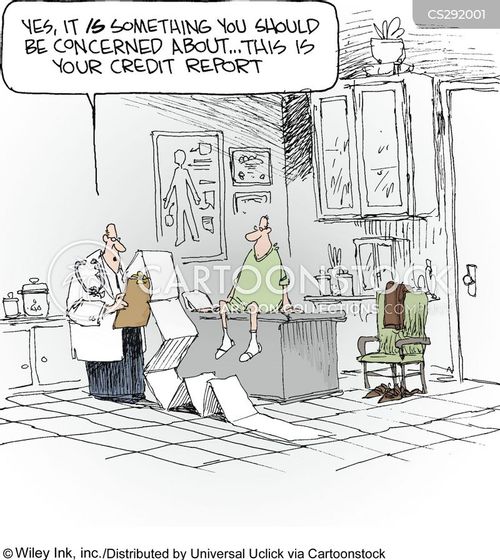
Cartoon – Where’s your Artificial Sense of Urgency?

With the presidential election quickly approaching, here’s your chance to know where your peers stand on key issues.
The Politics and Policy Survey was conducted during the third quarter of 2016, and received more than 130 responses from executives at hospitals, large healthcare systems, benefit management organizations, health plans, long-term care organizations, group purchasing organizations, and more.

Throughout his campaign and in the days following the election, President-elect Donald Trump said that one of his top priorities as the commander in chief would be to repeal and replace Obamacare, a major component of the Affordable Care Act (ACA). By having a Republican president as well as the GOP holding a majority in Congress (which also support its repeal), it’s likely that this will occur, says Ashraf Shehata, MBA, advisory leader for health plans and partner of the firm’s Global Healthcare Center of Excellence, KPMG.
But how do you go about replacing Obamacare when 20 million Americans are now obtaining healthcare coverage from it?
https://morningconsult.com/2016/12/02/house-republicans-warn-not-expect-aca-repeal-day-one/

House Speaker Paul Ryan discussed a path to repeal and replace the Affordable Care Act during a closed-door conference meeting with House Republicans on Friday
“The speaker walked members through the process for delivering on our promise of repealing and replacing Obamacare,” AshLee Strong, a spokeswoman for Ryan, said in a statement. “Hetold members this is one of the President-elect’s top priorities for Congress and one of the first things we will do in the House.”
Rep. Tom Cole (R-Okla.), who sits on the House Budget Committee, said the Senate will likely act on a budget resolution early next year, before sending it to the House, where committees will begin work on what will become a reconciliation package. In the House, the Ways and Means and Energy and Commerce committees are expected to play major roles in the repeal and replacement of the 2010 health care law.
While a formal timeline hasn’t been laid out, Cole guessed a bill repealing the law may be passed in February.
“It takes a little while to actually both work out exactly what you can do on reconciliation because there’s a lot of individual decisions the Senate parliamentarian makes, and then you’re going to be moving the replacement piece as well, and that takes real committee work,” he told reporters Friday.
While lawmakers plan to use reconciliation, a budget tool that allows the Senate to pass certain provisions with a simple majority of 51 votes to repeal the law, they likely won’t be able to pass a replacement through that process. Reconciliation itself will repeal the bulk of the ACA, but not the bill in whole.
Republicans have also raised concerns about trying to move too quickly on Obamacare, with some wary of setting a policy that could fail.
“This whole process will be done thoughtfully as we move forward with this,” Rep. Tim Murphy (R-Pa.), who hopes to chair the Energy and Commerce Health Subcommittee during the next Congress, told reporters Friday. “We do not want to move in haste, as was done before, and make a lot of errors.”
Donald Trump’s pledge to “repeal and replace Obamacare” was one of his biggest crowd pleasers. It’s been noted, of course, that “repeal and replacing” is easier said than done, and indeed the President-elect has already begun to fudge. But moving forward on his broad replacement themes—expanding health savings accounts (HSAs) and state flexibility—could lead to some surprising and intriguing reforms.
Some have argued that Trump could and should strike a devastating blow to the Affordable Care Act (ACA) on his first day in office. For instance, he could decide not to appeal the lower court ruling in House v Burwell. A federal district court has ruled that that money cannot be spent on cost-sharing subsidies because Congress has not appropriated the money. So dropping the appeal would mean the end of these payments. In similar vein, he might demand repayment from insurers of billions of dollars of transitional reinsurance payments, citing a recent General Accountability Office letter declaring that the Administration lacks the legal authority to reassign to health plans some funds intended by statute for the US Treasury’s general fund.
Such first-day actions would destabilize the exchange plans, causing more insurers to withdraw and shredding the subsidy system. Even allowing a 1- or 2-year phase-out would gravely disrupt the exchange system. Yet the high cost of premiums and deductibles was the chief complaint about Obamacare among Trump supporters. In addition, the Trump surge was strongest in counties characterized by poor health. These voters would be outraged by even higher out-of-pocket costs and fewer plans.
To avoid a backlash, repeal and replace must be a measured and slower process. That’s true even if much, or all, of the restructuring could be accomplished through budget reconciliation, a budget process maneuver that would avoid a filibuster by Senate Democrats. Moreover, a replacement does not need to be nationally uniform. Republicans, long dismissive of “one-size-fits-all” solutions from Washington, should recognize that what will work in Texas and Utah may not be right for California and Massachusetts.
So, in broad terms, how might the stated themes of repeal and replace evolve?

In 2012, more than half of Medicare beneficiaries reported they went without a dental visit in the past 12 months, with lower-income beneficiaries much less likely than higher-income ones to have received dental care. Overall, only 12 percent of beneficiaries reported having any kind of dental insurance. To expand access to care and reduce out-of-pocket exposure for older adults, the authors propose two policy options for adding dental benefits to Medicare’s benefit package.
Despite evidence of a strong connection between oral health and physical health, Medicare explicitly excludes dental care from covered benefits. This leaves beneficiaries at risk for tooth decay and disease and exposed to high out-of-pocket costs. Moreover, the lack of regular preventive dental exams means missed opportunities for detecting the onset of certain diseases, including some cancers. A new Commonwealth Fund–supported study in Health Affairs looks at older adults’ access to dental care and their out-of-pocket expenses for dental services. The authors also suggest two policies for expanding dental care for seniors, along with cost estimates.
“Until dental care is appropriately considered to be part of one’s medical care, and financially covered as such, poor oral health will continue to be the ‘silent epidemic’ that impedes improving the quality of life for older adults.”

The following hospitals and health systems announced or implemented workforce reductions each affecting 100 or more employees this year. The layoffs are listed below, in descending order of the number of positions affected.

A federal grand jury has returned indictments on 21 individuals allegedly involved in a massive kickback scheme through the defunct Forest Park Medical Center chain of luxury hospitals, which resulted in “well over half a billion dollars” in billed claims due to illegal bribes.
The 44-page indictment, unsealed Thursday, describes a vast, four-year conspiracy, fueled by $40 million in kickbacks funneled through a number of shell companies—consulting firms, commercial real estate firms, business services organizations—into the pockets of high-powered surgeons, some of whom have their faces on billboards throughout Dallas-Fort Worth.
The 21 suspects include two of the four physician founders of the hospital chain, including Dr. Richard Toussaint, the anesthesiologist who is awaiting sentencing on a separate fraud conviction; and Wade Barker, the bariatric surgeon who helped develop the idea for Forest Park. Other early adopters indicted in the scheme include Wilton ‘Mac’ Burt, a consultant who helped run the chain’s affiliated management company until he and his colleague, Alan Beauchamp, were bought out in 2015. Beauchamp was also indicted.
But the bribery scheme sailed far outside the doors of Forest Park’s grey and blue flagship at the corner of U.S. 75 and Interstate 635. Also indicted were prominent bariatric surgeons Drs. David Kim and William Nicholson as well as the minimally invasive spine surgeons Drs. Michael Rimlawi, Douglas Won, and Shawn Henry. Won, the DOJ alleges, was paid $7 million for his referrals. Rimlawi is accused of accepting $3.8 million. The feds argue that Kim and Nicholson, both of whom were investors in Forest Park, were paid $4.595 million and $3.8 million respectively. Reads the indictment: “The surgeons spent the vast majority of the bribe payments marketing their personal medical practices—which benefitted them financially—or on personal expenses such as cars, diamonds, and payments to family members.”
In all, the feds say Forest Park collected “in excess of two hundred million dollars in tainted and unlawful claims.” None of those named in the indictment have returned requests for comment. Sheryl Zapata, the chief development officer for the Texas Back Institute where Nicholson currently practices, said “TBI is not a part of this and we will not be commenting.”
“Medical providers who enrich themselves through bribes and kickbacks are not only perverting our critical health care system, but they are committing a serious crime,” read a statement from U.S. Attorney John Parker. “Massive, multi-faceted schemes such as this one, built on illegal financial relationships, drive up the cost of healthcare for everyone and must be stopped.”
Forest Park Medical Center was a chain of luxury hospitals that sprouted in Dallas, Fort Worth, Southlake, Frisco, and San Antonio. One in Austin was built but never opened, kneecapped due to nearly two dozen construction liens.
The model collapsed in on itself due to its reliance on high out-of-network charges that it would bill to insurance companies. The payers eventually balked, and the patient volumes dried up. The hospitals died one by one, each eventually entering bankruptcy and sold off to a health system. Because they were physician owned, they were barred by the Affordable Care Act from billing any public health insurance plan, such as Medicare, for fear of conflicts of interest regarding referrals. And despite this, it twice had to settle claims with the DOJ for paying kickbacks for Tricare patients and Department of Labor employees. The indictment alleges that this is exactly what happened: Beauchamp, Barker, and Kim, among others, “also attempted to refer patients with lower-reimbursing insurance coverage, namely Medicare and Medicaid beneficiaries, to other facilities in exchange for cash.”

 HENRY KOTULA