

The Medicare board of trustees held steady with its prediction on when the program’s hospital fund will run dry: 2026.
In an annual report (PDF) released Wednesday, the trustees said hospital expenditures exceeded income by $5.8 billion last year. They expect similar trends to continue until the fund runs out in six years. The 2026 estimate has remained the same over the past several years of reports.
Medicare’s Hospital Insurance Trust Fund has missed the trustees’ tests of short-term financial adequacy every year since 2003, according to the report. It also marks the third year in a row that the trustees have issued a funding warning for the program.
Total Medicare spending in 2019 was $796 billion, according to the report.
The trustees did say that despite the looming depletion of the fund, Congress has never allowed the hospital fund to fully run out. And the sooner policymakers act, the more time they have to roll out an extensive plan, the trustees said.
“The financial projections in this report indicate a need for substantial changes to address Medicare’s financial challenges,” the trustees said. “The sooner solutions are enacted, the more flexible and gradual they can be.”
“The early introduction of reforms increases the time available for affected individuals and organizations—including health care providers, beneficiaries, and taxpayers—to adjust their expectations and behavior,” they said.
While the fund backing Part A remains a risk, the funds for prescription drug coverage in Parts B and D are set to be stable for the foreseeable future, according to the report.
That’s because these segments of the program are designed differently from the hospital benefit. Income and premium revenue reset annually, which allows the program to build a reserve for Part B contingencies and cover expected costs.
The trustees also projected that Part B premiums will be about $153 in 2021. Premiums will be finalized in the fall.
The trustees caution, however, that the constant evolution in medicine makes it hard for long-term projections to be reliable. They also note that none of the projections account for any impacts related to the COVID-19 pandemic.
“Projections of Medicare costs are highly uncertain, especially when looking out more than several decades,” the trustees said. “No one knows whether future developments will, on balance, increase or decrease costs.”
A wide majority of Americans are not ready to resume public life, according to a poll released Thursday by CBS News and YouGov, as governors in Georgia, Tennessee and South Carolina plan to allow stay-at-home orders to expire next week.
Only 30% of people surveyed said the government’s priority should be restarting the economy; 70% said the focus should be on slowing the virus through social distancing measures.
The polling shows a partisan divide—while 91% of Democrats and 69% of Independents favor focusing on public health, 52% of Republicans say the economy should take precedence.
29% of those polled said they would feel comfortable eating at a restaurant; Georgia Governor Brian Kemp will allow certain businesses, including restaurants, to open on April 27, 2020.
A minority of respondents said they would be comfortable going to work right now (44%) and even fewer said they would attend a large entertainment or sports event (13%), but the social isolation is taking its toll—54% said they would be willing to visit their friends.
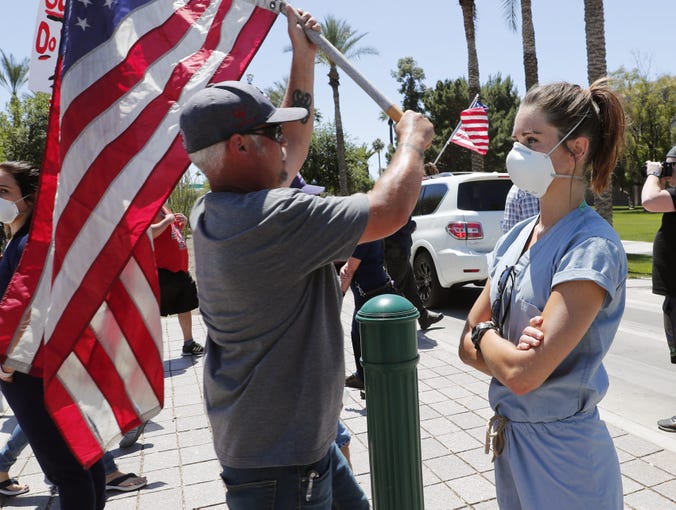
Protests against stay-at-home orders have cropped up around the country in states like California and Michigan, initially with President Donald Trump’s support. Although the movement is vocal, its support is limited. Less than a quarter of the poll’s respondents said they support the protests, and only 7% think that Trump should encourage them. The president is starting to change his tune, criticizing Georgia Governor Kemp’s plan to reopen businesses at the White House briefing on Wednesday.
Florida Governor Ron DeSantis said he is coordinating with neighboring governors on how to proceed, but has not yet announced whether he will extend the state’s stay-at-home order or let it expire. Florida has had more than 28,000 cases of COVID-19, more than any other southern state. A Quinnipiac poll released Wednesday shows that Florida residents’ opinions on reopening the economy reflect those of the country: Only 22% said that the state should loosen social distancing rules at the end of the month. As a first step, DeSantis allowed localities to reopen their beaches last week, and some, notably those in Jacksonville, were crowded.
New York is not going to let the COVID-19 coronavirus spread without a trace. Make that multiple traces. In fact, make that many, many, many traces.
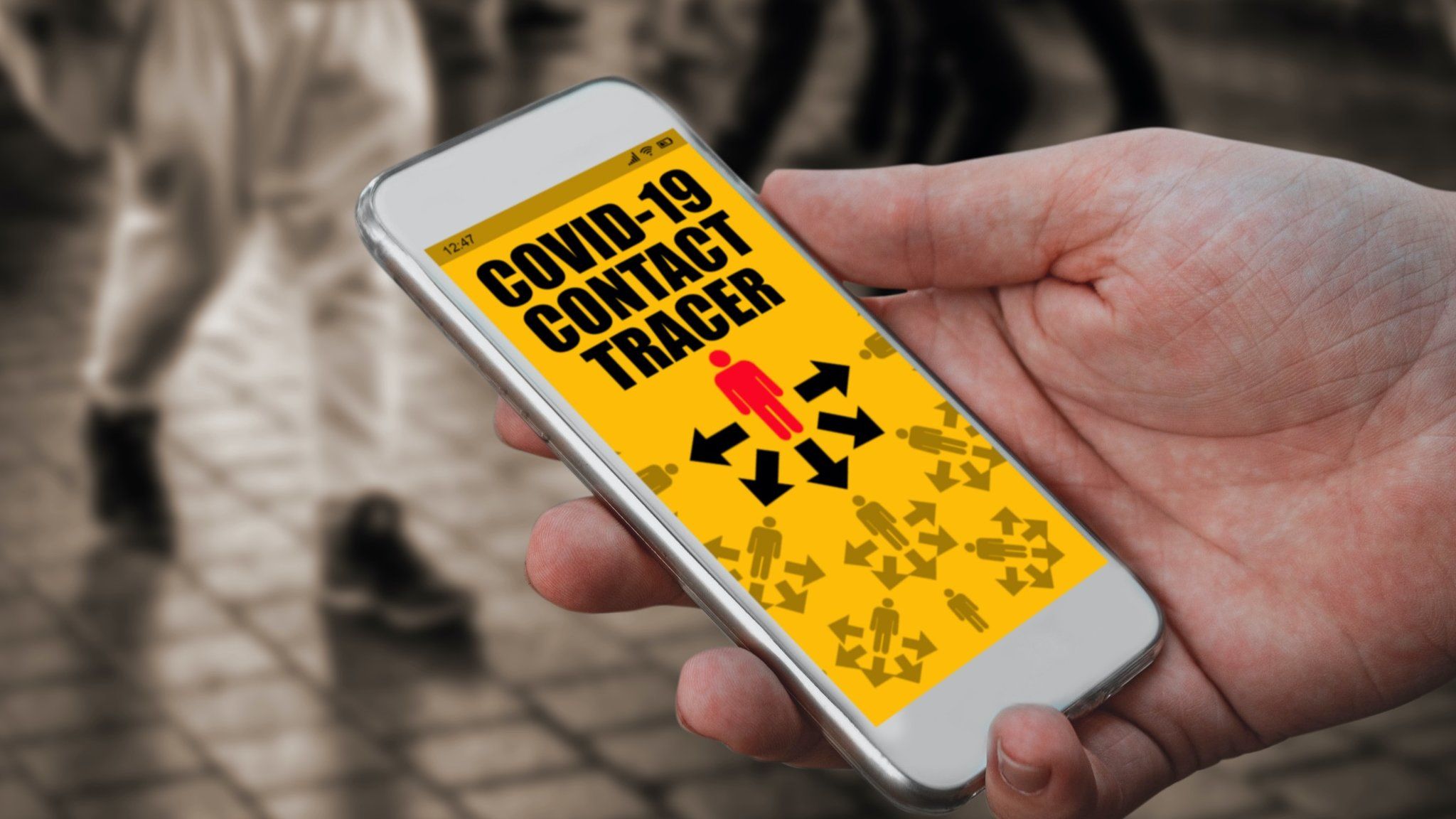
New York State Governor Andrew Cuomo and former New York City Mayor Mike Bloomberg announced the launch of a massive contact tracing program in an effort to better contain the severe acute respiratory syndrome coronavirus 2 (SARS-CoV-2). How massive? How about larger-than-any-contact-tracing-effort-that’s-been-attempted-before-in-the-U.S. massive?
It is a sign of the times that Cuomo had to include a slide that said: “But we can’t be stupid.” After all, there are other people out there pushing to re-open businesses without at the same time providing a specific plan on how exactly to stop the virus when social distancing measures are relaxed.
Bloomberg Philanthropies, which was founded by Bloomberg, will contribute $10.5 million as well as technical support and assistance to the program. The Johns Hopkins Bloomberg School of Public Health will develop an online training program and certification process for those doing the contact tracing. Vital Strategies, via its Resolve to Save Lives initiative, will advise and assist the New York State Health Department staff in developing protocols and processes to help the whole contact tracing process.
Speaking of vital strategies, “test-trace-isolate” is quite a vital strategy to try to contain the COVID-19 coronavirus so that social distancing measures can be relaxed and things can re-open, at least to some degree. Contact tracing is the “trace” part of that strategy. I’ve described previously for Forbes how to do contact tracing. When you’ve identified a person (an index case) infected with the SARS-Cov2 via testing, contact tracing is determining and locating every person that index case may have had contact with that was close enough to transmit the virus. This way you can isolate or quarantine all of those contacts as quickly as possible so that they can’t spread the virus any further. Essentially testing, tracing, and isolating or quarantining aims to contain the virus, to box it in, to give it no people to spread to, to surround it by nothing but toilet paper, fluffy pillows, Netflix videos, and whatever else people have in their houses and apartments.
Without a vaccine or specific treatment versus the SARS-Cov2, the virus could have spread much more widely without social distancing measures in place, because supplements, gargling salt water, Medieval chants or whatever bogus prevention measures have been offered weren’t going to stop the virus. Premature re-opening could send all of those efforts down the metaphorical toilet bowl. “While we start our work to re-open our economy we must ensure we are doing it in a way that does no harm and does not undo all of the work and sacrifice it has taken to get here,” said Cuomo in statement. “One of the most critical pieces of getting to a new normal is to ramp up testing, but states have a second big task – to put together an army of people to trace each person who tested positive, find out who they contacted and then isolate those people.”
Think about it. If you re-open places and relax social distancing measures, it could take only a small number of people spreading the virus to then cause another surge in COVID-19 cases. Therefore, a good contact tracing program needs to be in place to catch potentially infectious people quickly. Implementing large scale and coordinated contact tracing programs has been one way that Germany, Singapore and South Korea have been able to better control the COVID-19 coronavirus and its impact than the U.S. and U.K. have.
“We’re all eager to begin loosening restrictions on our daily lives and our economy,” said Bloomberg in a statement. “But in order to do that as safely as possible, we first have to put in place systems to identify people who may have been exposed to the virus and support them as they isolate.”
Putting appropriate systems in place before making a decision? Hear that sound? It’s the sound of science walking back into the ongoing “re-open America” conversation and saying, “what the heck have you been doing to the house while I’ve been away.” Deciding to re-open anything without first putting proper systems in place to monitor and contain the virus would be like going to a dinner party when you aren’t wearing any clothes. It would leave you quite exposed and basically put your butt on the line.
Although the program is launching immediately, it will take some time to recruit and train hundreds or perhaps thousands of tracers. Potential recruits will come from a variety of places such as the State Department of Health, various state agencies, the State University of New York (SUNY), and the City University of New York (CUNY). Henning indicated that the timeline for getting things in place will be in the order of “a number of weeks.”
This program will coordinate with contact tracing efforts in New Jersey and Connecticut. After all, this virus doesn’t respect borders or need an E-ZPass to spread to neighboring states. As Henning noted, “New York state has already been talking extensively with New Jersey and other states.”
If you live outside this tri-state area, try to pay attention to what’s going on here. After all, contact tracing will have to occur in other parts of the country as well. Otherwise, the virus can keep circulating in different parts of the country, which means that it could at any time readily spread to the rest of the U.S. After all, the virus is like a very bad house guest. It doesn’t respect boundaries. And it is unlikely to just disappear without a trace.
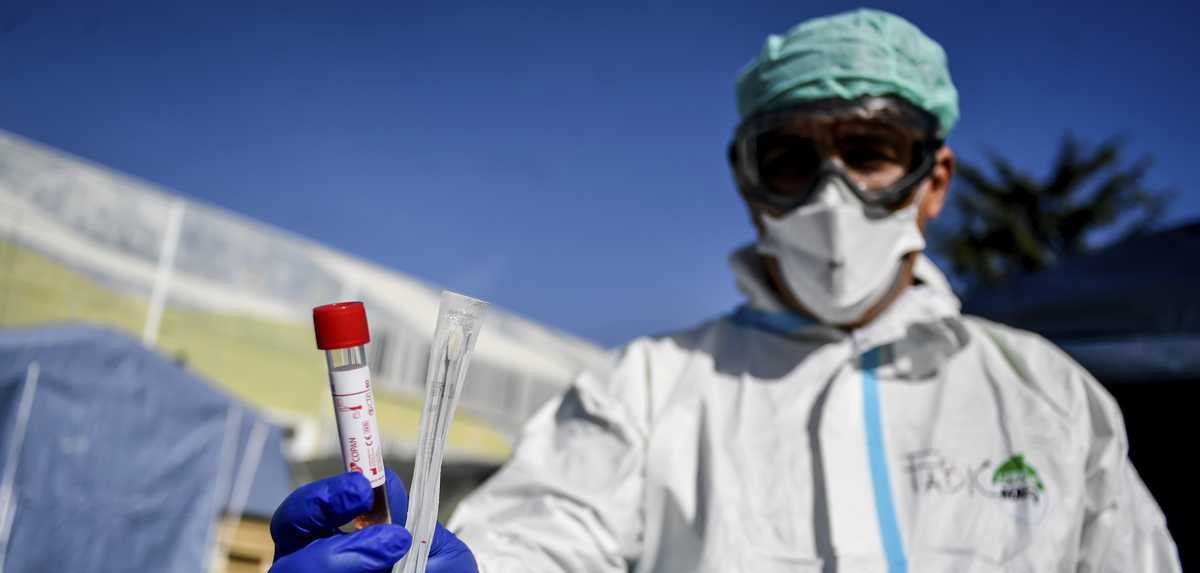
Depending on the study, remdesivir is either a clinical failure or a godsend for treating the novel coronavirus, Axios’ Bob Herman reports.
The big picture: The grim reality of the coronavirus pandemic has the world itching to know which experimental treatments actually work, but we’re not necessarily getting any smarter from these incremental drips of incomplete information.
Driving the news: Remdesivir — an antiviral drug that some experts have seen as a promising coronavirus treatment — “was not associated with clinical or virological benefits” for coronavirus patients, according to a summary of a clinical trial in China, viewed by STAT and the Financial Times.
Between the lines: The truth is we still don’t really know how effective the drug is in fighting this virus.
The bottom line: Science is slow for a reason, and the deluge of poorly designed trials and early drafts of studies is sowing confusion instead of creating clarity.
What’s next: A more rigorous report from Gilead’s Chinese trial is expected at the end of this month, and data from other trials is expected in late May.

In the midst of this pandemic, science is suffering from low standards for some research, a new study argues.
The big picture: Science — which is slow, methodical and redundant — isn’t necessarily made for the immediacy and acute public interest brought on by a health crisis.
What’s happening: A new study out today in the journal Science warns many of the clinical trials and studies first published about treatments and other issues involving the current pandemic were designed poorly or had other issues that affected their outcomes.
Yes, but: While the pandemic is exacerbating these problems with misinformation and lax research standards, it isn’t the cause of them.
What’s next: Many of these issues around varying standards of research and communication could be remedied through better communication among researchers and the agencies funding their work.

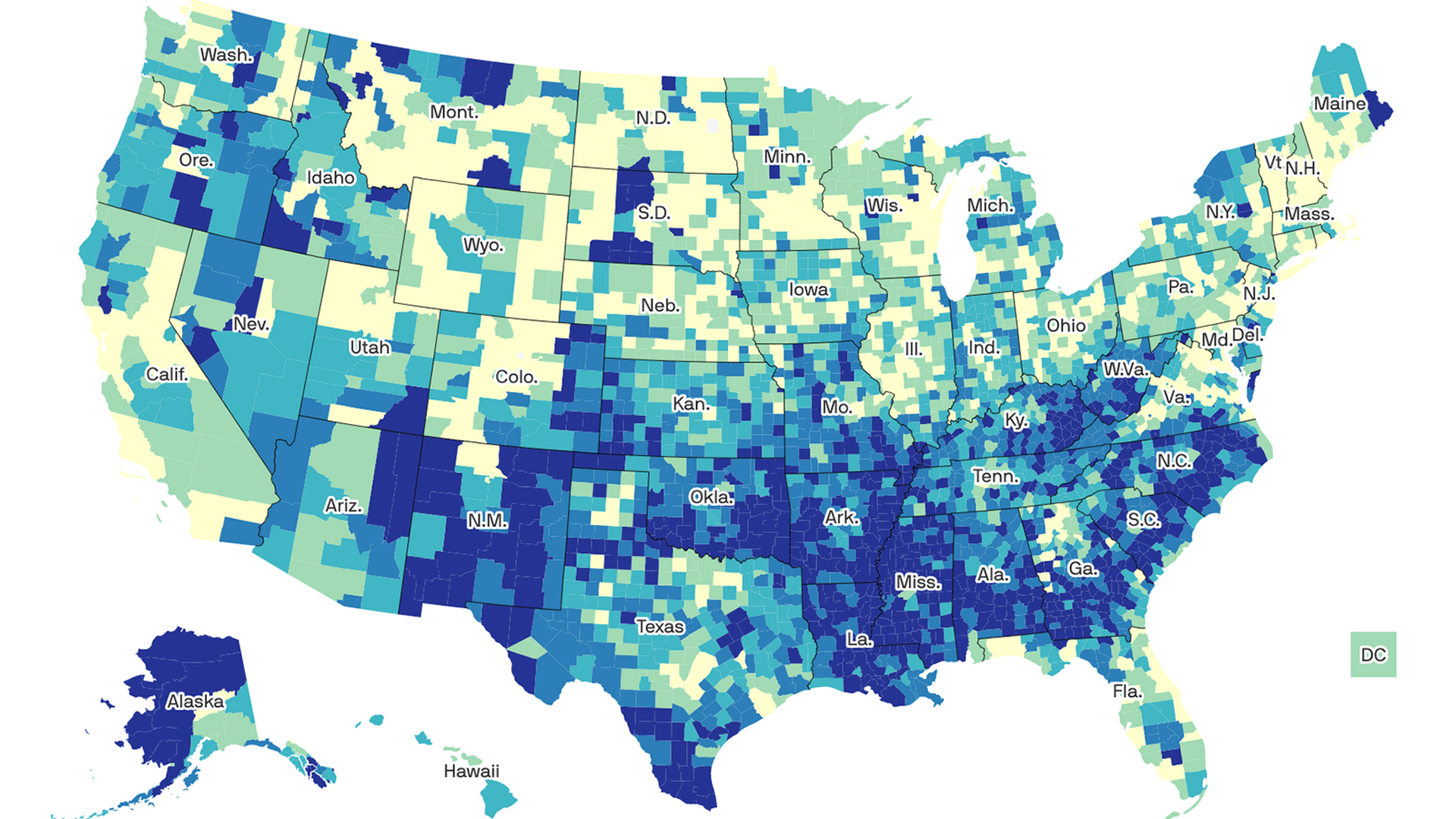
The South is at risk of being devastated by the coronavirus.
Why it matters: Southern states tend to have at-risk populations and weak health care systems — and they’re the ones moving fastest to loosen social distancing rules. That puts them at risk for the worst-case coronavirus scenarios.
The big picture: To stop the spread of the coronavirus, there are really only two options: stringent social distancing, or stringent public health measures.
Driving the news: Several southern states including Georgia, Tennessee and South Carolina have recently announced that they’re starting to back off of social distancing.
Between the lines: The Surgo Foundation created a coronavirus community vulnerability index that takes into account factors like socioeconomic status, minority status, housing type, epidemiologic factors and health care system factors.
The bottom line: The South is already worse off in almost every way, partially due to policy choices made in these states. Its comparatively unhealthy population is vulnerable to more serious illness, and looser social distancing will enable the virus’ spread.

More than 50,000 people in the United States have died of the COVID-19 disease, a grim milestone in a global pandemic that shows few signs of slowing even as pressure mounts to reopen parts of the U.S. economy.
The death toll is 16 times greater than the number of Americans who died in the 9/11 terrorist attacks and about one-and-a-half times larger than the number of U.S. soldiers who died in the Korean War. At the current pace, the number of coronavirus deaths is likely to surpass the number of Americans who died in the Vietnam War by the middle of next week.
The true number of deaths is likely higher than official figures. Coroners in California this week reclassified the death of a woman in Santa Clara on Feb. 6 as a coronavirus victim, the first known death from the disease in the United States and one that occurred three weeks before what had previously been thought to be the first known death.
About 900,000 people in the United States have tested positive for the virus that causes the disease, according to the most recent figures. That number has doubled in the past two weeks, climbing by 25,000 or more cases per day.
The richest nation in the world now accounts for about one-third of the planet’s 2.7 million cases.

The number of U.S. deaths has increased at a rate of about 2,000 per day in recent weeks as scientists race to understand the new pathogen and health systems in hard-hit areas like New York, Boston, New Orleans and Detroit struggle under the strain placed on hospitals and frontline health care workers.
More than a quarter of a million New Yorkers have tested positive for the virus, as have more than 100,000 residents of New Jersey. There are at least 35,000 cases in California, Illinois, Massachusetts, Michigan and Pennsylvania, and at least 20,000 cases in Connecticut, Florida, Georgia, Louisiana and Texas.
Though the virus was first detected in China, where the authoritarian government locked down entire cities in January, the United States is now home to the largest number of known cases in the world. The number of cases on American soil is nearly four times as high as the second-worst hit country, Spain, and higher than the total case counts in Spain, Italy, France, Germany and the United Kingdom combined, according to data compiled by Johns Hopkins University.

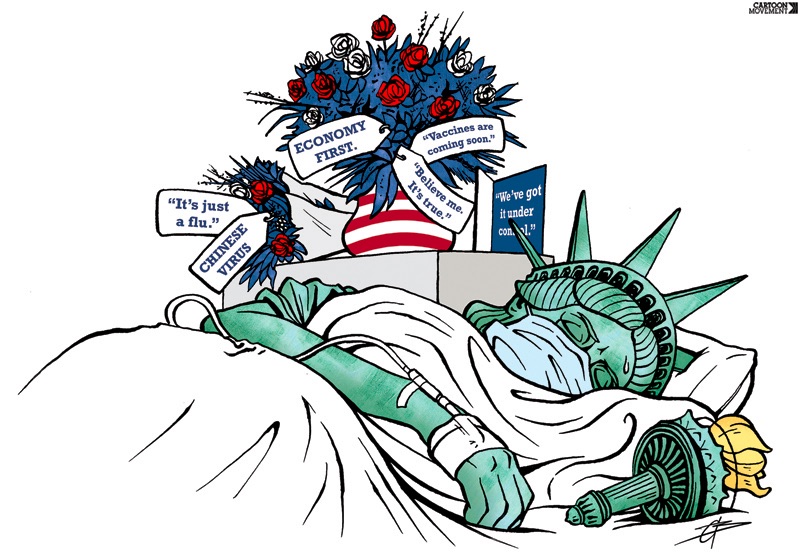
America’s disastrously slow response has stumbled over a number of hurdles other countries cleared easily. President Trump and his administration routinely claimed the virus was under control — he claimed the coronavirus would have “a very good ending for us” on Jan. 30, the same day the World Health Organization declared the virus a public health emergency of international concern.
Scientists now believe the virus began circulating in the United States in early to mid-January, a period when the country had little capacity to test its residents. An early test created by the Centers for Disease Control and Prevention and sent to public health laboratories across the country turned out to have a fatal flaw, setting back crucial testing capacity that could have uncovered the extent of the virus’s spread even as other countries deployed their own tests.
Companies that could have filled that backlog were also slow to develop their own diagnostic tests, and several ran into roadblocks at the Food and Drug Administration, which did not move to approve tests on an emergency basis until late February.
The United States only seemed to begin to take the threat of the outbreak seriously in early March. Almost two weeks later, the first state — California — announced stay-at-home orders.
As a consequence, the slow response has meant the United States has not bent its case curve downward as fast as other nations. The hardest-hit European nations have all seen daily case and death counts bending downward; the United States has, at best, reached a daunting plateau. And though countries like Italy, Spain and France have suffered more deaths per capita, their trajectories are down, while figures in the United States trend up.
There is still no known medicinal treatment for those suffering from COVID-19. And while dozens of laboratories across the globe race to develop a vaccine, experts warn that a finished product will not be available on a mass scale for more than a year — a schedule that would mark the fastest such development in human history. Until those vaccines are ready and widely available, the virus will remain in control.
Left leaderless at the federal level, state governments responded to the mounting crisis in their own ways. A bipartisan roster of governors in New York, California, Washington, Massachusetts, Maryland, Ohio and elsewhere have won praise for quick, decisive action and informative briefings that stand in stark contrast to Trump’s daily appearances at White House press conferences.
California Gov. Gavin Newsom‘s (D) order was followed by most other states, though eight states have yet to require residents to avoid nonessential activities. Even as some states took unprecedented steps to lock down their economies, banning residents from beaches and public parks and shuttering non-essential businesses, others were slow to act.
There is now mounting evidence that dozens of coronavirus cases are tied to an April election in Wisconsin, and to packed beaches during Spring Break in Florida the previous month. At least one man who attended what was dubbed a coronavirus party in Kentucky came down with the disease. Several pastors who defied recommendations against holding church services have died.
Now, as a few hundred protesters in several states demand a reopened economy, some governors are beginning to loosen restrictions. Georgia Gov. Brian Kemp (R) will allow some businesses to begin opening on Friday, even as the number of COVID-19 cases jumped to 21,883 on Thursday. Nearly 900 Georgians, about 4 percent of confirmed cases, have died.
Some nonessential businesses will begin opening in the coming days in Alaska, Indiana, Tennessee and Texas. Beaches have reopened in parts of Florida and South Carolina, even as public health officials have warned of the consequences of reopening too quickly.
“We have to proceed in a very careful, measured way,” Anthony Fauci, head of the National Institute of Allergy and Infectious Diseases, said at a White House press briefing Wednesday. “The one way not to reopen the economy is to have a rebound that we can’t take care of.”
But there remain signs of strain even within the highest ranks of government. Fauci contradicted Trump’s claim Wednesday that the virus would not return in the fall.
“We will have coronavirus in the fall. I am convinced of that because of the degree of transmissibility that it has, the global nature,” Fauci said.
Fauci did not appear at the White House briefing Thursday, when Trump said he did not agree with the nation’s leading infectious disease expert that the country’s testing capacity had risen to the level required to stamp out the virus.
“No, I don’t agree with him on that. No, I think we’re doing a great job in testing. I don’t agree. If he said that, I don’t agree with him,” Trump said.
 HENRY KOTULA