NIH director says it will take ‘weeks’ to understand omicron severity

https://thehill.com/homenews/sunday-talk-shows/583272-nih-director-says-it-will-take-two-three-weeks-to-better

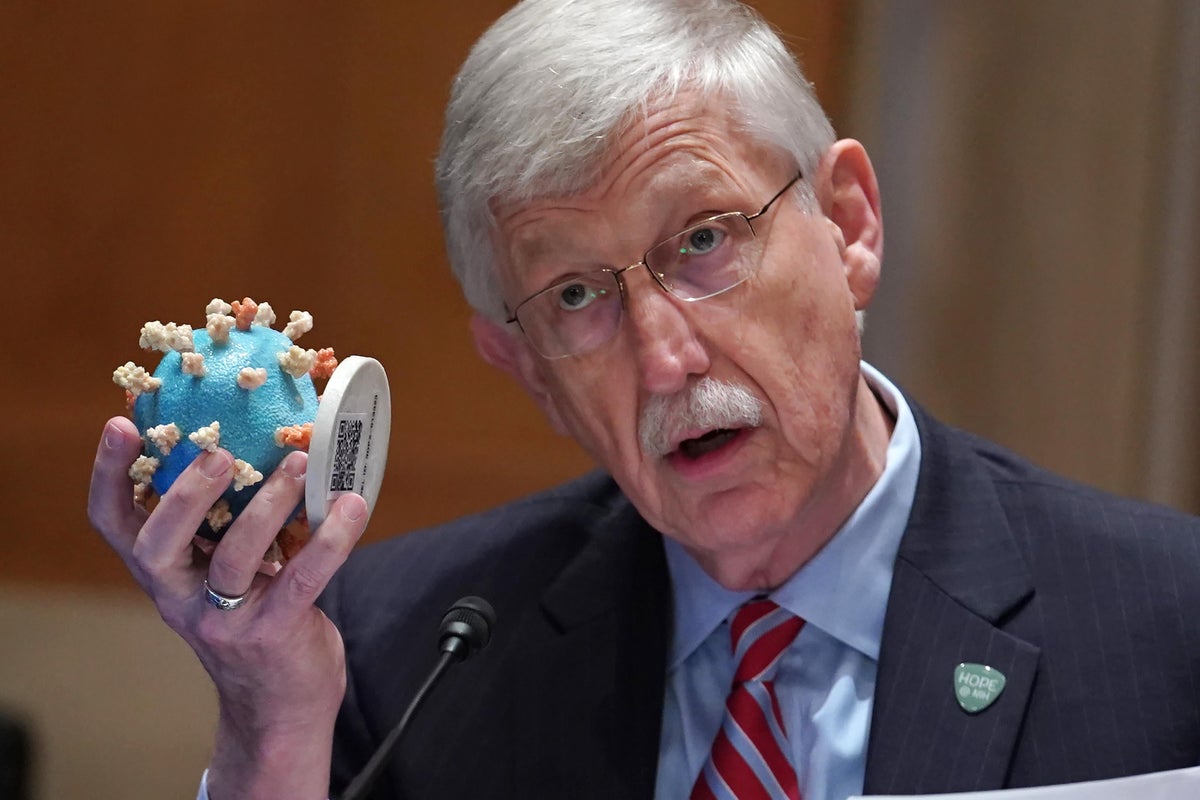
NIH Director Francis Collins: “There's no reason to panic” over omicron yet.

National Institutes of Health (NIH) Director Francis Collins offered caution about the new omicron variant of the coronavirus in a Sunday interview, saying it will take weeks to understand whether it can evade COVID-19 vaccines.

Appearing on “Fox News Sunday,” Collins explained that omicron has more than 30 mutations on its spike protein, which raises the question of how effective the antibodies created by vaccines are against the variant.

“If you’ve raised antibodies against [COVID-19] from previously being infected or from being vaccinated, the question is, will those antibodies still stick to this version of the spike protein, or will they evade that protection? We need to find that out, to be honest, though that’s gonna take two, three weeks in both laboratory and field studies to figure out the answer. And that’s what all of us as scientists want to know,” said Collins.

Collins stressed that the COVID-19 vaccines available in the U.S. have been shown to be effective against previous variants, such as delta, saying that was a good indication they also will work against omicron.

“Given that history, we expect that most likely the current vaccines will be sufficient to provide protection. And especially the boosters will give that additional layer of protection because there’s something about the booster that causes your immune system to really expand its capacity against all kinds of different spike proteins, even ones it hasn’t seen before,” he said.

“Please, Americans, if you’re one of those folks who are sort of waiting to see, this would be a great time to sign up get your booster. Or if you haven’t been vaccinated already, get started. Omicron is one more reason to do this,” he added.
NIH director says omicron variant a ‘great reason’ to get booster

NIH director says omicron variant a ‘great reason’ to get booster

NIH director: "No reason to panic" yet about Omicron variant - Axios

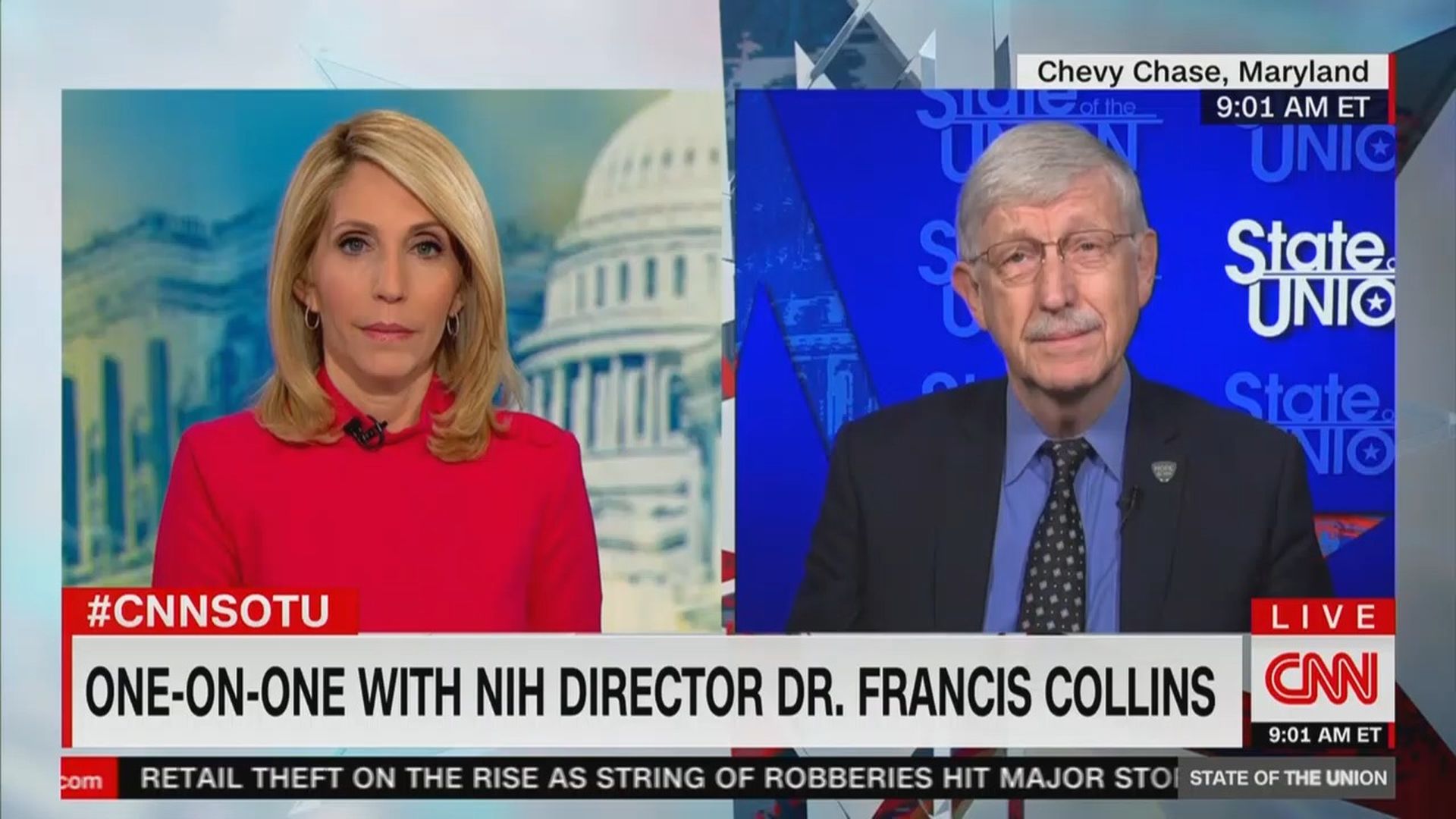
National Institutes of Health (NIH) director Francis Collins said the emergence of a new variant of the coronavirus presents a “great reason” for people in the United States to seek a booster shot. 

“There’s no reason to panic, but it’s a great reason to get boosted,” Collins said Sunday during an appearance on CNN.

The World Health Organization over the weekend held an emergency meeting regarding the new coronavirus strain first identified in South Africa, and classified it as being “of concern,” due to the variant’s large number of mutations and an increased risk of re-infection.

Several nations around the world, including the United States, have limited travel to several south African countries in recent days in an attempt to keep the variant from spreading more rapidly. 

During an earlier appearance on Fox News Sunday, Collins said it may take weeks before world health officials can determine how effective vaccines being used in the United States are against the new variant, which has been dubbed “omicron.” 

“Given that history, we expect that most likely the current vaccines will be sufficient to provide protection,” he said. “And especially the boosters will give that additional layer of protection because there’s something about the booster that causes your immune system to really expand its capacity against all kinds of different spike proteins, even ones it hasn’t seen before.” 

Collins said on CNN that the emergence of the new variant is “another reason” for people who have not received a coronavirus booster shot to do so once they are eligible. 

“The booster basically enlarges the capacity of your immune system to recognize all kinds of spike proteins its never seen,” Collins explained. “This is a great day to go and get boosted or find out how to do so.” 

Fauci says ‘troublesome’ omicron ‘might evade immune protection’

Fauci says ‘troublesome’ omicron ‘might evade immune protection’

Dr. Fauci Says We Need to Learn to Live With COVID Because 'We're Not Going  to Eradicate' It


President Biden
’s chief medical adviser, Anthony Fauci, on Sunday called the newly discovered omicron variant of COVID-19 “troublesome” and raised concerns that it “might evade immune protection.”

“Right now, what we have is we have the window into the mutations that are in this new variant. And they are troublesome in the fact that there are about 32 or more variants in that very important spike protein of the virus, which is the business end of the virus,” Fauci said during an interview on NBC’s “Meet the Press.” 

“And there are about 10 or more of these mutations that are on that part of the virus — we call it the receptor binding domain — that actually binds to the cells in your nasopharynx and in your lung,” Fauci continued. “In other words, the profile of the mutations strongly suggest that it’s going to have an advantage in transmissibility and that it might evade immune protection that you would get, for example, from a monoclonal antibody or from the convalescent serum after a person’s been infected and possibly even against some of the vaccine-induced antibodies.”

Though Fauci confirmed that the omicron strain has not yet been detected in the U.S., he said on ABC’s “This Week” that it was “inevitable” that it would hit the country.

Fauci’s comments come as scientists are racing to learn more about the variant, which was first found in South Africa.

The director of the National Institutes of Health, Francis Collins, said during an interview on “Fox News Sunday” that it would take several weeks for scientists to better understand whether omicron could evade the protection of the COVID-19 vaccines.

However, Collins said that because the COVID-19 vaccines have been effective against other variants such as delta, there was reason to believe that it also be effective against omicron.

“Given that history, we expect that most likely the current vaccines will be sufficient to provide protection. And especially the boosters will give that additional layer of protection because there’s something about the booster that causes your immune system to really expand its capacity against all kinds of different spike proteins, even ones it hasn’t seen before,” Collins said.

Gottlieb: ‘A pretty good degree of confidence’ people with three doses are protected from omicron

https://thehill.com/policy/healthcare/583280-gottlieb-a-pretty-good-degree-of-confidence-that-people-with-three

Sunday shows - Spotlight shifts to omicron variant | TheHill

Former Food and Drug Administration (FDA) Commissioner Scott Gottlieb on Sunday said vaccine developers have “a pretty good degree of confidence” that fully vaccinated individuals who have received a COVID-19 booster are protected against the omicron variant.

Appearing on CBS’s “Face the Nation,” Gottlieb said that there is no indication that the omicron variant first detected in South Africa makes individuals more ill than other previously detected variants, and that there have been anecdotal accounts of people experiencing mild cases of COVID-19, though he pointed out that initial cases appear to have been clustered among young people.

“The question here is going to be whether or not a fully boosted individual someone who’s had three doses of vaccine has good protection against this variant right now,” said Gottlieb, who now sits on Pfizer’s board of directors.

“If you talk to people in vaccine circles, people who are working on a vaccine, they have a pretty good degree of confidence that a boosted vaccine, so three full doses of vaccine, is going to be fairly protective against this new variant,” said Gottlieb.

However, Gottlieb stressed that data on the omicron data is sparse, with no clinical studies or test tube studies having been completed. He estimated that studies testing the blood of vaccinated people against the omicron variant could be out by the end of this week or some time next week.

“Now, I would expect that those studies are going to show that the neutralization against this virus declined substantially. But that doesn’t mean that the vaccines won’t be effective,” he said.