


About Nurses: How much do you make?

Unless you were under a rock, you saw yesterday’s news that Medicare negotiated a better deal than the private market for some of the program’s top-selling drugs.
Why it matters:
So what? How meaningful is that difference, and what will the longer-term effects be?
Our thought bubble:
Democrats are thrilled, Republicans are appalled. The drug industry is complaining publicly but telling investors everything is fine.
Between the lines:
The announced prices — an overall 22% reduction in net spending but no details on individual drugs’ net price reductions — are less drastic than some feared.
Analysts are reacting much more neutrally than the politicians.
Where it stands:
No one knows for sure the net prices of Part D drugs, much less what they would have otherwise been in 2026. But there are some estimates, and Medicare’s negotiated rate is generally lower than those estimates.
The big picture:
If there’s anything everyone agrees on, it’s that America’s high drug prices make up a grossly disproportionate bulk of pharma’s revenue compared with the rest of the world’s.
Regardless, that tasked the administration with figuring out how much of a revenue haircut — or a subsidy reduction — drug companies could take without sacrificing the new drugs we want them to continue bringing to market.
There are several reasons why the outcome of negotiations over this particular group of drugs may not say much about future outcomes.
Plus, positive earnings calls may not reflect the full picture.
And perhaps the biggest wild card of all: Different administrations could take different approaches — and nothing requires any given administration to be consistent.
The bottom line:
For now, it looks like the Biden administration found a way to save the government some money — it helped me to consider how I’d think about a 22% sale in my personal life — without really upsetting the drug market.



Arguably, three trade groups have emerged at the center of healthcare system transformation efforts in the U.S.: the American Hospital Association (AHA), America’s Health Insurance Plans (AHIP) and the Pharmaceutical Research and Manufacturers of America (PhRMA). Others weigh in—the American Medical Association, AdvaMed, the American Public Health Association and others—but this trio is widely regarded as the Big Tents under which policy changes are pursued.
Each plays a unique advocacy role in the system, protecting their members’ turf from unwelcome regulation while fighting against restrictions that might limit their growth opportunities. Their focus is their members:
| AHA | AHIP | PhRMA | |
| Members | 5000 hospitals & 43,000 individual members | 125 Health Insurers | 31 Manufacturers |
| Board Composition | 26 (10 female) | 33 (5 female) | 25 (3 female) |
| Revenues (’22) | $138.8 Mil | $78.6 Mil | $568.3 Mil |
| Revenue chg. ’22 v. ‘21 | +7.7% | -7.1% | -6.7 |
| Margin (’22) | $6.6 Mil | $4.7 Mil | $-0.1% |
| Exec Comp % of ’22 Rev | 8.4% | 9.6% | 3.9% |
| CEO (Tenure) | Richard J. Pollack (since 2015, with AHA 37 yrs.). | Mike Tuffin (since Jan 2024)Prior: SVP UHG, APCO | Stephen J. Ubl (since 2015)Prior: CEO AdvaMed, FAH |
| Direct Lobbying ‘23 | $30.2 Mil | NA | $27.6 Mil |
| Total Industry Lobbying 2023 (includes all sources) | $133.3 Mil | $129.3 Mil | $383.7 Mil |
Sources:*Nonprofit Explorer – ProPublicaIndustries IRS Form 990 for 2022, the latest year available • OpenSecrets based on year-end 2023.
Ironically, these Big Tents have much in common:
In each campaign cycle, the Big Tents create playbooks based on possible election outcomes and potential issues they’ll confront. Each identifies possible political appointees to key government posts, committee appointments and legislative staff that with whom they’ll deal. Each reaches out to friendly think-tanks, ex-pats from previous government roles and research organizations to create favorable thought leadership for the talking heads they trust. And each lines up outside lobbyists to augment their staff.
The Boards of the Big Tent trio weigh in, but senior staff in each of the Big Tents drive the organization’s strategy. They’re experienced in advocacy, well-paid and often heavy-handed in dealing with critics.
Operationally, the 3 Big Tents have much in common. Strategically, they’re far apart and the gap appears to be widening. Each blames the other for medical inflation and unnecessary cost. Each alleges the others use unfair business practices to gain market advantages. And each thinks their vision for the future of the U.S. health system is accurate, complete and in the best interest of the public good.
And none of the three has put-forth a vision for the long-term future of the U.S. health system. Protecting the immediate interests of their members against unwelcome regulatory changes is their focus.
P.S. It can be argued that the American Medical Association is the Fourth Big Tent. However, fewer than a fourth of the million active practitioners are AMA members contrasted to the other Big Tents. Like the trio, AMA’s primary advocacy focus is its members: protecting against encroachment by non-physicians, maintenance of clinical autonomy, restrictions on the use of artificial intelligence in patient care and Medicare reimbursement rate changes are major concerns. And, akin to the others, the wider set of issues facing the system i.e. structure, funding, ownership, price transparency, workforce modernization et al. has gotten less attention.
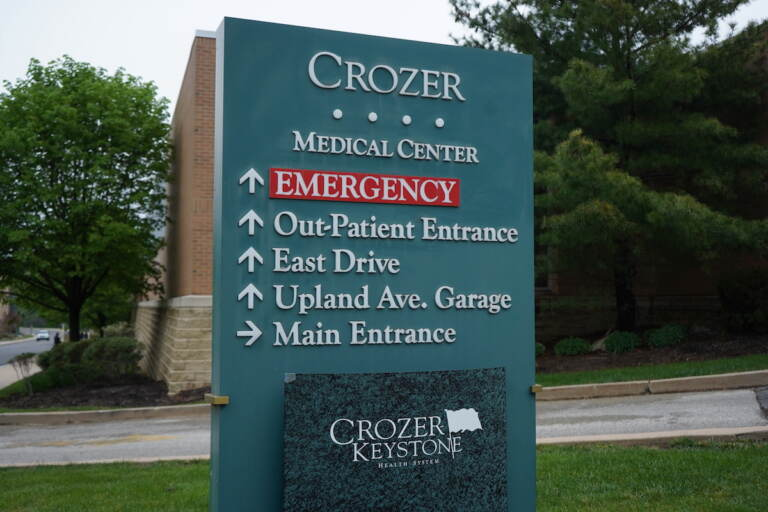
CHA Partners LLC emerged last week as the mystery suitor interested in acquiring Crozer Health and its ailing four-hospital system in Delaware County.
The New Jersey–based real estate firm has a record of buying, stabilizing and selling struggling hospitals, but at least one organization with a history with the company says they’re skeptical about CHA saving health care in Delco.
“It’s really just shocking that both CHA and another community would be interested in going down the same road that we’ve gone [down],” said Paul DiLorenzo, executive director of the Salem Health and Wellness Foundation.
Since its founding in 2008, CHA Partners has acquired and turned around five hospitals in New Jersey. The list includes the Barnert Medical Arts Complex in Paterson, the Greenville Medical Arts Complex in Jersey City, the William B. Kessler Medical Arts Complex in Hammonton and the Muhlenberg Medical Arts Complex in Plainfield.
The fifth and most recent hospital project involved the 2019 acquisition and revival of Salem Medical Center, formerly known as Memorial Hospital of Salem County. The hospital was on the brink of closure after years of a shrinking patient population and aging infrastructure.
“CHA offered to take over the hospital, but needed local support as a part of the initial investment,” DiLorenzo said.
Salem Health and Wellness Foundation, a nonprofit organization that supports public health and social services programs in the community, agreed to step in.
According to court documents, the foundation gave Salem Medical Center and CHA Partners about $39 million in grants and loans to save the local hospital.
CHA Partners sold Salem Medical Center to Inspira Health Network in 2022, but DiLorenzo said the real estate firm still owes the community foundation upwards of $4 million in unpaid loans and legal fees.
The majority of the loan balances were forgiven and the Salem community foundation sued CHA Partners to recoup the rest. They won in court this past May, but DiLorenzo said the foundation has yet to receive any payments.
Now, as the real estate firm moves to acquire another hospital system — Crozer Health in Delco — DiLorenzo said anger “is an understatement.”
“It’s astounding to us that CHA would be negotiating to do that when they’re not doing anything in good faith to pay the bills that are owed to us and to make the people of Salem County whole again,” he said.
CHA Partners declined to comment on its pending deal with Crozer Health or its standing with Salem Health and Wellness Foundation, which was involved with just the single hospital in Salem and not any of the other four New Jersey hospitals that CHA has acquired and stabilized.
CHA recently signed a letter of intent to purchase the hospital system from Crozer Health’s parent company, Prospect Medical Holdings.
The real estate firm would transition the health system from for-profit to nonprofit status, according to Crozer officials who announced the preliminary, nonbinding deal to staff last week. Prospect will work with CHA over the next few months to complete a transfer of ownership, but until then, there are no guarantees of a completed sale.
Prospect and Crozer officials declined to comment specifically on CHA’s history with the hospital in Salem, New Jersey, and the Salem Health and Wellness Foundation. But in an announcement to staff, Crozer leadership described CHA as a company committed to “preserving health care and jobs in the communities it serves” and turning around hospitals, with “each dedicated to providing exceptional care to local residents.”
Following the recent news of a potential new buyer for the Crozer Health system, Pennsylvania state Sen. Tim Kearney released a statement Thursday with concerns about the potential deal.
“The health and well-being of our constituents in Delaware County must be the top priority,” Kearney said. “I am calling on the Attorney General to conduct a thorough analysis of this acquisition. CHA’s track record must be carefully examined to determine if it is indeed a responsible and suitable buyer that will prioritize the health care needs of our community.”
After their experience in Salem County, DiLorenzo echoed those precautions. And while he blames CHA for failing to pay his foundation back, he said this is all a symptom of widespread challenges facing the United States health care industry.
“Poor communities, poor rural communities in particular, are really struggling to make the equation of all this work,” DiLorenzo said. “You have low insurance reimbursement rates, you don’t have the number of people to create a volume, you have health care systems that you know are trying to make the investment in communities, but they can’t make the numbers work. So, this is something that’s bigger than just Salem or just Delaware County.”
Crozer Health is the region’s main EMS provider and home to its primary trauma center and contains the county’s only burn unit. Last October, parent company Prospect Medical Holdings agreed to a deal with the state Attorney General’s Office and the Foundation for Delaware County to sell the distressed hospital system.
In February, the court-approved plan set in motion a 270-day window for Prospect to locate a nonprofit buyer.
WHYY News first reported last month that Prospect had found a potential buyer, but the identity of CHA Partners was not revealed until this past week. Prospect had also asked Pennsylvania officials for $100 million to $500 million in state funds to help finance the deal.

| Four decades ago, Paul Starr noted in his landmark history of U.S. healthcare, “The Social Transformation of American Medicine,” that the industry had taken a decisive turn toward corporate ownership. “Medical care in America now appears to be in the early stages of a major transformation in its institutional structure,” he wrote. “Corporations have begun to integrate a hitherto decentralized hospital system, enter a variety of other health care businesses, and consolidate ownership and control in what may eventually become an industry dominated by huge healthcare conglomerates.” Forty years later, Starr’s prediction has come true. The vast majority of hospitals (other than critical access facilities) are now part of health systems, and some of those belong to giant for-profit or not-for-profit corporations. Nearly 80% of physicians are now employed by hospitals or private companies, including health insurers like United Healthcare. Most community pharmacies have been displaced by enormous chains like CVS, Walgreens and Walmart. Nursing home chains have taken over two-thirds of skilled nursing facilities. A handful of huge firms dominate health insurance, and a dozen drug manufacturers produce and set the prices of the most common prescription medicines. Private equity (PE) investors focus like a laser beam on generating profits. There can be an amoral quality to PE investing, seeking returns whether or not they create value for customers in the marketplace. Steward Healthcare, a large hospital chain initially created with PE investment has become, whether fair or not, a poster child for what can go wrong with private investment in healthcare. Steward went bankrupt after aggressively expanding into new markets beyond Massachusetts with funding generated from sales-leaseback arrangements with Real Estate Investment Trusts (REITs). But many of the PE firms that now own over 200 acute care hospitals take a similar approach. According to a recent study of PE-owned hospitals, two years after they were purchased, 61% of them had reduced capital assets, compared to 15.5% of control hospitals. Assets decreased by a mean of 15% for acquired hospitals and increased by 9.2% for controls during that period. Corporate Goals Vs. Value-Based Care The consolidation of the industry by large corporate entities has received a fair amount of media attention. What has been less noticed is the incompatibility between corporate goals and value-based care. One reason for this is that many big healthcare systems pretend to be interested in population health management. For example, they may operate accountable care organizations (ACOs) that seek to improve the quality of care and reduce costs through better prevention and care coordination. They may also try to reduce readmissions, which helps them avoid Medicare penalties. Don’t be fooled. There are exceptions — including the few integrated systems like Kaiser and Geisinger that take financial responsibility for care — but most healthcare systems have no intention of turning their business model upside down by using population health management to decrease admissions and empty their beds. When for-profit chains deliver reports to stock analysts, or not-for-profits seek to sell bonds, the metric they most often use to show their financial health is their occupancy rate, not their success in value-based care. Meanwhile, the healthcare behemoths are continuing to grow larger. While the Department of Justice has ramped up its antitrust activity under the Biden Administration and has discouraged some mergers, this has had relatively little impact on healthcare consolidation. Academic medical centers are acquiring more community hospitals as referral sources, and some large systems like Risant Health, a nonprofit entity created by Kaiser Permanente, are doing interstate deals that help them escape the oversight of state laws. Physicians have been largely a football in the matches between giant healthcare systems and equally massive insurers. Many independent practices have been forced to sell out to hospitals because Medicare pays hospital outpatient departments more than independent practices for the same services. (That this remains the case nearly 10 years after Congress passed its first “site-neutral” payment law is a testament to the power of regulatory capture.) While there are some sizable independent groups and physician-led ACOs, it is difficult for doctors to determine their own destinies today. And, because of how their corporate overlords affect the practice of medicine, many employed physicians are unhappy with their working conditions and its impact on patients. We’re even starting to see the beginnings of unionization in some systems. Saving Primary Care A variety of reforms have been tried to shore up primary care, the cornerstone of value-based care. For example, some primary-care-driven ACOs with value-based contracts generate significant savings that they have shared with their doctors. But the percentage of all payments made in these kinds of arrangements is still fairly small. The risk-taking portion of the healthcare business will not grow substantially as long as hospitals and specialists continue to make good money doing the same old fee-for-service thing. Insurers have also taken the lead in some efforts to fortify primary care. United, which employs about 10% of the nation’s physicians, has been training them to practice evidence-based medicine and reduce waste. Elevance Health recently struck a deal with PE firm Clayton, Dubilier & Rice to create a new primary care model in Elevance’s Millenium Physician Group and Carelon Health. This “whole-person health” model will emphasize the patient-doctor relationship, along with care coordination, referral management and health coaching within “value-based care” financial arrangements. This is all to the good. But health insurers don’t make their profits by encouraging primary care doctors to take better care of patients. They use provider networks, prior authorization, high deductibles and other tools to limit access and the cost of services. In Medicare Advantage, carriers like United and Humana have used diagnostic coding to inflate their Medicare payments by an estimated $88 billion just this year. Efforts to infuse value-based care into healthcare delivery have not been a major priority for insurance companies. Drug Company Profits Whole books have been written about how the pharmaceutical industry has ripped off the American consumer. Following notorious, out-of-whack price increases over the years for drugs like insulin, Humira and Truvada, in 2022 net prices jumped 6.2% for Darzalex, 6% for Prolia, 7.2% for Xgeva, 6% for Perjeta, and 8.9% for Adcetris, among others. These price hikes, which were unsupported by new clinical evidence of the drugs’ effectiveness, netted from $63 million to $248 million in additional revenue for their manufacturers. Drug companies can get away with it because nothing in U.S. law prevents them from raising prices for patented medications by however much they want to. How they price their drugs can also have a strong impact on health costs as a whole, especially when a lot of people take a particular medication. Current examples include Wegovy, Ozempic and the other high-priced GLP-1 weight-loss drugs, which eventually could cost the health system as much as $1 trillion a year — five times as much as could be saved in lower costs for other conditions — if prescribed to all obese Americans. The kicker is that we spend nearly three times as much per person on prescription medicines as other leading countries do, because their governments bargain with pharmaceutical companies and ours doesn’t. Yet the drug makers complain that any limitations on their U.S. profits will make it impossible for them to develop more lifesaving medicines. Overall, it’s clear that the corporatization of our healthcare system is not good for our health. In Portugal, for example, health spending per capita is one-fifth that of the U.S., yet life expectancy there is six years longer, on average, than in our country. The difference is largely rooted in the fact that Portugal has a national health service that guarantees access to healthcare, regardless of ability to pay. In other words, health takes precedence over profits in Portugal. If we really want good healthcare at an affordable cost — the definition of value-based care — we have to move away from our profit-driven, corporatized healthcare model. As long as corporations are allowed to profit from healthcare, they will maximize those profits, regardless of the impact on consumers. It doesn’t matter how much we talk about value-based care or reforms that merely nip at corporate profits. Until Americans demand the same kind of healthcare that every Portuguese has, and insist that our government rein in the corporate owners of healthcare entities, we will get poorer healthcare and die sooner than citizens of other advanced countries. |
| Outcomes Matter. Customers Count. Value Rules. |
 HENRY KOTULA