


True Cost of Fighting Fascism


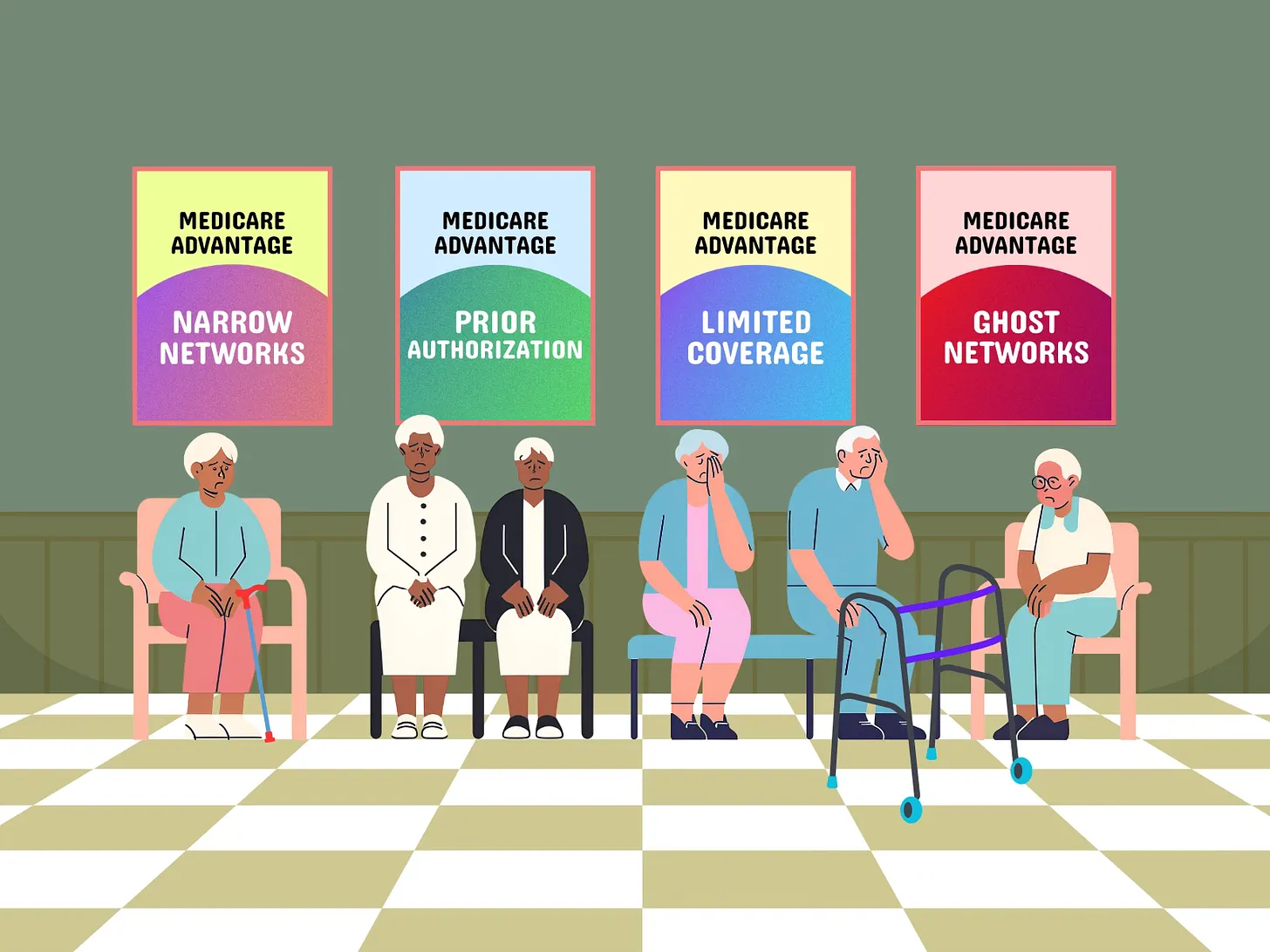
Physicians for a National Health Program estimate nearly 12 million seniors are in a Medicare Advantage plan that excludes more than 70% of doctors in their county.
Negative stories about Medicare Advantage (MA) insurers are finally making it to mainstream media after percolating below the surface for years. More and more patients, physicians, and even health care executives are speaking up about the disastrous expansion of this program. Shockingly, some of these stories have come from the insurance companies themselves.
With no hint of shame or irony, executives like CFO Thomas Cowhey of CVS Health have delivered lines such as “The goal next year is margin over membership,” making explicit that more money is their mantra. With all these reports of limited networks, care denials, delayed payments, and corporate greed, you may feel like the story of MA can’t get any worse.
Impossibly, it does. Physicians for a National Health Program (PNHP) has just recently released a bombshell report exposing the sheer breadth of harm that MA insurers have done to patients and health care workers across the country. The report combines policy analysis of dozens of academic studies, news reports, and government investigations with personal stories from people hurt by the insurance companies running these plans. We want to take some time to explore the report’s findings, and highly encourage you to read it in full as well.
Patients in MA experience difficulties from the moment they begin to seek care. By PNHP’s estimate, 11.7 million beneficiaries are in a plan that excludes more than 70% of doctors in their county. These narrow networks mean that patients often have to travel hours for an appointment, and can’t see their preferred family physician or the right specialist for their condition. This can have dire consequences.
One study found that cancer patients in MA are less likely to be treated at teaching hospitals, Commission on Cancer-accredited hospitals, or National Cancer Institute-designated centers. As a result, these patients suffer higher mortality rates following surgery for a number of kinds of cancer, with some cancer patients in MA plans being twice as likely to die as those in traditional Medicare.
Put simply, narrow networks designed to reap profits in MA are killing patients.
Even if they’re able to find the right doctor, getting care doesn’t become any easier. MA insurers almost always require prior authorization for standard, evidence-based tests, procedures, and treatments, making patients wait weeks or even months to get the life-saving care they need now.
In one story from the report, a physician recounts how damaging this practice can be:
I had a patient with several chronic diseases who was very sick and had just survived major abdominal surgery, almost miraculously. In the aftermath, she desperately needed to go to acute rehab, which is the most intensive rehab – we found a facility, she liked it, her family liked it, and then her MA plan looked at the place and said ‘No, she’s healthy enough to not go to acute rehab, we won’t authorize it.’ This was after our PM&R specialist, physical therapist, and 3 MDs on our team had told her she needed acute rehab, and that it was the only thing that would keep her out of the hospital again. And this insurer, without anyone ever looking at her, rejected that conclusion. And we knew that on traditional Medicare this never would’ve happened.
Prior authorization is also a gigantic waste of time and resources for doctors and health care workers who want to spend that time caring for patients. PNHP found that medical practices are forced to waste between 11.1 and 20.5 million hours per year filling out authorization forms and fighting with insurance companies to get necessary care approved.
Much of this is done arbitrarily, wearing patients down with bureaucracy so the insurance company doesn’t have to pay for treatment. When challenged on appeal, somewhere around 80% of denials are reversed, proving there was no good medical reason for the denial in the first place.
Assuming you can find a doctor in your narrow network, and that your doctor makes it through the red-tape nightmare to get your necessary care approved, you may then find yourself dealing with severely limited coverage and thousands of dollars in medical bills. In fact, 7.3 million beneficiaries in MA are considered underinsured based on their reporting of high health care costs. Seniors and people with disabilities are often enticed into MA by advertisements or insurance brokers who tout low premiums and supplemental benefits as big perks of their plans, only to find that once they actually become sick, coverage dries up fast.
After experiencing all of these hardships, many beneficiaries find themselves wanting to get out of MA and go to traditional Medicare, and studies show that those who are seriously ill or who have high health care costs indeed switch out of the program at high rates. Unfortunately, if you stay in MA too long, you may be trapped in the program for good.
For the first twelve months someone is in MA, they have a guarantee that no Medigap insurer can deny them a policy. However, once this period is up, this guarantee disappears in 46 of 50 states.
If you decide to switch back to traditional Medicare after a year, you are no longer guaranteed to receive this coverage, and you can be denied a policy on the basis of “pre-existing conditions,” a practice that most believe was fully outlawed following the passage of the Affordable Care Act.
Imagine you get sick while in MA, and rack up thousands of dollars in medical bills that you can’t pay. When you try to switch to traditional Medicare, you can be denied Medigap coverage because of the very illness that made you need to leave MA. Many people simply cannot afford Medicare without Medigap, meaning their only option is to stay in their MA plan.
If all of this seems crazy, that’s because it is. Medicare Advantage is a total rejection of the founding principles of Medicare and health care in general, and every harmful practice in this report is done in the name of profit. Restricting networks, denying care, refusing to cover costs–these are all ways that insurance companies in MA keep our taxpayer dollars while leaving patients and health care workers to deal with the consequences. We need to work together to get these greedy middlemen out of Medicare before they take it over entirely. Our hard-earned dollars should be going to traditional Medicare, the program that actually serves its constituents.


West Reading, Pa.-based Tower Health has secured more than $142 million through a debt refinancing deal with bondholders, nearly doubling its days of cash on hand to almost 60 days, a spokesperson for the health system confirmed to Becker’s.
The deal buys Tower more time to execute its financial turnaround and meet its objective of returning to profitability this fiscal year.
“This agreement secures substantial liquidity support and provides a longer-term window to advance our continued financial turnaround efforts,” Tower said in a statement shared with Becker’s. “These efforts are already gaining traction and yielding significant positive outcomes.”
As part of its turnaround efforts, Tower has closed two hospitals, laid off workers, and sold or closed multiple urgent care centers in Pennsylvania. It also will transition revenue cycle operations, patient access services, utilization review and physician advisors to Ensemble, effective July 1. The move will see about 675 Tower employees move to Ensemble.
The health system reported a $27.4 million operating loss for the nine months ending March 31, improving on the $122.8 million loss reported during the same period the prior year. Its long-term debt stands at more than $1.2 billion, according to its most recent quarterly report.
The refinancing was backed by the “vast majority” of Tower’s bondholders, a significant endorsement of its financial recovery plan, according to the nonprofit health system. Tower did not disclose a specific bondholder, but said the group represents some of the largest institutional asset managers in the U.S.
“[The refinancing deal] underscores their confidence in our strategy and affirms that we are on a positive trajectory,” according to the health system.
Tower was formed in 2017 after the formerly named Reading Health System acquired five Pennsylvania hospitals from Franklin, Tenn.-based Community Health Systems. The transaction included Reading Hospital in West Reading; Brandywine Hospital in Coatesville; Chestnut Hill Hospital in Philadelphia; Jennersville Hospital in West Grove; Phoenixville Hospital in Phoenixville; and Pottstown Hospital in Pottstown.
Tower recently closed Brandywine Hospital and Jennersville Hospital. Its plan to sell Brandywine Hospital to Philadelphia-based Penn Medicine fell through earlier this year.
The health system now includes more than 1,200 beds across its remaining hospitals as well as St. Christopher’s Hospital for Children in Philadelphia, in partnership with Drexel University, according to its website.

Hundreds of nurses at University Hospitals are facing a decrease in pay as the Cleveland-based health system pivots from its COVID-19 pandemic model, cleveland.com reported.
A spokesperson told Becker’s the pay adjustment is effective June 16 and applies to 350 Enterprise Staffing Services nurses.
“UH’s Enterprise Staffing Services is an in-house staffing agency formed in response to the once-in-a-lifetime global health pandemic that stretched our resources and workforce to the extreme,” a UH statement shared with Becker’s said. “During the pandemic, hospitals across the country (including UH) increased their use of agency nurses to fill gaps in staffing with government funding assistance, with agency costing up to twice as much or more than our hospital-based full-time nurses.
“Nurses are the heartbeat of our health system and we will never be able to thank them enough for their commitment and dedication to our patients during the pandemic. Unfortunately, the pandemic care model is not sustainable in today’s environment.”
The statement said those affected by the pay adjustment, representing 1% of the health system’s workforce, will still be paid about twice the national average.
Pay for staffing services nurses on night shift will decrease from $75 to $65 an hour, a 13% cut, UH said, according to cleveland.com, which obtained a health system memo related to the change. Pay for staffing services nurses on day shift will decrease 8%, from $60 to $55 an hour.
Pay for a new staffing services job without benefits will be $75 per hour for night shift, and $65 per hour for day shift, UH said in the memo, which also encouraged staffing services nurses to apply for other health system roles, according to cleveland.com.
“As we continue to exit from our pandemic model, external nursing staffing agencies and internal hospital nurse staffing agencies nationwide are adjusting pay accordingly,”
UH’s statement said. “We have provided cutting-edge, compassionate care to our neighbors in Northeast Ohio since 1866. We’re taking the appropriate steps to ensure we can continue fulfilling our mission for future generations.”
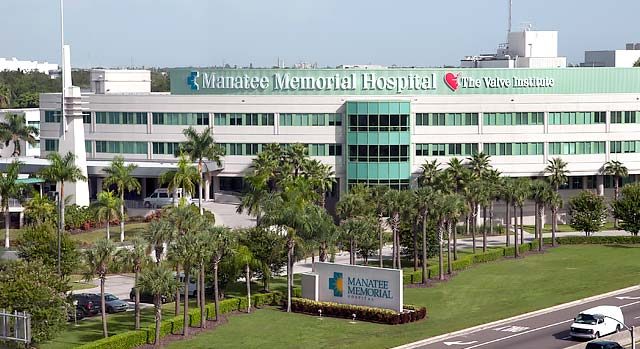
Manatee Memorial Hospital in Bradenton, Fla., is revising its charity care policies due to funding shortfalls, a move the investor-owned hospital called a “difficult, yet responsible, fiscally prudent decision,” according to a June 3 report by the Sarasota Herald-Tribune.
Part of King of Prussia, Pa.-based Universal Health Services, Manatee Memorial Hospital is a 300-bed facility staffed by over 800 physicians, residents, and allied health professionals.
In May, the hospital informed stakeholders it would no longer accept patients enrolled in Manatee County’s healthcare plan or unfunded referrals from the We Care Manatee nonprofit for uninsured, low-income county residents, effective June 1, the Sarasota Herald-Tribune reported.
Emergency room access will be maintained in compliance with the federal Emergency Medical Treatment and Labor Act.
“Our projected deficit from unfunded care, beyond charity care, amounts to several millions of dollars,” Manatee Memorial wrote in a May letter to stakeholders, as reported by the Sarasota Herald-Tribune. “The significant cost of unreimbursed care is unsustainable. We continue to be a supportive community partner and will maintain open discussions with Manatee County regarding solutions, however, we need to make this difficult, yet responsible, fiscally prudent decision.”
In April, Manatee Memorial Hospital CEO Tom McDougal indicated the hospital’s funding for indigent care services was unsustainable. He noted that the hospital’s costs for charity, indigent and uninsured care rose by 47% over two years, reaching $21.2 million in 2023, with an additional $2.9 million in uncollectable care. Last year, the hospital received $2.7 million in indigent funding from Manatee County.
“Ladies and gentlemen, I simply can’t afford to keep doing this without being compensated for it,” Mr. McDougal said at the April 16 public county commission meeting. “It takes away care from other patients.”
McDougal made his remarks at a commission meeting focused on undocumented immigration, acknowledging that specific figures linking undocumented immigrants to the rise in charity care costs were not available. Six percent of patients in the hospital emergency room self-disclosed their status as undocumented immigrants, which Mr. McDougal believes is an undercount.
The latest changes follow Mr. McDougal’s “very uncomfortable decision,” as he put it, in February to stop oncology services and some surgeries for Manatee County health plan enrollees, as the hospital’s costs under the program reached $9 million in 2023, compared to the $2.7 million reimbursement from the county.

Nonprofit hospital margins hit 4.3% in April, up 33% year over year, according to Kaufman Hall’s “National Hospital Flash Report” released June 3.
Kaufman Hall examined data from 1,300 hospitals in Syntellis Performance Solutions’ database and found that while hospital margins are improving overall, so is the gap between the highest and lowest performing hospitals. The best performing hospitals had a margin of 28.9%, compared to -16.1% for the worst performing hospitals.
“While financial performance looks solid on the surface, a closer examination of the data shows a greater divide between high- and low-performing hospitals,” said Erik Swanson, senior vice president of data and analytics at Kaufman Hall. “Forty percent of hospitals in the United States are losing money.
Organizations who have weathered the challenges of the last few years have adopted a wide range of proactive and growth-related strategies, including improving discharge transitions and building a larger outpatient footprint.”
Operating margins were up 7% month over month and year to date operating margins were 21% higher than in 2023. Operating EBITDA margin year to date was up 14% over the same period last year, and flat with hospital performance in 2021.
Net operating revenue per calendar day jumped 9% year to date in April compared, and 5% over March 2024. Inpatient revenue climbed 12 percent year over year in April.
Hospital operating margin index also increased in April to 4.3% after three months of decline.
Of note, the data revealed:
1. Outpatient revenue increased 10% year over year in April.
2. Average length of stay dropped 4% year over year in April.
3. Emergency department visits increased to hit pre-pandemic levels.

Here are 37 health systems with strong operational metrics and solid financial positions, according to reports from credit rating agencies Fitch Ratings and Moody’s Investors Service released in 2024.
AdventHealth has an “AA” rating and stable outlook with Fitch. The rating is based on the Altamonte Springs, Fla.-based system’s competitive market position — especially in its core Florida markets — and its financial profile, Fitch said.
Advocate Health members Advocate Aurora Health and Atrium Health have “Aa3” ratings and positive outlooks with Moody’s. The ratings are supported by the Charlotte, N.C-based system’s significant scale, strong market share across several major metro areas and good financial performance and liquidity, Moody’s said.
Avera Health has an “AA-” rating and a stable outlook with Fitch. The rating reflects the Sioux Falls, S.D.-based system’s strong operating risk and financial profile assessments, and significant size and scale, Fitch said.
Carilion Clinic has an “Aa3” rating and stable outlook with Moody’s. The rating reflects the Roanoke, Va.-based system’s scale, regional significance as a tertiary referral system with broad geographic capture, and a highly integrated physician base with a well-defined culture, Moody’s said.
Cedars-Sinai Health System has an “AA-” rating and a stable outlook with Fitch. The rating reflects the Los Angeles-based system’s consistent historical profitability and its strong liquidity metrics, historically supported by significant philanthropy, Fitch said.
Children’s Health has an “Aa3” rating and stable outlook with Moody’s. The rating reflects the Dallas-based system’s continued strong performance from a focus on high margin and tertiary services, as well as a distinctly leading market share, Moody’s said.
Children’s Hospital Medical Center of Akron (Ohio) has an “Aa3” rating and stable outlook with Moody’s. The rating reflects the system’s large primary care physician network, long-term collaborations with regional hospitals and leading market position as its market’s only dedicated pediatric provider, Moody’s said.
Children’s Hospital of Orange County has an “AA-” rating and a stable outlook with Fitch. The rating reflects the Orange, Calif.-based system’s position as the leading provider for pediatric acute care services in Orange County, a position solidified through its adult hospital and regional partnerships, ambulatory presence and pediatric trauma status, Fitch said.
Children’s Minnesota has an “AA” rating and stable outlook with Fitch. The rating reflects the Minneapolis-based system’s strong balance sheet, robust liquidity position and dominant pediatric market position, Fitch said.
Cincinnati Children’s Hospital Medical Center has an “Aa2” rating and stable outlook with Moody’s. The rating is supported by its national and international reputation in clinical services and research, Moody’s said.
Cleveland Clinic has an “Aa2” rating and stable outlook with Moody’s. The rating reflects the system’s strength as an international brand in highly complex clinical care and research and centralized governance model, the ratings agency said.
Cook Children’s Medical Center has an “Aa2” rating and stable outlook with Moody’s. The ratings agency said the Fort Worth Texas-based system will benefit from revenue diversification through its sizable health plan, large physician group, and an expanding North Texas footprint.
El Camino Health has an “AA” rating and a stable outlook with Fitch. The rating reflects the Mountain View, Calif.-based system’s strong operating profile assessment with a history of generating double-digit operating EBITDA margins anchored by a service area that features strong demographics as well as a healthy payer mix, Fitch said.
Hoag Memorial Hospital Presbyterian has an “AA” rating and stable outlook with Fitch. The Newport Beach, Calif.-based system’s rating is supported by its strong operating risk assessment, leading market position in its immediate service area and strong financial profile,” Fitch said.
Inspira Health has an “AA-” rating and stable outlook with Fitch. The rating reflects Fitch’s expectation that the Mullica Hill, N.J.-based system will return to strong operating cash flows following the operating challenges of 2022 and 2023, as well as the successful integration of Inspira Medical Center of Mannington (formerly Salem Medical Center).
JPS Health Network has an “AA” rating and stable outlook with Fitch. The rating reflects the Fort Worth, Texas-based system’s sound historical and forecast operating margins, the ratings agency said.
Mass General Brigham has an “Aa3” rating and stable outlook with Moody’s. The rating reflects the Somerville, Mass.-based system’s strong reputation for clinical services and research at its namesake academic medical center flagships that drive excellent patient demand and help it maintain a strong market position, Moody’s said.
McLaren Health Care has an “AA-” rating and stable outlook with Fitch. The rating reflects the Grand Blanc, Mich.-based system’s leading market position over a broad service area covering much of Michigan, the ratings agency said.
Med Center Health has an “AA-” rating and stable outlook with Fitch. The rating reflects the Bowling Green, Ky.-based system’s strong operating risk assessment and leading market position in a primary service area with favorable population growth, Fitch said.
Memorial Hermann Health System has an “Aa3” rating and stable outlook with Moody’s. The rating reflects the Houston-based system’s leading and expanding market position and strong demand in a growing region, Moody’s said.
Nationwide Children’s Hospital has an “Aa2” rating and stable outlook with Moody’s. The rating reflects the Columbus, Ohio-based system’s strong market position in pediatric services, growing statewide and national reputation and continued expansion strategies.
Nicklaus Children’s Hospital has an “AA-” rating and stable outlook with Fitch. The rating is supported by the Miami-based system’s position as the “premier pediatric hospital in South Florida with a leading and growing market share,” Fitch said.
Novant Health has an “AA-” rating and stable outlook with Fitch. The ratings agency said the Winston-Salem, N.C.-based system’s recent acquisition of three South Carolina hospitals from Dallas-based Tenet Healthcare will be accretive to its operating performance as the hospitals are highly profited and located in areas with growing populations and good income levels.
Oregon Health & Science University has an “Aa3” rating and stable outlook with Moody’s. The rating reflects the Portland-based system’s top-class academic, research and clinical capabilities, Moody’s said.
Orlando (Fla.) Health has an “AA-” rating and stable outlook with Fitch. The rating reflects the health system’s strong and consistent operating performance and a growing presence in a demographically favorable market, Fitch said.
Presbyterian Healthcare Services has an “AA” rating and stable outlook with Fitch. The Albuquerque, N.M.-based system’s rating is driven by a strong financial profile combined with a leading market position with broad coverage in both acute care services and health plan operations, Fitch said.
Rush University System for Health has an “AA-” rating and stable outlook with Fitch. The rating reflects the Chicago-based system’s strong financial profile and an expectation that operating margins will rebound despite ongoing macro labor pressures, the rating agency said.
Saint Francis Healthcare System has an “AA” rating and stable outlook with Fitch. The rating reflects the Cape Girardeau, Mo.-based system’s strong financial profile, characterized by robust liquidity metrics, Fitch said.
Saint Luke’s Health System has an “Aa2” rating and stable outlook with Moody’s. The Kansas City, Mo.-based system’s rating was upgraded from “A1” after its merger with St. Louis-based BJC HealthCare was completed in January.
Salem (Ore.) Health has an”AA-” rating and stable outlook with Fitch. The rating reflects the system’s dominant marketing positive in a stable service area with good population growth and demand for acute care services, Fitch said.
Seattle Children’s Hospital has an “AA” rating and a stable outlook with Fitch. The rating reflects the system’s strong market position as the only children’s hospital in Seattle and provider of pediatric care to an area that covers four states, Fitch said.
SSM Health has an “AA-” rating and stable outlook with Fitch. The St. Louis-based system’s rating is supported by a strong financial profile, multistate presence and scale with good revenue diversity, Fitch said.
St. Elizabeth Medical Center has an “AA” rating and stable outlook with Fitch. The rating reflects the Edgewood, Ky.-based system’s strong liquidity, leading market position and strong financial management, Fitch said.
Stanford Health Care has an “Aa3” rating and positive outlook with Moody’s. The rating reflects the Palo Alto, Calif.-based system’s clinical prominence, patient demand and its location in an affluent and well insured market, Moody’s said.
UChicago Medicine has an “AA-” rating and stable outlook with Fitch. The rating reflects the system’s strong financial profile in the context of its broad and growing reach for high-acuity services, Fitch said.
University of Colorado Health has an “AA” rating and stable outlook with Fitch. The Aurora-based system’s rating reflects a strong financial profile benefiting from a track record of robust operating margins and the system’s growing share of a growth market anchored by its position as the only academic medical center in the state, Fitch said.
Willis-Knighton Medical Center has an “AA-” rating and positive outlook with Fitch. The outlook reflects the Shreveport, La.-based system’s improving operating performance relative to the past two fiscal years combined with Fitch’s expectation for continued improvement in 2024 and beyond.
 HENRY KOTULA