Ever-Rising Health Costs Worsen California’s Coronavirus Threat

Ever-Rising Health Costs Worsen California’s Coronavirus Threat

Image result for Ever-Rising Health Costs Worsen California’s Coronavirus Threat

As California and the nation prepare for the spread of the new coronavirus disease known as COVID-19, it is important to be reminded of another significant threat to the health of our people: the high costs of health care.

It is striking that one of the first steps policymakers must consider in the wake of an outbreak is waiving consumer cost sharing such as copays and co-insurance for coronavirus testing and treatment. Why? We’ve known for decades that the use of patient cost sharing is a blunt instrument that leads people to skimp on necessary services. In an era when the average deductible facing a working family in California now exceeds $2,700, it’s not hard to imagine how many people missed detection and treatment opportunities because they could not afford to pay for them.

The discussion around COVID-19 cost sharing is a reminder that coronavirus testing and treatment is not the only thing Californians forgo because of cost. The latest CHCF health policy poll found that in the last year, more than half of California families delayed or skipped care due to cost, including avoiding recommended medical tests or treatments, cutting medication doses in half, or postponing physical or mental health care. These practices are spreading, and they are making us sicker. Forty-three percent of those who postponed care said it made their conditions worse.

A close look at the survey data (PDF) shows that many Californians experience these problems, regardless of their health insurance status, income, or residence in high- or low-cost regions. And worries over health care costs are even more widely shared. More than two-thirds of state residents are worried about medical bills and out-of-pocket costs, including almost 60% of those with employer-sponsored insurance. These concerns reflect two unfortunate realities: We are all vulnerable to disease, and no one is immune from ruinous medical bills because of it.

A key reason for the growth in cost-related problems and worries for California families is the rise in underlying expenses within our health care system. Economists point to several factors that drive systemwide expenses, including new medical technologies and Californians’ health status. But none of these factors explains away the overall rise and dramatic variation in prices for the same procedures in different parts of the state, even after controlling for the complexity of the procedure and underlying costs like physician wages.

CHCF surveys of employer-sponsored insurance over the last decade show how much of this rise is being shifted to working California families in the form of higher insurance premiums and deductibles. The chart below shows the cumulative increase of inflation and wages along with premiums and deductibles for the average California family covered by a preferred provider organization (PPO) in a workplace health plan. While wage growth has barely kept pace with inflation, family premiums increased at more than twice that rate. It is especially striking that deductibles increased almost four times as much as wages.

California will not be an affordable place to live and raise a family unless it confronts the problem of unjustified, underlying health care costs. Expanding health insurance coverage, increasing subsidies, and limiting out-of-pocket expenses solve immediate problems, but sustained progress demands that we reduce systemwide expenditures for services that are not making Californians any healthier. Evidence suggests the opportunity for savings is significant.

In his state budget (PDF) released in January, California Governor Gavin Newsom proposed establishing an Office of Health Care Affordability to address underlying health care cost trends and to develop strategies and cost targets for different sectors of the health care industry. Other states have established offices or cost commissions of this type. A recent CHCF publication examined how four states have structured and empowered their commissions to successfully do this work.

As we confront the public health threat of COVID-19, we must remember that widespread cost-related access problems and worries already afflict most families in the state. In ways that few people anticipated before this year, this cost issue isn’t just a problem for strapped families — it’s a threat to the well-being of every last one of us.


Coronavirus Has Mutated into More Aggressive Infection, Say Scientists

https://interestingengineering.com/coronavirus-has-mutated-into-more-aggressive-infection-say-scientists?utm_source=Facebook&utm_medium=Article&utm_campaign=organic&utm_content=Mar06&fbclid=IwAR1uIWQYvlWNvx6BfTbkb7bburGW2-zikXr4KCYhAhoozm2xyx2efPRqQ2s

Coronavirus Has Mutated into More Aggressive Infection, Say Scientists

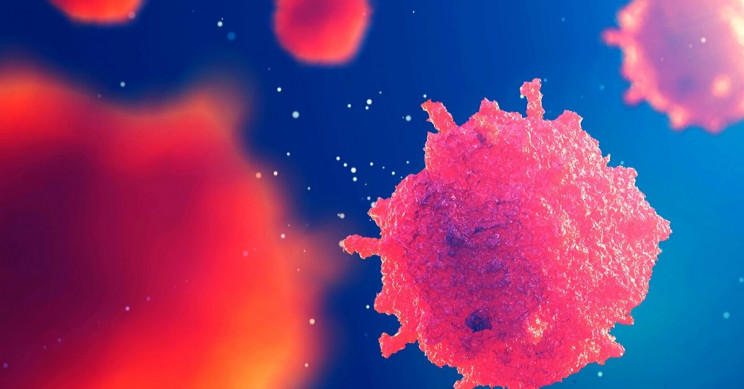
Coronavirus has undergone mutation into two distinct strains, one of which is far more aggressive and efficient.

Coronavirus has undergone mutation into two distinct strains, and one of them is far more aggressive than the other, according to scientists. This development may slow global attempts to develop a viable vaccine.

Coronavirus: “L” and “S” types

Researchers at Peking University’s School of Life Sciences and the Institut Pasteur of Shanghai witnessed the deadly virus evolve into two major lineages — called “L” and “S” types.

The “S-type” is the older, milder and less infectious type, while the evolved “L-type” spreads more rapidly, and presently accounts for roughly 70% of cases. While the L strain seemed to be more prevalent than the S strain, the S-type of the coronavirus is the ancestral version, reports The Guardian.

Genetic analysis of a man residing in the U.S. who was confirmed infected with coronavirus on Jan. 21 demonstrated to scientists that double-infection is possible.

In other words, anyone can be infected with both types.

Early origin of mutation

The scientists who carried out the genetic analysis used 103 samples of the virus, taken from patients in Wuhan and other cities. This suggests that both the L and S strains emerged early in the early days of the coronavirus, according to The Guardian.

It’s important to note that all viruses mutate over time, and the virus causing COVID-19 is no exception. In other words, while it’s natural to be dismayed, this was and is an expected development.

How widespread it ultimately becomes depends on the evolutionary process of natural selection — the types capable of propagating fastest and most efficiently within the human body achieve the most “success.”


Is COVID-19 really any worse than normal seasonal flu?

https://bigthink.com/politics-current-affairs/covid-19-vs-flu

  • Many are suggesting coronavirus is just flu-season business as usual. It’s not.
  • No sensible comparison can be made anyway, for a few reasons.
  • The one that’s less bad — whichever that is — can still kill you.

A lot of people are trying to get a sense of whether COVID-19 is any more dangerous than normal seasonal flu strains. Unfortunately, making meaningful comparisons between them is just not possible yet. From a “what should I do/worry about?” point of view, though, it’s pretty pointless to compare the two.

Whichever one you select as the ultimate Big Bad, they’re both out there: You have a decent chance of contracting either illness, and they both can be fatal for certain demographic segments. Trying to choose which one is worse is like trying to choose whether you’d rather be hit by a bus or a truck.

At this point, the best advice remains the same for both: Start washing those hands well and frequently, and follow the CDC’s recommendations for avoiding infection.

Here’s why we can’t know which is worse

There are some fundamental differences between the statistics available on seasonal flu and COVID-19, and they make a direct comparison impossible.

  • Seasonal flu is an annual phenomenon (even though strains change). There’s lots of multi-year data on rates of infection and mortality in the hands of numerous national health authorities. COVID-19, on the other hand, has been around for only about two months, and most of the available data comes from just one country, China, where it first emerged.
  • Related to this is that it’s impossible to calculate the spread of COVID-19 from such a limited amount of data, both in terms of time and geography. The disease is now apparently racing around the globe outside China, but how fast will it circulate and what will be its final infection rate? It’s impossible to know.
  • There are remedies and vaccines for seasonal flu strains — neither exist for COVID-19. While existing therapies are being tested for their efficacy against coronavirus, no silver bullet has yet been found and there’s no way to know when/if one will. Hilary Marston, a medical officer and policy advisor at the National Institute of Allergy and Infectious Diseases says of a coronavirus vaccine, “If everything moves as quickly as possible, the soonest that it could possibly be is about one-and-a-half to two years. That still might be very optimistic.” This makes a comparison of the death rates between seasonal flu and COVID-19 unfair: One has a cure, the other doesn’t.

Things people are saying, and what’s real

You’re more likely to get the seasonal flu.

Um, maybe, at the moment. Be aware that COVID-19 is being found in new areas pretty much every day. Harvard epidemiologist Mark Lipstich says, “I think the likely outcome is that it will ultimately not be containable.”

On top of that, we don’t know how fast it will spread in the wild. If it continues to travel at the rate it has in the last two months, hoo boy. However, contagion doesn’t usually remain linear. So it could get better. Or worse. Will seasons affect it? Proper sanitation? Other factors? With only two months of data, we can’t possibly know, but Lipstich predicts 40% to 70% of us will get it.

COVID-19 is 20 times more deadly than seasonal flu.

Sorry. It’s likely a lot worse than that. Last week, COVID-19’s mortality rate was thought to be 2.3%. Now it’s considered to be 3.4%, or .034 of the total number of infections. The CDC estimates the seasonal flu mortality rate this year is .001% — the number of deaths divided by the number of total infections. So, as of March 4, the latest figure for COVID-19’s mortality rate is 34 times greater than seasonal flu, nearly double what you’ve been hearing.

Of course, the lack of effective treatment is a key factor in COVID-19’s mortality rate. When/if one is identified, that rate will go down.

Most people get through COVID-19 just fine.

This is true, However, while in one sense it’s great that the vast majority of people who contract COVID-19 get over it easily, it also means that a lot of people have the coronavirus without realizing it and are continuing to spread the infection. In stark — and tragic — contrast, one of the reasons Ebola eventually stopped infecting people was that most of its victims typically died before they could spread the disease. COVID-19, on the other hand, can travel quite invisibly far and wide before being recognized.

Epidemiologist Jennifer Nuzzo tells The Washington Post that the recent U.S. diagnoses confirm “what we have long suspected — that there is a good chance there already are people infected in this country and that the virus is circulating undetected. It points to the need for expanded surveillance so we know how many more are out there and how to respond. It’s also likely that person-to-person spread will continue to occur, including in the United States.”

So stop comparing and just be safe

Regardless of which disease is worse, they’re both potentially dangerous, so be safe and follow safety guidelines. Take hand-washing seriously: Rub your hands together with soap and water for at least 20 seconds. (Sing the alphabet at a moderate speed and you’ll be about right.)


Coronavirus Covid-19 Global Cases by Johns Hopkins CSSE

https://gisanddata.maps.arcgis.com/apps/opsdashboard/index.html#/bda7594740fd40299423467b48e9ecf6

Image result for coronavirus covid 19 global cases by johns hopkins csse

128 cases have been reported in the U.S., along with nine related deaths, all in Washington state, as of 9 a.m., March 4. Eight people have recovered from the disease.


Another new first for CRISPR

https://www.axios.com/newsletters/axios-vitals-38324a12-c0f6-4610-bbc9-675192c94df1.html?utm_source=newsletter&utm_medium=email&utm_campaign=newsletter_axiosvitals&stream=top

Image result for crispr gene editing

For the first time, scientists have used the gene-editing technique CRISPR inside the body of an adult patient, in an effort to cure congenital blindness, Bryan reports.

Why it matters: CRISPR has already been used to edit cells outside a human body, which are then reinfused into the patient.

  • But the new study could open the door to using gene editing to treat incurable conditions that involve cells that can’t be removed from the body, like Huntington’s disease and dementia.

Details: The research was sponsored by biotech companies Editas Medicine of Cambridge, Massachusetts, and Allergan of Dublin, Ireland, and was carried out at Oregon Health and Science University.

  • Scientists led by Eric Pierce of Harvard Medical School injected microscopic droplets carrying a benign virus into the eye of a nearly blind patient suffering from the genetic disorder Leber congenital amaurosis.
  • The virus had been engineered to instruct the cells to create CRISPR machinery. The hope is that CRISPR will edit out the genetic defects that cause blindness, restoring at least some vision.
  • “We literally have the potential to take people who are essentially blind and make them see,” Charles Albright, chief scientific officer at Editas, told AP.

“It gives us hope that we could extend that to lots of other diseases — if it works and if it’s safe,” National Institutes of Health director Francis Collins told NPR.


Pharma is on a stock buyback spree

https://www.axios.com/newsletters/axios-vitals-38324a12-c0f6-4610-bbc9-675192c94df1.html?utm_source=newsletter&utm_medium=email&utm_campaign=newsletter_axiosvitals&stream=top

Image result for stock buybacks

Pharmaceutical companies spending on R&D and buybacks.

In 2018, the year the Republican tax law went into full effect, 12 of the largest pharmaceutical companies spent more money buying back their stock than they spent on drug research and development, Axios’ Bob Herman reports.

The big picture: When billions of dollars became available to the biggest drug companies, their main priority was to juice earnings, along with the paydays of their executives and investors — not investments in new treatments or relief for patients who can’t afford their drugs.

By the numbers: Axios analyzed the stock buybacks and R&D expenses of the 12 largest American pharmaceutical companies, by revenue, between 2016 and 2019.

  • These companies repurchased $69.1 billion of their stock in 2018, while spending $65.9 billion on researching new medicines.
  • Over the entire four-year period, stock buybacks for these 12 companies totaled $183 billion, and research expenses were $251 billion. They’re sitting on another $47 billion that has been earmarked for stock buybacks.
  • Two drugmakers — Amgen and Biogen — spent more on stock buybacks for the entire period than they spent on R&D. Amgen’s stock repurchases ($31.6 billion) were more than twice as much as research ($15.3 billion).

What they’re saying: Amgen said in a statement that it repurchased large quantities of stock because the tax law allowed the company to bring home cash that was parked overseas. Biogen submitted a statement saying it has a “deep commitment to R&D,” but did not address questions about its stock buybacks.