The Facts on Medicare Spending and Financing

https://www.kff.org/medicare/issue-brief/the-facts-on-medicare-spending-and-financing/
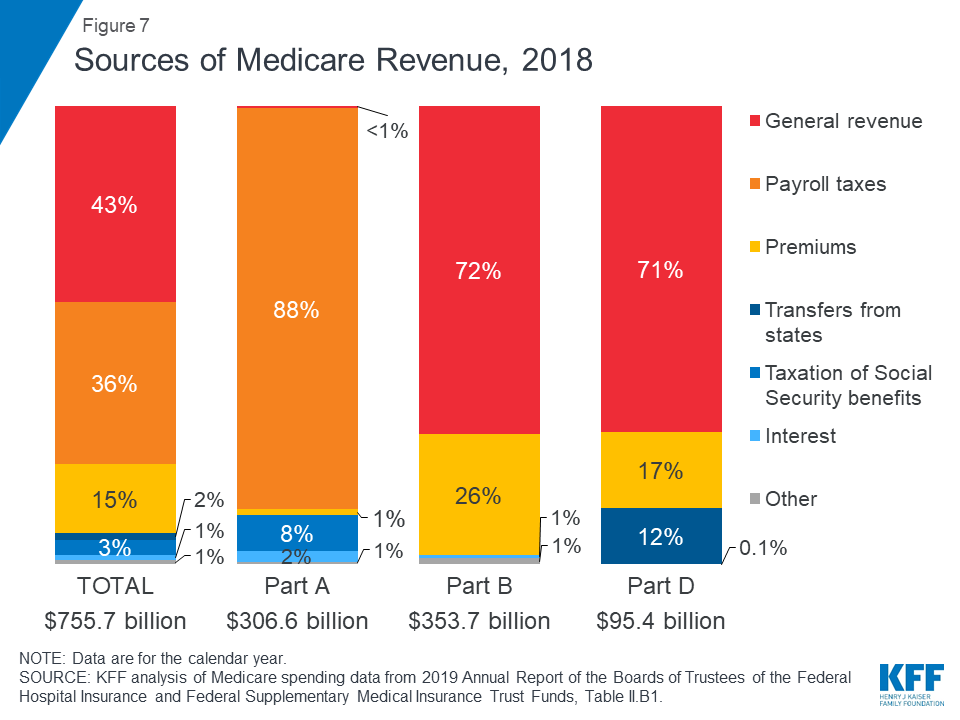
Figure 7: Sources of Medicare Revenue, 2018

Medicare, the federal health insurance program for more than 60 million people ages 65 and over and younger people with long-term disabilities, helps to pay for hospital and physician visits, prescription drugs, and other acute and post-acute care services. This issue brief includes the most recent historical and projected Medicare spending data published in the 2019 annual report of the Boards of Medicare Trustees from the Centers for Medicare & Medicaid Services (CMS) Office of the Actuary (OACT) and the 2019 Medicare baseline and projections from the Congressional Budget Office (CBO).

Key Facts
  • Medicare spending was 15 percent of total federal spending in 2018, and is projected to rise to 18 percent by 2029.
  • Based on the latest projections in the 2019 Medicare Trustees report, the Medicare Hospital Insurance (Part A) trust fund is projected to be depleted in 2026, the same as the 2018 projection.
  • In 2018, Medicare benefit payments totaled $731 billion, up from $462 billion in 2008.
  • As a share of total Medicare benefit spending, payments to Medicare Advantage plans for Part A and Part B benefits increased by nearly 50 percent between 2008 and 2018, from 21 percent ($99 billion) to 32 percent ($232 billion) of total spending, as enrollment in Medicare Advantage plans increased over these years.
  • Average annual growth in Medicare per capita spending was 1.7 percent between 2010 and 2018, down from 7.3 percent between 2000 and 2010, due in part to the Affordable Care Act’s reductions in payments to providers and plans, and to an influx of younger beneficiaries from the baby boom generation aging on to Medicare, who have lower per capita health care costs.
  • Medicare per capita spending is projected to grow at an average annual rate of 5.1 percent over the next 10 years (2018 to 2028), due to growing Medicare enrollment, increased use of services and intensity of care, and rising health care prices.

Overview of Medicare Spending

Medicare plays a major role in the health care system, accounting for 20 percent of total national health spending in 2017, 30 percent of spending on retail sales of prescription drugs, 25 percent of spending on hospital care, and 23 percent of spending on physician services. In 2018, Medicare spending (net of income from premiums and other offsetting receipts) totaled $605 billion, accounting for 15 percent of the federal budget (Figure 1).
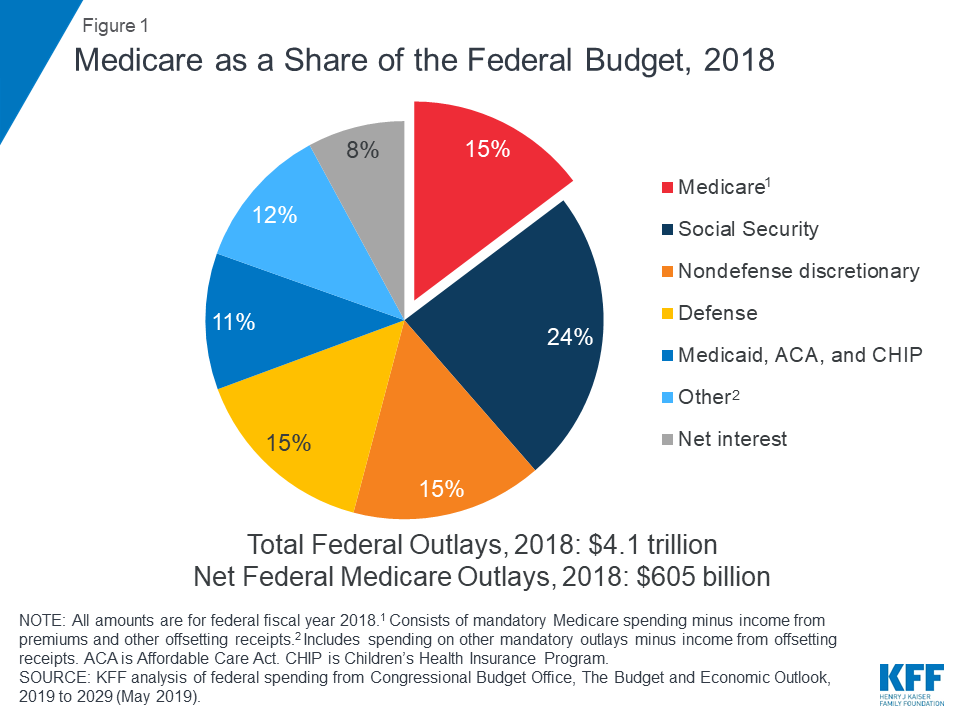
Figure 1: Medicare as a Share of the Federal Budget, 2018

Historical Trends in Medicare Spending

Trends in Medicare Benefit Payments

In 2018, Medicare benefit payments totaled $731 billion, up from $462 billion in 2008 (Figure 2) (these amounts do not net out premiums and other offsetting receipts). While benefit payments for each part of Medicare (A, B, and D) increased in dollar terms over these years, the share of total benefit payments represented by each part changed. Spending on Part A benefits (mainly hospital inpatient services) decreased from 50 percent to 41 percent, spending on Part B benefits (mainly physician services and hospital outpatient services) increased from 39 percent to 46 percent, and spending on Part D prescription drug benefits increased from 11 percent to 13 percent.
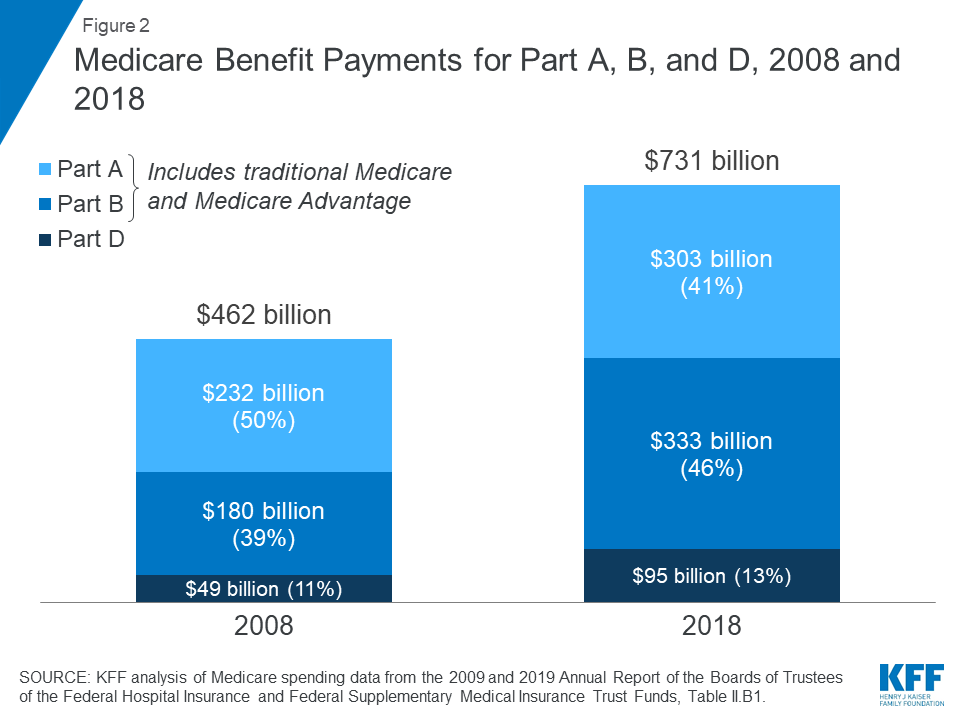
Figure 2: Medicare Benefit Payments for Part A, B, and D, 2008 and 2018

Another notable change in Medicare spending in the past 10 years is the increase in payments to Medicare Advantage plans, which are private health plans that cover all Part A and Part B benefits, and typically also Part D benefits. As a percent of total Medicare benefit spending, payments for Part A and Part B benefits covered by Medicare Advantage plans increased by nearly 50 percent between 2008 and 2018, from 21 percent ($99 billion) to 32 percent ($232 billion), as private plan enrollment grew steadily over these years (Figure 3). In 2018, 34 percent of Medicare beneficiaries were enrolled in Medicare Advantage plans, up from 22 percent in 2008.
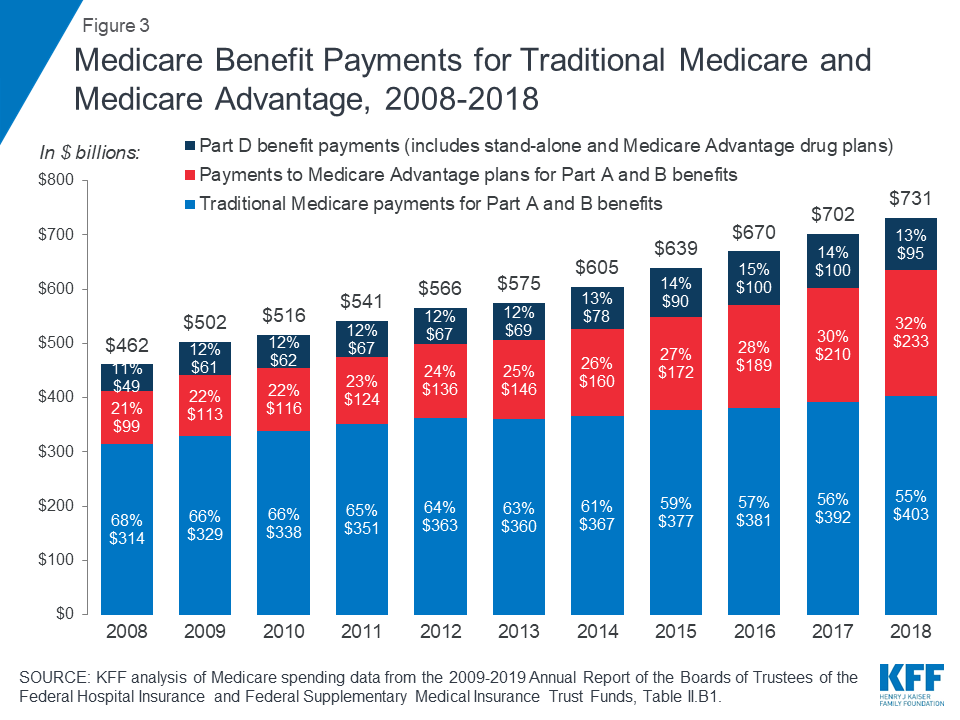
Figure 3: Medicare Benefit Payments for Traditional Medicare and Medicare Advantage, 2008-2018

The overall cost of administering benefits for traditional Medicare is relatively low. In 2018, administrative expenses for traditional Medicare (plus CMS administration and oversight of Part D) were 1.3 percent of total program spending; this includes expenses for the contractors that process claims submitted by beneficiaries in traditional Medicare and their providers. This estimate does not include insurers’ costs of administering private Medicare Advantage and Part D drug plans, which are considerably higher. Medicare’s actuaries estimate that insurers’ administrative expenses and profits for Part D plans were 10.7 percent of total plan benefit payments in 2018. The actuaries have not provided a comparable estimate for Medicare Advantage plans; however, according to a recent analysis, simple loss ratios (medical expenses as a share of total premiums collected) averaged 86 percent for Medicare Advantage plans in 2018, which means that administrative expenses, including profits, were 14 percent for Medicare Advantage plans.

Trends in Total and Per Capita Medicare Spending

There has been a notable reduction in the growth of Medicare spending in recent years, compared to prior decades, both overall and per beneficiary.

  • Average annual growth in total Medicare spending was 4.4 percent between 2010 and 2018, down from 9.0 percent between 2000 and 2010, despite faster growth in enrollment since 2011 when the baby boom generation started becoming eligible for Medicare (Figure 4).
  • Average annual growth in Medicare spending per beneficiary was just 1.7 percent between 2010 and 2018, down from 7.3 percent between 2000 and 2010.
  • Spending on each of the three parts of Medicare (A, B, and D) has grown more slowly in recent years than in previous decades (Figure 5). For example, the average annual growth rate between 2010 and 2018 was 0.1 percent for Part A, compared to 4.4 percent in the 2000s, and 3.1 percent for Part B, compared to 7.0 percent in the 2000s.
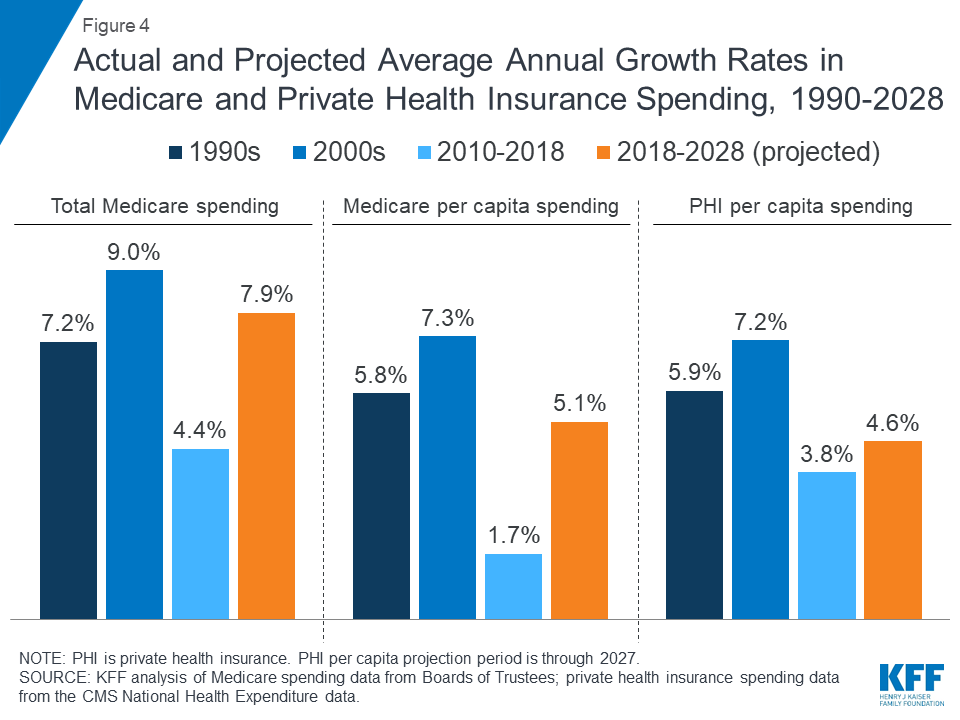
Figure 4: Actual and Projected Average Annual Growth Rates in Medicare and Private Health Insurance Spending, 1990-2028
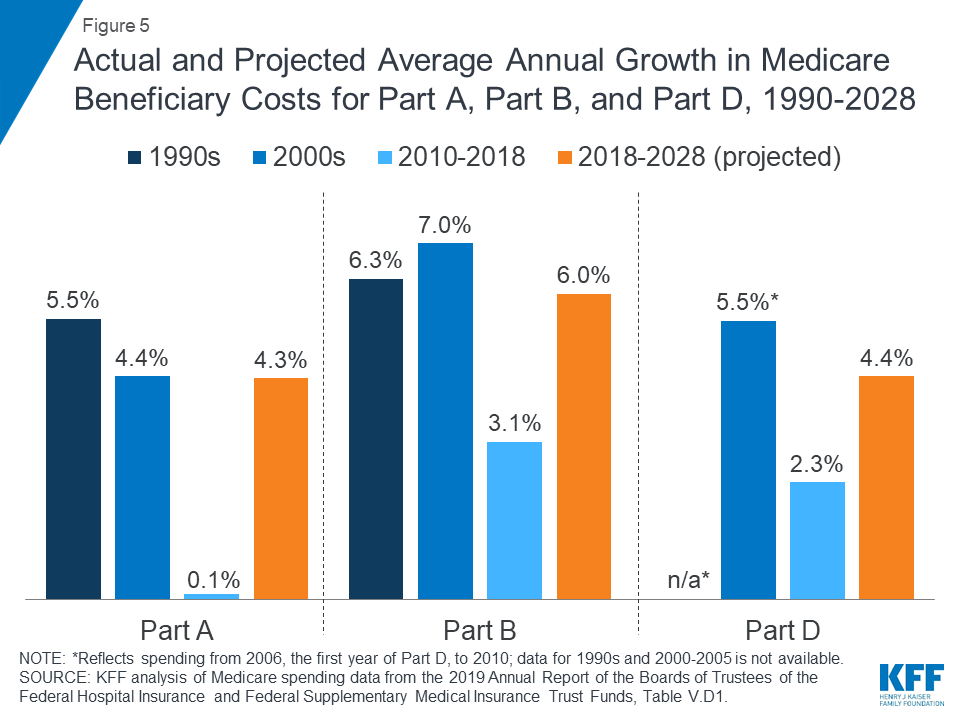
Figure 5: Actual and Projected Average Annual Growth in Medicare Beneficiary Costs for Part A, Part B, and Part D, 1990-2028

Slower growth in Medicare spending in recent years can be attributed in part to policy changes adopted as part of the Affordable Care Act (ACA) and the Budget Control Act of 2011 (BCA). The ACA included reductions in Medicare payments to plans and providers, increased revenues, and introduced delivery system reforms that aimed to improve efficiency and quality of patient care and reduce costs, including accountable care organizations (ACOs), medical homes, bundled payments, and value-based purchasing initiatives. The BCA lowered Medicare spending through sequestration that reduced payments to providers and plans by 2 percent beginning in 2013.

In addition, although Medicare enrollment has been growing between 2 percent and 3 percent annually for several years with the aging of the baby boom generation, the influx of younger, healthier beneficiaries has contributed to lower per capita spending and a slower rate of growth in overall program spending.

Spending Trends for Medicare Compared to Private Health Insurance

Prior to 2010, per enrollee spending growth rates were comparable for Medicare and private health insurance. With the recent slowdown in the growth of Medicare spending and the recent expansion of private health insurance through the ACA, however, the difference in growth rates between Medicare and private health insurance spending per enrollee has widened.

  • In the 1990s and 2000s, Medicare spending per enrollee grew at an average annual rate of 5.8 percent and 7.3 percent, respectively, compared to 5.9 percent and 7.2 percent for private insurance spending per enrollee (Figure 4).
  • Between 2010 and 2018, Medicare per capita spending grew considerably more slowly than private insurance spending, increasing at an average annual rate of just 1.7 percent over this time period, while average annual private health insurance spending per capita grew at 3.8 percent.

Medicare Spending Projections

Short-Term Spending Projections for the Next 10 Years

While Medicare spending is expected to continue to grow more slowly in the future compared to long-term historical trends, Medicare’s actuaries project that future spending growth will increase at a faster rate than in recent years, in part due to growing enrollment in Medicare related to the aging of the population, increased use of services and intensity of care, and rising health care prices.

Looking ahead, CBO projects Medicare spending will double over the next 10 years, measured both in total and net of income from premiums and other offsetting receipts. CBO projects net Medicare spending to increase from $630 billion in 2019 to $1.3 trillion in 2029 (Figure 6). Between 2019 and 2029, net Medicare spending is also projected to grow as a share of the federal budget—from 14.3 percent to 18.3 percent—and the nation’s economy—from 3.0 percent to 4.1 percent of gross domestic product (GDP).
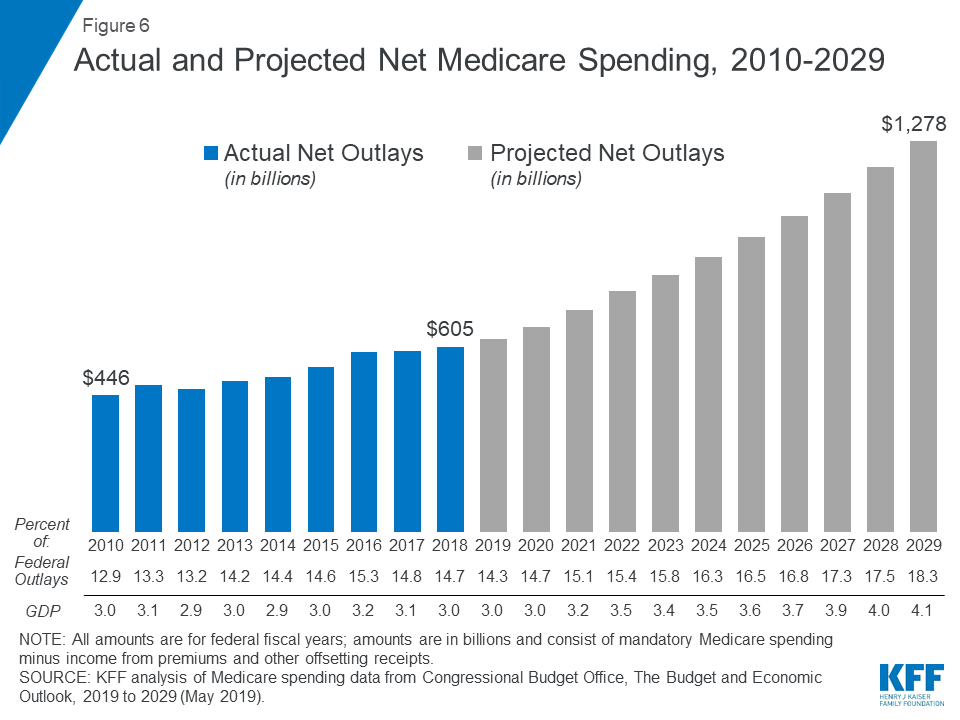
Figure 6: Actual and Projected Net Medicare Spending, 2010-2029

Spending Growth Rate Projections for the Next 10 Years

  • Average annual growth in total Medicare spending is projected to be higher between 2018 and 2028 than between 2010 and 2018 (7.9 percent versus 4.4 percent) (Figure 4).
  • On a per capita basis, Medicare spending is also projected to grow at a faster rate between 2018 and 2028 (5.1 percent) than between 2010 and 2018 (1.7 percent), and slightly faster than the average annual growth in per capita private health insurance spending over the next 10 years (4.6 percent).
  • Medicare’s actuaries project a higher per capita growth rate in the coming decade for each part of Medicare, compared to their 2010-2018 growth rates: 6.0 percent for Part B, 4.4 percent for Part D, and 4.3 percent for Part A (Figure 5).
  • Among the reasons cited for projected growth in Part B spending are legislative changes in the Bipartisan Budget Act (BBA) of 2018, including repeal of the Independent Payment Advisory Board (which also affects Part A and Part D spending projections) and repealing annual limits on therapy services covered under Part B, and higher Medicare Advantage spending. Projected increases in Part B per capita spending will lead to increases in the Part B premium and deductible.
  • The projected increase in Part D per capita spending growth is driven by a slowdown in the generic dispensing rate and increased specialty drug use, offset by higher manufacturer rebates negotiated by private plans and a decline in spending for hepatitis C drugs, which was a significant driver of higher total Part D spending in 2014 and 2015.

Long-term Spending Projections

Over the longer term (that is, beyond the next 10 years), both CBO and OACT expect Medicare spending to rise more rapidly than GDP due to a number of factors, including the aging of the population and faster growth in health care costs than growth in the economy on a per capita basis. According to CBO’s most recent long-term projections, net Medicare spending will grow from 3.0 percent of GDP in 2019 to 6.0 percent in 2049.

Over the next 30 years, CBO projects that “excess” health care cost growth—defined as the extent to which the growth of health care costs per beneficiary, adjusted for demographic changes, exceeds the per person growth of potential GDP (the maximum sustainable output of the economy)—will account for half of the increase in spending on the nation’s major health care programs (Medicare, Medicaid, and subsidies for ACA Marketplace coverage), and the aging of the population will account for the other half.

How is Medicare Financed?

Medicare is funded primarily from general revenues (43 percent), payroll taxes (36 percent), and beneficiary premiums (15 percent) (Figure 7).

Figure 7: Sources of Medicare Revenue, 2018

  • Part A is financed primarily through a 2.9 percent tax on earnings paid by employers and employees (1.45 percent each) (accounting for 88 percent of Part A revenue). Higher-income taxpayers (more than $200,000/individual and $250,000/couple) pay a higher payroll tax on earnings (2.35 percent).
  • Part B is financed through general revenues (72 percent), beneficiary premiums (26 percent), and interest and other sources (2 percent). Beneficiaries with annual incomes over $85,000/individual or $170,000/couple pay a higher, income-related Part B premium reflecting a larger share of total Part B spending, ranging from 35 percent to 85 percent.
  • Part D is financed by general revenues (71 percent), beneficiary premiums (17 percent), and state payments for beneficiaries dually eligible for Medicare and Medicaid (12 percent). Higher-income enrollees pay a larger share of the cost of Part D coverage, as they do for Part B.
  • The Medicare Advantage program (Part C) is not separately financed. Medicare Advantage plans, such as HMOs and PPOs, cover Part A, Part B, and (typically) Part D benefits. Beneficiaries enrolled in Medicare Advantage plans pay the Part B premium, and may pay an additional premium if required by their plan; about half of Medicare Advantage enrollees pay no additional premium.

Assessing Medicare’s Financial Condition

Medicare’s financial condition can be assessed in different ways, including comparing various measures of Medicare spending—overall or per capita—to other spending measures, such as Medicare spending as a share of the federal budget or as a share of GDP, as discussed above, and estimating the solvency of the Medicare Hospital Insurance (Part A) trust fund.

Solvency of the Medicare Hospital Insurance Trust Fund

The solvency of the Medicare Hospital Insurance trust fund, out of which Part A benefits are paid, is one way of measuring Medicare’s financial status, though because it only focuses on the status of Part A, it does not present a complete picture of total program spending. The solvency of Medicare in this context is measured by the level of assets in the Part A trust fund. In years when annual income to the trust fund exceeds benefits spending, the asset level increases, and when annual spending exceeds income, the asset level decreases. When spending exceeds income and the assets are fully depleted, Medicare will not have sufficient funds to pay all Part A benefits.

Each year, Medicare’s actuaries provide an estimate of the year when the asset level is projected to be fully depleted. In the 2019 Medicare Trustees report, the actuaries projected that the Part A trust fund will be depleted in 2026, the same year as their 2018 projection and three years earlier than their 2017 projection (Figure 8). The actuaries estimate that Medicare will be able to cover 89 percent of Part A costs from payroll tax revenue in 2026.
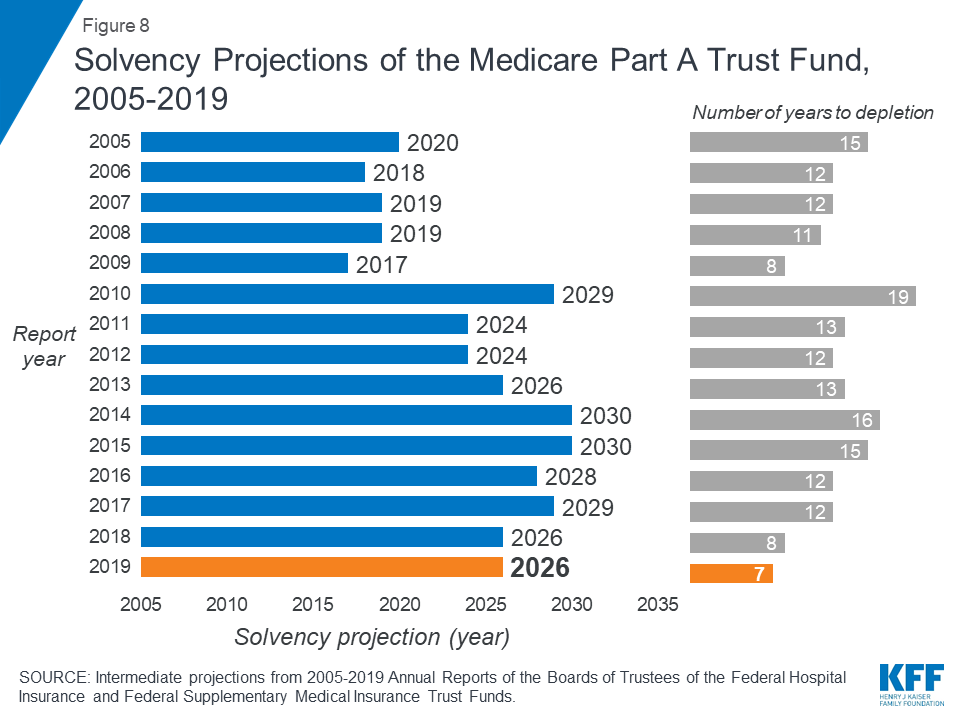
Figure 8: Figure 8: Solvency Projections of the Medicare Part A Trust Fund, 2005-2019

In the 2018 and 2019 Medicare Trustees reports, the actuaries attributed the earlier depletion date to several factors, including legislative changes enacted since the 2017 report that will reduce revenues to the Part A trust fund and increase Part A spending:

  • lower-than-expected revenues from payroll taxes in 2017 and 2018 due to lowered wages and lower levels of projected GDP;
  • lower revenue projections from taxation of Social Security benefits (which provided 8 percent of Part A revenues in 2018) as a result of the tax cut legislation enacted in December 2017;
  • higher-than-expected spending for Part A benefits and higher projected provider payment updates;
  • higher spending projections due repeal of the ACA’s individual mandate, which is expected to increase the number of people without health insurance, which will result in an increase in Medicare’s disproportionate share hospital (DSH) payments for uninsured patients; and
  • higher spending projections due to repeal of the Independent Payment Advisory Board, which would have helped to control Medicare spending if the growth rate exceeded certain target levels.

In general, Part A trust fund solvency is also affected by the level of growth in the economy, which affects Medicare’s revenue from payroll tax contributions, by overall health care spending trends, and by demographic trends—of note, an increasing number of beneficiaries, especially between 2010 and 2030 when the baby boom generation reaches Medicare eligibility age, and a declining ratio of workers per beneficiary making payroll tax contributions.

Part B and Part D do not have financing challenges similar to Part A, because both are funded by beneficiary premiums and general revenues that are set annually to match expected outlays. Expected future increases in spending under Part B and Part D, however, will require increases in general revenue funding and higher premiums paid by beneficiaries.

The Future Outlook

Although Medicare spending is on a slower upward trajectory now than in past decades, total and per capita annual growth rates are trending higher than their historically low levels of the past few years. The aging of the population, growth in Medicare enrollment due to the baby boom generation reaching the age of eligibility, and increases in per capita health care costs are leading to growth in overall Medicare spending. At the same time, recent legislative changes, including repeal of the ACA’s individual mandate and repealing IPAB, have worsened the short-term outlook for the Medicare Part A trust fund and have led to projections of higher Medicare spending in the future.

A number of changes to Medicare have been proposed in the past to address the fiscal challenges posed by the aging of the population and rising health care costs. Lately, policymakers have been focused more narrowly on policy options to control Medicare prescription drug spending, rather than on broader proposals to reduce the growth in Medicare spending. And there has been little discussion of revenue options that could be considered to help finance care for Medicare’s growing and aging population, including raising the Medicare payroll tax or increasing other existing taxes. Meanwhile, Medicare has featured prominently in the 2020 presidential campaign, with proposals from some Democratic candidates to expand on it as part of a Medicare-for-all plan, and ideas from others to allow people to buy into it.

The prospects for proposals that would affect Medicare’s financial outlook are unknown, but they will require careful deliberation over the effects on not only the program’s finances but also its growing number of beneficiaries.


Trump considers payroll tax cut — what it could mean for healthcare

https://www.beckershospitalreview.com/finance/trump-considers-payroll-tax-cut-what-it-could-mean-for-healthcare.html?origin=cfoe&utm_source=cfoe

The White House is considering a payroll tax cut, President Donald Trump confirmed Aug. 20, according to The Washington Post.

The president’s confirmation comes after the White House disputed that it was considering a payroll tax cut, the Post reported Aug. 19. The tax would help jump-start a slowing economy by giving low- and middle-income Americans more spending power.

However, payroll taxes do help fund Medicare. A cut could significantly handicap that program, which is just seven years away from running dry, depending on how the tax is designed. A payroll tax cut of two percentage points in 2011-12 reduced taxes by more than $100 billion each year, according to The Washington Post. During those years, the Obama administration redirected revenue to Social Security programs and the federal deficit took the hit, according to the report.

Read more here.


What Does Medicare Actually Cover?

What Does Medicare Actually Cover?

Image result for What Does Medicare Actually Cover?

If it followed the path of traditional Medicare, it would end up paying for a lot of coverage that has little medical value.

In the first congressional hearing held on “Medicare for all” in April, Michael Burgess, a Republican congressman from Texas and a physician, called such a proposal “frightening” because it could limit the treatments available to patients.

The debate over Medicare for all has largely focused on access and taxpayer cost, but this raises a question that hasn’t gotten much attention: What treatments would it cover?

A good starting place for answers is to look at how traditional Medicare currently handles things. In one sense, there are some important elements that Medicare does not cover — and  arguably should. But a little digging into the rules governing treatments also reveals that Medicare allows a lot of low-value care — which it arguably should not.

Many countries don’t cover procedures or treatments that have little medical value or that are considered too expensive relative to the benefits. American Medicare has also wrestled with the challenge of how to keep out low-value care, but for political reasons has never squarely faced it.

You might remember the factually misguided “death panel” attack on the Affordable Care Act, which preyed on discomfort with a governmental role in deciding what health care would or would not be paid for. (This discomfort also extends to private plans, exemplified by the backlash against managed care in the 1990s.)

Perhaps as a result, Americans don’t often talk about what treatments and services provide enough value to warrant coverage.

You can divide current Medicare coverage into two layers.

The first is relatively transparent. Traditional Medicare does not cover certain classes of care, including eyeglasses, hearing aids, dental or long-term care. When the classes of things it covers changes, or is under debate, there’s a big, bruising fight with a lot of public comment. The most recent battle added prescription drug coverage through legislation that passed in 2003.

Over the years, there have also been legislative efforts to add coverage for eyeglasses, hearing aids, dental and long-term care — none of them successful. Some of these are available through private plans. So a Medicare for all program that excluded all private insurance coverage and that resembled today’s traditional Medicare would leave Americans with significant coverage gaps. Most likely, debate over what Medicare for all would cover would center on this issue.

But there is a second layer of coverage that receives less attention. Which specific treatments does Medicare pay for within its classes of coverage? For instance, Medicare covers hospital and doctor visits associated with cancer care — but which specific cancer treatments?

This second layer is far more opaque than the first. By law, treatments must be reasonable and necessary” to be approved for Medicare coverage, but what that means is not very clear.

We think of Medicare as a uniform program, but some coverage decisions are local. What people are covered for in, say, Miami can be different from what people are covered for in Seattle.

Many treatments and services are covered automatically because they already have standard billing codes that Medicare recognizes and accepts. For treatments lacking such codes, Medicare makes coverage determinations in one of two ways: nationally or locally.

Although Medicare is a federal (national) program, most coverage determinations are local. Private contractors authorized to process Medicare claims decide what treatments to reimburse in each of 16 regions of the country.

In theory, this could allow for lots of variation across the country in what Medicare pays for. But most local coverage determinations are nearly identical. For example, four regional contractors have independently made local coverage determinations for allergen immunotherapy, but they all approve the same treatments for seasonal allergy sufferers.

There are more than 2,000 local coverage determinations like these. National coverage decisions, which apply to the entire country, are rarer, with only about 300 on the books.

When Medicare makes national coverage decisions, sometimes it does so while requiring people to enter clinical trials.

It has been doing this for over a decade. The program is called coverage with evidence development, and its use is rare. Fewer than two dozen therapies have entered the program since it was introduced in 2006. But it allows Medicare to gather additional clinical data before determining if the treatment should be covered outside of a trial. To be considered, the treatment must already be deemed safe, and it must already be effective in some population. The aim is to test if the treatment “meaningfully improves” the health of Medicare beneficiaries.

Only one therapy (CPAP, for sleep apnea) that entered this process has ever emerged to be covered as a routine part of Medicare. The others are in a perpetual state of limbo, neither fully covered nor definitively not covered. CAR-T cell therapy, a type of cancer immunotherapy, which appears to be very successful but is also very expensive, is one of the most recent to enter this process.

Despite the complexity of all these coverage determination methods — local, national, contingent on clinical trials — the bottom line is that very few treatments are fully excluded from Medicare, so long as they are of any clinical value. And this suggests that it’s not very likely that Medicare for all would deny coverage for needed care.

A 2018 study in Health Affairs found only 3 percent of Medicare claims were denied in 2015. And traditional Medicare doesn’t limit access to doctors or hospitals either, as it is accepted by nearly every one. (This is in contrast with Medicare Advantage.)

Medicare has a troubled history in considering cost-effectiveness in its coverage decisions. Past efforts to incorporate it have failed. For example, regulations proposed in 1989 were withdrawn after a decade of internal review.

As a result, Medicare covers some treatments that are extremely expensive for the program and that offer little benefit to patients. The Medicare Payment Advisory Commission recently studied this in detail. In a 2018 report to Congress, it noted that up to one-third of Medicare beneficiaries received some kind of low-value treatment in 2014, costing the program billions of dollars. If Medicare for all followed in traditional Medicare’s path, it could be wastefully expensive.

The United States has had a historical unwillingness to face cost-effectiveness questions in health care decisions, something many other countries tackle head-on. Some Americans favor Medicare for all because it would make the system more like some overseas. And yet, in choosing not to consider the value of the care it covers, Medicare remains uniquely American.


I’ve lived the difference between US and UK health care. Here’s what I learned

https://www.cnn.com/2019/08/07/opinions/single-payer-healthcare-beers/index.html?utm_source=Sailthru&utm_medium=email&utm_campaign=Newsletter%20Weekly%20Roundup:%20Healthcare%20Dive%2008-10-2019&utm_term=Healthcare%20Dive%20Weekender

Image result for conflict of interests

Earlier this year, I shattered my elbow in a freak fall, requiring surgery, plates and screws. While I am a US citizen, several years ago I married an Englishman and became a UK resident, entitled to coverage on the British National Health Service. My NHS surgeon was able to schedule me in for the three-hour surgery less than two weeks after my fall, and my physical therapist saw me weekly after the bone was healed to work on my flexion and extension. Both surgery and rehab were free at the point of use, and the only paperwork I completed was my pre-operative release forms.

Compare that to another freak accident I had while living in Boston in my 20s. I spilled a large cup of hot tea on myself, suffered second degree scald burns, and had to be taken to the hospital in an ambulance. In the pain and chaos of the ER admission, I accidentally put my primary insurance down as my secondary and vice versa. It took me the better part of six months to sort out the ensuing paperwork and billing confusion, and even with two policies, I still paid several hundred dollars in out-of-pocket expenses.
With debate raging in the US among Democrats about whether to push for a government health care system such as Medicare for All, there is no doubt in my mind that the NHS single-payer health care system is superior to the American system of private insurance.
As someone who suffers from chronic illness, is incredibly clumsy and accident-prone, and has two young children, I spend an inordinate amount of time in doctors’ offices and hospitals. When my family is in our home in York, England, our health care is paid for principally through direct taxation, and we have zero out of pocket costs.
In contrast, when we are in the US, we are on my employer-based insurance plan. After years with one provider, rising costs pushed the premiums alone to above 10% of my gross salary for the family plan, and I recently opted to switch to a new provider, whose premiums are a more modest but still eye-watering 7% of my salary. I have had to switch our family doctor and specialists, with the attendant hassle of applying to have our medical records released and transferred to our new providers. In addition to my premiums, both plans include significant co-pays, although my new provider does not have a deductible.

In Britain, I am not entitled to the annual well patient and women’s health check-ups that Americans can now receive without a co-pay or deductible thanks to the Affordable Care Act. As an asthma sufferer, I do, however, have regular annual reviews of my condition. When one of my children becomes ill, I am usually able to receive same-day treatment in both countries, although in both cases this involves showing up early for the urgent care clinic.
The comparative ease and security of the NHS is why the system retains such high levels of support from the British public, despite frustrations with wait times and other aspects of service provision. A recent poll found that 77% of respondents felt that “the NHS is crucial to British society and we must do everything we can to maintain it,” and nearly 90% agreed that that the NHS should be free at the point of delivery, provide a comprehensive service available to everyone, and be primarily funded through taxation. Britons’ affection for their NHS was dramatically enacted in Danny Boyle’s 2012 Olympic opening ceremony extravaganza.
Yet, while I share my adopted countrymen’s support for the NHS, I can see almost no chance of America adopting a single-payer health care system of the kind described by Sens. Sanders and Warren any time soon. Sanders, Warren and other single-payer advocates not only face a strong and entrenched adversary in the American insurance industry, they also lack the broad public support for reform which characterized post-WWII Britain.
That broad public support for reform was crucial. Britain’s NHS system was very nearly defeated by opposing interests when it was introduced in the 1940s. It was initially opposed by the municipal and voluntary authorities, who controlled the 3,000 hospitals which Health Secretary Aneurin Bevan sought to bring under national administration, by the various Royal Colleges of surgeons and specialists, and by British Medical Association (BMA), the professional body representing the vast majority of the nation’s general practitioners, who stood to lose control of their private practices and become state employees.
At a meeting of doctors following the publication of Bevan’s proposals in January 1946, one physician claimed that “This Bill is strongly suggestive of the Hitlerite regime now being destroyed in Germany,” and another described the proposed nationalization of the hospitals as “the greatest seizure of property since Henry VIII confiscated the monasteries.” The BMA hostility persisted through rounds of negotiations lasting two years. Less than six months before the bill was set to come into effect on July 5, 1948, the BMA’s membership voted by a margin of 8 to 1 against the NHS, sparking serious fears within the government that GPs would refuse to come on board, effectively scuppering the NHS.
Bevan insisted that he would not cave but he did have to make several costly concessions to bring the doctors on board. First, he cleaved off the specialists (who were closely tied to the hospitals), by promising them that, if they signed on, they could continue to treat private patients in NHS-run hospitals in addition to their NHS patients, whom they would be paid to treat on a fee-for-service basis. Then, he offered the general practitioners a generous buyout to give up their stake in their private practices (effectively purchasing their patient lists), if they came on board. And finally, he promised them that the government would not be able to compel them to become fully salaried employees of the state without the passage of new legislation.
At the same time that Bevan offered the carrot of economic concessions, he also wielded the stick of public opinion against the doctors. Speaking in the House of Commons in February 1948, Bevan positioned single-payer healthcare as an issue of middle class survival, in language whose substance, if not its style, would not sound out of place in a 2020 Democratic primary debate: “Consider that social class which is called the “middle class.” Their entrance into the scheme, and their having a free doctor and a free hospital service, is emancipation for many of them. There is nothing that destroys the family budget of the professional worker more than heavy hospital bills and doctors’ bills.”
Bevan spoke for a public exceptionally united in support of an expanded state welfare policy as a result of the socially unifying experience of World War II. Fear of public backlash combined with economic incentives ultimately brought the medical establishment to heel.
Many were shocked when Bevan succeeded, but the BMA was arguably a less formidable threat to reform then than the American insurance industry is now. Insurance companies stand to be the biggest losers from a switch to single-payer health care, which seeks to achieve economies in large part through cutting out the profit-making middle man. As Elizabeth Warren noted in last Tuesday’s debate, US insurance companies reported $23 billion in profits last year. And the insurance lobby is determined to protect its position. That is why insurance companies are major donors in both state and federal election campaigns. The insurance industry has put massive resources into ensuring continued public and political opposition to the introduction of a single-payer system.
It’s possible that, if Americans were presented with an arguably cheaper and less bureaucratic health care system, they might decide that they liked it and were committed to doing everything they could to maintain it. But given the constellation of political forces in 21st century America, that just isn’t going to happen any time soon.

Myth Diagnosis: Do hospitals charge more to make up for low government pay?

https://www.healthcaredive.com/news/myth-diagnosis-do-hospitals-charge-more-to-make-up-for-low-government-pay/560021/

Image result for hospital prices

It’s a mantra from providers to justify the disparate prices charged patients depending on their level of insurance coverage: It’s all in the name of cost shifting to make up for stingy government reimbursement.

The idea is that hospitals bill commercial payers more to make up for low rates from government payers and the costs from treating the uninsured. Providers and payers both insist the practice occurs, but academics are skeptical — and the notion is notoriously difficult to measure.

No one is doubting that the prices are different depending on who is footing the bill. The issue is whether they are dependent on each other.

“What is crystal clear is that there’s a huge unit cost payment differential between government and commercial payers,” John Pickering of Milliman told Healthcare Dive. “What isn’t clear is whether there’s a causal effect between those two.”

Heath economists, doctors and industry executives have been arguing about whether hospitals perform cost shifting for at least 40 years.

Government efforts to tamp down on runaway payments to providers may have sparked the debate. These include Medicare’s shift from strictly fee-for-service reimbursement to the prospective payment system in the 1980s.

Also, the Affordable Care Act attempted to codify efforts to pay providers based on performance with initiatives like the Hospital Readmission Reduction Program and alternative payment models.

Part of the difficulty is untangling factors like differences in geography, quality and market share, said Michael Darden, an associate professor at Carey Business School.

The body of research on healthcare cost shifting is mixed. There is evidence that some hospitals perform cost shifting, but not strong and clear results showing hospitals make such adjustments consistently or what exactly is causing them.

The debate has received some renewed attention as more states approve Medicaid expansion under the ACA and as employers consider offering high-deductible health plans that patients on the hook for more costs, Rick Gundling, senior vice president for healthcare financial practices with the Healthcare Financial Management Association, told Healthcare Dive.

“As folks get more price-sensitive through higher cost-sharing with patients and employers and these types of things — it’s certainly talked about. As it should be,” he said.

Policy implications

The topic may get even more attention as healthcare has come to dominate the early days of the 2020 presidential election, at least among the 20-plus contenders running in the primary.

While still a long way off, a “Medicare for All”-type system seems closer than any time in recent history.

While not all of the proposals explicitly or fully eliminate the private insurance industry, some (including those put forward by Sens. Bernie Sanders, I-Vt., and Elizabeth Warren, D-Mass.,) do, and others would at least severely curtail it. One key question for those plans is whether government rates would have to increase in order to keep hospitals and providers above water, and if so, by how much.

To counter, President Donald Trump and his administration have stepped up their scrutiny of industry billing practices. These efforts include pushing Congress to ban surprise billing and executive orders to revamp kidney care in the country and advance price transparency.

For their part,  providers say they’ll be forced to raise other rates if government programs pay less. Insurers will say the phenomenon means they must raise premiums to keep up.

In a statement to Healthcare Dive, America’s Health Insurance Plans pointed the finger at rising hospital prices, spurred in part from provider consolidation. The payer lobby argued health plans do their best to keep out-of-pocket costs affordable for customers through payment negotiations and by offering a number of coverage options.

“However, insurance premiums track directly with the underlying cost of medical care. The rising cost of doctor’s visits, hospital stays, and prescription medications all put upward pressure on premiums,” the group said.

Employers care about this issue as well, especially those that self-insure, said Steve Wojcik, vice president of public policy for the National Business Group on Health. Coverage can get expensive for businesses because they don’t get as good of a deal as government payers, he told Healthcare Dive.

Wojcik suggested more radical change away from fee-for-service payment arranges would be a better way of dealing with the issue. It’s an argument for many who push the healthcare sector’s slow march toward paying for quality and not quantity of treatment.

“I think, ultimately, it’s about driving transformation in healthcare delivery so that there’s more of a global payment for managing someone’s health or the health of a population rather than paying piecemeal for different services, which I think is inflationary,” he said.

Regardless, whether hospitals cost shift isn’t as important as whether they go out of business. “We may be missing the point if we focus on cost shifting,” Christopher Ody, a health economist at Northwestern University’s Kellogg School of Management, told Healthcare Dive.

Charging as much as they can?

A paper Darden helped author in the National Bureau of Economic Research found some hospitals that faced payment reductions from value-based Medicare programs did negotiate slightly higher average payments from private payers.

Health economist Austin Frakt noted the ability to negotiate better pricing could be related to quality improvement these hospitals likely undertook, knowing their quality measures would directly affect future payments.

It comes back to determining causality, Frakt, who holds positions with the Department of Veteran’s Affairs, Boston University and Harvard, told Healthcare Dive.

“It’s an important distinction, because the simplest economic model which is consistent with the evidence is that hospitals charge as much as they can to each type of payer,” he said. “So, they can’t really change what they receive from Medicare — those prices are fixed. But they charge private payers whatever the revenue- or profit-maximizing price is.”

Hospitals assert there is causality, but haven’t pointed to evidence that convinced Frakt of their argument. Frakt, for the record, understand why hospitals make the argument to policymakers, however.

“I’m not implying that this, throughout, is just to make a profit,” he said. “I think it’s possible to also have the best interests of patients in mind and to have this argument.”

Grundling said there has to be a breaking point somewhere so long as government rates fail to keep up with medical inflation. Also, hospitals have a federal legal responsibility to stabilize any patient regardless of ability to pay and have other philanthropic investments.

“It just puts a greater pressure on other payers in the system,” he said.

Frakt said the argument providers give for cost shifting doesn’t necessarily make sense for the average consumer. “It’s very strange that people find it intuitive that hospitals can readily cost shift because we don’t talk about any other industry like that,” he said. “Nobody says, well, my theater tickets was so much higher because you paid less.”

The idea that healthcare is vastly different from other industries is enduring, however, he said. “People don’t even want to think of healthcare as having prices,” he said. “How do you put a price on that?”


New York Insurers get 6.8% bump, say high medical costs are driving up rates

https://www.crainsnewyork.com/health-pulse/insurers-get-68-bump-say-high-medical-costs-are-driving-rates?utm_source=health-pulse-monday&utm_medium=email&utm_campaign=20190809&utm_content=hero-readmore

Image result for high health insurance premiums

Rates in the individual insurance market will increase by 6.8% on average next year—the lowest amount since 2015—as the state Department of Financial Services continued to beat the drum of affordability and reduce health plans’ proposed increases.

Insurers in the individual market had asked for 9.2% on average, and DFS trimmed those requests by about one-quarter.

DFS granted Centene’s Fidelis Care, which has the largest market share on the state’s Affordable Care Act marketplace, a 3.9% increase; the insurer had asked for 6.8%.

UnitedHealthcare, which offers one of the highest-priced plans on the marketplace, sought a 27.1% price bump and was approved for 15%, the greatest average increase among all plans.

Oscar had the second-highest rate jump, 14%, which was lowered slightly from its initial 15.4% average request.

EmblemHealth, a nonprofit insurer that has lost millions in recent years, received its full 13.5% price increase.

In the small-group insurance market, insurers were granted an average 7.9% increase in premiums after requesting a 12.2% bump on average.

The percentage increase each New Yorker experiences depends on their insurer, where they live, which product they choose and whether they qualify for income-based subsidies.

The rising premiums reflect increases in the prices of medical care and prescription drugs, said Eric Linzer, president and CEO of the state Health Plan Association.

“Every New Yorker deserves affordable coverage choices that provide them with access to high-quality care,” Linzer said. “Making that a reality requires addressing the underlying factors driving health care costs, particularly the persistent price increases by drug companies and providers.”

The average request of 9.2%, which differs from the 8.4% DFS reported insurers asked for in May, accounts for the inclusion of risk adjustment, a spokeswoman for the department said.

Health Care for All New York, a coalition of patient advocacy groups, said in June that more predictable medical costs in the individual market and excessive increases in past years made insurers’ requests for 2020 unjustified.

The persistent price increases in the individual market, as well as growing out-of-pocket costs for patients, have fueled proponents of a single-payer health system. But the Cuomo administration noted that New Yorkers who don’t get insurance from their employer are still better off than they were before the Affordable Care Act.

The state said that premiums in the individual market are still 55% lower than they were before the implementation of the Affordable Care Act without accounting for income-based tax credits that can lower the cost of insurance.

“This year marks the ninth anniversary of the Affordable Care Act’s passage and the fifth year since implementation, and we continue our strong efforts to support the ACA and combat unjustified federal attacks on the nation’s health care system,” DFS Superintendent Linda Lacewell said in a statement. “By reducing insurers’ rate requests, DFS is ensuring access to affordable health care and helping to maintain a robust, competitive marketplace.”

Elisabeth Benjamin, vice president of health initiatives at the Community Service Society, said state lawmakers must take more aggressive action to make health insurance affordable for New Yorkers. Such action could include price controls, state premium assistance, the creation of a public option or the adoption of a single-payer health system through the New York Health Act, she said.

“I think Superintendent Lacewell and DFS did the best that they could through the administrative tools they have—that is New York’s transparent prior approval process,” Benjamin said. “But at the end of the day, New York needs to do more to address the health care affordability crisis.” —Jonathan LaMantia


Republicans ready to revive ACA repeal talks

https://www.beckershospitalreview.com/hospital-management-administration/republicans-ready-to-revive-aca-repeal-talks.html

Image result for aca repeal

Sen. Lindsey Graham, R-S.C., promised to revive ACA repeal in Congress if Republicans can win back a majority in the House and reelect President Donald Trump in 2020, according to an interview on South Carolina radio show “The Morning Answer with Joey Hudson,” featured by The Hill

“This is what 2020 is about: If we can get the House back, and keep our majority in the Senate, and President Trump wins reelection, I can promise you, not only are we going to repeal Obamacare, we are going to do it in a smart way where South Carolina would be the biggest winner,” Mr. Graham said.

Mr. Graham, who failed to pass an ACA repeal plan in 2017, called “Medicare for All” and other Democratic presidential candidates’ healthcare plans “crazy.”  

“Medicare for All is $30 trillion, and it’s going to take private sector healthcare away from 180 million Americans,” he said. Instead, he proposed giving states the power to determine healthcare policy through block grants and other smaller reforms. This would allow states to test conservative healthcare policies against liberal ones, he said. 

“This election has got a common thing: Federalism versus socialism,” Mr. Graham said. “What I want to do is make sure the states get the chance to administer this money using conservative principles if you are in South Carolina, and if you want Medicare for All in California, knock yourself out.”