Hospital At Home Is Not Just For Hospitals

https://www.healthaffairs.org/do/10.1377/forefront.20220520.712735/#.Yo5Jf1zjH8c.linkedin

Hospital at Home programs deliver needed services to appropriate patients in their homes and can effectively serve patients, payers, and providers. The programs provide physician visits, drugs, monitoring, nursing services, diagnostics, and other services at a level typically reserved for patients in inpatient settings. A typical Hospital at Home patient has features that make home care preferable, for example, they may present to an emergency department with uncomplicated, simple pneumonia, have no significant comorbidities, and live with a partner who can provide basic care, such as preparing meals. Studies have shown these programs have lower readmission rates, lower payer costs, and higher patient satisfaction. Patients prefer their homespayers prefer having patients get care in the least acute setting possible, and hospital providers want to have beds available for patients who need them.

While Hospital at Home programs have been studied since the 1970s, adoption had been slow until the COVID-19 public health emergency (PHE) prompted the Centers for Medicare and Medicaid Services (CMS) to waive the Medicare Hospital Conditions of Participation to enable the use of this care delivery model for Medicare beneficiaries. In 2020, CMS implemented the Acute Hospital Care at Home Waiver, which establishes Medicare payment for home hospitalizations. The combination of the PHE and CMS’s regulatory response has generated huge demand for Hospital at Home. By July 2021, eight months after the Acute Hospital Care at Home Waiver program was established, more than 140 hospitals across 66 health systems were approved by CMS to provide hospital services in a home setting. Because of COVID-19, patients and providers have quickly embraced telehealth, and that “stay at home” attitude may bring Hospital at Home into the mainstream. In 2019, the Medicare population had more than 800,000 hospitalizations, which could have qualified for Hospital at Home. As the care delivery model grows in the post-PHE, some important questions remain, such as how insurers will reimburse providers for Hospital at Home services and the types of provider organizations that will embrace this novel care delivery model.

Top-Down And Bottom-Up Payment Approaches

Medicare currently pays for Hospital at Home using a top-down (hospital-centered) payment—the payment is made to hospitals, and the amount is based on Medicare’s payment system for acute inpatient admissions. An alternative, bottom-up approach could generate a payment amount on the basis of existing home-based care payment systems, with additions for the expanded services needed for the more acute patients in a Hospital at Home model. Because home care providers are typically reimbursed at lower rates, this approach to payment would be less expensive and could capitalize on the existing in-home care expertise these providers have, while expanding their reach to a higher-acuity patient population. The co-authors have compared payment options for home hospitalization programs under both the top-down and bottom-up approaches.

Transformation Challenges

The Hospital at Home delivery model faces three significant and related challenges to expansion—generating a sufficient volume of patients to keep local programs in business, achieving cost efficiencies, and defining appropriate patients (not so sick that the patients will fail to heal or be in danger but not so healthy that they don’t need Hospital at Home).

Any health care innovation needs patient volume to be viable. A Hospital at Home program requires teams that can immediately access and deliver all needed care, including diagnostics, monitoring, pharmaceuticals, and nursing services. It also requires physicians adept at working with home-based patients while coordinating all aspects of care. Patient intake and discharge must be handled promptly, including care plans for the patient during their Hospital at Home “stay” and transitioning the patient to their regular providers after the acute phase. Much, but not all, of this infrastructure exists in home health agencies, but Hospital at Home patients typically have more time-sensitive and intense needs than the usual home health patient, which will require some staff expansion by a home health agency seeking to run a Hospital at Home program. A few patients a day will not likely generate enough revenue to maintain the staff expertise or the infrastructure needed to deliver all the different services Hospital at Home patients need.

While it might seem logical that Hospital at Home programs would be sponsored and operated by individual hospitals, many hospitals would not generate sufficient volume to support their own program. In 2019, the national average discharge rate per hospital bed was about 33 per year, and about half were Medicare beneficiaries. A large hospital with 1,000 beds might have 15,000 Medicare discharges per year. On average, we found about 5 percent of Medicare discharges would be eligible for Hospital at Home—only about 15 per week for a 1,000-bed hospital. A program sponsored by a particular hospital might not receive referral patients from competing hospitals because the competing hospitals would be losing patient volume and revenue, and except for extremely large hospital systems, most hospitals would not generate sufficient volume to support the program. A program that serves multiple hospitals will likely have advantages of scale.

When it comes to cost, hospital-based services are well-known to bear facility overhead expenses, which can make hospital-based services more expensive than services delivered from other sites. Medicare pays for hospital inpatient services mostly using diagnosis-related groups. Medicare pays a pre-set amount for each kind of admission, regardless of the actual cost accrued by the provider for a particular patient. But as our analysis shows, starting with Medicare’s home care reimbursement saves the payer more than 50 percent of an acute patient stay, when considering all facility, professional, and ancillary services. Of course, the lower price is appealing to a payer, such as a Medicare Advantage plan, but it could also save a patient money in reduced cost sharing.

Identifying the right patients for medical interventions has been a challenge for decades. The goal is to strike the right balance: avoiding unnecessary care but not skimping on needed care. To promote efficiency and outcomes, private payers and Medicare apply utilization management reviews and quality monitoring. Even for patients appropriate for Hospital at Home, hospitals may dislike the programs, as they fail to see the value of home-based care delivery in the face of many unfilled inpatient beds. On the other hand, home health agency-based Hospital at Home programs could see financial gains and tend to over-use such programs. All of this must be balanced with patient perceptions and acceptance of such programs. Participants who have piloted both top-down and bottom-up models have found substantially higher patient acceptance in models that allow entry to a Hospital at Home admission without an emergency department visit, which is typically required of top-down models. Clearly, use and quality management programs will be needed to achieve the right balance of these competing interests, and value based programs can help align incentives as well.

Bottom Line

Most research and proposals for implementing home hospitalization programs assume they are an extension of hospital operations and assume hospital costs and reimbursement. But there are cost and other advantages to building home hospitalization on the foundation of home-based care providers, whose expertise includes keeping patients safe and healthy at home. Policy makers who design reimbursement for home hospitalization programs and set conditions for providers to participate in them should consider whether home-based care providers should be eligible to manage, or play a foundational role in, these programs. This could simultaneously save payers money, create operational efficiencies, and increase patient access. Physicians and hospitals sponsoring these programs should similarly consider the roles home-based care providers could play within current home hospitalization programs. Simply extending the reach of hospitals into patients’ homes is unlikely to allow the promising scale or cost savings stakeholders hope for from home hospitalization programs. Each year, hundreds of thousands of Medicare patients could benefit.


Do Medicare Advantage Networks Vary by Plan within Contract?

Medicare Advantage (MA) is the private insurance alternative to traditional Medicare. MA organizations contract with Centers for Medicare and Medicaid Services (CMS) to offer eligible beneficiaries residing in a defined geographic service area (a collection of counties) a selection of private plans. Insurers may offer multiple plans across different plan types under one contract. The service area is defined at the contract-level, and for most MA plans, service areas can include a single county or a collection of multiple counties. (There are other types of plans for which there are constraints on the boundaries of the service area, but these don’t account for very much of MA enrollment.)

As MA-offering insurers contract with CMS, they establish networks that govern patient liability for seeing in- and out-of-network providers. Consequently, plans will vary in their cost-sharing structures and benefit designs as they assume different levels of liability for the cost of out-of-network providers. Overall, plans will cover the cost of care (less copays and deductibles) for patients seeing providers in-network, and certain plan types may require that patients pay more for out-of-network services or receive referrals/prior authorization from primary care providers (PCP) to see specialists.

The most common plan types offered by MA insurers include the following:

  • Preferred Provider Organizations (PPOs) are considered the most flexible type of plan in providing access to care and covering it out-of-network. PPO enrollees can use out-of-network providers for covered services without a referral from a PCP, albeit at greater cost to them than in-network providers.
  • Health Maintenance Organizations (HMOs), in comparison to PPOs, are more restrictive plans that provide less access to care and less coverage for out-of-network providers, with the exception of emergency, urgent, and dialysis care. HMO members are required to select a PCP and must get authorization for most specialty services. For any out-of-network services received, the patient bears the full cost, up to the traditional Medicare rate.
  • Health Maintenance Organization Point-of- Service (HMO-POS) are a hybrid plan between PPOs and HMOs. Like an HMO, members must select a PCP for care coordination, but they do not need a referral for specialty services. (However, some services may require prior authorization for coverage.) Like a PPO, this plan does provide some coverage for out-of-network providers.

The differences across plan types in access to and cost sharing for out-of-network providers leads to the important question, do MA networks vary by plan within contract? For example, in Figure 1 below, do the beneficiaries enrolled in Plan 1 or 2 under Contract A have the same set of in- and out-of-network providers (likewise for the beneficiaries in Plans 1-3 under contract B)? More specifically, what if Plan 1 is an HMO and Plan 2 is a HMO-POS plan, do they share the same network?

Figure 1: CMS Medicare Advantage and Part D Contract and Plan Enumeration (2010). Source: https://ncvhs.hhs.gov/wp-content/uploads/2014/05/100719p08.pdf

The simple answer seems to be: not necessarily, though more recent regulations attempt to push insurers toward having the same networks across plans within contracts.

For instance, prior to 2019, CMS only reviewed the adequacy of an MA organization’s contracted network under a “triggering event,” like if an organization were to operate a new plan, expand coverage to additional service areas, or in a response to inadequate network complaints. The scope of CMS’ review varied depending on the triggering event that occurred. In some cases, CMS could only conduct partial reviews of a contract’s network, looking at a select set of specialties or counties. A study by the US Government Accountability Office found that between 2013 and 2015, CMS had reviewed less than 1% of all networks. Without regular scrutiny by regulators, it seems likely that networks varied across plans within contracts.

Under the current MA Network Adequacy Criteria Guidance, CMS assesses network adequacy requirements both under triggering events (as explained above) and, separate from that, on a triennial-basis at the contract-level. CMS has previously commented in the 2021 Final Rule that this approach allows them to assess the adequacy of organizations’ networks across all of their plan types (HMOs, PPOs, SNPs) and consider the broadest availability of providers and facilities for an organization. Again, this suggests that insurers may vary networks across plans within contracts.

There are at least two scenarios for which we know certain plans can and likely do have different networks compared with other plans in the contract.

  • Special Needs Plans (SNPs) are plans designed for individuals with specific diseases or characteristics, such as those who are dual-eligible, have institutional care needs, or have a chronic condition. SNPs can be allowed by regulators to augment the contract’s network to integrate care management teams and specialty providers to accommodate beneficiaries’ complex care needs under the plan’s Model of Care. While SNPs may be granted additional flexibility to alter the contract-level networks established, CMS does not allow SNPs to narrow or shrink that network. They can only expand it.
  • Provider Specific Plan (PSPs) are plans often found under large, integrated medical groups or provider groups that are the primary bearers of risk. PSP enrollees have access to a smaller subset of in-network providers. Since this plan type has a network of fewer providers than the overall contracted network, organizations must request to offer a PSP from CMS and attest that these plans are in compliance with network adequacy requirements.

Future work with Vericred provider-network data could be one approach to exploring variations in networks among plans under the same contract and service area, beyond the cases listed above. If networks are varying across HMO, PPO, and HMO-POS plans within contracts, it would be interesting to explore just how different they are from one another. Moreover, as CMS reviews continues to review network adequacy requirements at the contract-level (and if networks do differ by plan), one should consider the breadth of the network that organizations are submitting for evaluation. To what extent all plans in a contract are in compliance with network adequacy rules warrants future investigation.

Relief funding helped hospitals stay in the green during COVID-19’s initial barrage, study finds

https://www.fiercehealthcare.com/providers/relief-funding-helped-hospitals-stay-green-during-covid-19s-initial-barrage-researchers

Despite substantial operating margin declines during the first year of COVID-19, U.S. hospitals were able to keep their finances on track thanks to billions in government relief funds, Johns Hopkins researchers wrote in a new study published Friday in JAMA Health Forum.

Per their analysis of Centers for Medicare and Medicaid Services (CMS) Hospital Cost Reports data, researchers found that thousands of hospitals broadly maintained their overall profit margins thanks to a boost in “other nonoperating income,” the category under which hospitals recorded the collective $175 billion in subsidies Congress allocated to support healthcare facilities and clinicians.

This was particularly the case for government, rural and smaller hospitals that typically run on tighter margins, the researchers wrote. Because they, by design, received more targeted relief than other types of hospitals, these facilities were able to record higher overall profit margins in 2020 than in prior years.

“Hospital operations were really hit hard during the pandemic,” Ge Bai, professor in the Bloomberg School’s Department of Health Policy and Management, a professor of accounting at the Johns Hopkins Carey Business School and an author of the study, said in a statement.

“Our study shows that the relief funds provided an important lifeline to keep financially weak hospitals up and running.”

Among the study’s sample of 1,378 hospitals, mean operating margin declined from –1.0% in 2019 to –7.4% in 2020, representing the hit facilities took to their operations prior to the relief funding.

Those hospitals’ mean overall profit margin during the first year of the pandemic was 6.7%, which the researchers wrote was stable in light of the preceding four years and across all ownership types, geographic locations and hospital sizes.

The difference-maker, they wrote, was an increase in other nonoperating income as a share of a hospital’s total revenue. While that mean share was 4.4% in 2019, it jumped to 10.3% in 2020 thanks to the government relief funds.

Additionally, certain types of hospitals with traditionally lower overall profit margins saw significant improvements in 2020. These included government hospitals (3.7% to 7.2%), rural hospitals (1.9% to 7.5%) and hospitals with fewer admissions (3.5% to 6.7%).  

“Hospitals that tend to serve socioeconomically disadvantaged patients and more who are uninsured are the most vulnerable to financial losses,” Yang Wang, a doctoral student in the Bloomberg School’s Department of Health Policy and Management and the study’s first author, said in a statement. “But the extra federal funding helped them stay operational.”

The researchers’ study included hospitals with fiscal years beginning in January whose financial data were compiled and processed as part of RAND Hospital Data, which in turn pulls its data from CMS’ Medicare Cost Reports. The findings persisted among a second sample of 785 hospitals from the database with fiscal years beginning in July.

The government’s distribution of COVID-19 relief funds to providers has faced some critique from healthcare policy researchers, some of whom suggested that the methodology led to funding skewed toward hospitals serving well-insured communities.

Much of the relief set aside for hospitals has since run dry or is on its last legs as of early 2022. With COVID hospitalizations again ticking upward and earlier surges still unaccounted for, industry groups and the Biden administration alike are pushing Congress for more relief support.

RAND: Private plans paid hospitals 224% more than Medicare rates

https://www.fiercehealthcare.com/payers/rand-study-finds-private-plans-paid-hospitals-224-more-compared-medicare-rates

Private insurance plans paid hospitals on average 224% more compared with Medicare rates for both inpatient and outpatient services in 2020, a new study found. 

Researchers at RAND Corporation looked at data from 4,000 hospitals in 49 states from 2018 to 2020. While the 224% increase in rates is high, it is a slight reduction from the 247% reported in 2018 in the last study RAND performed. 

“This reduction is a result of a substantial increase in the volume of claims in the analysis from states with prices below the previous average price,” the study said. 

The report showed that plans in certain states wound up paying hospitals more than others. It found that Florida, West Virginia and South Carolina had prices that were at or even higher than 310% of Medicare

But other states like Hawaii, Arkansas and Washington paid less than 175% of Medicare rates. 

“Employers can use this report to become better-informed purchasers of health benefits,” study lead author Christopher Waley said in a statement. “The work also highlights the levels and variation in hospital prices paid by employers and private insurers, and thus may help policymakers who may be looking for strategies to curb healthcare spending.”

The data come as the federal government has explored ways to lower healthcare costs, including going toe-to-toe with the hospital industry. The Centers for Medicare & Medicaid Services (CMS) has in recent years sought to cut payments to off-campus outpatient clinics in order to bring Medicare payments in line with payments paid to physicians’ offices but has met with stiff legal and lobbying opposition from the hospital industry that argues the extra payments are needed.

CMS has also published regulations that call on hospitals to increase transparency of prices, including a rule that mandates hospitals publish online the prices for roughly 300 shoppable services.

The hospital industry pushed back against RAND’s findings, arguing that the study is based on incomplete data. The industry group American Hospital Association said researchers only looked at 2.2% of overall hospital spending, a small portion of overall expenses.

“Researchers should expect variation in the cost of delivering services across the wide range of U.S. hospitals – from rural critical access hospitals to large academic medical centers,” said AHA CEO Rick Pollack in a statement to Fierce Healthcare. “Tellingly, when RAND added more claims as compared to previous versions of this report, the average price for hospital services declined.”

Hospital labor expenses up 37% from pre-pandemic levels in March

Dive Brief:

  • Hospitals’ labor costs rose by more than a third from pre-pandemic levels by March 2022, according to a report out Wednesday from Kaufman Hall.
  • Heightened temporary and traveling labor costs were a main contributor, with contract labor accounting for 11% of hospitals’ total labor expenses in 2022 compared to 2% in 2019, the report found.
  • Contract nurses’ median hourly wages rose 106% over the period, from $64 an hour to $132 an hour, while employed nurse wages increased 11%, from $35 an hour to $39 an hour, the report found.

Dive Insight:

The new data from Kaufman Hall supports concerns hospital executives expressed while releasing first quarter earnings results, as higher-than expected labor costs spurred some operators, like HCA, to lower their financial full-year guidance.

The ongoing use of contract labor amid shortages driven by heightened turnover was a key factor executives cited for higher costs, and follows the findings from Kaufman Hall’s latest report.

More than a third of nurses surveyed by staffing firm Incredible Health said they plan to leave their current jobs by the end of this year, according to a March report. While burnout is driving them to leave, higher salaries are the top motivating factor for taking other positions, that report found.

Kaufman Hall’s report, which analyzes data from more than 900 hospitals across the country, found hospitals spent $5,494 in labor expenses per adjusted discharge in March compared to $4,009 roughly three years ago.

Costs rose for hospitals in every region, though the South and West experienced the largest increases from pre-pandemic levels as those expenses rose 43% and 42%, respectively.

The West and Northeast/Mid-Atlantic regions saw the highest expenses consistently from 2019 to 2022, according to the report.

“The pandemic made longstanding labor challenges in the healthcare sector much worse, making it far more expensive to care for hospitalized patients over the past two years,” said Erik Swanson, senior vice president of data and analytics at Kaufman Hall.

“Hospitals now face a number of pressures to attract and retain affordable clinical staff, maintain patient safety, deliver quality services and increase their efficiency,” Swanson said.

The report also notes that hospitals are competing with non-hospital employers also pursuing hourly staff, though those companies can pass along wage increases to consumers through higher prices “in a way healthcare organizations cannot,” the report said.

Some hospitals, like HCA Healthcare and Universal Health Services, are looking to raise prices for health plans amid rising nurse salaries, according to reporting from The Wall Street Journal.

Another recent report from group purchasing organization Premier found the CMS underestimated hospital labor spending when making payment adjustments for the 2022 fiscal year, resulting in hospitals receiving only a 2.4% rate increase compared to a 6.5% increase in hospital labor rates.

To match the rates hospitals are now paying staff, an adequate inpatient payment update for fiscal 2023 is needed, that report said.

The CMS proposed its IPPS rule for FY 2023 on April 18 that includes a 3.2% hike to inpatient hospital payments, which provider groups like the American Hospital Association rebuked as “simply unacceptable” considering inflation and rising hospital labor costs.

$1.6B CMS pay bump next year isn’t enough, hospitals say

The CMS proposed payment increase of 3.2 percent, or $1.6 billion, for fiscal year 2023, is inadequate due to inflation and labor and supply costs, Stacey Hughes, executive vice president of the American Hospital Association, said April 18.

Hospitals would actually see a net decrease in payments from this year to next year because of proposed cuts to Disproportionate Share Hospital payments and other payment cuts, Ms. Hughes said.

“This is simply unacceptable for hospitals and health systems and their caregivers that have been on the front lines of the COVID-19 pandemic for over two years now,” she stated in an April 18 news release. “While we have made great progress in the fight against this virus, our members continue to face a range of challenges that threaten their ability to continue caring for patients and providing essential services for their communities.”

The association is happy with the proposed 5 percent cap on a decrease to a hospital’s wage index, but Ms. Hughes asked that this be used in a “non-budget neutral” way.

CMS released the Inpatient Prospective Payment System proposed rule April 18 and is now accepting comments on it through June 17.

Read the full American Hospital Association statement here.

Centers for Medicare and Medicaid Services (CMS) overhauls the Direct Contracting payment model

https://mailchi.mp/7788648545f0/the-weekly-gist-february-25-2022?e=d1e747d2d8

On Thursday CMS announced it will replace all versions of its Global and Professional Direct Contracting (GPDC) model, which allowed primary care providers to take full or partial risk on managing cost of care for traditional Medicare beneficiaries, after progressive Democrats raised concerns about whether a growing presence of Medicare Advantage insurers and private equity-backed groups in the model might compromise patient care and access in the traditional Medicare program. GPDC will be replaced with a new three-year demonstration called Accountable Care Organization Realizing Equity, Access and Community Health (ACO REACH), to start enrollment in 2023. The 51 current participants in the GPDC model can move into ACO REACH as long as they meet new requirements, which include developing plans to identify and address health disparities, and ensuring providers control three quarters of governing boards (as compared to a quarter in the GPDC model). Private equity and insurer applicants can still apply, but must demonstrate a track record of direct patient care, delivering quality outcomes, and serving vulnerable populations.

The GistACO REACH is largely a “re-skinning” of the Direct Contracting program, rather than a significant overhaul. Physician, health system, and ACO groups, who were concerned that the program would be canceled altogether, were pleased with the announced changes to the model, although debate continues on whether the new guardrails will effectively address concerns around for-profit insurer and investor participation.

Like Direct Contracting before it, ACO REACH will be an important vehicle for risk-ready providers to move more extensively into full-risk contracting, without launching a plan or partnering directly with a MA insurer. 

House Republicans press HHS to end COVID-19 emergency, but hospitals want extension

House Republicans are demanding the Biden administration starts winding down the COVID-19 public health emergency, while hospital lobbying groups are pressing it to do the opposite.

A group of more than 70 House Republicans wrote Thursday to Department of Health and Human Services (HHS) Secretary Xavier Becerra asking to start the process to wind down the COVID-19 public health emergency (PHE), which was recently extended until April. At the same time, several hospital advocacy groups are hoping the agency keeps the PHE beyond this spring and wants a 60-day notice as to when it will end.

“Although the PHE was certainly necessary at the outset of the pandemic, it was always meant to be temporary,” according to the GOP letter led by Rep. Cathy McMorris Rodgers, R-Washington, ranking member of the House Energy and Commerce Committee.

Republicans want HHS to release a concrete timeline for when the agency plans to exit the PHE.

“We recognize that the PHE cannot end overnight, and that certain actions must be taken to avoid significant disruption to patients and healthcare providers, including working with Congress to extend certain policies like maintaining access to telehealth services for our nation’s seniors,” the letter added.

The PHE granted major flexibilities for providers to get reimbursed by Medicare for telehealth, but those powers will go away after the PHE. It also gave flexibility on several reporting requirements and eased other regulatory burdens.

Another major issue is that states are going to be able to start eligibility redeterminations for Medicaid, which have been paused since the PHE went into effect in January 2020. State Medicaid directors are seeking a heads-up on when the emergency will go away, as states can start to disenroll ineligible beneficiaries after the PHE expires.

Republicans also want Becerra to cite any programs that should be made permanent, and they want “swift action” to lift all COVID-19 vaccine mandates.

The Supreme Court upheld the Biden administration’s healthcare worker vaccine mandate, overturning a lower court’s stay that affected half of the country. The Centers for Medicare & Medicaid Services has deadlines for states to comply with the vaccination mandate, and facilities that don’t fully comply could risk losing participation in Medicare and Medicaid.

The Republicans charge that the mandates have not “stopped the spread of COVID-19 but have alienated many Americans and have caused staff shortages at hospitals and other healthcare facilities.”

Key drivers of the staff shortages, however, have been a massive surge of the virus overwhelming facilities caused by the omicron variant along with increased expenses facilities have faced for temporary nursing staff. Those lingering expenses are the reason hospital groups are pressing for HHS to do the opposite and extend the PHE beyond April.

The Federation of American Hospitals (FAH) also wrote to Becerra Thursday (PDF) seeking to continue to extend the PHE “well beyond its current expiration date in April 2022.” Even though the omicron surge appears to be easing, the virus is still creating major operational challenges for providers, FAH said.

It also wants the administration to give hospitals a 60-day heads-up when it plans to end the PHE.

“Unwinding the complex web of PHE waiver-authorized operations, programs and procedures—which will have been in place and relied on for more than two years—is a major undertaking that, if rushed, risks destabilizing fragile healthcare networks that patients rely on for care,” the letter said.

The American Hospital Association also wrote to congressional leaders Tuesday seeking for more relief from Congress to help systems overcome staffing shortages that have exacerbated due to the omicron surge.

“The financial pressures hospitals and health systems faced at the beginning of the public health emergency continue, with, for example, ongoing delays in non-emergent procedures, in addition to increased expenses for supplies, medicine, testing and protective equipment,” the letter said.

FAH President Chip Kahn told Fierce Healthcare on Friday that the issues Republicans address in the letter are different from the priorities of the FAH, namely that the association doesn’t focus on mask or vaccine mandates.

“What we are saying is that the PHE has many aspects to it, and so … we think [it] should be extended, but if you don’t then we need to have a lengthy or carefully thought through transition,” Kahn said.

He added that Becerra’s predecessor, acting Secretary Eric Hargan, told providers that they would get a 60-day notice before the end of the PHE. That deadline for such a 60-day notice is Feb. 15.

Kahn said he understands the administration may be under political pressure to end the emergency, but prior notice is absolutely needed.

“I don’t know how they will respond but if they do choose to pull out, we just want to make sure that it doesn’t leave anything behind,” he said.

Medicare is penalizing the same hospitals it highlights as having high quality

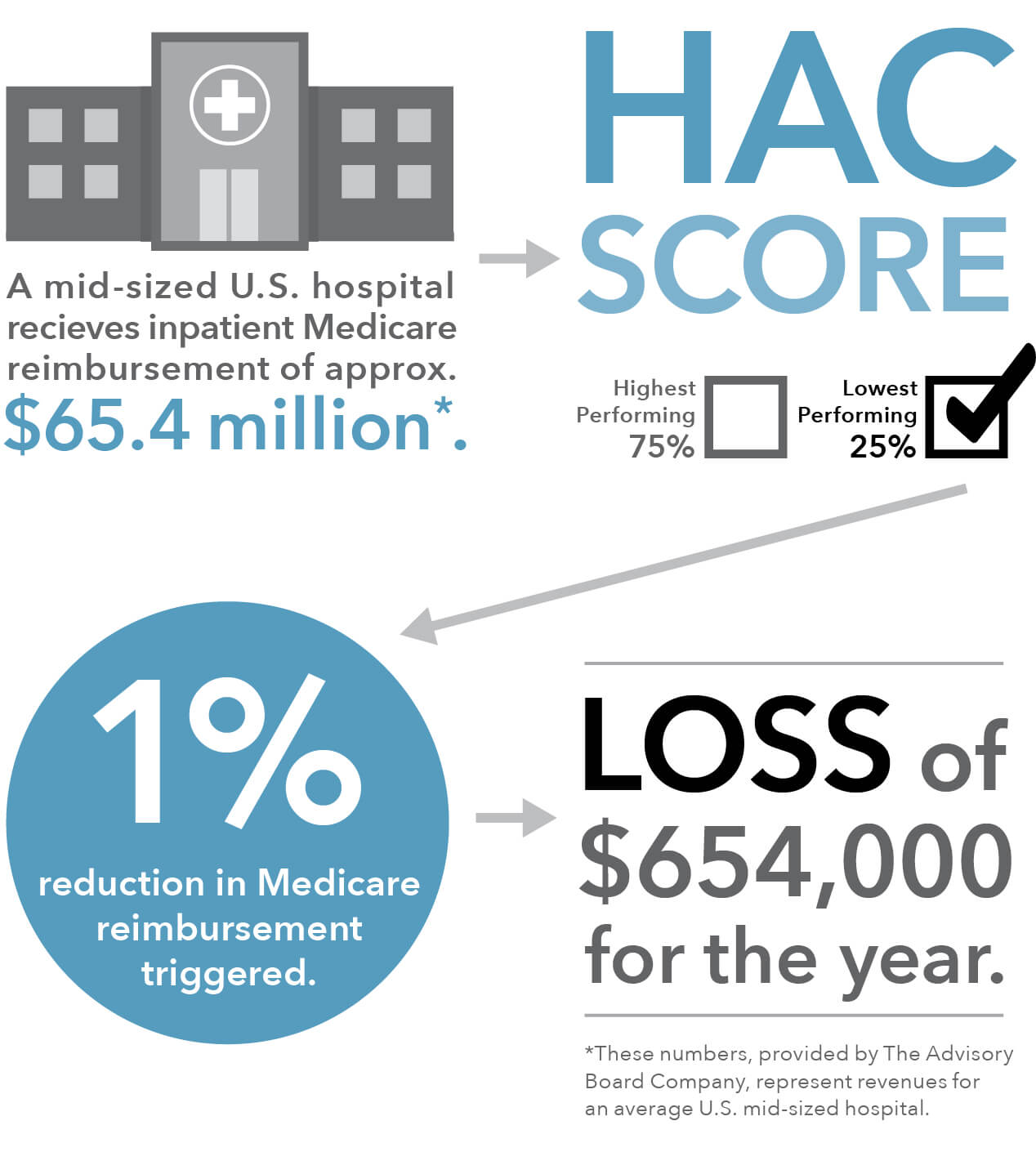
Understanding the Hospital-Acquired Condition (HAC) Reduction Program |  Interventional Radiology

Of the 764 hospitals the Centers for Medicare and Medicaid Services (CMS) is penalizing this year with a one percent reduction in Medicare payments for scoring in the bottom quartile in the Hospital-Acquired Condition Reduction (HAC) Program, 38 also earned a five-star rating from CMS for overall quality of care.

This paradox is in part because Medicare’s star ratings compare a hospital’s safety and quality to a calculated average, whereas the HAC program requires Medicare to penalize the lowest-performing quartile of hospitals each year, even if they are showing improvement, or if the difference between low- and high-performing hospitals is miniscule.

The Gist: The promise of Medicare’s pay-for-performance incentive programs has not materialized, and is unlikely to be driving true clinical improvement. In addition to being confusing and tedious to comply with, the programs lack impact because penalties and rewards are too small to impact a hospital’s bottom line—the benefits don’t justify the costs of redesigning care processes or changing behavior. With years of evidence that many of these ACA-era quality programs aren’t producing the desired results, it’s time to find more effective ways of improving patient outcomes.

CMS releases 2023 Medicare Advantage and Part D Advance Notice

https://www.healthcarefinancenews.com/news/cms-releases-2023-medicare-advantage-and-part-d-advance-notice

The agency’s end goal for Medicare Advantage is to match CMS’ vision for its programs as a whole, with an emphasis on health equity.

On Wednesday, the Centers for Medicare and Medicaid Services released proposed payment policy changes for Medicare Advantage and Part D drug programs in 2023 that are meant to create more choices and provide affordable options for consumers. 

The Calendar Year 2023 Advance Notice for Medicare Advantage and Part D plans is open to public comment for 30 days. This year, CMS is soliciting input through a health equity lens on the approach to some future potential changes.

The agency’s end goal for Medicare Advantage is to match CMS’ vision for its programs as a whole, which Administrator Chiquita Brooks-LaSure said is “to advance health equity; drive comprehensive, person-centered care; and promote affordability and the sustainability of the Medicare program.”

CMS is proposing an effective growth rate of 4.75% and an overall expected average change in revenue of 7.98%, following a 4.08% revenue increase planned for 2022.

WHAT’S THE IMPACT?

CMS is requesting input on a potential change to the MA and Part D Star Ratings that would take into account how well each plan advances health equity. 

The agency is also requesting comment on including a quality measure in MA and Part D Star Ratings that would assess how often plans are screening for common health-related social needs, such as food insecurity, housing insecurity and transportation problems.

The Health Equity Index has been tasked with creating more transparency on how MA plans care for disadvantaged beneficiaries. 

Additionally, CMS is requesting input on considerations for assessing the impact of using sub-state geographic levels of rate setting for enrollees with end-stage renal disease, particularly input regarding the impact of MA payment on care provided to rural and urban underserved populations and how such payment changes may impact health equity.

Other areas in which CMS is soliciting input include a variety of payment updates, a new measure concept to assess whether and how MA plans are transforming care by engaging in value-based models with providers’ and updates to risk-adjustment models to continue to pay appropriately for people enrolled in MA and Part D plans.

Public comments on the Advance Notice must be submitted by March 4. The Medicare Advantage and Part D payment policies for 2023 will be finalized in the 2023 Rate Announcement, which will be published no later than April 4.

REACTION

The proposed rule has already elicited reaction from various organizations, including Better Medicare Alliance.

“As we continue to review the Advance Notice in further detail, we appreciate that CMS has offered a thoughtful proposal that will help ensure stability for the millions of diverse seniors and individuals with disabilities who count on Medicare Advantage,” Mary Beth Donahue, president and CEO of the Better Medicare Alliance, said, adding that the proposal furthers the shared goal of improving health equity.

Medicare Advantage has proven its worth for seniors and taxpayers – providing lower costs, meaningful benefits that address social determinants of health, better outcomes and greater efficiencies for the Medicare dollar,” she said. “A stable rate for 2023 ensures this work can continue. On behalf of our 170 Ally organizations and over 600,000 beneficiary advocates, we applaud CMS for putting seniors first by issuing an Advance Notice that protects coverage choices, advances health equity and preserves affordability for beneficiaries.”

AHIP also responded, with President and CEO Matt Eyles pointing out that for 2022 the average Medicare Advantage monthly premium dropped to $19, down more than 10% since 2021.

“We agree that MA plans play an essential role in improving health equity and addressing the social determinants of health that impact millions of seniors and people with disabilities,” he said. “We support CMS soliciting input on ways to advance these important goals.

“Medicare Advantage enjoys strong bipartisan support because it provides America’s seniors and people with disabilities with access to affordable, high-quality healthcare services,” said Eyles. “We will continue to review the 2023 rate notice and look forward to providing constructive feedback to CMS during the comment period.”

THE LARGER TREND

CMS’ Advance Notice follows a recent congressional letter in which 346 bipartisan members of Congress declared support for Medicare Advantage and urged the agency “to provide a stable rate and policy environment” for the program in 2023.

A December 2021 Morning Consult poll showed that 94% of Medicare Advantage beneficiaries are satisfied with their coverage, while 93% believe that protecting MA should be a priority of the Biden administration.