The Mu variant is on the rise. Scientists weigh in on how much to worry.

https://www.nationalgeographic.com/science/article/the-mu-variant-is-on-the-rise-scientists-weigh-in-on-how-much-to-worry?cmpid=org=ngp::mc=crm-email::src=ngp::cmp=editorial::add=SpecialEdition_20210910::rid=C1D3D2601560EDF454552B245D039020
Laboratory studies suggest this variant may be better at avoiding the immune system but lags Delta when it comes to transmission and infecting cells.

One of the newest variants of COVID-19, known as Mu, has spread to 42 countries, but early studies suggest that it is less easily transmitted than the dangerous Delta variant, which has triggered a resurgence of the pandemic in the U.S. and many other countries.

Mu quickly became the dominant strain in Colombia, where it was first detected in January, but in the U.S., where the Delta virus is dominant, it has not spread significantly. After reaching a peak at the end of June, the prevalence of the Mu variant in the U.S. has steadily declined.

Scientists believe that the new variant cannot compete with the Delta variant, which is highly contagious. “Whether it could have gone higher or not if there was no Delta, that’s hard to really say,” says Alex Bolze, a geneticist at the genomics company Helix.

In Colombia, however, the Mu variant is responsible for more than a third of the COVID-19 cases. There have been 11 noteworthy variants to date, which the World Health Organization has named for the letters of the Greek alphabet. The newest variant, Mu, is the 12th. WHO has labeled this latest version of SARS-CoV-2 a Variant of Interest, a step below a Variant of Concern. 

Delta and three other variants have drawn the highest level of concern. But a Variant of Interest, like Mu still raises worries. Mu has many known mutations that can help the virus escape immunity from vaccines or previous infection.

Still, the good news is that Mu is unlikely to replace Delta in places like the U.S. where it is already predominant, says Tom Wenseleers, evolutionary biologist and biostatistician at the Catholic University of Leuven in Belgium, who previously estimated the transmissibility and impact of Alpha variant in England.

How is Mu different? 

Most genetic sequences reveal that Mu has eight mutations in its spike protein, many of which are also present in variants of concern: Alpha, Beta, Gamma, and Delta.

Some of Mu’s mutations, like E484K and N501Yhelp other variants evade antibodies from mRNA vaccines. In the Beta and Gamma variants, the E484K mutation made the variants more resistant to a single dose of mRNA vaccines.

A study, not yet peer reviewed, has shown that the P681H mutation helps transmission of the Alpha variant—it may do the same for Mu. 

Mu also harbors novel mutations that haven’t been seen in variants before, so their consequences are not fully understood. Mutation at the 346 position disrupts interaction of antibodies with the spike protein, which, scientists say, might make it easier for the virus to escape.

A study using epidemiological models, not yet peer reviewed, estimates that Mu is up to twice more transmissible than the original SARS-CoV-2 and caused the wave of COVID-19 deaths in Bogotá, Colombia in May, 2021. This study also suggests that immunity from a previous infection by the ancestral virus was 37 percent less effective in protecting against Mu.

“Right now, we do not have [enough] available evidence that may suggest that indeed this new variant Mu is associated with a significant [..] change in COVID,” says Alfonso Rodriguez-Morales, the President of the Colombian Association of Infectious Diseases.

But some clues are emerging that Mu can weaken protection from antibodies generated by existing vaccines. Lab-made virus mimicking the Mu variant were less affected by antibodies from people who had recovered from COVID-19 or were vaccinated with Pfizer’s Comiranty. In this study, not yet peer reviewed, Mu was the most vaccine resistant of all currently recognized variants.

In another lab-based study, antibodies from patients immunized with Pfizer’s vaccine were less effective at neutralizing Mu compared to other variants. 

“[Mu] variant has a constellation of mutations that suggests that it would evade certain antibodies—not only monoclonal antibodies, but vaccine and convalescent serum-induced antibodies—but there isn’t a lot of clinical data to suggest that. It is mostly laboratory […] data,” said Anthony Fauci, director of the National Institute of Allergy and Infectious Diseases, at a White House press briefing on September 2.

The COVID-19 vaccines—Pfizer, Astra Zeneca, Johnson & Johnson, and Sinovac, all of which are available in Colombia—still seem to offer good protection against Mu, according to Rodriguez-Morales.

How prevalent is Mu?

The Mu variant rapidly expanded across South America, but it is difficult to know for sure how far Mu has spread, according to Paúl Cárdenas, microbiologist at Universidad San Francisco de Quito in Ecuador.

“[Latin American countries] have provided very low numbers of sequences, compared with the numbers of cases that we have,” says Cárdenas. South American countries have sequenced just 0.07 percent of their total SARS-CoV-2 positive cases, although 25 percent of global infections have occurred in the region. This contrasts with 1.5 percent of all positive cases sequenced in the U.S. and 9.3 percent of all positive cases sequenced in the U.K.

“We are not necessarily looking at the reality of the distribution of the variants [in Latin America], because of the limitations in performing genome sequencing,” says Rodriguez-Morales.

That said, except in Columbia where Mu has been spreading since late February, the variant is becoming relatively less frequent globally, including in the rest of South America.

“Additional evidence on Mu is scarce, similar to Lambda and other regionally prevalent variants, because of limited capacity for follow-up studies, and because these variants have not yet been a significant threat in high-income countries like Delta is,” says Pablo Tsukayama, a microbiologist at Universidad Peruana Cayetano Heredia in Lima, Peru. He hopes the WHO’s designation of Mu as a variant of interest will change that.
The Fourth U.S. Wave of COVID-19 Could Be Ebbing. The Fifth Might Be Worse

Fourth COVID Wave Could Be Ebbing. The Fifth Might Be Worse | Time

We May Be in for a Repeat of Last Winter

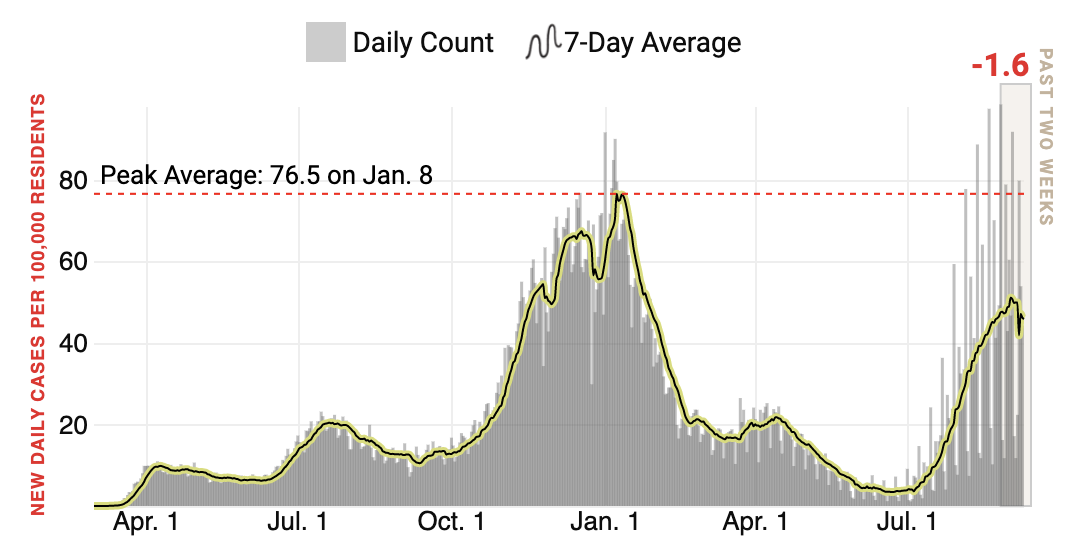
It may feel like eons ago, but try to recall summer 2020: While there were coronavirus surges in some parts of the country, national case rates were low. In some areas, the virus almost faded away entirely. But of course, the respite didn’t last. Cases began rising again in the fall of 2020, peaking at an average of more than 250,000 per day in January 2021.

The U.S. may be in for something even worse this year, my colleague Chris Wilson warns.

After a heartbreakingly bad summer, the virus’ spread appears to be ebbing, Chris writes. As of today, the U.S. is reporting about 145,000 diagnoses per day—too high for comfort, but at least a modest downward trend from over 160,000 daily cases at the end of August. In many hotspot states, diagnoses are significantly lower than they were a month or two ago.

But kids are now returning to school, cooler weather will force social gatherings indoors and holiday travel season will soon be upon us. With the highly contagious Delta variant now the dominant strain and millions of Americans still unvaccinated, we may be heading for a repeat of last year.

Of course, the situation isn’t exactly the same. More than half the population (and counting) is fully vaccinated, and many other people have at least some level of natural immunity after surviving an infection. That will certainly help keep cases down, but it may not be enough. As Chris points out, seven U.S. states set new daily case records this summer, even with vaccines widely available. As long as there are millions of unvaccinated people in the U.S., the virus will find a way to spread—particularly when it’s as contagious as the Delta variant.

So what can you do? At the risk of sounding like a broken record, the advice is the same as ever: get vaccinated if you haven’t, get your kids vaccinated if they’re old enough, wear masks if you gather with people indoors and stay home if you feel unwell.

President Joe Biden’s announcement Thursday that broadly expanded mandatory COVID-19 vaccinations or at least compulsory weekly testing is a sign, possibly, that the administration sees the writing on the wall. Even with tentative but promising signs that the fourth wave of surging cases in COVID-19 in the United States, dating back to the first days of summer, was waning, without drastic measures, the fifth will be catastrophically worse.

The new requirements are estimated to affect about 100 million people, including most federal workers and a substantial number of private sector employees—many of whom are already vaccinated. This would largely affect working-age residents (age 18-64), who currently number above 200 million, of whom 59.8% are vaccinated, according to TIME’s analysis of daily figures from the U.S. Centers for Disease Control and Prevention. That leaves more than 80 million who remain unvaccinated, though the White House orders will only cover a fraction of them.

The question is now: What happens this fall and winter, when children are at school and Americans once again travel for the holidays? In spite of desperate warnings from the CDC that people stay home for last year’s holiday, they largely did not, which led to the third spike in cases, which reached heights that dwarfed the first two. That doesn’t bode well for Christmas 2021, especially given that, in this current, fourth wave, seven states have already surpassed their previous peaks in cases (with another four doing nearly as poorly):

Within the next several days, we may see a modest surge from travel over the Labor Day weekend, but the real test will come in about two months—still all too soon. The holidays always sneak up on us. Under one possibility, many millions of Americans may be bolstered by a booster shot of the COVID-19 vaccine, though this will be scant protection for those who have yet to receive a first.

Evidence that surging cases could inspire more unvaccinated Americans to change their mind was initially encouraging, but did not extend indefinitely. Should the fourth wave recede considerably, it may take a fifth to convince a significantly greater number.

Cartoon – State of the Union (Unvaccinated)

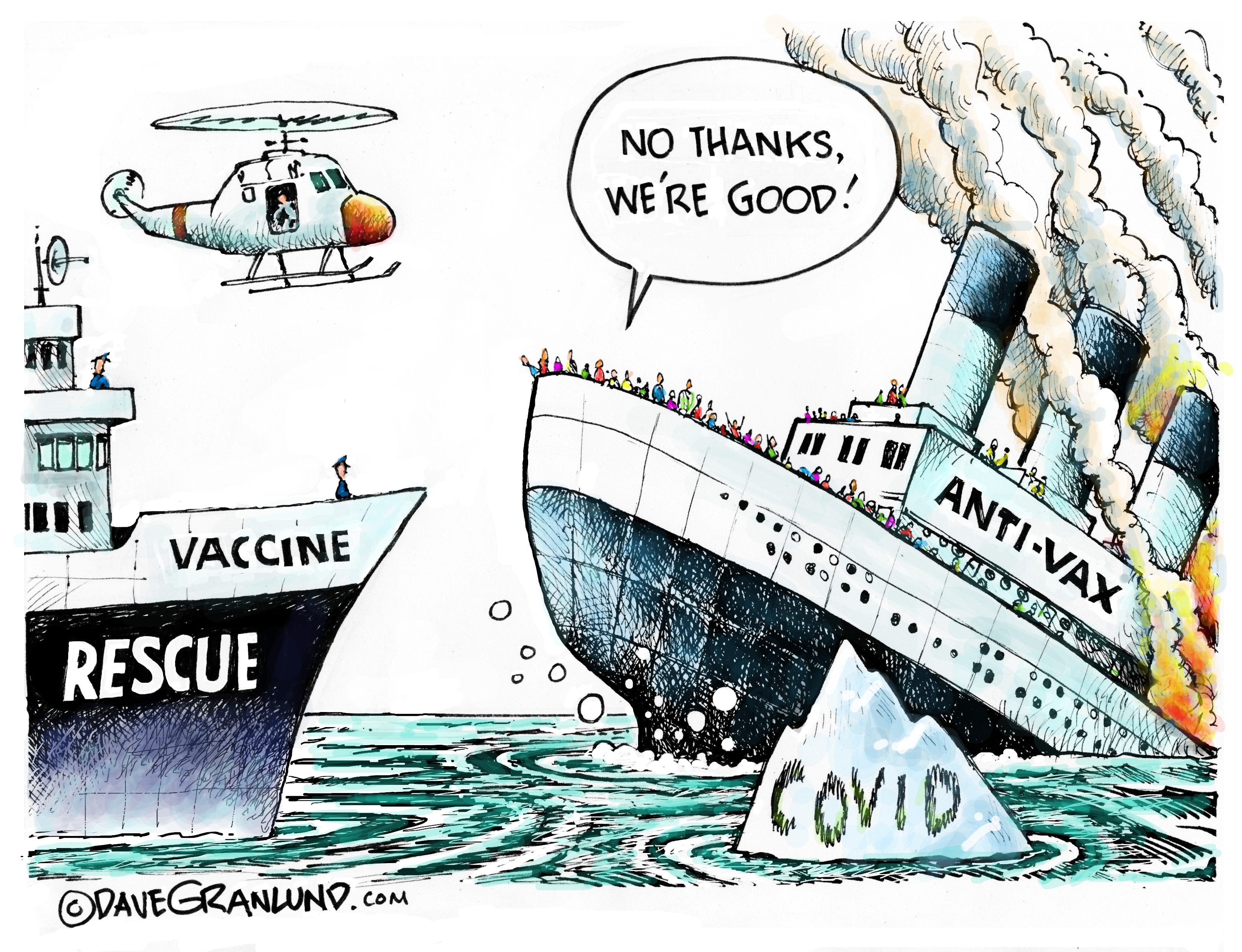
Dave Granlund cartoon on anti-vaccination people

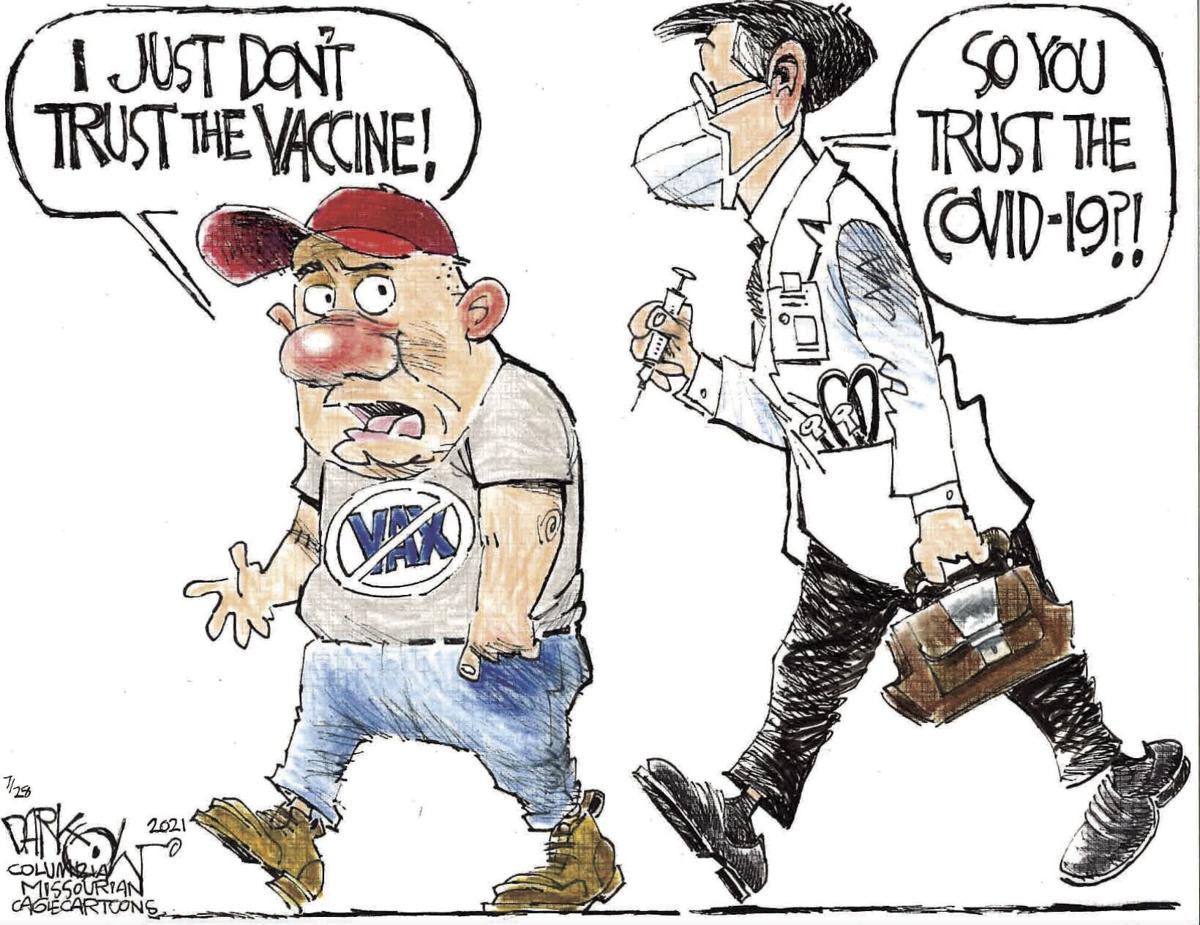
Cartoon – Misplaced Trust

Shareef: Intellectualism and COVID Vaccinations | Columnists | roanoke.com

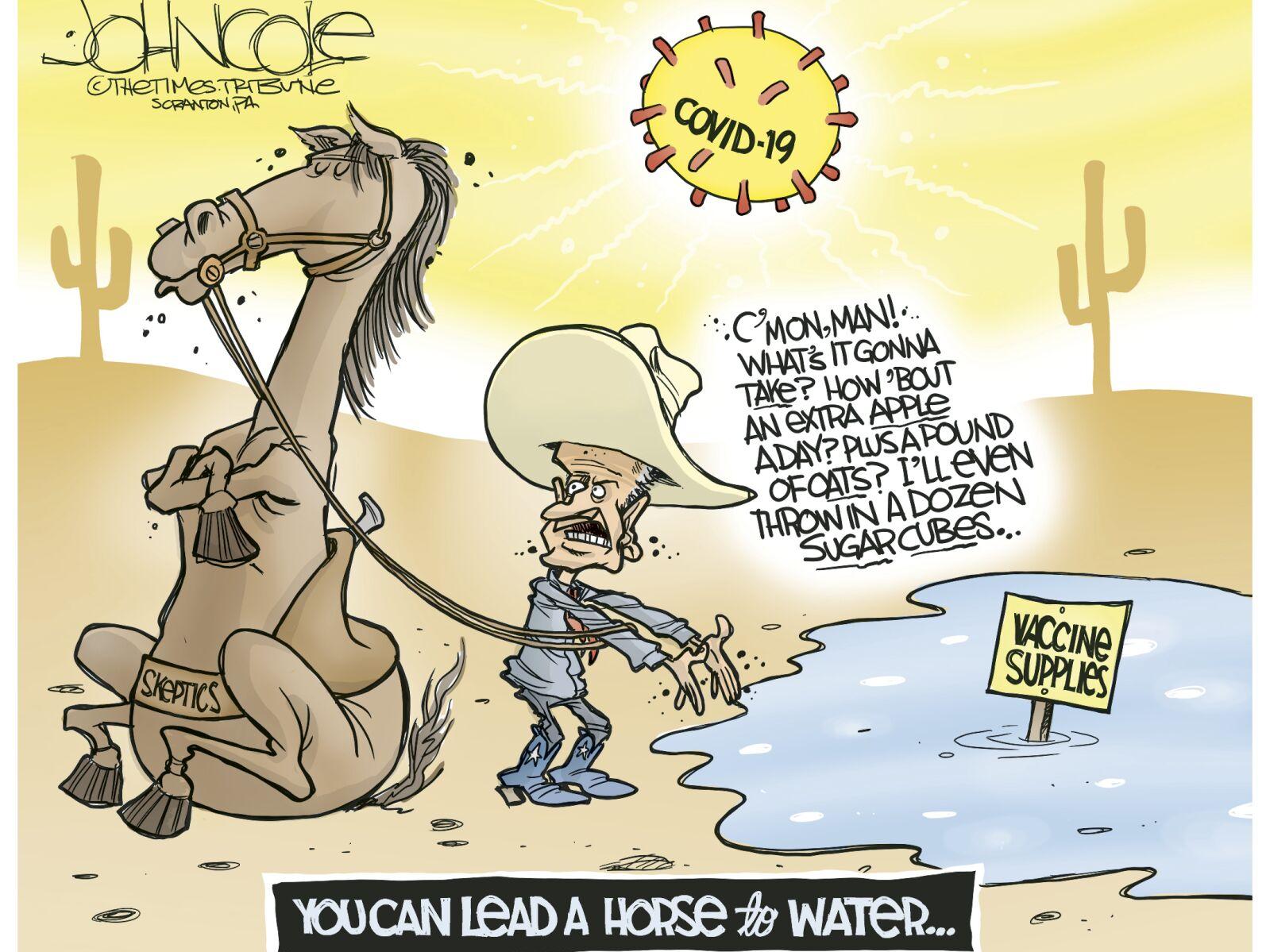
Cartoon – You can lead a horse to water

Octavio N. Martinez Jr.: Equity is playing a part in vaccine hesitancy in  Texas | Columnists | wacotrib.com

The Research on Ivermectin and Covid-19

Interest in the antiparasitic drug Ivermectin has increased drastically as of late thanks to the belief that it can help to prevent and/or treat Covid-19. In today’s episode we examine recent data on the efficacy of Ivermectin as an antiviral and discuss the history behind how it gained this reputation.

Implementing a long overdue vaccine mandate

https://mailchi.mp/60a059924012/the-weekly-gist-september-10-2021?e=d1e747d2d8

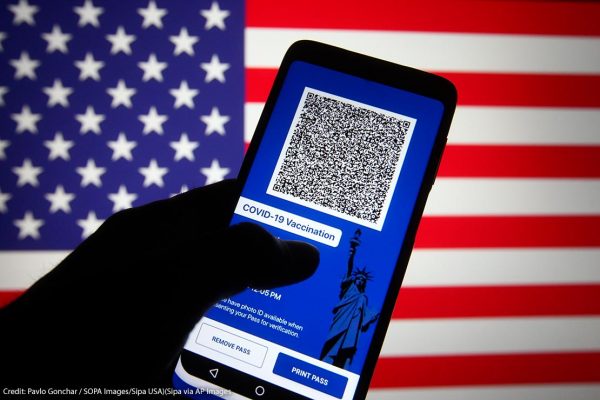
There's a Lot That Can Go Wrong With 'Vaccine Passports'

Declaring that “our patience is wearing thin” with Americans who refuse to be vaccinated against COVID-19, President Biden announced sweeping new plans to implement vaccine mandates on Thursday.

Businesses that employ more than 100 people must require their employees to get vaccinated or face weekly COVID testing, federal workers and contractors must be vaccinated or face disciplinary measures, and all healthcare organizations that receive Medicare or Medicaid funds must ensure 100 percent employee vaccination as a condition of continued participation in those federal payment programs. The healthcare component of the mandate will impact about 17 million workers, including those at hospitals, surgery centers, dialysis facilities, and home health agencies. The Centers for Medicare & Medicaid Services (CMS) already requires nursing home workers to be vaccinated, and yesterday announced plans to release a new regulation by October 1st, implementing the expanded mandate. According to Fierce Healthcare, at least 172 hospital systems have already announced some form of vaccine mandate, but others have expressed concerns that forcing workers to get vaccinated might exacerbate labor shortages and result in employees seeking work elsewhere.
 
Responding to President Biden’s announcement, the American Hospital Association (AHA) echoed those concerns, citing “the critical challenges that we are facing in maintaining the resiliency of our workforce.” In our view, that concern pales in comparison to the imperative to protect patients by reducing the potential for exposure by unvaccinated caregivers. If anything, the national healthcare mandate should provide cover for those hospitals and care providers that have shied away from mandates, letting other organizations take the lead. Once universal healthcare mandates are implemented, vaccine resistant workers will find few employment alternatives left, significantly dampening the risk of widespread resignations. If you don’t want to take the necessary precautions to keep patients safe, you shouldn’t be working in healthcare in the first place. Yesterday’s mandate announcement, while aggressive, is overdue.

The number that sticks out

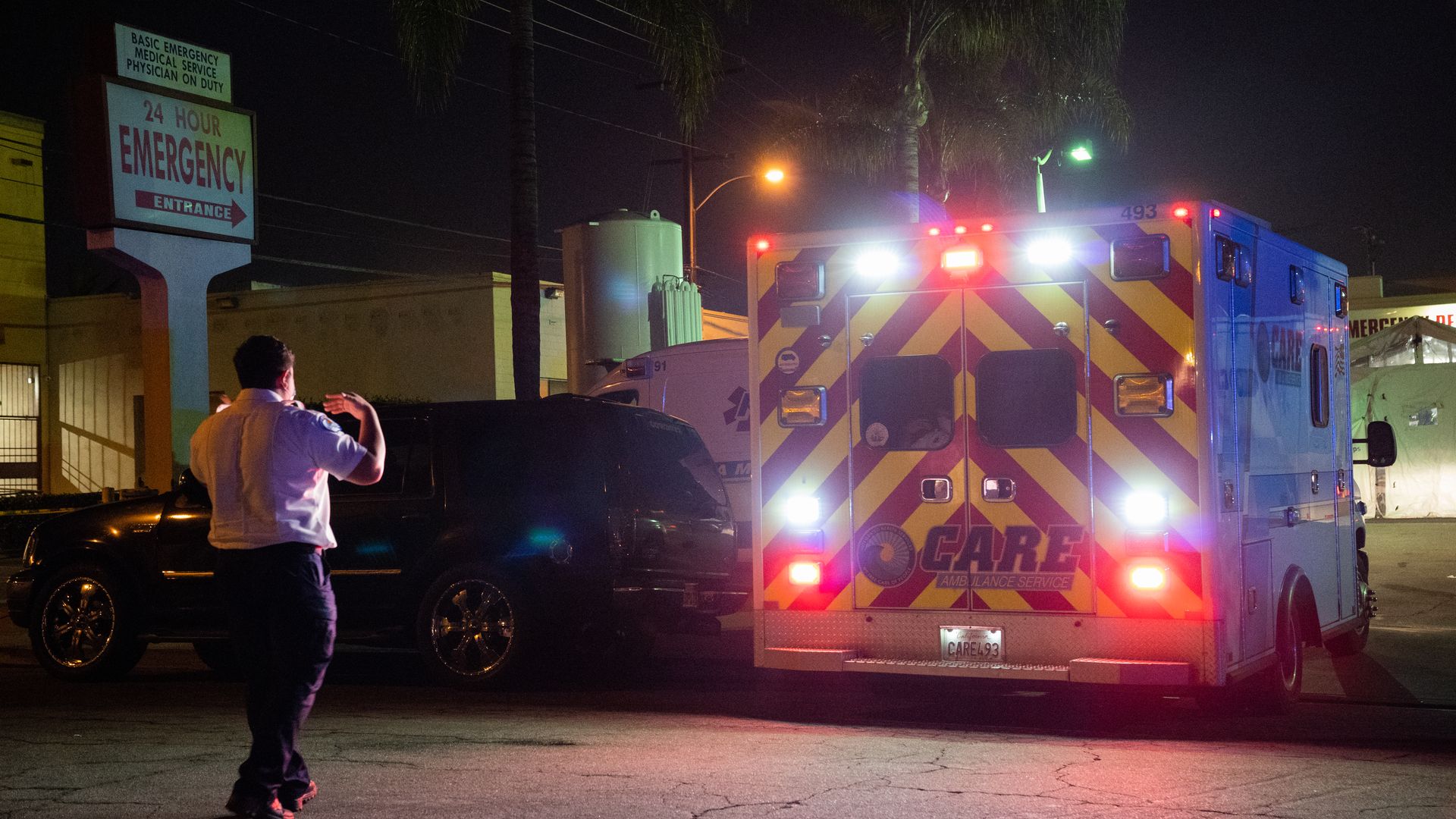
An EMT directs an ambulance outside the emergency room of the East Los Angeles Doctors Hospital.

Not a typo: Unvaccinated people are 11 times more likely to die of COVID than those who’ve gotten the shot, the CDC found.

By the numbers: Of 37,948 hospitalizations in 13 jurisdictions studied between April and July, 2,976 patients— or about 8% — were vaccinated, Axios’ Noah Garfinkel reports.

  • Of 6,748 deaths, 616 — or about 9% — were people who were fully vaccinated.

The three vaccines “showed continued robust protection for all adults — greater than 82 percent — for hospitalization, emergency room and urgent care trips,” The Washington Post reports.

  • Another study found the Moderna vaccine most effective against Delta. But Pfizer and J&J also worked.

20 Years Since 9/11: Why the U.S. Should Vaccinate the World

When will a coronavirus vaccine be ready? | Coronavirus | The Guardian

Earlier this week, David States and Bill Gardner argued that the U.S. should lead the developed nations in a program to immunize the entire human population. The Washington Post reported that President Biden is expected to call for a global vaccine summit conference.

David and Bill wrote that we should do this because it would save many lives. Perhaps this is all that needs to be said. We also argued that the U.S. stood to benefit if we could substantially reduce the number of global covid cases. This would reduce U.S. coronavirus exposure and slow the rate of evolution of new coronavirus variants. The economic cost to the U.S. of a more severe pandemic could easily be greater than the cost of making and distributing the vaccine. If so, the global vaccination effort would pay for itself.

There is, however, another moral argument for global vaccination, this one tied to 9/11 and the ensuing global war on terror. Since 9/11, the U.S. has engaged in 20 years of warfare in countries across the world.

The consequences of that war have been catastrophic. According to the Watson Institute at Brown University,

At least 801,000 people have been killed by direct war violence in Iraq, Afghanistan, Syria, Yemen, and Pakistan… The U.S. post-9/11 wars have forcibly displaced at least 38 million people in and from Afghanistan, Iraq, Pakistan, Yemen, Somalia, the Philippines, Libya, and Syria. This number exceeds the total displaced by every war since 1900, except World War II.

Of course, much of that violence was committed by al-Qaeda, ISIS, or the Syrian government. Some of the civil wars that have followed 9/11 might have happened anyway. Nevertheless, Americans failed to limit their 9/11 response to the specific individuals who carried out the attacks. This was a principal cause of the ensuing death and displacements.

So now, the U.S. is known not only for baseball and democracy but also for drone strikes and torture. If we led an effort to vaccinate the world, it would be one of the largest humanitarian actions in history. We should do this to set an example and balance the effects of the global war on terror.