Why we’re numb to 250,000 coronavirus deaths

https://www.axios.com/coronavirus-death-toll-psychological-reaction-f5aab275-1c93-444e-9914-5b0bf8fe07d9.html

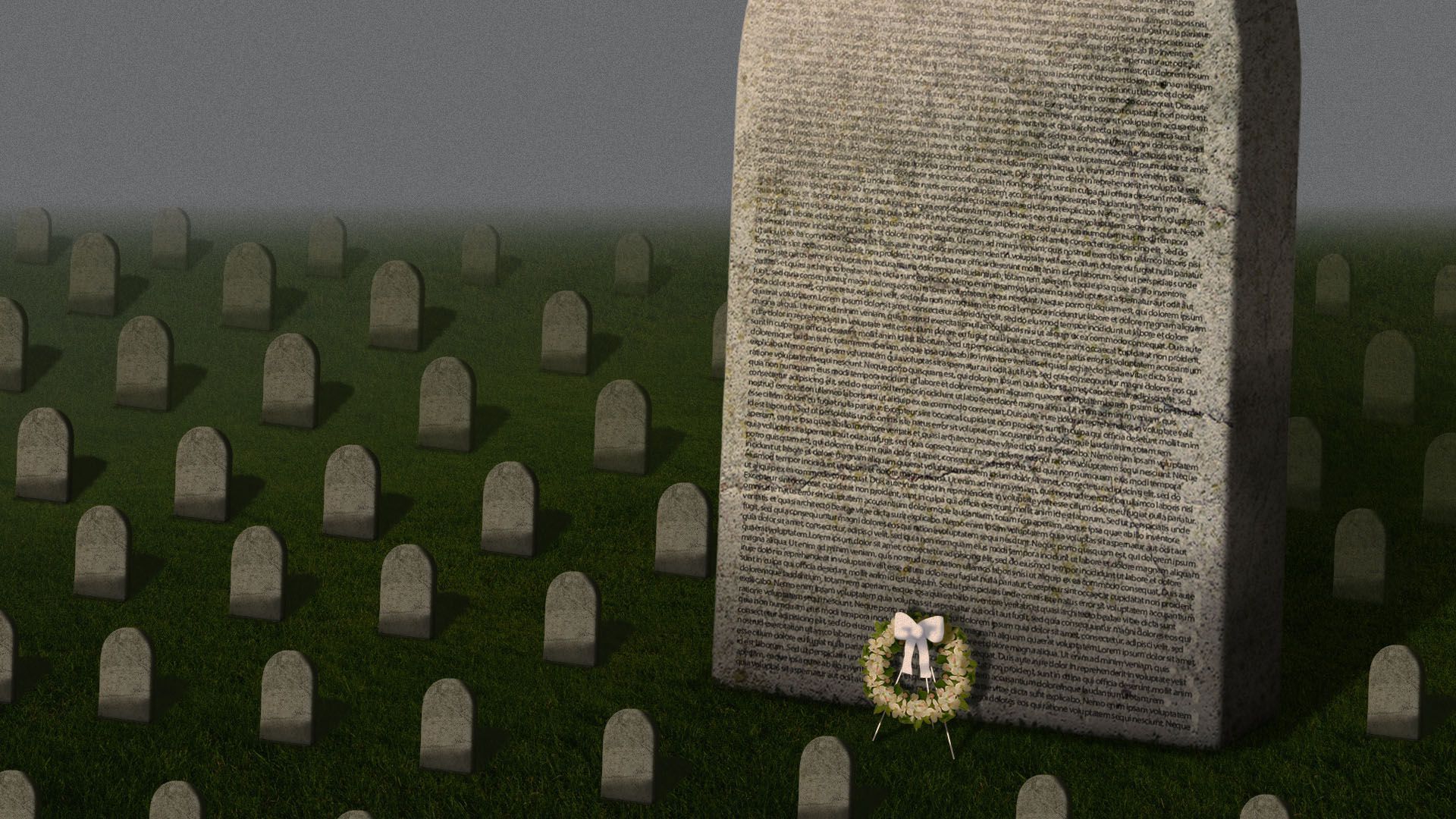
Illustration of a graveyard with one giant tombstone

The U.S. passed 250,000 confirmed deaths from COVID-19 this week, a figure that is truly vast — too vast, perhaps, for us to comprehend.

Why it matters: The psychic numbing that sets in around mass death saps us of our empathy for victims and discourages us from making the sacrifices needed to control the pandemic, whileit hampers our ability to prepare for other rare but potentially catastrophic risks down the road.

By the numbersThe sheer scale of the U.S. death toll from COVID-19 can be felt in the lengths media organizations have gone to try to put the numbers in perspective. 250,000 deaths is:

  • Ten times the number of American drivers and passengers who die in car crashes each year, according to CNN.
  • More than twice the number of American soldiers who died in World War I, according to NPR.
  • Enough to draw a vast hole in America’s heartland, if the deaths had all been concentrated in one area, according to the Washington Post.

Even if we try our best to grasp mass death, we inevitably come up against cognitive biases, says Paul Slovic, a psychologist at the University of Oregon who studies human judgment and decision-making.

  • The biggest bias is scope neglect: as the scale of deaths and tragedy grows, our own compassion and concern fail to keep pace. As the title of one of Slovic’s papers on the subject goes: “The more who die, the less we care.”

This is, of course, not rational — by any reasonable, moral calculation, we should find 250,000 deaths commensurately more horrifying than a smaller number. But in practice we don’t, almost as if we had a set capacity for empathy and concern that tops out well below the scale of a pandemic.

  • It doesn’t help that for most of us — save bereaved family members and health care workers on the front line — those deaths go unseen, hidden behind the walls of hospitals and funeral homes.
  • In a news culture driven by the visual — and equipped with a psychology moved by identifiable victims over mere numbers — that makes these deaths feel that much more unreal, and for some, that much easier to deny altogether.
  • Combined with the habituation to trauma that has set in after months of the pandemic, it shouldn’t be surprising that most of us are doing much less to fight the spread of COVID-19 now than we were in the spring, when the number of sick and dead were far lower.

How it works: In a study following the 1994 Rwandan genocide, in which 800,000 people were killed in a matter of months, Slovic and his colleagues asked a group of volunteers to imagine they were in charge of a refugee camp.

  • They had to decide whether or not to help 4,500 refugees get access to clean water. Half were told the camp held 250,000 refugees, and half were told it held 11,000.
  • The study subjects were much more willing to help if they thought they were assisting 4,500 people out of 11,000, and less willing if it was 4,500 out of 250,000 people. They were reacting to the proportion of those who would be helped, while neglecting the scope of the raw number.
  • Relatedly,in a 2014 study, Slovic found a decrease in empathy and a consequent drop in donations to save sick children as the number of victims rose, with effects being seen as soon as one child became two.

What to watch: These same cognitive biases make it difficult for us to fully appreciate chronic threats like climate change, or to prepare for rare but catastrophic risks in the future — like a pandemic.

  • Given how hardwired these biases are, our best bet is to try to steer into them, and keep in mind that each of these 250,000 deaths tells an individual story.
  • As the survivor Abel Herzberg said of the Holocaust: “There were not six million Jews murdered; there was one murder, six million times.”

The bottom line: As the death toll rises, it will take willful effort not to become numb to what’s happening. But it is an effort that must be made.
Sanford Health CEO: I’ve had COVID-19, won’t wear a mask as ‘symbolic gesture’

Sanford Health CEO to be inducted into SD Hall of Fame

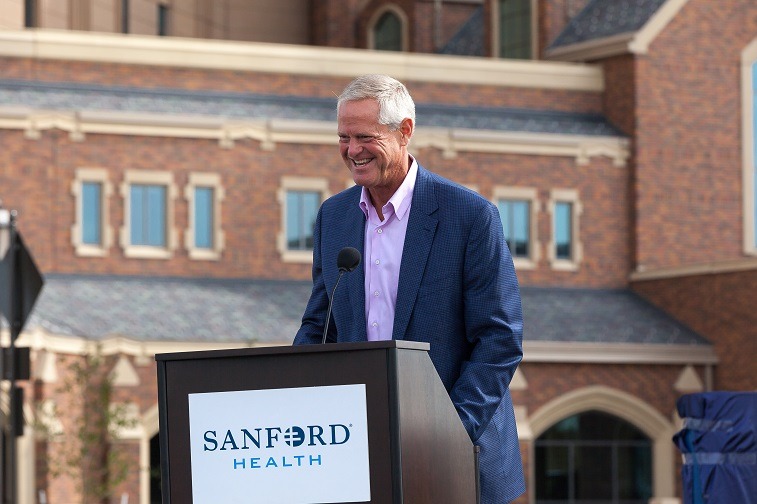
Sioux Falls, S.D.-based Sanford Health President and CEO Kelby Krabbenhoft shared his thoughts about having COVID-19 and why he won’t be wearing a mask in an email to health system staff, according to the Grand Forks Herald

In the 1,000-word email sent Nov. 18, Mr. Krabbenhoft said he had COVID-19, but he’s now back in his office working without a mask. He said he won’t be wearing a mask because doing so would only be a “symbolic gesture.” He considers himself immune from the virus.

“The information, science, truth, advice and growing evidence is that I am immune for at least seven months and perhaps for years to come, similar to that of chicken pox, measles, etc. For me to wear a mask defies the efficacy and purpose of a mask and sends an untruthful message that I am susceptible to infection or could transmit it,” Mr. Krabbenhoft wrote. “I have no interest in using masks as a symbolic gesture when I consider that my actions in support of our family leave zero doubt to my support of all 50,000 of you. My team and I have a duty to express the truth and facts and reality and not feed the opposite.” 

The CDC says those who have had COVID-19 should take steps to reduce the risk of spreading the virus, including wearing a mask in public places and staying at least 6 feet away from other people. 

In his email, Mr. Krabbenhoft argues the “on-again, off-again” use of masks is absurd. “Masks have been a symbolic issue that frankly frustrates me,” he wrote. 

“On the other hand, for people who have not contracted the virus and may acquire it and then spread it … it is important for them to know that masks are just plain smart to use and in their best interest,” Mr. Krabbenhoft wrote. 

The health system CEO concluded his letter by sharing his optimism for the future, noting that some Sanford Health workers would be among the first to get a COVID-19 vaccine once it is available. 

Sanford Health didn’t respond to Becker’s Hospital Review‘s request for comment by deadline. 

Read the Grand Forks Herald article here, which includes full text of the email Mr. Krabbenhoft sent to employees.

Time to End Covid Denialism

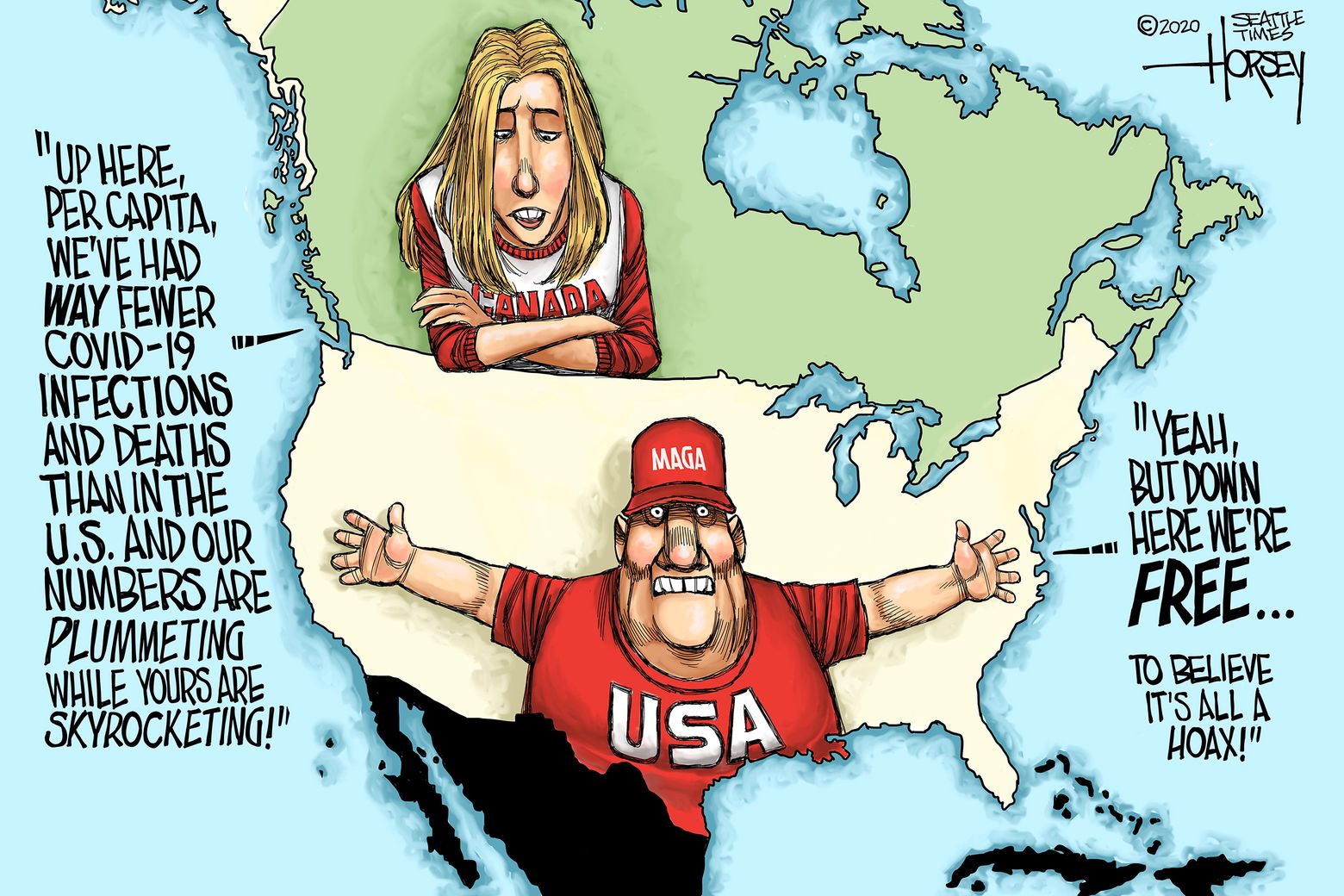
Cartoon – Price of Freedom

A B- for Canada, an F for the U.S. | The Seattle Times

States split on COVID-19 responses as cases surge

https://thehill.com/homenews/state-watch/525952-states-split-on-covid-19-responses-as-cases-surge?rnd=1605382007

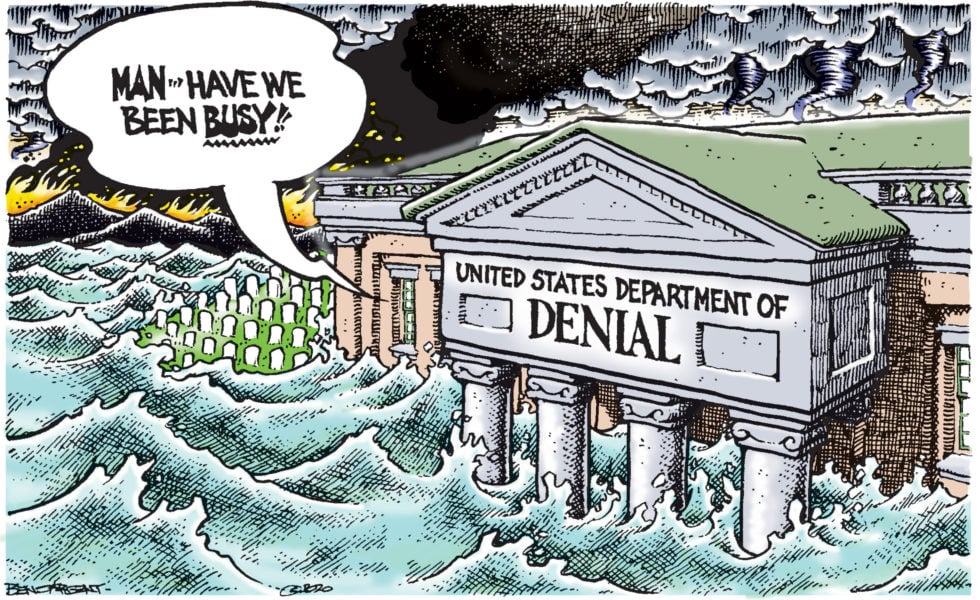
Ben Sargent

Governors across the country are grappling with an alarming surge of coronavirus cases and hospitalizations, so far putting forward a fractured response.

Despite the escalating public health crisis, many governors have taken only modest actions; most states still allow major sources of spread such as bars and indoor restaurants to remain open.

President Trump on Friday touted progress on a vaccine but did not announce any major new steps aimed at slowing the spread of the virus in the short term, and he is leaving most of those decisions to states.

Experts are urging governors to impose stronger measures such as closing bars and gyms, prohibiting indoor dining, mandating masks, and advising people to limit in-person gatherings.

“There are many very troubling warning signs in outbreaks across the U.S.,” said Anita Cicero, deputy director of the Johns Hopkins Center for Health Security. “I do feel that more immediate action is required.”

While most state actions have been relatively minor, stricter rules are starting to pop up, particularly from states with Democratic officials, underscoring the red versus blue divide on public health measures reminiscent of earlier this year.

New Mexico Gov. Michelle Lujan Grisham (D) on Friday instructed residents to stay home except for essential business, and Chicago Mayor Lori Lightfoot (D) issued a similar advisory. More such orders could be coming as the situation worsens.

Experts for the most part are not calling for a return to full-scale lockdowns, saying much has been learned since the spring about how the virus spreads, and there is little reason to stop low-risk activities such as curbside pickup from a store.

But significant sources of spread such as bars, indoor restaurants and gyms should be closed in hard-hit areas, they said.

Many states have not taken those steps, despite the ever-mounting case counts.

The country is now recording an unprecedented 150,000 new cases every day, with hospitalizations at record levels of more than 60,000 and deaths at around 1,000 per day and starting to rise. Hospitals in some areas are reaching capacity and becoming overwhelmed.

These trends show no signs of slowing as temperatures get colder and more activity moves indoors.

Just 13 states have closed their bars, according to a tracker from the Kaiser Family Foundation.

But there’s bipartisan pressure for states to do more.

A Washington Post op-ed on Wednesday — authored by Richard Danzig, Navy secretary under former President Clinton; James Lawler, an infectious disease doctor at the University of Nebraska; and Tom Bossert, a former homeland security adviser to President Trump — called on states to take three specific actions: limit indoor gatherings to no more than 10 people, close indoor restaurants and bars, and require masks in public.

The authors said those steps should be taken in any region where there are more than 20 new cases per 100,000 people per day. Forty states are already above that threshold, according to the COVID Exit Strategy tracking site.

Still, governors in some of the hardest-hit states have resisted actions such as statewide mask mandates and bar closures.

Iowa Gov. Kim Reynolds (R) has long opposed a statewide mask mandate, but amid the worsening outbreak, she issued an order last week requiring masks at businesses such as barbershops and at large gatherings.

At the same time, she emphasized that she did not want to close businesses.

“You can still eat in a restaurant, you can still go to a movie and work out at a gym, and in many states you can’t do that,” she said at a press conference on Tuesday. “Iowa is open for business, and we intend to keep it that way.”

Mississippi Gov. Tate Reeves (R) struck a similar note in an address on Thursday.

“We’re trying to open things up but to do it in a safe, responsible way,” he said. “We’re not going to shut down businesses. We’re not going to have long term mandates with no end in sight.”

On Capitol Hill, congressional leaders have been deadlocked over a new round of economic aid, which could provide relief for businesses such as bars and restaurants and allow them to temporarily close to slow the spread of the virus without taking a major financial hit.

“There needs to be a policy lever to help support and maintain those small businesses,” said Preeti Malani, chief health officer and professor of medicine at the University of Michigan.

In New York City, bars and restaurants are still open, with a new 10 p.m. curfew. But the prospect of schools closing has sparked criticism about the city’s priorities.

“If NYC closes schools and continues to allow indoor dining our priorities are totally backwards,” tweeted New York City Council member Mark Levine.

Malani said schools have been a “good-news situation” and have not been a significant source of transmission.

“If the balance is between keeping the bars open and keeping the schools open, that’s an easy decision in my mind,” she said.

Celine Gounder, a coronavirus adviser to President-elect Joe Biden, made a similar point on Friday.

“Some of those higher-risk places are, for example, restaurants, bars and gyms, whereas schools are not zero risk, but they’re much much lower risk, and they’re an essential service really,” she told CNBC. “So I think we need to close only those things that really are contributing to the spread and really try to let as much as possible remain open, like schools, if they’re not contributing to spread.”

Anthony Fauci, the government’s top infectious disease expert, said at an event hosted by the think tank Chatham House on Thursday that the news that Pfizer’s vaccine candidate was more than 90 percent effective in an interim analysis provides something of a light at the end of the tunnel.

That promising news, he said, should encourage people to take some tough steps for a few months until the vaccine is widely available.

“Ever since it became clear a few days ago that we have a really quite effective vaccine getting ready to deploy, [the message] is rather than ‘Hey. Don’t worry. You’re OK,’ it’s ‘Don’t stop shooting. The cavalry is coming. But don’t put your weapons down. You better keep fighting because they’re not here yet,'” Fauci said.

Cartoon – Covid Denialism

Cartoons

Cartoon – State of Denial

Granlund cartoon: State of denial

Cartoon – Covid Denial

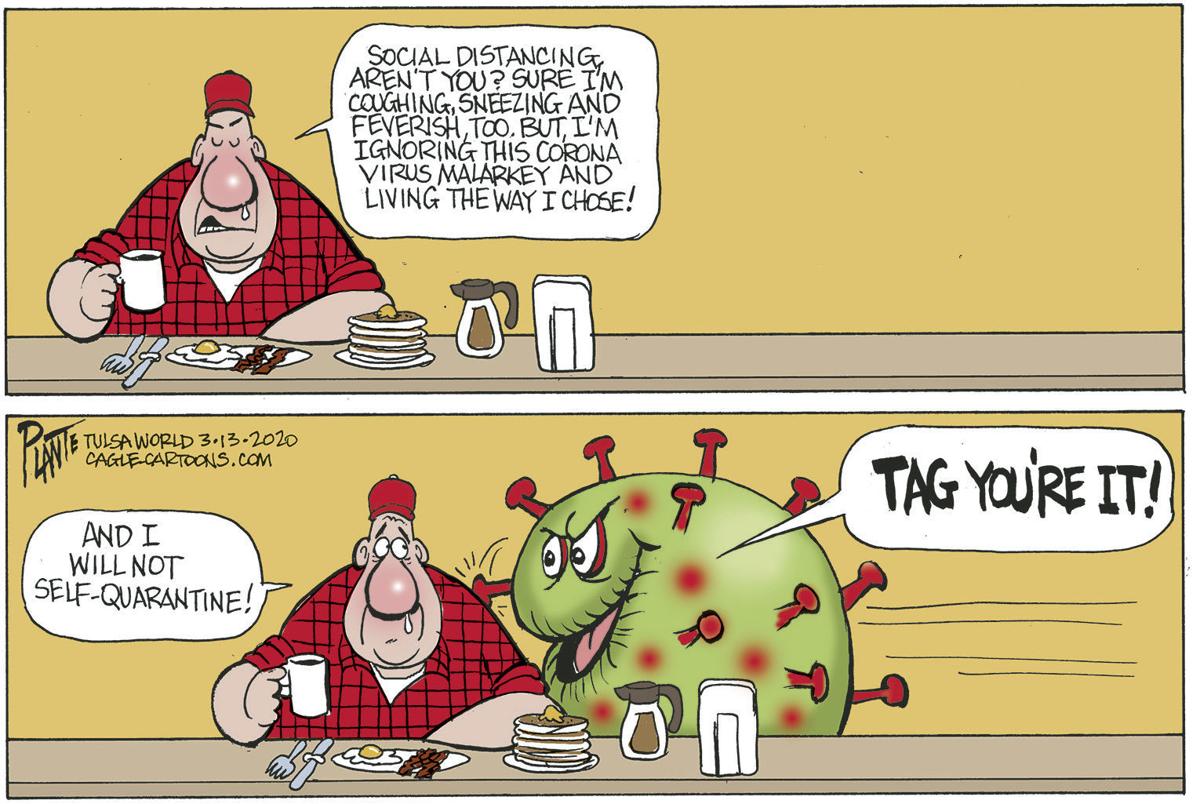
Bruce Plante Cartoon: Corona virus denial

Cartoon – State of the Union

ICYMI: Mask Deniers, Mandatory Meat, Gorilla Guardians & More | Sierra Club