Cartoon – What does your mask say about you?

Jim Morrissey: What does your coronavirus mask say about you ...

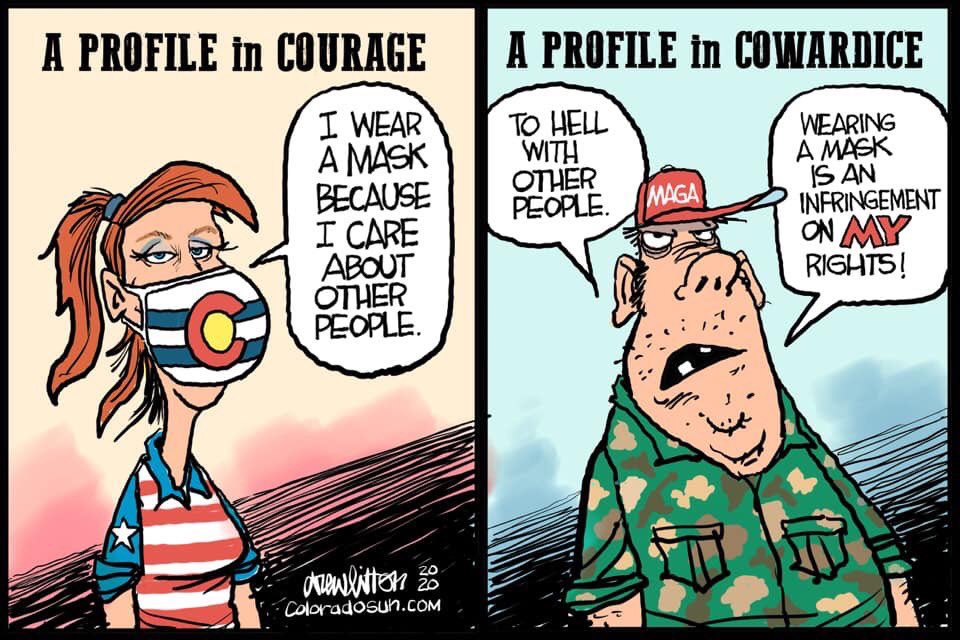
Cartoon – Profile in Courage vs. Cowardice

COVID-19 News - Updated Daily

Prosecuting the case against the COVID response

https://mailchi.mp/647832f9aa9e/the-weekly-gist-august-14-2020?e=d1e747d2d8

Bruce Plante Cartoon: Corona virus denial

This week, in her debut as running mate to presidential candidate Joe Biden, California Sen. Kamala Harris gave a preview of one of the Democratic ticket’s key arguments for the fall campaign, making a full-throated, prosecutorial case against the Trump administration’s handling of the coronavirus pandemic.

“The virus has impacted almost every country,” Harris said, “but there’s a reason it has hit America worse than any other advanced nation. It’s because of Trump’s failure to take it seriously from the start.

After receiving a briefing from public health experts on Thursday, Biden and Harris argued for a more comprehensive, aggressive national strategy to battle the virus, including major federal investment in contact tracing, a national mask mandate, and guaranteed free access to a COVID vaccine when it becomes available.

The remarks came as the US experienced the deadliest day of the summer so far, with nearly 1,500 COVID fatalities on Wednesday, and a seven-day rolling average of over 1,000 deaths per day for the last 17 days. Meanwhile, a new analysis by the New York Times, using data from the Centers for Disease Control and Prevention (CDC), indicated that the true US death toll from COVID may be as much as 35 percent higher than the reported total of 167K—a finding based on “excess deaths” above normal levels since March.

As President Trump continued to urge schools to reopen for in-person instruction nationwide, the White House released new guidance for ensuring students’ safe return to school. The guidance encouraged social distancing, frequent handwashing, better ventilation of school facilities, and the use of outdoor settings wherever possible.

Despite the President’s claim last week that children are “virtually immune” from the virus, a new analysis from the American Academy of Pediatrics and the Children’s Hospital Association showed that 97,000 children tested positive for COVID in the last two weeks of July alone, a 40 percent increase in the total number of known cases over that period.

About 340,000 children have tested positive so far, representing about 9 percent of all US cases. As schools face pressure to reopen, those numbers are likely to mount, and early-opening school districts in Georgia, Tennessee, Indiana, and Mississippi are already struggling to keep schools open amid rising cases.

Federal assistance to help schools deal with what seems like inevitable rounds of positive cases and closures is not forthcoming, however: after failing to reach a deal on another round of COVID relief, lawmakers have left Washington until September.

US coronavirus update: 5.2M cases; 167K deaths; 64.6M tests conducted.


U.S. records deadliest coronavirus day of the summer

https://www.axios.com/1485-us-coronavirus-death-record-5ee493cc-df91-4549-8c9d-43a5fee0bd87.html

U.S. records deadliest coronavirus day of the summer - Axios

The U.S. reported 1,485 deaths due to the coronavirus on Wednesday, COVID Tracking Project data shows.

Why it matters: It’s the highest single-day COVID-19 death toll since May 15, when the country reported 1,507 deaths. The U.S. has seen a total of 157,758 deaths from the virus.

The big picture: Georgia reported 109 deaths on Wednesday — its second triple-digit day in a row.

Go deeper: 5 states set single-day coronavirus case records last week


The two sides of America’s coronavirus response

https://www.axios.com/us-coronavirus-vaccine-testing-science-b656e905-67d1-4836-863e-c91f739cfd1e.html

The two sides of America's coronavirus response - Axios

America’s bungled political and social response to the coronavirus exists side-by-side with a record-breaking push to create a vaccine with U.S. companies and scientists at the center.

Why it matters: America’s two-sided response serves as an X-ray of the country itself — still capable of world-beating feats at the high end, but increasingly struggling with what should be the simple business of governing itself.

What’s happening: An index published last week by FP Analytics, an independent research division of Foreign Policy, ranked the U.S. 31st out of 36 countries in its assessment of government responses to COVID-19.

  • That puts it below developed countries like New Zealand and Denmark, and also lower than nations with fewer resources like Ghana, Kenya and South Africa.
  • The index cited America’s limited emergency health care spending, insufficient testing and hospital beds and limited debt relief.

By the numbers: As my Axios colleague Jonathan Swan pointed out in an interview with President Trump, the U.S. has one of the worst per-capita death rates from COVID-19, at 50.29 per 100,000 population.

Yes, but: Work on a COVID-19 vaccine is progressing astonishingly fast, with the Cambridge-based biotech company Moderna and the National Institutes of Health announcing at the end of July that they had begun Phase 3 of the clinical trial.

  • Their efforts are part of a global rush to a vaccine, and while companies in the U.K. and China are jockeying for the lead, U.S. companies and the NIH’s resources and expertise have been key to the effort.
  • Anthony Fauci has said he expects “tens of millions” of doses to be available by early 2021, a little over a year after the novel coronavirus was discovered.
  • If that turns out to be the case, “the Covid-19 vaccine could take a place alongside the Apollo missions as one of history’s greatest scientific achievements,” epidemiologist Michael Kinch recently wrote in STAT.

So which is the real American response to COVID-19? The bungled testing policies, the politically driven rush to reopen, the tragic racial divide seen in the sick and the dead? Or the warp-speed work to develop a vaccine in a year when most past efforts took decades?

Be smart: It’s both.

The bottom line: It can often feel as if there are two Americas, and not even a virus that has spread around the world seems capable of bridging that gap.


Rely on the science and avoid the politics, Fauci says

https://www.cnn.com/2020/08/12/health/us-coronavirus-wednesday/index.html?utm_source=nl&utm_brand=wired&utm_mailing=WIR_Science_081220&utm_campaign=aud-dev&utm_medium=email&utm_term=WIR_Science&bxid=5db707423f92a422eaeaf234&cndid=54318659&esrc=bounceX&source=EDT_WIR_NEWSLETTER_0_SCIENCE_ZZ

Science Day

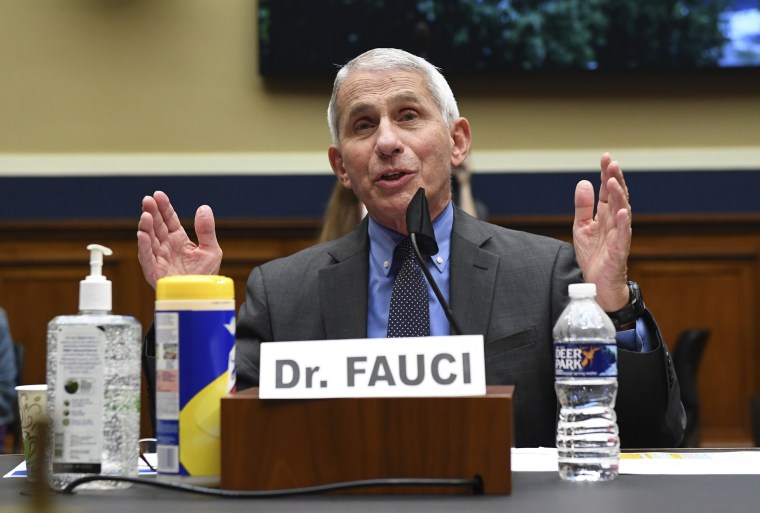
Although practices like wearing face coverings have been politicized, Dr. Anthony Fauci said Tuesday he has learned that in order to be a good public health leader in a crisis, you have to divorce yourself from politics, rely on science and be as transparent as possible.

“Completely divorce yourself from the kind of political undertones that sometimes go into an important outbreak like this,” Fauci, director of the National Institute of Allergy and Infectious Diseases, said as he was honored with a 2020 Citizen Leadership Award on Tuesday night by the Aspen Institute.
“You’ve got to stay away from that, lead by example, be perfectly honest and don’t be afraid to say you don’t know something when you don’t know it. I find that to be a very good formula when you’re dealing in a crisis.”
Even with the polarization, every state in the US passed at least one physical distancing measure in March to slow the spread, researchers from Harvard University and University College London said. Those measures worked, a new study found.
Physical distancing resulted in a reduction of more than 600,000 cases within just three weeks, according to the study, published Tuesday in the journal PLOS. Had there not been preventative interventions, the models suggest up to 80% of Americans would have been infected with Covid-19.
“In short, these measures work, and policy makers should use them as an arrow in their quivers to get on top of local epidemics where they are not responding to containment measures,” said the study’s co-author Dr. Mark J. Siedner in a news release.


Fauci: ‘I seriously doubt’ Russia’s coronavirus vaccine is safe and effective

https://thehill.com/policy/healthcare/511615-fauci-seriously-doubt-russias-coronavirus-vaccine-is-safe-and-effective?utm_source=Sailthru&utm_medium=email&utm_campaign=Issue:%202020-08-12%20Healthcare%20Dive%20%5Bissue:29035%5D&utm_term=Healthcare%20Dive

The White House has pushed Fauci into a little box on the side

Anthony Fauci, the nation’s top infectious diseases expert, said Tuesday that he has serious doubts about Russia’s announcement that it has a vaccine ready to be used for the novel coronavirus.

“Having a vaccine and proving that a vaccine is safe and effective are two different things,” Fauci said during a panel discussion with National Geographic.

The comments came just hours after Russian President Vladimir Putin said that the country had become the first in the world to gain regulatory approval for a COVID-19 vaccine.

Putin said that the vaccine went through clinical testing and that it had proven to offer immunity to the deadly disease, which has infected more than 20 million people worldwide, according to a Johns Hopkins University database.

However, phase three trials for the drug have reportedly not been completed, triggering skepticism from international health experts about its usefulness. 

Fauci, the director of the National Institute of Allergy and Infectious Diseases and a key member of the White House coronavirus task force, said that he had seen no evidence supporting Putin’s position. 

“I hope that the Russians have actually, definitively proven that the vaccine is safe and effective. I seriously doubt that they’ve done that,” he said, adding that Americans need to understand that the process for gaining vaccine approval requires safety and efficacy. 

More than 100 possible vaccines are being developed around the world as part of efforts to offer immunity protection for the coronavirus. Moderna, in collaboration with the National Institutes of Health, launched a phase three trial for a vaccine in July, making it the first U.S. candidate to reach that stage.

Fauci has said that he’s “cautiously optimistic” that a COVID-19 vaccine will be ready by the end of the year. He told a House committee on July 31 that he was encouraged by everything he’s seen in the early data but that “there’s never a guarantee that you’re going to get a safe and effective vaccine.”

The World Health Organization said Tuesday that it was monitoring Russia’s progress in developing a COVID-19 vaccine. Progress in combating the virus “should not compromise safety,” the health agency said.

Former Food and Drug Administration Commissioner Scott Gottlieb echoed Fauci’s skepticism earlier Tuesday, noting in a tweet that Russia has been behind disinformation campaigns related to the pandemic. 

“Today’s news that they ‘approved’ a vaccine on the equivalent of phase 1 data may be another effort to stoke doubts or goad U.S. into forcing early action on our vaccines,” he said.

Russia is reportedly planning to offer its COVID-19 vaccine to medical personnel as soon as this month. It will be made available to the general public in October, according to Reuters


Dr. Anthony Fauci says chance of coronavirus vaccine being highly effective is ‘not great’

https://www.cnbc.com/amp/2020/08/07/coronavirus-vaccine-dr-fauci-says-chances-of-it-being-highly-effective-is-not-great.html?utm_source=&utm_medium=email&utm_campaign=32192

KEY POINTS
  • White House coronavirus advisor Dr. Anthony Fauci that the chances of scientists creating a highly effective vaccine — one that provides 98% or more guaranteed protection — for the virus are slim.
  • Scientists are hoping for a coronavirus vaccine that is at least 75% effective, but 50% or 60% effective would be acceptable, too, he said.
  • The FDA has said it would authorize a coronavirus vaccine so long as it is safe and at least 50% effective.

White House coronavirus advisor Dr. Anthony Fauci said Friday that the chances of scientists creating a highly effective vaccine — one that provides 98% or more guaranteed protection — for the virus are slim.

Scientists are hoping for a coronavirus vaccine that is at least 75% effective, but 50% or 60% effective would be acceptable, too, Fauci, director of the National Institute of Allergy and Infectious Diseases, said during a Q&A with the Brown University School of Public Health. “The chances of it being 98% effective is not great, which means you must never abandon the public health approach.”

“You’ve got to think of the vaccine as a tool to be able to get the pandemic to no longer be a pandemic, but to be something that’s well controlled,” he said.

The Food and Drug Administration has said it would authorize a coronavirus vaccine so long as it is safe and at least 50% effective. Dr. Stephen Hahn, the FDA’s commissioner, said last month that the vaccine or vaccines that end up getting authorized will prove to be more than 50% effective, but it’s possible the U.S. could end up with a vaccine that, on average, reduces a person’s risk of a Covid-19 infection by just 50%.

“We really felt strongly that that had to be the floor,” Hahn said on July 30, adding that it’s “been batted around among medical groups.”

“But for the most part, I think, infectious disease experts have agreed that that’s a reasonable floor, of course hoping that the actual effectiveness will be higher.”

A 50% effective vaccine would be roughly on par with those for influenza, but below the effectiveness of one dose of a measles vaccination, which is about 93% effective, according to the Centers for Disease Control and Prevention.

Public health officials and scientists expect to know whether at least one of the numerous potential Covid-19 vaccines in development worldwide is safe and effective by the end of December or early next year, though there is never a guarantee. Drug companies Pfizer and Moderna both began late-stage trials for their potential vaccines last week and both expect to enroll about 30,000 participants.

Fauci has previously said he worries about the “durability” of a coronavirus vaccine, saying if Covid-19 acts like other coronaviruses, it may not provide long-term protection.

Health officials say there is no returning to “normal” until there is a vaccine. Fauci’s comment came a day after the World Health Organization cautioned about the development of vaccines, reiterating that there may never be a “silver bullet” for the virus, which continues to rapidly spread worldwide. The phase three trials underway do not necessarily mean that a vaccine is almost ready to be deployed to the public, the agency said.

“Phase three doesn’t mean nearly there,” Mike Ryan, executive director of the WHO’s emergencies health program, said during a virtual panel discussion with “NBC Nightly News” Anchor Lester Holt hosted by the Aspen Security Forum. “Phase three means this is the first time this vaccine has been put into the general population into otherwise healthy individuals to see if the vaccine will protect them against natural infection.”

While there is hope scientists will find a safe and effective vaccine, there is never a guarantee, WHO Director-General Tedros Adhanom Ghebreyesus said.

“We cannot say we have vaccines. We may or may not,” he said.

On Friday, Fauci reiterated that he is “cautiously optimistic” scientists will find a safe and effective vaccine. He also reiterated that the coronavirus may never be eliminated, but world leaders can work together to bring the virus down to “low levels.”

Some of Fauci’s comments have been at odds with President Donald Trump, who has repeatedly said the virus would “disappear.”

Trump, who is seeking reelection, said Thursday that it’s possible the United States could have a safe and effective vaccine for the coronavirus before the upcoming presidential election on Nov. 3.


97,000 children reportedly test positive for coronavirus in two weeks as schools gear up for instruction

https://www.cbsnews.com/news/covid-19-kids-school-children-positive-tests-coronavirus-reopening/?utm_source=nl&utm_brand=wired&utm_mailing=WIR_Science_081020&utm_campaign=aud-dev&utm_medium=email&utm_term=WIR_Science&bxid=5db707423f92a422eaeaf234&cndid=&esrc=bounceX&source=EDT_WIR_NEWSLETTER_0_SCIENCE_ZZ

97,000 children reportedly test positive for coronavirus in two ...

Nearly 100,000 children tested positive for the coronavirus in the last two weeks of July, a new report from the American Academy of Pediatrics finds. Just over 97,000 children tested positive for the coronavirus from July 16 to July 30, according to the association.

Out of almost 5 million reported COVID-19 cases in the U.S., CBS News’ Michael George reports that the group found that more than 338,000 were children.

Vanderbilt University’s Dr. Tina Hartert hopes increased testing of children will help determine what role they play in transmission, as school districts around the country return to some form of school. She is leading a government-funded study that saw DIY testing kits sent to some 2,000 families.

“The kits are shipped to the families, they are taught how to collect these samples, and then the samples are sent back by the families to a central repository,” she said.

In New York City, home to the nation’s largest school district, Mayor Bill de Blasio announced a return to in-person schooling in the fall and pledged officials “have worked incessantly to get this right.”

“They’ve looked at examples from all over the world of what will keep the school community safe, and they’ve made a series of choices of how to do things from the health and safety lens first, while also making sure we can educate our kids,” he said in a Friday press conference.

De Blasio gave parents until Friday night to register students for in-person instruction, remote learning or a hybrid.

More than 25 children died of the coronavirus in July alone. Pressure to get kids back into the classroom has left superintendents in more than 13,000 different school districts across the country to figure out how to keep children safe amid a myriad of public health advisories, and handle learning differences.

Niles, Michigan Superintendent Dan Applegate is hoping Plexiglas could be a solution for children with speech impediments to be able to participate in class.

He demonstrated by speaking behind a transparent slate at a press conference.

“As I’m sitting here and I can articulate,” Applegate said. “The student on the other side will be wearing a mask. Then I can put my mask on, and that student can drop their mask and articulate as well.”

Indiana’s Lawrence Township is cleaning school buses with a hospital-grade disinfectant spray for students still needing rides to school.

“You’re going to see a very clean and disinfected bus,” Transportation Director Matt Miles said. “We actually have fogging machines.”

However, they are not expecting many students to get on the bus — 35% of children in the area are expected to learn remotely, while other school districts in the U.S. will not open at all.


2005 chloroquine study had nothing to do with COVID-19 and the drug wasn’t given to humans

https://www.politifact.com/factchecks/2020/jul/29/facebook-posts/2005-chloroquine-study-had-nothing-do-covid-19-and/?fbclid=IwAR2e4j_lb10FWa5Cyuokzo3pbjlty_ffvwsEfVT_2iQ6ki8a9z-TpzDm9DQ

PolitiFact | 2005 chloroquine study had nothing to do with COVID ...

IF YOUR TIME IS SHORT

  • The 2005 study wasn’t published by the NIH and didn’t prove chloroquine was effective against “COVID-1” because that’s not a real disease.
  • The study found that chloroquine could inhibit the spread of Severe Acute Respiratory Syndrome in animal cell culture, and the authors said more research was needed.
  • There are currently no approved medications or treatments for COVID-19.


Chloroquine is back.

The anti-malarial drug first showed up as a possible COVID-19 treatment around May 2020, when President Donald Trump said he had been taking its chemical cousin, hydroxychloroquine, to prevent getting infected with the virus.

Since then, some studies have found that the drugs could help alleviate symptoms associated with COVID-19, but the research is not conclusive. There are currently no FDA-approved medicines specifically for COVID-19. (Chloroquine is chemically similar to hydroxychloroquine, but it is a different drug that’s primarily used to treat malaria. Both carry a particular risk for people with heart problems, plus other possible side effects.)

Now, hydroxychloroquine and chloroquine have been thrust back into the spotlight as misinformation about the drugs’ effectiveness and safety recently reappeared online.

One such post on Facebook falsely claims that Americans have been deceived because health officials at the National Institutes of Health have known all along that chloroquine is effective against “COVID.”

The post reads:

“N.I.H. 15 years ago published a study on chloroquine. It is effective against COVID-(1). We are being lied to America!”

The post was flagged as part of Facebook’s efforts to combat false news and misinformation on its News Feed. (Read more about our partnership with Facebook.) 


This is flawed. 

First, there’s no such thing as “COVID-1.” COVID-19 was named for the year it was discovered, not because it’s the 19th iteration. 

Second, the 2005 study found that chloroquine was effective on primate cells infected with severe acute respiratory syndrome, known as SARS, which is caused by a coronavirus. But while the two share similarities, SARS-CoV and COVID-19 are different diseases, and primate cells are far from human patients.

Third, the study was indexed by the NIH’s National Library of Medicine, but the NIH was not involved. It was published in the peer-reviewed Virology Journal and conducted by researchers from the Centers for Disease Control and Prevention and the Montreal Clinical Research Institute.


What the study says

The study was published in August 2005 and found that chloroquine has “strong antiviral effects on SARS-CoV infection of primate cells” and that it was effective on cells treated with the drug before and after exposure to the virus.

The drug was not administered to actual SARS patients, and the study’s authors wrote that more research was needed on how the drug interacts with SARS in animal test subjects.

“Cell culture testing of an antiviral drug against the virus is only the first step, of many steps, necessary to develop an antiviral drug,” Kate Fowlie, a spokesperson for the CDC previously told PolitiFact in an email. “It is important to realize that most antivirals that pass this cell culture test hurdle fail at later steps in the development process.”

Dr. Alex Greninger, assistant director of clinical virology at the University of Washington School of Medicine, told us that a problem in virology is trying to determine the difference of how drugs work in cell culture in comparison to humans.

“Data on chloroquine is largely taken from these cell culture studies, but we now have trials in people on hydroxychloroquine that show it’s not as effective,” Greninger said, “and there’s new data out in the last week that suggests that some of the reasons could be because of the cell types that SARS coronaviruses grow in, and this original experiment was done on African green monkey kidney cells, which is not the tissue we are really worried about.”


What officials say about the drugs now

The Food and Drug Administration granted emergency use authorizations for some medicines to be used for certain patients hospitalized with COVID-19, but it revoked the authorization for hydroxychloroquine and chloroquine in mid-June due to concerns over the drugs’ serious side effects. There are currently no FDA-approved medicines for COVID-19.

“It is no longer reasonable to believe that oral formulations of HCQ and CQ may be effective in treating COVID-19, nor is it reasonable to believe that the known and potential benefits of these products outweigh their known and potential risks,” FDA Chief Scientist Denise M. Hinton wrote.

The NIH’s COVID-19 treatment guidelines, which were developed to inform clinicians on how to care for patients with COVID-19, also currently recommend against the use of chloroquine or hydroxychloroquine for COVID-19 treatment, except in a clinical trial.

But even those trials have been halted. The World Health Organization and the NIH announced in mid-June that they would stop hydroxychloroquine patient trials, citing safety concerns that include serious heart rhythm problems, blood and lymph system disorders, kidney injuries, and liver problems and failure.


Our ruling

A Facebook post says that the NIH published a study 15 years ago that showed chloroquine was effective against “COVID-(1)” and that health officials have been lying to the American people.

This is wrong. There’s no such thing as “COVID-1” and the study cited was not published by the NIH and had to do with animal cells infected with SARS, not COVID-19. The drug was not given to human patients and the study’s authors said more research was needed.

Health officials caution against the use of chloroquine or hydroxychloroquine to treat COVID-19 patients, citing the possibility of serious side effects. There are currently no approved treatments for the virus.

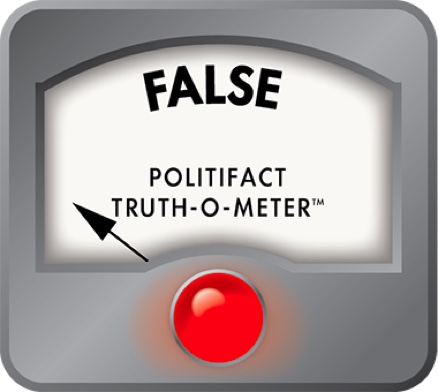
We rate this False.