

https://mailchi.mp/3675b0fcd5fd/the-weekly-gist-july-12-2019?e=d1e747d2d8

I recently had a conversation with the CEO of a regional health system we’ve worked with for many years. It’s a system at the forefront of the shift to risk-based contracting—rather than the 3-5 percent of revenue at risk common across the industry, his system already has a third of its revenue fully at risk. (That’s not counting performance bonuses and other “value-based” reimbursement—it’s true, delegated risk for total cost of care.)
The system managed to get to this point without owning its own insurance plan, but now the CEO is considering whether that’s the right next step, which was the topic of our discussion. We talked through the pros and cons of launching a provider-sponsored plan, which has proven to be a difficult step for many other health systems.
When I asked the CEO how his team was able to move so much faster to risk than other systems, he told me an important component of their approach was the incentive structure put in place for executives and facility leaders. Rather than continuing to pay bonuses based on hospital or system profitability, the board agreed to encourage executives to take a longer-term, strategic view by paying straight salary.
Eliminating P&L-based bonuses allowed leaders to focus on making the right decisions to transform the business, without being overly concerned about the short-term impact on profitability. It’s an idea worth considering for other systems committed to leaving fee-for-service behind. The critical ingredient, of course, is ensuring the board is fully bought into the strategy and has a high degree of trust in system executives to make the best long-term decisions on behalf of the organization.
https://mailchi.mp/3675b0fcd5fd/the-weekly-gist-july-12-2019?e=d1e747d2d8

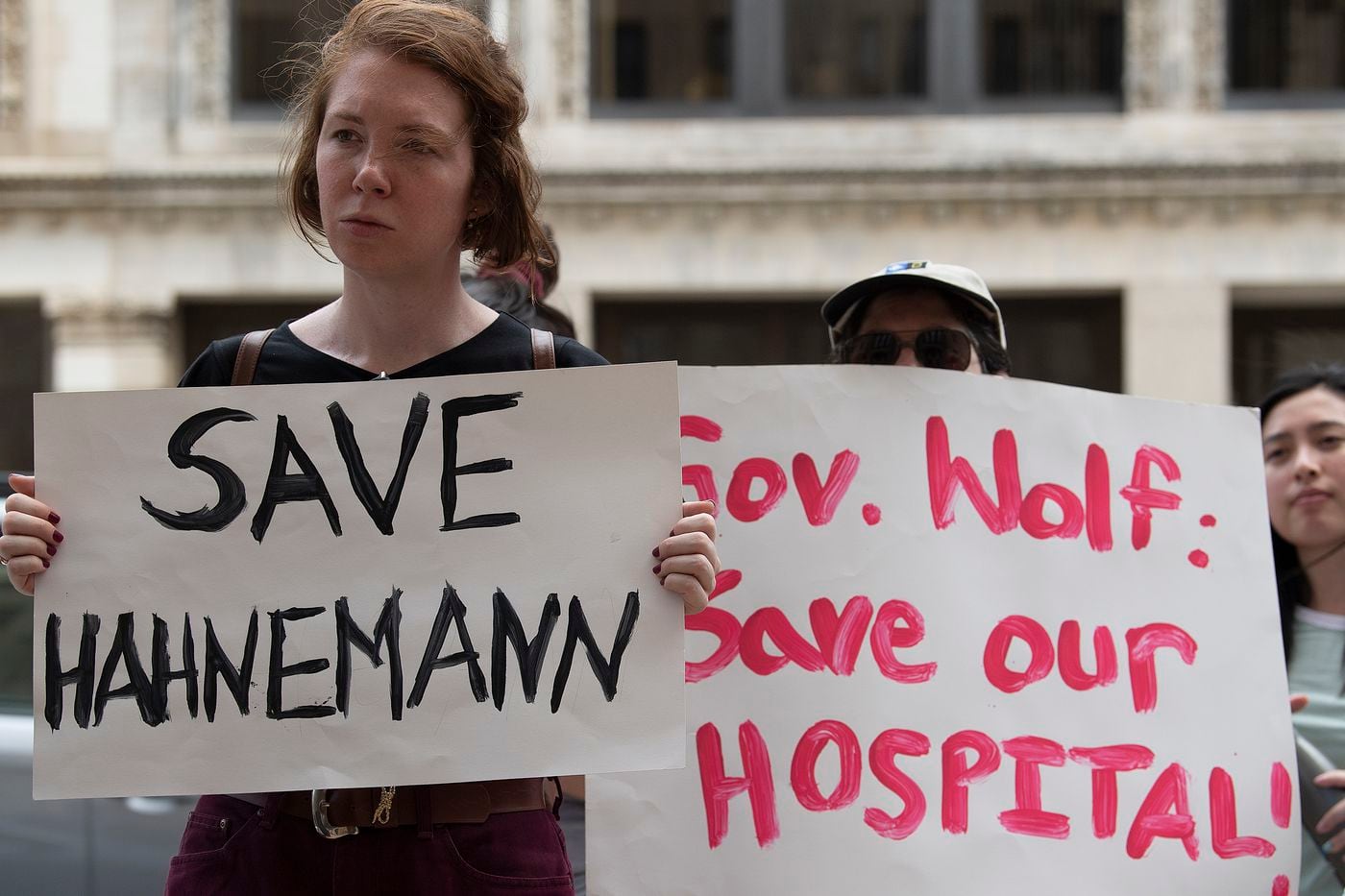
It’s been less than a month since Hahnemann University Hospital in Philadelphia, the primary teaching hospital for Drexel University College of Medicine, announced that it will close in September. (A judge this week ordered the hospital to remain open while final bankruptcy and closure plans are approved.) The hospital was acquired by for-profit firm American Academic Health System (AAHS) from Tenet Healthcare Corp. just last year. AAHS cited untenable and irreversible financial losses as the reason for closure.
Hahnemann’s shuttering not only deprives the city of a 150-year old institution providing a large portion of its healthcare safety net, but also displaces 570 resident physicians, many of whom just arrived to begin training. The Philadelphia Inquirer eloquently captured the personal stories behind and implications of the closure. Many industry experts, including us, have questioned whether the country may be better served by fewer, larger teaching and research centers. With four medical schools, Philadelphia is a market where there may be too many academic medical centers, each operating at suboptimal scale.
But the Hahnemann saga illustrates the myriad difficulties of actually closing a financially-strained teaching hospital: challenges of for-profit “turnaround” management and performance goals, disruption for hundreds of trainees, and impact on access for the neediest patients. Getting to the right academic training and care delivery model for a region won’t come from reactive responses to abrupt closures, but will require community, government, academic and hospital leaders across organizations to collaborate on a long-term plan aimed at delivering greater value, scale and productivity.
https://www.healthleadersmedia.com/finance/nonprofit-provider-pensions-remain-solidly-funded

Despite a volatile investment market, the median funded status of defined benefit pension plans for nonprofit healthcare organizations in 2018 was 85%, increasing nearly 5% due to a higher bond rate, according to an S&P Global Ratings report released Thursday afternoon.
Among nonprofit providers, Ponoma Valley Hospital Medical Center in California led the way with a 144.5% funding status, followed by Jackson County Schneck Memorial Hospital in Indiana and Northwestern Memorial Hospital in Illinois.
The lowest funded pension plans were at Northern Inyo County Hospital District in California, with a 44.6% funding status, followed by Kaiser Foundation Health Plan in California and Catholic Health System in New York.
The report found that most pension costs for Financial Accounting Standards Board (FASB) issuers are still low while Governmental Accounting Standards Board (GASB) issuers have dealt with cost as a credit pressure on the organization.
“In our view, most hospitals and health systems have managed their pension burdens well, with no credit implications,” the report stated. “However, we believe that even without a direct negative credit impact, in some circumstances, a high funding burden has inhibited improvement in credit quality.”
The report continued: “Furthermore, not all hospitals’ pension funding improved in 2018, and for providers already struggling with thin income statements and balance sheets, underfunded pension plans could contribute to credit
stress.”
Looking at the short-term, nonprofit providers are slated to experience a boost to their respective financial profiles due to a higher funded status resulting in “lower statutory minimum contributions” to defined benefit plans.
Conversely, the S&P report indicated that underfunded or soon-to-be underfunded defined benefit plans posed a credit risk for nonprofit providers.
As with other lingering financial challenges that health systems face, the looming pension crisis poses a substantial risk to long-term solvency and the ability to attract clinical talent.
According to the S&P report, the majority of issuers have closed plan offerings to new employees or eliminated plans to lower risk, while some have used debt funding to prop up plans despite an increased market risk.

are may emerge as the number one issue in the 2020 election. In itself this isn’t surprising, given that for many decades the electorate has considered healthcare a key issue.
And, the truth is healthcare access continues to be a major problem in the U.S., along with inequalities in outcomes, relatively high prices for healthcare services, and high out-of-pocket spending. Democratic presidential candidates have weighed in on these issues.
Without more clarity, however, the debate runs the risk of unraveling into exercises in sophistry.
Politicians in America have had a knack for telling half-truths or even untruths about healthcare. For example, in 2012, John Boehner claimed that “the U.S. has the best healthcare delivery system in the world.” And, just prior to signing the Affordable Care Act (ACA) into law, President Obama stated “if you like your healthcare plan, you can keep it.”
Many constituents — myself included — are also confused by certain terms used in the current debate.
Democrats appear to all want universal coverage. Among the presidential candidates there are different ideas about how to achieve the objective. One group, led by Vermont Senator Bernie Sanders, wants a single payer system, misnamed “Medicare for All.” When Sanders and others talk about Medicare for All, they aren’t aiming to expand the currently existing Medicare program to include all U.S. residents. Rather, they’re talking about a government program that would replace all currently existing forms of insurance, both private and public. Sanders’s plan would also substitute premiums and out-of-pocket spending with taxes. Whether this single payer system would result in lower healthcare costs for individuals – paid in the form of premiums and out-of-pocket costs, or taxes – remains to be calculated.
When Sanders and others speak of eliminating private insurance and replacing it with Medicare for All they ignore the fact that private insurance is embedded in many aspects of the Medicare program. For example, more than a third of Medicare beneficiaries are enrolled in a Medicare Advantage plan, and over 60% have their prescription drug coverage managed in stand-alone fashion by a prescription drug plan. So, in addition to the abolition of commercial private insurance, Medicare for All would radically alter the Medicare program as it operates today, which makes the name of Sanders’ plan all the more curious.
There are of course some things that presumably Medicare for All would do that the currently existing Medicare program does not, including coverage of long-term care expenses, hearing, dental, vision and foot care.
A number of candidates have proposed tinkering with the existing system by expanding Medicare eligibility, i.e., Medicare for More, and still others have proposed including a “public option” to augment ACA. Regarding the former, certain groups of people — for example, those over age 50 — would be offered the opportunity to purchase Medicare. And, in the ACA-plus scenario, certain individuals could buy into existing programs, such as Medicaid, state employee health plans, or an entirely new health plan run by the state.
One area of apparent consensus across the Medicare for All, Medicare for More, and ACA-plus camps is establishing a system in which there are lower reimbursement rates for healthcare services, which would drive down costs. Currently, there is a very sizable gap between Medicare and private health insurer reimbursement rates to hospitals and physicians. Medicare for All goes furthest in ratcheting down payments to essentially a single rate. By abolishing private insurance the rates would be reduced to Medicare levels, which are at least 40% lower. This, however, could prove to be problematic as such measures could force hospitals to close if they had to accept the rates currently paid by Medicare. Physicians would also stand to lose under a drastic rate reduction.
The healthcare industry is particularly opposed to Medicare for All because of concerns about disruption to the system – even undermining insurers’ raison d’être – and much lower reimbursement rates.
A frank discussion would be welcome regarding the implications of all proposals across the political spectrum, including ramifications of undoing the ACA. For too long, the healthcare debate on both sides of the aisle has shied away from explaining the consequences of policy proposals, or inaction for that matter.

Seven months after a federal judge struck down the Affordable Care Act, a coalition of 21 Democratic attorneys general will once again defend the landmark healthcare law in New Orleans on Tuesday. The challenge, if upheld, would have far-reaching consequences for millions of Americans and the healthcare companies that serve them.
Left-leaning and conservative legal experts alike say there’s little chance the three-judge panel in New Orleans agrees with the lower court and declare the ACA unconstitutional. The arguments used by the Republican states that sued to wipe out the ACA are “frivolous,” the experts say.
“This case is different from all of the previous Obamacare cases because there is a consensus among the Republican intellectual establishment that the legal arguments are frivolous,” said Yale University health law professor Abbe Gluck. “You’ve got a lot of prominent Republican legal experts siding against the Trump administration in this case, so I think that most people are hoping that this circuit will apply very settled law and reverse the lower-court decision.”
“Make no mistake, this lawsuit has a good chance of succeeding,” Sen. Chris Murphy (D-Conn.) said during a conference call Monday with reporters. “I understand that there are some legal scholars that say that the theory of the petitioners is wacky, but it survived the district court and it now has the administration as a full and complete partner with the attorneys general. There is real muscle on the side of the plaintiffs in this case.”
The appellate court arguments largely mirror those in the district court. This time around, the U.S. Justice Department is urging the 5th U.S. Circuit Court of Appeals to uphold the lower-court ruling that the entire Affordable Care Act must fall because the 2017 Congress reduced the individual mandate penalty to zero. Previously, the Justice Department argued the individual mandate is unconstitutional, but could be “severed” from most of the ACA.
This question of whether the entire ACA must go is the crux of the case. Gluck explained that a non-controversial, settled legal doctrine called “severability” states that the decision to scrap a piece of a law or destroy the whole thing rests on what Congress would have wanted. That’s something courts usually have to guess, but in this case there’s no question what Congress would have wanted: it already zeroed-out the individual mandate penalty and left the rest of the ACA alone.
“It is an absolutely outrageous argument to say that the district court was doing what Congress wanted when Congress in 2017 reduced the penalty and left the entire statute standing,” Gluck said.
Nicholas Bagley, a law professor at the University of Michigan Law School, similarly said, “These are bad legal arguments.”
The odds of the Fifth Circuit declaring the entire ACA unconstitutional are low, he said, given the arguments in the case “are thin to the point of frivolousness, and I think the Fifth Circuit judges will know that, whatever their political disposition may happen to be. But I’d be lying if I said I knew that for sure.”
The panel announced last week includes Judges Jennifer Walker Elrod, Kurt Englehardt and Carolyn Dineen King. Two were appointed by Republican presidents; one is a Democratic appointee. U.S. District Judge Reed O’Connor, who struck down the healthcare law, was also appointed by a Republican president.
Legal experts said it is also likely that oral arguments will devote time to whether the Democratic states and the U.S. House of Representatives have standing to intervene in the case. The Fifth Circuit judges last week asked for supplemental briefs on that question. While the court’s request was seen by some as a sign that it is supportive of the Republican states, others viewed it as normal, given the high stakes and the fact that the Justice Department declined to defend the law.
Gluck said it’s unlikely the court will decide neither the blue states or the House have standing in the case. It would be hard to argue that the Democrat-led states would not be harmed by a ruling that invalidates the entire ACA, and the House has previously intervened to defend a statute when the executive branch chose not to, she said.
But if the Fifth Circuit does decide neither have standing, it would have to decide whether to let the lower-court decision stand or erase it, she said.
Should the appellate court uphold the lower-court ruling, the consequences would be sweeping. In a June analysis, the left-leaning Urban Institute found that the number of uninsured Americans would climb 65% to 50.3 million in 2020 if the ACA is ultimately struck down. The decision would affect not only people who buy coverage in the individual market but also those with coverage through Medicaid expansion, Medicare and from their employers.
That would also impact healthcare providers and insurers.
“No industry has been more directly impacted by the ACA than health insurance providers, which have invested vast amounts of resources to participate in the relevant markets, comply with the law’s myriad reforms, and organize their businesses to operate in a revamped healthcare system,” insurance industry lobbying group America’s Health Insurance Plans wrote in an amicus brief filed in April in support of reversing the lower-court decision.

There needs to be more frank talk and better explanations about the costs and trade-offs of plans like Medicare for All.
Health care took up a decent portion of the Democratic presidential debates this week. For all of the verbiage, we didn’t learn much new. Everybody wants universal coverage, but they have different ideas about how to get there. One group, led Vermont Senator Bernie Sanders, want a single-payer system like “Medicare for All”; others, including former Vice President Joe Biden, prefer various flavors of a public option that co-exists with elements of the status quo.
Nonetheless, there were a few moments that drew attention to important issues that could (or should) shape the health-care discussion going forward:
THE BIG TRADE-OFF: “People who have health under Medicare for All will have no premiums, no deductibles, no co-payments, no out-of-pocket expenses,” Sanders said during Wednesday’s debate. “Yes, they will pay more in taxes, but less in health care for what they get.” Sanders was responding to a question about whether his policies would mean higher taxes for middle-class Americans; his answer elucidated an essential truth that’s still lost on many voters.
Medicare for All is at its core a shift in how America finances health care. Right now, people pay big chunks of their health costs themselves – especially when they’re sick. Sanders’s plan would replace that out-of-pocket spending with taxes. There’s an appeal to that. It’s more equitable and would eliminate situations where health crises result in bankruptcy, or costs dissuades people from seeking care. Whether this shift will result in savings for individuals will depend on tax details as well as income and health status. If such a plan can lower costs by cutting prices and eliminating insurer profits, there’s a real possibility that many Americans come out ahead. Right now, polls suggest that broad support for Medicare for All drops when people hear about tax increases. Getting voters to understand what they get in return will be critical.
RAISE YOUR HAND: On both nights, the debate moderators chose to boil the health-care debate down to one yes-or-no question. Candidates who support eliminating private health insurance in favor of a single-payer system were asked to raise their hands. This is a defining divide in the field, so it was notable that Elizabeth Warren raised hers on Wednesday. She places third in most polls behind Joe Biden and Sanders, and has been vague on health care in the past. If she’s a dogmatic supporter of Sanders’s specific plan, that tilts the race in the direction of Medicare for All. I’m not sure that’s the case, though. She could end up diverging on specifics of how the U.S. should transition to a single-payer system and structure it. As the field shrinks, it will probably benefit her to stake out a place between Sanders and Biden, who supports a milder public option. A lot of candidates want to be in that space, though none have defined it well or made it their own yet. Given ambivalent polling about the details of Medicare for All and the idea of killing private insurance, this feels like an opportunity for the person who seizes it.
WHAT PRICE IS RIGHT? America spends far more than other countries on services without getting better results. That might not change without price controls for providers. Former Maryland representative John Delaney claimed on Wednesday that these types of controls would have consequences, saying that many hospitals would be forced to close if they had to accept the rates currently paid by Medicare for all services. While the truth of that statement is a matter of some debate, what isn’t in doubt is that lower reimbursement would be necessary even for milder plans, and that this could put pressure on hospital systems.
Reform-minded candidates don’t like to talk about that, which is why Delaney’s point stood out. Instead, they preferred to focus their ire on insurers and drugmakers. Drug prices and insurer overhead are important issues too, but services eat up a far more significant portion of spending. The field won’t be able to ignore that issue and the potentially disruptive consequences of dealing with it.
These first debates got the discussion going. The devil will be in the details.

While the number and variety of contracts held by Accountable Care Organizations have increased dramatically in recent years, the proportion of those bearing downside risk has seen only modest growth, according to a new study published in Health Affairs.
ACOs, which use financial incentives in an effort to improve patient care and reduce healthcare costs, have become one of the most commonly implemented value-based payment models by payers. In 2018, there were more than 1,000 ACOs nationally, covering an estimated 33 million lives and including more than 1,400 different payment arrangements.
Yet debates about the impact of the ACO model persist, especially pertaining to the contribution of downside risk, in which ACOs share responsibility for financial losses with payers if the former fail to meet their targets.
WHAT’S THE IMPACT
To help improve understanding of the rapid growth and evolution of ACOs, the research team analyzed ACO structure and contracts over a six-year period from 2012-2018, using data from the National Survey of Accountable Care Organizations.
They found that while the number of ACOs had grown fivefold during that time period, the proportion of ACOs taking on downside risk remained relatively stable — increasing from 28 percent in 2012 to 33 percent in 2018. Overall, the majority were upside-only risk contracts, which reward cost and quality improvements but do not financially penalize poor performance.
There’s concern among industry experts that these kinds of contracts might not provide adequate incentives to boost ACO performance.
When examining the leadership, services and size of ACOs, the researchers said those bearing downside risk were less likely to be physician-led or physician-owned, more likely to be part of larger, integrated delivery systems (that included hospitals), had more participating physicians, and were more likely to provide services such as inpatient rehabilitation, routine specialty care, and palliative or hospice care.
In addition, the authors found that ACOs with downside risk contracts were more likely to have participating providers who had experience with other forms of payment reform, such as bundled or capitated payments, and had more ACO contracts across payer types — Medicare, commercial and Medicaid.
THE LARGER TREND
The authors said increasing the number of ACO payment contracts per ACO suggests a broadening of financial incentives around value-based care, but that there’s been “stagnation in the proportion of ACOs with deeper financial incentives.” In 2018, just one-third chose contracts with downside risk.
CMS recently issued a rule mandating that ACOs take on financial risk sooner.

Florida lawmakers eliminated a regulatory process that limited how many hospitals and specialty services could be built in the state, according to the Orlando Sentinel.
Beginning July 1, general hospitals won’t need to secure a certificate of need to build a facility or start a new service, such as pediatric and adult open-heart surgeries, organ transplants, neonatal intensive care units and rehab programs.
In two years, the second part of the bill will go into effect, which cancels the certificate of need requirement for some specialty hospitals, such as children’s and women’s hospitals, rehab hospitals, psychiatric and substance misuse hospitals, and others.
Altamonte Springs, Fla.-based AdventHealth and Orlando (Fla.) Health told the Orlando Sentinel they will accelerate their construction projects that were on deck to go through the certificate-of-need application or were tied up in regulatory red tape. Nashville, Tenn.-based HCA Healthcare did not say how the change would affect its building plans in Florida.
Roughly 35 states have certificate-of-need laws, according to National Conference of State Legislatures data cited by the Orlando Sentinel.

A new TransUnion Healthcare analysis has found that most patients likely felt a bigger pinch to their wallets as out-of-pocket costs across all settings of care increased in 2018. The new findings were made public yesterday at the 2019 Healthcare Financial Management Association Annual Conference in Orlando.
The analysis reveals that patients experienced annual increases of up to 12% in their out-of-pocket responsibilities for inpatient, outpatient and emergency department care last year.
In 2017, the average inpatient cost was $4,068; the average outpatient cost was $990; and the average emergency department cost was $577.
In 2018, the average inpatient cost was $4,659; the average outpatient cost was $1,109; and the average emergency department cost was $617.
FUELING THE TREND
There are certain factors that are influencing this trend, according to Jonathan Wiik, principal of healthcare strategy at TransUnion Healthcare.
“Patients are becoming more aware that emergency care is expensive and somewhat inefficient,” Wiik said. “No one wants to go to the emergency room unless we have to, because we don’t want to deal with the time there or the expense. They aren’t the best place to get primary or even urgent care.”
Another factor, he said, is that providers realize the emergency department is a care setting of last resort for many. Providers want to make sure that have room in the ED for cases that are real emergencies, so they’re essentially curating their patients, steering patients to the most cost effective settings possible — often primary care, which is the least expensive setting.
Noting that the biggest annual increases were in inpatient and outpatient care, Wiik said that was largely a function of utilization and just a general wariness, in addition to the fact that most EDs have pretty flat contracts. Financial communication with patients is also an issue.
“Most people can’t afford the average out-of-pocket, so providers are really trying to educate patients as early as they can about those costs,” said Wiik. “Emergency care is a really hard place to educate people on finances, let alone collect on them.”
RISING COSTS
The analysis found that, during a hospital visit, patients are likely experiencing cost increases that continue the trend of higher out-of-pocket costs. About 59% of patients in 2018 had an average out-of-pocket expense between $501 and $1,000 during a healthcare visit. This was a dramatic increase from 39% in 2017. Conversely, the number of patients that had an average out- of-pocket expense of $500 or below decreased from 49% in 2017 to 36% in 2018.
And with out-of-pocket costs increasing, the trend toward consumerism is growing as more patients, payers and providers transition to lower cost settings of care.
One example: Inpatient care, traditionally the most expensive healthcare option, has seen a leveling off with the percentage of price estimates remaining at 8% between 2017 and 2018. The percentage of outpatient services estimates, generally about one-quarter of the cost of inpatient services, rose in that same timeframe from 65% to 73%.
“Patients are likely seeing more providers and payers recommending that they take advantage of cost-effective healthcare options, which brings down costs for all parties,” said Wiik. “This is especially important as costs continue to rise in all areas of healthcare, particularly in inpatient, outpatient and emergency department services.”
This is having an impact on providers, payers and patients, he said.
“Let’s pretend Joanna had an MRI in her head, and that ran $3,200. That might have been paid by Blue Cross Blue Shield, and $100 out of Joanna’s pocket. Now Joanna’s paying $300. Most patients don’t look up how much the MRI’s going to be. They just get the bill later and try to figure it out. I think the patient portion of the bill is going to be in the 35, 40% range very soon. What that means is we’re quickly approaching half of the bill coming from the patient and half from the payer. That’s not insurance anymore, that’s a bank account.”
A recent Kaiser Family Foundation study indicated that 34% of patients are finding it difficult to pay their deductible before insurance kicks in. In addition to patients being challenged to make payments, the trend is that providers are also feeling the pressure of increased denial rates and write-offs, which is increasing bad debt.
Considering these factors together — increased out-of-pocket expenses, a patient’s challenge to make payment, and increased denial rates — collecting payments from all payers is critical for providers. In order for providers to ensure they receive payment for the patient-care services rendered, it is vital that they implement strategies that maximize reimbursements.

