Health “insurtechs” struggling to stay relevant

https://mailchi.mp/9fd97f114e7a/the-weekly-gist-october-6-2023?e=d1e747d2d8

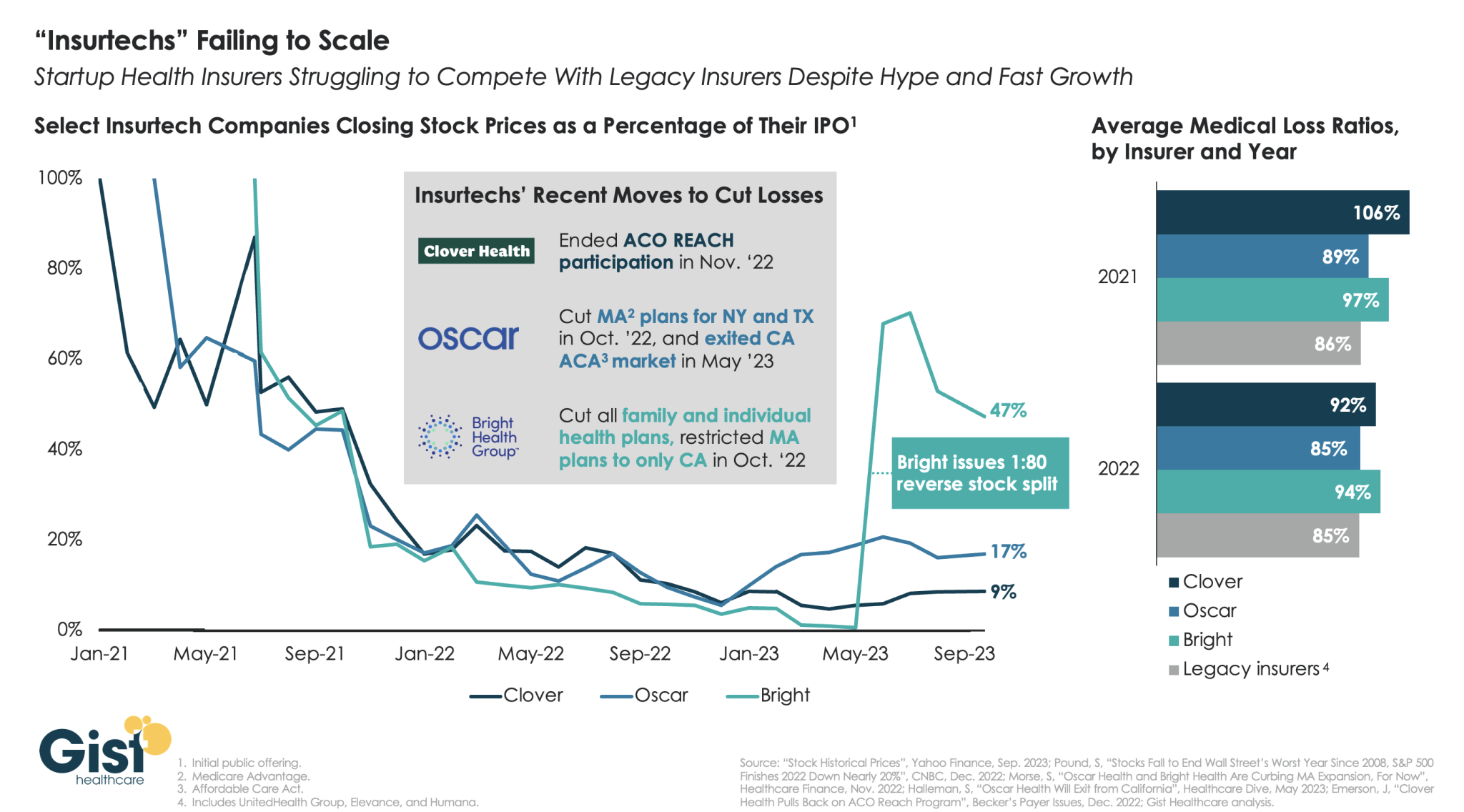
“Insurtechs” Clover Health, Oscar Health, and Bright Health all went public in the midst of the hot equity market of 2021. Investors were excited by the fast growth of these health insurer startups, and their potential to revolutionize an industry dominated by a few large players.

However, the hype has dissipated as financial performance has deteriorated. After growing at all costs during a period of low interest rates, changing market conditions directed investors to demand a pivot to profitability, which the companies have struggled to deliver—two years later, none of the three has turned a profit. 

Oscar and Bright have cut back their market presence significantly, while Clover has mostly carried on while sustaining high losses. In the last two years, only Oscar has posted a medical loss ratio in line with other major payers, who meanwhile are reporting expectation-beating profits. While Oscar has shown signs of righting the ship since the appointment of former Aetna CEO Mark Bertolini, 

the future of these small insurers remains uncertain. As their losses mount and they exit markets, they may become less desirable as acquisition targets for large payers.

Babylon Health to end US business as proposed go-private deal falls through

https://mailchi.mp/27e58978fc54/the-weekly-gist-august-11-2023?e=d1e747d2d8

The beleaguered digital health company announced on Monday that its previously proposed arrangement to go private via a deal with Swiss-based neurotechnology company MindMaze will not happen, offering no further details. That deal was arranged by AlbaCore Capital Group, which had secured a loan for Babylon in May to implement the transaction.

Babylon said that it will now exit its core US businesses, which consist mostly of value-based agreements with health plans, and will continue to seek a buyer for its Meritage Medical Network, a California-based independent practice association (IPA) comprised of approximately 1,800 physicians.

Babylon said it may have to file for bankruptcy if it can’t secure additional funding or reach another deal to divest.

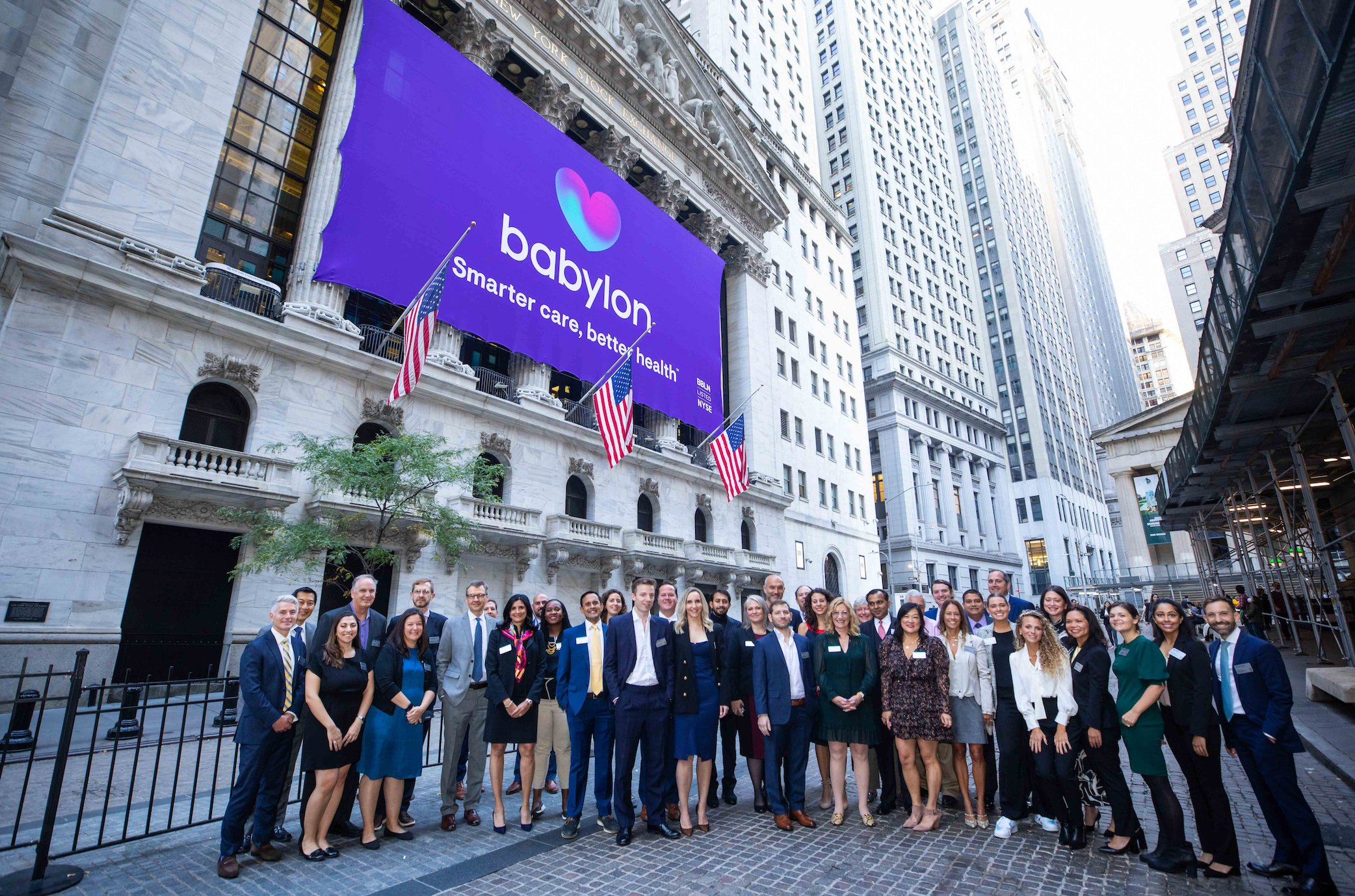
The Gist: Babylon is one of the starkest digital health “boom-and-bust” stories thus far. Despite the fact that the company overpromised and under-delivered in both the US and abroad, it was able to raise—and then lose—billions of dollars in just a few short years after going public in October 2021 via a special purpose acquisition corporation (SPAC) merger. It remains to be seen who will buy Babylon’s attractive IPA asset. Presumably insurers, retailers, health systems and other players are evaluating a purchase, either to enter or expand their provider footprint into Northern and Central California.

Babylon Health announces planned sale of California physician group

https://mailchi.mp/cd392de550e2/the-weekly-gist-october-21-2022?e=d1e747d2d8

In a press release, London-based telemedicine provider Babylon Health said it intends to divest Meritage Medical Network, its 1,800-physician independent practice association located in Northern and Central California. Babylon claims the sale will allow it to better focus on its core business model of digital-first, value-based care contracts. After going public last year at $4.2B, Babylon’s valuation has fallen over 95 percent.

The Gist: Yet another highly touted healthcare startup with digital-first “solutions” has announced a massive pullback in its care footprint. As we wrote about Bright Health last week, these companies have failed to meet investor demands, and must now shutter services or sell assets to buy time to prove their core business model can actually turn a profit.

In Babylon’s case, integrating established physician practices into a digital-first, value-based care model was always going to be costly, challenging and time-consuming—too slow to deliver the returns demanded by an increasingly difficult investor market. 

Bright Health exits nine more states

https://mailchi.mp/4587dc321337/the-weekly-gist-october-14-2022?e=d1e747d2d8

Coming off a $1.2B net loss in 2021, Minneapolis-based insurtech Bright Health announced this week it will stop offering commercial and Medicare Advantage (MA) plans in all states except Florida and California, where it will solely offer MA plans. In its remaining markets, the company plans to focus on its care delivery and provider support business, NeueHealth. Bright has reportedly struggled to contain its medical spend, due to rapid growth and COVID-related costs; its claims processing backlog also earned a $1M fine from the Colorado Department of Insurance last April. Once valued at over $11B, Bright’s stock has lost 95 percent of its value since going public in June 2021. 

The Gist: The largest digital health IPO to date is now rapidly shrinking, not even two years later—and Bright is not alone amongst its peers. After years of hype, most insurtechs still have minimal market share, and most have yet to turn a profit. With a market cap now under $1B—and dropping by the day—Bright could be an easy pickup for an established health plan interested in its consumer-centric technology, though given reports of dissatisfied beneficiaries, the value of that technology is still unclear.

Bear Market for recent Digital Health IPOs cautions investors

https://mailchi.mp/e60a8f8b8fee/the-weekly-gist-september-23-2022?e=d1e747d2d8

COVID fueled a record year for digital healthcare venture funding in 2021, which included 85 digital health startups achieving “unicorn” status with $1B+ valuations. But 2022 has been marked by cooling expectations amid inflation concerns and recession fears. 

In the graphic above, we’ve tracked the stock market performances of six recent healthcare IPOs across their opening, peak, and latest months. While not all of them are pure digital health plays, each of these companies promotes its digital solutions or tech-enabled patient platforms as key parts of their value propositions. 

Since going public, each company has lost between 50 and 90 percent of its initial value, more than double the S&P 500’s roughly 20 percent drop from its January 2022 peak to today’s level. The bear market has influenced the venture funding world as well, as H1 2022 fundraising totals for digital health have dropped from last year’s record-setting pace, though they may still surpass 2020 levels by year end. 

After the initial fervor, this market correction among “healthtech” companies is not surprising, and acquisitions—like Amazon’s purchase of One Medical—are likely to continue, as long as these market trends hold. 

The questions every investor should now be asking: does this start-up have a viable path to profitability in the US healthcare market, and does it deliver meaningful value to consumers? 

In analyst call, Clover reveals it doesn’t have the customers it said it did during IPO

Why Clover Health Chose a SPAC, Not an IPO, to Go Public | Barron's

When it planned to go public through a SPAC merger, insurance startup Clover Health told investors that it already had 200,000 direct contracting lives under contract for 2021. But in new guidance shared on Monday, the company now plans to end the year just 70,000 to 100,000 covered lives from direct contracting. 

After telling investors that it would more than quadruple its membership base in a year, insurance startup Clover Health is cutting its projections in half.

The insurance startup now plans to end the year with between 70,000 and 100,000 covered lives from direct contracting, a new payment program launched last by the Centers for Medicare and Medicaid (CMS) services last year, according to its most recent earnings report. 

Last year, when Clover announced plans to go public through a merger with a special-purpose acquisition company backed by “SPAC King” Chamath Palihapitiya, the company told investors it already had 200,000 direct contracting lives under contract for 2021, according to a slide deck.

But its projections call into question the veracity of those shared when the company was looking to go public. In fact, Kevin Fischbeck, an analyst with Bank of America, called out the discrepancy when he asked the company about estimates that it would have nearly half-a-million members covered through direct contracting by 2023.

Clover could only manage a feeble response, with CFO Joe Wagner saying it was “too early to say in future years exactly where we’re going to end up.”

It’s not the only big question that Clover faces about its future. After a scathing report from a short-seller earlier this year, the startup confirmed it had received a request for information from the Department of Justice, which it hadn’t disclosed previously. A day later, the company received notice of an investigation from the Securities and Exchange Commission.

When asked about the current status of the investigation, co-founder and CEO Vivek Garipalli said it was the company’s policy not to comment on pending inquiries.

In an unusual move, the company fielded questions from Reddit during the investor call, alongside those from analysts.

Clover is one of 53 companies selected to participate in CMS’ direct contracting programs in 2021. The value-based payment models were created under the previous administration, which would allow the startup to strike contracts with doctors who are caring for patients under the traditional Medicare program and manage their care.

Under the new administration, CMS has stopped taking applications for the new direct contracting models, which are slated to launch next year. It also paused the rollout of an alternative model that would tie payments to the population health and cost outcomes for all residents of a specific location.

In the meantime, most of Clover’s business still comes from its Medicare Advantage plans, where it has 66,300 members, an 18% increase year-over-year. It brought in $200.3 million in revenue in the first quarter, up 21%, but its net loss jumped more than 70% to $48.4 million.

The company also decreased its revenue projections from what it originally told investors last year. The startup said it expects to bring in revenue of $810 million to $830 million by the end of 2021, a decrease from its previous projections of $880 million. A small portion of that, just $20 million to $30 million, would come from direct contracting.

Health insurance marketplace GoHealth files to go public

https://www.fiercehealthcare.com/tech/health-insurance-marketplace-gohealth-files-to-go-public?utm_medium=nl&utm_source=internal&mrkid=959610&mkt_tok=eyJpIjoiWmpjeVlXVTRZV0l5T1RndyIsInQiOiJLWWxjamNKK2lkZmNjcXV4dm0rdjZNS2lOanZtYTFoenViQjMzWnF0RGNlY1pkcjVGcFwvZFY4VjFaUUlZaFRBT1NRMGE5eWhGK1ZmR01ZSWVZWGMxOHRzTkptZVZXZmc5UnNvM3pVM2VIWDh6VllldFc3OGNZTTMxTDJrXC8wbzN1In0%3D

GoHealth files for $100M IPO

GoHealth, an online health insurance marketplace, is looking to raise up to $100 million in an initial public offering, according to a filing with the U.S. Securities and Exchange Commission (SEC) Friday.

The Chicago company, launched in 2001, said its stock will trade on the Nasdaq Global Market under the symbol “GHTH,” according to an S-1 filing.

The company didn’t list specific share price or the number of shares it’s selling in the filing.

GoHealth operates a health insurance portal offering a variety of plans that allows customers to compare numerous insurance plans such as family health plans and self-employed insurance.

The company works with more than 300 health insurance carriers and has enrolled more than 5 million people into health plans.

Goldman Sachs, BofA Securities and Morgan Stanley are acting as the managing book runners for the proposed offering. Barclays, Credit Suisse, Evercore ISI, RBC Capital Markets and William Blair are acting as book runners for the proposed offering. Cantor and SunTrust Robinson Humphrey are acting as co-managers for the proposed offering, according to a GoHealth press release.

GoHealth will join a growing list of technology-enabled healthcare companies that are testing the public markets, including One Medical, Livongo, Phreesia, Health Catalyst, Change Healthcare and Progyny.

The company has shifted its focus toward Medicare products over the past four years, positioning itself to capitalize on strong demographic trends and an aging population.

Medicare enrollment is expected to grow from approximately 61 million individuals in 2019 to approximately 77 million individuals by 2028, the company said in its SEC filing.

At the same time, an increasing proportion of the Medicare-eligible population is choosing commercial insurance solutions, with 38% of Medicare beneficiaries, or approximately 23 million people, enrolled in Medicare Advantage plans in 2019, an increase of approximately 1.5 million people from 2018 to 2019, the company said.

The market is “ripe for disruption” by digitally enabled and technology-driven marketplaces like the GoHealth platform, according to the company.

GoHealth estimates a total addressable market of $28 billion for Medicare Advantage and Medicare Supplement products.

“We believe that these trends will drive a larger market in the coming years that, when taken together with our other product and plan offerings, will result in an even larger addressable market. We also believe that we are poised to benefit from market share gains in what has traditionally been a highly fragmented market,” the company said in the S-1 filing.

The company uses machine-learning algorithms and insurance behavioral data to match customers with the health insurance plan that meets their specific needs.

In 2019, the company generated over 42.2 million consumer interactions.

In September 2019, Centerbridge acquired a majority stake of GoHealth in a deal that reportedly valued the company at $1.5 billion, the Chicago Tribune reported.

Net revenues grew to $141 million for the first quarter of this year, compared to $69.1 million last year. The company reported 2019 pro forma net revenues of $540 million, up 139% from 2018’s revenue of $226 million, the company reported in its SEC filing.

The company reported a net loss of $937,000 for the first quarter of 2020 compared to a net income of $5 million for the same period in 2019, according to its IPO.

Demographic, consumer preference and regulatory factors are driving growth in the individual health insurance market, according to the company. Medicare enrollment is expected to grow significantly over the next 10 years as 10,000-plus individuals turn 65 each day and become Medicare-eligible.

At the same time, the growth in plan choices makes education and assistance with plan selection more important for consumers, GoHealth said.

“Marketplaces such as ours help educate consumers, and assist them in making informed plan choices,” the company said.

The company also faces significant risks that may impede its growth. Currently, a large portion of GoHealth’s revenue is derived from a limited number of carriers. Carriers owned by Humana and Anthem accounted for approximately 42% and 32%, respectively, of the company’s net revenues for the first three months of 2020, the company said in its IPO paperwork.

The COVID-19 pandemic also creates uncertainty in the healthcare market, and future developments in the outbreak could impact the company’s financial performance, GoHealth said.


Health care IPOs had a big 2019

https://www.axios.com/newsletters/axios-vitals-cd5b1e39-4d51-47d8-840c-1d446b3fccc4.html?utm_source=newsletter&utm_medium=email&utm_campaign=newsletter_axiosvitals&stream=top

Image result for Health care IPOs had a big 2019

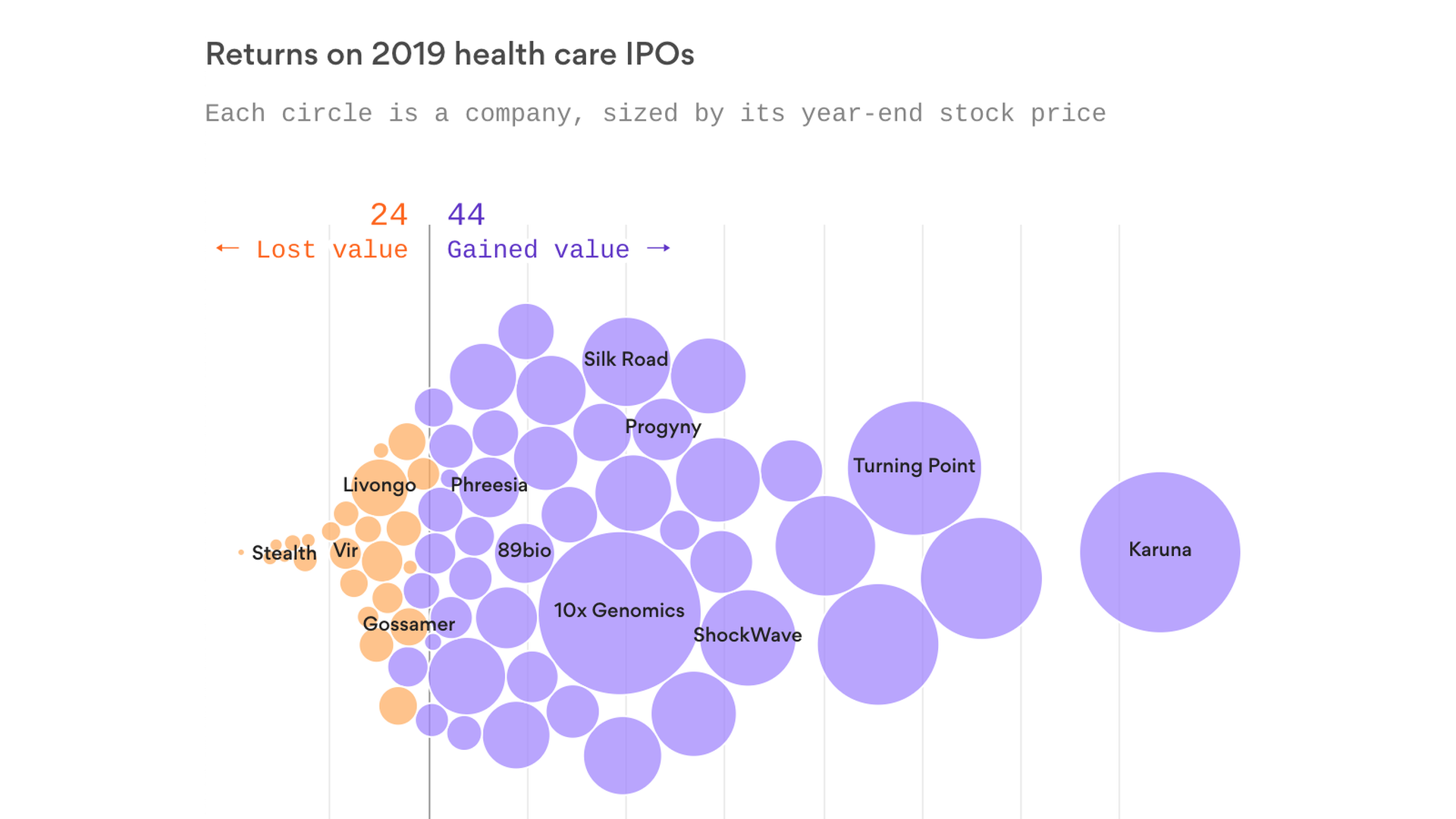
Two-thirds of the 68 health care companies that went public in 2019 traded above their IPO price by the end of year — many of which provided huge initial returns to owners and outside investors, Axios’ Bob Herman reports.

The big picture: The vast majority of health care companies that go public are biotechnology firms. Several of those biotechs in the 2019 class benefited from some promising, but extremely early, clinical trial data.

By the numbers: If you bought an equal amount of shares of every health care company that went public last year and then sold before the calendar flipped, you would have gotten a 47% return on your money.

  • Sixteen companies saw their stock prices double between their IPOs and the end of the year.

Winners: Karuna Therapeutics made the biggest leap, as the biotech company’s stock price almost quintupled by the end of the year. Early clinical trial data showed that Karuna’s schizophrenia drug relieved many symptoms, Stat reported.

  • NextCure and Turning Point Therapeutics also saw their stocks rise after releasing early-stage drug data.
  • Two medical device firms — ShockWave Medical and Silk Road Medical — and fertility benefits company Progyny were the exceptions to the biotech-heavy list.

Losers: SmileDirectClub, which mails teeth-straightening kits, and a handful of biotech startups like Stealth BioTherapeutics saw their stock prices fall by more than half from their IPOs.

The bottom line: Biotech stocks are notoriously fickle. Poor clinical trial data can derail an entire company, and some of these firms inevitably will fail, given the nature of science.

  • But the initial signals indicate investors still have plenty of money to throw at health care startups of all stripes.

Go deeper: One Medical was one of the first health care IPOs of 2020