


Cartoon – Becoming Redundant
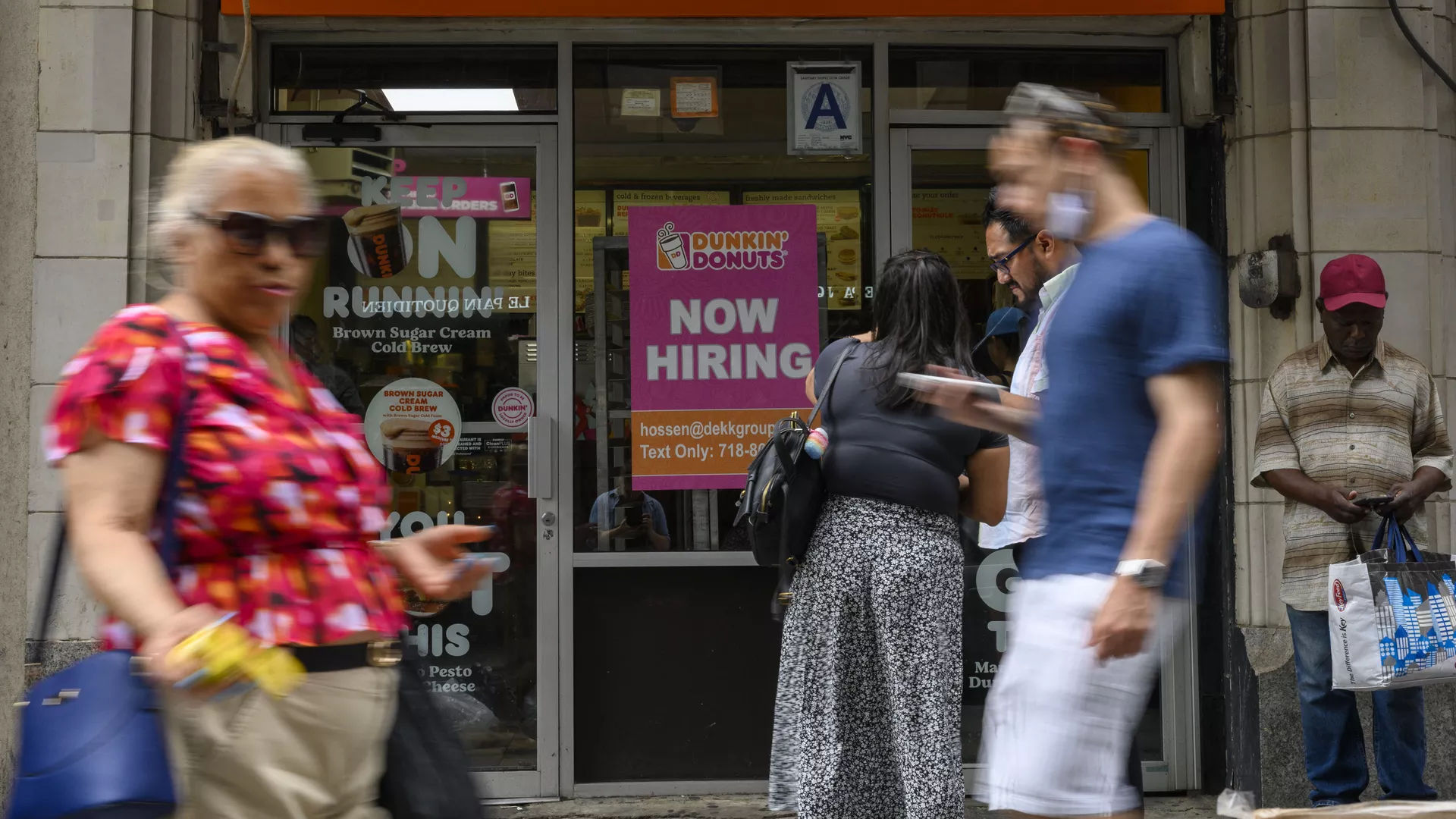
America had another month of solid job gains: The economy added 315,000 jobs in August, while the unemployment rate ticked up to 3.7% as more workers entered the labor force, the government said on Friday.
Why it matters: Employers continue to hire workers at a robust pace, even as the Federal Reserve raises interest rates swiftly to crush inflation.
Details: Perhaps the most welcoming piece of news in the report is the influx of workers who entered the labor force last month. The labor force participation rate — the share of people working or looking for work — rose by 0.3 percentage points, after a string of monthly declines.
The backdrop: The Fed has been bracing for some heat to come out of the labor market. It has raised interest rates at a historically rapid pace in a bid to squash elevated inflation. This report offers some good news as wage growth slowed — and more workers entered the workforce, helping ease the tightness in the labor market.

Interest rates are rising, inflation is lingering at four-decade highs, the economy appears to be slowing and experts fear a recession is on the way. But Americans are still quitting their jobs at near-record rates in the face of growing economic uncertainty.
The percentage of American workers who quit their jobs set a record earlier this year and has only dropped slightly as the economy slows from two years of torrid growth. After reaching 2.9 percent this spring, the quits rate dropped to 2.7 percent in July, according to data released Tuesday by the Labor Department.
The idea of quitting a job amid a period of increased cost of living and a dubious economic future may seem counterintuitive. But the labor market has remained stacked in favor of workers, who see ample opportunities to boost their earnings to supplant increased costs from inflation.
“Despite recent declines, job openings still outnumber unemployed workers by a sizable margin, illustrating just how tight the labor market remains,” wrote AnnElizabeth Konkel, an economist at Indeed Hiring Lab, in a Monday analysis.
There were roughly two open jobs for every unemployed American, according to Labor Department data, giving job seekers ample opportunities to find new jobs with better pay or working conditions. Businesses are still scrambling to find enough workers to keep up with consumer spending — which is well above pre-pandemic levels — from a workforce that remains smaller than it was before COVID-19.
“It seems possible that employer demand would need to cool significantly more before recruiters start to notice an easing in recruiting conditions,” Konkel wrote.
In other words, employers still have too many open jobs and not enough candidates to avoid boosting wages and other perks to find talent. And that means workers still have ample incentive to quit for a better-paying job, particularly with inflation still high.
Job seekers on Indeed.com are looking for ever-higher wages, Konkel explained. The number of Indeed users seeking jobs with a $20 per hour wage rose above those seeking $15 per hour in June 2022, and the number of jobseekers looking for $25 per hour is up 122 percent over the past 12 months.
Konkel attributed the spike in job seekers looking for more money to the steady increase in advertised wages and the inflation they’ve helped to feed.
“Once job seekers know it’s possible to attain a higher wage, their expectations may shift and act as a pull factor in searching for a higher dollar amount. In this case, the shift in job seeker expectations from searching for $15 to instead $20 is clear,” Konkel explained.
“On the flip side, inflation continues to take a bite out of workers’ paychecks,” she continued, noting that only 46 percent of workers saw wage gains that outpaced inflation.
The pressure to quit for a higher paying job has been highest in the private sector, where 3.5 percent of the workforce left their current employer in July. Workers in industries with historically low wages, tough working conditions and limited teleworking options have led the charge.
The leisure and hospitality sector posted a whopping 6.1 percent quit rate in July, down sharply from 6.9 percent a year ago but still nearly twice the national quit rate.
Restaurants and bars in particular have struggled to return to pre-pandemic employment levels despite rapidly raising wages. The pressure has also made it nearly impossible for those businesses to fire or lay off employees, even amid usual season turnover.
“Hospitality companies tell us that what was once a ‘one strike, you’re out’ rule for employees who failed to show up at work without notice is now more like a ‘ten strikes, you’re out’ rule. They cannot afford to fire workers because they cannot afford to replace them,” said Julia Pollak, chief economist at ZipRecruiter.
“The decline in terminations in industries like hospitality have been so large, they have more than offset the increase in layoffs in the tech sector,” she explained.
Quits have also remained high in retail (4 percent) and the transportation and warehousing sectors (3.5 percent), with both industries facing threats from a decline in goods spending and rising interest rates.
Even so, there are some signs of waning worker confidence, which may lead to a decline in quits.
ZipRecruiter’s job seeker confidence index dropped 4.5 points in August to an all-time low of 97.8, Pollak said, with a greater number of applicants looking for job security over higher wages.
“Since the pandemic, job seekers have been looking for higher pay, less stress, and greater flexibility. In August however, job security rose to the second-place spot in their priority ranking,” Pollak explained.
“One in four employed job seekers say they feel less secure about their current job than they did six months ago. Rising risk of a recession, paired with a wave of recent tech layoffs, has made employees more concerned about the precarity of their jobs.”

Hiring is getting less challenging on some level, even amid a tight labor market, several employers said, according to The Wall Street Journal.
Take Nashville, Tenn.-based HCA Healthcare, for example.
In July, the hospital operator released its second-quarter earnings, and CEO Sam Hazen said turnover was down more than 20 percent in the second quarter compared to the first, The Wall Street Journal reported Aug. 8. Other large companies like Verizon, Uber and Marriott also indicated improvements in hiring or less turnover.
The decreased turnover comes as employers have faced workforce shortages during the COVID-19 pandemic. While employers continue to face challenges with shortages and hiring certain roles, some say the situation is improving to some degree, according to The Wall Street Journal.
Companies and economists cited multiple factors contributing to the trend, including some workers returning to their former employers, as well as inflationary pressures motivating workers to accept jobs more quickly or keeping workers in their existing jobs.
Overall, healthcare gained 69,600 jobs in July, an increase from the amount added in June, according to the latest jobs report from the U.S. Bureau of Labor Statistics. The July count compares to 56,700 jobs added in June and 28,300 jobs added in May.
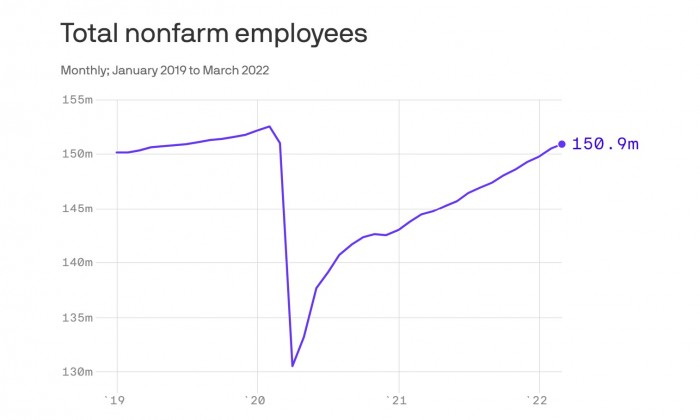
Employers added a stunning 528,000 jobs in July, while the unemployment rate ticked down to 3.5%, the lowest level in nearly 50 years, the Labor Department said on Friday.
Why it matters: It’s the fastest pace of jobs growth since February as the labor market continues to defy fears that the economy is heading into a recession.
The backdrop: The data comes at a delicate time for the U.S. economy. Growth has slowed as the Federal Reserve raises interest rates swiftly in an attempt to contain soaring inflation.
https://www.healthcaredive.com/news/providence-job-cuts/627660/

Providence said Tuesday it is restructuring and reducing executive roles amid persistent operating challenges spurred by the COVID-19 pandemic.
Providence said it will reduce its regional executive teams to three divisions from seven. The Washington-based nonprofit health system also has plans to consolidate three clinical lines of business — physician enterprise, ambulatory care network and clinical institutes — down to one executive leadership team.
“We began this journey before the pandemic, but it has become even more imperative today as health systems across the country face a new reality,” Providence President and CEO Rod Hochman said in a statement.
The new operating model is aimed at protecting direct patient care staff and other essential roles, Melissa Tizon, vice president of communication, told Healthcare Dive.
It’s unclear how many roles will be eliminated as part of the restructuring. Providence did not provide a specific number of job reductions.
Erik Wexler, former president of strategy and operations in Providence’s southern regions, will step into a new role as chief operating officer and will oversee the three new divisions.
Kevin Manemann will serve as division chief executive of the South region, which includes operations in Southern and Northern California.
Joel Gilbertson, division chief executive for the central region, will oversee operations in Eastern Washington, Montana, Oregon, Texas and New Mexico.
Guy Hudson will lead the North Division, which includes operations in Western Washington and Alaska. Hudson will keep his role as president and CEO of Swedish Health Services in Seattle.
David Kim, an executive vice president, will lead the three clinical business lines that were consolidated under one leadership team.
The shakeup comes after Providence reported in March that its operating loss doubled in 2021, reaching $714 million as operating expenses climbed 8% for the year.
The system said it treated more patients who were sicker and required a higher level of care than in 2020 and, at the same time, struggled with labor shortages.
https://mailchi.mp/30feb0b31ba0/the-weekly-gist-july-15-2022?e=d1e747d2d8

The rise of ubiquitous self-testing and the paucity of accurate, timely data from the CDC on COVID numbers has left us feeling our way in the dark in terms of the current state of the pandemic. Clearly there’s a new surge underway, driven by the BA.5 variant. What we can report from our experiences on the road over the past few weeks is that the wave is significant.
We’re hearing from our health system members that inpatient COVID volumes and COVID-related ED visits are significantly up again—often double or more what they were just two months ago, although still well below levels of past surges. Length of stay for COVID inpatients is shorter, with fewer ICU visits than during the Delta surge—about the same intensity, proportionally, as during Omicron.
But COVID-related staffing shortages are once again having a real impact on hospitals’ ability to deliver care—clinical and non-clinical staff callouts are at high levels again, as during Omicron.
One piece of good news: masking is back in vogue among many health system executive teams, likely in response to a number of “superspreader” events: gatherings of hospital staff over the past few weeks that resulted in clusters of cases. One system described an all-hands session for anesthesiologists that resulted in more than a dozen cases across the next week—forcing the hospital to cancel procedures.
We’re worried that this BA.5 surge is just getting started, and with booster uptake stagnating and masking all but nonexistent in the general population, the late summer and early autumn situation could be significantly worse.
Be careful out there.

As employers plan for 2023, attracting and retaining talent is top of mind amid a competitive U.S. labor market. That’s led to over two-thirds of companies planning to enhance employee health and benefit offerings next year, according to survey results from Mercer published July 6.
The survey was conducted April 26 to May 13. In total, 708 organizations participated, from all industries and of all sizes ranging from fewer than 500 employees to more than 5,000.
Nine things to know:
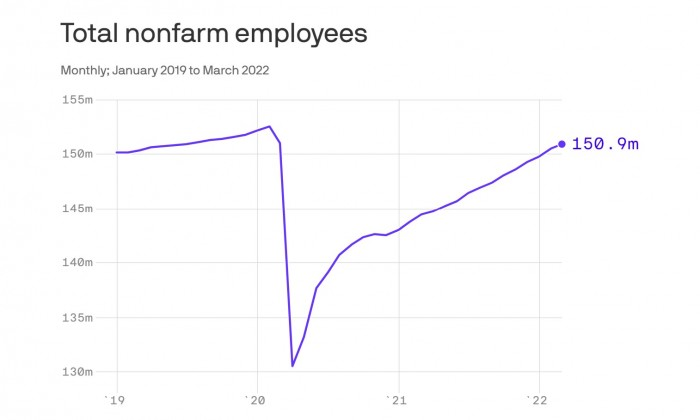
The U.S. economy added 372,000 jobs last month, while the unemployment rate held at 3.6%, close to the lowest level in a half-century, the government said on Friday.
Why it matters: Jobs growth remains healthy, even as the Federal Reserve tries to slam the brakes on the economy to contain decades-high inflation.
By the numbers: Job gains in April and May were 74,000 lower than initially estimated.
The backdrop: There has been a spate of companies announcing layoffs, rescinding job offers and pausing hiring, though these developments have largely been concentrated in sectors like housing and technology.
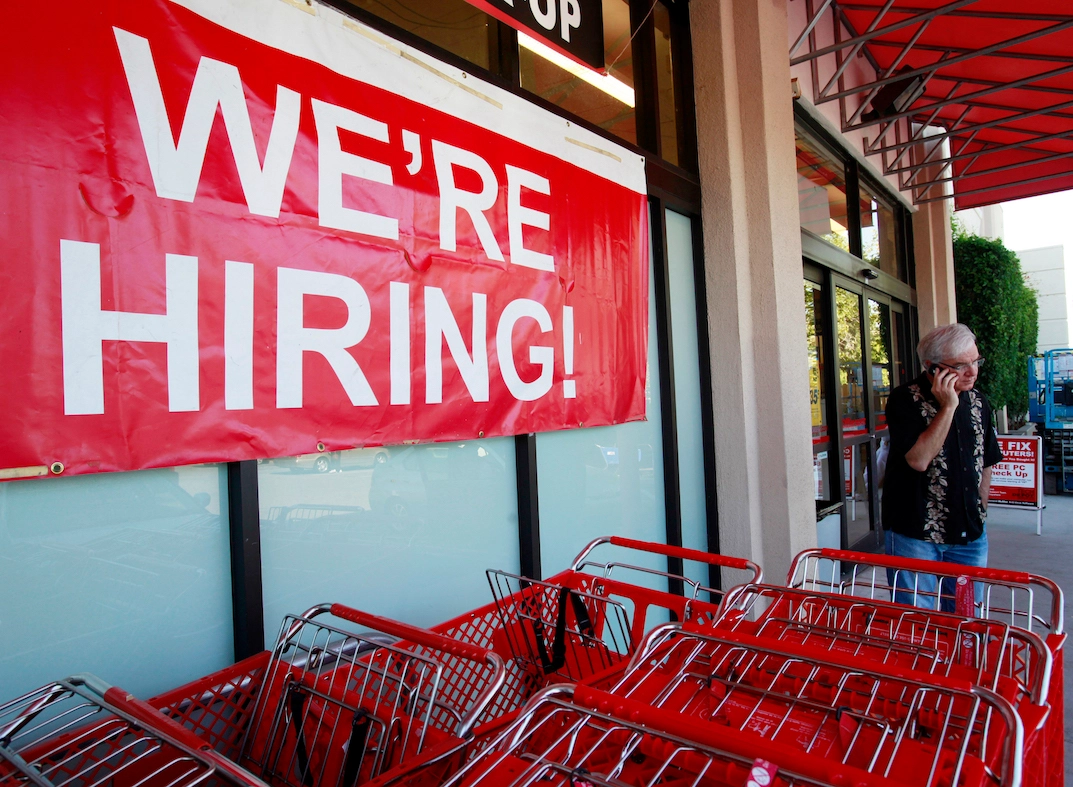
Job openings fell slightly in May as demand for workers remained near record highs, according to data released Wednesday by the Labor Department, even amid growing concerns of a potential recession.
The number of open jobs listed in the U.S. on the final business day of May totaled 11.3 million, dropping from 11.7 million in April after seasonal adjustments. Though job openings fell in May, hires, layoffs and quits stayed roughly even with their April numbers, according to the May Job Openings and Labor Turnover Survey (JOLTS) report.
The JOLTS report showed a labor market still stacked strongly for workers in May, a month when the U.S. added 390,000 jobs and saw the jobless rate hold strong at 3.6 percent. Despite the decline in job openings, there were still almost two open gigs for each unemployed American.
That mismatch can give workers many opportunities to find new jobs with better compensation and career opportunities than their current ones.
“This is not what a recession looks like. The May 2022 JOLTS data obviously lags what’s happening in the labor market presently, but all signs are that it remains strong,” wrote Nick Bunker, research director at Indeed.com, in a Wednesday analysis.
“If the labor market were quickly and suddenly taking a downturn, we would see employers’ demand for new hires drop and their willingness to let workers go increase. For now, we aren’t seeing a sudden move in either direction.”
Businesses hired roughly 6.5 million workers and lost 6 million in May, both in line with April totals. The percentage of the workers who quit their jobs in May fell to 2.8 percent, just 0.1 percentage points from a record high of 2.9 percent set earlier this year.
With ample jobs available and people still eager to leave in search of better work, businesses have avoided laying off employees over fears they could be hard to replace. Roughly 1.4 million workers were laid off in May, slightly higher than April’s total of 1.3 million. But the percentage of the workforce laid off by their employers held even at 0.9 percent, which is below pre-pandemic levels.
“Despite continued headlines about layoffs, particularly in the tech sector, the layoff rate remains low,” Bunker explained. “This is the 15th straight month that the layoff rate has been below its pre-pandemic bottom.”
The steady strength of the U.S. job market helped propel a rapid recovery from the depths of the COVID-19 recession through much of 2020 and 2021. The U.S. is fewer than 1 million new jobs away from replacing the 21 million jobs lost to the onset of the pandemic, and the speed of the pandemic recovery has helped fuel rapid wage growth, particularly for low-earning workers.
Even so, many economists — including Federal Reserve officials — fear the strength of the job market could add further fuel to inflation already at four-decade highs. While steady job gains are good for the economy, the intense competition for workers has made it difficult for many firms to stay adequately staffed and keep up with both higher wage demands and rising prices.
Fed Chairman Jerome Powell and many economists are hopeful that higher interest rates and the fading effects of fiscal stimulus can help reduce job openings — and the pressure they put on wages — without wiping out job gains.
The Fed has boosted its baseline interest rate range by 1.5 percentage points from near-zero levels in January and is expected to hike by another 2 percentage points by the end of the year. Higher interest rates are meant to reduce inflation by slowing the economy enough to force businesses to stop raising prices and wages.
Even so, he has acknowledged it will be difficult for the Fed to avoid slowing down the labor market into a standstill as the central bank boosts interest rates to fight inflation.
“The labor market conditions [Powell] has described as ‘extremely, historically’ tight and ‘unsustainably hot’ persisted in May,” wrote Julia Pollak, chief economist at ZipRecruiter, in a Wednesday analysis.
“Employers are hanging onto the workers they have in a tight labor market where replacing them is unusually costly.”
The June jobs report, set to be released Friday, will give a most recent view into how well the labor market has held up amid Fed rate hikes. Economists expect the U.S. to have added roughly 268,000 jobs last month, according to consensus estimates.
“There will be a time when the US labor market takes a downturn, jobs are shed at a higher rate, and workers stop quitting their jobs. But that time has yet to come. The labor market remains very tight and very hot. That may change, but it hasn’t yet,” Bunker wrote.
 HENRY KOTULA