Many U.S. hospitals are turning to layoffs to cut costs as they recover from the financial hit of the COVID-19 pandemic.
Here are seven hospitals or health systems that recently announced layoffs or job cuts:
1. Mishawaka, Ind.-based Franciscan Health will lay off 83 employees of its 100-year-old hospital in Hammond, Ind., according to a notice filed with the state. The layoff notice comes as the health system works to shrink the 226-bed Franciscan Health Hammond Hospital to an eight-bed acute care facility with an emergency department and primary care practice. The layoffs are slated to begin Aug. 21 and will be permanent, the health system said.
2. HealthAlliance of the Hudson Valley, a three-hospital system in the Westchester Medical Center Health Network, laid off an undisclosed number of workers June 14. Westchester Medical Center Health Network in Valhalla, N.Y., said it laid off HealthAlliance hospital employees in Kingston, N.Y., to eliminate redundancies as it begins to consolidate inpatient services to one location.
3. As part of a financial restructuring plan, Sacramento, Calif.-based Sutter Healthwill issue another round of layoffs this year. The health system said in early June it plans to lay off 400 employees. These newly announced layoffs are in addition to 277 information technology jobs that were cut April 2. Sutter said most of the new layoffs affect employees in administrative positions in benefits, human resources, data services and accounting. The layoff notice said many of these employees were working remotely or in the field.
4. A little over a month after filing a notice to complete about 651 layoffs this year, Ascension Technologies, the IT subsidiary of St. Louis-based Ascension,eliminated 92 remote IT jobs in Indiana, according to a June 3 report. Most of the laid-off employees are based in Indianapolis and Evansville, Ind., the Indiana Department of Workforce Development said June 2
5. Lawrence (Mass.) General Hospital plans to lay off 56 employees and is warning of more cuts unless it receives government aid quickly, according to a May 25 report. The layoffs will affect employees working in administration and patient care. The layoffs affect about 2.5 percent of the 186-bed hospital’s workforce. Lawrence General attributed the layoffs to the COVID-19 pandemic weakening its financial profile.
6. Boca Raton, Fla.-based Cancer Treatment Centers of America closed its hospital in Tulsa, Okla. About 400 employees will be affected by the closure. The hospital saw its last patient on May 27.
7. Boca Raton, Fla.-based Cancer Treatment Centers of America is selling its hospital in Philadelphia and will lay off the facility’s 365 employees, according to a closure notice filed with the state. The cancer care network said it anticipates the layoffs in Philadelphia will begin after May 30.
Hospitals added 2,900 jobs in May, after four months of job losses this year, according to the latest jobs report from the U.S. Bureau of Labor Statistics.
Overall, healthcare added 22,500 jobs last month — compared to 4,100 jobs lost in April and 11,500 jobs added in March — and employment in the industry is down by 508,000 compared with February 2020.
Within healthcare, ambulatory healthcare services saw 22,000 added jobs in May, and nursing and residential care facilities lost 2,400 jobs in May.
Overall, the U.S. gained 559,000 jobs in May after gaining 266,000 in April. The unemployment rate was 5.8 percent last month, compared to 6.1 percent in April.
Hospitals lost 5,800 jobs in April, marking the fourth month of job loss this year, according to the latest jobs report from the U.S. Bureau of Labor Statistics.
Overall, healthcare lost 4,100 jobs last month — compared to 11,500 jobs added in March — and employment in the industry is down by 542,000 since February 2020.
Within ambulatory healthcare services, dentist offices saw 3,700 added jobs; physician offices saw 11,300 job gains; and home healthcare services lost 6,700 jobs in April.
Nursing and residential care facilities lost 19,500 jobs last month, compared to 3,200 jobs lost the month prior.
The U.S. gained 266,000 in April after gaining 916,000 jobs in March. The unemployment rate was 6.1 percent last month, compared to 6 percent in March.
A new report out later today concludes that basic scientific research plays an essential role in creating companies that later produce thousands of jobs and billions in economic value.
Why it matters: The report uses thepandemic — and especially the rapid development of new mRNA vaccines — to show how basic research funding from the government lays the necessary groundwork for economically valuable companies down the road.
By the numbers: The Science Coalition — a nonprofit group that represents 50 of the nation’s top private and public research universities — identified 53 companies that have spun off from federally funded university research.
Those companies — which range from pharmaceutical startups to agriculture firms — have contributed more than $1.3 billion to U.S. GDP between 2015 and 2019, while supporting the creation of more than 100,000 jobs.
What they’re saying:“The COVID-19 pandemic has shown that the need for the federal government to continue investing in fundamental research is far from theoretical,” says John Latini, president of the Science Coalition. “Consistent, sustained, robust federal funding is how science evolves.”
Details: Latini praised the Biden administration’s first budget proposal to Congress, released last week, which includes what would be a $9 billion funding boost for the National Institutes of Health (NIH) — the country’s single biggest science research funding agency.
The National Oceanic and Atmospheric Administration would see its budget rise to a record high of $6.9 billion, including $800 millionreserved for climate research.
The catch: The Biden budget proposal is just that, and it will ultimately be up to Congress to decide how much to allocate to research agencies.
Context: Government research funding is vital because private money tends to go to applied research. But without basic research — the lifeblood of science — the U.S. risks missing out on potentially world-changing innovations in the future.
The long-term value of that funding can be seen in the story of Katalin Kariko, an obscure biomedical researcher who labored for years on mRNA with little reward — until the pandemic, when her work helped provide the foundation for mRNA COVID-19 vaccines.
The bottom line: Because its ultimate payoff might lay years in the future, it’s easy to see basic research funding as a waste — until the day comes when we need it.
Abstract:This article is the second in the series that addresses the initial stages of going through a career transition. Career management articles in the blog have been popular. A transition is a traumatic event, to say the least, especially the first time. These articles address what you should be doing BEFORE your transition occurs.
In the last piece that is the first in this series, I addressed the fact that there is little relationship between how good you are at what you do and the probability that you will end up in a transition.
This article addresses what you should be doing to prepare for an unplanned transition.
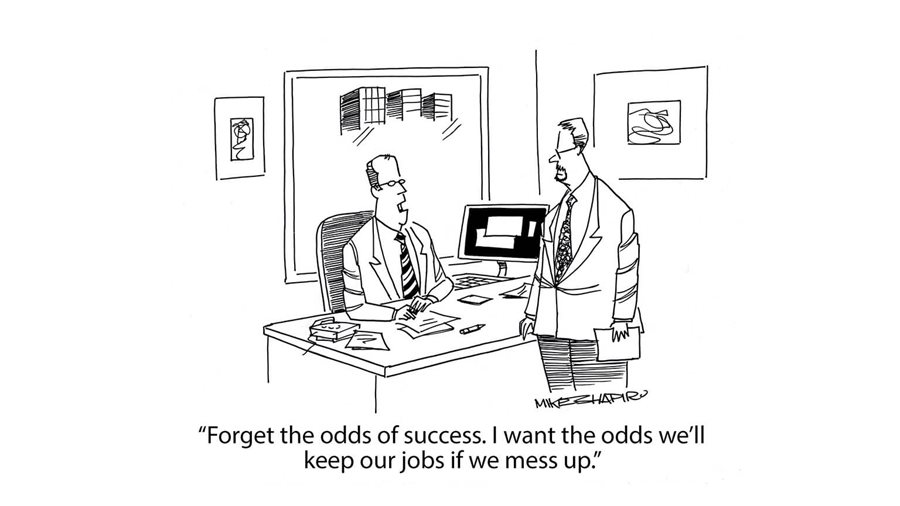
The ACHE tracks hospital CEO turnover. The average annual rate is around 18%. According to Challenger, Gray, and Christmas, hospital CEO is one of America’s most dangerous occupations measured by potential longevity or lack thereof in a position. One of my most popular articles discusses some of the many reasons for executive turnover that have little to do with performance. A lot of people are very interested in the topic.
HFMA does not track CFO turnover, but it is probably equally rampant as CFOs too often get credit for substandard organizational performance despite having little control or influence over the incurrence of operating cost or results. CFOs and other C-Suite inhabitants bear a disproportionate risk of having their career disrupted by CEO turnover.
If you start asking around, you might be surprised to learn how many healthcare executives were involuntarily ‘freed up to seek other opportunities’ at least once in their career. When I told my friend John at a reunion that I had decided to go into the consulting business, he immediately accused me (correctly) of having been fired. John went on to tell me how lucky I was because few executives that are disruptive innovators have not been fired at least once. To my friend, having been fired is a rite of passage.
John’s career goal at the time was to become the CEO of a large hospital, and he believed that a transition would strengthen his CV. As fate would have it, not too long after the reunion, I got the call from John and, you know, the rest of the story. John went on from this setback to become the long-running CEO of one of the largest Baptist hospitals in the southeast.
For those who push hard in organizations to get them to change their culture for the better and get on a better track, the risk of being let go is much higher. With one exception, every person that I have ever worked with through a transition has emerged a wiser, stronger person in a position much better suited for their skills and talents. While I would never encourage anyone to go through a transition, the process’s outcome has been both cathartic and career-enhancing.
So, given this risk, what should you be doing? Your preparation for a turnover event should start IMMEDIATELY!! If you wait until you are out, you have waited WAY TOO LONG!! If you do not have a networking database, you need to start immediately to develop this asset. My networking database commenced during my first transition. It now has over 3,000 companies and over 4,100 contacts. Most of my contacts are business-related, and most of them will respond to an email or return a call. Contrast this with the call I get too often from a newly terminated executive asking for connection assistance, that never bothered to record phone numbers or email addresses of people that may be in a position to be of help. Too many friends had contact files stored on a corporate phone or a corporate database and lost them when they turned over a phone or access to corporate systems was terminated. Frequently, access is restricted right before the victim learns of their fate as a security measure of the organization. Getting your data back if this happens is not going to be easy or fun.
For this reason, I have successfully refused to use a company-owned phone or put my networking database developed over twenty years on a computer system I do not control. The problem with having business and personal data on the same device is if you give the organization access to ‘their data, they cannot lock it selectively. When they lock or wipe the device, they are going to destroy everything on the device. My networking database is my most valuable personal asset. There is an article in my blog dedicated to networking. The time to start building your networking database and skill is before you need it.
You should start the process of thinking through the next step in your career. Get out a piece of paper. What do you like about your current situation and wish to preserve? What do you want to change? Where are you willing to relocate? What is your idea of the perfect relationship with a superior? What will the effect of a termination/relocation be on your family, and how will you manage that? In other words, what are you going to be when you grow up? A turnover event is sometimes the catalyst that causes someone to decide to start their own business. Is there a path forward in your current situation, or should you be thinking about proactively inducing your turnover event or at least beginning preparations? People that have been through transitions will tell you from experience that it is a lot easier to get a job while employed than when you are not employed.
A turnover event is a huge psychological and physical burden. Everyone around you is going to be affected. Do not delude yourself into thinking you can manage a transition without help, especially the first one. My dad had a sign in his shop,
Shop Rates
Labor – $20
If you watch – $40
If you help – $80
If you already worked on it yourself, $200
My most significant learning from consulting experience is recognizing when an expert is needed and understanding the necessity of getting my ego out of the way in the process of seeking and availing myself or my client of expert assistance. Clients and consultants do more harm than good by trying to do something they have no business doing in a frequently futile effort to save money. Sometimes, the results are disastrous. We have all heard the adages that a doctor treating himself has an idiot patient or a lawyer who represents himself has a moron for a client.
Contact me to discuss any questions or observations you might have about these articles, leadership, transitions, or interim services. I might have an idea or two that might be valuable to you.An observation from my experience is that we need better leadership at every level in organizations. Some of my feedback comes from people who are demonstrating an interest in advancing their careers, and I am writing content to address those inquiries.
The easiest way to keep abreast of this blog is to become a follower. I will notify you of updates as they occur. To become a follower, click the “Following” bubble that usually appears near each web page’s bottom.
I encourage you to use the comment section at the bottom of each article to provide feedback and stimulate discussion. I welcome input and feedback that will help me to improve the quality and relevance of this work.
This blog is original work. I claim copyright of this material with reproduction prohibited without attribution. I note and provide links to supporting documentation for non-original material. If you choose to link any of my articles, I’d appreciate a notification.
If you would like to discuss any of this content, provide private feedback or ask questions, you can reach me at ras2@me.com.







 HENRY KOTULA