

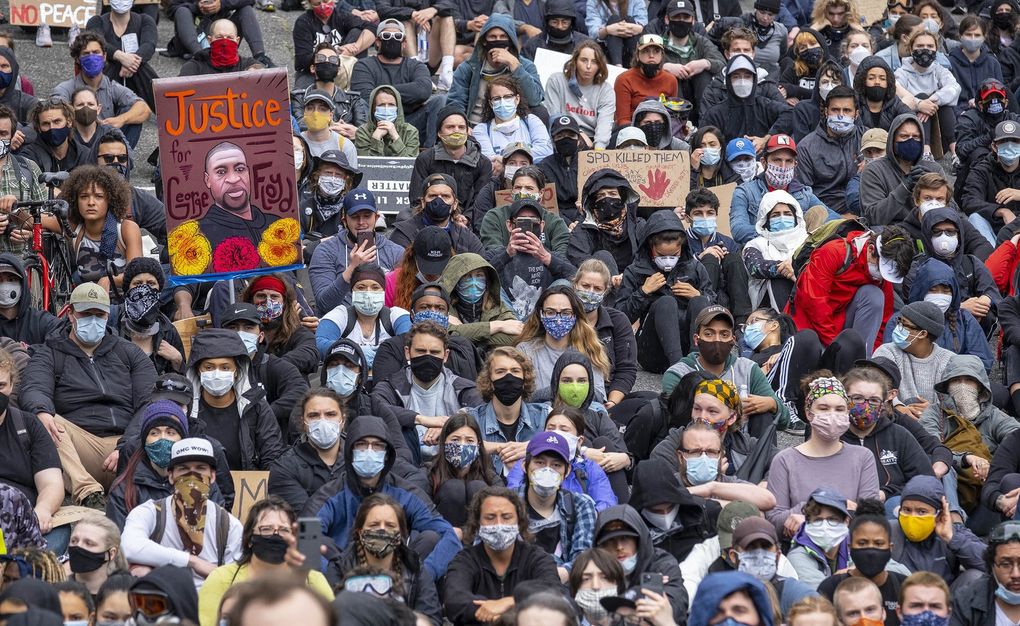
Though the protests that erupted after a black man died in police custody might result in spikes of COVID-19, some healthcare workers say that they are important, as racial disparities in healthcare is also a public health issue, according to The Wall Street Journal.
Public health experts and healthcare workers across the country are joining in the protests that began after George Floyd died at the hand of police in Minneapolis in late May. He is the most recent example of police brutality against black people and joins a long list of deaths of African Americans in police custody.
Healthcare experts and workers are saying though the protests may result in a new wave of coronavirus cases, the issue at hand is more important and the potential benefits outweigh the risks, especially since the risk of transmission is lower outside than inside when precautions are taken.
Darrell Gray, MD, a black gastroenterologist at the Ohio State University Wexner Medical Center in Columbus, has been attending protests, telling the Journal, “I prioritize being at protests and peaceful demonstrations because I strongly believe that they can be leveraged to produce change.” He said that he is taking precautions, wearing a face mask and distancing himself as much as possible.
Dr. Gray also said that the pandemic has disproportionately affected black communities, as the underlying conditions that are linked to more severe COVID-19 illness, such as diabetes and high blood pressure, are more rampant in those communities.
Jennifer Nuzzo, DrPH, an epidemiologist and senior scholar at the Johns Hopkins Center for Health Security in Baltimore, also supports the protests, though she has not been able to attend one in person as yet due to time constraints.
She told the Journal although she is worried about virus transmission, “there are some categories of risk that are, for me, completely worth it.” These protests are in those categories, she said.
Dr. Nuzzo and other health experts have also said protesters can reduce the risk of transmission by wearing masks, trying to maintain 6 feet of social distance when possible and making sure they are washing their hands often or using hand sanitizer.
More than 1,000 public health and infectious disease experts and community stakeholders signed an open letter last week saying that demonstrations were important for combating race-based health inequities, largely a result of racism, the Journal reports.
 HENRY KOTULA