Allina Health doctors unionize over health system’s objections

Dive Brief:

  • The National Labor Relations Board has certified the union election of more than 130 Allina Health doctors at Mercy and Unity Hospitals, nearly a year after they voted to join the Doctors Council Service Employees International Union (SEIU).
  • The certification follows objections from the Minneapolis-based nonprofit health system, which said that physicians active in the union drive held supervisor or managerial positions and may have unlawfully pressured colleagues into supporting the union. The NLRB rejected that claim.
  • It’s another victory for Doctors Council SEIU at Allina facilities. In October, more than 500 Allina doctors, physician assistants and nurse practitioners at over 60 facilities voted to join the union, according to NLRB documents.

Dive Insight:

Allina doctors and physician assistants said that chronic understaffing, high levels of burnout and compromised patient safety due to the corporatization of care motivated them to seek union representation.

“We have been seeing the shift of healthcare control going to corporations and further and further away from patient voices and patient advocacy. That really fell apart during the pandemic,” said Allina physician Liz Koffel during a press conference on Aug. 15 announcing primary care physicians’ unionization drive.

Koffel detailed workplace grievances that she said occurred due to Allina’s push for profits, including high productivity demands backed by few support staff and the health system’s now-abandoned policy of interrupting non-emergency medical care for patients with high levels of debt

In a statement to Healthcare Dive, an Allina spokesperson said the system had “committed to taking steps to make sure the National Labor Relations Board’s process was fair to all involved,” and that it would not take further procedural action against the union.

Across the country, physicians’ feelings of limited autonomy is driving similar interest in unionization, according to John August, director of healthcare labor relations at Cornell’s School of Industrial and Labor Relations. 

“Frankly, I’ve never seen anything like it in my whole career — where so many people are saying exactly the same thing at the same time, from a profession that heretofore has been essentially not unionized,” he said.

Although doctors have historically shown little interest in unionization — the physician unionization rate was under 6% nationwide in 2021 — the tide is beginning to turn

Doctors are increasingly working in consolidated hospitals owned by larger health systems or private equity firms. They report consolidation limits the influence they have on their day-to-day jobs, according to a December study from the Physician Advocacy Institute.

In addition, other options, such as physician-owned practices, are disappearing, with the percentage of owned practices falling 13% between 2012 and 2022, according to an analysis from the American Medical Association.

Elsewhere in the healthcare industry, unionization and strikes have led to gains for workers.

Last year, nurses at Robert Wood Johnson University Hospital successfully negotiated nurse-to-patient ratios by holding the picket line for nearly four months in New Jersey, and more than 75,000 healthcare workers secured a 20% raise over four years at Kaiser Permanente by staging the largest healthcare strike in recent history.

Starbucks softens its union stance

Starbucks is softening its stance toward unionization after years of pushing back.

Why it matters: 

It’s a potentially huge shift for the chain and a signal of the staying power of the labor movement that surged in the wake of the pandemic.

  • “They know this isn’t going away,” said Nick Setyan, an equity analyst at Wedbush who covers Starbucks. He called the company’s new posture “capitulation.”
  • Setyan said recent worker walkouts were a turning point. Also, at least five more stores this month voted to unionize.

Zoom out: 

Union organizing efforts have been a public relations headache for Starbucks since at least 2021 when a store in Buffalo became the first to vote for a union. Meanwhile, pressure from labor regulators isn’t slowing.

Zoom in: 

Starbucks’ strategy shift began in March when Laxman Narasimhan took the CEO reins from founder Howard Schultz, who had repeatedly clashed with workers over unionizing. The new CEO spoke of the need to care for customer-facing staff, per Reuters.

  • It’s accelerated over the past week — last Friday, Starbucks vice president Sara Kelly sent a letter to Workers United (the union that reps workers), saying the company wanted to restart bargaining.
  • The union has yet to bargain a contract. Starbucks now says it wants an agreement by next year.
  • On Wednesday, the company released an audit on its labor relations practices that was commissioned by Starbucks — after a shareholder vote forced its hand — and conducted by a former management-side lawyer.
  • Though the report asserted Starbucks didn’t have an “anti-union playbook,” it did find the company was unprepared to deal with its unionizing workforce and acknowledged that store managers made mistakes in how they handled the situation.
  • The report offers recommendations for improvement — including better training. Change starts with “tone from the top,” the audit says, suggesting that the company should reach agreements with the union “expeditiously.”

What happened: 

Starbucks initially believed it could fend off unionization by messaging about best-in-class wages and benefits, Setyan said, noting that it’s true the chain offers better compensation than competitors.

  • “Internally, they felt kind of aggrieved,” he said, that workers who management perceived as well-compensated would want to organize.
  • For a while it seemed like the messaging campaign was working, but the Red Cup Rebellion walkout last month and a flurry of new union votes changed minds.
  • Starbucks has historically been very sensitive to public relations — and it became clear pushing back isn’t great for its image, Setyan said.

The other side: 

Union representatives are skeptical of Starbucks’ new position.

  • “We are hopeful your letter is indeed the beginning of a sincere effort, and not a publicity move in the face of pressure from partners, Wall Street, shareholders, and others,” Workers United president Lynne Fox, said in a letter to Kelly last week.

What to watch: 

If Starbucks’ change in tone is a sign that the company will finally come to terms with these workers, and agree to a contract, or just a shift in its public stance while it continues efforts to avoid a deal.

Thousands of US health care workers go on strike in multiple states over wages and staff shortages

https://apnews.com/article/kaiser-health-care-workers-strike-b8b40ce8c082c0b8c4f1c0fb7ec38741

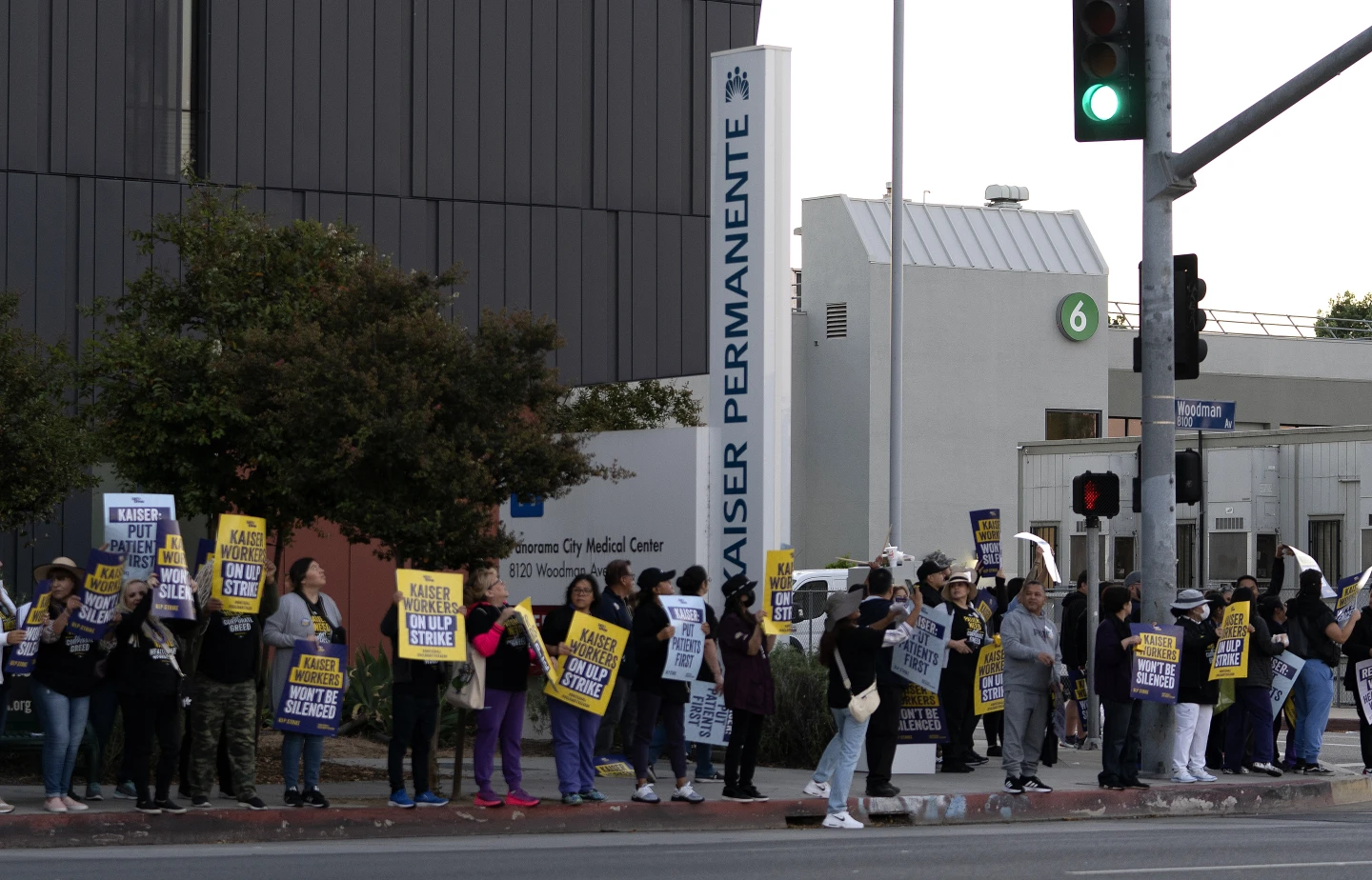
Picketing began Wednesday at Kaiser Permanente hospitals as some 75,000 health care workers went on strike in Virginia, California and three other states over wages and staffing shortages, marking the latest major labor unrest in the United States.

Kaiser Permanente is one of the country’s larger insurers and health care system operators, with 39 hospitals nationwide. The nonprofit company, based in Oakland, California, provides health coverage for nearly 13 million people, sending customers to clinics and hospitals it runs or contracts with to provide care.

The Coalition of Kaiser Permanente Unions, representing about 85,000 of the health system’s employees nationally, approved a strike for three days in California, Colorado, Oregon and Washington, and for one day in Virginia and Washington, D.C.

A cheer went up from union members outside Kaiser Permanente Los Angeles Medical Center when the strike deadline arrived before dawn.

The strikers include licensed vocational nurses, home health aides and ultrasound sonographers, as well as technicians in radiology, X-ray, surgical, pharmacy and emergency departments.

Doctors are not participating, and Kaiser says its hospitals, including emergency rooms, will remain open during the picketing. The company said it was bringing in thousands of temporary workers to fill gaps during the strike. But the strike could lead to delays in getting appointments and non-urgent procedures being rescheduled.

It comes amid unprecedented worker organizing — from strike authorizations to work stoppages — within multiple industries this year, including, transportationentertainment and hospitality.

Wednesday’s strike is the latest one for the health care industry this year as it continues to confront burnout with the heavy workloads — problems that were exacerbated greatly by the pandemic.

Unions representing Kaiser workers in August asked for a $25 hourly minimum wage, as well as increases of 7% each year in the first two years and 6.25% each year in the two years afterward.

They say understaffing is boosting the hospital system’s profits but hurting patients, and executives have been bargaining in bad faith during negotiations.

“They’re not listening to the frontline health care workers,” said Mikki Fletchall, a licensed vocational nurse based in a Kaiser medical office in Camarillo, California. “We’re striking because of our patients. We don’t want to have to do it, but we will do it.”

Kaiser has proposed minimum hourly wages of between $21 and $23 next year depending on the location.

Since 2022, the hospital system has hired 51,000 workers and has plans to add 10,000 more people by the end of the month.

Kaiser Permanente reported $2.1 billion in net income for this year’s second quarter on more than $25 billion in operating revenue. But the company said it still was dealing with cost headwinds and challenges from inflation and labor shortages.

Kaiser executive Michelle Gaskill-Hames defended the company and said its practices, compensation and retention are better than its competitors, even as the entire sector faces the same challenges.

“Our focus, for the dollars that we bring in, are to keep them invested in value-based care,” said Gaskill-Hames, president of Kaiser Foundation Health Plan and Hospitals of Southern California and Hawaii.

She added that Kaiser only faces 7% turnover compared to the industry standard of 21%, despite the effects of the pandemic.

“I think coming out of the pandemic, health care workers have been completely burned out,” she said. “The trauma that was felt caring for so many COVID patients, and patients that died, was just difficult.”

The workers’ last contract was negotiated in 2019, before the pandemic.

Hospitals generally have struggled in recent years with high labor costs, staffing shortages and rising levels of uncompensated care, according to Rick Gundling, a senior vice president with the Healthcare Financial Management Association, a nonprofit that works with health care finance executives.

Most of their revenue is fixed, coming from government-funded programs like Medicare and Medicaid, Gundling noted. He said that means revenue growth is “only possible by increasing volumes, which is difficult even under the best of circumstances.”

Workers calling for higher wages, better working conditions and job security, especially since the end of the pandemic, have been increasingly willing to walk out on the job as employers face a greater need for workers.

The California legislature has sent Democratic Gov. Gavin Newsom a bill that would increase the minimum wage for the state’s 455,000 health care workers to $25 per hour over the next decade. The governor has until Oct. 14 to decide whether to sign or veto it.

New Jersey hospital to suspend healthcare benefits from striking nurses

Robert Wood Johnson University Hospital in New Brunswick, N.J., said it plans to temporarily cut off healthcare benefits for striking union workers, effective Sept. 1.

Hospital spokesperson Wendy Gottsegen described the move as unfortunate.

“We have said all along that no one benefits from a strike — least of all our nurses. We hope the union considers the impact a prolonged strike is having on our nurses and their families,” Ms. Gottsegen said in an Aug. 28 news release shared with Becker’s. “As of Sept. 1, RWJUH nurses must pay for their health benefits through COBRA. This hardship, in addition to the loss of wages throughout the strike, is very unfortunate and has been openly communicated to the union and the striking nurses since prior to the walkout on Aug. 4.”

The ongoing strike involves the United Steelworkers Local 4-200, which represents about 1,700 nurses at the facility.

Union members voted to authorize a strike in July. The union and hospital have been negotiating a new agreement for months, with the last bargaining session occurring Aug. 16.

During negotiations, the union has said it seeks a contract that provides safe staffing standards, living wages and quality, affordable healthcare.

Local 4-200 President Judy Danella, RN, said in a previous union release, “Our members remain deeply committed to our patients. However, we must address urgent concerns, like staffing. We need enough nurses on each shift, on each floor, so we can devote more time to each patient and keep ourselves safe on the job.”

Several nurses told TAPinto New Brunswick last week that they began preparing for the current situation ahead of the strike, taking overtime shifts and saving as much money as possible. Others told the publication they are taking part-time jobs or temporary employment elsewhere in the nursing field or adjacent roles.

“I think it’s important that you [remember] you might not get the job you want to do at that moment, but people have to do what they have to do to get it done,” Jessica Newcomb, RN, told TAPinto New Brunswick.

Meanwhile, the hospital has contracted with an agency to hire replacement nurses during the strike. 

“As always, our top priority is to our patients. RWJUH is open, fully operational and completely staffed, and we remain steadfast in our commitment to deliver the highest quality and always-safe patient care,” Ms. Gottsegen said.

As of Aug. 28, no further dates for negotiations were scheduled by mediators.

Pennsylvania unions file antitrust complaint against UPMC

https://www.healthcaredive.com/news/upmc-unions-antitrust-complaint-doj-workers/650739/

Dive Brief:

  • Pennsylvania unions have filed a complaint with the Department of Justice alleging integrated hospital giant UPMC is abusing its dominant market position to suppress wages and retain workers.
  • On Thursday, SEIU Healthcare Pennsylvania and a coalition of labor unions filed a 55-page complaint against UPMC, the largest private employer in the state, saying the hospital system’s size has allowed it to stamp out wage growth, “drastically increase” workload and keep workers from departing to other jobs.
  • The unions are asking federal regulators to investigate UPMC for antitrust violations, citing its dominance of the healthcare market in select regions of Pennsylvania. UPMC denied allegations of wage suppression.

Dive Insight:

The Pittsburgh-based system has seen a rise in labor complaints, according to the unions, as the system has grown into its 41-hospital footprint through a series of mergers and acquisitions. UPMC, which also operates 800 doctors offices and clinics and a handful of health insurance offerings, reported $26 billion in operating revenue last year.

Attempts in the last decade to organize UPMC’s hourly workers have been unsuccessful, according to SEIU.

Matt Yarnell, president of SEIU Healthcare Pennsylvania, called the complaints groundbreaking on a Thursday call with reporters, saying that no entity has ever filed a complaint arguing that mobility restrictions and labor violations are anticompetitive, and in violation of antitrust law.

The complaint alleges that, for every 10% increase in market share, the wages of UPMC workers falls 30 to 57 cents an hour on average. UPMC hospital workers face an average 2% wage gap compared to non-UPMC facilities, according to a study cited in the complaint.

In addition, the labor groups allege that UPMC’s staffing ratios have fallen over the past decade, resulting in its staffing ratios being 19% lower on average compared with non-UPMC care sites as of 2020.

The unions are going after UPMC for being a “monopsony,” or a company that controls buying in a given marketplace, including controlling a large number of jobs. UPMC has some 92,000 workers, according to the complaint, and has cut off avenues of competition through non-compete agreements, in addition to preventing employees from unionizing.

“If, as we believe, UPMC is insulated from competitive market pressures, it will be able to keep workers’ wages and benefits — and patient quality — below competitive levels, while at the same time continually imposing further restraints and abuses on workers to maintain its market dominance,” the complaint states. “Because we believe this conduct is contrary to Section 2 of the Sherman Act, we respectfully urge the Department of Justice to investigate UPMC and take action to halt this conduct.”

In response to the allegations, UPMC said it has the highest entry-level pay of any provider in the state, and offers “above-industry” employee benefits. UPMC’s average wage is more than $78,000, Paul Wood, UPMC’s chief communications officer, told Healthcare Dive in a statement.

“There are no other employers of size and scope in the regions UPMC serves that provide good paying jobs at every level and an average wage of this magnitude,” Wood said.

Healthcare workers are increasingly pushing for better working conditions and pay amid the COVID-19 pandemic, as hospitals grapple with recruitment and retention issues driven by burnout and heightened labor costs.

Workload expectations at core of nurses’ lawsuit against University of Michigan

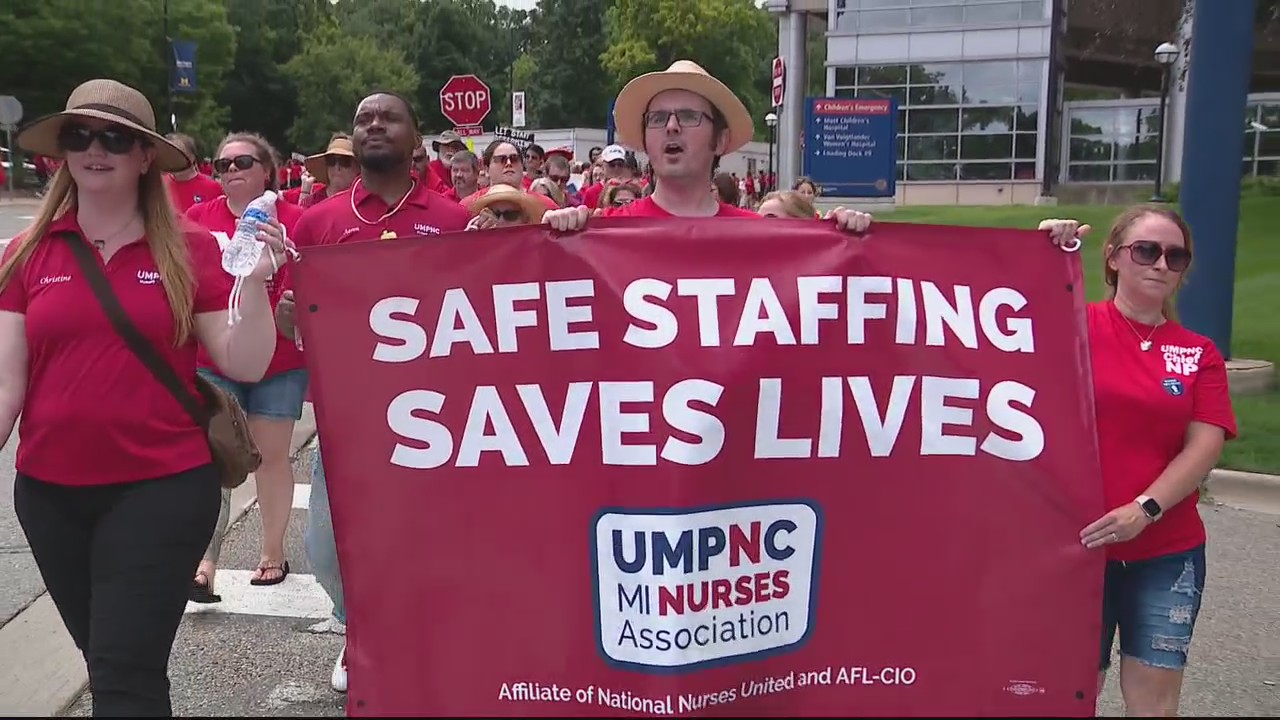
Members of the Michigan Nurses Association are accusing the University of Michigan of unlawfully refusing to negotiate over nurses’ workloads in its bargaining with the University of Michigan Professional Nurse Council.

The union, an affiliate of National Nurses United and AFL-CIO, represents about 13,000 registered nurses and healthcare professionals in Michigan, including workers employed by the University of Michigan. The University of Michigan regents hold the contract with the University of Michigan Professional Nurse Council, the largest bargaining unit of the Michigan Nurses Association.

A total of 6,200 University of Michigan Health nurses have been working without a new contract since July 1, and they are working under the terms of the expired agreement, according to hospital and union statements. The University of Michigan Health, the clinical division of Ann Arbor-based Michigan Medicine, told Becker’s in a statement that during negotiations, it has offered a 21 percent base pay increase for nurses over the life of the contract, as well as a new salary step program for nurse practitioners and the safe elimination of mandatory overtime.

The union contends the University of Michigan has refused to bargain over safe workloads regarding the number of patients assigned per nurse, which it says is tied directly to nurses’ patient safety concerns. As a result, it filed a lawsuit Aug. 15 in the Michigan Court of Claims. 

“When nurses are forced to take care of too many people at once, patient care gets compromised and nurses are put in danger of injury or burnout, and that’s happening far too often at our hospital,” said Renee Curtis, RN, president of the University of Michigan Professional Nurse Council, said in a news release. 

“University of Michigan Health makes staffing determinations with patient safety at the forefront of its decisions, and this has produced outstanding safety results,” the health system said in its statement. “The health system continuously receives recognition as Michigan’s safest hospital with recent recognitions by top agencies.”

University of Michigan Health also said it “plans to vigorously defend itself” against the union lawsuit.

Strike set to begin at Cedars-Sinai

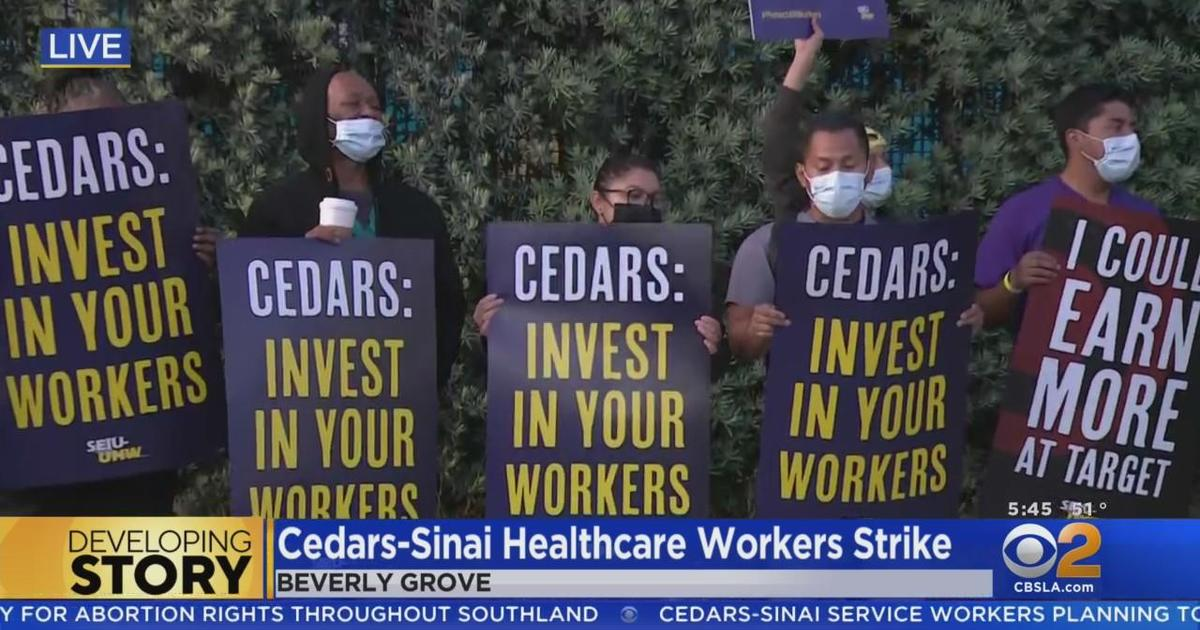
Members of the Service Employees International Union-United Healthcare Workers West are set to begin a weeklong strike May 9 at Cedars-Sinai Medical Center in Los Angeles.

The union represents about 2,000 certified nursing assistants, surgical technicians, sterile processing technicians, transporters, environmental service workers, plant operation workers and food service technicians, according to NBC Los Angeles. Cedars-Sinai Medical Center has about 14,000 employees total.

Union members voted to authorize a strike in April. The union and hospital began negotiating a new labor contract March 21, according to NBC Los Angeles. A hospital spokesperson told the local news outlet that upon the start of negotiations, “Cedars-Sinai presented a strong economic proposal that would have continued our market leading pay by providing substantial pay increases to bargaining unit employees as early as March 27.”

The union contends that in its latest round of bargaining, Cedars-Sinai rejected proposals on PPE stockpiles, COVID-19 exposure notifications, keeping pregnant and immunocompromised workers away from COVID-19 patients and other safety measures. “We’re asking for basic workplace protections and respect for the lives and health of caregivers and patients,” an SEIU-UHW statement reads. 

“We respect the rights of SEIU-UHW members to take this step,” the hospital said in a statement. “The most effective way to reach a fair agreement, however, is for both parties to stay at the bargaining table and finish negotiations.”

Stanford Health Care to nurses: No pay for those who strike

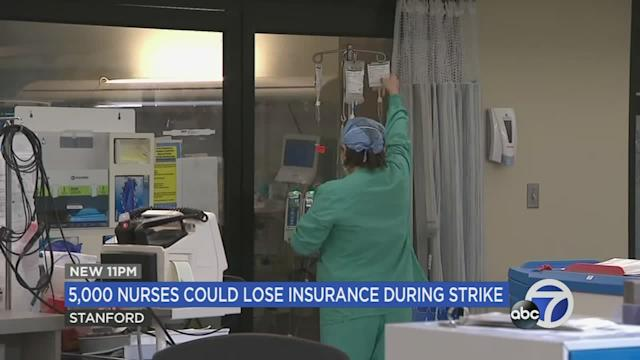
Stanford Health Care and Lucile Packard Children’s Hospital administrators have notified union leaders that its nurse members who strike later in April risk losing pay and health benefits, according to Palo Alto Weekly.

The Committee for Recognition of Nursing Achievement, a union at Stanford Health Care and Stanford Children’s Health that represents about 5,000 nurses, has scheduled a strike to begin April 25. The nurses’ contract expired March 31.

If the strike moves forward, Stanford Health Care and the Lucile Packard Children’s Hospital, both based in Palo Alto, Calif., are prepared to continue to provide safe, quality healthcare, according to a statement from Dale Beatty, DNP, RN, chief nurse executive and vice president of patient care services for Stanford Health Care, and Jesus Cepero, PhD, RN, senior vice president of patient care and chief nursing officer for Stanford Children’s Health.

But the statement, which was shared with Becker’s, said nurses who choose to strike will not be paid for shifts they miss.

“In addition, employer-paid health benefits will cease on May 1 for nurses who go out on strike and remain out through the end of the month in which the strike begins,” Drs. Beatty and Cepero said.

The leaders quoted from Committee for Recognition of Nursing Achievement’s “contingency manual” that the union provided to nurses: “If a strike lasts beyond the end of the month in which it begins and the hospitals discontinue medical coverage, you will have the option to pay for continued coverage.”

Drs. Beatty and Cepero said nurses who strike may pay to continue their health coverage through the Consolidated Omnibus Budget Reconciliation Act.

In a separate statement shared with Becker’s, Committee for Recognition of Nursing Achievement President Colleen Borges called Stanford and Packard management’s move regarding nurses’ health benefits “cruel” and “immoral.”

“Health benefits should not be used against workers, especially against the very healthcare professionals who have made Stanford a world-class health system,” said Ms. Borges, who is also a pediatric oncology nurse at Lucile Packard Children’s Hospital. “We have spent our careers caring for others and putting others first — now more than ever we need solutions that will ensure sustainability, safe staffing and strong benefits to retain nurses. But instead of taking our proposals seriously, hospitals are spending their time and energy weaponizing our medical benefits. We refuse to be intimidated from standing up for the fair contracts that we need in order to continue delivering world-class patient care.”

The union has organized a petition to tell Stanford not to cut off medical benefits for nurses and their families during the strike. As of April 19, the petition had more than 25,150 signatures.

Sutter Health: Nurses who staged 1-day strike must wait 5 days to return to work

Sacramento-based Sutter Health said nurses who went on strike April 18 will not be allowed to return to work until the morning of April 23, the San Francisco Chronicle reported.

The strike affected nurses and healthcare workers at Sutter Health facilities in Northern California. The nurses are members of the California Nurses Association, and the other workers are members of the Caregivers and Healthcare Employees Union, an affiliate of the California Nurses Association.

More than 8,000 registered nurses and healthcare workers were expected to participate in the strike, according to an April 18 news release from the unions.

In a statement shared with Becker’s, Sutter Health said the organization conducted strike contingency planning, which included “securing staff to replace nurses who have chosen to strike, and those replacement contracts provide the assurance of five days of guaranteed staffing amid the uncertainty of a widespread work stoppage.” 

“As always, our top priority remains safe, high-quality patient care and nurses may be reinstated sooner based on operational and patient care needs,” the statement said.

The California Nurses Association described Sutter Health’s decision as retaliatory, as well as “completely unnecessary and vindictive.”

“Nurses who are regularly scheduled to work during this lockout period will lose those days of pay,” the union said in a statement shared with Becker’s. “We urge Sutter to respect the nurses’ strike and let all nurses return to work.”

Sutter Health workers authorized a strike in March, and union officials announced an official strike notice April 8. Union members cited lack of transparency about the stockpile of personal protective equipment supplies and contact tracing as a reason for the strike. They also said they seek a contract that will help retain experienced nurses and provide sufficient staffing and training.

Nurses have been in contract negotiations since June. 

More than 4K Stanford nurses vote to strike in California

UPDATE: April 14, 2022: Nurses will begin striking April 25 if they are unable to reach a deal with the system by then, according to a Wednesday statement from the union. The two sides have met with a federal mediator three times, and the strike would be open-ended.

Dive Brief:

  • Unionized nurses at Stanford hospitals in California voted in favor of authorizing a strike Thursday, meaning more than 4,500 nurses could walk off the job in a bid for better staffing, wages and mental health measures in new contracts.
  • Some 93% of nurses represented by the Committee for Recognition of Nursing Achievement voted in favor of the work stoppage, though the union did not set a date, according to a union release. It must give the hospitals 10 days notice before going on strike.
  • Nurses’ contracts expired March 31 and the union and hospital have engaged in more than 30 bargaining sessions over the past three months, including with a federal mediator, according to the union.

Dive Insight:

As the COVID-19 pandemic has worsened working conditions for nurses, some unions have made negotiating contracts a priority. Better staffing is key, along with higher wages and other benefits to help attract and retain employees amid ongoing shortages.

The California nurses’ demands in new contracts focus heavily on recruitment and retention of nursing staff “amid an industry-wide shortage and nurses being exhausted after working through the pandemic, many in short-staffed units,” the union said in the release.

They’re also asking for improved access to time off and more mental health support.

Nurses say their working conditions are becoming untenable and relying on travel staff and overtime shifts is not sustainable, according to the release.

The hospitals are taking precautionary steps to prepare for a potential strike and will resume negotiations with the union and a federal mediator Tuesday, according to a statement from Stanford.

But according to CRONA, nurses have filed significantly more assignment despite objections documents from 2020 to 2021 — forms that notify hospital supervisors of assignments nurses take despite personal objections around lacking resources, training or staff.

And a survey of CRONA nurses conducted in November 2021 founds that as many as 45% were considering quitting their jobs, according to the union.

That’s in line with other national surveys, including one from staffing firm Incredible Health released in March that found more than a third of nurses said they plan to leave their current jobs by the end of this year.

The CRONA nurses “readiness to strike demonstrates the urgency of the great professional and personal crisis they are facing and the solutions they are demanding from hospital executives,” the union said in the release.

No major strikes among healthcare workers have occurred so far this year, though several happened in 2021 and in 2020, the first year of the pandemic.