Hospitals scooping up physician practices increases health care prices

https://mailchi.mp/tradeoffs/research-corner-5222129?e=ad91541e82

This week’s contributor is Aditi Sen, the Director of Research and Policy at the Health Care Cost Institute. Her work uses HCCI’s unique data resources to conduct analyses that inform policy to promote a sustainable, accessible and high-value health care system.

High health care prices in the U.S. make it hard for people to access care, difficult for employers to provide insurance, and challenging for policymakers to balance health care spending with other budgetary priorities. That’s why it’s important to understand what drives prices higher and identify policies to keep prices from getting so high.

In a new paper in Health Affairs, Vilsa Curto, Anna Sinaiko and Meredith Rosenthal examined whether hospital and health systems’ acquisition of and contracting with physician practices – two forms of what is often called vertical integration – has led to higher prices for physician services. The researchers combined four sets of data from Massachusetts from 2013-2017 for their analysis.

They found that: 

  • The percent of physicians who joined health systems grew meaningfully: The percent of primary care physicians who remained independent dropped from 42% in 2013 to 31.5% in 2017, and the percent of independent specialists fell from 26% to 17%.
  • Over this same period, prices for physician services rose. Price increases were especially large – 12% for primary care physicians and 6% for specialists – when physicians joined health systems that had a high share of admissions in their area. 

This study stands out for several reasons. First, it shows vertical integration drives up health care prices. Second, the authors highlight actions states can and are considering taking to monitor and curb vertical integration, including antitrust enforcement and enacting laws to promote competition.

Finally, the Massachusetts data allow the public to better appreciate what’s happening across the state. Many earlier studies on health care consolidation have been limited to a subset of insurers, physicians or patients. Massachusetts is a leader when it comes to creating and sharing its data thanks to its all-payer claims database, which pulls together all the health care bills from private insurers and public programs like Medicare and Medicaid in the state. This critical information helps to illuminate patterns of care and prices and connect them to issues like consolidation and competition. Neither the federal government nor most states track how vertical integration mergers influence health care prices.

As these findings demonstrate, acquisitions and other forms of vertical integration impact what people pay for health care services. Given that prices in this sector continue to climb, this paper underscores the need for more state and national data to understand the downstream effects on all of us who use and participate in the U.S. health care system.

The FTC says it’s getting tougher on hospital consolidation. Antitrust experts aren’t buying it

FTC Chairwoman Lina Khan

Two lawsuits against hospital mergers announced the same day may look like the FTC under Chair Lina Khan (pictured) is flexing its muscle to restrain deals that raise prices. But those complaints are “more smoke than fire,” Ken Field, a former FTC lawyer and current co-chair of Jones Day’s global health care practice, told STAT’s Tara Bannow.

The real target shouldn’t be the mergers in Utah and New Jersey between hospitals, antitrust experts said, but something called vertical mergers, in which hospitals buy up physician groups. After such deals, doctors spent $73 million more on 10 common imaging and lab tests over four years, a 2021 Health Affairs study found.

An FTC spokesperson didn’t comment on the agency’s strategy with respect to hospital consolidation. 

Steward Health Care sells its Medicare value-based care business to CareMax

https://mailchi.mp/31b9e4f5100d/the-weekly-gist-june-03-2022?e=d1e747d2d8

The for-profit, 39-hospital Steward system manages 171K lives across the Medicare Advantage, Medicare shared savings, and Medicare direct contracting programs. This deal will allow Miami-based CareMax, a publicly-traded, value-based care company with 42 senior centers (mostly in Florida) and 34K lives under management, to expand across Steward’s footprint, which includes Texas and Arizona, states with rapidly growing Medicare populations.

The Gist: This deal is an example of the rise of venture-funded MSO (medical services organization) services that aim to subsume and scale value-based care functions from hospitals and medical groups. Steward wagers it can find greater success in managing risk in partnership with CareMax, moving a greater share of its Medicare population into risk, and outsourcing care management and patient engagement functions.

Many health systems have spent substantial resources building out accountable care organizations and risk-based Medicare businesses over the last decade. While selling these assets to a company like CareMax may be one way to generate a return, particularly for those frustrated by lower-than-anticipated gains from moving to value-based care, it also requires relinquishing control of functions likely central to the future health system business model.

2022 forecast: Medicare Advantage is the industry’s hottest market. Don’t expect that to change next year

https://www.fiercehealthcare.com/payer/medicare-advantage-industry-s-hottest-market-2022-don-t-expect-to-change

The momentum behind Medicare Advantage is only growing as more baby boomers age into eligibility, and experts don’t expect the energy around the program to slow down any time soon.

recent analysis from the Kaiser Family Foundation found that a record 3,834 plans were available for the 2022 plan year in MA, which represents an 8% increase over 2021 and the largest number on the market in a decade.

Open enrollment for Medicare ended Dec. 7, and enrollment numbers will begin trickling out as the year winds down. In 2021, 26 million Medicare beneficiaries, or about 42% of those eligible for the program, were enrolled in an MA plan.

As Medicare Advantage enrollment continues to grow, insurers seem to be responding by offering more plans and choices to the people on Medicare,” the KFF analysts said.

Part of the appeal of MA to an increasingly savvy consumer base is that it offers additional benefits beyond those afforded people in traditional Medicare, such as vision and dental coverage as well as supports for members’ social needs.

Sachin Jain, M.D., CEO of SCAN Health Plan, told Fierce Healthcare that people are increasingly shopping around for plans, building greater awareness of MA as a whole as well as of the different types of benefits beneficiaries could select.

“We’re seeing that consumers are more sophisticated today than they were a decade ago,” he said. “I think people are realizing that fee-for-service Medicare doesn’t cover a lot of things.”

The KFF report shows that more than 90% of non-group MA plans offer some kind of vision, hearing, telehealth or dental benefits and that most (89%) include prescription drug coverage as well. 

Elena McFann, president of Medicare at Anthem, told Fierce Healthcare that throughout the open enrollment period, plans built with benefits that target the social determinants of health and promote whole-person care resonated strongly with members.

Anthem, for example, offers plans that include a slate of essential extra benefits that members can choose from based on what they need the most. Options include grocery cards, transportation benefits and in-home supports.

She said that the grocery benefits and flex cards that allow members to purchase additional hearing, vision and dental coverage have proven particularly popular in this enrollment season.

“What those all point to is the concept of flexibility and helping them lead healthier lives where they really need the help where they are in their journey,” McFann said.

As these benefits prove popular, an increasing number of plans are offering them in tandem. The Better Medicare Alliance released a survey late last month that found the number of plans including supplemental benefits grew by 43% for the 2022 plan year.

The Centers for Medicare & Medicaid Services (CMS) has issued additional flexibilities that allow MA plans to address members’ social determinants of health as the program’s enrollment continues to swell.

Jain said SCAN has seen similar interest in supplemental benefits, and that flexibility afforded to MA plans to adapt to seniors’ needs and expectations is a critical factor in the program’s success.

“When you’re in the business of serving seniors, a lot of what you have to do is anticipate needs that those seniors may not anticipate that they have, give them things they didn’t know they needed,” he said.

In addition, insurers are eyeing non-traditional partners to launch new plans. Anthem teamed up this year with Kroger on co-branded MA plans, and in late 2020 MA startup Clover Health similarly joined forces with Walmart.

McFann said that beneficiaries value plans like these that unite brands they trust and recognize and that partners like Kroger enable insurers to more effectively meet seniors where they are. In its co-branded plans, members can access benefits like Healthy Grocery Cards and stipends to purchase over-the-counter health items.

She said that there has been significant “excitement” around those plans, which are available in four states, during the current enrollment period.

“It gives the Medicare eligibles a sense of familiarity and a sense of comfort, again meeting them on their terms,” McFann said.

However, while many established insurers have set ambitious growth targets in this market and new startups enter the space regularly, they still have plenty of work to do if they want to catch up with the market’s dominant forces: UnitedHealthcare, Humana and Blues plans.

UHC and Humana together account for 45% of the MA market in 2021, according to the KFF analysis. Humana offers plans in 85% of counties and UHC in 74% for 2022.

That means, 89% of Medicare eligibles have access to a Humana plan and 90% have access to a UHC MA plan if they choose, according to the report.

Competition is continuing to grow, though, and both McFann and Jain said they don’t feel the momentum around MA slowing down anytime soon. 

“It is those extras and social drivers of health solutions that really have caught on with the Medicare-eligible segment and we expect to see that expand even further,” McFann said.

The Trend of Health System Mergers Continues

While healthcare is delivered locally, the business of healthcare
is regional, and the regions are only getting bigger.
Hospital
and health system mergers alike have continued to shift from
local to regional, and the recently announced merger between Advocate Aurora
Health and Atrium Health clearly highlights that the regions are only getting
bigger.


Advocate Aurora, with a presence in Illinois and Wisconsin, and Atrium Health,
with a presence in North Carolina, South Carolina, Georgia, and Alabama, will
combine to create a $27 billion health system that will span six states and make it
one of the leading healthcare delivery systems in the country. The combined
organization, which will transition to a new brand, Advocate Health, will operate
67 hospitals and over 1,000 sites of care, employ nearly 150,000 teammates, and
serve 5.5 million patients. Together, Advocate Health will become the 6th largest
system in the country behind Kaiser Permanente, HCA Healthcare, CommonSpirit
Health, Ascension, and Providence.


We have seen a number of large health systems come together recently,
including Intermountain Healthcare + SCL Health to create a $15 billion revenue
system, Spectrum Health + Beaumont ($14 billion), NorthShore University Health
System + Edward-Elmhurst Healthcare
($5 billion), LifePoint Health + Kindred
Healthcare
($14 billion), and Jefferson Health + Einstein Healthcare Network ($8
billion).


The exact reasoning for each merger differs slightly, but one of the common
threads across all is scale.
But not scale in the traditional M&A sense. Rather,
scale in covered lives; scale in physician infrastructure and alignment; scale in
clinical and operational capabilities; scale in technology, innovation, and
partnerships with non-traditional players; scale for capital access; and scale for
insurance risk to compete in a value-based world. It is no longer the strong
acquiring the weak. Rather, strong players are coming together to gain scale to
face the headwinds in a unified manner.

For Advocate Aurora and Atrium, coming together is about leveraging their combined clinical excellence,
advancing data analytics capabilities and digital consumer infrastructure, improving affordability, driving health equity, creating a next-generation workforce, research, and environmental sustainability. Together, they have pledged $2 billion to disrupt the root causes of health inequities across underserved communities and create more than 20,000 new jobs.


Both Advocate Aurora and Atrium are no strangers to mergers. Advocate and Aurora came together in 2018, and prior to that Advocate was intending to merge with NorthShore before being blocked due to anti-trust. Atrium has grown over the years, merging with systems such as Navicent Health in Georgia in 2018, Wake Forest Baptist Health in North Carolina 2020, and Floyd Health System in Georgia in 2021. In the newly proposed merger, Advocate Aurora and Atrium are coming together via a joint operating arrangement where each entity will be responsible for their own liabilities and maintain ownership of their respective assets but operate together under the new parent entity and board. This may allow the combined entity more flexibility in local decision-making. The current CEOs, Jim Skogsbergh and Eugene Woods will serve as co-CEOs for the first 18 months, at which point Skogsbergh will retire, and Woods will take over as the sole CEO.


Mergers can come in various shapes and structures, but the driving forces behind consolidation are not unique. With the need to compete in value-based care, adequately manage risk, gain scale across covered lives, physicians, and points of access, successfully deliver affordable high-quality care, and the need to deal with the vertical and horizontal consolidation of the large-scale payers, the markets that health systems operate in must be large enough to be effective and relevant. We fully expect to see more of these larger scale health system mergers in the near term.


The physical delivery of healthcare is local, but, again, the business of healthcare is not; it is regional, and the regions are only getting bigger.

6 hospital, health system deals called off this year

Six health system and hospital deals have been canceled so far this year, whether it be a scrapped merger or acquisition or the unwinding of a partnership.

1. Proposed Dartmouth Health, GraniteOne Health merger canceled
Lebanon, N.H.-based Dartmouth Health and Manchester, N.H.-based GraniteOne Health are canceling their proposed merger after the state Attorney General’s Office said the move would violate the New Hampshire constitution, according to VTDigger.

2. Hackensack Meridian, Englewood withdraw merger plans
Edison, N.J.-based Hackensack Meridian Health and Englewood (N.J.) Health have dropped their merger plans, a spokesperson for Hackensack Meridian told Becker’s.

3. Canyon Atlantic ends bid to buy 2 Pennsylvania hospitals
The prospective buyer of two shuttered Pennsylvania hospitals has filed a motion to end litigation to purchase the facilities, The Daily Local reported March 8.

4. Lifespan, Care New England withdraw merger application
The boards of Lifespan and Care New England — both based in Providence, R.I. — have decided to withdraw their merger application after the Federal Trade Commission made an announcement Feb. 17 it would file suit to block the deal.

5. Hoag, Providence to split: 5 things to know
Hoag Memorial Hospital Presbyterian in Newport Beach, Calif., and Providence, a Catholic health system based in Renton, Wash., said they would end their affiliation in January.

6. Trinity Health won’t buy Tower Health hospital
Trinity Health Mid-Atlantic has abandoned its plan to buy Tower Health’s Chestnut Hill Hospital in Philadelphia, according to the Philadelphia Inquirer.

RWJBarnabas Health, Saint Peter’s integration deal wins NJ approval, awaits FTC signoff

https://www.fiercehealthcare.com/providers/rwjbarnabas-health-saint-peters-integration-deal-wins-nj-approval-awaits-ftc-sign

RWJBarnabas Health (RWJBH) and Saint Peter’s Healthcare System’s proposed integration has received the blessing of New Jersey regulators, a key step forward as the systems look to form what they describe as the state’s “first premier academic medical center,” according to a Monday announcement.

The organizations are now awaiting a final approval from the Federal Trade Commission (FTC) before moving ahead with the deal.

“State approval now puts us on the cusp of being able to create New Jersey’s first multi-campus premier academic medical center that will draw top talent, increased research funding and more opportunities for groundbreaking clinical trials, while also enhancing specialized services and improving overall patient care,” Saint Peter’s President and CEO Leslie Hirsch said in a statement.

“New Jersey deserves to have a premier academic medical center of national distinction like many other states that will serve as a destination for patients from all walks of life to get lifesaving treatment for complex illnesses and as an anchor for medical innovation, educational opportunity and economic development,” Hirsch said.

The two health systems had signed a definitive agreement declaring their “intention to integrate” in late 2020.

The organizations said that in addition to increasing services and strengthening patient access, the premier academic medical center’s location in New Brunswick, New Jersey, would play a role in attracting more academic talent and research to nearby Rutgers University.

The systems’ announcement also cited affirmation from Superior Court Judge Lisa Vignuolo, who said when authorizing the transaction that the deal “will serve in the public interest and the public good.”

RWJBH is the larger of the pair, providing care to more than 3 million patients annually across 11 hospitals, four children’s hospitals and dozens of other centers. It’s already the largest academic health system in New Jersey thanks to a collaboration with Rutgers Robert Wood Johnson Medical Schools to train over 1,000 medical residents and interns across RWJBH hospitals yearly.

Formed in 2007, Saint Peter’s Healthcare System is a Catholic organization headlined by the 478-bed Saint Peter’s University Hospital in New Brunswick. It also operates a children’s hospital, primary and specialty care networks and a surgical center.

Under the previously announced terms of the agreement, Saint Peter’s would remain a full-service acute healthcare provider in New Jersey and continue to adhere to its Catholic healthcare mission. RWJBH would make significant strategic capital investments in St. Peter’s facilities, technology and innovation.

“This is a tremendous milestone in a years-long journey towards fulfilling our shared vision to bring transformative care to New Jersey,” RWJBH CEO Barry Ostrowsky said in a statement.

The beginning of the year already saw RWJBH officially acquire Trinitas Regional Medical Center, an Elizabeth, New Jersey-based Catholic teaching medical center.

Regulators’ green light for RWJBH’s moves contrasts with the recent opposition to Hackensack Meridian Health and Englewood Health’s now-nixed merger plans. The FTC and half of the country’s state attorneys general fought the proposal due to concerns that it would remove competition and harm residents in New Jersey’s Bergen County.

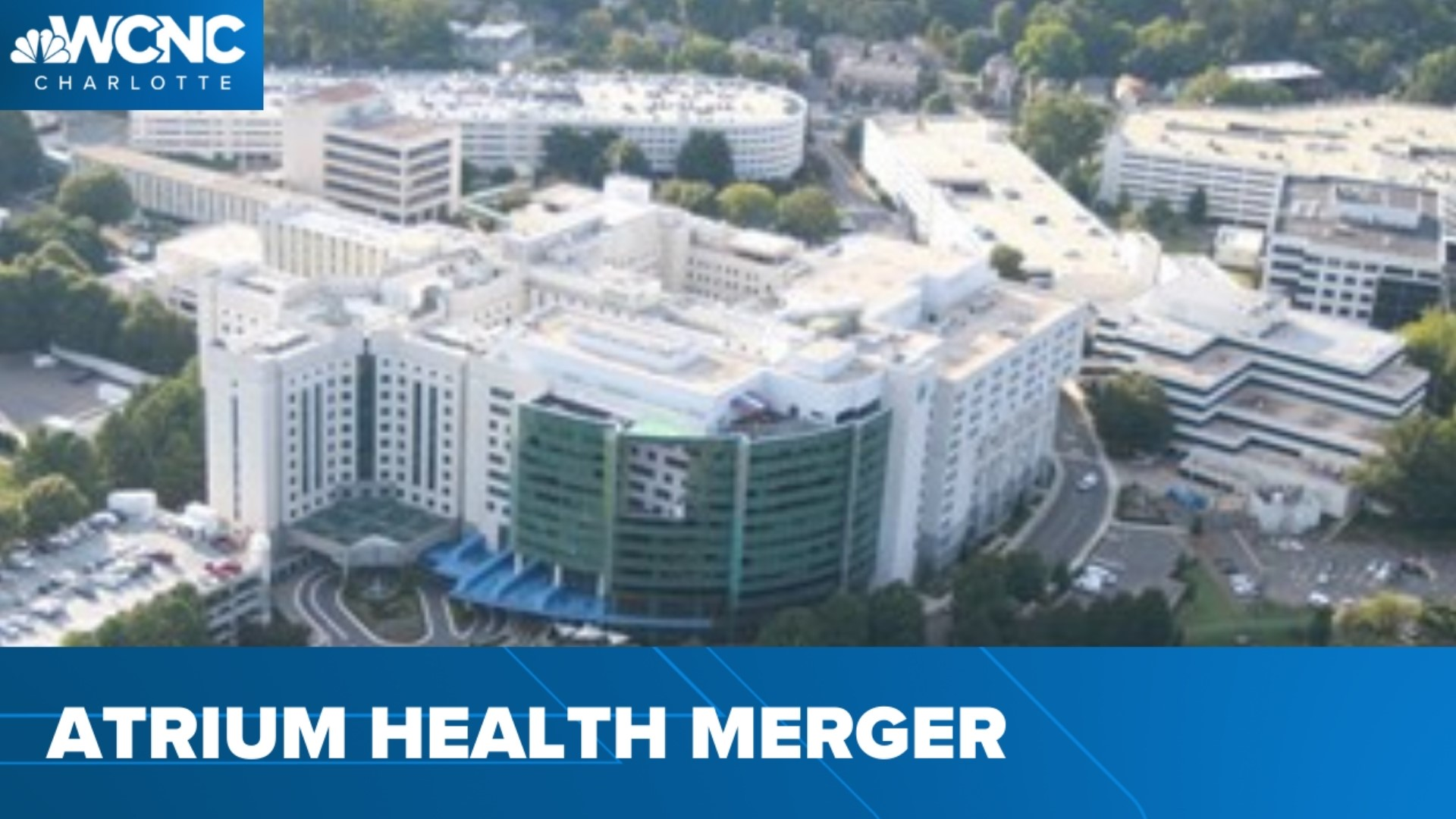
Charlotte, NC-based Atrium Health and Illinois- and Wisconsin-based Advocate Aurora Health announce plans to merge

The combined health system will become the sixth largest nationwide, with $27B in revenue and 67 hospitals across six Midwest and Southeast states. The system will be based in Charlotte, and known as Advocate Health, though Atrium will continue to use its name in its markets.

Atrium CEO Gene Woods is slated to ultimately lead the combined entity, after an 18-month co-CEO arrangement with Advocate Aurora CEO Jim Skogsbergh. While the cross-market merger is unlikely to create antitrust concerns about increased pricing leverage, the Biden administration has been making noises about applying stricter scrutiny to the impact of health system consolidation on labor market competition.  

The Gist: Earlier this year, Utah-based Intermountain Healthcare and Colorado-based SCL Health combined to create a 33-hospital, $14B health system, which became the 11th largest nationwide. While these mega-mergers of regional systems can realize cost savings from back-office synergies, there is a significant opportunity to create larger “platforms” of care to win consumer loyalty, deploy digital capabilities, attract talent, and become more desirable partners for nontraditional players like Amazon, Walmart, and One Medical.

It will be critical to watch whether the governance and cultural challenges that often hinder health system mergers come into play here. Advocate Aurora has had two prospective mergers fall apart in recent years, the first with Chicago-based NorthShore University HealthSystem, and the second with Michigan-based Beaumont Health (who subsequently finalized a merger with Spectrum Health earlier this year). 

But the combination with Atrium is structured as a joint operating agreement, essentially creating a new superstructure atop the two legacy systems. This may allow the combined entity more flexibility in local decision-making, but the ultimate question will be how the combined entity will create value for consumers. Time will tell.

Trinity to become sole owner of MercyOne, acquire CommonSpirit’s share

Livonia, Mich.-based Trinity Health and Chicago-based CommonSpirit Health have signed an agreement for Trinity to acquire all MercyOne Health System assets and facilities.

Clive, Iowa-based MercyOne has 16 medical centers, 27 affiliate organizations and more than 420 care sites, according to a joint news release. It employs more than 20,000 people.

Trinity and CommonSpirit decided it would be best for MercyOne and the communities it serves for it to have a sole parent company, according to the news release. MercyOne facilities will transition to Trinity’s strategies and operations.

The transaction is expected to be finalized this summer.

“True to our shared Catholic mission, our goal is to provide high-quality, compassionate care with the best patient/member experience possible. We will accomplish that goal through a holistic approach, with a range of health services and technologies that are fully connected and coordinated,” Mike Slubowski, president and CEO of Trinity Health, said in the news release. “This agreement creates a fully integrated MercyOne to care for more people in a unified way.”

Intermountain Healthcare completes its merger with SCL Health

Salt Lake City-based Intermountain and Broomfield, CO-based SCL Health have now formed a 33-hospital, $14B nonprofit health system, which immediately becomes the 11th largest nationwide. The system will operate across seven states under the Intermountain brand, although the SCL hospitals will keep their legacy names and Catholic affiliation. Regulators signed off on the interstate merger after the systems agreed not to close any locations or services.  

The Gist: Intermountain has been trying to build scale across the Mountain West in the last few years, having recently come up short in an attempt to merge with South Dakota-based Sanford Health. 

The SCL deal will allow Intermountain to expand its SelectHealth insurance plan and integrated care model into the fast-growing Denver metro area, as well as into Kansas and Montana. As with any merger, the difficult work of combining cultures and demonstrating meaningful value for patients and consumers lies ahead.