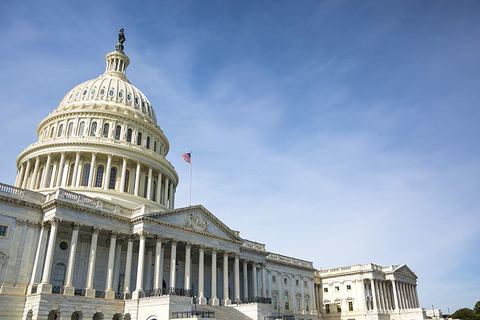
Centene quietly lobbying Congress to let states partially expand Medicaid

https://www.healthcaredive.com/news/centene-quietly-lobbying-congress-to-let-states-partially-expand-medicaid/568742/

Centene, the nation’s largest Medicaid managed care provider, wants Congress to change the eligibility requirements around Medicaid, the government-sponsored safety net program that covers one in five low-income Americans.

Its proposal would ultimately push more people onto the Affordable Care Act exchanges by allowing states to adopt a partial Medicaid expansion, an idea typically embraced by red states.

CEO Michael Neidorff told Healthcare Dive the company has been quietly talking to lawmakers on both sides of the aisle on Capitol Hill about the plan, though he emphasized nothing of substance will happen until after the 2020 election.  

Centene says its proposal is an attempt to strengthen the ACA markets by increasing the pool of people while enticing holdout states to partially expand their Medicaid programs.

“I think there’s a way to get it done,” Neidorff told Healthcare Dive. “We have a very powerful Washington office and they’ve been working with leadership and their staff.”

Centene filed lobbying forms totaling about $2 million in spending in the congressional lobbying database for 2019, as of Dec. 11. ​In 2018, the payer reported spending roughly $2.5 million. 

However, policy experts caution that it would result in increased spending for the federal government and fewer protections for those enrolled in Medicaid who are then pushed into the exchanges.

It’s unclear how receptive Congress will be, but experts were skeptical of any consensus on the polarizing health law.

“It would be a very major change. I certainly don’t see that happening. It’s opening up the ACA and as we know from past history, it’s a battle royale when you go into the ACA,” Joan Alker, executive director and co-founder of the Center for Children and Families at Georgetown University, told Healthcare Dive.

Centene’s proposal

Under the ACA, states can expand their Medicaid programs to cover all adults whose annual incomes does not exceed 138% of the federal poverty level, or $17,236 for an individual.

Centene’s proposal calls for lowering that income ceiling from 138% to 100%, or $12,490 for an individual.

That would shrink the pool of who is eligible for Medicaid and push those people into the exchanges. Neidorff said the move would grow the exchange pool and ultimately drive down prices. High costs have attracted criticism as they play a role in forcing those who are not subsidized to leave the market.

Credit: Samantha Liss/Healthcare Dive

For Centene, it would be a notable shift because its core business has long been in Medicaid. The insurance exchanges only became a viable business beginning in 2013 with the advent of the ACA. It’s a nod to how important the exchange business has become for the payer.

Centene arguably stands to benefit the most as the nation’s largest insurer on the exchanges in terms of enrollment, plus the exchanges generate higher profit margins than its Medicaid book of business.

“You move those lives into exchange and your profitability is higher,” David Windley, an analyst with Jefferies, told Healthcare Dive.​

In the states that have not expanded Medicaid, there are about 2 million people with incomes between 100% and 138% of the federal poverty level, according to the Kaiser Family Foundation.

Hospitals and providers are likely to favor the proposal because Medicaid plans tend to pay less than commercial ones. The idea could garner support from states with tight budgets as some, even Massachusetts, have already expressed a desire to adopt a partial expansion. (Both the Trump and Obama’s administrations have denied providing the enhanced match rate for states seeking partial expansions).

Who benefits the most?

Still, there are potential drawbacks, according to analysts and policy experts. For example, the plan could potentially cost taxpayers more if there is a greater shift to the exchanges away from Medicaid coverage.

“Medicaid is broadly accepted as the cheapest coverage vehicle in the country,” Windley said, noting that the exchanges are typically a more expensive insurance product than Medicaid coverage.

Plus, because of the way the ACA was written, the federal government would be forced to pick up the entire tab of the subsidies for those between 100% and 138% of FPL. 

“As a result, the states save money for every beneficiary whom they can move from Medicaid into their exchanges,” according to a previous paper in the New England Journal of Medicine.

However, policy experts warn the proposal may not be in the best interest of Medicaid members who would migrate to the exchanges.

These members are better off with Medicaid, Alker said.

“From a beneficiary perspective it’s problematic because there are no premiums in Medicaid for that group, 100-138 [FPL]. The cost sharing is very limited,” she said.

Plus, there are benefits in Medicaid members would no longer have access to if they move to the exchanges, Adrianna McIntyre, a health policy researcher at Harvard University, told Healthcare Dive, including non-emergency transportation and retroactive eligibility.

Centene argues many states have avoided expanding Medicaid because of cost concerns, which then leaves some residents without access to affordable care, particularly those in the coverage gap, or those with incomes below 100% of FPL.

If a partial option convinces some holdout states to expand “that’s a tradeoff some may be willing to make,” McIntyre said.

Some states that did expand are looking for ways to curb costs and have decided to implement work requirements, Neidorff noted. He believes the proposal is the answer to both these problems for states.

Centene’s plan comes as a slate of Democratic presidential contenders are calling for “Medicare for All,” a single-payer or public-option healthcare system.

Not surprisingly as such a plan would at a minimum sideline private plans and at the extreme eliminate private payers, Neidorff dismissed the idea.

He estimates his plan would cost $6 billion a year, which he characterized as “very affordable” when compared to a Medicare for All plan, which some studies estimate could cost as much as $32 trillion over 10 years.

Still, some policy experts say the change being proposed by Centene is a tall order.

Though the changes may seem small, the consequences of adopting a partial expansion are large, researchers wrote in a NEJM report: “The damage to Medicaid beneficiaries, the exchange population, and the federal budget could be serious.”


Nonprofit hospitals get bump in Moody’s ratings for 2020

https://www.healthcaredive.com/news/nonprofit-hospitals-get-bump-in-moodys-ratings-for-2020/568739/

UPDATE: Dec. 11, 2019: Fitch Ratings also changed its sector outlook for the U.S. nonprofit health systems market to stable from negative for 2020 in a report released Tuesday.

Dive Brief:

  • Next year should be kinder to nonprofit hospitals and health systems, with Moody’s Investors Service forecasting a 2% to 3% growth in operating cash flow next year, driven by stronger provider revenue due to Medicare and commercial reimbursement raises and growth in patient volumes.
  • Moody’s revised its 2020 outlook for the not-for-profit provider sector from negative to stable as a result, and expects to see increased consolidation as hospitals bid to gain “negotiating leverage with commercial insurers, achieve savings through economies of scale, and ensure a foothold in emerging offerings such as urgent care and telemedicine,” analysts wrote.​
  • That’s not to say health systems won’t continue to contend with sharp industry headwinds like rising labor costs and the aging population, along with uncertainty from up-in-the-air legislation, regulation and lawsuits.

Dive Insight:

High Medicare reimbursement rates should, along with slightly more favorable commercial reimbursements, drive sector revenue to jump 4% to 5%, Moody’s predicts. Medicare payment rates in 2020 are the most industry-friendly in a while, analysts say, at 3.1% for overall inpatient rates and 2.6% for outpatient.

Fitch Ratings, which also revised its sector outlook from negative to stable, noted balance sheet measures for the providers are now at levels not seen since before the Great Recession in 2007.

Expense management is also forecast to improve cash flow, though provider shortages will cause labor costs to grow.

A growth in the number of uninsured is projected to curb some of the gains expected under this positive forecast, however. The uninsured rate reached 13.7% at the end of 2018, ticking up from 12.2% in 2017 and a low of 10.6% in 2016, according to Gallup. Policy experts blame the elimination of the Affordable Care Act’s individual mandate, along with other Trump administration policies destabilizing the market.

Other regulatory waves could also impact hospital margins next year.

Cuts to Medicaid disproportionate share payments are likely to be postponed until late 2020 at least, which will help hospitals serving a large number of low-income patients. The $4 billion payment reduction was supposed to go into effect in 2014, but lawmakers have delayed the unpopular cuts annually since.

On Nov. 21, the Senate approved a continuing resolution to fund the federal government through Dec. 20. The CR once again pushed back the trims to the Medicaid payments.

Trump administration policy requiring payers and providers to post secret negotiated rates online could help some hospitals and hurt others, with some health experts arguing it would stimulate competition through transparency and others warning it could cause prices across the board to rise.

Hospital lobbies filed a lawsuit Dec. 4 to stop the rule, arguing it violates the First Amendment and would put overly onerous administrative burdens on providers.

Cuts to the 340B Drug Discount program, meant to prop up hospitals with a large amount of uncompensated care, could also hurt the sector. The program generated an average savings of almost $12 million across all U.S. hospitals last year.

In May, a federal judge struck down planned HHS cuts to 340B, arguing the change was outside of the agency’s authority. However, CMS has said it plans to go through with the payment reductions in the final outpatient rule for 2020.

On the legislative side, the Republican state-led initiative to find the Affordable Care Act unconstitutional would shear an estimated 20 million Americans from coverage and raise premiums on millions more, hitting both hospitals and the consumer hard. ​

“The fate of the ACA will likely again rest with the Supreme Court,” Moody’s analysts said. “An adverse ruling there would have painful implications for hospitals if millions of individuals lose insurance,” and “coverage gains from Medicaid expansion would likely be lost.”


University to Students on Medicaid: Buy Private Coverage, or Drop Out

Image result for University to Students on Medicaid: Buy Private Coverage, or Drop Out

Emily and Kullen Langston were enrolling in classes for the winter semester at Brigham Young University-Idaho when they hit an unexpected roadblock.

The school, like many others, requires all students to have health coverage. But this month, the university made an unusual announcement: It would no longer accept Medicaid.

Ms. Langston, 20, enrolled in the free government insurance program last year after becoming pregnant with the couple’s daughter, who is now 4 months old. Mr. Langston, 22, was planning to sign up for Medicaid in January, when it is set to expand in the state.

To remain in school, they would have to buy private coverage. The cheapest option available is the university’s student health plan, which does not comply with the Affordable Care Act’s consumer protections and would require the Langstons to pay a $3,125 annual premium.

Ms. Langston said her family, which relies on the income her husband earns as a call-center operator, cannot afford that. She had hoped to become a teacher, but now intends to drop out of school, and her husband is unsure whether he will attend.

“I’m disappointed that they’re showing prejudice against those of us who are poor right now,” Ms. Langston said. “I’m disappointed that I’m not going to be able to finish school.”

The decision on the eastern Idaho campus has confused and angered students. The change is set to go into effect on Jan. 1, the same day Idaho will expand Medicaid coverage to about 70,000 low-income residents, including college students.

In an email last week to its 19,000 students in Idaho, the university appeared to tie its decision to the Medicaid expansion. It’s not clear how many students currently have Medicaid coverage, but the state projects that about 2,400 more people in Madison County, where the school is, would enroll with the expansion. The university warned that having too many students sign up for the public program “would be impractical for the local medical community,” an assertion a local hospital official rejects.

The policy change is likely to push more students into a health plan administered by Deseret Mutual Benefits Administration, which, like the university, is owned by the Church of Jesus Christ of Latter-day Saints.

That plan limits annual benefits and doesn’t cover birth control — provisions that would violate the Affordable Care Act, but for a little-noticed Obama-era exemption for universities that fund their own health plans.

“It seems like a loophole, and is pretty misleading to students,” said Erin Hemlin, who oversees health policy at Young Invincibles, a nonprofit that focuses on issues affecting college students and young adults. “It’s called a student health plan, so you would think it’s going to be comprehensive coverage, and it isn’t.”

The church has been vocal on aspects of the Affordable Care Act, including religious freedom and the health law’s birth control mandate, but it has remained quiet on Medicaid expansion. It has never taken a public position on the issue, a church spokesman confirmed. The university’s Idaho campus and the church both declined to comment on the policy change.

Before the Affordable Care Act, student health plans across the country varied significantly from one campus to another. Some offered robust health benefits, while others had maximum annual benefits as low as $5,000.

The Obama administration required that most university plans comply with the new law by covering a wide array of essential health benefits, including maternity care and prescription drugs, and eliminating annual benefit caps.

The rules, issued in 2013, included a carve-out for a small number of universities that “self-funded” their health plans, meaning they used student premiums to cover costs — and accepted responsibility for any large bills that might cost even more. At the time, about 30 universities had such plans.

Most were big institutions with large endowments, such as the University of CaliforniaJohns Hopkins and Princeton. Those three, and some others, chose nevertheless to make their self-funded student plans comply with the Affordable Care Act.

But Brigham Young University campuses in Utah, Idaho and Hawaii did not. The university publicly opposed the law’s requirement to cover contraceptives. And its plans limited the maximum annual benefit. At the time, a university spokesman told the campus newspaper in Utah, “There are numerous government-imposed requirements that we don’t believe are necessary to provide good health care to our students.”

The Idaho campus’s plan has a $4,750 deductible that must be met before it will cover maternity care for the spouse of a student. It does not cover certain major medical services, such as residential mental health care and care related to an organ transplant.

These restrictions, along with the premium costs, are central reasons the Idaho students with Medicaid coverage object to buying the university’s student plan. “It feels like they’re forcing us into a noncompliant health plan when the one we have is already compliant with Obamacare,” said Amanda Emerson, a 26-year-old student. “They’re making it really difficult to do anything otherwise.”

Deseret Mutual Benefit, the plan administrator, says that limiting benefits helps keep premiums down. “The purpose is to try to provide a plan as inexpensively as possible to the students,” said Andy Almeida, the company’s chief operating officer.

The Idaho campus is the only Brigham Young site that will no longer accept Medicaid as a substitute for the student health plan, a decision that university officials would not explain. The school’s Utah and Hawaii campuses allow students with Medicaid to waive private coverage.

Utah voters agreed to a Medicaid expansion last year, and a partial version of the program took effect in February. The state does not provide data on how many of the 33,000 students at the Provo campus are enrolled in Medicaid. The Hawaii campus has just 2,500 students; the number on Medicaid is not disclosed.

Idaho had long resisted participating in the Affordable Care Act’s expansion of Medicaid, which provides coverage to Americans who earn less than 133 percent of the federal poverty level ($16,612 for an individual, and $34,248 for a family of four).

The state legislature twice voted down bills that would have added Idaho to the program, which currently covers 36 states and the District of Columbia. In 2018, local activists secured a ballot initiative on the issue. The proposal passed with a double-digit margin, and after a State Supreme Court challenge, the program will start in January.

In announcing its new stance on Medicaid, Brigham Young University-Idaho cited a worry about overwhelming local health care providers. The local hospital, however, said it had no such concerns and had not raised the issue with the university.

“We have some great providers here, and we feel like we’re able to handle any growth that the university and the community would need,” said Doug McBride, executive director of business development at Madison Memorial Hospital, a county-owned facility.

Since the school announced the new policy this month, students have organized Facebook groups and circulated petitions opposing the change.

Ms. Emerson, one of the students with Medicaid, is planning to enroll in a private plan in addition to her public coverage. Her husband, also a student at the Idaho campus, plans to do the same. They said they had discussed their options with a local insurance broker and found that the student plan would be the cheapest, but hadn’t yet made a decision.

“We only have a few weeks until we have to be registered for new classes, so this kind of dropped a bomb on us,” Ms. Emerson said. “We only have one semester to go, so we’re willing to dip into our savings.”


Tennessee becomes first state to ask permission for Medicaid block grants

Tennessee becomes first state to ask permission for Medicaid block grants

Image result for medicaid block grants

Tennessee on Wednesday formally asked the Trump administration for permission to convert its Medicaid program into a limited, block grant–type model, a controversial plan that, if approved, could be the first in the nation.

The proposal will test the Trump administration’s ability to allow states the flexibility to make drastic changes to Medicaid.

Imposing block grants in Medicaid has long been a major conservative goal and has been encouraged by the Trump administration, but it is not clear if the administration alone has the legal authority to allow such drastic changes.

Administration officials had drafted a guidance that would make it easier for states to apply for a capped payment or block grants, but the document was quietly removed from the White House Office of Management and Budget last week.

No states have been granted permission to date, but if Tennessee’s plan is approved, it would likely embolden other Republican-led states. The proposal will also mobilize opposition from patient advocacy groups, who have already been protesting since the state passed a bill

“This proposal represents a significant opportunity for the federal government to test a potential innovative, national solution at how to incentivize states’ performance in maximizing the value of taxpayer dollars,” the state said in its application.

Republicans say policies like block grants allow for more state flexibility and are more fiscally sustainable.

Critics fear a block grant would ultimately lead to states kicking people off their rolls or pulling back services. But Tennessee’s proposal is a novel one that departs from some of the more traditional block grant ideas, even as it imposes financial caps on federal spending.

Under Tennessee’s proposal, the state would receive a nearly $7.9 billion block grant from the federal government, which is based on projected Medicaid costs. The amount would be adjusted for inflation, but unlike a traditional block grant, it could increase in the future based on enrollment.

If enrollment drops, the block grant amount would not decrease. The state said no current TennCare members would experience a loss or rollback of benefits.

Also unlike a traditional block grant, if the state spent less in a given year than it would have under the traditional Medicaid system, Tennessee would split those savings with the federal government.


The Politics of Medicaid Expansion Have Changed

https://www.pewtrusts.org/en/research-and-analysis/blogs/stateline/2019/11/13/the-politics-of-medicaid-expansion-have-changed

Year by year, resistance to extending Medicaid to more low-income Americans in conservative states has given way. That trend seems likely to continue into 2020.

In some states, Democratic governors who favor expansion have replaced Republicans who were stalwart opponents. GOP critics have had a change of heart in some holdout states. And in several Republican-led states, citizen ballot initiatives are driving expansion.

Serious efforts are underway in Kansas, Missouri, North Carolina and Oklahoma that could add them to the 36 states, plus Washington, D.C., that have opted to expand Medicaid under the Affordable Care Act (ACA), also known as Obamacare. Three of those states adopted the expansion but have yet to implement the program.

Organizers in Missouri say they have collected a quarter of the 172,000 signatures they need to get a measure on the ballot next year. In Oklahoma, organizers say they have turned in 135,000 more signatures than required.

Proponents also are optimistic about a legislative breakthrough in Kansas, where Democratic Gov. Laura Kelly is finishing up her first year in office and expansion missed by a single vote this year in a Senate committee. And in North Carolina, a new Democratic governor and a Republican-led legislative effort give expansion the best chance it’s had in that state.

In Maine, Democratic Gov. Janet Mills in January signed an executive order implementing Medicaid expansion, which had been approved by voters in 2017 but blocked by her Republican predecessor. And in Montana, Democratic Gov. Steve Bullock in May signed a law extending Medicaid expansion for another six years.

Meanwhile, Idaho, Nebraska and Utah have submitted applications to the federal government to expand Medicaid after voters approved ballot initiatives last year.

History may be repeating itself. Although Congress created Medicaid in 1966, it was another 16 years before every state agreed to participate in the government health plan for lower-income Americans. In 1982, Arizona became the last state to sign up.

The politics surrounding the issue have changed dramatically in the past five years. Republican officeholders have shown an increasing willingness to break with party orthodoxy to support expansion. And the benefits of expansion have been thoroughly researched and publicized: Millions of Americans have gained coverage in expansion states, while rural and safety net hospitals have benefited from the additional federal resources.

Republican officeholders also have seen voters in red states signal their support for expansion at the ballot box.

In Mississippi, Democratic gubernatorial candidate Jim Hood championed expansion during his campaign. He eventually lost, but observers believe the issue helped him run a surprisingly close race against Republican Tate Reeves.

Although Kentucky has already expanded Medicaid, the winning Democratic gubernatorial challenger, Andy Beshear, made protection of the ACA a central feature of his campaign. His Republican opponent, incumbent Gov. Matt Bevin, is an outspoken opponent of the ACA. Beshear’s victory also is likely to mean that the state will stop trying to impose work requirements on Medicaid beneficiaries, a Bevin initiative.

Even Georgia’s conservative governor, Republican Brian Kemp, who highlighted his opposition to expansion in his 2018 campaign against Stacey Abrams, has softened. Earlier this week, he unveiled his own modified Medicaid expansion plan.

If not quite a conservative bandwagon, momentum is certainly moving in one direction, and policymakers in non-expansion states are taking note.

“People in Missouri know that other states right next door have passed it,” said Connie Farrow, spokeswoman for Healthcare for Missouri, the group leading the signature-gathering for that state’s ballot initiative. “Nebraska is a conservative state, and they passed it. Arkansas is a conservative state, and they passed it. Conservative states like Idaho and Utah, they’ve passed it.”

The experience states have had with expansion has made it harder to continue to stand against it, said Jesse Cross-Call, a senior health policy analyst with the Center on Budget Policy and Priorities, a liberal-leaning research and policy institute in Washington.

“There’s been a ton of evidence showing large gains in health care coverage, while helping states economically and keeping rural hospitals open,” Cross-Call said. “And it hasn’t hurt state budgets. It remains a really good deal for states to cover hundreds of thousands of people.”

New research this summer also makes the case that Medicaid expansion is literally a life-or-death decision for states. A study by the National Bureau of Economic Research found that at least 19,200 lives of adults aged 55 to 64 had been saved in states that had expanded Medicaid between 2014 and 2017.

At the same time, 15,600 people in that demographic died because their states hadn’t expanded. The deaths and non-deaths related to whether people with treatable chronic conditions, such as diabetes, heart disease and cancer, had access to health care.

It’s not just research that has made Medicaid expansion more palatable for Republican lawmakers, said Chris Pope, a health policy analyst with the Manhattan Institute, a free market policy center.

“As time goes by, the extent to which [Medicaid expansion] is associated with the Obama administration is weakening,” he said. “That makes it easier for Republicans in red states to move closer to expansion without being seen as complicit with Obamacare.”

“Plus,” Pope added, “the money is so attractive.”

Nevertheless, some Republicans are holding fast against expansion, warning that it is a financial risk their states can’t afford to take.

Missouri state Rep. Cody Smith, the Republican chairman of the House Budget Committee, told The Joplin Globe in August that he was “gravely concerned” about the Medicaid expansion initiative in his state. Missouri already spends a third of its budget on Medicaid, he pointed out. Smith did not respond to a message seeking comment.

“If we obligate ourselves to spend more money on Medicaid, those dollars have to come from other programs,” including education, Smith told the paper.

Red States Trickle In

Medicaid expansion was supposed to be a settled political issue after the Affordable Care Act passed in 2010. That’s because the law called for all states to expand Medicaid, offering eligibility to any adult earning up to 138% of the federal poverty line ($17,236 annual income for an individual), even those without children or a disability.

Federal and state governments share the financial burden of Medicaid, but Washington, D.C.’s share for the expansion population is higher than what it provides for the non-expansion Medicaid population. In the first years, the federal government paid 100% of the costs of the Medicaid expansion population. Starting next year, the federal match will be 90%.

The U.S. Supreme Court upended the original plan regarding expansion. In a 2012 ruling that otherwise upheld the ACA, the court made Medicaid expansion optional for states.

States with Democratic governors and legislatures signed up for the expansion for the start of its implementation in January 2014. A few Republican-led states, including Arizona, Michigan and Ohio, also joined immediately. Since then, red states have trickled into the expansion fold — including the three states that held initiatives last year and Montana. All are awaiting final federal approval.

And, if expansion proponents have their way, that trend will continue next year.

Donny Lambeth, a state representative in North Carolina, is among those Republican officeholders who have had a change of heart regarding expansion. He introduced a measure in the North Carolina House that would expand Medicaid, though with several wrinkles that depart from the plan by Democratic Gov. Roy Cooper.

Chief among those differences is a requirement that enrollees either work or enroll in a school or job training program. Lambeth also would raise taxes on hospitals to pay for the state’s increased Medicaid expenses.

“These are proud people who are working and want to take care of their families, but they can’t afford private insurance,” Lambeth said. He added that the trend of rural hospitals closing will continue unless expansion passes.

Eleven rural hospitals have closed in North Carolina since 2007, according to the North Carolina Rural Health Research Program at the University of North Carolina. Across the country, the program says 161 rural hospitals have shut their doors since 2005.

Support for expansion in North Carolina has come at the local level as well. The county commission in rural Graham County, by the Tennessee border, voted in September to urge the legislature to pass expansion.

“Republican leadership in the state just took the national Republican stance on it and opposed it just because it was something the Democrats had pushed,” said Dale Wiggins, the Republican chairman of the GOP-majority commission. “People doing what their political party wants rather than what the people of this country needs — that’s wrong.”

In Oklahoma, Republican lawmakers haven’t budged noticeably on expansion, but proponents got a boost in September when the former speaker of the House, Kris Steele, a Republican who had been wary of the ACA while in office, came out in favor of expansion at a town hall meeting.

“I believe [expansion] improves lives of working individuals and gives them an opportunity to be healthy and ultimately flourish in society,” Steele said in an interview. “From a conservative aspect of it, I think it makes sense for Oklahoma to have our own tax dollars to come back to our state to help out citizens.”

Strongest Prospects in Kansas

Prospects for expansion are likely strongest in Kansas. The legislature passed expansion in 2017, only to have the bill vetoed by then-Gov. Sam Brownback, a Republican. This year, the House passed an expansion bill in its legislative session but a Senate committee came up one vote shy of moving the measure to the floor.

Democratic Gov. Laura Kelly has redoubled efforts for passage next year. At the same time, Republican Senate Majority Leader Jim Denning has promised to put out his own expansion bill and has asked a special Senate committee to explore the issue.

In an interview with Stateline, Kelly said she is confident expansion will pass next year. “This is a huge issue in Kansas,” she said. “Everybody is up for re-election in 2020, and I think it is essential that this gets passed if they stand any chance of getting re-elected.”

Although the Trump administration has reviled both the ACA and Medicaid expansion, the Manhattan Institute’s Pope says that the administration’s actions may have pushed Republicans to seek expansion. From the beginning, the administration has encouraged states to customize their Medicaid programs, for example by requiring beneficiaries to work.

Conservative states such as Arkansas and Kentucky fashioned their expansion applications to the federal government around such proposals.

“The Trump administration by expanding options has made it more attractive to states,” Pope said.

A federal judge earlier this year threw out work requirements in Arkansas, Kentucky and New Hampshire. Those cases have been appealed. Arizona and Maine have both suspended plans to implement work requirements, and Democratic governors in Michigan and Virginia have raised alarms about carrying them out in their states.

The administration may want to give states flexibility in running their Medicaid programs, but it has also made clear it has no interest in encouraging expansion.

When Utah’s Republican governor and lawmakers this year tried to do a limited expansion that would have extended Medicaid eligibility only to residents with incomes below the poverty line, the Trump administration said it would not pay the higher federal match for a partial expansion. It said it didn’t want to encourage more states to expand Medicaid, even partially.


Advocates submit signatures to get Medicaid expansion on Oklahoma ballot in 2020

https://thehill.com/policy/healthcare/467382-advocates-submit-signatures-to-get-medicaid-expansion-on-oklahoma-ballot-in

Advocates submit signatures to get Medicaid expansion on Oklahoma ballot in 2020

Supporters of Medicaid expansion in Oklahoma said they submitted more than enough signatures on Thursday to get the measure on the ballot in 2020.

The “Yes on 802” campaign said it submitted more than 313,000 signatures, far more than the roughly 178,000 it needed, to qualify to get Medicaid expansion on the ballot in Oklahoma next year. 

Campaign manager Amber England said in a statement that her group had “a mandate from a record-breaking number of Oklahoma voters who want the chance to bring more than a billion of our tax dollars home from Washington every single year to deliver healthcare to our neighbors, keep our rural hospitals open, and boost our economy.”

Oklahoma is one 14 GOP-controlled states that have not accepted the expansion of Medicaid under ObamaCare. Republicans have traditionally raised concerns about the cost of the program. 

More states have been expanding recently, however. Utah, Idaho and Nebraska voters approved ballot measures approving Medicaid expansion in last year’s elections. 

The Yes on 802 campaign estimates almost 200,000 people in Oklahoma would gain coverage if expansion were adopted in next year’s election.

The Oklahoma Council of Public Affairs, a conservative think tank in the state, has vowed an opposition effort.

“There will obviously be significant opposition once it gets to the campaign stage,” the group’s president, Jonathan Small, told The Oklahoman earlier this month.


A group of Republicans has unveiled its healthcare plan. Here is what’s new and what isn’t

https://www.fiercehealthcare.com/payer/a-group-republicans-have-a-new-healthcare-plan-here-what-new-and-what-isn-t?mkt_tok=eyJpIjoiT0RZNE4yTm1PV1psTmpNeSIsInQiOiJ5R3gxMEwrdUhPWUdZVlBTZ3NWWkdMV08xOCtObDdFaGdHaE1hN0o4Z2p5WnBaN3hjd2lDVm5ybnBhWUtUNFdlTW1LcndtaTN1WUtNVzg1NmUrQjJmWEhqTWpJR3BkUmVuZmVNS2FzdmRWdENuMEtNT0tJMXozUW93N0lVQmZ5WSJ9&mrkid=959610

Capitol building in Washington

The Republican Study Committee (RSC), a group of 145 House GOP lawmakers, rolled out a new healthcare plan to counter Democrats’ call for “Medicare for All.”

However, the plan itself closely resembles the Affordable Care Act (ACA) repeal bill called the American Health Care Act (AHCA) that the House passed in 2017 and contributed greatly to the loss of the GOP House majority in 2018.

For the plan to become law, Republicans would have to retake the House in 2020, and President Donald Trump would need to be reelected. However, if those victories happen, the plan could be a blueprint for how a GOP-controlled Congress would move forward on healthcare, as the committee counts among its members both GOP leadership and rank and file.

Here are three takeaways from the plan:

Shifting to high-risk pools

The plan would retain the ACA’s requirement that individual market plans cover pre-existing conditions. However, it takes out provisions that ensure patients with pre-existing conditions get affordable coverage such as requirements that prevent plans from charging sicker people higher premiums than healthy customers.

The plan does introduce high-risk pools that would be used by people with high healthcare costs, a commonly deployed tactic by states for the individual market before the ACA. The high-risk pools would be funded by repackaging the funding used for the ACA’s subsidies and the Medicaid expansion.

However, the plan doesn’t identify the full amount that should be devoted to high-risk pools, which segregate high-cost customers on the individual market.

The plan cites a 2017 report from consulting firm Milliman that estimated a federally supported high-risk pool could require $3.3 billion to $16.7 billion a year. The AHCA also called for high-risk pools but only gave $2.5 billion a year to help states fund them.

While the “$17 billion annual price tag may not seem ideal, it sets up a sustainable path for the individual market,” the RSC report said.

The desire for more funding for high-risk pools is likely a nod to Democratic attacks during the 2018 midterms that the AHCA threatened pre-existing condition protections. The nonpartisan Congressional Budget Office said the AHCA, which let states waive pre-existing condition protections, would lead to people in those states not getting affordable coverage for their pre-existing conditions.

While the AHCA had funding for high-risk pools, experts across the healthcare spectrum said that it wasn’t enough. It would remain to be seen how much more funding would be needed.

Doubling down again on health savings accounts

Bolstering health savings accounts has been a very popular reform idea among Republicans, and that enthusiasm is clear in the RSC plan.

The plan proposes to increase how much an employee can contribute to a health savings account. Currently, an individual can contribute $3,500 and a family can contribute $7,000.

A 2018 bill that passed out of the House but didn’t make it through Congress increased the contribution cap to $6,650 for an individual and $13,300 for a family.

Now, the RSC plan wants to increase the figures again, this time to $9,000 per individual and $18,000 for families, in line with a proposal from libertarian think tank Cato Institute.

“The RSC plan would also expand health savings accounts so that they could be used for a number of health services and products that currently must be paid for with after-tax dollars,” the plan said.

Replace Medicaid expansion with a block grant

This is another common reform in ACA repeal plans. The bill would phase out the enhanced federal matching rate for the Medicaid expansion to pre-expansion levels.

In addition, the bill would replace the existing open-ended federal match with a fixed amount in a block grant.

But the plan has a new twist in a new “flex-grant” that would give more funding to states that adopt a work requirement. However, half of the funding for any flex-grant must go toward supporting the purchase of private plans for low-income individuals.

So far, 12 states have gotten approval from the Trump administration to install work requirements for their Medicaid expansion population. But of those 12 states, three have had their work requirement programs struck down by legal challenges.

Some states are also considering installing their own block grants. Tennessee has released a draft proposal for a block grant but has yet to get federal approval.


How Pending Decision on Obamacare Could Upend 2020 Campaign

Supporters of expanding Medicare at a town hall meeting this summer in Forked River, N.J.  Health care registers as a top priority for voters in poll after poll.

A federal appeals court’s ruling on the Affordable Care Act could be a huge headache for the president and take Democrats’ focus off Medicare for all.

 A federal appeals court in New Orleans is preparing a ruling on the Affordable Care Act that could put the law’s future front and center in the presidential race, overwhelming the current Democratic debate over Medicare for all and reigniting the health care-driven worries that helped Democrats win back the House last year.

Three judges on the Fifth Circuit Court of Appeals are weighing whether to uphold a Texas judge’s ruling that the law’s requirement for most Americans to have health insurance is unconstitutional, and that the rest of the sprawling law cannot function without it. It is hard to imagine a thornier domestic issue for President Trump, whose administration not only refused to defend the law in the case filed by Texas and 19 other states but sided with the plaintiffs, asking the court to invalidate it.

A ruling against Barack Obama’s signature domestic achievement as president, which provides health coverage for about 24 million Americans, would almost certainly be stayed pending further appeal.

But if it comes in the next few weeks, it could create significant confusion during open enrollment for the Obamacare plans offered through the law’s online marketplaces. And it would open a huge vulnerability for Mr. Trump, whose health care platform largely consists of attacking as socialism Democratic plans to expand government health care, either through Medicare for all or a government-run health care option that would be offered through the Affordable Care Act’s marketplaces.

A ruling against the health law would probably reframe the Democratic conversation on health policy away from moving beyond the Affordable Care Act toward Republican efforts to take health care away. That message, a driving force in the 2018 midterm campaigns, could resonate more broadly than the party’s current arguments over expanding coverage.

“Democrats will do better talking about what Trump can take away than about their new policy visions,” said Chris Jennings, a longtime Democratic adviser on health care. “The Texas case may reframe discourse around health policy more toward that type of discussion, which of course Republicans will hate.”

The law’s most popular provision is protections for people with pre-existing medical conditions, but it includes much more, such as health insurance exchanges where people can buy private coverage with subsidies, an expansion of Medicaid and requirements for what insurance must cover, from emergency services to prescription drugs.

The appeals court panel could decide to partly reverse Judge Reed O’Connor of the Federal District Court in Fort Worth, affirming that the mandate that most Americans have health insurance is unconstitutional but rejecting Judge O’Connor’s ruling that the rest of the law cannot stand without it. That would cause barely a ripple, because the tax penalty for not having insurance was reduced to zero in the 2017 tax overhaul and the effects have been negligible.

But a ruling that upheld his decision in full, or even one that said the mandate and pre-existing condition protections had to go, would send shock waves through the health care and political systems. Either outcome would probably play into Democratic hands, especially in contests against vulnerable Republicans like Senators Martha McSally of Arizona, Cory Gardner of Colorado, Susan Collins of Maine and Thom Tillis of North Carolina.

Republicans are not conceding that possibility. Asked how a ruling against the law might affect members of the party seeking re-election, the spokesman for the House Republican campaign arm, Chris Pack, said: “Both Democrats and Republicans oppose Obamacare. The only difference is that Democrats want to replace it with socialized single-payer health care that makes private health insurance illegal.”

In fact, most Democrats would welcome a renewed debate over the Affordable Care Act. Many Democrats in Congress have resisted Medicare for all; instead they have sought to shore up the existing health law and trap Republicans on pre-existing conditions. Senator Chuck Schumer of New York, the Democratic leader, intends to force a floor vote as soon as next week on a resolution to overturn a Trump rule that lets states promote skimpy-but-inexpensive insurance plans that do not meet the law’s coverage standards.

The vote, Mr. Schumer said Tuesday on the Senate floor, “will present our Republican colleagues with a choice: whether to protect Americans with pre-existing conditions or not to protect them.”

Mr. Trump is in a box on health care, the issue that registers as a top priority for voters in poll after poll. He wants deals on ending surprise medical bills and lowering prescription drug prices, but the Senate and House are far apart on what drug price legislation they would agree to, and impeachment proceedings could derail any chance of bipartisan measures.

Public support for the health law remains high, driven in part by swing voters. And few Americans believe Mr. Trump will offer details of a new health care plan before the end of the year, according to a Kaiser poll released this week. They also doubt any plan he releases would offer “better care at lower costs,” as he has promised.

Alex M. Azar II, the secretary of health and human services, has repeatedly played down the importance of expanding coverage to the remaining uninsured; instead, he has said, Mr. Trump wants to improve the health care system for all Americans. His efforts thus far have mostly been directed at discrete groups of patients: a plan to reduce new H.I.V. infections by 75 percent over five years, for example, and another to move people with advanced kidney disease to home-based, instead of clinic-based, dialysis.

At oral arguments before the appeals court panel in July, a lawyer from the Justice Department indicated the Trump administration would seek a stay if the panel upheld Judge O’Connor’s decision. The losing side could appeal directly to the Supreme Court, increasing the chances of a ruling or at least oral arguments before that court in the final months of the presidential campaign. Alternatively, it could first ask for a hearing by the full appeals court, which would slow down the process.

The appeals panel could also send the case back to Judge O’Connor to reconsider, an option that August Flentje, a lawyer for the Justice Department, embraced during oral arguments. That would also draw out the court fight.

When the six-week open enrollment period starts next month, there will be more insurers offering plans through the Affordable Care Act markets. Premiums have stabilized, too, after a few years of price increases. But it will be a much lower-profile effort than in past years; the Trump administration has cut the budget for both advertising and enrollment help. As a result, a court ruling against the law would paralyze open enrollment if people assume there is no use buying or renewing coverage under a law that was ruled unconstitutional, and if no effort is mounted to counter that misunderstanding.

“It will require a doubling down, a dramatic increase in education — which is exactly the opposite of what this administration has done,” said Leslie Dach, executive director of Protect Our Care, a consumer advocacy group aligned with Democrats. “Someone will need to educate people that low-cost, quality health insurance is still available to them.”


Rate of uninsured people increases for first time since ACA rolled out

https://www.axios.com/uninsured-rate-increases-first-time-since-obamacare-ec6dbd6d-fffc-446d-be4c-02bed0d3ea3e.html

Image result for uninsured health care

Roughly 27.5 million people, or 8.5% of the U.S. population, had no health insurance at some point in 2018, according to new figures from the Census Bureau.

Why it matters: Last year’s uninsured rate increased from 7.9% in 2017 — the first time the uninsured rate has gone up since the Affordable Care Act has been in effect.

Between the lines: The uninsured population does not include the “underinsured,” or people who have medical coverage but face prohibitively high deductibles and out-of-pocket costs.

  • The figure also does not include people who have short-term plans, association plans and religious-based sharing ministries — policies the Trump administration has promoted, but that have holes in coverage that could leave people on the hook for high costs.

The intrigue: The type of coverage that witnessed the largest decline in 2018 was Medicaid, which fell 0.7 percentage points.

  • 4 states where the uninsured rate had a statistically significant increase were Alabama, Idaho, Tennessee and Texas, all of which have not fully expanded Medicaid under the ACA.

The bottom line: The uninsured rate is still markedly lower before the ACA became law, but it’s an odd paradox to see more people lose health coverage even though the economy created more jobs.


Rhode Island: A Most-Improved State in Health Performance

https://www.commonwealthfund.org/blog/2019/rhode-island-most-improved-state-health-performance

Rhode Island health care improvement

States use the Commonwealth Fund’s 2019 Scorecard on State Health System Performance to identify places where their health care policies are on track and areas that need improvement. Using the Scorecard, states can compare their improvement to others, and see how they stack up. In the most recent edition, released in June, Rhode Island improved on the most health system performance indicators tracked over time, followed by Missouri, Washington, West Virginia, and Arkansas.

Rhode Island particularly made strides in the areas of coverage and behavioral health. The state uninsured rate among adults dropped from 17 percent in 2013 to 7 percent in 2015 and 6 percent in 2017. In addition, the percentage of adults with any mental illness reporting an unmet need dropped from 27 percent in 2010–11 to 18 percent in 2014–16. The state also saw significant reductions in the percentage of children with unmet mental health needs.

These improvements did not happen by chance. What actions did policymakers take to drive progress and what work lies ahead?

Making Progress Through Clear Priorities and State Leadership

In 2014, Governor Gina Raimondo came into office fully committed to the Affordable Care Act, including Rhode Island’s state-based health insurance marketplace and expanded Medicaid eligibility.

Another early administration priority was making sure behavioral health care was as available and affordable as medical care. The opioid epidemic was hitting Rhode Island hard, making access to treatment for mental health and substance use disorder a top concern.

Coverage expansion. The decision to create a state-based marketplace, HealthSource Rhode Island (HSRI), was instrumental in helping the state make gains in coverage and affordability. The state has its own funding for marketing and navigators who help people understand and choose health plans. This has helped shield residents from federal outreach cuts. The state’s commitment also helped when the Trump administration decided to end marketplace cost-sharing-reduction subsidies. The state’s Office of the Health Insurance Commissioner (OHIC) worked with the state marketplace HSRI to protect consumers by building price increases to cover the loss of subsidies into silver-level health plans and keeping premiums lower in the other plans. HSRI plans offered among the lowest state-based marketplace premiums in the country. During last year’s open-enrollment period, HSRI saw a 5 percent increase in new and overall customers.

Access to behavioral health. In 2015, Governor Raimondo issued an executive order to establish the Overdose Prevention and Intervention Task Force, which has guided state reforms. The opioid crisis also has led to more open conversations about mental health and to improved relationships between first responders and communities. To facilitate these relationships, Rhode Island now requires police officers receive training to recognize behavioral health issues and help connect individuals with the care they need.

Rhode Island experienced a decline in overall overdose deaths, from 336 in 2016 to 314 in 2018. Community programs and pharmacies have worked hard to get naloxone, used to counter the effects of opioid overdose, into the hands of people who need it. Rhode Island was also the first state to offer medication-assisted opioid treatment in prison. Community health workers follow up on inmates after release to ensure treatment is continued. Fatal overdoses declined by 60 percent among people leaving detention from 2016 to 2017, and continued to drop in 2018.

OHIC also has prioritized integrating behavioral health into the primary care setting as a cost-effective way of increasing access to such services. Studies have shown that integrated care improves depression and anxiety outcomes, along with quality of life, while reducing the total cost of care.

Additionally, OHIC has been working on encouraging parity between medical and behavioral health in the insurance market by reviewing insurers’ coverage documents. It is focusing on limiting mental health benefit exclusions and ensuring the states’ major carriers are in compliance with the laws related to coverage for mental health and substance use disorder treatment. As a result, the four major insurers have agreed to discontinue prior authorization requirements for certain medication-assisted treatments.

Maintaining Momentum

In 2018 an HSRI/OHIC workgroup was formed to develop policy options to mitigate the potential impact of federal changes on health coverage costs, consumer choice, and access. The group recommended pursuing a Section 1332 waiver to establish a reinsurance program to reduce premium increases in the individual market; implementing a state-level requirement that individuals have health insurance to offset the impact of the federal health insurance mandate penalty repeal; and establishing OHIC’s regulatory authority over short-term limited duration plans. All three recommendations were signed into law on July 5.

In addition, recent state legislation has expanded OHIC’s authority related to establishing behavioral health parity, such as a law giving it authority over health plans and third-party organizations that conduct benefit reviews.

Addressing population health challenges demands a concerted effort. Rhode Island is fortunate to have a culture of collaboration among health care leaders, coupled with strong political commitment to health system improvement.