Ten states still spurn Medicaid expansion — and they’re unlikely to budge soon

https://www.washingtonpost.com/politics/2023/03/28/ten-states-still-spurn-medicaid-expansion-they-unlikely-budge-soon/

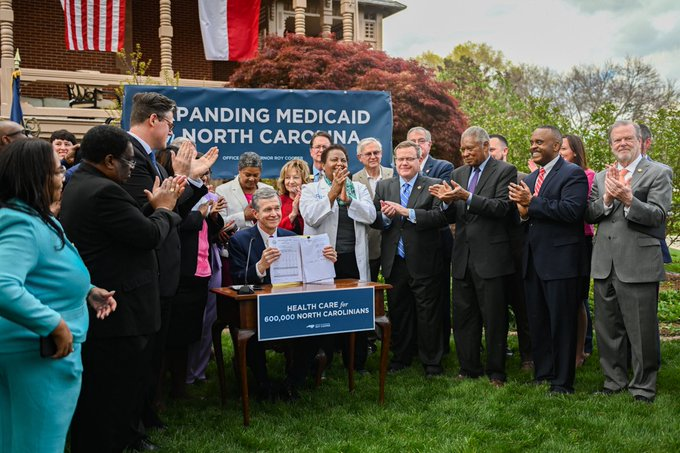
North Carolina is poised to become the 40th state to expand Medicaid. 

Yesterday afternoon, Gov. Roy Cooper (D) signed legislation crafted by the state’s two Republican leaders, an unlikely deal that puts an end to an over-a-decade-long political battle. 

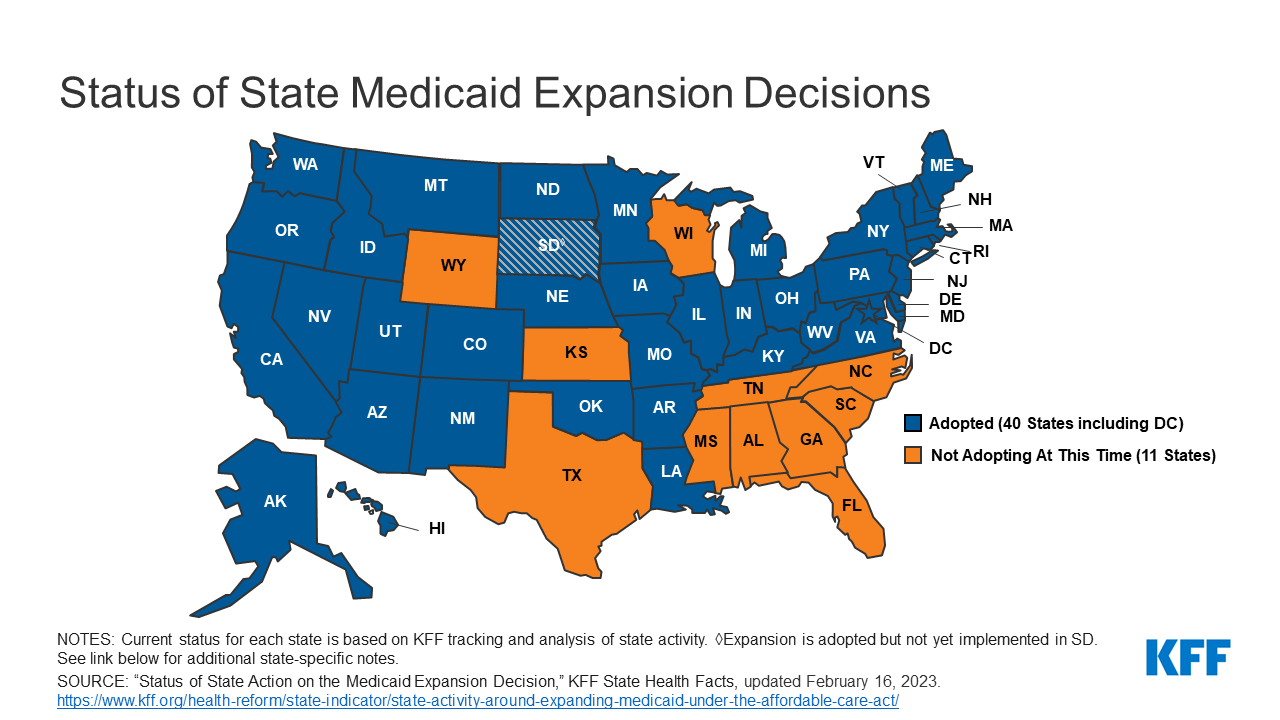
But North Carolina may be the last of the Medicaid expansion holdout states to reverse course for a while. Supporters of extending the safety net coverage to hundreds of thousands more low-income adults have repeatedly run into Republican resistance in the 10 states that have long refused the Obamacare program — and another victory isn’t imminent. 

“Now we’re down to some of the hardest states to get expansion through,” said Frederick Isasi, the executive director of Families USA, a left-leaning consumer health lobby, though he expressed confidence the remaining states would eventually budge. 

Over the years, some steadfast GOP opposition to Medicaid expansion has softened, such as in North Carolina. The 2010 Affordable Care Act required states to extend the safety net program up to 138 percent of the federal poverty level, but the Supreme Court made doing so voluntary. 

The ballot measures

Since 2017, advocates have put expanding Medicaid directly to voters in seven conservative-leaning states. They argued it would bring federal taxpayer dollars back to their state and help struggling rural hospitals — and the ballot measures passed in every instance. 

But that strategy may be almost exhausted. Three of the holdout states have had citizen-led ballot measure processes — Florida, Wyoming and Mississippi — but at the moment, that path only appears viable in one state.

That’s Florida, where Medicaid advocates have their eye on fall 2026. Florida Decides Healthcare, a political committee supporting expansion, estimates it’ll cost roughly $10 million just to gather enough signatures to get the measure on the ballot, according to Jake Flaherty, the group’s campaign manager. 

  • Even if that happens in a few years, there’s another hurdle. An amendment to the constitution must garner the support of 60 percent of voters. Only once — in Idaho — has that happened for Medicaid expansion. 

The prospects are dim in the near future for the other two states. Wyoming advocates don’t believe they can use the ballot measure process to expand Medicaid, citing a mandate that an initiative not “make appropriations.” The next best chance is likely 2025, when the state legislature convenes again for a general session, according to Nate Martin, the executive director of Better Wyoming.

And in Mississippi, advocates filed paperwork to launch an expansion campaign in 2021. But it had to disband a month later when the state Supreme Court nullified the ballot measure process until state lawmakers fixed it, which the legislature failed to do this year, the Clarion Ledger reported.

Other states

North Carolina is the first state to expand Medicaid through the legislature since Virginia in 2018. And it’s still not finalized: The expansion is tied to the state passing a new budget, which is expected to occur over the summer. 

Other states that haven’t expanded include Alabama, Georgia, Kansas, South Carolina, Tennessee, Texas and Wisconsin. Republicans opposing expansion have often cited fiscal concerns with the policy, which supporters push back against and have pointed to extra two-year incentives signed into law in 2021.  

Several advocates said they’re watching Alabama closely, and that Gov. Kay Ivey (R) has the power to expand Medicaid without the GOP-led legislature’s sign-off. Last week, a House committee held an educational meeting on addressing the state’s coverage gap, the Alabama Reflector reported. In a statement to The Health 202, spokesperson Gina Maiola wrote that “the governor’s concern remains how the state would pay for it long-term.”

And in Kansas, Democratic Gov. Laura Kelly has been pushing the issue for years. But it’s an uphill battle to get it passed this year amid some Republican opposition, Will Lawrence, her chief of staff, acknowledged in an interview. Lawrence said he believes if a deal can be reached with the House speaker at some point, then the Senate may come along.

  • “We’ll continue to push those conversations,” Lawrence said. He added: “If it doesn’t happen this session, then we’ll be working over the summer and fall, like we did a few years ago, and we’ll come back with a strong push in January of next year.”

North Carolina legislature approves Medicaid expansion

https://mailchi.mp/6f4bb5a2183a/the-weekly-gist-march-24-2023?e=d1e747d2d8

On Thursday, legislators in North Carolina’s Republican-led General Assembly passed a bill to expand Medicaid eligibility to more than 600K low-income residents. The bill is expected to be signed into law by Democratic Governor Roy Cooper, with expanded coverage beginning in 2024. The Tar Heel State is poised to become the 40th state to expand Medicaid through the Affordable Care Act, although it must still appropriate funding in upcoming budget negotiations. The North Carolina Healthcare Association, which represents the state’s health systems, helped get the deal over the line by supporting language that repeals state certificate of need (CON) review in certain instances, including ambulatory surgical centers (ASCs), behavioral health and substance treatment beds, and capital technology replacements costing below $3M.

The Gist: North Carolina legislators have been attempting to expand Medicaid since 2019. It’s notable that the state’s hospitals viewed the benefits of broader public insurance to be worth the elimination of CON rules restricting development of ambulatory surgery centers, which will surely increase competition from new insurer- and private equity-backed facilities.

North Carolina will become the fourth state to expand Medicaid using additional incentives from the American Rescue Plan, and there’s a chance Kansas will be next, given the recent push by Democratic Governor Laura Kelly.

Prospects for Medicaid expansion in the remaining nine states seem slim at best. 

Uninsured rate fell for those historically lacking coverage

https://www.healthcaredive.com/news/uninsured-rate-fell-historically-lacking-coverage-hhs-repor/640488/

The national rate of uninsured people under the age of 65 fell from 11.1% in 2019 to 10.5% in 2021 as government policies aimed at increasing accessible coverage for those with lower incomes, according to an HHS report out last week.

The rate decline was highest among those who had incomes between 100% and 200% of the federal poverty level. Those in traditionally uncovered demographies, such as people who are Latino, American Indian/Alaska native and those who don’t speak English, saw larger gains in coverage.

The research comes as the Biden administration reported an 8% national uninsurance rate, a historic low, in the first quarter of last year for all Americans.

Half of the top 10 states for coverage gains expanded Medicaid under the Affordable Care Act between 2019 and 2021. The leading state, Maine, reached a 7.1% uninsured population in 2021, dropping from 10.2% in 2019. Officials shifted to a state-based exchange for the 2022 plan year.

“Many of the areas with the greatest coverage gains since 2019 had higher than average uninsured rates in 2021, suggesting progress in narrowing geographic disparities but still with substantial gaps remaining; the lack of Medicaid expansion in 11 states plays a key ongoing role in coverage disparities across states,” the report authors wrote.

The state with the largest increase in uninsured people was Alabama, which reached 12.5% in 2021 compared to 12.1% in 2019.

In addition to Medicaid expansion, other policies that helped those receive coverage include increased premium tax subsidies under the American Rescue Plan.

Also helping is the Medicaid continuous coverage provision, which has barred states from kicking people off rolls during the COVID-19 public health emergency.

That policy is set to end in April, however. Researchers have said that as many as 15 million to 18 million people could be affected.

States are taking some steps to help those eligible remain in the program. Most states plan to update enrollee mailing addresses and follow up with those people when action is recovered to maintain coverage, according to a recent Kaiser Family Foundation report.

Forty-one states said it will take up to 12 months to process renewals, KFF said.

Record-breaking 16.3M people signed up for ACA coverage

https://www.healthcaredive.com/news/record-breaking-people-signed-up-aca-coverage/641216/?mkt_tok=ODUwLVRBQS01MTEAAAGJjU731Jnz2OmQ49Mlkh7jVIfsWO9PQNGUgGD23jiZG76J5yFBjHCkGbM_HfYAWeZPujQSE5FV9Z068MsZ8c5kVs5X-6FfoAjcKiXxUnd6OBLk

The CMS announced Wednesday that a record-breaking 16.3 million people signed up for Affordable Care Act marketplace plans during the 2023 open enrollment season, a result of extended pandemic-era subsidies enacted by the American Rescue Plan.

Over 1.8 million more people enrolled in marketplace coverage compared to last year — a 13% increase, and the most amount of plan selections of any year since the launch of the ACA marketplace a decade ago, according to the CMS. The record-breaking enrollment numbers include 3.6 million first-time marketplace enrollees.

Enrollment comes after last year’s passage of the Inflation Reduction Act extended ACA subsidies into 2025, protecting millions of Americans from premium hikes and reflecting a broader push in policy from the Biden administration aimed at increasing healthcare insurance coverage. This month, the HHS announced that the national rate of uninsured people under the age of 65 fell from 11.1% in 2019 to 10.5% in 2021.

However, some coverage protections rely on the federal COVID-19 public health emergency status, which will expire without an extension in mid-April. Medicaid enrollment numbers are expected to drop at the end of the public health emergency, with as many as 18 million enrollees projected to lose Medicaid coverage, according to the Robert Wood Johnson Foundation.

In addition to a boost from subsidies, the CMS announced this month that it had quadrupled the number of navigators used to assist plan signups.

Some red state hospitals pitch Medicaid expansion to solve rural health woes

https://www.axios.com/2022/12/08/red-state-hospitals-medicaid-expansion-rural-health-woes

Hospitals in some non-Medicaid expansion states are pitching expansion as a way to help solve the rural health crisis. But the industry is hardly speaking with one voice.

Driving the news: Facilities with fewer commercially insured patients that treat a large number of uninsured people see expansion as a potential lifeline in tough economic times.

Yes, but: Republican lawmakers in the holdout states continue to oppose enlarging their Medicaid rolls, citing higher state costs of covering a bigger population.

  • And hospital associations in North Carolina and Florida have opposed expansion plans, either out of concern about alienating key lawmakers or because the plans could bring other changes that disrupt dollars flowing to their members.

State of play: South Dakota voters approved a Medicaid expansion ballot measure this fall, leaving 11 non-expansion states.

  • Democratic governors in North Carolina and Kansas think they may be wearing down Republican opposition, Politico reports, but still face uphill battles when the new legislative sessions begin.

Zoom in: Medicaid expansion can bring dollars into a state’s health care system, even if the program pays only a fraction of the actual cost of care.

  • Numerous studies show that Medicaid expansion can have a positive financial impact on hospitals’ operating and profit margins, particularly smaller rural facilities, Robin Rudowitz, vice president at the Kaiser Family Foundation, told Axios.
  • The program could provide a reprieve for hospitals that were kept afloat in part by federal pandemic aid that’s now drying up.
  • “We have hospitals with 12 days cash on hand. We’ve lost a nursing home this year. We have seen decreased services. We’ve lost OB services in a few places, and we’ve seen over the years the decrease in mental health,” Wyoming Hospital Association vice president Josh Hannes told state lawmakers last month, per Politico.
  • Expanding Medicaid in other states has also led to a significant decline in uncompensated care costs, as well as improved states’ health outcomes, including overall mortality.

Yes, but: Medicaid expansion is not necessarily a silver bullet that will rescue every struggling facility.

  • Some state hospital associations are seeking other types of relief, from cuts in hospital bed taxes or higher reimbursements for existing Medicaid beneficiaries.

Of note: Rural, small hospitals have the most to gain from Medicaid expansion, because they serve a smaller patient populations with a larger pool of uninsured people.

  • Congress sweetened the deal for non-expansion states in the American Rescue Plan Act, with a 5% increase in the federal Medicaid Assistance Percentage for the state’s current Medicaid recipients, which lasts for two years.
  • In Texas, whose uninsured rate is the highest in the nation, hospital leaders think Medicaid expansion could help cover many in the working class whose jobs do not offer health plans.
  • “If you could get those folks coverage at a Medicaid rate it would obviously help the financial situations of (rural) hospitals, and if you could get them to a medical home you could deal with more acute medical conditions going forward,” John Hawkins, president of the Texas Hospital Association, told reporters last week.

The bottom line: While rural hospitals all over are facing headwinds, those in non-expansion states are bearing the brunt of the pain. And while there is a potential lever for those states, it doesn’t appear likely their elected officials are willing to pull it.

18M Are at Risk of Losing Medicaid Coverage at the End of Covid Emergency

Of these 18 million people, 3.8 million people will become completely uninsured, according to the Urban Institute’s report. The estimate is higher than HHS’ August prediction of 15 million people losing coverage after the public health emergency.

If the Covid-19 public health emergency expires in April, about 18 million people could lose Medicaid coverage, a new report concludes.

The Urban Institute, which published the report, found that of these 18 million people, 3.8 million people will become completely uninsured. About 3.2 million children will likely move from Medicaid to separate Children’s Health Insurance Programs. Additionally, about 9.5 million people will receive employer-sponsored insurance. Lastly, more than 1 million people will enroll in a plan through the nongroup market.

The Urban Institute’s estimates, published Monday, is higher than the U.S. Department of Health & Human Services’ (HHS) prediction of 15 million people losing coverage after the public health emergency ends. HHS’ report was published in August and stated that 17.4% of Medicaid and Children’s Health Insurance Program enrollees would leave the program. The Urban Institute’s report did not provide a percentage.

To conduct the study, researchers from the Urban Institute relied on the most recent administrative data on Medicaid enrollment, as well as recent household survey data on health coverage. It used a simulation model to estimate how many Americans will lose Medicaid insurance.

In 2020, Congress passed the Families First Coronavirus Response Act due to the Covid-19 pandemic. It barred states from disenrolling people during the public health emergency, and in return, states received a temporary increase in the federal Medicaid match rates. From February 2020 to June 2022, Medicaid enrollment increased by 18 million people, an unprecedented number, according to the Urban Institute.

Currently, the public health emergency is set to end in January. But since the government has to provide a 60-day notice before the expiration —and did not do so in November — it is expected to be extended to April.

Because many of the affected enrollees who will lose Medicaid coverage will be eligible for coverage through federal or state Marketplaces, the Urban Institute recommends coordination between the Marketplaces and state Medicaid agencies

Researchers called on the government to take action so Americans are prepared for the end of the public health emergency.

“State Medicaid officials and policymakers must continue to ensure that individuals currently enrolled in Medicaid are aware of the approaching end of the public health emergency, and that they have a plan to maintain or find new health coverage through their employer, the federal healthcare Marketplace, or Medicaid,” the Urban Institute said.

Many insured Americans still struggle to afford care 

https://mailchi.mp/0622acf09daa/the-weekly-gist-december-2-2022?e=d1e747d2d8

Driven by the steady progress of Medicaid expansion and pandemic-era policies to ensure access to health insurance coverage, the US uninsured rate hit an all-time low of 8 percent in early 2022. Since the Affordable Care Act passed in 2010, the US uninsured rate has been cut in half, with the largest gains coming from Medicaid expansion. 

However, using data from Commonwealth Fund, the graphic below illustrates how this noteworthy achievement is undermined by widespread underinsurancedefined as coverage that fails to protect enrollees from significant healthcare cost burdens. A recent survey of working-age adults found that eleven percent of Americans experienced a coverage gap during the year, and nearly a quarter had continuous insurance, but with inadequate coverage. 

High deductibles are a key driver of underinsurance, with average deductibles for employer-sponsored plans around $2,000 for individuals and $4,000 for families. 

Roughly half of Americans are unable to afford a $1,000 unexpected medical bill. Americans’ healthcare affordability challenges will surely worsen once the federal COVID public health emergency ends, because between 5M and 14M Medicaid recipients could lose coverage once the federal government ends the program that has guaranteed continuous Medicaid eligibility. 

The process of eligibility redeterminations is sure to be messy—while some Medicaid recipients will be able to turn to other coverage options, the ranks of uninsured and underinsured are likely to swell.

Oscar Health pulls out of major Medicare Advantage (MA) markets

https://mailchi.mp/cfd0577540a3/the-weekly-gist-november-11-2022?e=d1e747d2d8

In its Q3 earnings call, Oscar Health CEO Mario Schlosser revealed that the “insurtech” has pulled out of the MA market in Texas and New York, leaving it with only one Florida-based plan. Oscar entered the MA business with high hopes in 2020, but counted fewer than 5K MA members in Q3 2022.

Although its Affordable Care Act exchange enrollment has nearly doubled since last year, now covering more than 1M lives, Oscar is still struggling with high medical loss ratios, which have kept it from turning a profit. The company’s stock price is at an all-time low, having declined over 90 percent from its peak, shortly after its 2021 IPO.

The Gist: Like Bright HealthCare before them, Oscar pulling out of MA is another sign that the chance of meaningful disruption from “insurtechs” has nearly vanished. While still privately held, Oscar achieved fame in the early 2010s through catchy marketing that targeted a young, tech-savvy client base, and its move into MA before the pandemic signaled broader ambitions.

Oscar’s travails illustrate just how hard it is to start an insurance company from scratch, even with an intriguing and comprehensive technology platform. The company proved unable to overcome its lack of market power in negotiations with providers, and faced difficulty managing a small, unstable risk pool. 

Now that more traditional insurers are improving their mobile tech interfaces and telehealth offerings, the differentiated value Oscar offers to its members has clearly diminished.

Congressional control still undecided, but voters protect and expand state-level healthcare access in midterms

https://mailchi.mp/cfd0577540a3/the-weekly-gist-november-11-2022?e=d1e747d2d8

While the final balance of the House and Senate are still unknown after Tuesday’s midterm elections, both chambers are expected to be narrowly divided. 

Ballot initiatives on reproductive health produced more unambiguous results, with three states—California, Michigan, and Vermont—amending their constitutions to affirm reproductive rights, and two states—Kentucky and Montana—voting down proposals that would have imposed greater legal barriers to abortion access. South Dakota became the seventh, and likely final, state to expand Medicaid via ballot initiativemaking an additional 28K South Dakotans eligible for coverage, and reducing the number of states that have yet to expand Medicaid to 11.

The Gist: Democrats beat expectations, bucking historical trends in which midterm voters swing strongly against the President’s party. But healthcare did not feature prominently in voters’ choices, with this being the first election in over a decade where the state of the Affordable Care Act and protecting individuals’ access to care and coverage was not a significant choice driver. 

The fallout from the Supreme Court’s decision in June to overturn Roe v. Wade had a clear impact on voter turnout, with abortion tying inflation for voters’ top concern in exit polls. At the state level, South Dakota voters approved Medicaid expansion, where over 40 percent of the state’s uninsured adults could now gain access to coverage—another clear sign that voters, regardless of party affiliation, are behind the ACA’s expanded vision for the safety net program. 

Moving forward, a closely divided Congress is unlikely to take on significant healthcare legislation, regardless of who ultimately holds the House and Senate.

 Federal Public Health Emergency (PHE) Extended

https://mailchi.mp/tradeoffs/research-corner-5267789?e=ad91541e82

Earlier this month, the Biden administration officially extended the federal public health emergency (PHE) declaration it had set in place for COVID-19. That means the PHE provisions will stay in effect for another 90 days — until mid-January at least.

When the PHE does end, a number of rules developed in response to the pandemic will sunset. One of those is a provision that temporarily requires states to let all Medicaid beneficiaries remain enrolled in the program — even if they have become ineligible during the pandemic.

Estimates suggest that millions could lose Medicaid coverage when this emergency provision ends. Among those who would lose coverage because they are no longer eligible for the program, about one-third are expected to qualify for subsidized coverage on the Affordable Care Act (ACA) marketplaces. Most others are expected to get coverage through an employer. It remains an open question, though, how many people will successfully transition to these other plans. 

recent paper by health economics researcher Laura Dague and colleagues in the Journal of Health Politics, Policy, and Law sheds light on these dynamics. The authors used a prior change in eligibility in Wisconsin’s Medicaid program to estimate how many people successfully transitioned to a private plan when their Medicaid eligibility ended.

Wisconsin’s Medicaid program is unique. Back in 2008 — before the ACA passed — Wisconsin broadly expanded Medicaid eligibility for non-elderly adults. After the ACA came into effect, Wisconsin reworked its Medicaid program in a way that made about 44,000 adults (mostly parents) with incomes above the federal poverty line ineligible for the program. To remain insured, they would have to switch to private coverage (via Obamacare or an employer). 

Using data from the Wisconsin All-Payer Claims Database (APCD), the researchers found that:

  • Only about one-third of those 44,000 people had definitely enrolled in private coverage within two months of exiting the Medicaid program.
     
  • The remaining two-thirds of people were uninsured or their insurance status couldn’t be determined.
     
  • Even using the most optimistic assumptions to fill in that missing insurance status data, the authors estimated only up to 42% of people might have had private coverage within three months.
     
  • Nearly 1 in 10 enrollees had re-entered Medicaid coverage within six months, possibly due to fluctuations in household income. 

This paper has several limitations. Health insurers are not required to participate in Wisconsin’s APCD, so the authors may not be capturing all successful transitions from Medicaid to private insurance. The paper also does not distinguish between different types of private insurance: Some coverage gains may have resulted from employer-based insurance rather than the ACA marketplace. 

Still, the findings suggest that when a large number of Wisconsin residents lost Medicaid eligibility in 2014, many were not able to transition from Medicaid to private coverage. Wisconsin’s experience can help us understand what might happen when the national public health emergency ends and Medicaid programs resume removing people from their rolls.