Winners and losers of the HHS interoperability final rule

https://www.beckershospitalreview.com/ehrs/winners-and-losers-of-the-hhs-interoperability-final-rule.html?utm_medium=email

Image result for HHS interoperability final rule

HHS released its much-anticipated final rules on EHR interoperability, ruling against “information blocking” tactics by EHR vendors and giving patients more control over their medical records.

The new rule will be applied over the next two years and will make patient records downloadable to smartphones using consumer apps. Overall, members of the healthcare industry applaud these efforts to make patient information more accessible to improve healthcare delivery. However, there are privacy concerns around how patient data can be used once downloaded to third-party consumer apps that weren’t addressed in the final rule.

Here is a brief list of a few potential winners and losers of the new rule.


WINNERS

Patients. Patients now have more control over their medical records and will be able to access them through third-party apps for free, which will make it easier for them to take their medical records to new providers outside of their previous provider’s system. As a result, they will have more choice in where they go for healthcare.

Hospitals and physicians. The lengthy process of trying to convert a patient’s medical records will be unnecessary. Patients will no longer need to have their medical records faxed between healthcare facilities in different networks and the rule will streamline workflow around gathering patient data to provide the best possible care. Hospitals participating in Medicare and Medicaid will also be able to send electronic notifications to other facilities or providers when a patient is admitted, transferred or discharged under its new “Coordination of Participation” rule.

App developers and health IT startups. App developers that allow patients to store their health data and medical information will have access to that data, a virtual gold mine. The federal privacy protections limiting how providers and insurers share medical records do not apply when patients transfer data to consumer apps, according to the New York Times.

Apple and Microsoft. Healthcare providers will be required to send medical data in a format that is compatible on third-party apps including Apple Health Records. Microsoft is also working to sell technology in the health sector, and the new rule will make it easier, according to CNBC.


LOSERS

Patients. While the rule has many benefits to patients, there is also potential for disaster. Patients who download their medical information on consumer apps may find their information shared or sold. There could also be additional security issues if those apps are hacked. Finally, some patients may become confused by their medical records and notes if the information isn’t stated clearly, causing further anxiety around their care.

Hospitals and clinics. Patient leakage may become more common if it’s easier for patients to take their medical records with them. Healthcare organizations will also need to prepare for an influx of patient data and have strong governance procedures in place as they partner with payers and other organizations to incorporate clinical data with patient-gathered data and potentially social determinants of health data.

EHR vendors. EHR companies must now adopt application programming interfaces so their systems can communicate with third-party apps. EHR companies have two years to comply and face up to $1 million per violation for engaging in “information blocking.” The new focus on interoperability may also pave the way for competitors to gain market share over the two most dominant players, Epic and Cerner.

Epic. Epic was a notable opponent to the HHS interoperability rules, citing patient privacy concerns. If forced to collaborate with other companies, Epic could potentially lose its edge over competitors, according to an op-ed written by former HHS Secretary Tommy Thompson in the Wisconsin State Journal. He contended Epic would have to “give its trade secrets away to venture capitalists, Big Tech, Silicon Valley interests and overseas competitors for little or no compensation.” Epic is also the most dominant EHR, holding 28 percent of the acute care hospital market, which could be threatened by greater interoperability. However, in response to the final rule’s release, Epic issued a statement saying that it would focus on “standards-based scope for meaningful interoperability.”
 

Two candidates remain: Mr. Medicare for All and Mr. Public Option

https://mailchi.mp/9e118141a707/the-weekly-gist-march-6-2020?e=d1e747d2d8

Image result for Medicare for All and Public Option

The past week in Presidential politics has been momentous—but not clarifying—for determining both the eventual Democratic nominee and the healthcare platform of the party. Between the first ballots cast in South Carolina and the last votes counted in California, the field of viable candidates for the nomination has been winnowed to two: Vermont Sen. Bernie Sanders and former Vice President Joe Biden. The coming weeks will feature a knock-down, drag-out fight for delegates in the run-up to what is likely to be a contested convention in Milwaukee in mid-July, pitting Biden’s “establishment” wing of the party against Sanders’ “progressive” wing.

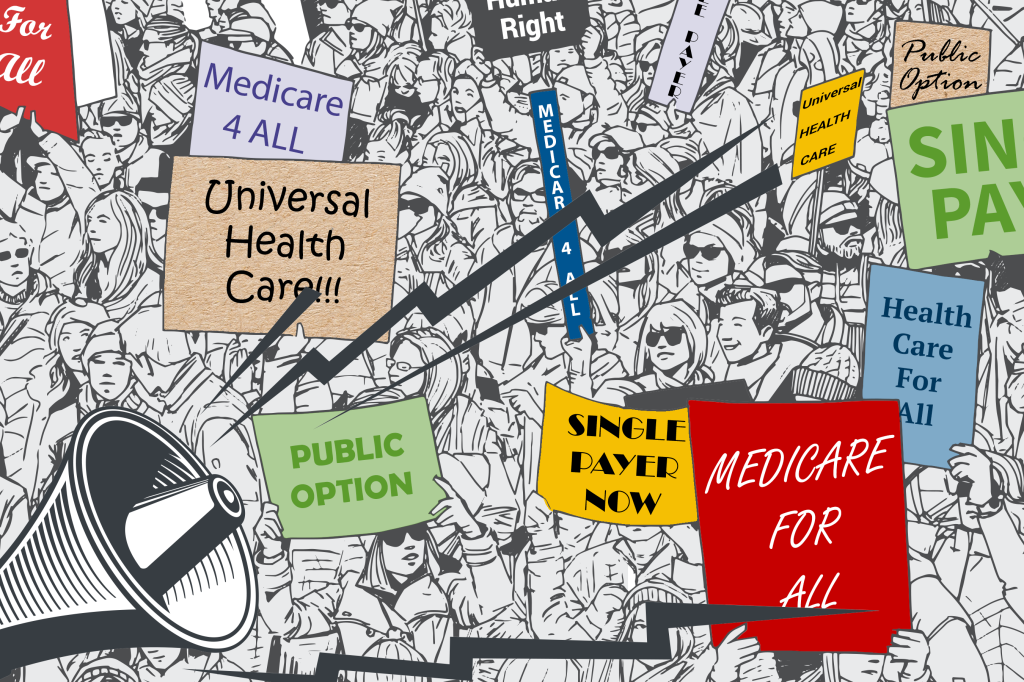
On the healthcare front, that means a continued debate between defenders of the Affordable Care Act (ACA), who want to extend coverage, as Biden does, using a government-run “public option” plan, and supporters of single-payer, “Medicare for All” (M4A) coveragewhich Sanders advocates. That’s the same argument Democrats have been having since the campaign started, and while healthcare remains the top issue of concern for primary voters, polls indicate that both plans are popular with the electorate.

We continue to believe that the public option plan is a far more likely outcome than M4A, but only if the Democrats win control of the Senate—a prospect which appears more possible given billionaire Mike Bloomberg’s post-Super Tuesday endorsement of Biden, and plans to devote his substantial campaign resources to support Democratic candidates across the ballot. Some of that money will surely be spent in Montana, where Gov. Steve Bullock is poised to announce plans to run against incumbent Sen. Steve Daines (R-MT), in a critical race that could be the most expensive Senate contest in history.

And for an indication of how the politics of a public option would play out, look no further than Colorado, where the Democratic legislature moved forward with its version of the plan this week, over the objections of the hospital and insurance lobbies.

Finally, looming over the general election campaign will be the pivotal Texas vs. California case, which the Supreme Court agreed to take up in this fall’s term. That case will ensure that healthcare will remain the centerpiece of American political debates regardless of who leads the Democratic ticket. Buckle up.


Congress releases $8.3B coronavirus funding package. Here’s what’s in it

https://www.fiercehealthcare.com/hospitals-health-systems/congress-releases-8-3b-coronavirus-funding-package-here-s-what-s-it?mkt_tok=eyJpIjoiWXpZek1tWm1NakprWTJaaSIsInQiOiJFYkFWWlwvYzc5c09JOWNiV1ZmSXlqclZsSU5RYnNBQ1NGd2EyQTdiYUdoa3BpV2ZwMTlyZ0xwcWNSNkthZ0pnbDRxR0IrWGNwZmFrcDhWQ3FjNkdzSUx6YTRKM3RHVWhPaitCXC8wRE5rRHM1a3dSRVBNTFdodnBiY0tkclQxSTVRIn0%3D&mrkid=959610

Image result for Congress releases $8.3B coronavirus funding package. Here's what's in it

Congress is expected to pass a major $8.3 billion spending package to help providers and local governments handle the spread of the coronavirus and to boost the development of vaccines and tests of the virus.

Here are key parts of the spending package released Wednesday:

  • $500 million for an emergency telehealth waiver. The bill would waive certain Medicare restrictions for telehealth, including that a Medicare beneficiary can use telehealth services even if they aren’t in a rural community. “This provision would also allow beneficiaries to receive care from physicians and other practitioners in their homes,” a summary of the package said;
  • $2.2 billion to the Centers for Disease Control and Prevention to help state and local health agencies. The funding would include a provision to reimburse state or local costs for coronavirus response and preparedness activities from Jan. 20 to the end of this supplemental;
  • Nearly $1 billion to buy drugs and medical supplies. This procurement will include $500 million for drugs, masks and personal protective equipment that can be distributed to state and local health agencies in areas that are in shortage. It also includes funding for increasing the supply of biocontainment beds, which are secured areas used for patients with highly contagious diseases; and
  • More than $3 billion to support the research and development of vaccines, diagnostics and other treatments for the coronavirus. Any vaccine or diagnostic developed via taxpayer funds must also “be available for purchase by the federal government at a fair and reasonable price,” the summary said. The bill also enables the Department of Health and Human Services to ensure any vaccine or diagnostic can be affordable in the commercial market, but doesn’t elaborate on how.

The package sailed through the House on Wednesday and could be taken up quickly by the Senate.

Provider groups bracing for a coronavirus outbreak praised the spending package.

“This bill will provide essential assistance to caregivers and communities on the front lines of this battle,” said Chip Kahn, president and CEO of the Federation of American Hospitals, in a statement.


Budget Cuts Target Medicaid, Medicare

https://www.healthcarefinancenews.com/news/president-trumps-budget-cuts-target-medicaid-medicare?mkt_tok=eyJpIjoiTW1JMFptSmhNR1F4WVRNeSIsInQiOiJOK3RWYTlrV0djQ1JEYWcyRlhqZDlHVGF2ejRRWXE3UDdHaGpcL2R5bVwvMHlHOUgyY0V0d1wvUE8rK3pMRlFFSXJsZGEzTVwvRVZRVHh3OGdLT0pOWG5LVDZaNFNadTVmYVFWdkFTamFcL2JhZUpPd3lia1hySCtzVlhROXpmWTh1Zm1mIn0%3D

Image result for medicare and medicaid budget cuts

Blueprint includes cuts for care in hospital outpatient departments, teaching hospitals and post-acute care providers, AHA says.

President Trump’s proposed $4.8 trillion budget slashes billions of dollars from Medicaid, food stamps and other safety net programs in an attempt to shrink the federal deficit.

Medicaid and the Affordable Care Act see about $1 trillion in cuts over the next decade, according to The Hill. The budget eliminates the enhanced federal match for Medicaid expansion enrollees. An additional $150 billion is expected to be shaved off of Medicaid from the implementation of work requirements, which is expected to result in people losing their healthcare coverage.

The “President’s health reform vision” to ax the Affordable Care Act takes $844 billion over 10 years from the ACA, the report said.

The decrease in federal spending on Medicare would total about $750 billion over 10 years, but that includes shifting two programs out of the budget. After accounting for those changes, the reduction is just over $500 billion, according to CNN. Much of that cut comes from reducing payments to providers.

The budget needs Congressional approval and is not expected to get past a Democratic-controlled House without changes.

House Speaker Nancy Pelosi tweeted: “The budget is a statement of values. Once again, the #TrumpBudget makes it painfully clear how little the President values the good health, financial security and well-being of America’s hard-working families.”

Ways and Means Committee Chairman Richard E. Neal, D-MA, said, “When I saw the President’s proposed budget today, I felt an immense sense of relief – relief that there is absolutely no chance of his ruthless cuts to critical programs ever becoming law. Slashing billions from Medicare and Medicaid will only make it harder for Americans to access the healthcare they need.

Cutting nutrition assistance and Social Security benefits for the disabled won’t enable people to get back on their feet financially.”

Senator Lamar Alexander, R-Tenn said, “Under the Constitution, it is Congress’ job to set spending priorities and pass appropriations bills, and as a member of the Senate Appropriations Committee, my priorities will continue to be making sure our national defense, national laboratories, the National Institutes of Health and national parks have the resources they need. I am encouraged to see the president is calling to end surprise medical billing.”

The budget adds money to the National Institutes of Health. The NIH will invest $50 million for new research on chronic diseases, using AI and related approaches, according to the White House briefing. It adds $7 billion over 10 years to fight opioid abuse and for mental health in the Medicaid program.

WHY THIS MATTERS

Cuts to Medicare and Medicaid mean uncompensated care to providers, or a reduction in the government payments.

The American Hospital Association said, “The budget request, which is not binding, proposes hundreds of billions of dollars in reductions to Medicare and Medicaid over 10 years.”

AHA President and CEO Rick Pollack said, “Every year, we adapt to a constantly changing environment, but every year, the Administration aims to gut our nation’s healthcare infrastructure. The proposals in this budget would result in hundreds of billions of dollars in cuts that sacrifice the health of seniors, the uninsured and low-income individuals. This includes the one in five Americans who depend on Medicaid, of which 43% of enrollees are children.

“In addition to the hundreds of billions in proposed reductions to Medicare, the blueprint includes cuts we strongly oppose for care in hospital outpatient departments, teaching hospitals and post-acute care providers.

These cuts fail to recognize the crucial role hospitals serve for their communities, such as providing 24/7 emergency services. Post-acute cuts threaten care for patients with the most medically complex conditions.”


How runaway healthcare costs are a threat to older adults — and what to do about it

https://www.healthcarefinancenews.com/node/139803?mkt_tok=eyJpIjoiTW1JMFptSmhNR1F4WVRNeSIsInQiOiJOK3RWYTlrV0djQ1JEYWcyRlhqZDlHVGF2ejRRWXE3UDdHaGpcL2R5bVwvMHlHOUgyY0V0d1wvUE8rK3pMRlFFSXJsZGEzTVwvRVZRVHh3OGdLT0pOWG5LVDZaNFNadTVmYVFWdkFTamFcL2JhZUpPd3lia1hySCtzVlhROXpmWTh1Zm1mIn0%3D

Authors call for allowing Medicare to directly negotiate drug prices with manufacturers, which is currently prohibited by law.

Empowering Medicare to directly negotiate drug prices, accelerating the adoption of value-based care, using philanthropy as a catalyst for reform and expanding senior-specific models of care are among recommendations for reducing healthcare costs published in a new special report and supplement to the Winter 2019-20 edition of Generations, the journal of the American Society of Aging.

The report, “Older Adults and America’s Healthcare Cost Crisis,” includes a dozen articles by experts and leaders from healthcare, business, academia and philanthropy.

The authors examine the major drivers of the high cost of healthcare and its impact on patients, then offer solutions that can reduce costs and potentially improve the quality of care for older adults and society at large.

Topics include the employer’s role in reining in healthcare prices; the high cost of prescription drugs; investing in the social determinants of health; the value of home-based acute care; the need for oral health programs for older adults; value-based payment reform; and the geriatric emergency care movement.

WHAT’S THE IMPACT

In the report’s lead article, West Health President and CEO Shelley Lyford and Timothy Lash, chief strategy officer of West Health and president of the West Health Policy Center, called for allowing Medicare to directly negotiate drug prices with manufacturers, which is currently prohibited by law.

They write it “would be a game-changing lever that could force prescription drug manufacturers to bring down prices and lower costs for older Americans.” They also said it’s essential to quickly move from unfettered fee-for-service to value-based payment models, and that more transparency on price and quality is needed so consumers and other purchasers can make more informed decisions about care.

Among the other recommendations are for employers to demand greater price accountability from hospitals and health plans, and to take the lead in adopting value-based payment models.

Authors also call for establishing senior-specific models of care, including geriatric emergency departments, which may improve health outcomes and reduce hospital admissions, and senior dental centers, which can address what they call an epidemic of oral health problems among older adults.

They also support widespread use of home-based acute care, which they say increases the value of healthcare.

THE LARGER TREND

As spiraling U.S. healthcare costs dominate policy agendas at the state and federal level, older adults — the largest group of consumers of healthcare services — have a particularly high stake in solving the crisis. According to a 2019 West Health-Gallup poll, seniors withdrew an estimated $22 billion from long-term savings in the past year to pay for healthcare and an estimated 7.5 million were unable to pay for a prescribed medicine.


Learning to live on Medicare margins

https://mailchi.mp/0ee433170414/the-weekly-gist-february-14-2020?e=d1e747d2d8

Image result for Learning to live on Medicare margins

“If Democrats take back the Senate and win the White House, there’s a good chance they’ll implement some version of a public option or Medicare buy-in, and that would be devastating for the fragile economics of our health system.” That was the message delivered by the CEO of a system we were visiting recently, in her report to the board of directors.

That kind of alarmist message might seem career-limiting, but given the way the politics of healthcare are playing out at both the national and state levels (see Colorado and Washington State), it’s past time for executives to get beyond the rhetoric and begin to prepare for the real financial consequences of public option proposals.

That’s what this CEO had done—what followed the dire warning was a detailed analysis (which we helped assemble) of what would happen in various scenarios—what if one percent of our revenue shifted from commercial rates (around 250 percent of Medicare) to possible public option rates (somewhere between 140 and 180 percent of Medicare)? That’s a knowable number, and you can begin to make assumptions about how much business would shift under different scenarios, and how quickly.

The reality for health systems is that most of the margin comes from the 55-to-65-year-old population—who use more healthcare services but whose care is reimbursed at commercial rates. That cohort cross-subsidizes much of the rest of a typical hospital’s business.

The presentation to the board laid those economic realities out in concise detail—and provided a bracing wake-up call that the system needs to be prepared to live on a different level of margin than they enjoyed in the past.

That means radical cost controls, sharp reductions in “system bloat”, and a laser-like focus on shifting care to lower-cost settings. For years, hospital leaders have tossed around the notion that “we have to learn to live on Medicare margins”.

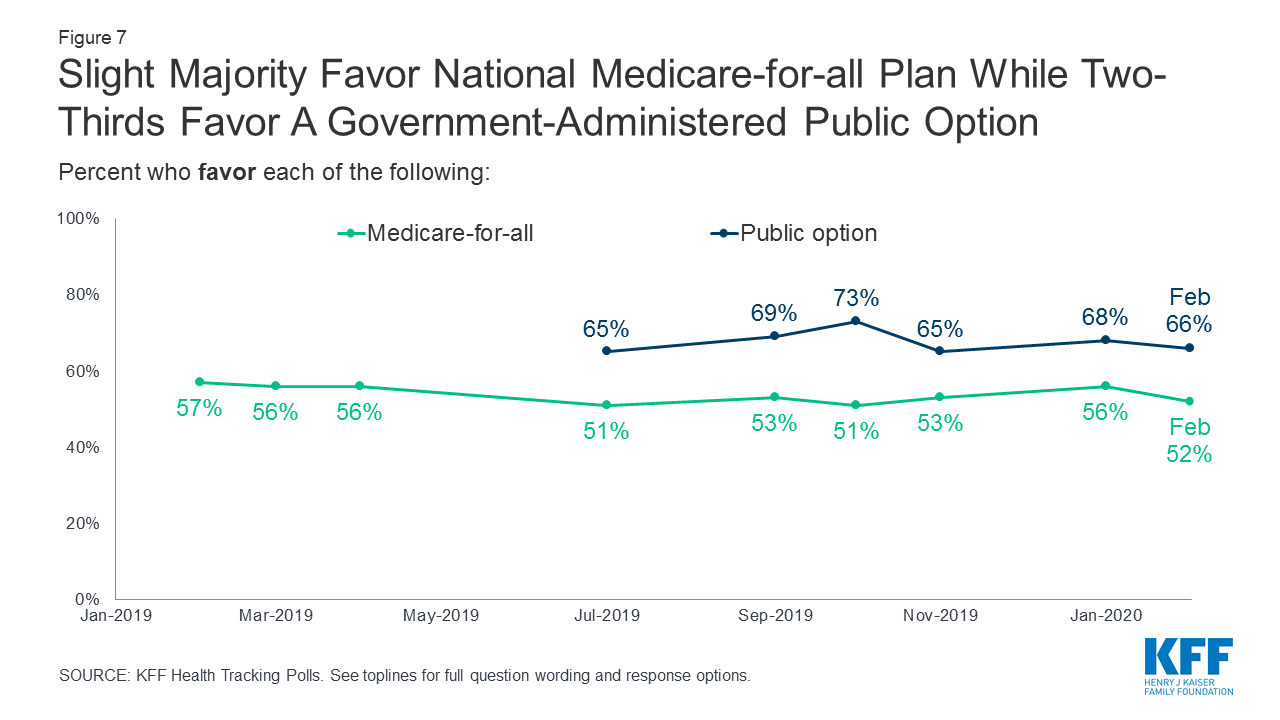
Given the rising popularity of public option policies (67 percent of Americans support the idea according to a recent poll, as do 42 percent of Republicans), that lesson may need to be learned sooner rather than later.


The attractive economics of Medicare Advantage

https://mailchi.mp/0ee433170414/the-weekly-gist-february-14-2020?e=d1e747d2d8


After years of subsidizing Medicare Advantage (MA) plans in an effort to attract more insurers and beneficiaries to the market, the government has succeeded in its goal: the average beneficiary can now choose from 28 plans in 2020, and recent studies have shown MA plans are outperforming fee-for-service (FFS) Medicare on several key quality measures.

As shown above, this subsidy has decreased in recent years—as mandated by the Affordable Care Act—and per-beneficiary MA payments are roughly equal to those of FFS Medicare. (These numbers may be underreported, however, due to aggressive risk adjustment measures on the part of MA plans.) However, risk-adjusted average Medicare cost per MA beneficiary is actually 13 percent lower than per Medicare FFS beneficiary, due mainly to lower utilization of high-cost services and other efficiencies.

Insurers offering MA plans are profiting from this lucrative “spread.” 

Growth in MA plans in recent years ensures that private insurers will continue to play an important role in the future of Medicare—the most recent projections estimate that 47 percent of Medicare beneficiaries will be in MA plans within a decade.

But inefficiencies in traditional Medicare may not make it the best standard on which to base MA payments. And ultimately, relative MA payment rates will have to continue to drop for the program to sustainably manage the healthcare costs of the gigantic Baby Boom generation.


Trump budget calls for cutting Medicaid, ACA by about $1 trillion

Trump budget calls for cutting Medicaid, ACA by about $1 trillion

President Trump’s proposed budget includes about $1 trillion in cuts to Medicaid and the Affordable Care Act over a decade, analysts said.

The budget released Monday includes $844 billion over 10 years in cuts from the “President’s health reform vision,” a stand-in for the repeal and replacement of ObamaCare. There are also more than $150 billion in additional cuts from implementing Medicaid work requirements and other changes to the program, which would result in some people losing coverage if they did not meet the requirements.

The cuts drew swift condemnation from Democrats, who pointed out that Trump himself promised not to cut Medicaid, the health insurance program for the poor, during his 2016 campaign.

“I’m not going to cut Medicare or Medicaid,” Trump said in 2015, adding, “Every other Republican is going to cut it.”

“Americans’ quality, affordable health care will never be safe with President Trump,” Speaker Nancy Pelosi (D-Calif.) said in a statement on the budget proposal.

A senior administration official defended the Medicaid cuts, arguing reforms will help preserve the program for people who need it most. “The Budget protects and preserves Medicaid by putting it on a sustainable path, so it can continue to provide vital services to those who need it the most, including children, the disabled, elderly and pregnant women,” the official said.

In contrast to previous years, the budget does not spell out how Trump proposes to repeal and replace ObamaCare. Instead, the budget gives a savings number of $844 billion that could come from any number of possible changes to Medicaid or the health law’s exchanges and subsidies. 

One policy that is specified is that the budget calls for ending the additional federal funding that helped states expand Medicaid to cover more people under the Affordable Care Act, with officials arguing states can step up their spending if they want to expand the program.

Latest boost for Medicare Advantage

https://www.axios.com/newsletters/axios-vitals-0460cccc-499e-4609-80e6-745311cef1ad.html?utm_source=newsletter&utm_medium=email&utm_campaign=newsletter_axiosvitals&stream=top

Image result for medicare advantage

The Trump administration yesterday announced more changes designed to make Medicare Advantage more appealing and to lower prescription drug costs for seniors.

Why it matters: Although the proposal mainly tinkers around the edges, it could have a meaningful impact on some seniors’ pocketbooks while furthering the administration’s commitment to Medicare Advantage, a cash cow for insurers.

Details: The proposal aims to create more transparency within Medicare’s prescription drug benefit, and to enhance price competition.

  • Beginning in 2022, plans would be required to give beneficiaries tools to compare the out-of-pocket costs of different drugs, which would allow patients to know their drug costs ahead of time and to shop around for the cheapest medications.
  • The proposal also aims to create more price competition among specialty drugs, which tend to be the most expensive drugs on the market.

It also would allow all seniors with end-stage renal disease to enroll in Medicare Advantage, beginning in 2021.

  • Medicare Advantage beneficiaries this year are gaining access to telehealth benefits that aren’t available to seniors enrolled in traditional fee-for-service Medicare, and the new proposal would build on these benefits.


Health care is Iowa’s only winner right now

https://www.axios.com/newsletters/axios-vitals-ded63eb6-2431-48d0-a186-2f3b52417f2f.html?utm_source=newsletter&utm_medium=email&utm_campaign=newsletter_axiosvitals&stream=top

Image result for health policy"

Iowa Democrats reported last night that their biggest priorities were beating President Trump and health care — but the meltdown of their election reporting systems left their presidential choices unresolved.

Why it matters: We’ve been writing for months that Democrats have a major choice ahead, either picking an advocate of Medicare for All — and siding with the plan that’s less popular with the rest of the country — or a public option advocate.

  • The Iowa debacle means the path the party will take won’t be clear for a while longer.

By the numbers: Several polls — including ones by NBC News, the National Exit Poll and AP Votecast — found that around four in 10 caucus voters said health care was their top issue.

  • Previous polling has found that Medicare for All is less popular overall than a public option, but both were popular among Democratic caucus-goers last night.
  • Seven in 10 said they back a single-payer plan, and almost nine in 10 said they support a public option, per AP Votecast, which was conducted by NORC at the University of Chicago for The Associated Press and Fox News.

Yes, but: Caucus-goers said they prefer a Democratic candidate who can beat Trump over one that agrees with them on issues, CNN reports.

The big picture: Republicans are more than happy to talk about Medicare for All — and its subsequent tax increases and expanded government role in health care — instead of protecting and building on the Affordable Care Act.

  • Whereas the former gives them an opportunity to go on offense, the latter puts the GOP on defense against its 2017 repeal-and-replace efforts and ongoing lawsuit that would strike down the whole health care law, including its protections for pre-existing conditions.