UPMC reported higher revenue in the first half of this year than in the same period of 2021, but the Pittsburgh-based health system’s operating income declined year over year, according to financial documents released Aug. 23.
UPMC reported revenue of $12.5 billion in the first six months of this year, up from $12.2 billion in the same period of 2021.
Expenses also increased year over year. UPMC reported operating expenses of $12.4 billion in the first half of this year, up from $11.6 billion a year earlier. Expenses increased across all categories, including supplies and salaries and benefits.
“Throughout 2022, the continued effect of COVID-19, along with conditions in the labor and supply markets have resulted in cost growth in employment, staffing and other operating expenses in excess of revenue growth,” UPMC management wrote in the financial filing.
The health system ended the first half of this year with operating income of $81.9 million, down 86 percent from $604.6 million in the same period last year. UPMC’s operating margin was 0.7 percent for the first half of this year, compared with 5 percent in the same period last year.
UPMC reported a net loss of $844.1 million in the first half of this year, compared to net income of $1.1 billion in the same period of 2021. The system’s loss from investing and financing activities totaled $865.9 million in the first two quarters of 2022, compared to a gain of $531.1 million in the same period a year earlier.
While Advocate Aurora Health’s year-to-date operating income sits at $51.2 million, $666 million in investment declines weigh heavy on its bruised bottom line.
Following a tight first quarter, Advocate Aurora Health managed to grow its operating margin but still landed negative due to $400 million in investment losses during the quarter ended June 30, according to financial filings.
The 27-hospital nonprofit—which pending regulatory review slated to merge with Atrium Health in one of the year’s biggest hospital transactions—reported a $48.7 million operating income during its second fiscal quarter of 2022 (1.7% margin).
This is up from the $2.5 million (0.3% margin) it scraped out earlier this year but well below the $213.7 million (6.5% margin) of Q2 2021.
Revenues for the quarter increased 1.5% year over year to more than $3.5 billion. While patient service revenue and other revenue both grew by tens of millions, capitation revenue declined slightly due to a shift in overall membership mix and a 6.1% dip in capitated lives, the system wrote in its filing.
Discharge volumes fell 7.7% year over year during the most recent quarter, as did home care visits by 7.6%. The system saw increases compared to the previous year among its observation cases (11.6%), hospital outpatient visits (2.1%) and physician visits (7.1%).
Advocate Aurora’s expenses grew at a faster rate, at 6.7% year over year during the second quarter. The increase was led by a 10.2% jump in salaries, wages and benefits payouts, which the system said was fueled by a blend of higher nurse agency costs, higher merit and premium pay for clinical care and volume-driven demand for more full-time equivalent employees.
The nonprofit saw last year’s investment gains largely upended, recording a $400 million net loss during the quarter compared to the $571.6 million gain of the prior year’s equivalent quarter.
The shortfall dragged Advocate Aurora’s net income to a $347.6 million loss for the quarter. It had logged a $545.6 million gain the previous year.
Looking at six-month numbers, the health system reported $7.1 billion in total revenue and $7 billion in total expenses for an operating income of $51.2 million. Year-to-date investment losses landed at $666 million, bringing the organization to a $600.8 million net loss.
Advocate Aurora was formed in 2018 from the merger of nonprofits Advocate Health Care and Aurora Health Care. It treats 2.6 million unique patients, employs 75,000 people and logged just under $14.1 billion in total revenue across 2021 and a net income of more than $1.8 billion.
Should its merger plans go through, Advocate Aurora and Atrium Health would control 67 hospitals and $27 billion of combined revenues across six states. The deal is anticipated to close before the end of the year, according to the earnings filing.
The system’s latest numbers will come as no surprise in light of similar quarterly reports from Advocate Aurora’s nonprofit contemporaries.
Investment struggles and increased expenses were reported across the board, although not every major system was able to keep operations in the black. Mayo Clinic, Kaiser Permanente and UPMC were among those on the stronger side of the scale while Sutter Health, Mass General Brigham and Providence each reported tens to hundreds of millions in operational losses.
Fitch Ratingswarned last week that these sector-wide challenges are unlikely to vanish during the remainder of the year. As such, the agency has downgraded its outlook for the nonprofit hospital industry from “neutral” to “deteriorating.”
Intermountain Healthcare reported net income of $2.7 billion in the first six months of the year, despite a heavy loss on investments and flagging operating income.
The 46% year-over-year jump in net income for the Utah-based nonprofit was spurred by more than $4 billion in contribution from its merger with SCL Health that closed in April, according to recent financial documents.
Intermountain and SCL entered into a merger agreement to combine their health systems in December. The merger was completed in April, creating a $12 billion system and expanding Intermountain’s reach into Colorado.
In its first financial filing since the affiliation, 33-hospital Intermountain, which also manages hundreds of clinics across seven states, reported revenues of $6.5 billion in the first six months of 2022, up 25% year over year.
Expenses climbed 31% to $5.9 billion, driven primarily by growth in employee compensation and benefits and increasingly pricey supplies.
Net operating income was $285 billion, down 38% year over year.
Intermountain’s inpatient admissions and hospital outpatient visits ticked down 1% and 7% respectively, though its emergency rooms visits climbed 11%. Visits at the system’s non-hospital clinics were also up 11%.
Inpatient surgeries were down 2% while outpatient surgeries were up 4%, suggesting a broader shift away from care being delivered in the hospital setting.
Intermountain’s results mirror those of other large U.S. systems in 2022 so far, as major for-profit chains report lower operating income and admissions. Tight competition for labor amid ongoing workforce shortages has resulted in skyrocketing labor expenses while inflation and supply chain pressures has ratcheted up the cost of hospital supplies needed to provide patient care.
Some of the biggest nonprofits in the U.S. have reported net losses in the second quarter, including Kaiser Permanente and Sutter Health. Nonprofit giant Providence reported an operating loss of $934 million in the first half of 2022, citing cost and operational stressors. Providence plans to restructure and cut executive roles in a bid to become a nimbler organization.
On Tuesday, ratings agency Fitch said its outlook for nonprofit hospitals is “deteriorating” amid elevated expense pressures, along with investment losses.
On Friday, Intermountain named Lydia Jumonville as interim CEO after Marc Harrison announced plans to depart the Salt Lake City-based system for the venture capital firm General Catalyst. Intermountain’s board is conducting a national search for a permanent chief executive, which it hopes to complete by the fall.
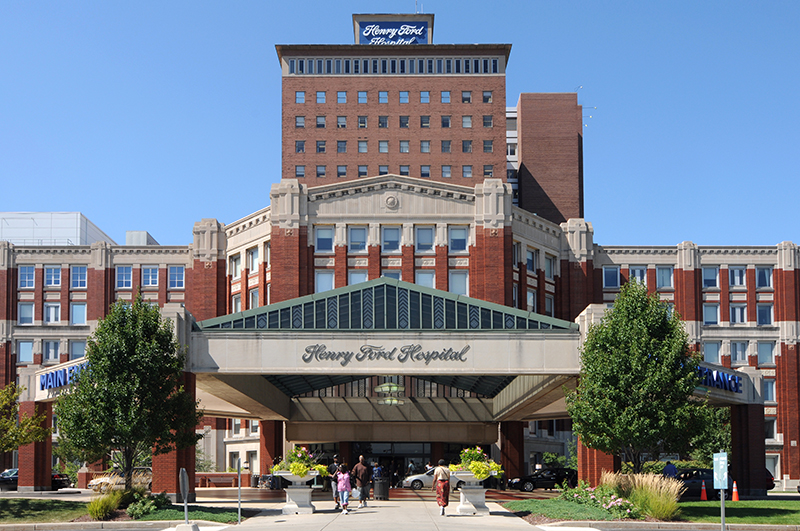
Detroit-based Henry Ford Health ended the first half of this year with an operating loss, according to financial documents released Aug. 15.
In the first two quarters of this year, Henry Ford Health reported revenue of $3.41 billion, up from $3.36 billion in the same period a year earlier. Net patient service revenue and healthcare premium revenue were up year over year. The health system attributed the increase in patient service revenue to higher pharmacy and outpatient volume.
After factoring in expenses, which grew 4.4 percent year over year, the health system ended the first six months of this year with an operating loss of $74.77 million and an operating margin of -2.2 percent. Henry Ford Health reported operating income of $19.29 million in the first half of 2021.
Henry Ford Health’s nonoperating loss totaled $272.53 million in the first six months of this year, which was primarily attributed to a significant loss on investments. In the first half of 2021, the health system reported nonoperating income of $134.65 million.
Henry Ford Health closed out the first half of this year with a net loss of $347.98 million, compared to a net income of $153.18 million in the same period of 2021.
Mayo Clinic’s revenue and expenses were higher in the second quarter of this year, according to financial documents released Aug. 18.
Rochester, Minn.-based Mayo Clinic’s revenue totaled $4.03 billion in the second quarter of this year, up from $3.94 billion in the same period a year earlier.
The nonprofit health system’s expenses climbed 11 percent year over year to $3.88 billion in the second quarter of 2022. Mayo Clinic saw expenses increase across all categories, including salaries and benefits.
Mayo Clinic ended the second quarter of this year with operating income of $155 million, down 66 percent from $451 million in the same quarter of 2021.
Mayo Clinic has major campuses in Rochester, Jacksonville, Fla., and Scottsdale and Phoenix, Ariz.
Here are eight health systems with strong operational metrics and solid financial positions, according to reports from Fitch Ratings and Moody’s Investors Service.
1. Advocate Aurora Health has an “AA” rating and stable outlook with Fitch. The health system, dually headquartered in Milwaukee and Downers Grove, Ill., has a strong financial profile and a leading market position over a broad service area in Illinois and Wisconsin, Fitch said. The health system’s fundamental operating platform is strong, the credit rating agency said.
2. Banner Health has an “AA-” rating and stable outlook with Fitch. The Phoenix-based health system’s core hospital delivery system and growth of its insurance division combine to make it a successful highly integrated delivery system, Fitch said. The credit rating agency said it expects Banner to maintain operating EBITDA margins of about 8 percent on an annual basis, reflecting the growing revenues from the system’s insurance division and large employed physician base.
3. Lincoln, Neb.-based Bryan Health has an “AA-” rating and stable outlook with Fitch. The health system has a leading and growing market position, very strong cash flow and a strong financial position, Fitch said. The credit rating agency said Bryan Health has been resilient through the COVID-19 pandemic and is well-positioned to accommodate additional strategic investments.
4. Gundersen Health System has an “AA-” rating and stable outlook with Fitch. The La Crosse, Wis.-based health system has strong balance sheet metrics and a leading market position and expanding operating platform in its service area, Fitch said. The credit rating agency expects the health system to return to strong operating performance as it emerges from disruption related to the COVID-19 pandemic.
5. Hackensack Meridian Health has an “AA-” rating and stable outlook with Fitch. The Edison, N.J.-based health system has shown consistent year-over-year increases in market share and has a solid liquidity position, Fitch said.
6. Falls Church, Va.-based Inova Health System has an “Aa2” rating and stable outlook with Moody’s. The health system has a consistently strong operating cash flow margin and ample balance sheet resources, Moody’s said. Inova’s financial excellence will remain undergirded by its favorable regulatory and economic environment, the credit rating agency said.
7. Salt Lake City-based Intermountain Healthcare has an “Aa1” rating and stable outlook with Moody’s. The health system has exceptional credit quality, which will continue to benefit from its leading market position in Utah, Moody’s said. The credit rating agency said the health system’s merger with Broomfield, Colo.-based SCL Health will give Intermountain greater geographic reach.
8. UnityPoint Health has an “AA-” rating and stable outlook with Fitch. The Des Moines, Iowa-based health system has strong leverage metrics and cash position, Fitch said. The credit rating agency expects the health system’s balance sheet and debt service coverage metrics to remain robust.
Providence, a 51-hospital system, ended the first six months of this year with an operating loss, according to financial documents released Aug. 15.
For the six months ended June 30, the health system reported revenue of $12.7 billion, up 2 percent year over year on a pro forma basis. The pro forma results exclude the operations of Newport Beach, Calif.-based Hoag Hospital. Providence and Hoag ended their affiliation in January.
Providence’s expenses also increased. For the six months ended June 30, the health system reported operating expenses of $13.6 billion, up 8 percent year over year on a pro forma basis. Higher wages, increased agency staffing costs and overtime pushed Providence’s labor costs higher year over year, the system said in an earnings release.
Providence ended the first two quarters of this year with an operating loss of $934 million, compared to an operating loss of $94 million in the same period a year earlier. The system’s second-quarter operating loss totaled $424 million.
Providence, which has system offices in Renton, Wash., and Irvine, Calif., released its financial results a month after announcing a plan to shrink its leadership team and roll out a new divisional structure.
“Creating a more sustainable model of health care by 2025 has been a key part of our vision since before the pandemic,” Providence CFO Greg Hoffman said in the earnings release. “But it has become even more imperative today as health systems across the country face a new reality. Alongside our investments to simplify processes and modernize technology, streamlining our leadership and administrative structure is another way we will ensure we are operating as efficiently as possible, so that we can keep resources focused on direct patient care, especially for those who are most vulnerable.”
For the six months ended June 30, Providence invested $1 billion in community benefit, compared to $813 million in the same period of 2021, according to the earnings release.
“Having served the Western U.S. for more than 165 years, Providence has lived through other economic downturns, past pandemics, and periods of political and social unrest. With the steps we are taking to respond to the times, we will continue supporting caregivers and serving our communities throughout these challenging times, with the mission of Providence enduring for generations to come,” Providence President and CEO Rod Hochman, MD, said in the earnings release.
Kaiser Permanente reported lower revenues in the second quarter of this year than in the same period a year earlier, and the Oakland, Calif.-based healthcare giant ended the period with a net loss.
Kaiser, which provides healthcare and health plans, reported operating revenue of $23.47 billion in the second quarter of 2022, down from $23.69 billion in the same quarter of 2021. The organization’s expenses climbed from $23.34 billion in the second quarter of last year to $23.38 billion in the same period this year.
“Much like the entire health care industry, we continue to address deferred care while navigating COVID-19 surges and associated expenses,” Kathy Lancaster, Kaiser executive vice president and CFO, said in an Aug. 5 earnings release. “Kaiser Permanente’s integrated model of providing both care and coverage enables us to meet these challenges as demonstrated by our moderate increase in year-over-year operating expenses for the second quarter.”
Kaiser ended the second quarter of this year with operating income of $89 million, down from $349 million a year earlier.
After factoring in a nonoperating loss of $1.4 billion, Kaiser reported a net loss of $1.3 billion for the second quarter of this year, compared to net income of $2.97 billion in the same period last year. Kaiser said the loss was largely attributable to market conditions.
This is the second quarter in a row that Kaiser has reported a loss. The organization closed out the first quarter of this year with a net loss of $961 million, compared to net income of $2 billion in the same quarter of 2021.
Updated on Aug. 5 with comments from Sutter Health.
A $457 million net loss for the quarter ended June 30 has brought Sutter Health even deeper into the red for 2022, according to new financial filings.
The Sacramento-based nonprofit health system brought in $3.49 billion in total operating revenues from the quarter, down slightly from the prior year’s $3.51 billion.
At the same time, the system’s operating expenses grew from $3.41 billion in the second quarter of 2021 to $3.55 billion in the most recent quarter, driven by $30 million and $151 million year-over-year increases in salaries and purchased services, respectively. The latter includes the increased professional fees being felt by labor-strapped systems across the country.
These led the system to report a $51 million operating loss for the quarter as opposed to the $106 million operating gain from last year’s equivalent quarter.
“Poorly” performing financial markets also took a toll on Sutter’s numbers. The system’s quarterly investment income dipped from $251 million to $56 million from 2021 to 2022. A $495 million downward change in net unrealized gains and losses on its investments was also a stark reversal from the prior year’s $270 million increase.
Despite a 1.5% year-over-year operating revenue increase to $7.05 billion for the opening six months, a 1.7% year-over-year operating revenue bump places the system’s year-to-date income at $44 million (0.6% operating margin), slightly below last year’s $57 million (0.8% operating margin).
However, market struggles through both quarters and a $208 million loss tied to the disaffiliation of Samuel Merritt University now has Sutter sitting at a $641 million net loss for the opening half of 2022. The system was up $825 million at the same time last year.
“Sutter’s finances have stabilized, but our year-to-date numbers show we still have more affordability work ahead as we strive to best position Sutter Health to serve our patients and communities into the future,” the system wrote in an email statement. “We are grateful for our employees and clinicians who have worked diligently over the last several years to help bring our costs down—at the same time managing through the pandemic and continuing to provide high-quality, nationally recognized care.”
Sutter noted in the filing that it is or will be in labor negotiations with much of its unionized workforce, as 43% of its contract agreements have either expired or will be running their course within the year.
The filing also included notice of a handful of legal matters that have yet to be resolved. These include an antitrust verdict in favor of Sutter that is being appealed by the plaintiff, a lawsuit regarding an alleged privacy breach of two anonymous plaintiffs and two separate class-action complaints regarding employee retirement plan funding, among others.
“The organization continues to face financial headwinds like inflation and increased staffing costs, as evidenced by our near breakeven operating margin,” Sutter said in a statement. “Even still, we are encouraged that independent ratings agencies have recently acknowledged our efforts to date. In the second quarter, Moody’s, S&P and Fitch all affirmed the system’s existing ‘A’ category bond ratings.”
Much of Sutter’s pains are being felt across the industry. A recent Kaufman Hall industrywide report showed only marginal relief from expenses and middling non-COVID volume recovery through June, while a Fitch Ratings update on nonprofit hospitals warned that these challenges and broader inflation pressures will likely weigh down the sector through 2022.
Hospitals are forced to absorb inflationary expenses, particularly related to supporting their workforce, AHA says.
The Centers for Medicare and Medicaid Services’ increase in the inpatient payment rate for 2023 is welcome but not enough to offset expenses, according to the American Hospital Association.
CMS set a 4.1% market basket update for 2023 in its final rule released Monday, calling it the highest in the last 25 years. The increase was due to the higher cost in compensation for hospital workers.
The final rule gave inpatient hospitals a 4.3% increase for 2023, as opposed to the 3.2% increase in April’s proposed rule.
WHY THIS MATTERS
CMS used more recent data to calculate the market basket and disproportionate share hospital payments, a move that better reflects inflation and labor and supply cost pressures on hospitals, the AHA said.
“That said, this update still falls short of what hospitals and health systems need to continue to overcome the many challenges that threaten their ability to care for patients and provide essential services for their communities,” said AHA Executive Vice President Stacey Hughes. “This includes the extraordinary inflationary expenses in the cost of caring hospitals are being forced to absorb, particularly related to supporting their workforce while experiencing severe staff shortages.”
The AHA would continue to urge Congress to take action to support the hospital field, including by extending the low-volume adjustment and Medicare-dependent hospital programs, Hughes said.
In late July, Senate and House members urged CMS to increase the inpatient hospital payment.
Premier, which works with hospitals, also said the 4.3% payment update falls short of reflecting the rising labor costs that hospitals have experienced since the onset of the pandemic.
“Coupled with record high inflation, this inadequate payment bump will only exacerbate the intense financial pressure on American hospitals,” said Soumi Saha, senior vice president of Government Affairs for Premier.
THE LARGER TREND
Recent studies show hospitals remain financially challenged since the COVID-19 pandemic’s effect on revenue and supply chain and labor expenses. Piled onto that has been inflation that has added to soaring expenses.
Hospital margins were up slightly from May to June, but are still significantly lower than pre-pandemic levels, according to a Flash Report from Kaufman Hall.
The effects of the pandemic on the healthcare industry have been profound, resulting in the creation of new business models, according to a report from McKinsey.
Transformational change is necessary as hospitals have been hit hard by eroding margins due to cost inflation and expenses, Fitch found.










 HENRY KOTULA