There have been 9,487,080 coronavirus cases in the United States, and 233,729 people have died (Johns Hopkins). Around 3,743,527 people have recovered, and the United States has conducted 150,969,797 tests. Worldwide, there have been 48,107,322 confirmed cases of coronavirus, with 1,225,881 deaths. At least 31,917,411 people have recovered from the virus.
U.S. Reports More Than 100,000 New Cases on Wednesday, Following Second-Highest Daily Covid-19 Cases on Election Day; Hospitalizations Increase; Covid-19 Becomes Third Leading Cause of Death in Arkansas.
The U.S. recorded more than 91,000 new cases of Covid-19 on Election Day, Nov. 3, and more than 100,000 new cases on Wednesday, Nov. 4 (CNN, Johns Hopkins, NYT). Six states – Idaho, Maine, Minnesota, New Mexico, Ohio and Pennsylvania – reported single-day highs on Tuesday. And five states — Maine, Minnesota, Indiana, Nebraska and Colorado — set single-day case records on Wednesday. The seven-day average for daily new cases now tops 90,000, the highest since the pandemic began and more than twice as high as the average during the low point in early September.
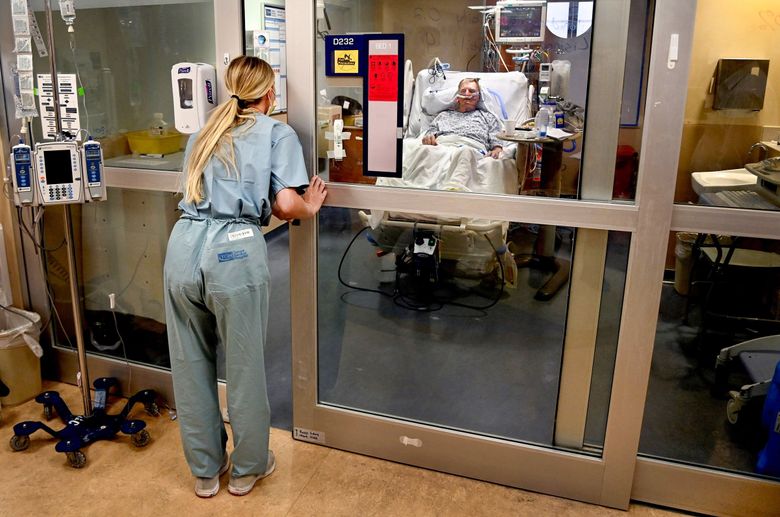
More than 50,000 people were hospitalized with the virus during voting on Tuesday. In the Midwest in particular, hospitalizations are rising steeply. Some Midwest hospitals are under strain as they work to provide care for large numbers of Covid-19 patients.
In Arkansas on Tuesday, Governor Asa Hutchinson announced that Covid-19 has become the third leading cause of death in the state, after cancer and heart attacks. “It is a deadly virus that takes people’s lives,” the governor said. “We want to make sure everybody understands the seriousness of it.” Bo Ryall, president and CEO of the Arkansas Hospital Association, asked residents to “please adhere to safety measures again” to help mitigate the strain on hospitals.
Despite increased production of protective gear, levels of N95 face masks are lower than recommended at many health-care facilities.
Manufacturers and health officials are reporting shortages of N95 masks, critical protective equipment for frontline workers (WSJ). Although supplies of masks, gloves, and other equipment have improved since the start of the pandemic, new Covid-19 surges around the country are making it difficult for health care facilities to keep up with demand for N95 masks.
Many facilities are being forced to ration and reuse supplies. In Michigan, approximately two-thirds of health systems report less than a three-week supply of protective equipment, far below the state’s recommended 90-day supply. In New Mexico, 90% of hospitals are now reusing N95 masks. State health officials around the country expect shortages to be exacerbated in the coming weeks as Covid-19 cases continue to rise.
Manufacturers are scrambling to keep up, ramping up production, and working with state officials to direct supplies to areas in greatest need. 3M, the largest manufacturer of N95 masks in the country, is producing four times the number of N95 masks per month compared to pre-pandemic production. Even so, Chief Executive Mike Roman told reporters, “N95s are still in high demand. We have more demand than we can supply.”
The coronavirus pandemic reached a dire milestone Wednesday when the number of new U.S. infections topped 100,000 in one day for the first time, continuing a resurgence that showed no sign of slowing.
The pandemic is roaring across the Midwest and Plains states. Seven states set records for hospitalizations for covid-19, the disease caused by the virus. And Connecticut, Iowa, Maine, Michigan, Minnesota, Nebraska and North Dakota saw jumps of more than 45 percent in their seven-day rolling average of new infections, considered the best measure of the spread of the virus.
The record, 104,004 cases, was reached a day after the deeply divided nation went to the polls to choose between President Trump and Democratic nominee Joe Biden, an election widely seen as a choice between fully reopening the economy and aggressively quelling the outbreak.
“It’s clear we’re heading into a period where we’re going to see increasing hospitalization and deaths in the U.S. And it worries me how little we’re doing about it,” said Tom Frieden, director of the Centers for Disease Control and Prevention during the Obama administration. “We know by now how fast this virus can move. You have to get ahead of it.”
After more than nine months of restrictions, some state leaders are hesitant to risk further pandemic fatigue, Frieden said.
But if case counts continue rising at the current rate and strong action isn’t taken, viral transmission may soon reach a point in some areas where nothing will stop the virus except another shutdown, he said.
“The numbers keep going up, and we’re only getting closer and closer to Thanksgiving and Christmas,” when some families are expected to congregate indoors and risk spreading the virus further, said Eleanor Murray, an assistant professor of epidemiology at Boston University. “For so many reasons, the next few weeks are going to be bad for us and good for covid.”
With Trump and his aides fighting to hold on to the White House, the federal response to the pandemic, which already leaves major responsibilities to the states, may be even more fractured, Murray said.
“Something that deeply worries me is either way this election goes, Trump will still be in charge the next few weeks, when cases are higher than they’ve ever been,” she said. “And he’s made clear there will be no top-down, coordinated action coming from the federal government.”
Despite months of surveys that clearly indicated strong voter disapproval of the president’s response to the pandemic could weigh heavily against his reelection effort, more voters chose the economy as the primary issue in casting their ballots, exit polling showed.
Even if Biden captures the White House, the results appear to signal that, for many people, covid-19 is not as daunting as the prospect of being unable to pay their bills or send their children to school.
“I got news for you, pal. Covid-19 is over. It’s done,” said Nick Arnone, owner of HLSM, a software company for the power sports industry in Plains, Pa. “We have therapeutics, so deaths are way down. We are very close to a vaccine. We’ve got to ride it out now.
About 35 percent of voters said the economy was the most important issue for them, while about 17 percent cited the pandemic and about 2 in 10 were motivated most by racial inequality.
At the same time, however, just over half the voters said it is more important to contain the virus, even if that hurts the economy, while slightly more than 4 in 10 said rebuilding the economy is most critical, even if that impairs work to quell the virus.
In El Paso, where the pandemic is surging, James Clark said he voted for Biden because of the uncontrolled outbreak.
“Covid was the main reason . . . and the things he was saying specifically about it,” Clark said. “I mean there were some things Trump was doing well, too, but overall it was covid.”
Some analysts were surprised and concerned that voters appeared to view the decision before them as a choice between the virus and their livelihoods, rather than as intertwined problems that could be solved together.
“That was shocking to me, that Trump could convince so many people it was a choice between the economy and pandemic,” said Eric Topol, a cardiologist and head of the Scripps Research Translational Institute in San Diego. “I’m amazed the extent he pulled that off, because it’s so obviously a false dichotomy. There’s no way for the economy to thrive unless we get control of the pandemic.”
On the campaign trail, Biden warned voters of a “dark winter” and invoked empty chairs in homes where families grieved the death of a loved one. He suggested he would follow science and tighten restrictions in places where that was necessary.
Trump repeatedly declared that the country was “rounding the turn” on the pandemic and said a vaccine was almost ready to be distributed. “You know what we want? We want normal,” Trump said this past weekend in Butler, Pa.
The two political messages were consistent with the viewpoints of each candidate’s base, said Kathleen Hall Jamieson, director of the Annenberg Public Policy Center at the University of Pennsylvania.
Biden has much more support among urban voters and people of color who, until recently, have been hit harder by the pandemic. Trump’s base is more White and rural, constituencies that have been slammed by the virus only in recent weeks, as the number of infections soared in the Upper Midwest and Plains states, she said.
“Who’s more likely to know someone’s who’s died? People who are already more likely to be Democrats than Republicans,” Jamieson said. “The lived experience of the two constituencies, the base vote for each side, is different.”
In Florida, which Trump carried more easily than expected, Biden’s emphasis on the pandemic hampered grass-roots campaigning, said Susan MacManus, an emerita professor of political science at the University of South Florida. With Biden emphasizing social distancing, the Democratic campaign there followed his lead.
“The Republicans never let their foot off the pedal in terms of continuing to register [voters] and going door to door, all through the covid,” she said. “The Democrats, once covid hit, they made a conscious effort, not going door to door.”
Rep. Donna Shalala (D-Fla.), who appeared to be headed toward losing her seat to television newscaster Maria Elvira Salazar (R) in Miami, campaigned heavily on Trump’s response to the virus.
Stefan Baral, a physician and epidemiologist at Johns Hopkins School of Public Health, Wednesday faulted Democrats’ pandemic messaging, saying Biden did not adequately express empathy for the economic hardships caused by the pandemic-related shutdowns.
“This is a terrible virus. But empathy for all the folks who have lost their jobs and lost their opportunities and kids who are out of school — I just never felt that message of empathy come across at all,” Baral said.
When some people heard Biden talk about the dark winter ahead, they thought, “The first thing he’s going to do is close my business,” Baral said.
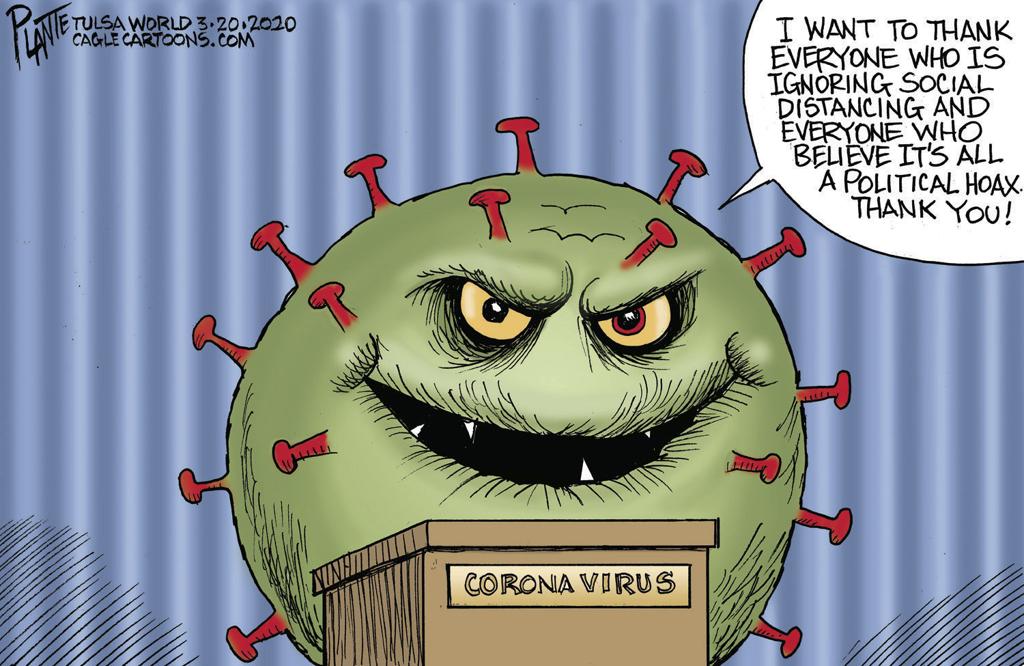
Voters also had to make up their minds amid a torrent of misinformation and purposeful distortion about the pandemic, said Matthew Seeger, a risk communication expert at Wayne State University in Michigan, who helped the CDC develop its past communications plans.
“The messaging around the pandemic has been deliberately confused and strategically manipulated to downplay its significance,” Seeger said. “You combine that with the fact that this is a slow-moving crisis with risk fatigue starting to settle in, and you can see why public perception is what it is.”
In Chandler, Ariz., a suburb southeast of Phoenix last week, Al Fandick said he considers the pandemic wildly overblown and masks largely pointless. Fandick, 53, who runs a transport company, said he found it absurd that he was required to wear a mask to enter a restaurant but could remove the face covering once he sat down.
“Having a face mask on while I walk into that restaurant, but then I can take that face mask off, that’s like having a peeing section in a pool,” Fandick said.
Aside from trips to visit people in the hospital, he never wore a mask until Maricopa County began mandating it for public spaces, a policy he vehemently opposes, he said.
“Don’t need the hassle,” he said.
On the other side of the gulf are those who see the accelerating pandemic and a possibly very deadly period ahead.
“It is demoralizing to feel like: Here we are in November. A third surge is not just underway, but has already surpassed past surges. And people still don’t understand what’s happening and what’s at stake,” said Murray of Boston University.
“We are in the middle of an emergency. We have cases higher than they have ever been since this pandemic started, and yet you will have people paying less attention than ever to covid,” Murray said. “We as a country are not in a place right now where it’s safe to do that.”
Last Friday, the CDC reported 99,750 new cases, a record high from the day before.
The United States reported its highest number of new COVID-19 cases in a single day on Friday as cases across the country have been rising since mid-September, according to the Centers for Disease Control and Prevention’s COVID-19 data tracker.
Last Friday, the CDC reported 99,750 new cases, a record high from the day before when there were 90,155 new cases.
The overall national percentage of positive COVID-19 tests increased from 6.6% from the week ending on Oct. 17 to 7.1% for the week ending on Oct. 24, according to the CDC’s weekly surveillance summary.
WHAT’S THE IMPACT
With the spike in cases, the U.S. now has 9,182,628 total COVID-19 cases, with 565,607 of these coming in the last week.
Hospitalization rates have also increased since September,according to the CDC’s weekly COVID-19 summary. In the most recent report, the COVID-19-related hospitalization rate was about 200 hospitalizations per 100,000 population.
States that are being hardest hit with the most cases in the last week are Illinois (44,570), Texas (42,480), Wisconsin (32,506), California (28,505) and Florida (28,149).
While hospitals in surge areas of Texas, South and North Dakota, Utah and Wisconsin are reportedly overwhelmed, The New York Times reported that the death rate for seriously ill COVID-19 patients has declined. At one New York hospital system, the report said, where 30% of coronavirus patients died in March, the death rate dropped to 3% by the end of June.
Racial minorities continue to be harder hit by the pandemic; the hospitalization rate for Hispanic or Latino people was approximately 4.4 times that of non-Hispanic whites. The rate was 4.3 times higher for non-Hispanic American Indian or Alaska Native and 4.2 times higher for non-Hispanic Black individuals compared with non-Hispanic whites.
COVID-19 deaths in the U.S. have remained fairly consistent at 700 to 800 deaths per week since the beginning of September. The current death toll sits at 230,383, according to the CDC.
THE LARGER TREND
Congress has been unable to agree on legislation for more relief funding that might help hospitals, as the Coronavirus Aid, Relief and Economic Security Act did.
The recent surge in cases marks the country’s third and highest peak. Meanwhile, as other countries began locking down after their own increases in COVID-19 cases, President Trump criticized the preventative measures as “draconian.”
This is only the beginning of a new wave of COVID-19 cases, according to public health officials. Dr. Anthony Fauci, the nation’s leading infectious disease expert, told The Washington Post, “We’re in for a whole lot of hurt,” as the winter months come closer. Former FDA Commissioner Dr. Scott Gottlieb warned on CBS News’ “Face the Nation” that Thanksgiving is going to be the point where the country will begin to see “exponential growth in a lot of states,” with December likely being the hardest hit month.
With what hospitals and health systems learned from the first wave of COVID-19, ensuring their medical supply chains are intact and their telehealth offerings remain easy to use will be critical. Other strategies from the CDC include creating a written and structured COVID-19 plan that includes communication, triage and visitor protocols.
The fall Covid-19 surge keeps growing, with 29 states setting new records this month for the most new daily cases since the pandemic began, according to data from Johns Hopkins University.
And it’s not just due to more testing. The average number of daily new cases this past week is up 21% compared to the previous week, according to JHU. But testing has increased only 6.63% over the same time frame, according to the Covid Tracking Project. “We’re rising quickly. If we just go back about six, seven weeks ago to Labor Day, we were at about 35,000 cases a day,” said Dr. Ashish Jha, dean of Brown University School of Public Health.”
At least 73,240 new US cases and 985 deaths were reported Tuesday, according to JHU. “I would not be surprised if we end up getting to 100,000” new cases a day, Jha said. The surge is hitting all regions of the country. As of Wednesday, 40 states were trending in the wrong direction, with at least 10% more new cases this past week compared to the previous week, according to JHU. Missouri is the only state with at least 10% fewer cases, and the remaining nine states are relatively steady.
Without changes, ‘half a million people will be dead’
This month, 11 states reported their highest single day of new deaths since the pandemic began.
And because a vaccine probably won’t be available to most Americans until the middle of next year, personal responsibility will be key to saving American lives.“If we continue our current behavior, by the time we start to go down the other side of the curve, a half a million people will be dead,”said CNN medical analyst Dr. Jonathan Reiner, a professor of medicine at George Washington University.Under the current conditions, the daily US death toll is projected to reach 2,000 by January 1, according to the University of Washington’s Institute for Health Metrics and Evaluation.In the past nine months, more than 8.7million people in the US have been infected with coronavirus, and more than 226,000 have died.
Imminent threats to hospital capacity
Even after setting up a field hospital at the state fairgrounds, Wisconsin is facing a dire predicament with hospital capacity. “There is no way to sugarcoat it. We are facing an urgent crisis, and there is an imminent risk to you and your family,” Gov. Tony Evers said.
In Ohio, admissions to intensive care units have doubled since the beginning of this month, Gov. Mike DeWine said. Colorado is also worried about hospital capacity as the number of daily new cases skyrocketed this month. “If these trends continue, it would exceed May hospitalization numbers,” Gov. Jared Polis said. “And the modeling suggests that if we don’t change what we’re doing, it’ll exceed all of the existing hospital capacity by the end of the year. This thing moves quick, and we need to change the way we live.”The city and county of Denver has reduced the maximum allowed occupancy of restaurants, retailers and some other businesses from 50% to 25%, according to a statement Tuesday.”Why we’re doing this is to send a clarion call to everyone that we have a responsibility to once again put our hands on this boulder and begin to push it back up the hill,” Denver Mayor Michael Hancock said.
The president’s comments at a recent rally are false and contribute to the spread of misinformation, they say.
Hospital groups are pushing back against President Trump’s claims this week that doctors are over-reporting COVID-19 deaths for financial gain. Trump made the comments at a Wisconsin rally on Saturday.
“You know some countries they report differently,” Trump is quoted as saying in Newsweek. “If somebody’s sick with a heart problem, and they die of COVID they say they die of a heart problem. If somebody’s terminally ill with cancer and they have COVID, we report them. And you know doctors get more money and hospitals get more money. Think of this incentive. … We’re going to start looking at things.”
WHAT’S THE IMPACT
Hospitals and health systems are eligible to receive higher payments for complex coronavirus-related treatment under the Coronavirus Aid, Relief and Economic Security Act, under which they receive a Medicare add-on payment of 20%. However, American Hospital Association President and CEO Rick Pollack refuted Trump’s claims.
Asked to respond, the AHA referred to a viewpoint article written by Pollack in September, in which he sought to dispel what he called certain “myths.”
“Hospitals do not receive extra funds when patients die from COVID-19,” Pollack said. “They are not over-reporting COVID-19 cases. And they are not making money on treating COVID-19.
“The truth is,hospitals and health systems are in their worst financial shape in decades due to the coronavirus. In some cases, the situation is truly dire. An AHA report estimates total losses for our nation’s hospitals and health systems of least $323 billion in 2020. There is no windfall here.”
Pollack also noted that healthcare organizations adhere to strict coding guidelines and use the COVID-19 code for Medicare claims only for confirmed cases. Inappropriate coding can result in criminal penalties and exclusion from the Medicare program altogether.
In a more recent and direct response to the president’s latest comments, American Medical Association President Dr. Susan Bailey bemoaned that physicians are being pulled into a public battle over the legitimacy and motivation behind their work.
“The assault on public health and the undermining of efforts to defeat COVID-19 began with unfounded suspicions about the science and evidence of this novel coronavirus and how it spreads,” Bailey said on Tuesday. “It grew with speculation about harmful and unproven treatments for COVID-19, false claims that masks were a source of infections, and by misleading suggestions that increased testing alone explains why case counts are surging.
“It expanded again with inaccurate, dangerous statements about children being ‘almost immune’ from the most serious effects of COVID-19, a reckless plan of ‘focused protection’ and naturally acquired ‘herd immunity’ as a pathway out of this pandemic, and most recently with wild and highly offensive claims that physicians are inflating the number of COVID-19 cases and deaths to increase our incomes.”
Bailey said that many public health officials have been threatened and intimidated, prompting some to quit or retire, and decried the “campaign of misinformation” as a betrayal of public trust that threatens the work being done to treat and contain the virus.
“Our AMA will always stand on the side of patients and physicians, of science and evidence, and of free and honest conversations that build the trust that is so crucial to our work,” she said. “We will not hesitate to call out political intimidation and fear-driven rhetoric that undermines this trust or that interferes with our ability to deliver the very best care to patients.”
The American College of Emergency Physicians also issued a statement, calling Trump’s assertions “reckless” and “false.”
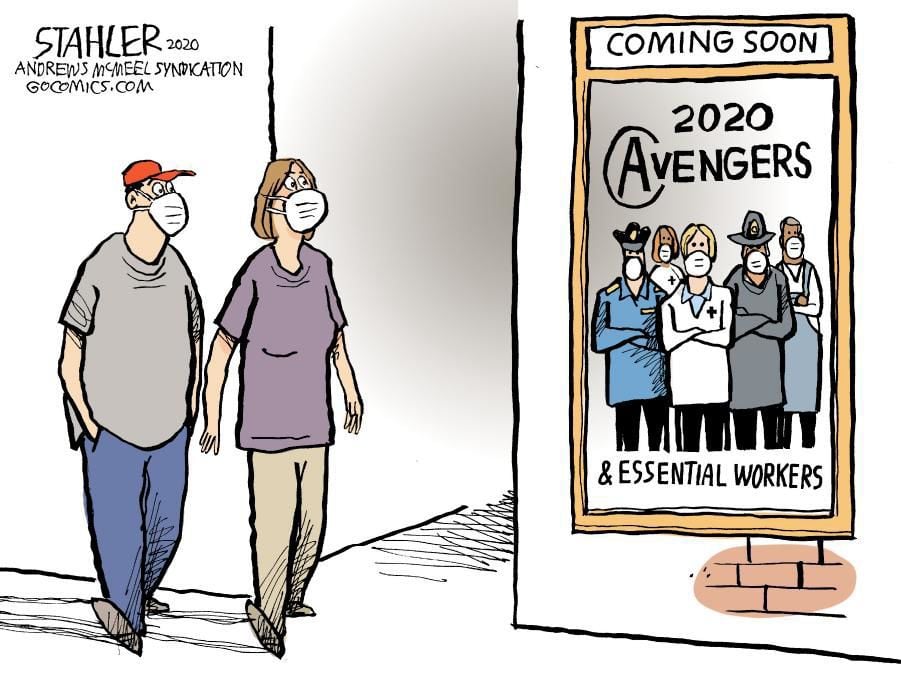
“To imply that emergency physicians would inflate the number of deaths from this pandemic to gain financially is offensive, especially as many are actually under unprecedented financial strain as they continue to bear the brunt of COVID-19,” ACEP wrote. “These baseless claims not only do a disservice to our health care heroes but promulgate the dangerous wave of misinformation which continues to hinder our nation’s efforts to get the pandemic under control and allow our nation to return to normalcy.”
THE LARGER TREND
The numbers of COVID-19 cases continue to bring grim news, especially in the U.S., which struggled early in the pandemic to secure testing capacity and necessary personal protective equipment for frontline healthcare workers.
As of Wednesday morning, the Johns Hopkins University coronavirus tracker showed more than 8.7 million confirmed cases of the virus in the U.S., with the death toll climbing to over 226,000. Both lead the world. Second on the list is India (7,990,322 cases, 120,010 deaths), while Brazil comes in third (5,439,641 cases, 157,946 deaths).






 HENRY KOTULA