I’m a nurse in a Covid-19 unit. My hospital’s leaders frighten me more than the virus.

I’m a nurse in a Covid-19 unit. My hospital’s leaders frighten me more than the virus

As a nurse, my hospital's leaders frighten me more than Covid-19 ...

I’ve been a nurse for almost 10 years, working mainly on a hospital’s cardiac floor.

One day I was assigned to a makeshift intensive care unit that had previously been an observation unit for highly stable patients waiting for test results. Many of the patients in this new Covid-19 unit were intubated, with ventilators breathing for them.

When I started the shift, a trained intensive care unit nurse was crying in the supply closet. She was overwhelmed and anxious, hadn’t worked on her familiar unit in weeks, and had been told that her next shift would be an overnight one — and she had no choice in the matter.

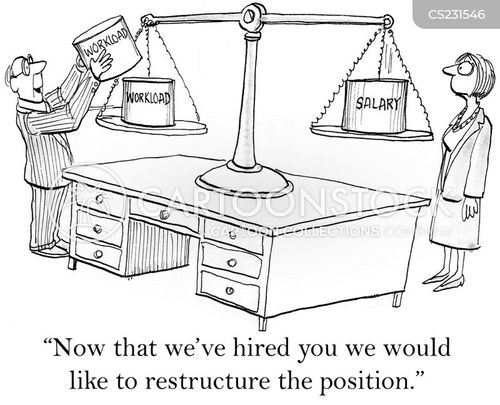
Many of us don’t have a choice. We are assigned to work in unfamiliar units, with patients who are outside our expertise, without any training. We’re lost.

Most shifts start with nurses crying. Most shifts end that way too.

“It’s out of our hands,” we hear from hospital administrators.

Nurses who typically work in outpatient clinics are being sent to inpatient floors and assigned to care for patients who are acutely ill. Many haven’t worked at the bedside in decades. The number of patients who have fallen in this unit has risen exponentially in the past two weeks due to lack of training of outpatient nurses.

I wonder if the patients know their nurses are overwhelmed, and that many of them are scared they’ll make a deadly mistake.

“Everyone is out of their comfort zone, just hang in there,” we’re told.

Doctors have been instructed not to enter patients’ rooms unless they must as a way to minimize their exposure to the virus that causes Covid-19 while nurses go from one room to the next, medicating, bathing, turning, and comforting their patients without changing their uncomfortable personal protective equipment, since supplies are limited. This work can take hours. It is not uncommon for nurses to go all day without drinking water or eating because that would mean removing our protective gear.

During one of my shifts, a doctor at my hospital posted several TikToks he made while sitting at the nurses’ station of a busy Covid-19 unit as nurses whispered words of encouragement to patients clinging to life supported by ventilators. Over our words and the hum of the ventilators, I wondered if our patients heard music coming from this doctor’s TikToks.

“We hear your concerns, but there’s nothing we can do,” doesn’t reassure or encourage us.

One day as I worked in the makeshift ICU, one of the hospital’s leaders went floor to floor making an important delivery. She approached our nursing station in her crisp professional attire and fresh disposition, and proudly delivered a supply of makeup-removing wipes. She told us to use the wipes to clean our faces before putting on our N95 masks so we could reuse the masks later, then moved on to the next nurses’ station without asking how our staff was doing or if we needed anything. I wonder if she had noticed the nurse crying in the supply closet.

“That’s above us, we don’t make those decisions,” is passing the buck at its worst.

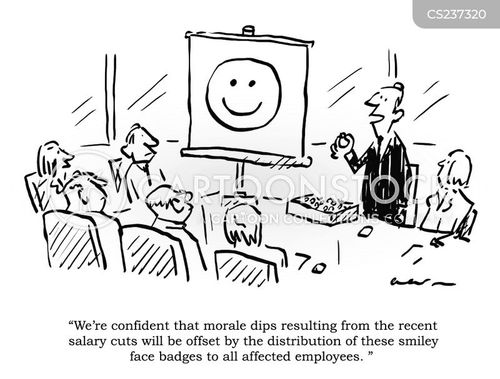
Excuses from hospital administrators seem to have punctuated every shift for the past six weeks. The praise and applause from hospital leadership only go so far.

I can read in my co-workers’ faces and hear from the stories they tell that the biggest danger we face is not Covid-19. It’s the hospital’s administration.

Leadership is failing us, even as we stand firm in not failing our patients. We care for your loved ones, Covid-19 or not, monitor their vital signs, give them medications, rub lotion on their backs, help them to the bathroom, and brush their hair. We FaceTime their families from our personal phones so they can see their loved ones fighting to live. This is important care that nurses are proud to provide.

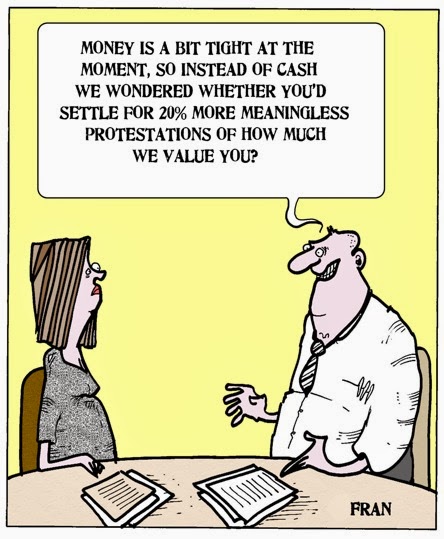
The narrative is simple. Nursing, and nurses, are not valued. It’s a shame, and maybe even a deadly shame, that hospital leaders don’t care about nurses like we care for our patients.



What is work sharing and how can it help the labor market?

https://www.brookings.edu/blog/up-front/2020/04/16/what-is-work-sharing-and-how-can-it-help-the-labor-market/?utm_campaign=Brookings%20Brief&utm_source=hs_email&utm_medium=email&utm_content=86505163

What is work sharing and how can it help the labor market?

When economic conditions worsen, as they did beginning in March 2020 because of the COVID-19 pandemic, employers often respond by laying off their employees. This can lead to very undesirable outcomes for society at large. Research shows that losing a job often causes decreased long-term earnings, health problems, and other adverse outcomes, the effects of which can last generations (Abraham and Houseman 2014). Layoffs create future costs for employers as well—once demand picks back up, firms will have to expend valuable resources on significant search, hiring, and training costs.

The U.S. unemployment insurance (UI) system can help. Its core function is to replace some of the earnings of workers who have lost their jobs, helping them to stay afloat during tough economic times. But the UI system can also support workers and employers as they reduce, rather than eliminate, employees’ work hours.

WHAT IS WORK SHARING?

A program called work sharing, or short-time compensation, encourages employers to temporarily reduce the hours of their employees rather than lay them off during an economic downturn. Work sharing allows employers to keep their skilled workforce and reestablish a full-time schedule when economic conditions improve. With this approach, employees continue to be paid for the hours they work, collecting pro-rated unemployment benefits that help cover the work hours they lose. For example, employers could reduce everyone’s hours by 20 percent and employees would qualify for 20 percent of the weekly unemployment benefit amount.

In a Hamilton Project proposal, economists Katharine Abraham and Susan Houseman described reforms that would facilitate the use of work sharing. The importance of these reforms for addressing the current economic downturn was discussed further in a recent webcast titled, “Unemployment Insurance during the COVID-19 Pandemic: Reducing the Impact of this Economic Downturn.”

WHAT IS THE RATIONALE FOR WORK SHARING? HOW MANY JOBS COULD IT SAVE?

Work sharing provides employers a way to respond to a decrease in demand by cutting back on hours rather than laying workers off. This approach maintains employer-employee connections, minimizing layoffs and supporting workers who have their hours reduced. Work sharing can be particularly helpful when the drop in demand is expected to be temporary, as many think likely for this pandemic-caused recession.

The value of preserving relationships between employers and employees is twofold. First, it can avoid huge spikes in permanent job losses that are financially ruinous for many families. Workers continue their employment, albeit with reduced hours, and avoid many of the damaging effects of losing a job (like loss of health insurance coverage). Second, both employers and workers will avoid costly search, hiring, and training once demand eventually picks back up.

Throughout the Great Recession, when only 17 states offered the option, use of work-sharing was very limited. Abraham and Houseman estimate that if work sharing had been available for the entire country during the Great Recession—and take-up rates had been similar to our European counterparts—work-sharing programs could have saved up to 1 million jobs, or 1 in 8 of the net jobs that were lost during the Great Recession.

HOW WIDESPREAD ARE WORK-SHARING PROGRAMS?

Today, 26 states, covering nearly 70 percent of the workforce, have operational work-sharing programs in place. But work sharing has been little used in the earliest days of this recession. As of the week ending in March 28, just 0.3 percent of the more than 8.2 million people claiming UI benefits received work-sharing benefits.

To expand coverage, Abraham and Houseman propose that Congress pass legislation that requires states to have a work-sharing program as a part of their UI system to participate in the federal–state UI system. Further, in order to encourage state take-up, they propose that the U.S. Department of Labor modify its funding formula to more accurately fund state administrative burdens associated with implementing and promoting work-sharing programs.

WHAT ELSE CAN BE DONE TO MAKE IT EASY FOR EMPLOYERS TO USE THE PROGRAM?

First, states could look for opportunities to expedite the process of starting up a work-sharing plan and paying benefits. Second, states could remove policies that tend to discourage the use of work sharing and push employers toward layoffs. For example, some states bar employers who have heavily used the UI system in the past from participating in work-sharing programs. Additionally, some states impose higher effective UI tax rates on employers who choose work-share programs than if they laid off their workers. Designed to prevent abuse of the UI system, these policies may discourage work sharing, especially during downturns. Abraham and Houseman recommend that Congress add a prohibition against the use of these policies to the existing criteria for state eligibility to participate in the federal–state UI system.

HOW CAN WORK-SHARING PROGRAMS BE FURTHER INCORPORATED INTO THE EXISTING UI SYSTEM?

Under current law, sharp increases in a state’s unemployment rate trigger extensions to the benefits available in that state; the federal government covers half the cost of those extensions. That same federal-state program could enhance the use of work sharing. Abraham and Houseman propose that the federal government cover half the cost of work-sharing programs when UI extended benefits are triggered in a state. As explained below, Congress has recently gone beyond this proposal, but only on a temporary basis.

HOW IS WORK SHARING ADDRESSED IN THE CORONAVIRUS AID, RELIEF, AND ECONOMIC SECURITY ACT (CARES ACT)?

The CARES Act, signed into law on March 25, 2020, encourages states and employers to use work-sharing programs. The federal government will reimburse 100 percent of the cost of short-time compensation benefits paid in states that have work-sharing programs in place. For those states that do not have a work-sharing program, the CARES act includes funds to pay for short-time benefits at a 50 percent federal coverage rate. Finally, the CARES Act allocates grant funding for states to promote and improve the implementation and administration of work-sharing programs.