


Cartoon – Who can Define Values? Anyone?


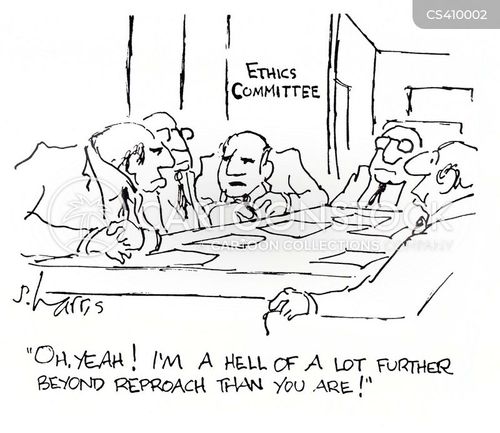


Banner Health has agreed to pay more than $18 million to settle whistleblower claims that the Phoenix-based health system admitted patients who could have been treated less expensively at outpatient facilities.
The settlement resolves a whistleblower case brought by a former Banner Health employee who claimed one dozen hospitals in Arizona and Colorado overcharged Medicare for brief, inpatient procedures that should have been billed on a less costly outpatient basis, the U.S. Attorney’s Office in Arizona said.
The settlement resolves allegations that Arizona’s largest health provider “inflated in reports to Medicare the number of hours for which patients received outpatient observation care during this time period,” according to a statement from the federal prosecutors.
The settlement involved Medicare billing at one dozen hospitals from November 2007 through December 2016.
The case was brought by former Banner Health employee Cecilia Guardiola under the federal False Claims Act, which allows individuals to bring lawsuits on behalf of the government and collect a portion of any settlement. Under terms of the settlement, Guardiola will be paid $3.3 million.
Banner Health said in a statement that the settlement does not include any findings of wrongdoing and allows the system to avoid the costs and disruption of ongoing litigation.
“Banner Health is fully committed to adhering to all legal and regulatory requirements and providing patients with the highest quality of care,” the statement read. “Although the rules that dictate when a hospital can accommodate a physician’s request to admit a Medicare patient are complex and evolving, our policy has always been to make those decisions in accordance with government guidelines.”
Guardiola, a registered nurse and a law school graduate, was hired by Banner Health in October 2012 as a director overseeing clinical documentation. She resigned three months later after she determined her efforts to bring “ethical compliance” would be ineffective, according to a statement issued by Kreindler & Associates, a law firm representing Guardiola.
During her brief stint at Banner, Guardiola evaluated Banner’s clinical documentation as well as short-stay inpatient claims.
She discovered that Banner hospitals billed an “inordinate and improper number of short-stay claims, particularly those for expensive cardiac procedures,” according to the statement.
In all, she discovered more than 650 examples of Banner billing Medicare for an inpatient claim even though the patient was admitted and discharged the same day, the statement said.
She also discovered that two hospitals, Banner Boswell and Banner Del Webb, identified some cardiac procedures as urgent rather than elective to prevent claims from being denied, the statement said.
https://khn.org/news/podcast-khns-what-the-health-its-nerd-week/

The Trump administration this week issued the rules governing next year’s Affordable Care Act insurance marketplaces, and they make some potentially large changes that could result in higher premiums and fewer benefits.
Meanwhile, states are going different ways in addressing the health insurance markets in their states in response to the federal activity. And House Speaker Paul Ryan announced his retirement — leaving an intellectual void among House Republicans when it comes to health care.
This week’s panelists for KHN’s “What the Health?” are:
Among the takeaways from this week’s podcast:

The New Jersey legislature yesterday approved two big bills designed to counteract some of President Trump’s changes to the Affordable Care Act and stabilize the state’s individual insurance market.
The bills: One would begin the process of seeking a federal waiver to establish a reinsurance program. The other would create an individual mandate in the state.
Why it matters: Some ACA allies have pinned an awful lot of hope on the states to counteract the administration’s policy moves. That’s only likely to happen in blue states, and even there, the ultimate effects will probably be limited. But if Murphy signs these bills, they would likely give other blue states some encouragement to proceed.
Go deeper: Freelance health care journalist/analyst Andrew Sprung has written a lot about how these measures could preempt the administration’s priorities.

Hospital executives have a tough balancing act regarding the transition to value-based payment models. While the industry is steadily moving toward this new framework, many providers and services still operate on the old fee-for-service model, which is becoming more and more obsolete. That means C-suite leadership has to make the switch to value a high priority for their organizations.
They’re under tremendous pressure these days. There’s been a significant market shift. Providers and their associated patient panels — a list of patients assigned to each care team in the practice — are shifting toward government business, and government business has a more pronounced focus on value-based care.
According to Jeff Smith, senior vice president of U.S. markets at Lumeris, the move to value has been accelerated by a shift in payer mix away from commercial and more toward Medicare, which yields lower margins. And the commercial rates providers have been receiving are on the downswing.
“Underlying their business model today, health systems have to profitably manage their fee-for-service business while making this transition to value,” Smith said. “It’s like having one foot on the dock and one in the canoe. They often don’t have the understanding or expertise to make that strategic shift and successfully move toward value. It’s a new frontier for many of these providers.”
What providers need, said Smith, is more robust alignment with their delivery system around the new model. It’s about having an engaged, aligned network that focuses not just on the patient in front of them, but on an entire population.
“It really is an enterprise-wide change management initiative. This the kind of transition that careers are built on,” Smith said. “Some of the things they need to avoid are embarking on this journey with a lack of, I would say, panel density, and aligned incentives with their physician network. It’s problematic if this is nothing more than a nuisance. It really has to be a strategic focus.”
An organization also has to have the right governance and leadership in place, he said. Even though something worked under the old model, it’s a mistake to assume that it will naturally evolve and adapt to the new. A successful transition requires significant practice transformation.
All that, and an organization still has to maintain a high standard of care. That’s where advanced analytics come in.
“It really requires an understanding of where the opportunities are,” Smith said, “and that’s driven by advanced analytics and practical insights, and where to apply their investments to get the maximum return. They also need to have a really strong plan in governance, and this really requires support from the C-suite. It has to start with the CEO.”
Because every hospital, health system and physician practice is different, a good place to begin is with a market assessment of provider and business opportunity, which can show how to align strategies around a blueprint for successful profitability. Alignment truly is a key component of success, as everyone needs to be on the same page, from the CEO down to the physicians delivering care.
And time is of the essence. Smith expects the journey to value to be near-complete within about three years.
“The transition has been remarkable to me,” he said. “The amount of change we’re seeing year over year is remarkable. It was primarily led by these government programs, but the private payers have really adopted a lot of these changes. There are significant changes in the payer community in general, and more to come.”

 HENRY KOTULA