


Wishing Hope for 2021
Summary
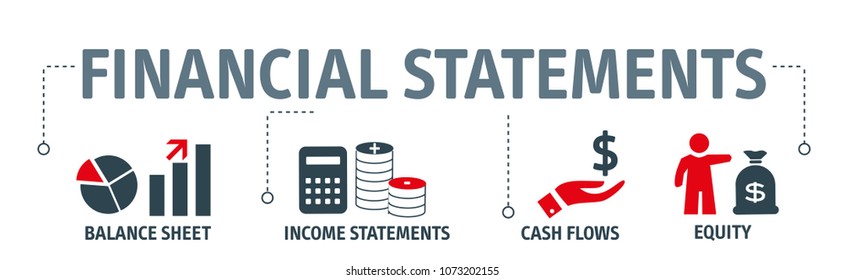
One of the most important uses of financial statements is to enable investors to make timely decisions about buying and selling stocks. In the simplest analysis, an investor makes money by buying shares cheap and selling when it becomes overpriced. Value investors rely on multiple, often complicated, methods to make trading decisions. One way relies on income statement (profits) and balance sheets (assets) to identify cheap or expensive stocks. But current accounting rules require that funds companies spend on innovation, product development, information technology and other investments in the future should not be reported as assets and must be treated as costs in calculation of profits. The current system is causing confusion among investors and may even lead to misallocation of investment capital. It’s time to make concrete revisions to what must be reported in financial reports.
Article
Recently, a large value fund managing about $10 billion dollars in assets decided to close its operation. It was just one of numerous value funds, managing trillions of dollars, that have seen their worst performance in the last 200 years. Those aren’t just any dollars either — they include pension and retirement funds and lifetime savings. So why are these value funds closing en masse? To do our analysis of this question, we reviewed our research and revisited our earlier HBR article, “Why Financial Statements Don’t Work for Digital Companies,” to explain these new developments. But more importantly, we believe these closures make reforming financial reporting even more urgent. Without such reform, investors will continue to create their own, half-baked solutions, which harm their cause more than help it.
One of the most important uses of financial statements is to enable investors to make timely decisions about buying and selling stocks. In the simplest analysis, an investor makes money by buying shares cheap and selling when it becomes overpriced. Buying and selling a company’s stock also implies that money flows towards or away from it. For example, a rising stock price may encourage Tesla’s Elon Musk to spend more on electric vehicles, while declining Exxon Mobil stock implies that capital gets pulled out of fossil fuels.
Value investors rely on multiple, often complicated, methods to make trading decisions. One way relies on income statement (profits) and balance sheets (assets) to identify cheap or expensive stocks. For example, a stock with low stock prices but large assets and profits could be a good stock to buy. This has been the fundamental tenet of value investing. However, as our previous HBR article and Professor Baruch Lev’s 2016 book The End of Accounting describe, balance sheet and income statement are becoming largely useless for this kind of decision making.
If you consider the mechanics of the modern organizations whose stock prices increased most dramatically in the 21st century, they spend large amounts on innovation, product development, process improvement, information technology, organizational strategy, hiring and training personnel, customer acquisition, brand development, and on wringing efficiencies from their peer and supplier networks. The current accounting rules, however, require that these amounts should not be reported as assets and also must be treated as costs in calculation of profits. The more a modern company invests in building its future, the lower are its reported profits. So, a company that builds unique competencies, based on knowledge and ideas, appears as extremely expensive stock based on the traditional value investing philosophy, instead of as a promising investment opportunity.
Many value funds, especially those closing now, mechanically relied on accounting numbers and missed out on investment opportunities such as Microsoft, Google (Alphabet), and Facebook, because those companies have little land, buildings, inventory, and warehouses, that are included in reported assets – instead they have knowledge capital. In the last decade, those investors not only missed out on great opportunities but could also ended up buying wrong stocks.
This factor has become particularly pronounced in the current year, best illustrated by the so-called “FAANG” stocks, which stands for Facebook, Amazon, Apple, Netflix, and Google. Their market capitalizations at this time are $835 billion, $1,661 billion, $2,018 billion, $227 billion, and $1,119 billion. In addition, Microsoft is worth $1,691 billion. These numbers are so large that their combined value exceeds GDPs of almost 80 countries in the world. An investor who bought those stocks would have seen 40%-70% returns just this year. In contrast, a value fund that relied only on the accounting numbers and took negative positions as a result would have suffered a dramatic loss. For example, Vanguard Value Fund, a highly respected 40-year old fund, gave negative returns this year, despite the overall stock market going up. Individual investors then start abandoning value funds, causing their closures.
So is there a way to bring promising stocks into value portfolios but also helps investors identify young companies that will become a future Microsoft or Facebook? One solution is to identify companies that spend large amounts on building knowledge-based or a unique idea-based competency. To bring them into value portfolios, fund managers would have to recreate financial statements. The best finance brains are now working to recalculate asset values and profits, and recreating measures used in investment analysis, such as market-to-book ratio, high-minus-low factors, internal rates of return, and Tobin’Q. Some of these efforts include our own papers. While these words may sound overly technical to those not steeped in finance, they form the basis for investments of trillions of dollars in value portfolios.
So, what is the problem with these recreated values? While they seem like an improvement compared to real values, they can never be the same as real values and could even suffer from fundamental mistakes. For example, these methods typically assume that all firms invest a uniform 30% of their operating expenses in knowledge assets. This one-size-fits all assumption goes contrary to a well established idea that investments differ based on a company’s lifecycle and industry. A biotechnology or electronics firm spends more on R&D than a restaurant or paper mill. Similarly, a new business spends more on building brands, customer relationships, and innovation than a company winding down its obsolete business. So, in recreating those values, investors are making wild, often wrong, guesses on how much firms spent on intangible investments.
The fundamental question then becomes, why shouldn’t American companies themselves provide the amount of R&D investments, as are required and allowed for foreign companies, instead of leaving investors to make wild guesses and recreate numbers. Even if companies are not allowed to report them as assets, should they not be encouraged to disclose what they spend on innovation, human resources, and organizational competencies. Wouldn’t providing that information help investors, who are the owners of the corporations, to take rational decisions?
In sum, we believe that the developments this year, particularly, the demise of value funds, show the urgency for a thorough overhaul in financial reporting. The current system is causing confusion among investors and may even lead to misallocation of investment capital. It’s time to make concrete revisions to what must be reported in financial reports. First and foremost, firms must provide information on revenue and its drivers. Second, a detailed statement on outlays, presented in three broad categories. The first category should describe the amount spent on supporting current operations. (For example, Twitter provides “cost per ad engagement.”) The second category should describe the investments on future-oriented projects, such as developing a new electric car or a new mobile phone. In the third category, the company must itemize its so-called one-time, special, or extraordinary items. The purpose of financial reports should once again become enabling investors to take good decisions, instead of causing confusion and leaving them in the dark.


The challenge to Jefferson Health’s bid for Albert Einstein was the first action to block a provider deal in years for the FTC. Now, it’s hit a hurdle in the courts, though the agency could still appeal after this dismissal.
“The Court’s ruling is disappointing, and we our considering our options,” an FTC spokesperson said.
FTC has argued that both Jefferson and Einstein compete in acute care and rehab services and vie for inclusion in insurers’ networks.
Pappert’s ruling Monday, and the examples he used, essentially argued that given the number of competitors in the region, insurers could walk away from potential price increases the merged entity may impose by opting to redirect their members to other facilities.
Because there are so many systems, “no insurer can credibly assert that there would be ‘no network’ without a combined Jefferson and Einstein — something the insurers could say when Hershey and Pinnacle, the two largest Harrisburg area hospitals … attempted to merge,” Pappert wrote. He frequently cited the Hershey-Pinnacle case, which also was denied a preliminary injunction in district court but went on to win one in a federal appeals court.
Pappert also noted that no employers testified that they would have difficulty marketing a health plan to employees that excluded Jefferson and Einstein. In fact, the one employer that did weigh in, a school district, said it would be fine without the two.
The court also takes issue with whether the FTC properly defined the relevant markets in the lawsuit, an important hurdle in any case seeking to block a merger.
Pappert, a President Barack Obama appointee, was skeptical of the region’s largest insurer’s opposition to the merger during testimony. Particularly when the second-largest insurer had no concerns with the merger and does not believe it will pay higher rates.
Pappert said Independence Blue Cross, the largest carrier, has a “clear motive, other than antitrust concerns, to oppose this merger.” Together, Jefferson and Einstein own a portion of Health Partners Plans, a Medicaid and Medicare insurance product. HPP operates the second-largest Medicaid plan in Philadelphia, behind IBC’s.
A merger of Jefferson and Einstein would give the combined entity a 50% stake in HPP, though Jefferson is seeking to buyout the other partner, court dockets claim.
IBC’s CEO, said of the potential insurer competition: “It remains to be seen how we are going to be able to collaborate with anyone who is in direct competition with us as an insurer.”




 HENRY KOTULA