Cigna teams with CVS Health in collaboration to rival urgent care clinics

http://www.healthcarefinancenews.com/news/cigna-teams-cvs-health-collaboration-rival-urgent-care-clinics?mkt_tok=eyJpIjoiTXpVelkyRXhZMkpqTmpKaSIsInQiOiJFVjFscVRVVDdXZmZqek02STNMSVNjelwvREEwMmZmckZrWmNyZjNrQnVcL0szTGZuNXA4ZGdrOGRhT1V5bnREanBwWitPbTNkQllLZW5BTmd4VDk5TDg0ak1NNStnTllqdEllQlNpQmRZbDUwcm5JdVNaZ1lJcmpVVXJNYWxcL0JcL28ifQ%3D%3D

Roughly 45 percent of urgent care facility visits by Cigna members could be conducted at retail healthcare clinics, insurer says.

Cigna expects to save money on urgent care and emergency room visits through a new collaboration with CVS Health called Cigna Health Works..

In June, the insurer and CVS Health announced the initiative for Cigna’s self-funded employer-sponsored health plans.

Retail pharmacies are competing against traditional providers by offering convenient walk-in clinics.

Cigna Health Works offers patients an alternative to urgent care and emergency room visits, the insurer said. Roughy 45 percent of urgent care facility visits by its members could be conducted at retail clinics, potentially reducing healthcare costs by 81 percent per visit, Cigna said.

The collaboration aligns Cigna-administered health benefits with CVS Pharmacyand CVS MinuteClinic retail healthcare services.

“This new model is based on how the customer wants to consume health care — it’s about creating value and a new way for healthcare consumers to get more from their health plan, by ensuring that we are there for them at the places they prefer to go for convenient care,” said Michele Paige, vice president and general manager of Cigna Onsite Health.

“As the popularity of retail health care continues to rise, Cigna Health Works is designed to help improve healthcare quality and address potential gaps in care. In some markets, up to one-third of Cigna customers have used some form of retail health care within a year’s time.”

Cigna Health Works can help patients who do not have a primary care doctor to find one by providing a list of Cigna-contract physicians from the health plan’s provider network.

CVS MinuteClinic nurse practitioners can offer pre-diabetic health screening, acute episodic care at discounted rates, as well as low cost A1C blood sugar testing, with the drugs available at CVS.

The nurse practitioner can ensure that an electronic record of each visit to CVS MinuteClinic is sent to the PCP‘s office.

“This new level of collaboration with Cigna is a part of the growing trend toward consumer-directed care,” said Helena Foulkes, president of CVS Pharmacy. CVS Health, a pharmacy benefit manager, has nearly 9,700 retail locations and more than 1,100 walk-in medical clinics nationwide.

It is among the country’s top pharmacies that also include Walgreens, Walmart, Rite Aid and Kroger.

In November, CVS Health partnered with OptumRx, UnitedHealth’s pharmacy benefit manager business. OptumRx consumers are able to fill 90-day prescriptions at CVS for prices that compete with  home delivery copays.

Walgreens formed a similar deal with OptumRx.

Cigna Health Works beneficiaries get personalized pharmacy support through Health Tag Messages on the prescription bag to advise patients of needed health actions by the pharmacist or clinician, and provide information on available Cigna health and wellness coaching services included in their Cigna plan at no additional cost.

They get contracted discounts at CVS MinuteClinic for select preventive and acute care, including biometric screenings for blood pressure, cholesterol and blood sugar as well as diagnosis and treatment for minor illnesses such as bronchitis, ear infections and strep throat.

Consumers get an exclusive 20 percent discount on CVS health brand over-the-counter products through the CVS ExtraCare Health card. This program can be coupled with Cigna 90 Now, which offers 90-day refills for maintenance prescriptions to help improve patient adherence to their medication regimen.

The personalized health and wellness program is being offered in select markets for U.S. Cigna-administered employer-sponsored medical plans.

Molina to cut 1,400 positions to improve financial performance

http://www.healthcarefinancenews.com/news/molina-cut-1400-positions-improve-financial-performance?mkt_tok=eyJpIjoiTXpVelkyRXhZMkpqTmpKaSIsInQiOiJFVjFscVRVVDdXZmZqek02STNMSVNjelwvREEwMmZmckZrWmNyZjNrQnVcL0szTGZuNXA4ZGdrOGRhT1V5bnREanBwWitPbTNkQllLZW5BTmd4VDk5TDg0ak1NNStnTllqdEllQlNpQmRZbDUwcm5JdVNaZ1lJcmpVVXJNYWxcL0JcL28ifQ%3D%3D

Image result for molina healthcare

The cuts follow removal of CEO and CFO due to financial losses blamed on Affordable Care Act market.

Molina Healthcare, which fired its CEO and CFO in May due to the poor financial performance of the company, will eliminate about 1,400 jobs over the next few months, according to an internal memo obtained by Reuters.

The cuts are due to financial losses blamed on Molina’s individual business in the Affordable Care Act market, in which it has been a major player.

Molina will reduce its workforce by the elimination of 10 percent of its 6,400 corporate positions and about 10 percent of 7,700 health plan jobs, according to Reuters. It will not affect Molina’s Pathways behavioral health business, which employs about 5,500 people.

Interim CEO and CFO Joe White sent the memo to employees saying the cuts aim to contribute to savings by 2018 in what he called “Project Nickel,” to do more with less.

In March, Molina was touted as an ACA success story.

Former CEO J. Mario Molina, MD, was an outspoken opponent of the Republican plan to repeal and replace the ACA. His brother, John C. Molina, who served as CFO. was also let go in a decision by the board to turn around the company’s financial position.

Last week Molina said it was concerned about Republicans repealing the ACA without having a replacement plan in place, the roll back of Medicaid expansion and the lack of a guarantee of federal cost-sharing reduction payments, which allows insurers to offer lower-income consumers lower deductibles and out-of-pocket expenses.

Molina also argued for the continuation of the individual mandate to get insurance.

“The bedrock of any coverage system is a requirement that people must obtain health insurance,” Molina said. “The lack of such a requirement will be detrimental to the individual market risk pool and will result in adverse selection, which would significantly increase costs.”

In June, Molina said it would file rates for 2018 to remain in the exchange market in Florida.

The California Department of Insurance is releasing on August 1 the insurers which have filed rates for the ACA market in 2018.

EHR installs carry huge financial risks, Moody’s says

http://www.healthcarefinancenews.com/news/ehr-installs-carry-huge-financial-risks-moodys-says?mkt_tok=eyJpIjoiTXpVelkyRXhZMkpqTmpKaSIsInQiOiJFVjFscVRVVDdXZmZqek02STNMSVNjelwvREEwMmZmckZrWmNyZjNrQnVcL0szTGZuNXA4ZGdrOGRhT1V5bnREanBwWitPbTNkQllLZW5BTmd4VDk5TDg0ak1NNStnTllqdEllQlNpQmRZbDUwcm5JdVNaZ1lJcmpVVXJNYWxcL0JcL28ifQ%3D%3D

Hospitals run the risk of incurring operating losses, lower patient volumes and receivables write-offs if there are problems, Moody’s says.

Rolling out new electronic health record systems puts hospitals at a significant risk of financial losses, according to a new report by credit rating firm Moody’s.

“Hospitals run the risk of incurring operating losses, lower patient volumes, and receivables write-offs if there are problems with adoption of a new EMR system,” Moody’s said in its Monday report.

Add to that the operational and financial disruptions that typically accompany complex IT projects, and hospitals could find themselves walking an even thinner financial margin than they are used to, Moody’s said.

“In a sample of hospitals that have recently invested in major EMR and revenue cycle system conversions, increased expenses and slower patient volumes contributed to a median 10.1 percent decline in absolute operating cash flow and 6.1 percent reduction in days of cash on hand in the install year,” Moody’s found.

The good news is that many hospitals returned to pre-install levels within a year, owing to strong risk management.

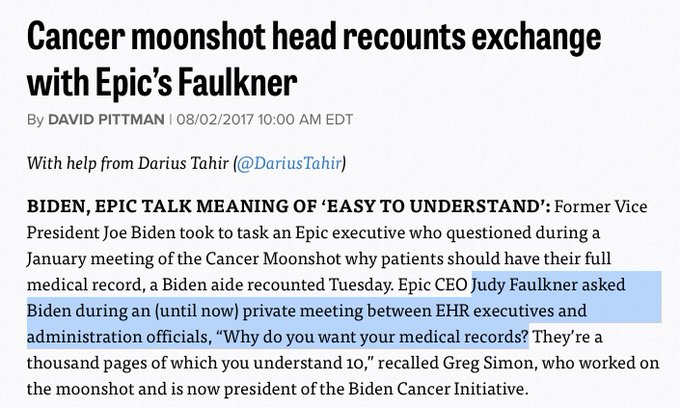
When Epic Systems founder and CEO Judy Faulkner talked with Healthcare IT News at HIMSS17 last February, she said Epic customers had done well financially. True, Epic EHR installations cost millions of dollars. However, from 2004 to 2015, she said Moody’s and Standard & Poor’s statistics showed that Epic customers reaped profitability unsurpassed by clients who implemented her competitors’ EHRs.

Despite the risks, hospitals will continue to invest in EHRs, Moody’s said. Hospital executives want to improve patient safety, clinical quality and provide decision support. IT will also continue to be a selling point in physician recruitment and retention, as new data reporting will be required by Medicare for professional reimbursement.

While hospitals may be exposed to a number of risks during massive IT rollouts, the threats that come with cyber attacks make them even more vulnerable, according to Moody’s.

As example, Moody’s points to Hollywood Presbyterian Medical Center in Hollywood, California, which acknowledged paying ransom after an attack in 2016.

Moody’s expects cybersecurity to become an even stronger focus than it already is.

“As IT investments represent a growing portion of hospital budgets, an increasing amount will be allotted to guarding confidential patient data, which make hospitals a prime target for cyberattacks and ransomware events,” according to Moody’s. “We expect cybersecurity to be a primary focus of hospital management teams and their boards, with annual capital and operating budgets allotting appropriate levels of expenditures to protect patient data and testing vulnerabilities.”

GOP lawmakers, Trump at odds over insurance payments

GOP lawmakers, Trump at odds over insurance payments

Image result for GOP lawmakers, Trump at odds over insurance payments

Lawmakers are facing off with President Trump over key ObamaCare payments that are in jeopardy after the collapse of efforts to repeal the healthcare law.

Trump is threatening to cancel the payments, known as cost-sharing reductions (CSRs), as part of his effort to make ObamaCare “implode.”

But he is running into opposition from key Republicans, including Senate Finance Committee Chairman Orrin Hatch (Utah) and House Ways and Means Committee Chairman Kevin Brady (Texas), who say they want to find a way to guarantee the payments, which reimburse insurers for giving discounted deductibles to low-income ObamaCare enrollees.

If the payments were cancelled, insurers have warned they would either have to spike premiums to make up for the lost money, or drop out of the market altogether, limiting people’s options for coverage.

Trump could announce that he is cancelling the payments as early as Tuesday.

Rep. Chris Collins (R-N.Y.), one of Trump’s top supporters on Capitol Hill, told CNN on Monday that he had encouraged Trump to announce the cancellation on Tuesday.

Trump has long warned that he could cancel the payments, though it is unclear if he will follow through.

In addition to a premium spike that experts estimate could reach 20 percent, Democrats warn that there would be a political fallout as well if people blame Trump for the chaos.

A Kaiser Family Foundation poll in May found that 63 percent of the public thinks Trump and congressional Republicans are responsible for problems with the Affordable Care Act going forward.

Senate Democratic Leader Chuck Schumer (N.Y.) on Monday said there would be a “Trump tax” on people’s premiums if he cancelled the payments.

Trump seemed to refer to cancelling CSRs on Saturday when he tweeted: “If a new HealthCare Bill is not approved quickly, BAILOUTS for Insurance Companies and BAILOUTS for Members of Congress will end very soon!”

Trump has alternated between saying he will simply cause ObamaCare to implode and calling for Congress to repeal the law.

In another tweet on Saturday, Trump called for Congress not to give up on repeal and to vote on it before acting on any other bill.

Many congressional Republicans have called for continuing the CSR payments.

In a statement Friday, Brady warned that “simply letting Obamacare collapse” would cause “even more pain” for people in his district facing high premiums and fewer choices.

“For those trapped in Obamacare, we must continue to look for immediate solutions to deliver relief, stop premiums from soaring even higher, and help people get the health care that’s right for them,” Brady said.

Hatch told Reuters in an interview Monday that he did not want to provide funding for the CSRs, but “I think we’re going to have to do that.”

Sen. Lamar Alexander (R-Tenn.), chairman of the Senate health committee, has also called for Congress to act on the payments. His committee will be holding hearings on improving the stability of the ObamaCare markets in the near future, which could lead to bipartisan action.

“I guess I’m hopeful that the administration, the president will keep making them and if he doesn’t then I guess we’ll have to figure out from a congressional standpoint what we do,” Sen. John Thune (R-S.D.), the No. 3 Senate Republican, said on Monday.

Sen. John Cornyn (R-Texas), the No. 2 Republican, noted that Trump would have to sign legislation guaranteeing the payments, making it a “challenge.” He also said that the prospect of action by Congress is a “real live issue.”

A House GOP aide said Monday that Republicans are still looking at different legislative vehicles for temporarily guaranteeing the CSR payments.

Democrats are pushing for Congress to guarantee the payments soon, to reduce uncertainty for insurers ahead of an Aug. 16 deadline for filing their premium rates for next year.

In more momentum for congressional action, a bipartisan group of more than 40 House lawmakers on Monday unveiled a proposal to fix problems with ObamaCare, including guaranteeing funding for the CSRs, which would take the issue out of Trump’s hands.

“Cutting off those payments further destabilizes the individual market and these are real people,” Rep. Tom Reed (R-N.Y.), one of the leaders of the bipartisan effort in the House, told The Hill on Monday.

Reed said that while he still supports repeal of the health law, Republicans should try a different, bipartisan, direction rather than “engage in insanity by doing the same thing over and over again.”

Still, there are other Republicans who are still pressing to repeal and replace ObamaCare.

Sens. Lindsey Graham (R-S.C.) and Bill Cassidy (R-La.) have both attended meetings at the White House in recent days focused on trying to revive such legislation.

The two senators have written a measure that would convert current ObamaCare spending into a block grant given to states, which is aimed at giving states flexibility. Democrats warn the block grants would be significantly less than current spending levels, leading to cuts.

The proposal faces a steep path to passage, especially given that McConnell indicated he is moving on from repeal efforts for now.

Reed said that he had kept House GOP leaders apprised of the bipartisan group’s work.

“I hope so,” Reed said when asked if leadership is open to bipartisan action on healthcare. “The other path is not working.”

Senate Republicans brush off Trump’s healthcare demands

Senate Republicans brush off Trump’s healthcare demands

Image result for Senate Republicans brush off Trump's healthcare demands

Senate Republicans appear poised to ignore President Trump’s demands that they immediately resurrect ObamaCare repeal and abolish the legislative filibuster.

Trump has waged a public pressure campaign against GOP senators since they failed to pass even a “skinny” bill repealing ObamaCare last week.

Unless Republicans are “total quitters,” Trump tweeted, they will revive their years-long effort to repeal and replace ObamaCare. While they’re at it, Trump wrote, Republicans should get rid of the 60-vote procedural hurdle for legislation, saying they “look like fools and are just wasting time.”

But Trump’s demands might fall on deaf ears.

Sen. John Cornyn (R-Texas) warned reporters Monday not to “leap to conclusions” that Republicans won’t be able to pass a healthcare bill, but appeared to hint that a second vote isn’t imminent.

“What we do know is next is nominations and hopefully Sen. [Charles] Schumer will agree to break the logjam … and that would be a good use of our next two weeks,” the No. 2 Senate Republican said.

Sen. Roy Blunt (R-Mo.), another member of Senate GOP leadership, said Republicans could circle back to healthcare when they reach a consensus. Until then, “it’s time to move on” and put “wins on the board,” he said.

“Obviously we didn’t give up and we didn’t quit and we gave it our best shot, and we can come back to this at a later time,” Blunt said, asked about Trump’s tweets.

Trump targeted GOP leadership by name in his tweetstorm, saying “Mitch M, go to 51 Votes NOW and WIN. IT’S TIME!”

Senate Majority Leader Mitch McConnell (R-Ky.) regularly declines to weigh in on Trump’s tweets, except to say he wishes the president would tweet less.

But he’s shot down previous calls from Trump to end the legislative filibuster.

“That will not happen,” he told reporters after a similar request in May.

Asked if that was still McConnell’s position, a spokesman for the Kentucky Republican said that if Senate Republicans change their mind on the rules, they’d make an announcement.

Changing the rules might not make it easier to pass healthcare — which only needed a simple majority — but it would allow Republicans to leapfrog Democrats on other legislative issues like immigration, funding the government and raising the debt ceiling.

But many Republicans have shown little interest in getting rid of the 60-vote threshold. Many Republican senators fear ending the filibuster would have disastrous repercussions.

Sen. Jeff Flake (R-Ariz.), who is up for reelection in 2018 and has been a target of Trump’s ire, predicted Senate Republicans are unlikely to change the rules.

“I don’t want to lurch back and forth every couple of years from one extreme to the other,” he told CBS News on Monday. “Those rules are there for a reason. They’re good. … They invite us to work across the aisle.”

Senators in both parties have warned that nixing the filibuster would essentially turn their chamber into the House and backfire on Republicans in the minority, when they would no longer have the power to block Democratic legislation.

After Republicans went “nuclear” to ensure Supreme Court nominations could be approved with a simple majority, 61 senators sent a letter to McConnell and Schumer in support of preserving the 60-vote legislative filibuster.

Meanwhile, GOP leadership has also given no indication that it wants to spend the spend first two weeks of August relitigating the healthcare vote despite efforts by the White House to inject fresh urgency.

During an emotional speech after the failed healthcare vote, McConnell told his caucus, most of whom were still in their seats on the Senate floor, “that it is time to move on.”

When he opened up the Senate late Monday afternoon, the message-disciplined GOP leader made no mention of the healthcare fight.

Instead, McConnell talked of working on a Trump judicial nominee and teed up consideration for a National Labor Relations Board member. Those nominations, if senators drag out debate time, could easily eat up the Senate’s week.

Sen. Orrin Hatch (R-Utah), the second highest-ranking Senate official, also broke with Trump on Monday, telling Reuters “there’s just too much animosity and we’re too divided on healthcare.”

Senate Republicans pointed to a backlog of nominations when they decided to delay their summer recess by two weeks. They also want to approve Christopher Wray’s nomination to be the FBI director before leaving town.

But even as senators shift their attention to nominees, the White House is playing hardball, unwilling to let ObamaCare repeal drop.

Trump is warning GOP senators that the “world is watching.” Mick Mulvaney, the president’s budget chief, said over the weekend that the Senate shouldn’t move on to other issues until they pass a healthcare bill.

Asked about Mulvaney’s remarks, Cornyn advised the former House member to focus on his own job.

“I don’t think he’s got much experience in the Senate, as I recall,” he said.

GOP leadership doesn’t appear to have the votes to take up a healthcare bill for the time being.

With Sen. John McCain (R-Ariz.) in Arizona for cancer treatments until September, McConnell can only afford to lose one GOP senator and still be able to take up the House-passed healthcare bill.

“Everything’s harder when you have people missing, and certainly that would have an effect,” Cornyn said when asked about McCain’s absence.

To move forward on a bill, leadership would have to flip GOP Sen. Lisa Murkowski (Alaska) or Susan Collins (Maine), which seems unlikely.

Both voted against taking up the healthcare bill and have signaled they won’t be strong-armed by the administration or leadership. They also were celebrated back in their home states over the weekend for opposing the “skinny repeal.”

Collins added on Sunday that Trump’s threat to cut off ObamaCare’s cost-sharing reduction payments wouldn’t impact her vote.

Even as Trump publicly pressures GOP senators, the White House is also playing host to a rotating door of lawmakers. Top conservatives, including GOP Sen. Ted Cruz (Texas), are predicting colleagues will come back to the negotiating table.

“No party can remain in power by lying to the American people, and I hope and pray that our party doesn’t try to do that,” Cruz told reporters after the failed healthcare vote.

Sens. Lindsey Graham (R-S.C.), Bill Cassidy (R-La.) and Dean Heller (R-Nev.) are now pushing a proposal that would shift most of the decision-making power on healthcare back to state governments.

Trump met with Graham on Friday, while Cassidy went to the White House on Monday to meet with Tom Price, Trump’s healthcare chief, and several governors.

It’s unclear whether their proposal could win over conservatives, and it doesn’t yet have a Congressional Budget Office (CBO) score, which means it would need 60 votes to pass.

“If I had a vote on my bill right now I would get in the high 40s,” Graham told reporters late last week, adding wanted more time to get a CBO score that could help him make his case.

Sen. Ron Johnson (R-Wis.) on Monday said that they were continuing to have talks with the White House and governors on healthcare.

“We’re moving forward. Maybe set this aside while we do tax reform,” he said, “but we have to continue working on his healthcare system because ObamaCare is a mess.”

Florida health administrator charged in $1B fraud case

http://www.fiercehealthcare.com/finance/florida-health-administrator-charged-1b-fraud-case?utm_medium=nl&utm_source=internal&mrkid=959610&mkt_tok=eyJpIjoiTkdWbE16bGlOMlJrWWpKaSIsInQiOiJWYVwvZWxBWjZGWEREN3BuSHBkNGZHN3ZqUVJNcWVzTVEwRDk5TWV6OVBkQ1RoZGhuVmlRbXFWMmpVMFgyb1NhbDNDeEhtYUVaaEdJVXBZXC9MWEpqUlZcLzR6WU9kQkowUk5OS1hcL1BcL21oSnphRXMrOFwvOHRhekVyQ2dlbktSc2pLdiJ9

Dollars

Bribes paid to a state health administrator are central to one of the biggest healthcare fraud cases to date, according to federal authorities.

The Department of Justice has charged Bertha Blanco, a former employee at Florida’s Agency for Health Care Administration (AHCA) with bribery in connection with a $1 billion Miami fraud case. Federal investigators said Blanco received bribes from Philip Esformes, the CEO of a Miami chain of skilled nursing facilities and assisted-living facilities, and his associates.

Blanco received cash bribes from Medicare and Medicaid providers in exchange for confidential AHCA reports, including patient complaints and unannounced AHCA inspection schedules that were then used to make false Medicare and Medicaid claims, according to DOJ. Blanco did not receive payouts directly from Esformes but through a series of intermediaries, the Miami Herald reports.

Esformes, who made FierceHealthcare’s list of notorious healthcare executives last year, has been charged with fraud and bribery in the case. He has been behind bars in federal prison since July 2016 awaiting a trial set for March 2018.

Assistant Attorney General Leslie R. Caldwell called the scheme “ruthlessly efficient,” with conspirators using a network of corrupt providers to shuffle patients between various healthcare facilities while exchanging kickbacks disguised in various sham agreements, as FierceHealthcare has previously reported.

Blanco’s defense attorney Robyn Blake told the Herald that she is reviewing the DOJ’s evidence before deciding to pursue a full trial or take a plea deal. Blanco was arrested earlier this month and was released on $250,000 bond; she will be arraigned on Sept. 1.

Esformes’ attorneys maintain his innocence, according to the Herald. Two of the Esformes’ alleged co-conspirators have pleaded guilty to Medicare fraud charges, and Michael Pasano, Esformes’ lead attorney, said the pair worked independently without Esformes’  involvement.

Another fraud case: Vanderbilt Hospital settles overbilling suit

In other fraud news, Vanderbilt University Medical Center has paid out $6.5 million to settle a federal lawsuit that alleged the hospital overbilled Medicare and Medicaid, the Associated Press reports.

The suit was brought in 2013 by whistleblowers who claimed the hospital overbilled federal healthcare programs for more than a decade. Vanderbilt’s counsel, Michael Regier, said that the settlement aimed to avoid further costs and distractions related to the suit, according to the article, and that the hospital still disputes the claims in the lawsuit.

The hospital and the feds found no evidence of wrongdoing on Vanderbilt’s part, Regier said.

Healthcare executives call for bipartisan health reform

http://www.fiercehealthcare.com/healthcare/healthcare-execs-call-for-bipartisan-health-reform?mkt_tok=eyJpIjoiTkdWbE16bGlOMlJrWWpKaSIsInQiOiJWYVwvZWxBWjZGWEREN3BuSHBkNGZHN3ZqUVJNcWVzTVEwRDk5TWV6OVBkQ1RoZGhuVmlRbXFWMmpVMFgyb1NhbDNDeEhtYUVaaEdJVXBZXC9MWEpqUlZcLzR6WU9kQkowUk5OS1hcL1BcL21oSnphRXMrOFwvOHRhekVyQ2dlbktSc2pLdiJ9&mrkid=959610&utm_medium=nl&utm_source=internal

Affordable Care Act highlighted

Despite the Senate’s failure to pass any of several measures to repeal and replace the Affordable Care Act last week, healthcare executives are watching Washington closely to see what’s next—and what role they can play in future debates.

Michael Dowling, the CEO of Northwell Health, which includes providers and a health plan, said in an interview with National Public Radio that the Trump administration still has many tools at its disposal to hinder key parts of the healthcare law.

“One thing that has to be done is make sure that they don’t sabotage what currently exists, even though legislation wasn’t passed,” Dowling said. “That would be an unbelievable thing for the administration to do. It would be, I think, pretty ridiculous.”

Instead, he believes that lawmakers should come together and look to fix certain elements of the ACA, such as adjusting the individual mandate to better encourage younger, healthier people to enroll in individual market plans and taking a look at what Dowling called “unnecessary micro-regulations” in the healthcare law.

Sister Carol Keehan, CEO of Catholic Health Association, echoed Dowling’s sentiment, saying in an interview with America Magazine that her organization is relieved that the ACA remains intact. The GOP’s efforts to repeal the law were “poorly thought-out,” she said, and were done with limited input from the healthcare industry and the public. Now that several variations of a repeal have failed, there’s room for a bipartisan solution.

“The American genius,” she told the publication, “can make [the ACA] so much better. We need to marshall that genius, to use everybody’s input and gifts to make this bill so much more of service to the American people and the American economy.”

A number of healthcare CEOs opposed the Senate’s original bill, the Better Care Reconciliation Act, prior to last week’s series of votes, expressing concern about significant cuts to Medicaid funding. Many providers benefited from the ACA’s expansion of Medicaid, as it cut down on uncompensated care costs.

Mason VanHouweling, CEO of the University Medical Center of Southern Nevada, told the Las Vegas Sun that those cuts could significantly undo financial gains made by the hospital. In 2015, University Medical Center required a $70 million subsidy from its county and $45 million in emergency loans just to continue operating. It also had to lay off hundreds of staff as well.

But by 2016 it was in the black, with much thanks to expanded Medicaid coverage. Prior to the expansion, 29% of UMC’s patient population was on Medicaid, and 24% was self-pay, but now 47% of its patients are on Medicaid and just 10% are self-pay, according to the article.

“The ACA was a true blessing,” Lawrence Weekly, chairman of the UMC board, told the newspaper. “There wasn’t a whole lot of love when it came to the hospital. We were there through some tough times. I’m grateful for management stepping up.”