http://www.beckershospitalreview.com/finance/9-health-systems-with-strong-finances-may24.html

http://theamericanceo.com/2016/05/10/first-time-ceos-not-prepared-job-says-ceo-study/

These results are based on in-depth conversations with 75 first-time CEOs on everything from preparedness to biggest surprises to the best and worst parts of the job. The results were not surprising to The River Group researchers or to me. I have focused my efforts over the last few years on the premise that most first-time CEOs are not ready for the role. Based on the interviews – with chief executives on five continents with an average of 8,000 employees and $8 billion in revenue – here are 10 key takeaways and recommendations for first-time CEOs, which I agree with:
http://www.metrowestdailynews.com/article/20160521/NEWS/160528946

A five- or six-figure bill that doesn’t even include the hospital stay.

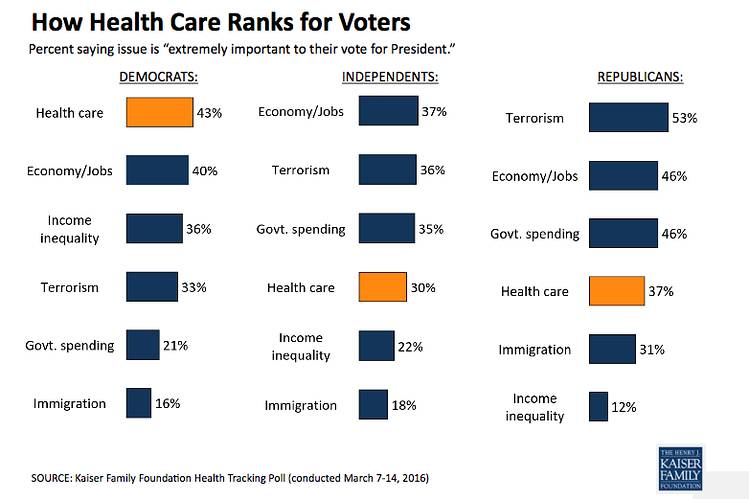
Health care has faded into the background of the election campaign as Donald Trump himself has become the issue on the Republican side and the debate between Hillary Clinton and Bernie Sanders over health care has shifted to other topics. This doesn’t mean that health will be the No. 1 or No. 4 factor when Democrats and Republicans vote in November. As the chart also shows, issue priorities are closely bunched, and my experience has been that voters cast ballots in presidential elections on the basis of their overall views of the candidates rather than candidates’ specific positions on issues.
When people say health care is an extremely important voting issue, they aren’t always thinking of the ACA. Among Republicans who say health is “extremely important” to their vote, about equal shares are thinking about the ACA as are thinking about issues such as access to care and health-care costs. Nor are Democrats always intending to support the ACA when they cite health as a voting issue. They are more likely to cite improving access or addressing costs generally as their reason for naming health a top voting issue.
Gallup polling released last week showed majority support–58%–for replacing the Affordable Care Act with a federally funded health system. The same poll found 51% support for repealing the ACA. There is a basic point that often gets lost in reaction to poll findings like these: They measure the public’s initial response to ideas and words, and proposals such as single payer or ACA repeal that people associate with candidates–but they don’t tell us much about the likely level of support for a policy if there is a real debate about legislation before Congress, with winners and losers laid bare.
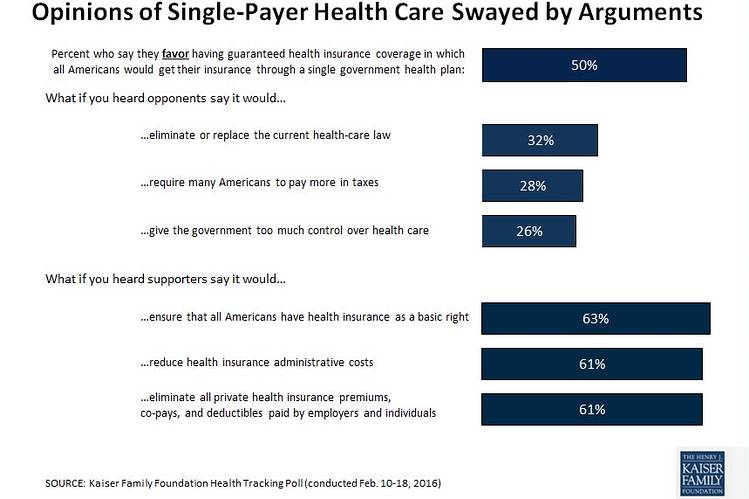
It’s always a fair bet that support would decline for big changes that come with big trade-offs–whether it is single-payer health care or ACA repeal or something else–but there is no way to know those levels in advance, and support could rise or fall depending on how a legislative debate plays out. Consider single-payer health care as an example. In February, the Kaiser Family Foundation monthly tracking poll simulated some of the arguments the public might hear in a debate about single payer.