A key part of President Biden’s new coronavirus strategy is a push to administer 100 million doses in 100 days, or a lofty sounding 1 million immunizations a day.
That goal, part of a comprehensive national plan launched this week, has raised questions about how quickly the United States can, and should aim to, deliver vaccines to its population.
The strategy document calls the 1 million shots per day pace “aggressive,” an effort that will “take every American doing their part.” But critics have pointed out that it does not constitute a major leap from the current rate, which has already neared or even surpassed the target. Many wonder why the country cannot move more swiftly.
It remains possible that the United States could pick up its pace as vaccine supply increases and logistics improve. But in international context 1 million doses a day does not seem slow.
Though differences in population, logistical capacity and data transparency, along with different levels of vaccine vetting and effectiveness between vaccine types, make it hard to compare vaccination campaigns across countries, the United States is near the top of the pack, behind some of the fastest countries to vaccinate, including Israel and Britain, but ahead of most of the rest of the world.
The biggest factor shaping the rate of vaccination is global supply.
Though the development and emergency approval of coronavirus vaccines has unfolded at an unprecedented pace, drug companies are scrambling to make enough doses to meet demand. As some countries receive a high number of doses from among the limited total produced, others must wait their turn.
So far, a small number of relatively rich countries, including the United States, have snapped up the initial supply, relegating low- and middle-income countries to the back of the line — possibly for years. Some projections suggest poor countries will not have enough doses until 2023 or 2024.
Rich countries are set to fare better. The European Commission aims to vaccinate 70 percent of the adult population of the European Union by the summer, though details of that plan are not yet clear.
Anthony S. Fauci, adviser to President Biden and director of the National Institute of Allergy and Infectious Diseases, said this week that the United States could potentially reach “herd immunity” by fall 2021.
Will other large countries move faster than the United States?
Possibly, but it is hard to say.
Questions about manufacturing capacity, the potential approval of additional vaccines and the impact of the new U.K. variant make predictions tough. However, India offers an interesting point of comparison.
On Jan. 16, India launched a plan to vaccinate 300 million people by August.
The roughly 200 day push to deliver 600 million doses is more ambitious than the U.S. plan. However, India’s population is more than three times larger than that of the United States.
China promised to vaccinate some 50 million people against the coronavirus before the Lunar New Year holiday next month — a seemingly rapid pace. But a report in a news outlet controlled by the ruling Communist Party said the country had administered 15 million doses by Jan. 20.
There are also questions about whether Chinese-made vaccines are as effective as the Moderna, Pfizer and AstraZeneca formulations used elsewhere.
Days after Brazilian officials announced that a vaccine made by Chinese company Sinovac was 78 percent effective protecting against moderate and severe covid-19 cases, for instance, they were forced to clarify that the shot’s efficacy rate among all cases was only 50.4 percent.
Ultimately, the biggest difference between the U.S. vaccination push and the Chinese effort is need.
Though there are doubts about China’s figures, the country reports just above 4,600 coronavirus deaths to date — comparable to the 4,409 U.S. deaths on Inauguration Day alone.
I had been staring her in the eyes, as she had ordered, but when a doctor on my other side began jabbing me with a needle, I started to turn my head. “Don’t look at it,” the first doctor said. I obeyed.
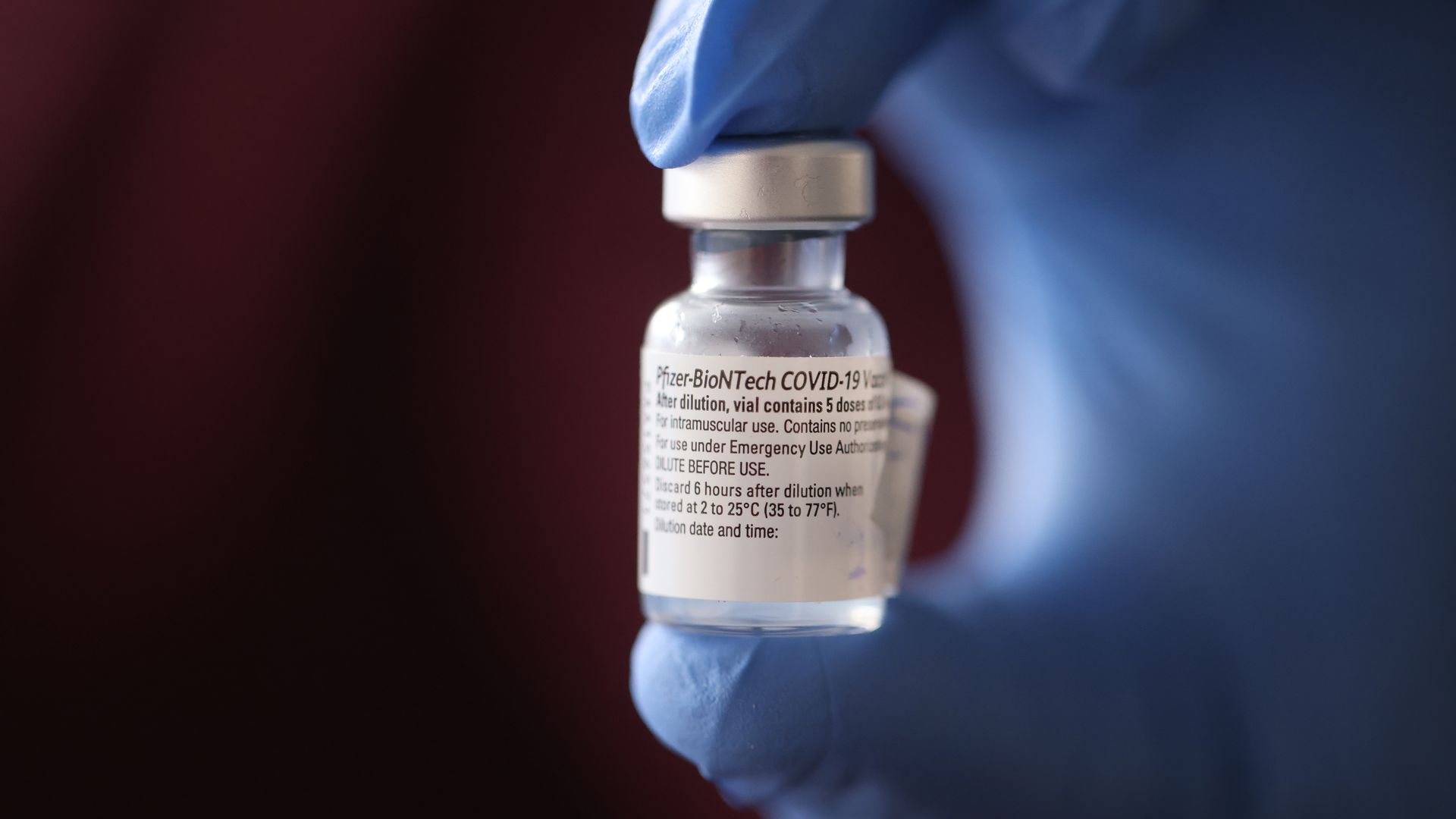
This was in early August in New Orleans, where I had signed up to be a participant in the clinical trial for the Pfizer-BioNTech COVID-19 vaccine. It was a blind study, which meant I was not supposed to know whether I had gotten the placebo or the real vaccine. I asked the doctor if I would really been able to tell by looking at the syringe. “Probably not,” she answered, “but we want to be careful. This is very important to get right.”
I became a vaccine guinea pig because, in addition to wanting to be useful, I had a deep interest in the wondrous new roles now being played by RNA, the genetic material that is at the heart of new types of vaccines, cancer treatments and gene-editing tools. I was writing a book on the Berkeley biochemist Jennifer Doudna. She was a pioneer in determining the structure of RNA, which helped her and her doctoral adviser figure out how it could be the origin of all life on this planet. Then she and a colleague invented an RNA-guided gene-editing tool, which won them the 2020 Nobel Prize in Chemistry.
The tool is based on a system that bacteria use to fight viruses. Bacteria develop clustered repeated sequences in their DNA, known as CRISPRs, that can remember dangerous viruses and then deploy RNA-guided scissors to destroy them. In other words, it’s an immune system that can adapt itself to fight each new wave of viruses—just what we humans need. Now, with the recently approved Pfizer-BioNTech vaccine and a similar one from Moderna being slowly rolled out across the U.S. and Europe, RNA has been deployed to make a whole new type of vaccine that will, when it reaches enough people, change the course of the pandemic.
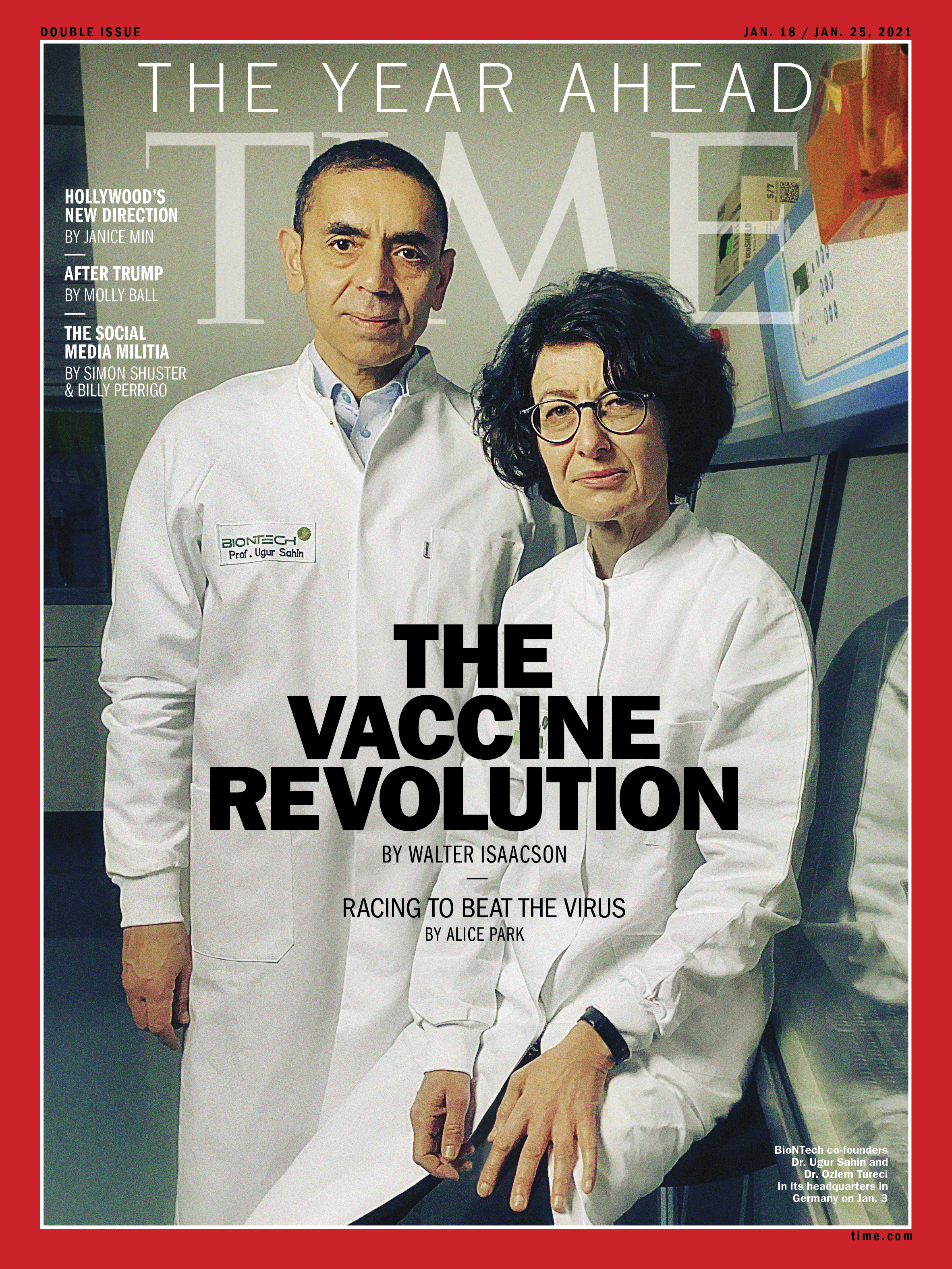
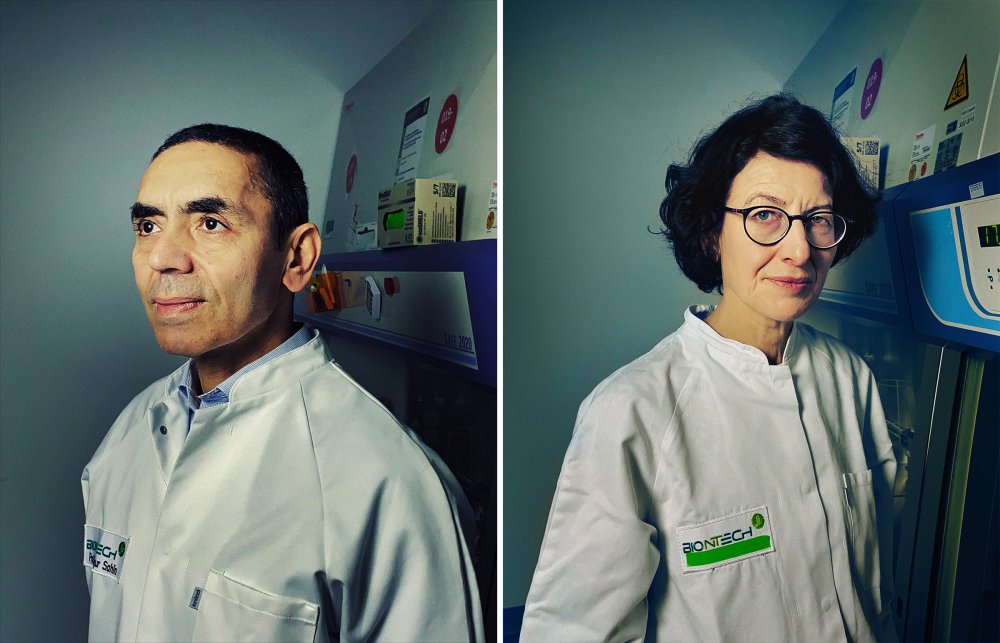
Drs. Ugur Sahin and Ozlem Tureci, Co-founders, BioNTech. In January 2020, before many in the Western world were paying attention to a new virus spreading in China, Dr. Ugur Sahin was convinced it would spur a pandemic. Sahin, who in 2008 co-founded the German biotech company BioNTech with his wife Dr. Ozlem Tureci, went to work on a vaccine and by March called his contact at Pfizer, a much larger pharmaceutical company with which BioNTech had previously worked on an influenza vaccine using mRNA. Less than a year later, the Pfizer-BioNTech COVID-19 vaccine became the first ever mRNA vaccine available for widespread use. Even so, Sahin, BioNTech’s CEO, and Tureci, its chief medical officer, maintain that BioNTech is not an mRNA company but rather an immunotherapy company. Much of the couple’s work—both at BioNTech and at their previous venture, Ganymed—has focused on treating cancer. But it is mRNA, and the COVID-19 vaccine made possible by the technology, that has pushed the famously hardworking couple into the limelight—and helped them become one of the richest pairs in Germany, though they reportedly still bicycle to work and live in a modest apartment near their office.
Up until last year, vaccines had not changed very much, at least in concept, for more than two centuries. Most have been modeled on the discovery made in 1796 by the English doctor Edward Jenner, who noticed that many milkmaids were immune to smallpox. They had all been infected by a form of pox that afflicts cows but is relatively harmless to humans, and Jenner surmised that the cowpox had given them immunity to smallpox. So he took some pus from a cowpox blister, rubbed it into scratches he made in the arm of his gardener’s 8-year-old son and then (this was in the days before bioethics panels) exposed the kid to smallpox. He didn’t become ill.
Before then, inoculations were done by giving patients a small dose of the actual smallpox virus, hoping that they would get a mild case and then be immune. Jenner’s great advance was to use a related but relatively harmless virus. Ever since, vaccinations have been based on the idea of exposing a patient to a safe facsimile of a dangerous virus or other germ. This is intended to kick the person’s adaptive immune system into gear. When it works, the body produces antibodies that will, sometimes for many years, fend off any infection if the real germ attacks.
One approach is to inject a safely weakened version of the virus. These can be good teachers, because they look very much like the real thing. The body responds by making antibodies for fighting them, and the immunity can last a lifetime. Albert Sabin used this approach for the oral polio vaccine in the 1950s, and that’s the way we now fend off measles, mumps, rubella and chicken pox.
At the same time Sabin was trying to develop a vaccine based on a weakened polio virus, Jonas Salk succeeded with a safer approach: using a killed or inactivated virus. This type of vaccine can still teach a person’s immune system how to fight off the live virus but is less likely to cause serious side effects. Two Chinese companies, Sinopharm and Sinovac, have used this approach to develop vaccines for COVID-19 that are now in limited use in China, the UAE and Indonesia.
Another traditional approach is to inject a subunit of the virus, such as one of the proteins that are on the virus’s coat. The immune system will then remember these, allowing the body to mount a quick and robust response when it encounters the actual virus. The vaccine against the hepatitis B virus, for example, works this way. Using only a fragment of the virus means that they are safer to inject into a patient and easier to produce, but they are often not as good at producing long-term immunity. The Maryland-based biotech Novavax is in late-stage clinical trials for a COVID-19 vaccine using this approach, and it is the basis for one of the two vaccines already being rolled out in Russia.
The plague year of 2020 will be remembered as the time when these traditional vaccines were supplanted by something fundamentally new:genetic vaccines, which deliver a gene or piece of genetic code into human cells. The genetic instructions then cause the cells to produce, on their own, safe components of the target virus in order to stimulate the patient’s immune system.
For SARS-CoV-2—the virus that causes COVID-19—the target component is its spike protein, which studs the outer envelope of the virus and enables it to infiltrate human cells. One method for doing this is by inserting the desired gene, using a technique known as recombinant DNA, into a harmless virus that can deliver the gene into human cells. To make a COVID vaccine, a gene that contains instructions for building part of a coronavirus spike protein is edited into the DNA of a weakened virus like an adenovirus, which can cause the common cold. The idea is that the re-engineered adenovirus will worm its way into human cells, where the new gene will cause the cells to make lots of these spike proteins. As a result, the person’s immune system will be primed to respond rapidly if the real coronavirus strikes.
This approach led to one of the earliest COVID vaccine candidates, developed at the aptly named Jenner Institute of the University of Oxford. Scientists there engineered the spike-protein gene into an adenovirus that causes the common cold in chimpanzees, but is relatively harmless in humans.
The lead researcher at Oxford is Sarah Gilbert. She worked on developing a vaccine for Middle East respiratory syndrome (MERS) using the same chimp adenovirus. That epidemic waned before her vaccine could be deployed, but it gave her a head start when COVID-19 struck. She already knew that the chimp adenovirus had successfully delivered into humans the gene for the spike protein of MERS. As soon as the Chinese published the genetic sequence of the new coronavirus in January 2020, she began engineering its spike-protein gene into the chimp virus, waking each day at 4 a.m.
Her 21-year-old triplets, all of whom were studying biochemistry, volunteered to be early testers, getting the vaccine and seeing if they developed the desired antibodies. (They did.) Trials in monkeys conducted at a Montana primate center in March also produced promising results.
Bill Gates, whose foundation provided much of the funding, pushed Oxford to team up with a major company that could test, manufacture and distribute the vaccine. So Oxford forged a partnership with AstraZeneca, the British-Swedish pharmaceutical company. Unfortunately, the clinical trials turned out to be sloppy, with the wrong doses given to some participants, which led to delays. Britain authorized it for emergency use at the end of December, and the U.S. is likely to do so in the next two months.
Johnson & Johnson is testing a similar vaccine that uses a human adenovirus, rather than a chimpanzee one, as the delivery mechanism to carry a gene that codes for making part of the spike protein. It’s a method that has shown promise in the past, but it could have the disadvantage that humans who have already been exposed to that adenovirus may have some immunity to it. Results from its clinical trial are expected later this month.
In addition, two other vaccines based on genetically engineered adenoviruses are now in limited distribution: one made by CanSino Biologics and being used on the military in China and another named Sputnik V from the Russian ministry of health.
There is another way to get genetic material into a human cell and cause it to produce the components of a dangerous virus, such as the spike proteins, that can stimulate the immune system. Instead of engineering the gene for the component into an adenovirus, you can simply inject the genetic code for the component into humans as DNA or RNA.
Let’s start with DNA vaccines. Researchers at Inovio Pharmaceuticals and a handful of other companies in 2020 created a little circle of DNA that coded for parts of the coronavirus spike protein. The idea was that if it could get inside the nucleus of a cell, the DNA could very efficiently churn out instructions for the production of the spike-protein parts, which serve to train the immune system to react to the real thing.
The big challenge facing a DNA vaccine is delivery.How can you get the little ring of DNA not only into a human cell but into the nucleus of the cell? Injecting a lot of the DNA vaccine into a patient’s arm will cause some of the DNA to get into cells, but it’s not very efficient.
Some of the developers of DNA vaccines, including Inovio, tried to facilitate the delivery into human cells through a method called electroporation, which delivers electrical shock pulses to the patient at the site of the injection. That opens pores in the cell membranes and allows the DNA to get in. The electric pulse guns have lots of tiny needles and are unnerving to behold. It’s not hard to see why this technique is unpopular, especially with those on the receiving end. So far, no easy and reliable delivery mechanism has been developed for getting DNA vaccines into the nucleus of human cells.
That leads us to the molecule that has proven victorious in the COVID vaccine race and deserves the title of TIME magazine’s Molecule of the Year: RNA. Its sibling DNA is more famous. But like many famous siblings, DNA doesn’t do much work. It mainly stays bunkered down in the nucleus of our cells, protecting the information it encodes. RNA, on the other hand, actually goes out and gets things done. The genes encoded by our DNA are transcribed into snippets of RNA that venture out from the nucleus of our cells into the protein-manufacturing region. There, this messenger RNA (mRNA) oversees the assembly of the specified protein. In other words, instead of just sitting at home curating information, it makes real products.
Scientists including Sydney Brenner at Cambridge and James Watson at Harvard first identified and isolated mRNA molecules in 1961. But it was hard to harness them to do our bidding, because the body’s immune system often destroyed the mRNA that researchers engineered and attempted to introduce into the body. Then in 2005, a pair of researchers at the University of Pennsylvania, Katalin Kariko and Drew Weissman, showed how to tweak a synthetic mRNA molecule so it could get into human cells without being attacked by the body’s immune system.
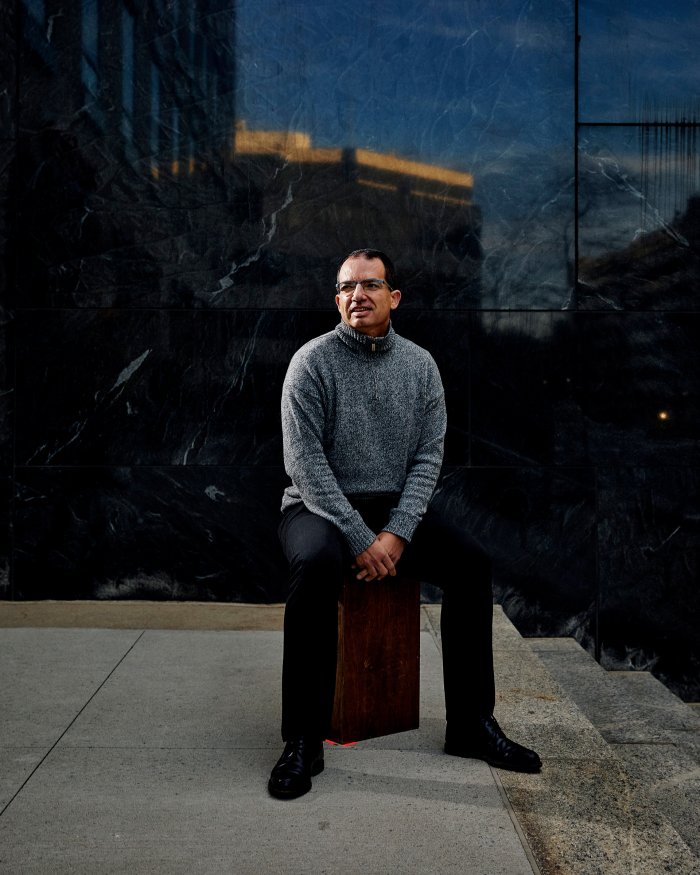
Stéphane Bancel, CEO, Moderna. Moderna’s COVID-19 vaccine was first tested in humans less than three months after news of the novel virus broke. But that lightning-fast development process belies the years of work that got Moderna to where it is today. The startup was founded in 2010 with the belief that mRNA technology, then still fairly new, could help treat any number of ailments. CEO Stéphane Bancel, pictured above, joined a year later. Moderna wasn’t originally focused on vaccines, but over time, its scientists began working toward vaccines against several infectious diseases as well as some forms of cancer. That experience came in handy when the COVID-19 pandemic arrived, leaving the world clamoring for a vaccine that could fight the deadly virus—and fast. Bancel’s company took the challenge in stride, using its mRNA platform to develop a vaccine around 95% effective at protecting against COVID-19 disease in less than a year.
When the COVID-19 pandemic hit a year ago, two innovative young pharmaceutical companies decided to try to harness this role played by messenger RNA: the German company BioNTech, which formed a partnership with the U.S. company Pfizer; and Moderna, based in Cambridge, Mass. Their mission was to engineer messenger RNA carrying the code letters to make part of the coronavirus spike protein—a string that begins CCUCGGCGGGCA … —and to deploy it in human cells.
BioNTech was founded in 2008 by the husband-and-wife team of Ugur Sahin and Ozlem Tureci, who met when they were training to be doctors in Germany in the early 1990s. Both were from Turkish immigrant families, and they shared a passion for medical research, so much so that they spent part of their wedding day working in the lab. They founded BioNTech with the goal of creating therapies that stimulate the immune system to fight cancerous cells. It also soon became a leader in devising medicines that use mRNA in vaccines against viruses.
In January 2020, Sahin read an article in the medical journal Lancet about a new coronavirus in China. After discussing it with his wife over breakfast, he sent an email to the other members of the BioNTech board saying that it was wrong to believe that this virus would come and go as easily as MERS and SARS. “This time it is different,” he told them.
BioNTech launched a crash project to devise a vaccine based on RNA sequences, which Sahin was able to write within days, that would cause human cells to make versions of the coronavirus’s spike protein. Once it looked promising, Sahin called Kathrin Jansen, the head of vaccine research and development at Pfizer. The two companies had been working together since 2018 to develop flu vaccines using mRNA technology, and he asked her whether Pfizer would want to enter a similar partnership for a COVID vaccine. “I was just about to call you and propose the same thing,” Jansen replied. The deal was signed in March.
By then, a similar mRNA vaccine was being developed by Moderna, a much smaller company with only 800 employees. Its chair and co-founder, Noubar Afeyan, a Beirut-born Armenian who immigrated to the U.S., had become fascinated by mRNA in 2010, when he heard a pitch from a group of Harvard and MIT researchers. Together they formed Moderna, which initially focused on using mRNA to try to develop personalized cancer treatments, but soon began experimenting with using the technique to make vaccines against viruses.
In January 2020, Afeyan took one of his daughters to a restaurant near his office in Cambridge to celebrate her birthday. In the middle of the meal, he got an urgent text message from the CEO of his company, Stéphane Bancel, in Switzerland. So he rushed outside in the freezing temperature, forgetting to grab his coat, to call him back.
Bancel said that he wanted to launch a project to use mRNA to attempt a vaccine against the new coronavirus. At that point, Moderna had more than 20 drugs in development but none had even reached the final stage of clinical trials. Nevertheless, Afeyan instantly authorized him to start work. “Don’t worry about the board,” he said. “Just get moving.” Lacking Pfizer’s resources, Moderna had to depend on funding from the U.S. government. Anthony Fauci, head of the National Institute of Allergy and Infectious Diseases, was supportive. “Go for it,” he declared. “Whatever it costs, don’t worry about it.”
It took Bancel and his Moderna team only two days to create the RNA sequences that would produce the spike protein, and 41 days later, it shipped the first box of vials to the National Institutes of Health to begin early trials. Afeyan keeps a picture of that box on his cell phone.
An mRNA vaccine has certain advantages over a DNA vaccine, which has to use a re-engineered virus or other delivery mechanism to make it through the membrane that protects the nucleus of a cell. The RNA does not need to get into the nucleus. It simply needs to be delivered into the more-accessible outer region of cells, the cytoplasm, which is where proteins are constructed.
The Pfizer-BioNTech and Moderna vaccines do so by encapsulating the mRNA in tiny oily capsules, known as lipid nanoparticles.Moderna had been working for 10 years to improve its nanoparticles.This gave it one advantage over Pfizer-BioNTech: its particles were more stable and did not have to be stored at extremely low temperatures.
Katalin Kariko, Senior vice president, BioNTech. In 1995, after years of struggle, Hungarian-born Katalin Kariko was pushed off the path to full professorship at the University of Pennsylvania. Her work on mRNA, molecules she believed could fundamentally change the way humans treat disease, had stalled. Then, in 1997, she met and began working with immunologist Drew Weissman. In 2005, they published a study describing a modified form of artificial mRNA—a discovery, they argued, that opened the door to mRNA’s use in vaccines and other therapies. Eventually, Kariko and Weissman licensed their technology to the German company BioNTech, where Kariko, shown here in a portrait shot by a photographer working remotely, is now a senior vice president. Her patience paid off this year. The mRNA-based Pfizer-BioNTech coronavirus vaccine, which Kariko helped develop, has been shown to be 95% effective at preventing COVID-19.
By November, the results of the Pfizer-BioNTech and Moderna late-stage trials came back with resounding findings: both vaccines were more than 90% effective. A few weeks later, with COVID-19 once again surging throughout much of the world, they received emergency authorization from the U.S. Food and Drug Administration and became the vanguard of the biotech effort to beat back the pandemic.
The ability to code messenger RNA to do our bidding will transform medicine. As with the COVID vaccines, we can instruct mRNA to cause our cells to make antigens—molecules that stimulate our immune system—that could protect us against many viruses, bacteria, or other pathogens that cause infectious disease. In addition, mRNA could in the future be used, as BioNTech and Moderna are pioneering, to fight cancer. Harnessing a process called immunotherapy, the mRNA can be coded to produce molecules that will cause the body’s immune system to identify and kill cancer cells.
RNA can also be engineered, as Jennifer Doudna and others discovered, to target genes for editing. Using the CRISPR system adapted from bacteria, RNA can guide scissors-like enzymes to specific sequences of DNA in order to eliminate or edit a gene. This technique has already been used in trials to cure sickle cell anemia. Now it is also being used in the war against COVID. Doudna and others have created RNA-guided enzymes that can directly detect SARS-CoV-2 and eventually could be used to destroy it.
More controversially, CRISPR could be used to create “designer babies” with inheritable genetic changes. In 2018, a young Chinese doctor used CRISPR to engineer twin girls so they did not have the receptor for the virus that causes AIDS. There was an immediate outburst of awe and then shock. The doctor was denounced, and there were calls for an international moratorium on inheritable gene edits. But in the wake of the pandemic, RNA-guided genetic editing to make our species less receptive to viruses may someday begin to seem more acceptable.
Throughout human history, we have been subjected to wave after wave of viral and bacterial plagues. One of the earliest known was the Babylon flu epidemic around 1200 B.C. The plague of Athens in 429 B.C. killed close to 100,000 people, the Antonine plague in the 2nd century killed 5 million, the plague of Justinian in the 6th century killed 50 million, and the Black Death of the 14th century took almost 200 million lives, close to half of Europe’s population.
The COVID-19 pandemic that killed more than 1.8 million people in 2020 will not be the final plague. However, thanks to the new RNA technology, our defenses against most future plagues are likely to be immensely faster and more effective. As new viruses come along, or as the current coronavirus mutates, researchers can quickly recode a vaccine’s mRNA to target the new threats. “It was a bad day for viruses,” Moderna’s chair Afeyan says about the Sunday when he got the first word of his company’s clinical trial results. “There was a sudden shift in the evolutionary balance between what human technology can do and what viruses can do. We may never have a pandemic again.”
The invention of easily reprogrammable RNA vaccines was a lightning-fast triumph of human ingenuity, but it was based on decades of curiosity-driven research into one of the most fundamental aspects of life on planet earth: how genes are transcribed into RNA that tell cells what proteins to assemble. Likewise, CRISPR gene-editing technology came from understanding the way that bacteria use snippets of RNA to guide enzymes to destroy viruses. Great inventions come from understanding basic science. Nature is beautiful that way.
Most people who have recovered from Covid-19 have similar levels of immunity against future infection to those who received a coronavirus vaccine, a study by Public Health England found, offering early hope against fears of a short-lived immunity spurred on by reports of people catching the virus twice, though the researchers warn that those with immunity may still be able to carry and transmit the virus to others.
KEY FACTS
Naturally acquired immunity from a previous Covid-19 infection provides 83% protection against reinfection when compared with people who have not had the disease before, government researchers found in a study of more than 20,000 healthcare workers.
The study, which has not yet been peer reviewed for rigor by other scientists, shows that this protection lasts for at least five months and is at a level just below that offered by vaccines from Pfizer-BioNTech (95%) and Moderna (94%) and significantly above that of the vaccine developed by the University of Oxford and AstraZeneca (62%), though manufacturers don’t know for how long this immunity lasts.
The figures suggest reinfection is relatively rare — occurring in fewer than 1% of the the 6,614 people who had already tested positive for the disease — though the scientists warned that while “those with antibodies have some protection from becoming ill with Covid-19 themselves,” early evidence suggests that they can carry and transmit the virus to others.
“It is therefore crucial that everyone continues to follow the rules and stays at home, even if they have previously had Covid-19, to prevent spreading the virus to others,” Public Health England wrote.
The study will continue to follow participants for another 12 months to determine “how long any immunity may last, the effectiveness of vaccines and to what extent people with immunity are able to carry and transmit the virus,” as well as investigate the highly-contagious new variant of coronavirus spreading across the U.K..
CRUCIAL QUOTE
Professor Lawrence Young, a virologist and Professor of Molecular Oncology at Warwick Medical School in England, said an important takeaway from the study is that we don’t yet know how long antibody protection will last outside of the five month window. He said it is “possible that many people who were infected during the first wave of the pandemic may now be susceptible to re-infection.” Young said it will be interesting to see whether people previously infected with Covid-19 and are subsequently vaccinated have “an even longer-lived protective immune response” and whether or not these findings hold true for the new virus variant currently spreading in the U.K..
WHAT TO WATCH FOR
The information gathered from reinfection cases could prove important as the pandemic progresses, especially when it comes to designing and implementing an effective vaccination program and deciding whether to ease lockdown measures. Whether or not those who are immune to serious illness are capable of transmitting the infection to others will be a crucial deciding factor.
WHAT WE DON’T KNOW
It’s not yet clear for how long the protection provided by vaccines last. This will have to be studied over time, as with this case of natural immunity, and is something manufacturers are already doing. Moderna believes their vaccine offers at least a year’s protection against disease. Whether or not this protection prevents individuals from infecting others will also need to be figured out.
BIG NUMBER
384,784. That’s how many people have died from Covid-19 in the U.S. since the pandemic began, according to Johns Hopkins university. According to CDC projections, this figure is set to grow 25% in the next three weeks. At the moment, more than 23 million people have contracted the disease in the U.S..
We know that the vaccines now available across the world will protect their recipients from getting sick with Covid-19. But while each vaccine authorized for public use can prevent well over 50% of cases (in Pfizer-BioNTech and Moderna‘s case, more than 90%), what we don’t know is whether they’ll also curb transmission of the SARS-CoV-2 virus.
That question is answerable, though—and understanding vaccines’ effect on transmission will help determine when things can go back to whatever our new normal looks like.
The reason we don’t know if the vaccine can prevent transmission is twofold. One reason is practical. The first order of business for vaccines is preventing exposed individuals from getting sick, so that’s what the clinical trials for Covid-19 shots were designed to determine. We simply don’t have public health data to answer the question of transmission yet.
The second reason is immunological. From a scientific perspective, there are a lot of complex questions about how the vaccine generates antibodies in the body that haven’t yet been studied. Scientists are still eager to explore these immunological rabbit holes, but it could take years to reach the bottom of them.
Acting the part
Vaccines work by tricking the immune system into making antibodies before an infection comes along. Antibodies can then attack the actual virus when it enters our systems before they have a chance to replicate enough to launch a full-blown infection. But while vaccines could win an Oscar for their infectious acting job, they can’t get the body to produce antibodies exactly the same way as the real deal.
From what we know so far, Covid-19 vaccines cause the body to produce a class of antibodies called immunoglobulin G, or IgG antibodies, explains Matthew Woodruff, an immunologist at Emory University. IgG antibodies are thugs: They react swiftly to all kinds of foreign entities. They make up the majority of our antibodies, and are confined to the parts of our body that don’t have contact with the outside world, like our muscles and blood.
But to prevent Covid-19 transmission, another type of antibodies could be the more important player. The immune system that patrols your outward-facing mucosal surfaces—spaces like the nose, the throat, the lungs, and digestive tract—relies on immunoglobulin A, or IgA antibodies. And we don’t yet know how well existing vaccines incite IgA antibodies.
“Mucosal immunology is ridiculously complicated,” says Woodruff. “Rather than thinking of immune system as a way to fight off bad actors, it’s really a way for your internal environment to maintain some sort of homeostatic existence with a really dynamic outside world,” as you breathe, eat, drink, and touch your face.
People who get sick and recover from Covid-19 produce a ton of these more-specialized IgA antibodies. Because IgA antibodies occupy the same respiratory tract surfaces involved in transmitting SARS-CoV-2, we could reasonably expect that people who recover from Covid-19 aren’t spreading the virus any more. (Granted, this may also depend on how much of the virus that person was exposed to.)
But we don’t know if people who have IgG antibodies from the vaccine are stopping the virus in our respiratory tracts in the same way. And even if we did, scientists still don’t know how much of the SARS-CoV-2 virus it takes to cause a new infection. So even if we understood how well a vaccine worked to prevent a virus from replicating along the upper respiratory tract, it’d be extremely difficult to tell if that would mean a person couldn’t transmit the disease.
Making it real
Because of all that complication, it’s unlikely that immunological research alone will reveal how well vaccines can prevent Covid-19 transmission—at least, not for years. But there’s another way to tell if a vaccine can stop a person from transmitting a virus to others: community spread.
As more and more people get both doses of a Covid-19 vaccine (and wait a full two weeks after their second dose for maximum immunity to kick in), public health officials can see how fast case counts fall. It may not be a perfect indicator of whether we’re stopping the virus in its tracks—there are many other variables that can slow transmission, including lockdown measures—but for practical purposes, it’ll be good enough to help make public health decisions.
Plus, even though the data we have from clinical trials isn’t perfect, it’s a pretty good indicator that the vaccine at least stops some viral replication. “I can’t imagine how the vaccine would prevent symptomatic infection at the efficacies that [companies] reported and have no impact on transmission,” Woodruff says.
Each of the vaccines granted emergency use in western countries—Moderna, Pfizer-BioNTech, and AstraZeneca—have all shown high efficacy in phase 3 clinical trials. (The Sinopharm and Sinovac vaccines from China and the Bharat Biotech vaccine in India have also been shown to be effective at preventing Covid-19, but aren’t widely approved for use yet.)
Frustratingly, it’s just going to take more time to see if people who got the vaccine are involved in future transmission events. That’s why it’s vital that even after receiving both doses of the Covid-19 vaccine, all individuals wear masks, practice physical distancing, and wash their hands when around those who haven’t been vaccinated—just in case.
It’s cheaper, easier to distribute, and relies on very different tech than its competitors.
AstraZeneca’s COVID-19 vaccine has been approved for emergency use in the United Kingdom, India, and Mexico.
Unlike its competitors, AstraZeneca’s vaccine is a modified version of a common cold virus that spreads among chimpanzees.
This is the first vaccine of its kind to be approved for human use, but other companies are developing similar tech to fight COVID-19.
The United Kingdom became the first country to approve AstraZeneca’s COVID-19 vaccine for emergency use on Dec. 30, just weeks after Pfizer’s and Moderna’s vaccine candidates received a green light from the Food and Drug Administration in the United States. The approval is another promising sign in the global immunization rollout—especially because this option, developed by Oxford University and biopharmaceutical company AstraZeneca, could be key to reaching people in rural and underfunded areas.
Unlike its competitors, the AstraZeneca COVID-19 vaccine can be stored at higher temperatures, costs less per dose, and uses different technology to immunize people. Although the vaccine hasn’t been approved for use in the U.S. yet, it could reach arms stateside in February at the earliest, The New York Times reports. Here’s what we know about the vaccine so far, and how it stacks up against Pfizer’s and Moderna’s.
How does the AstraZeneca COVID-19 vaccine work?
AstraZeneca’s vaccine uses adenovirus-vectored technology. Translation: It’s a harmless, modified version of a common cold virus that usually only spreads among chimpanzees. This altered virus can’t make you sick, but it carries a gene from the novel coronavirus’ spike protein, the portion of the virus that triggers an immune response. This allows the immune system to manufacture antibodies that work against COVID-19, teaching your body how to respond should you become infected.
In other words, AstraZeneca’s vaccine mimics a COVID-19 infection without its life-threatening side effects, per a release from the company. The reason researchers chose a chimpanzee adenovirus is simple: The modified virus needs to be new to the people being vaccinated—otherwise, the body won’t create those all-important antibodies. Anyone could already have antibodies for a cold spread among humans, but far fewer people have been exposed to a cold spread among chimps.
The Pfizer-BioNTech and Moderna vaccines, meanwhile, rely on mRNA technology, which essentially introduces a piece of genetic code that tricks the body into producing COVID-19 antibodies, no virus required. All three vaccines require two shots spaced about a month apart. Although no adenovirus-vectored vaccine has been approved for human use before, companies like Johnson & Johnson, CanSino, and NantKwest are all working on their own versions.
How does the AstraZeneca vaccine compare to the Moderna and Pfizer vaccines?
Storage and distribution
AstraZeneca’s vaccine is the easiest to transport so far—it can be stored for up to six months between 36 and 46°F, normal refrigerator temperatures. The Moderna and Pfizer options, meanwhile, must be stored at subzero temperatures until they’re ready to be used, at -4°F and -94°F, respectively. (mRNA technology is relatively fragile compared to adenovirus-vectored tech, meaning it must be kept at much lower temperatures to remain effective and stable.)
AstraZeneca’s higher storage temperature could make distribution much easier. “A clinic, a nursing home, or even [regional] health departments may not have freezers that can hold things at -94°F,” says Kawsar Talaat, M.D., an infectious disease doctor, vaccine researcher, and assistant professor in the department of International Health at Johns Hopkins University. Being able to use a typical fridge “allows time for distribution, allows the vaccine time to get to more rural areas, [and allows vaccines] to be kept at a clinic for a longer period of time.”
Cost
The new vaccine also beats its competitors on price: AstraZeneca’s vaccine costs providers about $4 per dose, while Pfizer’s costs $20 and Moderna’s costs $33,Al Jazeera reports. These prices will most likely fluctuate as time goes on and the vaccines evolve.
Efficacy
The two mRNA vaccines have a slight edge in efficacy; both Pfizer and Moderna report being about 95% effective against COVID-19 after the second shot in clinical trials, while AstraZeneca has reported an average efficacy of 70%, and up to 90% if the dosing is adjusted. (For comparison, the annual flu shot is usually between 40 and 60% effective, per the CDC.)
Side effects
All three vaccines’ side effects are similar, including potential injection site pain and flu-like symptoms, including fever, fatigue, headaches, and muscle pain, which are to be expected as your immune system is primed.
Which COVID-19 vaccine is the best?
There’s no “best” vaccine option, as there’s not enough research to confirm that yet. Vaccines aren’t a silver bullet, especially as the pandemic rages on: They must be combined with masks, hand-washing, and social distancing to work as effectively as possible, per the CDC. No matter which COVID-19 vaccine becomes available to you first, you can feel confident in its ability to protect you, as long as you continue being cautious until positive cases, hospitalizations, and deaths are significantly reduced nationwide.
In the meantime, it’s likely “that all the manufacturers are working on making their vaccines more stable at easier-to-manage temperatures,” Dr. Talaat explains. As their formulations change, their pros and cons will, too.
For now, we can be thankful that AstraZeneca’s vaccine is nearing worldwide clearance. “The next generation of vaccines, like AstraZeneca’s, which is kept at refrigerator temperatures, is a major advancement,” Dr. Talaat says. “When you’re talking about distribution to the entire world, it’s much easier to do because we already keep vaccines cold. It’s a lot harder to keep things frozen.”
Around half a million Americans are now getting a coronavirus vaccine shot every day. But that pace must accelerate considerably if the United States has any hope of quashing the virus in 2021.
Public health experts differ on how quickly that might happen — and when things might start to feel “normal” again around the country.
To inaugurate our first Health 202 of the new year, we asked eight experts for their predictions.
After all, we all want to know when we can go to concerts and ballgames again. Or even just go to the office. (Let’s start small.)
We asked two questions. The first has to do with when the United States will reach “herd immunity” — the point at which enough people are immune to a virus, either by recovering from it or getting vaccinated against it. Herd immunity generally kicks in when about 70 percent of people are immune, although experts differ on the precise threshold.
To reach herd immunity with the coronavirus, approximately 230 million Americans would need the vaccine. As of yesterday, just 4 million had gotten the first of two shots. Daily immunizations have increased considerably over the past few days, with about 500,000 people getting the shot each day, but experts say that number needs to at least double and ideally quadruple.
We also asked these experts when they personally expect their lives to return to normal.
Here are their responses, edited lightly for clarity and brevity.
When will enough Americans be vaccinated for the U.S. to reach herd immunity, based on how things look right now?
Carlos del Rio, professor of medicine and global health at Emory University:
“At the current pace it will take a really long time. … I think if we can get our act together and start vaccinating 1 million people a day like President-elect Biden is promising, then we can get to 260 million people getting at least one dose … more or less or by late August or early September.If we really scale up and get to 3 million per day, then we can get to 260 million people in [less than] 100 days or three months. Can we do it? Yes! But it will require coordination, leadership and funding. So, as you see, my answer is: It depends.”
Eric Topol, director and founder of Scripps Research Translational Institute:
“I think by July, if we get 2 to 3 million people vaccinated per day, and even sooner, if we have a rapid neutralization antibody assay to be able to defer those who have had a prior infection and mounted a durable immune response. Yes, that is optimistic, but it can be done.”
Jay Bhattacharya, professor of medicine at Stanford University:
“There is a lot of disagreement in the scientific literature about the herd immunity threshold, which is certain to vary from place to place. I don’t think anyone responsible would confidently say what it is, and would never put forward a single number for the U.S. as a whole. Rather, the key question is how rapidly we inoculate people who have a high risk of mortality conditional on infection — most older folks and some late middle-aged folks with severe chronic conditions. Prioritizing them for vaccination will yield the greatest benefit in reducing covid-19-related mortality, regardless of when herd immunity is hit.”
Jesse Goodman, professor of medicine and infectious diseases at Georgetown University:
“I am not sure that in the near future we will reach a level of population immunity where the virus will be virtually shut down, as we are accustomed to with measles. Through immunity due to vaccination, combined, unfortunately, with infections in the unvaccinated, we should reach a state where the risk of exposure is reduced due to a mostly immune population. While cases will still occur, our health system will no longer be stressed and large outbreaks should be less common.
“I am hopeful we can get to such a situation in the last quarter of this year, provided vaccine production, access and acceptance go well and no mutant viruses arise that gain the ability to escape current vaccines.”
Kimberly Powers, associate professor of epidemiology at the University of North Carolina at Chapel Hill:
“That question is difficult to answer, as there is considerable uncertainty around the level of immunity we would need in the population to achieve herd immunity, along with the speed with which we can expect widespread vaccine uptake to occur.”
Leana Wen, public health professor at George Washington University and former Baltimore health commissioner:
“Right now, vaccine distribution is progressing at an unacceptably slow speed, and at this current rate, it will take years to reach herd immunity — if ever. If we are able to pick up speed by many times in January, there is still a chance we could substantially slow down the infection and perhaps approach herd immunity in 2021.”
Marc Lipsitch, professor of epidemiology at Harvard University:
“I think you mean ‘will enough Americans be vaccinated to reach the herd immunity threshold?’ My answer is possibly not because we don’t know if the vaccines protect enough against transmission for the threshold to be achievable, and because the new variant may increase that threshold substantially.”
Michael Osterholm, chairman of the Center for Infectious Disease Research and Policy at the University of Minnesota:
“There are three factors that will independently determine when enough Americans will either be protected from covid-19 via vaccination or development of antibody following actual infection.
“First, when will there be sufficient vaccine produced and distributed so everyone can receive their two doses? This includes vaccinating those who may have immune protection from actual infection but are vaccinated anyway to increase durable protection. Second, will enough people agree to be vaccinated? And finally, what is the durability of vaccine-induced protection over time?
“Each of these factors will play a role in achieving local, regional or national herd immunity protection. I feel confident we can achieve the first factor of sufficient vaccine by the late summer or early fall. But ultimately, the second two factors, how many will be vaccinated and how durable is immune protection will determine the answer to this question. I hope, when considering all three factors, it will be late summer or early fall, but we all realize hope is not a strategy.”
When do you expect your own daily life to feel similar to pre-pandemic times?
Carlos del Rio:
“I am hoping to be ‘close to normal’ by December 2021 more or less. However, as a physician seeing patients, I will probably continue to wearing a face mask and goggles for much longer.”
Eric Topol:
“In 2022.”
Jay Bhattacharya:
“Given the changes that the previous year has had on my professional and personal life, I do not expect my daily life to ever feel similar to pre-pandemic times. More broadly though and given the disappointingly slow roll out of the vaccine to the vulnerable in many states, I anticipate that American society will start to feel more like normal by April 2021.”
Jesse Goodman:
“Hopefully late this year, life should begin to feel similar to pre-pandemic times. However, it is likely that both great vigilance and some social distancing will still be needed, particularly if the population is not nearly all vaccinated. In addition, we may well require periodic immunization against the current and, possibly, other emerging coronavirus variants.”
Kimberly Powers:
“I expect daily life to feel more normal by sometime this summer, but I think it will be 2022 before some mitigation measures can be fully relaxed. And I expect that our society will feel ongoing consequences of this pandemic — physical, mental, emotional, and economic — for years to come.”
Leana Wen:
“I don’t know. I was much more optimistic a few weeks ago. But given the lag in vaccine rollout thus far and how under-resourced our public health systems are, I am concerned things for much of 2021 will feel more like 2020 than 2019.”
Marc Lipsitch:
“I think that sometime in the second half of the yearthere will be enough vaccination in the U.S. and some other countries that we will begin to treat covid-19 more like seasonal flu, which is deadly to large numbers of people but does not overwhelm health care and does not cause us to curtail normal social contact. This is because with enough vaccine in those at high risk of death and hospitalization, transmission may continue (at a reduced level thanks to some immunity in the population from prior infection and vaccine) but the outcomes will be less severe.”
Michael Osterholm:
“I’m not sure it ever will. We will not go back to a pre-covid-19 normal. We will instead exist in world with a new normal. And even that will in part be determined by the availability of adequate vaccine supply to cover everyone in high, middle and low income countries. I look forward to the day when my office hours are as they were pre-covid-19.”
Atul Gawande is outlandishly accomplished. The son of Indian immigrants, he grew up in Athens, Ohio, and was educated at Athens High School, Stanford, Oxford, and Harvard, where he studied issues of public health. Before working as a surgeon at Brigham and Women’s Hospital, in Boston, he advised such politicians as Jim Cooper and Bill Clinton. He teaches at Harvard and is the chairman of Ariadne Labs, which works on innovation in health-care delivery and solutions, and he recently spent two years as the C.E.O. of a health-care venture called Haven, which is co-owned by Amazon, JPMorgan Chase, and Berkshire Hathaway.
Gawande is also a writer, and he has been publishing in The New Yorker for more than two decades. In 2009, heading into the debate over the Affordable Care Act, President Obama told colleagues that he had been deeply affected by Gawande’s article in the magazine called “The Cost Conundrum,” a study conducted in McAllen, Texas. Obama made the piece required reading for his staff. Gawande’s most recent book, a Times No. 1 best-seller, is “Being Mortal: Medicine and What Matters in the End.”
Since the beginning of the coronavirus pandemic, Gawande has been sharp in his criticism of the Trump Administration and, like Anthony Fauci and other prominent figures in public health, insistent on clear, basic measures to reduce levels of disease. After the election in November, President-elect Biden formed a covid-19 advisory board and included Gawande among its members. Earlier this week, I spoke with Gawande for The New Yorker Radio Hour. In the interview, which has been edited for length and clarity, Gawande says that President Trump’s relative silence on the issue after the election might be a blessing (considering the alternative). He suggests that the development of vaccines promises great things down the line, a return to relative normalcy some months from now. But, before that happens, he says, we may not only see terrible rates of illness and death—we will also experience an almost inevitably contentious rollout of the vaccine. Questions of who gets the vaccine and when will test a deeply divided society. As Gawande put it, “The bus drivers never came before the bankers before.”
We currently have one of the highest death and transmission rates of covid-19 in the world. What went wrong?
There’s so many things that went wrong, but you can boil it down to the difficulty of pulling together. One of the most critical things you have in the toolbox in public health is communications. It’s your ability to have clear priorities and communication about those priorities to your own public and to all of the players who get stuff done. We didn’t get testing started early. We weren’t calling the laboratories together to get testing built and created right from the get-go. And then fast-forward to where we are today. We still are in a world where we have not had clear communications from the top of the government around whether we should be wearing masks and having an actual national strategy to fight the virus. I would boil down what went wrong to not committing to communicating clearly and with one voice about the seriousness of what we’re up against and what the measures are to solve it.
When this began, I read “The Great Influenza,” John M. Barry’s book about 1918 and the horrendous flu that killed millions worldwide, and many hundreds of thousands in the United States. I thought to myself, Well, it’s not possible that we would repeat these mistakes, because, after all, we learn from history, even if the President of the United States does not. How is it possible that we made these same mistakes on such a mass scale? Do you lay it all at the feet of the President?
There’s a big part of this that I lay at the feet of the President. Imagine Pearl Harbor happened, and then we spent seven or eight months deciding whether or not we were going to fight back. And then, seven or eight months into it, a new President is going to come in who says, O.K., we are going to fight now. But you now have substantial parts of the country already arrayed against the idea that fighting it is worthwhile. In the meantime, some states have fought the attack and other states have not, and they’ve had to compete with each other for supplies. That’s the mess we have.
In May, I got to write about this in The New Yorker: the hospitals learned how to bring people to work and have them succeed. It was a formula that included masks, included some basic hygiene, some basic distancing, and testing. That’s been the formula, and is the formula still, for making it possible for people to resume a normal life. But we did not have a commitment from the very top to make this happen on a national basis. And we are continuing to litigate that issue to this very day.
You are now on President-elect Biden’s advisory board on covid-19, and I wonder what kind of coöperation you’re getting from the Trump Administration’s own advisory board.
Well, remember: up until just a few days ago, there was no contact allowed at all between any Administration officials and the Biden-Harris transition team. So only in the last few days have there started to be the contacts that would allow for basic information to be passed. I think it’s too early to say how well those channels of communication are turning out.
I’m sorry to interrupt, Atul, but, just to be clear here: we’re in a public-health emergency. Are you saying that the President’s theories, ill-founded and fantastical theories about the election, held up any communication whatsoever between President Trump’s advisory board and President-elect Biden’s board?
Absolutely. And I want to put a pin in what that means, in concrete fact. Here, we had a vaccine trial that came out three weeks ago showing a successful, effective vaccine, followed, just a few days later, by another vaccine trial. We did not have access to the information they were getting about the status of those trials. We did not have access to information about supplies. So, at the beginning of the year, with Operation Warp Speed, the target was three hundred million vaccines produced by the end of the year. Instead, what we’re seeing is reportedly thirty million or so by the end of [December]. We’re seeing in the press some backtracking from that as well. What were the bottlenecks that meant that this couldn’t be done? Is it a shortage of raw ingredients? Are they having stockpile problems? Is it a problem with the actual production processes?
Here’s another one when I’m talking to colleagues around the country who are going to be involved in distributing the vaccine: We hear about everything from shortages of gloves, uncertainty about supplies of needles and syringes for three hundred and thirty million people to get two rounds of doses. There’s no information yet on how many vaccines will be allocated to a given state or a given big pharmacy company like CVS or Walgreens—places that are an important part of the distribution chain. So there’s a lot of basic information that hasn’t been known. That discovery process is just starting.
The Biden Administration-to-be’s covid-19 task force has got a seven-point plan to stop the pandemic. What are the crucial elements of that plan?
It’s the same story that we’ve known since April: It’s mandating masks—that’s one of the most important tools we have for driving transmission down. It’s testing and being able to make sure that there’s widespread availability of testing. It’s supplies for the places that are going to need proper gloves, masks, et cetera. It’s continuing, based on the level of spread in a given community, to tune how much capacity restriction you have on indoor environments, whether it’s bars and restaurants or weddings or other gatherings that are seen to be currently driving transmission. Those are all critical elements. I’m firmly in agreement with where the President-elect is going on heeding the advice from public-health people that schools can be opened. But, in order for kids to be back in schools, especially elementary and middle schools, there’s still a lot of work to do to insure they have the supplies that they need to maintain distancing, to have the right ventilation.
Thanksgiving was a week ago. Anthony Fauci says that what he fears is a spike on top of a spike, a leap on top of a leap. Do you share that fear?
I do. A lot of people heeded the C.D.C. advice to not travel during Thanksgiving and to limit the size of family get-togethers. And I think that will help a great deal. But clearly large numbers of people did not heed that advice. And that’s the reason for the fear of the spike on top of a spike. We saw that, during the Thanksgiving weekend, we had the highest level of hospitalizations at any time in this pandemic, including the darkest days of spring. That’s going to have consequences in the days to come. I’m concerned that we’ll go into the Christmas holiday week with even higher spikes that will make that holiday all that much more challenging. Spike upon spike upon spike is the fear in this six-week-long period.
One of the signal disasters, as you said earlier, in the Trump Administration was communications, both what the President said about the pandemic and how he said it, the language he couched it in and the attitude he took toward it. Since the election, Trump doesn’t even talk about it on a daily basis.
No, he’s, he’s been awol. He had said in his statements: You know, it’s covid, covid, covid; all they want to talk about is covid. But watch, he said, the news will go away the day after the election. Instead, he’s the one who went away the day after the election. He has hardly spoken on what we’re up against, how bad things are, and what is going to be required. It’s interesting, however. In some ways, that is preferable to his coming in and constantly undermining the public-health messaging. So you have seen the C.D.C. and F.D.A. be able to step up. I can only surmise that what he’s clearly been focussed on is figuring out how to hold on to power. The irony is it’s left the field clear.
President-elect Biden is saying very clearly that this should be thought of as a war. We have to be on a war footing and understand how grave this is. Now you’re getting a unified message that’s coming across, and it’s coming from the President-elect on down and from the career scientists. In the face of the rising levels of disease in the country, you now have some Republican governors who had [opposed] a mask mandate now implementing the mask mandate. And they’re not getting contradicted by the President in that process. So, ironically, look, if I have to have President Trump on the airwaves contradicting everybody, or being awol, I’d rather have him be awol.
Thankfully, we can look forward to a vaccine, but that presents enormous logistical challenges. What are the challenges, and how do you view that rolling out?
Well, this is an undertaking on another scale from anything we’ve been doing in the last year. We have deployed north of a hundred and twenty million coronavirus tests in the course of eight months.This is going to be three hundred and thirty million vaccinations, done twice, and hoping to accomplish it in the course of six months or less. This is with vaccines that are new and that haven’t been produced at this volume before. Their clinical data is just undergoing review for approval by the F.D.A. The task is muddied by the fact that we don’t have a clear understanding of what the supply situation is that we have inherited from the Trump Administration. We also don’t know even what the prioritization is.
I’m concerned that what will happen when the new Administration starts is that they will inherit a lot of public confusion, because each state is now coming to its own conclusion about how they’re going to prioritize things. There’s going to be such demand. People are going to clamor for this vaccine. And, if they think that the system is rigged, we will have even more trouble.
After health-care workers and nursing homes, who gets the vaccine next? It’s almost like some terrible philosophical, moral, ethical conundrum that philosophers are faced with all the time. What are your discussions like when it comes to those next levels?
There are eighty-seven million essential workers who are at heightened risk of exposure. They are, say, meatpackers who are exposed to co-workers, or grocery-store workers or bus drivers who are exposed. You’ll be able to go to your local pharmacy and get a vaccine, but what they need to know is, how do they identify who’s the bus driver and who’s not?
Will the government be able to guarantee us that wealthy people, connected people, won’t be able to jump the line?
I think this is one of the critical tests—and an opportunity. The chance to prove that the system is not rigged should not be underestimated. It’s hard. Think about it. The bus drivers never came before the bankers before. You’re going to have Zoom workers who want to go back to normal, and I cannot blame the number of people who will say, You know, thank God I can finally not be in fear. Let me get the vaccine. What do you mean, I have to wait five months? I can imagine a million ways [of jumping the line], people paying someone twenty-five hundred bucks to get your work I.D. tag. This is all about rallying people together. It can’t just be about the rules. It has to be about how we all understand this and work together to say, These are the folks most at risk. They make our subways work. They make our buses work. They get our food supply to us. They make it possible for me to go grocery shopping, and I’ll just have to wait three or four months for my turn.
What you’re talking about is community and common interest and fairness. Many people are very good about that on the level of rhetoric, but, when it comes to their health and their children’s health or their parents’ health, that’s where rubber meets the road.
The mass debate and antagonism we’ve had over the last few months is nothing compared to the splits we will see over “I want my family to be vaccinated.” You know, one person in the family might get vaccinated. Another person might not because they have an illness profile or they have a job that fits in that way. You’ll have children who some families will want to have vaccinated and others will not want to have vaccinated. Pediatric clinical trials have only just gotten under way, and we won’t see those results for a while.
I have a child with severe autism, and so I pay very close attention to the anti-vaxxer movement. And the statistics, the numbers of people who say they will not be vaccinated, is enormous. Doesn’t that have serious implications not only for them but for our over-all effort?
It does. It seems, if we can get around seventy per cent or so of people vaccinated, that would stop the transmission just through vaccination alone. Now if, once people start getting vaccinated, they start throwing their masks away and you can’t get them to do anything else like distancing, then you’re really relying on vaccination as the sole prong of the strategy come three, four months from now. I think there are lots of things that are pushing in the direction of keeping the numbers of people who resist vaccination smaller than those surveys indicate.
What are the numbers?
The numbers suggest that it’s up to as much as forty per cent, even up to fifty per cent, who have said that they are not ready to take the vaccine [even] if the F.D.A. approves it. Part of the reason it’s good that health-care workers would go first is just demonstrating that we ourselves are willing to get vaccinated. Health-care workers are everywhere, which means we’re all going to know people who got vaccinated, and we’re going to see that they did all right.
The reality is that there are memes around anti-vaccination, like: the vaccine will change your D.N.A., or people are injecting a location transmitter into you, a conspiracy to be tagging everybody in the country. We’ll have to be able to combat crazy conspiracy theories. I’ll just summarize by saying this will be contentious, but I’m quite hopeful that we will get to large enough levels of vaccination so that we will be able to get this under control and return to a significant degree of normalcy.
Has there ever been any kind of distribution effort like this in American history?
I draw on things like the polio campaigns, which, you know, took polio from being an annual summer pandemic, in the early fifties, that left kids paralyzed, to essentially being gone a few years after the vaccines came out. Then you had H1N1, where we were in position to vaccinate seventy-million-plus people. So I think there is some precedent. We have not tried to say, Let’s eradicate this disease in one year. Smallpox took a couple of decades. I think we can get [the coronavirus] under control without necessarily eradicating it.
What would it take to eradicate it—or are we never going to eradicate it?
You don’t have to vaccinate every single human being in order to eradicate it. You need to get enough people vaccinated so that the disease stops spreading and dies out. I’m hopeful that we can get it under control here, but, to get eradication, to go back to global travel like before, you would have to get the whole world vaccinated. And that will take years. If we are well vaccinated here, we will feel comfortable over time lifting our restrictions on travel in the United States. And we will become freer to travel to many places around the world. And we will begin to realize what a lot of public-health people like me have been saying, which is that this can’t just be about distribution of vaccine in the United States. This is also going to need to be about enabling global vaccination.
At what point do you think you will be comfortable eating in crowded restaurants, flying on planes, living the life that you lived a year ago?
I think it will be after I get vaccinated [and we have enough data to know the vaccines are stopping transmission]. I’m actually a trial participant. One of the things that’s running through my brain is when I’m going to feel comfortable—when I find out whether I got a placebo or I got the vaccine.
What trial are you in?
I’m in the Moderna trial. After the booster shot, I got a fever, and I had the whole reaction that you would have expected. So I’m going to guess that I got the vaccine. But I won’t feel comfortable that I got it until I actually get that confirmation. But this isn’t about me. I want to see the evidence that the vaccine is lasting. What is the story three months from now? Are the antibodies showing indications that it lasts? I suspect that we’ll really feel comfortable, that we’re able to largely return to normal, maybe in about six months’ time. But, you know, we’re going to go through this gray-zone period where a lot of people have been vaccinated, and I will feel among them. I’m so desperate to go to a concert! Live music is the thing I’ve missed the absolute most.
Dr. Fauci has been a paragon. At the same time, he said, it could be a year and a half for a vaccine to be deployable. Why was the timeline so much faster in the end?
It was insane, some of the timelines that the scientists hit. For example, from the moment that the genome for the virus got sequenced to the moment when the N.I.H.-Moderna team actually was producing the vaccine, it was days. I think it was like a week or something like that. That’s just beyond belief.
What was the science, the discoveries, that made that possible?
Well, it was years of work to build the platform that could deliver the genetic information. Those first few days of success were built on years of work that folks like Dr. Fauci get credit for, because he’s been contributing to the creation of that kind of platform for some years now, as have many biotech companies and many university labs and the government.
Atul, we’re sitting here and watching the year 2020 end—and not a moment too soon. What do you expect will be our situation in December, 2021?
Well, for one thing, I think we’ll be having normal holiday experiences. We’ll be able to get together with our families and spend time. It’s harder for me to predict from my vantage point with as much confidence, but I think that if that’s happening, we will be on better economic terms as well. Right now, airlines, hotels, and any face-to-face service industry—bars, restaurants, child care, health care—I think all of those things are coming back.
California reported its first case of a new variant of the coronavirus that may be more transmissible, AP reports.
The big picture:California is the second state to document a confirmed case of the variant — which originated in the United Kingdom — after Colorado reported the first case in the United States on Tuesday.
California Gov. Gavin Newsom announced the infection during an online conversation with Anthony Fauci, head of the National Institute of Allergy and Infectious Diseases, according to AP.
The governor said the case was located in Southern California, but he did not provide any other details about the person who was infected.
“I don’t think Californians should think that this is odd. It’s to be expected,” Fauci said Wednesday, per AP.
Of note:There is thus far no evidence that the new variant is more deadly — only that it appears more transmissible. There is also no evidence that COVID-19 vaccines will be less effective against the new variant.
A non-peer reviewed study by the Centre for Mathematical Modelling of Infectious Diseases at the London School of Hygiene and Tropical Medicine found that the variant is 56% more transmissible than other strains.
The British government previously warned that a new variant could be up to 70% more transmissible.
Pfizer said in a statement that there are “no data” to demonstrate that a single dose of its coronavirus vaccine will provide protection from infection after 21 days.
Why it matters: The U.K. announced on Wednesday that it would shift its vaccination strategy “to give as many people in at-risk groups their first dose, rather than providing the required two doses in as short a time as possible.” Some provinces in Canada are doing the same.
Pfizer confirmed in response that although some protection appears to begin as early as 12 days after the first dose, two doses of the vaccine — separated by three weeks — is the only regimen that proved to be 95% effective in Phase 3 trials.
“Everyone will still receive their second dose and this will be within 12 weeks of their first,” the U.K. government added in a statement. “The second dose completes the course and is important for longer term protection.”
The big picture: Pfizer’s warning comes as many countries, including the U.S., debate how to rapidly deploy the vaccines in the most effective way possible. The U.S. is on pace to fall far below its target of vaccinating 20 million people by the end of 2020, with only 3 million single-doses administered as of Wednesday night.
After officials in the United Kingdom said Saturday that the variant first identified there was spreading 70 percent faster than others, Google searches about the mutation have spiked. But American public health experts and federal officials say that although it appears that the variant may be more contagious, it is not any more dangerous than others already detected in the United States.
“I don’t think there should be any reason for alarm right now,” Adm. Brett Giroir, who has been in charge of testing, told George Stephanopoulos on ABC’s “This Week.”
Variations to the virus are nothing new, and experts say the novel coronavirus does not mutate as much as influenza, meaning it is less likely that a vaccine would need to be developed every year to keep up with the new strains.
Still, much about this variant remains unknown, such as whether it is a new strain — a functionally different version of the virus.
“The take-home message for right now is that we need to get more information,” said Krutika Kuppalli, an infectious-diseases specialist at the Medical University of South Carolina. “In the meantime, we all need to really double down on our public health measures — wearing masks, remaining physically distanced, avoiding crowds of people.”
Where has the variant been detected?
In September, U.K. researchers discovered the variant’s prevalence when they collected samples from infected people in southeastern England. It seemed to spread quickly.
“This lineage came up quite rapidly,” Nick Loman, one of the researchers and a professor of microbial genomics at the University of Birmingham, told The Washington Post.
Since then, Australia, Denmark and the Netherlands have identified cases of the variant in their countries, the World Health Organization told the BBC. On Sunday, Italian officials announced that a patient returning from Britain “in the last few days” was in isolation after scientists detected the mutation.
In South Africa, health officials said Sunday that a version of the virus similar to the U.K. variant has been found in 80 to 90 percent of samples analyzed since mid-November.
Is the variant already in the United States?
The virus has not been detected in the United States, but officials are watching for developments in Britain, Giroir told Stephanopoulos.
Although guidance from federal agencies discourages traveling to Britain, the United States has not banned travel from there.
“I really don’t believe we need to do that yet,” Giroir said.
But New York Gov. Andrew M. Cuomo (D) pointed out Sunday that it would take only one flight to the United States to spread the mutation, urging federal officials to restrict travel.
“Right now, this variant in the U.K. is getting on a plane and flying to JFK,” Cuomo said on a conference call with reporters.
However, Kuppalli warned that little is known about the effectiveness of a ban, referring to instances in which people rushed to airports and congregated in long lines trying to travel before restrictions were put into effect earlier in the pandemic.
It is also not entirely certain whether the virus gained its foothold in the southeast of England because of its altered genetic markers or through super-spreading events, said Scott Gottlieb, a former head of the Food and Drug Administration.
“It seems like this new strain is more contagious,” Gottlieb said on CBS’s “Face the Nation.” “It doesn’t seem to be any more virulent, any more dangerous than run-of-the-mill covid. The next question is: Will it obviate our natural immunity?”
Will the authorized vaccines still be effective against this variant of the virus?
As of now, experts say there has been no indication that the variant is resistant to the Pfizer and Moderna vaccines authorized by the FDA.
“There is no reason to believe that the vaccines that have been developed will not be effective against this virus as well,” Vivek H. Murthy, President-elect Joe Biden’s nominee for surgeon general, told host Chuck Todd on NBC’s “Meet the Press.” “The bottom line is if you’re at home and hearing this news, it does not change what we do in terms of precautions.”
Although the vaccine remains out of reach for most Americans, following guidance such as social distancing and wearing masks remains the most practical way to prevent transmission.








 HENRY KOTULA