In a guest essay for the New York Times this week, Dr. Eric Reinhart argues that physician burnout is not solely a product of physicians’ deteriorating working conditions, but is also driven by a loss of faith in the larger US healthcare system.
He notes that physicians have begun to lose hope in their ability to improve the system in which they work. As outpourings of appreciation for heroic healthcare workers have ended, physicians find themselves working in a system whose myriad structural flaws have been exacerbated by the pandemic. While the system might serve certain physician groups well (particularly specialists who are advantaged by the American Medical Association’s billing code structures), it often fails the patients who trust them for their care, and doctors “are now finding it difficult to quash the suspicion that our institutions, and much of [their] work inside them, primarily serve a moneymaking machine”.
The Gist:While elevating burnout to the level of culture, ideology, and faith in the US healthcare system may be met with skepticism by health system leaders interested in concrete solutions to their workforce problems, it’s important to acknowledge that material benefits and operational improvements may not fully solve engagement challenges.
Compared to peer nations, our healthcare system can be uniquely seen as unfair and unequal, whether because of medical debt, maternal mortality, or declining life expectancies—and many providers feel ill-equipped to address these concerns in their daily work.
This piece serves as a reminder of why most clinicians chose healthcare in the first place: to save lives and help people. The younger generation of physicians isrethinking what that mission means, and how it should include more than just care delivery—and they’re more open to aggressive policy solutions to address systemic inequalities.
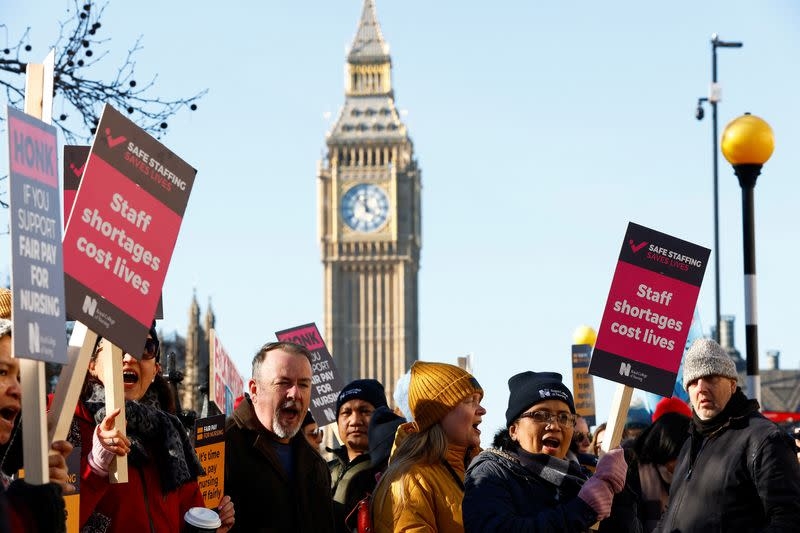
Monday’s walkout of tens of thousands of nurses and ambulance staff was the largest in the NHS’s 75-year history.
Labor demonstrations have been ongoing across the past few months, as workers demand higher pay and better working conditions amid rampant national inflation and increased workloads.
Specific demands vary by union and nation within the United Kingdom. Welsh nurses called off their strike this week to review a proposal from Wales’ Labour Party-run government, while the Royal College of Nurses, the UK’s largest nursing union, has countered a nominal 5 percent pay increase proposal with demands for a five percent pay raise on top of inflation, which topped 10 percent in Britain in December.
The Gist: A glance at our neighbors across the pond shows that the US healthcare system is not the only one currently experiencing a labor crisis.
The UK’s nationalized system has also failed to shield its workers from the combined impact of COVID burnout and inflation. But the NHS, as the UK’s largest employer and perennial object of political maneuvering, is more susceptible to organized labor actions.
In contrast, American healthcare unions, which only covered 17 percent of the country’s nurses in 2021, must negotiate with local employers, whose responses to their demands vary.
While this may enhance the bargaining power of US health system leaders, it also heightensthe risk that we will fail to adequately secure our nursing workforce, a key national resource already in short supply, for the longer term.
In his second annual State of the Union address to Congress on Tuesday, President Biden pointed to his accomplishments in shoring up the Affordable Care Act, and presented a fairly modest healthcare agenda that could garner bipartisan support.
Though the back-and-forth with Republican lawmakers over Medicare cuts made headlines, his prepared remarks focused primarily on drug costs, as he touted Medicare’s new drug negotiation powers and called for Medicare’s $35 monthly insulin cap to be extended to commercial health plans.
The Gist: The fate of the President’s drug cost proposals, along with his calls for more COVID funding, mental health treatment, and cancer research, rest in the hands of a Republican House unlikely to work with him.
It brings us no joy to acknowledge that the 2024 Presidential race has already begun, meaning that substantive legislative action will likely take a back seat for the next two years. Looking ahead, we’d expect Biden’s reelection pitch to sound a lot like Tuesday’s speech, shored up by whatever he can deliver via rulemaking and executive orders.
Given the economic situation most hospitals face today, it was only a matter of time before we started to hear comments like we heard recently from a system CEO.
“We’ve got to pump the brakes on physician employment this year,” she said. “This arms race with Optum and PE firms has gotten out of control, and we’re looking at almost $300K per year of loss per employed doc.”
Of course, that system (like most) has been calling that loss a “subsidy” or an “investment” for the past several years, justified by the ability to pursue an integrated model of care and to grow the overall system book of business.
But with non-hospital competitors unfettered by the requirement to pay “fair market value” for physicians, the bidding war for doctors has become unsustainable for many hospitals. Around half of physicians are now employed by hospitals, with many more employed in other corporate settings.
There’s a growing sense that the pendulum has swung too far in the direction of employment, and now the phrase “stopping the bleed”—commonplace in the post-PhyCor days of the early 2000s—has begun to ring out again.
One challenge: finding ways to talk openly about “pumping the brakes” with the board, given that most systems have key physician stakeholders as part of their governance structure. Twice in the last month we’ve had CEOs ask us about reconfiguring their boards so that there are fewer doctors involved in governance—a sharp about-face from the “integration” narrative of just a few years ago.
It’s a tricky balance to strike. We recently heard a fascinating statistic that we’re working to verify: a third of all hospital CEO turnover in the last year was driven by votes of no-confidence by the medical staff. True or not, there’s no doubt that running afoul of physicians can be a career-limiting move for hospital executives, so if we’re about to enter an era of dialing back physician employment strategies, it’ll be fascinating to see how the conversations unfold. We’ll continue to keep an eye on this shift in direction and would love to know what you’re hearing as well, and to discuss how we might be of assistance in navigating what are sure to be a series of difficult choices.
Last week the Biden Administration announced that the federal COVID public health emergency (PHE) will expire on May 11. While the recent Omnibus law will lessen the impact, the graphic above highlights several important provisions for providers which are currently set to end with the PHE.
The Centers for Medicare and Medicaid Services (CMS) will no longer provide hospitals with a 20 percent inpatient payment boost for treating traditional Medicare patients hospitalized with COVID. The cost of COVID testing and treatments will shift from the federal government to consumers as private and public insurers can charge for tests and care, while the uninsured will bear the full costs of COVID vaccines and treatment.
Medicare’s current flexibilities around skilled nursing facility (SNF) admissions will end, as it reinstates the three-day prior hospitalization rule for SNF transfers, and ceases paying for SNF stays beyond 100 days.
The end of the PHE also means that providers willno longer be able to prescribe controlled substances virtually, without an initial in-person evaluation. This is especially significant given the volume of mental health and substance abuse treatment that shifted to telehealth across the course of the pandemic.
While the Drug Enforcement Agency has been working on regulations to address this, a proposed rule has not yet been released. Together, these changes amount tolower payments for health systems, COVID cost exposure for patients, and fewer flexibilities for providers managing care, even as thousands of patients are still being hospitalized with COVID each week.
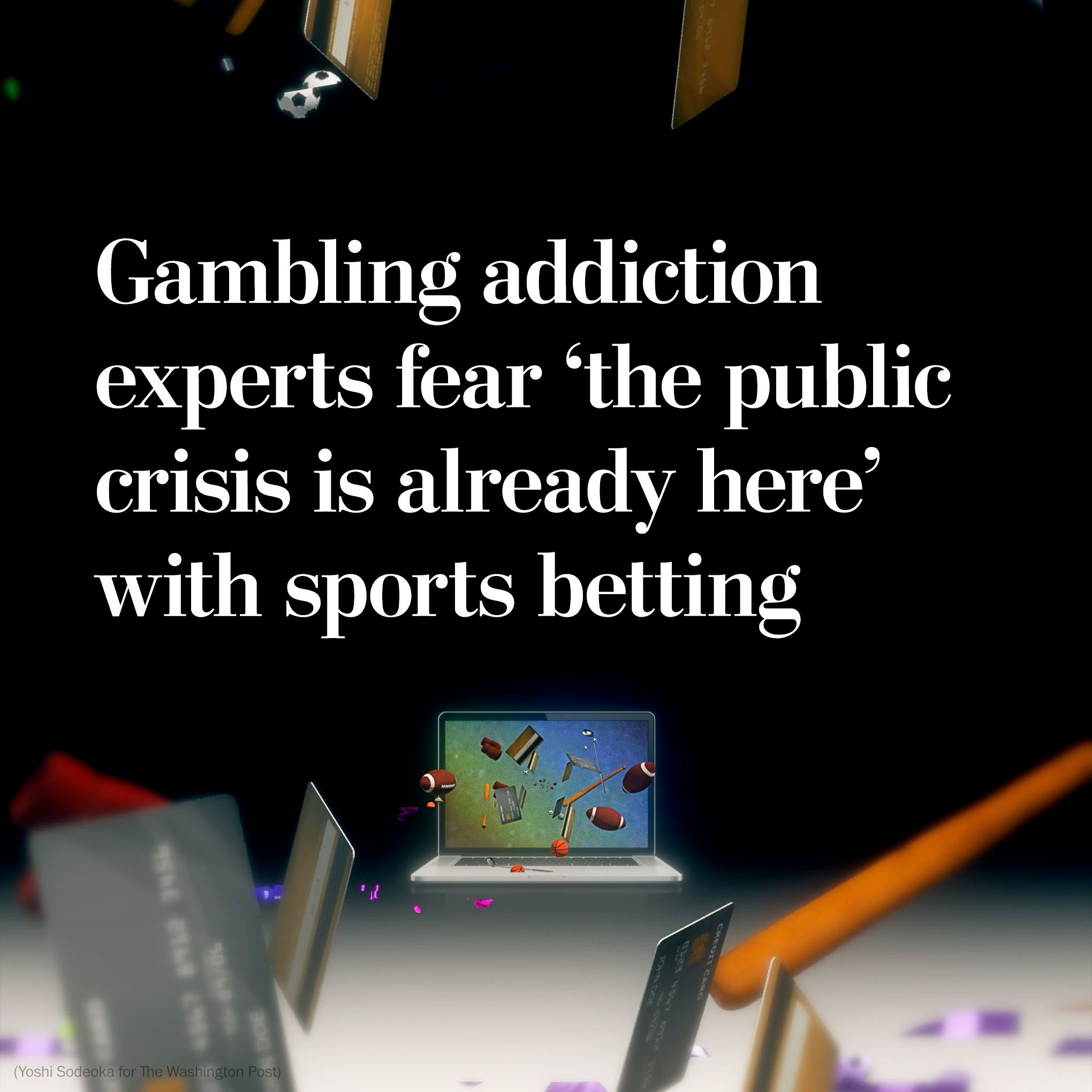
The sports betting market has multiplied tenfold in three years and may have reached $7 billion in 2022. More than half of the nation can now legally gamble on sports. Fifty million Americans are expected to bet on the upcoming Super Bowl.
Five years ago, betting on live games was illegal in most of the United States. A Supreme Court ruling in 2018 removed the ban and transformed the industry. Now, 33 states and the District of Columbia allow wagers on games.
Addiction experts fear a coming national epidemic to rival the opioid crisis.
“Gambling is a very different addiction from drugs or alcohol,” said Lia Nower, a professor and director of the Center for Gambling Studies at Rutgers University. “If I’m drunk or high, at some point my family is going to figure it out. With gambling, I can be sitting with my kids, watching cartoons, and gambling away my house, my car, everything I own, on my mobile phone. How would you know?”
The Supreme Court ruling struck down a federal law that had banned most commercial sport wagering outside Las Vegas. The subsequent spread of legal gambling was stunningly swift.
Lobbyists pampered state lawmakers with parties and promises, predicting millions in new tax dollars. Much of the promised revenue hasn’t reached the states, according to a New York Times investigation.
But gambling dollars have reached the betting operators. The industry reaped $4.3 billion in revenue on $57 billion in wagers in 2021. In the first 11 months of 2022, Americans bet $83 billion on sports and delivered $6.6 billion to betting firms. That figure is 15 times what the sports gambling industry reaped in 2018.
“We have a movement toward expanding what was once considered a sin, what was once considered a vice, and embedding it at every level of American culture, down to kindergarten,” said Timothy Fong, a clinical professor of psychiatry at the Jane and Terry Semel Institute for Neuroscience and Human Behavior at the University of California, Los Angeles.
“Sports gambling market. Ten years ago, those words didn’t exist,” Fong said. “What you have is this massive, exponential expansion of gambling into homes, faster than we can study or monitor it.”
A record 50 million Americans, one adult in five, will bet on Super Bowl LVII, according to an American Gaming Association survey. They will wager $16 billion, twice as much as last year.
Celebrity athletes shill for betting firms on television. Betting firms promote gambling on college campuses. Professional teams court “official mobile sports betting partners.”
“Pete Rose was banned from baseball and blocked from the Hall of Fame because he gambled,” said Nower, of Rutgers. “Now, we’ve got professional ballplayers who are partnering with gambling companies. Now, kids are seeing these things inextricably linked.”
Teams and league owners love sports betting because they “have found that engagement is off the charts among people who are placing bets on games,” said Daniel Barbarisi, author of “Dueling with Kings: High Stakes, Killer Sharks, and the Get-Rich Promise of Daily Fantasy Sports.”
People who bet on games “are not just tuning out if it’s a blowout,” Barbarisi said, because they bet on more than the final score. Fans can place wagers on the margin of victory, the combined point total from both teams and other metrics — such as whether Aaron Judge will hit a home run or Max Scherzer will ring up double-digit strikeouts.
Sports bettors are predominantly male, surveys show. They are mostly under 45. Some are wealthy, but a Rutgers study found that half of sports gamblers earn less than $50,000 a year. Some hail from a distinct subpopulation of Americans who get a thrill from risking money on the Next Big Thing.
“You can kind of draw a through line from the people who were involved in the poker boom in the early 2000s to the daily fantasy thing in the 2010s and then to the crypto thing,” Barbarisi said.
“I don’t know if you can say it’s a small group of guys anymore. It’s a big group of guys.”
Gambling is unquestionably addictive, and arguably immoral: Not for nothing did Las Vegas earn the Sin City sobriquet. Now that betting on sports is broadly legal, however, Americans are warming to the idea.
A poll by The Washington Post and University of Maryland found that 66 percent of Americans approved of legal sports betting in 2022, up from 55 percent in 2017, a year before the Supreme Court decision.
Nower suspects most Americans remain naive about gambling’s ills, much as society once cheerily embraced smoking and drinking. “We are where cigarettes were in the 1940s and alcohol was in the 1950s,” she said.
Most Americans ignored the opioid crisis, a staggering increase in overdose deaths in the 1990s and 2000s, until the government and news media processed the data and tendered a response.
With sports betting, “you have the exact same players you had with opioids,” Fong said. “You have government. You have industry. You have civilians, a lot of whom will benefit from this. And then you have a population who will develop an addiction, let’s say 1, 1.5 percent of the population.”
With legal sports gambling, “It’s a hidden addiction,” Fong said. “You can’t see it, you can’t smell it, you can’t taste it.”
Fong points to one of his patients, a man in his 20s who earns $160,000 a year and owes $40,000 in gambling debts.
“On face value, he can pay his rent, he’s not gonna die,” Fong said. “But he’s miserable. He’s just not happy.”
Over time, researchers say, sports-betting addiction will take a toll in rising rates of bankruptcy, domestic violence, depression, anxiety and suicide.
The federal government takes a keen interest in regulating alcohol, tobacco and drugs. In sports gambling, by contrast, “there is no federal presence at all,” Nower said. “And that is the biggest problem.”
Oversight of the booming sports-betting industry has been mostly left to states.
States that allow legal sports gambling “are not disinterested parties,” the Times wrote in its 2022 investigation. “They collect taxes on gambling, and the more people bet, the more governments get. One result is that states have, in many ways, given gambling companies free rein.”
New Jersey, the state at the heart of the 2018 Supreme Court ruling, offers a rare exception, Nower said.
Gambling regulators in New Jersey studied “the relationship between gambling and problem gambling” before they allowed legal gambling on sports, Nower said. She knows of no other state that took that step.
New Jersey uses gambling data to identify “people who may be exhibiting problem symptoms,” Nower said: Shuffling several payment methods, overdrawing their cards, doubling down on bets, gambling more frequently.
Most other states “are just legalizing this stuff without any idea of the effects,” she said.
The sports betting landscape will remain untamed, researchers say, until governments recognize gambling as a matter of public health.
“I do think there are watershed moments in all public health crises,” Nower said. “Unfortunately, it usually takes some kind of crisis or tragedy to turn the tide.”







 HENRY KOTULA