Tax bill has major downside for heavily indebted healthcare companies

https://www.beckershospitalreview.com/finance/tax-bill-has-major-downside-for-heavily-indebted-healthcare-companies.html

Image result for declining money

The Republicans’ tax overhaul plan, which is expected to become law soon, will cause many healthcare organizations to reassess their debt levels.

The tax bill will limit the tax deduction companies take for the interest they pay on their debt to 30 percent of earnings before interest, taxes, depreciation and amortization. This change will put pressure on healthcare companies with heavy debt loads. In 2022, interest expense deductions would be further reduced, which could cause companies’ tax bills to increase further, according to The Wall Street Journal.

Franklin, Tenn.-based Community Health Systems and Dallas-based Tenet Healthcare, which carry about $14 billion and $15 billion of debt, respectively, could be negatively affected by the tax bill’s limit on interest expense deductions. On Tuesday, Tenet said it expects the change to lower its 2018 earnings forecast, according to the report.

In a report issued earlier this month, Moody’s Investors Service said many speculative-grade companies across several sectors, including healthcare, would be negatively affected if deductibility were limited.


Moody’s: 3 ways the GOP tax bill will hurt nonprofit hospitals

https://www.beckershospitalreview.com/finance/moody-s-3-ways-the-gop-tax-bill-will-hurt-nonprofit-hospitals.html

Image result for Tax Bill implications for nonprofit hospitals

The Republicans’ tax overhaul plan, which is expected to become law soon, has negative credit implications for nonprofit hospitals and health systems, according to Moody’s Investors Service.

Here are three ways the tax bill will hurt nonprofit hospitals and health systems.

1. The tax bill will repeal the ACA’s individual insurance mandate. This will cause the uninsured population to rise and raise uncompensated care costs, which will negatively affect healthcare organizations’ operating margins and cash flow, according to Moody’s.

2. The tax plan’s limits on tax-exempt refundings is negative for all issuers of tax-exempt debt, including nonprofit hospitals and health systems, as these financings have been used to reduce long-term borrowing costs and take advantage of lower interest rates, according to Moody’s.

3. The tax bill will slash the corporate tax rate to 21 percent from 35 percent. This change has negative implications for nonprofit hospitals and health systems, as it “makes tax-exempt bonds a less attractive investment for banks and other financial institutions, which will weaken demand, especially for direct bank loans and private placements,” according to Moody’s.

Illinois hospitals’ financial struggles likely to continue into 2018

http://www.chicagotribune.com/business/ct-biz-hospital-financial-struggles-20171215-story.html
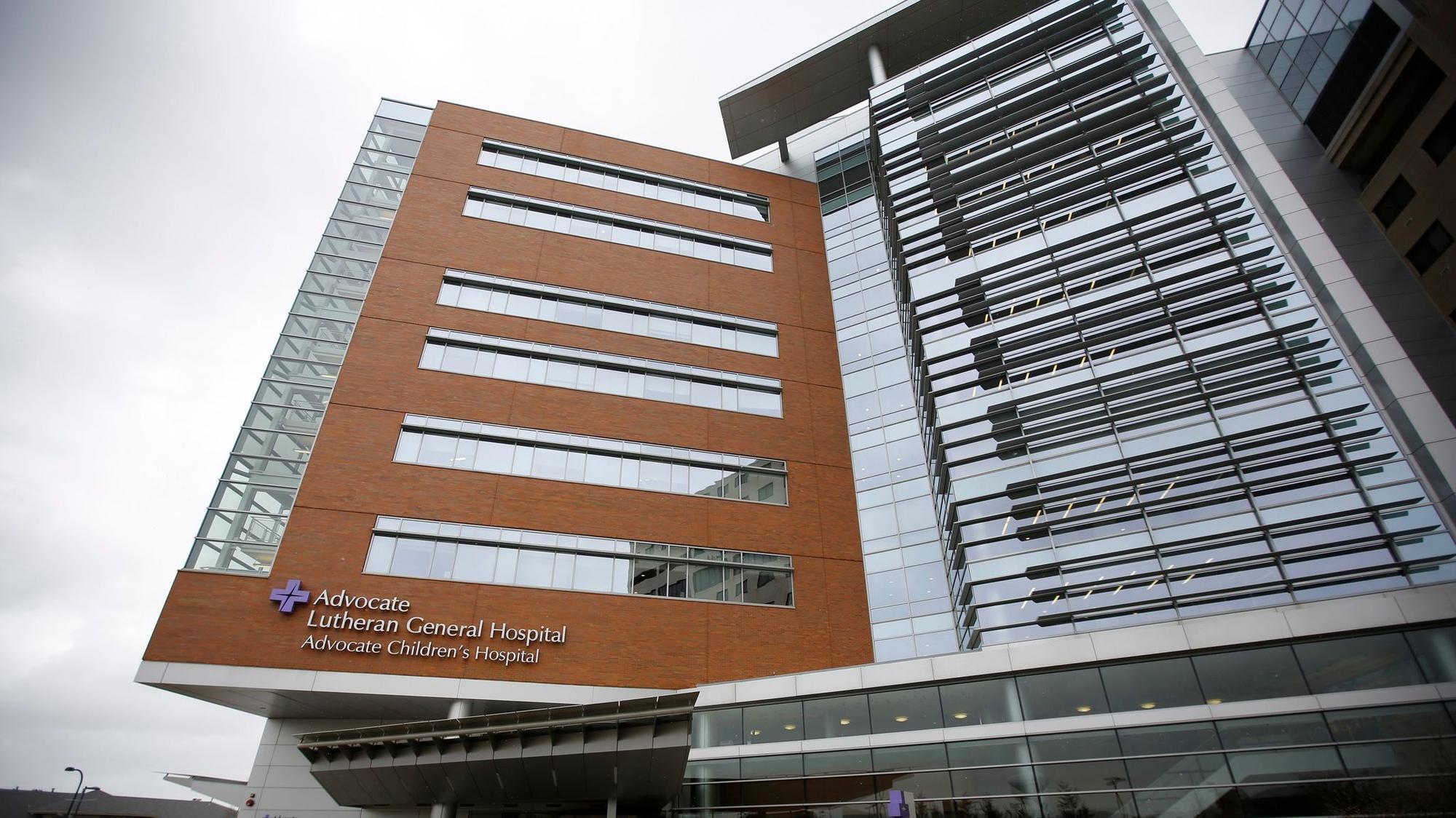
Image result for Illinois hospitals' financial struggles likely to continue into 2018

he list reads like a who’s who of hospital systems in the Chicago area: Advocate Health Care, Edward-Elmhurst Health, Centegra Health System.

But it’s a list of hospitals systems that cut jobs this year to deal with financial pressures — not a list any hospital is eager to join.

Hospitals in Illinois and across the country faced financial stresses this year and are likely to continue feeling the squeeze into 2018 and beyond, experts say. Those pressures could fuel more cuts, consolidation and changes to patient care and services.

“We have many hospitals doing their best just to survive,” said A.J. Wilhelmi, president and CEO of the Illinois Health and Hospital Association.

Moody’s Investors Service recently downgraded its outlook for not-for-profit health care and public health care nationally from stable to negative, with the expectation that operating cash flow will fall by 2 percent to 4 percent over the next 12-18 months. About three-fourths of Illinois hospitals are not-for-profit.

“(For) almost every hospital and health system we talk to, (financial pressure) is at the top of their list in terms of ongoing issues,” said Michael Evangelides, a principal at Deloitte Consulting.

A number of factors are to blame.

Leaders of Illinois systems say reimbursements from government insurance programs, such as Medicaid and Medicare, don’t cover the full cost of care. And with baby boomers growing older, many hospitals’ Medicare populations are on the rise. It doesn’t help that payments to hospitals from the state were delayed amid Illinois’ recently resolved, two-year budget impasse, Wilhelmi said.

Unpaid medical bills, known as bad debt, are also increasing as more patients find themselves responsible for large deductibles. Payments from private insurers are no longer helping hospitals as much as they once did. Though those payments tend to be higher than reimbursements from Medicare and Medicaid, they’re not growing as fast as they used to, said Daniel Steingart, a vice president at Moody’s.

Growing expenses, such as for drugs and information technology services, also are driving hospitals’ financial woes. And hospitals are spending vast sums on electronic medical record systems and cybersecurity, Steingart said.

Many also expect that the new federal tax bill, passed Wednesday, may further strain hospital budgets in the future. That bill will do away with the penalty for not having health insurance, starting in 2019. Hospital leaders worry that change will lead to more uninsured people who have trouble paying hospital bills and wait until their conditions become dire and complex before seeking care.

With so much going on, it can be tough for hospitals to meet revenue goals.

“You’re talking about a phenomenon taking place across the country,” said Advocate President and CEO Jim Skogsbergh. Advocate announced in May that it planned to make $200 million in cuts after failing to meet revenue targets. In March, Advocate walked away from a planned merger with NorthShore University HealthSystem after a federal judge sided with the Federal Trade Commission, which had challenged the deal. Advocate is now hoping to merge with Wisconsin health care giant Aurora Health Care, although the hospital systems say financial issues aren’t driving the deal.

“Everybody is seeing declining revenues, and margins are being squeezed. It’s a very challenging time,” Skogsbergh said.

Hospitals in Illinois have responded to the pressures in a number of ways, including with job reductions. Advocate laid off about 75 workers in the fall; Centegra announced plans in September to eliminate 131 jobs and outsource another 230; and Edward-Elmhurst laid off 84 employees, eliminating 234 positions in all, mostly by not filling vacant spots.

Hospitals also are changing some of the services they offer patients and delaying technology improvements, said the Illinois hospital association’s Wilhelmi.

Centegra Hospital-Woodstock earlier this year stopped admitting most overnight patients, one of a number of changes meant to save money and increase efficiency. As a result, the system “achieved our goal of keeping much-needed services in our community,” spokeswoman Michelle Green said in a statement.

Many Illinois hospitals have also cut inpatient pediatric services, citing weak demand, and are instead investing in outpatient services.

The challenge is saving money while improving care and patient outcomes, said Evangelides of Deloitte. Hospitals are striving to do both at the same time.

Advocate, for example, opened its AdvocateCare Center in 2016 on the city’s South Side to treat Medicare patients with multiple chronic illnesses and conditions. The clinic offers doctors, pharmacists, physical therapists, social workers and exercise psychologists. It has helped reduce hospital admissions and visits among its patients, said Dr. Lee Sacks, Advocate executive vice president and chief medical officer.

Advocate didn’t open the clinic primarily to help its bottom line. The goal was to improve patient care while also potentially reducing some costs.

But such moves are becoming increasingly important to hospitals.

“It really does impact everyone,” Evangelides said of the financial pressures facing hospitals. “We all have a giant stake in helping and hoping that the systems across the country … can ultimately survive and thrive.”


Fitch issues negative outlook for nonprofit hospitals: 4 things to know

https://www.beckershospitalreview.com/finance/fitch-issues-negative-outlook-for-nonprofit-hospitals-4-things-to-know.html

Image result for negative hospital outlook

Fitch Ratings’ outlook on the nonprofit healthcare sector is negative for 2018, as the sector faces regulatory, political and competitive challenges.

Here are four things to know about Fitch’s outlook on the sector.

1. Fitch expects nonprofit hospitals and health systems’ profitability to continue to weaken over the next year. “Growth in Medicare and Medicaid volumes are weakening provider payer mixes at a time when providers are moving from volume-based reimbursement in greater numbers,” said Fitch Senior Director Kevin Holloran.

2. Fitch said several factors could adversely affect lower-rated hospitals’ operating performance in 2018, including growing pressure on salaries and continued erosion in payer mix.

3. The proposed tax overhaul bill, which would hamper nonprofit hospitals’ ability to issue tax-exempt revenue, could further pressure the industry, according to Fitch.

4. Although the nonprofit healthcare sector outlook is negative, Fitch maintained its stable outlook for ratings of healthcare issuers. “Fitch anticipates our revised criteria for the acute care sector will be published early next year, which should lead to an above-average, but still balanced, degree of rating movement during the year,” the debt rating agency said.

Trinity Health races to sell $889M in bonds ahead of tax changes

https://www.beckershospitalreview.com/finance/trinity-health-races-to-sell-889m-in-bonds-ahead-of-tax-changes.html

Image result for big dollars

The possibility that Congress could eliminate federal tax breaks for a large portion of the municipal market has hospitals and other debt issuers hurrying to issue tax-free bonds before borrowing costs rise, according to Reuters.

Nonprofit hospitals and health systems issue tax-exempt bonds to finance capital projects. Under House Republicans’ tax plan, interest on newly issued private activity bonds would no longer be tax-exempt. This change would reduce financing options for some healthcare organizations by raising the cost of capital, according to S&P Global Ratings.

“From a credit perspective, higher borrowing rates can lead to budget imbalances, a challenge for all, and a hallmark of struggling credits,” said S&P.

In response to the tax bill passed by the House in November, Livonia, Mich.-based Trinity Health moved up the sale of about $889 million of new and refunding revenue bonds to this week from January 2018.

“I look at it as kind of a risk mitigation. We were able to accelerate and mitigate any risk of where these proposals may eventually land,” Dina Richard, senior vice president of treasury and chief investment officer of Trinity Health, told Reuters.

The move to eliminate tax exemptions for new private activity bonds is not included in a bill passed by Senate Republicans on Saturday, according to Reuters.


Fitch: Rating downgrades will likely outweigh upgrades for US healthcare companies in 2018

https://www.beckershospitalreview.com/finance/fitch-rating-downgrades-will-likely-outweigh-upgrades-for-us-healthcare-companies-in-2018.html

Image result for fitch

US healthcare companies will likely see more credit rating downgrades than upgrades in 2018, according to Fitch Ratings.

Fitch attributes the increased pressure on industry credit ratings to the uncertain future of the ACA, a changing tax plan, the adoption of alternative payment models and the potential for outsider disruption, which includes Amazon’s entrance into healthcare and advancements in technology.

Further, Fitch explains that technology is increasingly moving patients away from hospitals and enabling decentralization — thus reshaping the healthcare landscape. Due to this changing landscape, the healthcare industry is, “facing secular challenges to pricing power and profitability and these forces are expected to influence certain segments more than others in 2018,” Fitch notes.

However, despite the higher potential for credit downgrades, the US healthcare sector outlook is stable for 2018 due to sheer demand for services, an overall favorable liquidity profile, and generally consistent leverage and debt coverage.


8 hospitals with strong finances

https://www.beckershospitalreview.com/finance/8-hospitals-with-strong-finances-112117.html

Here are eight hospitals and health systems with strong operational metrics and solid financial positions, according to recent reports from Fitch Ratings, Moody’s Investors Service and S&P Global Ratings.

Note: This is not an exhaustive list. Hospital and health system names were compiled from recent credit rating reports and are listed in alphabetical order.

1. Downers Grove, Ill.-based Advocate Health Care has an “Aa2” rating and stable outlook with Moody’s. The health system has a strong market position, healthy liquidity, moderate leverage and good debt metrics, according to Moody’s.

2. Phoenix-based Banner Health has an “AA-” rating and stable outlook with Fitch. The health system has a solid market position, adequate liquidity and healthy capital spending, according to Fitch.

3. Milwaukee-based Children’s Hospital and Health System has an “Aa3” rating and stable outlook with Moody’s. The system has a strong balance sheet and is the dominant provider of tertiary and quaternary pediatric services in southeastern Wisconsin, according to Moody’s.

4. Cook Children’s Medical Center in Fort Worth, Texas, has an “Aa2” rating and stable outlook with Moody’s. The hospital has a strong market position, favorable leverage metrics and a solid liquidity position, according to Moody’s.

5. Mercy Health in Cincinnati has an “Aa3” rating and stable outlook with Moody’s and an “AA-” rating and stable outlook with S&P. The health system has solid debt service coverage and strong balance sheet metrics, according to Moody’s.

6. Nationwide Children’s Hospital in Columbus, Ohio, has an “Aa2” rating and stable outlook with Moody’s. The hospital has a strong market position, solid cash flow and healthy revenue growth, according to Moody’s.

7. Iowa City-based University of Iowa Hospitals & Clinics has as “Aa2” rating and stable outlook with Moody’s. The health system has a broad market with growing patient volumes and geographic reach for its high-acuity services. Moody’s expects the health system’s expense control initiatives to continue to gain traction through fiscal year 2018.

8. Philadelphia-based University of Pennsylvania Health System has an “Aa3” rating and stable outlook with Moody’s. The health system has a strong market position, solid operating margins and limited debt burden, according to Moody’s.


Fitch launches new tool that allows hospitals to assess financial flexibility

https://www.beckershospitalreview.com/finance/fitch-launches-new-tool-that-allows-hospitals-to-assess-financial-flexibility.html

Image result for fitch Analytical Sensitivity Tool


Provider organizations face increased financial pressure as reimbursement models shift in the value-based care era. To keep pace with these trends, Fitch Ratings is updating its rating criteria for nonprofit hospitals and health systems.

The agency’s proposed rating criteria changes, which also apply to tax-supported hospital districts, include introduction of revenue defensibility, operating risk and financial profile rating factors as well as individual assessments for each of those factors. Fitch said risk factors such as debt structure will also play a role in rating assignments.

The new rating factors assess how prepared the organization is to handle cost pressures and the organization’s operating cost flexibility, among other things, according to Fitch.

“The rating criteria needed a refresh and forces us to think about what’s going on right now in healthcare,” says Kevin Holloran, a Dallas-based senior director with Fitch.

The rating agency does not expect to see widespread rating changes as a result of the proposed rating criteria changes. In fact, Fitch projects the proposed changes will affect less than 15 percent of the ratings covered by the criteria.

Fitch took feedback on its initial draft of proposed rating criteria changes up until Oct. 20. It will now incorporate feedback into a final draft and anticipates adopting the proposed rating criteria changes in December.

FAST

As part of the proposed rating criteria changes, the rating agency is launching the Fitch Analytical Sensitivity Tool, or FAST. The interactive tool measures the financial flexibility of healthcare organizations in various hypothetical stress scenarios. For instance, the tool can assess how changes in the overall U.S. economy/market cycle, such as a drop in property values or the gross domestic product, may affect a hospital’s financial picture. Additionally, the tool can assess a hospital’s potential sensitivity to margin decline in various stress scenarios such as issuing a significant amount of debt or facing increased market competition, according to Fitch.

“Ratings agencies are always accused of looking backward in the mirror, but we want [the organization] to look forward expressly. We thought we always did a good job with that, but there’s always room for improvement,” says Mr. Holloran.

FAST can also model growth and expense rates and subject them to stress or an unexpected negative event to see if a hospital’s credit remains stable, according to Mr. Holloran.

He explains, this is “not a forecast, but a reasonable scenario based on our input combined with the credit, or input based on historical performance.” Mr. Holloran also notes the model informs ratings but does not drive them.

The public can now look at a mockup of the model here. Mr. Holloran says the model is built, but it does not include every credit rating yet. Fitch will continue to add to the tool over time.

Once the agency’s proposed rating criteria changes are fully adopted, the FAST model will allow hospitals to look forward and stress test a rating.

Hospitals “could use it for scenario building and give them a guide for the metrics they want to focus on,” Mr. Holloran says. “We can tell them this is the criteria we’re focusing on and this is how you stack up.”

He added, “It’s a powerful [data visualization] tool and really drives the conversation.”

These Hospital Bonds Are on Life Support

https://www.bloomberg.com/gadfly/articles/2017-10-27/a-49-billion-hospital-emergency-heads-toward-junk-bonds

Image result for junk yard

Junk-bond buyers appear to have a blind spot when it comes to for-profit health care companies.

They’ve snapped up bonds of Tenet Healthcare Corp. and Community Health Systems Inc. despite the drastically souring outlook for both hospital operators. Some of this may be idiosyncratic or the result of specific investors’ strategies (or unwillingness to sell). Franklin Resources Inc., for example, now owns nearly 20 percent of Community Health’s total debt and more than half of its $1.9 billion of bonds maturing in 2019, according to recent filings compiled by Bloomberg.

In general, however, as credit investors plow into broad indexes of riskier assets, it appears they’re simply turning a blind eye to the ugly balance sheets of hospital operators amid an increasingly difficult backdrop. Federal programs like Medicaid are clamping down on costs. And the Trump administration’s various efforts to weaken the individual insurance market will potentially put hospitals on the hook for more uncompensated care as fewer people sign up for health care coverage.

Meanwhile, Tenet and Community Health made some questionable decisions in recent years to borrow billions of dollars to make acquisitions that now look pricey. These companies don’t generate a ton of cash at the best of times, and much of what they do have now goes to debt service rather than much needed hospital improvements.

CIRCLING THE DRAIN

It’s hard for companies to confront mountainous piles of debt when they don’t generate consistent cash flow.

These hospital operators have a narrowing field of options right now. Tenet recently tried, and failed, to sell itself, which sent its shares plunging on Thursday. Both hospitals report earnings within the next few weeks. If HCA Healthcare is any guide — the company pre-announced worse-than-expected third-quarter earnings last week — they won’t be pretty.

But still, no one in the bond market seems to care. Tenet’s bonds have soared 7.8 percent so far this year, even though its stock has fallen 13.3 percent. Community Health debt has gained 16.5 percent, four times the 4.1 percent gain in its shares.

DIVERGING FATES

Bond investors seem to be turning a blind eye to difficulties recognized by stock investors

This seems sort of ludicrous. One hedge fund manager, Boaz Weinstein of Saba Capital Management, sees this as an opportunity to short some of these companies’ junior bonds. Weinstein pointed out at a conference this month that Community Health’s $14 billion pile of debt is 20 times the value of its equity.

Unless the company’s fortunes turn around, it will be forced to reckon with its debt in painful ways for its business as well as the returns of creditors. It’s hard to see how the business could get better with President Donald Trump’s continuing attempts to torpedo health care insurance subsidies, which is widely expected to hurt hospital profitability.

Credit investors at some point are going to have to come to grips with this. Community Health and Tenet, along with HCA, account for $49 billion of debt in a broad U.S. high-yield bond index. This pile is looking increasingly vulnerable to a day of reckoning.

New competitor poses big risk for Community Health Systems

Image result for Indiana University Health

IU Health is getting into the Fort Wayne market.

The News-Sentinel in Fort Wayne, Indiana, is reporting Indiana University Health, the dominant not-for-profit health system in the state, is expanding into the city. Brian Bauer — the former CEO of Lutheran Health Network in Fort Wayne who was fired by Lutheran’s for-profit parent, Community Health Systems — will lead the IU Health region.

Why it matters: This is not just a small regional deal in Indiana. CHS is on the brink of collapse. And now Lutheran, one of CHS’ most profitable hospital systems, faces a powerful competitor that likely will nab Lutheran’s patients as well as doctors, nurses and other employees.

Inside Fort Wayne: Two sources familiar with Lutheran told me the environment is “toxic” and “adversarial.” Lutheran already has lost employees to a separate nearby system, Parkview Health, the sources said. They also said Lutheran’s profitability has dwindled this year. IU Health did not respond to inquiries.

  • IU Health plans to build hospitals and outpatient centers in the Fort Wayne area, and that would be a giant blow to Lutheran, which many Wall Street analysts say is the “crown jewel” of CHS. One source said Lutheran’s earnings before interest, tax, depreciation and amortization last year were around $280 million.
  • That will make it even tougher for CHS to pay down its mountain of debt if profits get sucked out of its most lucrative region.
  • CHS, which is in the process of selling off hospitals, turned down a buyout offer of Lutheran last year.
What to watch: CHS will report third-quarter earnings after markets close Nov. 1, and the investor call will be the following morning.