Top 10 healthcare trends for 2017

https://www.linkedin.com/pulse/top-10-healthcare-trends-2017-steve-valentine?trk=hb_ntf_MEGAPHONE_ARTICLE_POST

Image result for Top 10 healthcare trends for 2017

2017 will be a transition year shaped by changes proposed by President-elect Donald Trump and a Republican Congress. Chief healthcare concerns include legislative proposals to “repeal and replace” the Affordable Care Act (ACA), along with the continued movement to implement alternative payment models (APMs) as called for in the Medicare Access and CHIP Reauthorization Act (MACRA). We will address the potential changes ahead when it comes to shifting health benefits, provider supply, new care models, transparency, and the continued growth of consumerism. 2017 will be a dynamic year as we pivot and move in a new political direction.

S&P issues stable outlook for nonprofit healthcare despite looming ACA repeal

http://www.beckershospitalreview.com/finance/s-p-issues-stable-outlook-for-nonprofit-healthcare-despite-looming-aca-repeal.html

Image result for s&p

S&P Global Ratings‘ outlook on the nonprofit healthcare sector is stable in 2017, despite the sector facing a likely repeal of the ACA.

Although S&P’s ratings and financial medians support its outlook on the sector, the rating agency may change its outlook in the near future.

“…we see a growing potential for credit quality deterioration based on the latest results from some providers, and the possibility the outlook could turn negative after the new administration and Congress are sworn in, given their intention to drastically alter the ACA and many long-term legislative tenets of the overall healthcare delivery system,” said Kevin Holloran, an S&P Global Ratings credit analyst.

Even without any major legislative changes, many hospitals are facing renewed expense, revenue and volume pressures, as the initial positive effects of Medicaid expansion have ended. S&P said there has recently been an increase in the number of providers with weaker financial and operating performance.

“We believe the sector peaked in 2016 from a financial and operating metric perspective, although change is evolving slowly and is based on existing legislative healthcare framework,” said S&P.

The rating agency emphasized that 2017 is not all doom and gloom for the nonprofit healthcare sector.

“Continued implementation of fundamental operational improvement initiatives and strategies…should continue to provide financial flexibility under any type of payment system,” said S&P.

Two other major rating agencies, Moody’s Investors Service and Fitch Ratings, have also issued stable outlooks for the nonprofit healthcare sector in 2017.

Big Changes and Big Risks Are Ahead for Health Policy

http://www.realclearhealth.com/articles/2016/11/09/big_changes_and_big_risks_are_ahead_for_health_policy__110237.html?utm_campaign=KHN%3A+Daily+Health+Policy+Report&utm_source=hs_email&utm_medium=email&utm_content=37390717&_hsenc=p2ANqtz-_CzB7SB8_jTflW9iZbujhPgbEgYoEGH0CmjnZCWfYQ6OhRFxv03I_g24L5CSEuvETzsbKwqacigRbc9C9fAU0zdkkgyw&_hsmi=37390717

Image result for Big Changes and Big Risks Are Ahead for Health Policy

The election outcome itself could create more problems for the ACA. The insurance plans sold on the law’s exchanges have already experienced substantial losses due to adverse selection, leading many insurance companies to pull back on their participation. The prospect of a Trump administration steering ACA implementation may be enough to convince some of the insurers still offering products on the exchanges in 2017 to rethink their plans. If more insurance companies head for the exits, the exchanges could become even less stable than they already are.

The “replace” part of “repeal and replace” has always been the tricky part for ACA opponents, and that will also be true for the incoming Trump administration. During the campaign, Trump offered only the vaguest outline of a plan that wouldn’t come close to serving as a starting point for a workable proposal. The ACA, for all of its problems, brought many low-income households into insurance coverage, through an expansion of the Medicaid program and through heavy subsidization of the insurance plans offered on the exchanges. Unless Trump wants to preside over a massive increase in the number of Americans without health insurance during his presidency, he will have to offer a plan that ensures households with low incomes can secure health insurance in some new way.

Analysis: Time for GOP to prove it has a better plan for healthcare reform

http://www.fiercehealthcare.com/payer/analysis-time-for-gop-to-prove-it-has-a-better-plan-for-healthcare-reform?utm_medium=nl&utm_source=internal&mrkid=959610&mkt_tok=eyJpIjoiTnpkaFpqRm1ZVEZpWkdZMiIsInQiOiJxY1NBT1ZDbGdDQWsxVzRQQ21iOVwvcEVkOFdDVTBIUG9hZWllQ0tiYmFuM2lUVU52Y2JGWkxnNW9BWDJhTWNZSTVTR2QwVmdTYWdIQkFPWGdxZ3FRWlwvRXVuSFFvZ2pKa3NaTUlwU0M1YmVJPSJ9

With Donald Trump headed to the White House and his party firmly in control of Congress, Republicans will finally have a chance to prove what they’ve been saying all along: that they can produce a better version of healthcare reform than the Affordable Care Act.

It’s clear that the ACA is as imperiled as it has ever been. Trump has fervently vowed to repeal it–and with Republican control of both chambers of Congress, he may well get his wish. After all, the law’s most visible component, the exchanges, are on shaky ground as it is, with premiums rising and some health insurers retreating from the marketplaces.

Plus, President Barack Obama’s last attempt at convincing Republicans to work on fixing the ACA–not repealing it–fell on deaf ears even before the party’s resounding victory Tuesday.

What gets lost in all the talk about the ACA’s uncertain future, though, is the fact that while some insurers have struggled to make a profit in the individual marketplaces, there are other aspects of the law to which they have become quite attached.

Take Medicaid expansion, an idea championed by Democrats (and even once embraced by Vice President-Elect Mike Pence) that has been a boon to insurance companies in the form of lucrative managed care contracts. Some companies that specialize in slimmed-down Medicaid plans have also thrived on the exchanges where others have floundered.

Then there’s the ACA’s provisions that encourage the transition to value-based payments, which insurers have embraced and largely retooled their business models to reflect. Accountable care organizations, for example, have sprung up like wildfire, producing promising results for some companies.

A wholesale repeal of the ACA would also erase the law’s historic gains in reducing the uninsured rate. Though many of the newly insured have turned out to be costlier to cover than expected, such a move would still rob insurers of millions of new customers.

The question, then, becomes what will replace the law–and that’s where it gets interesting.

Trump has a plan, but it is short on details. Perhaps most visibly, he has advocated for selling insurance across state lines–a timeworn GOP talking point that many experts agree is not feasible. He would also repeal Medicaid expansion and convert Medicaid federal matching funds into a block grant, the latter of which would drastically cut Medicaid funding and coverage.

One analysis from The Commonwealth Fund says that his plan could add nearly 20 million peopleto the ranks of the uninsured, and even more if his Medicaid proposals come to fruition.

The 2016 Election Reveals The Differences On Health Care Are Deeper Than Ever

http://healthaffairs.org/blog/2016/11/07/the-2016-election-reveals-the-differences-on-health-care-are-deeper-than-ever/

mcdonough_exhibit1

We are nearing the grand finale of our long and disheartening election opera, one we dare not ignore because the outcomes matter so much. While the election results will not be determined by public reactions to the Affordable Care Act, the ACA’s fate will be mightily determined by Tuesday’s outcomes. What have we learned about our collective health future over the past 18 months and what might this mean for our health system’s future?

Public Opinion On Health Reform Is As Frozen Today As It Was In Spring, 2015

Kaiser monthly tracking polls show reliably unfavorable attitudes toward the ACA, slightly beating favorables, and stuck since 2014 in 40 percent purgatory. The advantages millions of Americans feel from ACA insurance coverage expansions and other access reforms are balanced by those who now blame the ACA for everything bad that happens in health care. The misnamed Pottery Barn rule—“if you break it, you own it”—applies here even though the dish was broken well before the ACA. Beyond this, if there is one thing on which both sides of the new Republican divide concur, it is a deep hostility towards ObamaCare. The election cycle seems to have only hardened these views.

22 recent hospital outlook and credit rating actions

http://www.beckershospitalreview.com/finance/22-recent-hospital-outlook-and-credit-rating-actions-102116.html

Image result for credit ratings


Fitch: Health insurer credit metrics hit hard in first half of 2016

http://www.beckershospitalreview.com/payer-issues/fitch-health-insurer-credit-metrics-hit-hard-in-first-half-of-2016.html

Debt Buying FirmsDebt Buying Firms

Higher leverage ratios from acquisition-related debt combined with declining revenue growth and declining interest coverage ratios contributed to deteriorating credit metrics for publicly traded health insurers in the first half of 2016, according to a Fitch Ratings report.

The weakened credit picture has led Fitch to take several negative rating actions. The rating agency downgraded Louisville, Ky.-based Humana’s senior notes, revised Minnetonka, Minn.-based UnitedHealth Group’s rating outlook to negative and placed ratings of Hartford, Conn.-based Aetna, Indianapolis-based Anthem and St. Louis-based Centene on negative watch.

13 recent hospital outlook and credit rating actions

http://www.beckershospitalreview.com/finance/13-recent-hospital-outlook-and-credit-rating-actions-081216.html

11 recent hospital outlook and credit rating actions

http://www.beckershospitalreview.com/finance/11-recent-hospital-outlook-and-credit-rating-actions-070816.html

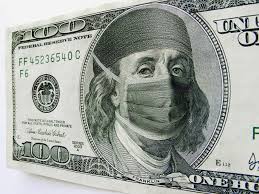
Money Physician


Healthcare reform, value-based pay bolsters credit ratings, for now, experts say

http://www.healthcarefinancenews.com/news/healthcare-reforms-value-based-pay-bolsters-credit-ratings-now-experts-say

While reforms tied to the Affordable Care Act have most healthcare providers focusing on quality and efficiency, financial experts say the dramatic change in business model is driving improvement in credit ratings. But worries still persists about just how stable those changes are.

According to Martin Arrick, a managing director at Standard and Poor’s, said a number of factors are affecting ratings trends, although the outlook in general appears to improving. S&P had been negative on the healthcare sector a couple of years ago, mostly because of pressure on operating margins, but that outlook has since reverted back to stable.

“We still see pressure on operating margins, but there are two big things,” said Arrick. “One is that hospitals have done a good job containing costs and keeping their margins generally solid. Two is Medicaid expansion.”