GOP Conservatives’ Goal To Relax Mandatory Health Benefits Unlikely To Tame Premiums

GOP Conservatives’ Goal To Relax Mandatory Health Benefits Unlikely To Tame Premiums

Image result for health insurance industry lobby

As House Republicans try to find common cause on a bill to repeal and replace the Affordable Care Act, they may be ready to let states make the ultimate decision about whether to keep a key consumer provision in the federal health law that conservatives say is raising insurance costs.

Those conservatives, known as the House Freedom Caucus, and members of a more moderate group of House Republicans, the Tuesday Group, are hammering out changes to the GOP bill that was pulled unceremoniously by party leaders last month when they couldn’t get enough votes to pass it. At the heart of those changes is the law’s requirement for most insurance plans to offer 10 specific categories of “essential health benefits.” Those include hospital care, doctor and outpatient visits and prescription drug coverage, along with things like maternity care, mental health and preventive care services.

The Freedom Caucus had been pushing for those benefits to be removed, arguing that coverage guarantees were driving up premium prices.

“We ultimately will be judged by only one factor: if insurance premiums come down,” Freedom Caucus Chairman Rep. Mark Meadows (R-N.C.) told The Heritage Foundation’s Daily Signal.

But moderates, bolstered by complaints from patients groups and consumer activists, fought back. And a brief synopsis of results from the intraparty negotiations suggests that the compromise could be letting states decide whether to seek a federal waiver to change the essential health benefits.

“The insurance mandates are a primary driver of [premium] spikes,” wrote Meadows and Sen. Ted Cruz (R-Texas) in an op-ed in March.

But do those benefits drive increases in premiums? And would eliminating the requirement really bring premiums down? Health analysts and economists say probably not — at least not in the way conservatives are hoping.

“I don’t know what they’re thinking they’re going to pull out of this pie,” said Rebekah Bayram, a principal consulting actuary at the benefits consulting firm Milliman. She is the lead author of a recent study on the cost of various health benefits.

Opponents of the required benefits point to coverage for maternity care and mental health and substance abuse treatment as driving up premiums for people who will never use such services.

But Bayram said eliminating those wouldn’t have much of an impact. Hospital care, doctor visits and prescription drugs “are the three big ones,” she said. “Unless they were talking about ditching those, the other ones only have a marginal impact.”

John Bertko, an actuary who worked in the Obama administration and served on the board of Massachusetts’ health exchange, agreed: “You would either have very crappy benefits without drugs or physicians or hospitalization, or you would have roughly the same costs.”

Maternity care and mental health and substance abuse, he said, “are probably less than 5 percent” of premium costs.

Of course, requiring specific coverage does push up premiums to some extent. James Bailey, who teaches at Creighton University in Omaha, Neb., has studied the issue at the state level. He estimates that the average state health insurance mandate “raises premiums by about one-half of 1 percent.”

Those who want to get rid of the required benefits point to the fact that premiums in the individual market jumped dramatically from 2013 to 2014, the first year the benefits were required.

“The ACA requires more benefits that every consumer is required to purchase regardless of whether they want them, need them or can afford them,” Ohio Insurance Commissioner Mary Taylor said in 2013, when the state’s rates were announced.

But Bayram noted most of that jump was not due to the broader benefits, but to the fact that, for the first time, sicker patients were allowed to buy coverage. “The premiums would go down a lot if only very healthy people were covered and people who were higher risk were pulled out of the risk pool,” she said. (Some conservatives want to change that requirement, too, and let insurers charge sick people higher premiums.)

Meanwhile, most of the research that has been done on required benefits has looked at plans offered to workers by their employers, not policies available to individuals who buy their own coverage because they don’t get it through work or the government. That individual market is the focus of the current debate.

Analysts warn that individual-market dynamics differ greatly from those of the employer insurance market.

Bailey said he “saw this debate coming and wanted to write a paper” about the ACA’s essential health benefits. But “I very quickly realized there are all these complicated details that are going to make it very hard to figure out,” he said, particularly the way the required benefits work in tandem with other requirements in the law.

For example, said Bertko, prescription drugs can represent 20 percent of costs in the individual market. That’s far more than in the employer market.

Bayram said another big complication is that the required benefits do double duty. They not only ensure that consumers have a comprehensive package of benefits but enable other parts of the health law to work by ensuring that everyone’s benefits are comparable.

For example, the law adjusts payments to insurers to help compensate plans that enroll sicker-than-average patients. But in order to do that “risk adjustment,” she said, “all of the plans have to agree on some kind of package. So if you think of essential health benefits as an agreed-upon benchmark, I don’t know how they can get rid of that and still have risk adjustment.”

Drugmakers Dramatically Boosted Lobbying Spending In Trump’s First Quarter

Drugmakers Dramatically Boosted Lobbying Spending In Trump’s First Quarter

Eight pharmaceutical companies more than doubled their lobbying spending in the first three months of 2017, when the Affordable Care Act was on the chopping block and high drug prices were clearly in the crosshairs of Congress and President Donald Trump.

Congressional records show those eight, including Celgene and Mylan, kicked in an extra $4.42 million versus that quarter last year. Industry giant Teva Pharmaceutical Industries spent $2.67 million, up 115 percent from a year ago as several companies embroiled in controversies raised their outlays significantly.

“It’s certainly a rare event” when lobbying dollars double, noted Timothy LaPira, an associate professor of political science at James Madison University. “These spikes are usually timed when Congress in particular is going to be really hammering home on a particular issue. Right now, that’s health care and taxes.”

Trump has come down hard on drugmakers, stating in a press conference before his inauguration that the industry is “getting away with murder.” He has promised to lower drug prices and increase competition with faster approvals and fewer regulations. Sens. Bernie Sanders (I-Vt.) and John McCain (R-Ariz.), and Rep. Elijah E. Cummings (D-Md.) have introduced bills to allow lower-cost drug imports from Canada or other countries.

Lobbyists weren’t expecting much by way of big policy changes during the comparatively sleepy end of the Obama administration this time last year, but with a surprise Trump administration and a Republican-controlled House and Senate, trade groups and companies are probably “going all in,” LaPira said.

Thirty-eight major drugmakers and trade groups spent a total of $50.9 million, up $10.1 million from the first quarter of last year, according to a Kaiser Health News analysis. They deployed 600 lobbyists in all.

PhRMA, the drug industry’s largest trade group, spent $7.98 million during the quarter —more than in any single quarter in almost a decade, congressional records show, topping even its quarterly lobbying ahead of the Affordable Care Act’s passage in 2010.

In their congressional disclosures, companies listed Medicare price negotiation, the American Health Care Act, drug importation and the orphan drug program as issues they were lobbying for or against. They do not have to disclose on which side of an issue they lobbied.

When Medicare prices are on the table, it should come as no surprise that pharmaceutical companies are interested in influencing congress.

“It’s quite literally hitting their bottom line,” LaPira said.

Drugmakers under fire more than doubled their lobbying dollars. Mylan spent $1.45 million during the quarter, up from $610,000 last year. The company’s CEO faced a congressional hearing in the fall when it raised the price of EpiPen to over $600.

Marathon Pharmaceuticals spent $230,000, which was $120,000 more than last year. Marathon was criticized in February after setting the price of Emflaza, a steroid to treat Duchenne muscular dystrophy, at $89,000 a year. That angered advocates, Congress and patients who had been importing the same drug for as little as $1,000 a year. Marathon has since sold the drug to another company, and the price may come down.

Teva and Shire also more than doubled their spending. Teva was accused as part of an alleged generic price-fixing scheme in December, and the Federal Trade Commission sued Shire because one of its recently acquired companies allegedly filed “sham” petitions with the Food and Drug Administration to stave off generics.

Companies that make drugs for rare diseases also more than doubled lobbying dollars as congressional leaders and the Government Accountability Office work to determine whether the Orphan Drug Act is being abused. Those firms include BioMarin, Celgene and Vertex Pharmaceuticals. Celgene, which makes a rare cancer drug, more than tripled its first quarter lobbying to more than $1 million.

Despite efforts to make good on campaign promises to repeal the Affordable Care Act, House Republicans canceled a floor vote on the American Health Care Act in March after multiple studies estimated that millions of people would lose coverage if it passed, and neither Democrats nor ultra-conservatives lined up in opposition to the bill’s provisions. Drug prices weren’t a key part of the package.


GOP to give Obamacare repeal another shot next week

http://www.healthcarefinancenews.com/news/gop-give-obamacare-repeal-another-shot-next-week

Image result for aca repeal

The Republicans have a new plan to repeal and replace the Affordable Care Act, according to reports.

The new bill is expected to be out by the weekend and to get a vote by the mid-week in time for the president’s first 100 days, according to Politico. Sources told Politico they believe they are close to having the votes necessary to pass the bill.

House Speaker Paul Ryan pulled the previous bill, the American Health Care Act, when it became clear there were not enough votes for it to pass because of opposition from members of the conservative Freedom Caucus.

On April 13, Republican Representatives Tom MacArthur, a Republican from New Jersey, and Mark Meadows, who heads the Freedom Caucus seemed to come to a compromise on an amendment that gives states more flexibility while preserving consumer protections to get and retain health insurance.

The MacArthur Amendment to the American Health Care Act would reinstate essential health benefits as the federal standard, but would allow states to apply for a waiver for these essential health benefits as a way to reduce premium costs.

State waivers could also be applied for community rating rules that prevent insurers from varying premiums within a geographic area, except for factors of gender, health status and age. The later would have the exception of the 5:1 age ratio for older Americans.

Under the amendment, health status is also up for an exception in states that establish a high-risk pool or are participating in a federal high-risk pool.

It would prohibit denial of coverage due to preexisting medical conditions, guarantee coverage and renewal of coverage, and allow dependents to stay on their parents’ plans up until the age of 26 years old.

In mid-April, House Speaker Paul Ryan unveiled an amendment to the American Health Care Act that would create a federal risk sharing program for insurers.

Before the break, a House Rules Committee approved a mark-up of the amendment.

Ryan gave no cost to the amendment sponsored by conservative Reps. Gary Palmer of Alabama and David Schweikert of Arizona. Palmer said the Palmer-Schweikert proposal is modeled after what is being done in Maine. The risk-sharing program would be a federal program for three years and then turned over to the states, Palmer said.

In 2011, Maine overhauled its system, creating what is called an invisible high-risk pool for individuals with pre-existing conditions. The invisible high-risk pool was made of up individuals who had certain conditions that would have normally placed them in a regular high-risk pool.

However, these individuals did not know they were in the invisible high-risk pool and were not charged higher premiums. The invisible high-risk pool operated behind the scenes as the Maine Guaranteed Access Reinsurance Association.


Revised ACA Repeal-and-Replace Bill Likely to Increase the Uninsured Rate and Health Insurance Costs for Many

http://www.commonwealthfund.org/publications/blog/2017/apr/amendment-aca-repeal-and-replace-bill

News outlets report that House Republicans are close to agreeing on an amended version of the American Health Care Act (AHCA), their proposed repeal and replacement of the Affordable Care Act (ACA). The all-important legislative language for the revised bill is not yet available, nor are Congressional Budget Office (CBO) projections of its effects on coverage and the budget, so any analyses are necessarily tentative.

Nevertheless, the summaries leaked to the media offer insight on the amended bill. If accurate, those summaries suggest that the revised AHCA will significantly increase the numbers of uninsured Americans, raise the cost of insurance for many of the nation’s most vulnerable citizens, and, as originally proposed in the AHCA, cut and reconfigure the Medicaid program. The new amendment specifically allows states to weaken consumer protections by, for example, permitting insurers to charge people with preexisting conditions higher premiums.

What the Amendment Leaves in Place

The amended proposed bill does little to change many provisions of the original AHCA including:

The CBO estimated in March that the combined effects of these provisions would increase the number of people without health insurance by 24 million by 2026. Older Americans would be particularly hard hit by the bill, experiencing much higher premiums relative to the ACA and the greatest coverage losses.

What the Amendment Changes

The amendment offers states the option to apply for waivers to reduce ACA consumer protections that have enabled people with health problems to buy private health insurance. States could waive the ban on charging people with preexisting conditions higher premiums, as long as states set up high-risk pools for people with conditions like cancer or heart disease who could no longer afford coverage. States could also change the ACA’s required minimum package of health benefits for health plans sold in the individual and small-group markets.

Despite the fact the federal ban on preexisting condition exclusions would remain under the AHCA, as Tim Jost points out, insurers could reach the same end by not covering services like chemotherapy that sick people need, or by charging very high premiums for individuals with expensive, preexisting problems. In addition, waiving the ACA’s essential benefit requirement could weaken other consumer protections like bans on lifetime and annual benefit limits and caps on out-of-pocket costs.

While states that allowed higher premiums for people with health problems would be required to use a high-risk pool under the amendment, prior research has found that such pools operated by states before the ACA were expensive both for states and for people enrolled in them, and covered only a small fraction of the individuals who would have benefited. An amendment proposed earlier in the month would provide federal funds for a so-called “invisible risk-sharing” program, a hybrid between a high-risk pool and reinsurance for high claims costs, but the allocated funding would likely need to be much higher to have an impact on costs.

The number of states that would apply for these waivers is unknown, but it seems reasonable to expect that many states with governors and legislatures that have opposed the ACA would do so. For a substantial part of the country, therefore, the amendment could seriously undermine the ACA’s protections for people with preexisting health conditions.


White House, Republican leadership downplay chances of quick healthcare deal

‘Iranians are no threat to Americans’: Ann Coulter blasts Trump focus on Iran instead of ‘this hemisphere’

Image result for aca repeal

White House officials and Republican aides worked to downplay expectations of an imminent vote on Obamacare reform legislation Thursday amid widespread speculation that a healthcare deal was in the offing.

While both the White House and GOP aides confirmed that healthcare negotiations have continued throughout the congressional recess, both sides stressed that a compromise bill may not be ready for a vote by next week, when lawmakers return from their two-week break.

“Congress needs to act quickly on a solution for the American people. Our administration is engaged in those conversations and we are making progress,” a White House official told the Washington Examiner. “But there is not a set deadline to complete it.”

A senior Republican aide told the Examiner that discussions about how to unite members behind an Obamacare reform bill had yielded “no legislative text.”

And Trump himself expressed uncertainty that a new version of the healthcare bill would be ready by next week, although he predicted it could be ready “shortly thereafter.”

“We’re doing very well on healthcare,” Trump said. “We’ll see what happens.”

Premium Increases for Pre-Existing Conditions Under Latest ACA Repeal Plan, by State

https://www.americanprogress.org/issues/healthcare/news/2017/04/21/431019/premium-increases-pre-existing-conditions-latest-aca-repeal-plan-state/

Hundreds of people march through downtown Los Angeles protesting President Donald Trump's plan to dismantle the Affordable Care Act, March 23, 2017.

Repealing protections for people with pre-existing health conditions could be on Congress’ agenda as early as next week. Facing pressure from the Trump administration, Congress may be ready once again to try to repeal the Affordable Care Act, or ACA. This time around, Congress is discussing including an amendment that would allow insurance companies in the individual market to charge higher rates to consumers based on health status.

Under the deal that was leaked, states would be able to waive protections for pre-existing conditions for any reason, as long as they set up a high-risk pool or participated in a federal risk-sharing program. Before the ACA, all but seven states allowed insurance companies to charge higher premiums to people with pre-existing conditions.

Without pre-existing condition protections, health care would become prohibitively expensive for those who need it most. People with asthma, a relatively minor chronic condition, would face a markup of about $4,000 for coverage, while those with severe illnesses such as heart trouble or cancer would face premiums tens of thousands of dollars above standard rates.

The cost of care varies by state, and health insurance costs do too. The Center for American Progress has estimated the premium surcharges that consumers in each state—and the District of Columbia—would face for five conditions under the new congressional Republican proposal: breast cancer; pregnancy; major depression; diabetes; and asthma. We have also accounted for the federal risk-sharing program that Republicans in Congress have put forward as a means of limiting premium increases. The numbers in the table are the average increases that people currently experiencing the listed conditions would pay on top of the standard rate for health coverage, including the new risk-sharing program.

However, as evidence from before the passage of the ACA shows, insurance companies would also set rates based on previous ailments. More than 130 million nonelderly Americans have pre-existing conditions, and the return of rating on health status would subject them to thousands of dollars of extra expenses for individual market coverage.

Seven states had pre-existing condition protections in place before the ACA: Maine; Massachusetts; New Jersey; New York; Oregon; Vermont; and Washington. We assume that these states would not seek an AHCA waiver to allow rating based on health status and therefore did not calculate health-based surcharges for these states.


Shalala: What I Learned About How Hard It Is to Reform Health Care

http://www.chcf.org/articles/2017/04/shalala-what-i-learned

Image result for donna shalala

J. Duncan Moore Jr.

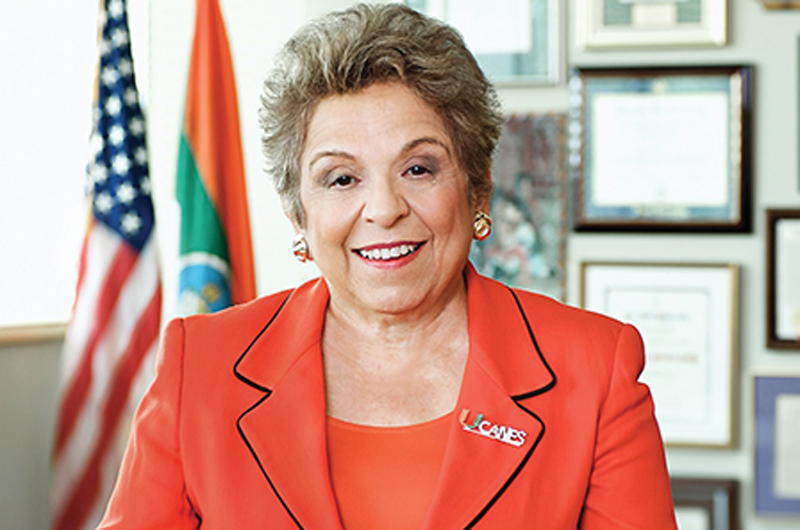
Independent journalist J. Duncan Moore, Jr., has been writing about health policy for more than 20 years. Recently he attended a health policy conference at the University of Miami where former Health and Human Services Secretary Donna Shalala reflected on lessons learned from her career in health policy and politics. Here is his report.

President Trump and Republican members of Congress continue to struggle with their many different plans to repeal and replace the Affordable Care Act (ACA). This is a high-risk venture on two levels. If they get their way, it could reduce the number of Americans with health insurance by more than 24 million, do away with essential health benefit rules, allow insurance companies to exclude customers with pre-existing conditions, and more.

Beyond those serious human impacts on Americans’ health and household finances, the political effects could be significant for the Republicans who control the legislative and executive branches. Polling shows dismal support for the GOP’s health care goals, and Republicans have been greeted by angry crowds at many town halls during the current congressional recess. This is all turning out to be much harder than they apparently believed during Barack Obama’s eight-year administration, when they tried more than 60 times to repeal the ACA but always knew their actions would be vetoed.

The political strife surrounding the proposed ACA repeal is not surprising to those who chased health care reform plans that went down to dust. Donna Shalala, who was secretary of Health and Human Services during the Clinton administration’s ill-fated health care initiative in 1993, recently recounted how difficult it can be to push a major domestic legislative overhaul. The graveyard of doomed health care initiatives is crowded, she pointed out, with tombstones memorializing efforts by Franklin D. Roosevelt, Harry Truman, John F. Kennedy and Sen. Edward Kennedy, Jimmy Carter, and Bill Clinton. Even Richard Nixon made a proposal that withered in Congress. “Sen. Kennedy said, toward the end of his life, ‘I wish I had signed on to the Nixon bill,’ ” Shalala recalled. Now it’s Trump’s turn to tempt fate.

“Taking giant steps in health policy takes a certain number of characteristics,” Shalala told an audience of 800 health care executives and policy experts in March at the University of Miami, where she formerly served as president. “Over the years we have learned what the elements have to be to do that. We have learned through the failures.”

Here are the lessons Shalala learned about major health policy legislation:

  • The president must have passion for pushing the bill through to completion. Presidents need to be prepared to use up a lot of political capital along the way. President Obama overruled the naysayers in his own White House because of the searing memory of his mother arguing with her health insurance company as she lay dying of cancer.
  • Move fast. Time is not on your side. “Presidents lose power every day. The height of their power is the beginning of the administration. In the Clinton Administration, we delayed. Clinton was distracted by other things.”
  • You must have a plan. President Obama had the advantage of being cornered during the 2008 primary season by Hillary Clinton, who released her own health reform plan. He was forced to think about his plan during the campaign.
    • Presidents must stay out of the weeds. Just keep trumpeting the big themes. “Carter loved the details. Clinton loved to get into the weeds.” It didn’t help them any.
    • You won’t get anywhere without congressional buy-in. “Just sending them up a bill was unsuccessful for any president.”
    • You must win the support of the stakeholders. “Every unsuccessful effort has been stopped by stakeholders: the American Medical Association, the hospitals, or the pharmaceutical industry.” In political science, she said, “we talk about negative coalitions. Every stakeholder decides there is something they don’t like. You have to put a positive coalition together. Lyndon Johnson tricked the AMA into supporting Medicare. Everybody knows the Obama story: with pharma, the nurses, the insurance companies, he learned from the previous experiences and lined up the stakeholders.”
    • Don’t mix the coverage issue with the cost issue. The successful reformers have not made holding the line on medical costs a major goal. “The politics of coverage is very different from bending the cost curve. The stakeholders line up in different ways. I have always thought the politics of coverage is much easier than the politics of cost control. If what they are talking about is pulling money out of the system, that is very different from putting a trillion dollars into the system and expanding the coverage.”
    • Finally: “You have to explain and explain and explain. You cannot let those in opposition capture the moment and capture the opposition. In the Clinton administration, the “Harry and Louise” ads killed us, even though they were only shown in Washington, DC. . . . Hillary made the mistake of talking about them; then they were all over network TV. We lost control of the story.”

      Shalala made these remarks in the context of a public one-on-one dialogue with Kathleen Sebelius, who was Obama’s HHS secretary during and after passage of the only successful major health reform since the 1960s. Toward the end, she said to Sebelius: “No one ever gets their legislation perfect. What would you have done differently?” Sebelius ticked off a list of regrets: They should have reduced administrative paperwork, Congress should have funded the insurance risk corridors, HHS needed more outreach and education money, Medicaid should have been expanded to every state.

      For Democrats, the political costs of passing this comprehensive legislation have been steep. Largely because of united Republican opposition to their reform law, they first lost control of the House of Representatives, then the Senate. They lost control of many houses in state legislatures, 10 governor’s offices, and finally, the White House.

      Speaking of regrets, I asked them in the question period, “Was what you gained worth the enormously consequential price you paid?”

      Shalala cut me off: “We got 20 million people covered with health insurance,” she said. A huge wave of applause rewarded her statement.

      For Shalala, that’s the bottom line. Everything else is secondary.


Trump must decide whether to support or undermine Obamacare

https://www.washingtonpost.com/powerpost/trump-must-decide-whether-to-support-or-undermine-obamacare/2017/04/19/a52193d6-2502-11e7-bb9d-8cd6118e1409_story.html?_hsenc=p2ANqtz–qRGfjVng2ifif04sBWoB8BnXqWE4AiaOdpPtzmNgoRlaZrrLLv_6KRsxf7m-me-xNmGjvXicczyd7NO4Wdur8XJpBzQ&_hsmi=50970117&utm_campaign=KHN%3A%20First%20Edition&utm_content=50970117&utm_medium=email&utm_source=hs_email&utm_term=.4095c5893438

Image result for ACA

President Trump is pressuring Congress to sink parts of the Affordable Care Act. But now that the first attempt at a GOP health-care overhaul has failed, he must decide whether to throw the law a line.

The White House and Republican lawmakers are facing key decisions that could either improve the insurance marketplaces established by the ACA next year or prompt insurers to further hike rates or withdraw from those marketplaces entirely. Republicans had hoped to protect those with marketplace coverage while lawmakers replaced Obamacare.

But with that effort hitting a wall, Trump and his health-care decision-makers are in a bind: They can either let the current system fail and risk raising the ire of 11 million Americans who use the marketplaces, or help stabilize Obamacare and potentially make it harder for Republicans in Congress to abandon the law itself.

“It’s an awkward political environment, there’s no question about it,” said Lanhee Chen, a health-policy expert and former adviser to 2012 presidential candidate Mitt Romney.

Republican objections to the ACA naturally lead them away from assisting it, but the party now bears some responsibility for what happens to it, Chen added.

“The reality of this is Republicans will face some political repercussions for what happens to Obamacare,” he said.

Trump and other Republicans have long predicted a so-called death spiral for the state-based marketplaces set up under President Obama’s signature domestic achievement. Trump has often tweeted and said on the campaign trail that the law will “die of its own weight.” He shrugged off the recent failure of the GOP health-care bill by saying the law is “exploding” anyway.

“The best thing we can do, politically speaking, is let Obamacare explode,” Trump said in the Oval Office last month. “It’s exploding right now.”

The dire predictions have partially come true: Although some state marketplaces offered multiple plan options and only modest premium raises last year, many others provided only one plan choice and double-digit premium hikes. Next year’s outlook is still unclear, but it’s unlikely the marketplaces will suddenly attract a better mix of healthy enrollees to help lower costs.

If the marketplaces further deteriorate, Republicans may take the fall, surveys show. A recent Kaiser Family Foundation poll found that a majority of Americans will now blame Republicans, not Democrats, for marketplace problems, because the GOP spent the past seven years promising to fix and replace the system.

That reality is forcing Republicans, including Trump, to seriously consider a half-dozen actions that could help improve — or at least sustain — the marketplaces where Americans without employer-sponsored plans buy coverage.

“Looking at next year, if we imagine that the marketplace right now is, say, a C-minus, there are several things that need to be done to just preserve it at its C-minus level,” said Mike Adelberg, who under Obama directed the Center for Consumer Information and Insurance Oversight established at the Department of Health and Human Services.

There is a list of actions the administration must decide whether to take to keep the marketplaces humming, most of them through regulatory actions at the Health and Human Services Department or through the Internal Revenue Service.

The actions center on three programs: cost-sharing reductions, reinsurance and risk corridors. Cost-sharing refers to government subsidies to low-income Americans to help them pay for insurance. Trump threatened recently to let such subsidies lapse, but Democrats say they will shut down the government as part of the spending negotiations next week if the president follows through.

Administration officials and lawmakers are still deciding how to handle the issue. A White House spokesman said only that “no decisions have been made at this time.”

Reinsurance and risk corridors are two programs set up under the ACA to redistribute funds from insurers with healthier enrollees to insurers with sicker, more expensive customers.

The marketplaces could also be hurt or helped depending on whether the IRS enforces the ACA’s individual mandate to buy coverage and whether the administration enforces new, tighter rules around enrollment.

With Drug Costs In Crosshairs, Health Firms Gave Generously To Trump’s Inauguration

http://khn.org/news/with-drug-costs-in-crosshairs-health-firms-gave-generously-to-trumps-inauguration/?utm_campaign=KHN%3A%20First%20Edition&utm_source=hs_email&utm_medium=email&utm_content=50970117&_hsenc=p2ANqtz-_29aij17DH0WgJYur7x-cnHQXUZt6m8_q4tHbxMjzeB6rqfapNvI96rtvHRxmGpvJRFQ-xQtRTk87zzqKXJGcSsH7JHA&_hsmi=50970117

Image result for Drug Company Donations

Facing acute risks to their businesses from Washington policymakers, health companies spent more than $2 million to buy access to the incoming Trump administration via candlelight dinners, black-tie balls and other inauguration events, new filings show.

Drugmaker Pfizer gave $1 million to help finance the inauguration, according to documents filed with the Federal Election Commission. Amgen, another pharmaceutical company, donated $500,000. Health insurers Anthem, Centene and Aetna all gave six-figure contributions.

They joined a surge of corporate donors from multiple industries to break inauguration-finance records even as then-President-elect Donald Trump promised to “drain the swamp” of Washington influence-peddling.

But the stakes for the health industry were especially high as the new administration prepared to take power.

Two weeks before Pfizer’s donation, Trump told Time magazine: “I’m going to bring down drug prices.” At the same time, one of his top goals was repealing Obamacare — the Affordable Care Act — and its billions in subsidies for insurance companies and hospitals.

Also writing checks for the inauguration were drugmaker Abbott Laboratories, drug wholesaler Caremark, insurer MetLife and Managed Care of North America, a dental benefits manager.

Trump’s inaugural committee raised $107 million, more than twice as much as for any previous presidential investiture. President Barack Obama’s 2009 inauguration held the previous record of $53 million.

Obama banned corporate donations that year and limited individual donations to $50,000 but accepted corporate grants for his 2013 inauguration.

No health company gave more to Trump’s event than Pfizer, whose profits for Lyrica, Prevnar 13 and other high-priced medicines could come under pressure if the Medicare program for seniors is allowed to negotiate on cost, as Trump has suggested.

Lyrica alleviates nerve and muscle pain. Prevnar 13 is a vaccine against pneumococcal pneumonia.

Along with several other pharma companies, Pfizer is the subject of a Justice Departmentinvestigation over donations to charities that help Medicare patients avoid copayments for expensive drugs.

Pfizer CEO Ian Read is also a vocal advocate of cutting corporate income taxes, which Trump has pledged to do. The Obama administration thwarted Pfizer’s $160 billion deal to move its legal residency to low-tax Ireland to merge with Botox maker Allergen.

Pfizer’s $1 million donation entitled it to four tickets to a “leadership luncheon” with “select Cabinet appointees and House and Senate leadership,” according to a solicitation brochure obtained and posted online by the Center for Public Integrity.

“As it has been the case with previous presidential inaugurations, we made a financial contribution to the 58th Presidential Inaugural Committee and a group of our senior leaders participated in various official events,” said Pfizer spokesperson Sharon Castillo. She declined to identify the executives.


Medicare Advantage risk selection

http://www.academyhealth.org/blog/2017-04/medicare-advantage-risk-selection

Mortality graph

One of the concerns about Medicare Advantage (MA) is that it doesn’t serve sick beneficiaries well, motivating some of them to switch to traditional Medicare (TM). If true, it’s an argument for maintaining affordable access to TM.

There’s considerable evidence that it is true. The most recent (if you can call last summer recent) is found in a paper by Elizabeth Goldberg and colleagues. They examined Medicare beneficiaries 65 years or older between 2000 and 2012, a period during which enrollment in MA grew from 19% of beneficiaries to 28%. For each year, they classified a beneficiary as “MA” if enrolled in an MA plan in January of that year, and “TM” otherwise. Note, however, that it wasn’t until 2006 that beneficiaries had to stick with their plan choice for most of the year (lock-in). Nowadays, they can adjust their plan choice only until mid-February. Prior to 2006, they could switch plans every month.

TM has no Part A (hospital insurance) premium and it’s standard Part B (physician services insurance) premium is 25 percent of program costs, or $134 per month in 2017. The premium is higher for individuals and couples with higher income. Both parts include considerable cost sharing and both have an open network and impose no managed care-type restrictions on utilization. Though MA plans tend to fill in much of Medicare’s cost sharing, as well as offer supplemental benefits at little to no additional premium, they usually have limited networks and attempt to manage care. It’s these latter features that can make TM more attractive than MA to sicker beneficiaries.

Older studies also found that sicker people tended to prefer traditional Medicare and were more likely to leave Medicare H.M.O.s. And other, more recent studies found that lower-income, less educated and sicker people reported worse experiences in Medicare Advantage than in traditional Medicare.

My takeaway from all this is that MA may promote efficiency and higher quality care, but it doesn’t serve some types of sicker beneficiaries as well as TM. They vote with their feet and leave MA when TM appears relatively more attractive. Though not without cost, this degree of choice — that spans both private and public options — is a strength of Medicare and a large benefit to its beneficiaries, while remaining the focus of intense political attention.