

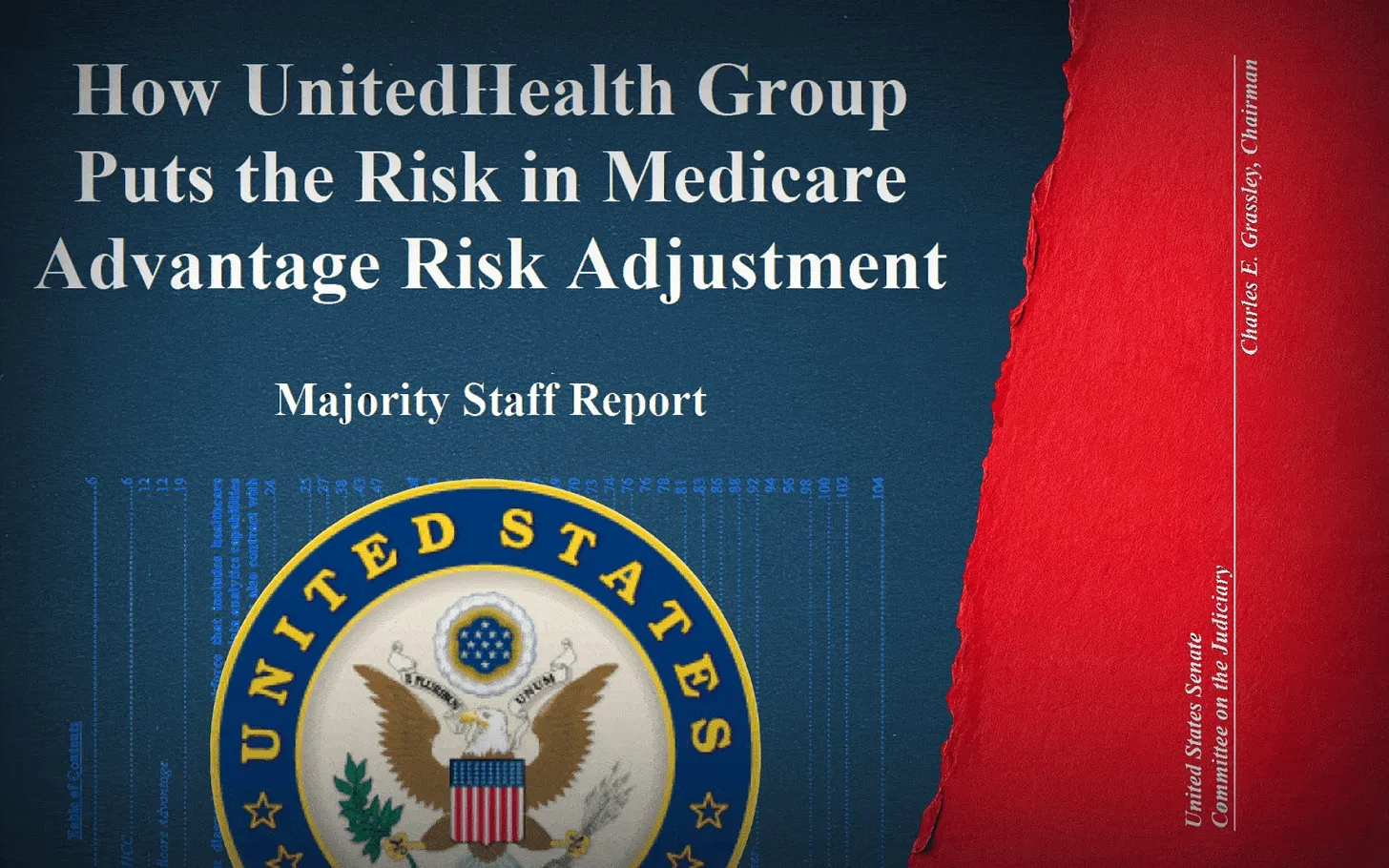
A new report from the Republican-led Senate Judiciary Committee describes how UnitedHealth Group has turned a safeguard for sick patients in the Medicare Advantage program into a profit-making strategy.
The report, How UnitedHealth Group Puts the Risk in Medicare Advantage Risk Adjustment, details how Medicare Advantage (MA) payments (seemingly designed to compensate health insurers more for enrolling patients with greater health needs) have increasingly rewarded insurers with the resources, data and scale to capture and maximize diagnosis codes. According to the committee, UnitedHealth Group has leveraged its size, vertical integration and advanced data and AI capabilities to consistently stay ahead of efforts by the Centers for Medicare & Medicaid Services to curb excess payments tied to coding intensity.
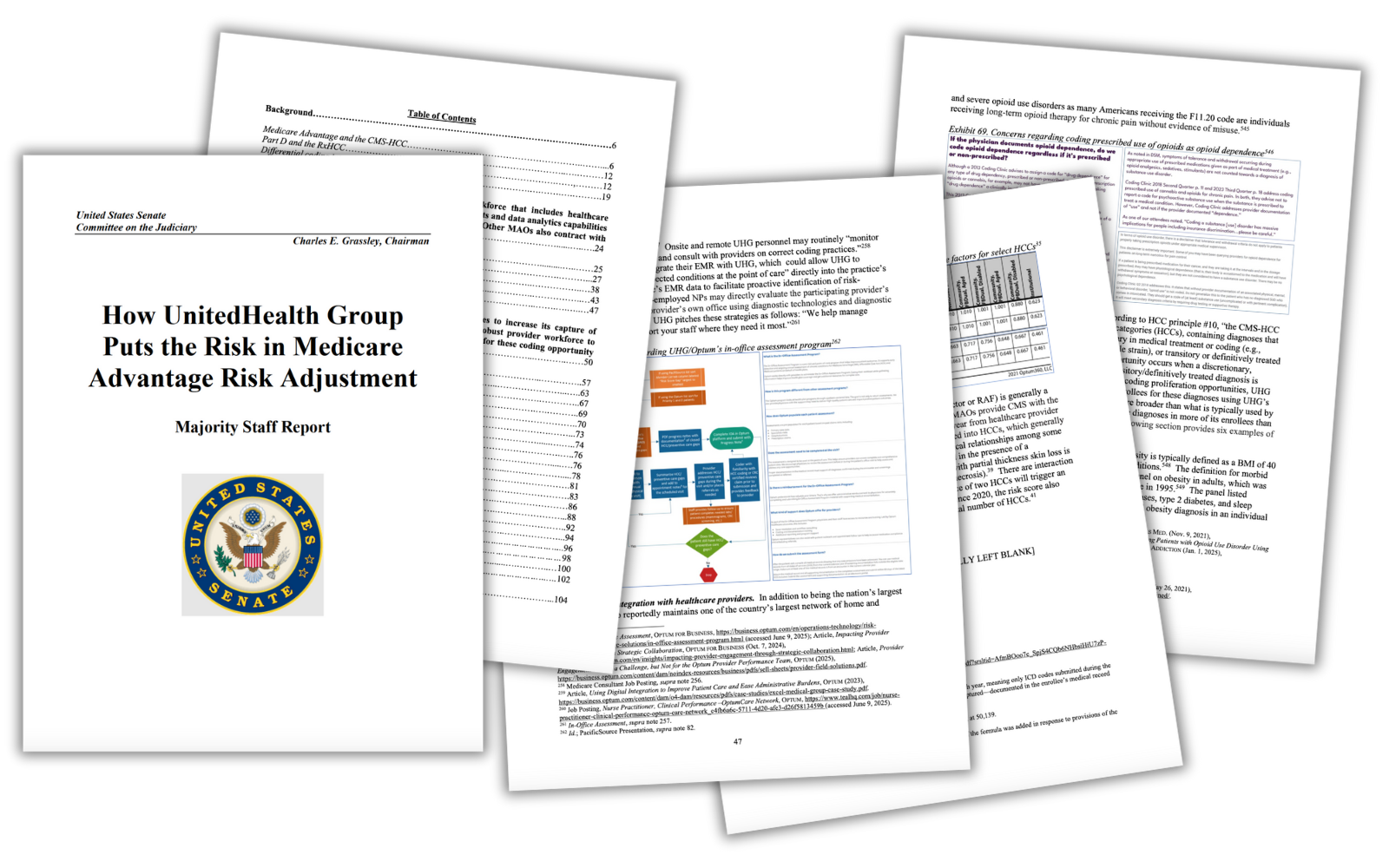
After reviewing more than 50,000 pages of internal UnitedHealth documents, Judiciary Committee investigators found that the company built a vast diagnosis-capture infrastructure that includes in-home health risk assessments, secondary chart reviews, “pay-for-coding” arrangements with providers, and tightly controlled clinical workflows within UnitedHealth-aligned medical practices. These efforts, the report states, go well beyond neutral documentation and instead amount to an aggressive strategy to maximize risk scores and, by extension, federal payments.
The committee, chaired by Sen. Chuck Grassley, (R-Iowa), warns that even when CMS attempts to rein in abuse (such as excluding more than 2,000 diagnosis codes from the risk-adjustment model) UnitedHealth appears uniquely positioned to identify new, untapped diagnoses among the thousands that remain. Because UnitedHealth also sells its diagnostic criteria, coding tools and workforce to rival insurers, its strategies can quickly spread across the entire Medicare Advantage market.
The report concludes with this:
While Senator Grassley’s staff will continue to evaluate the information produced by UHG, this initial review has revealed how UHG has been able to profit from the way that CMS risk adjusts payments to MAOs. The investigation has also shown that risk adjustment in MA has become a business in itself—by no means should this be the case. MAOs should receive payments that are commensurate to the complexity and acuity of the Medicare beneficiaries that they insure, not their knowledge of coding rules and their ability to find new ways to expand inclusion criteria for diagnoses. Taxpayers and patients deserve accurate and clear-cut risk adjustment policies and processes.
But what makes these findings especially notable is who commissioned the investigation in the first place. Grassley was one of the original architects and longtime champions of Medicare Advantage when it was enacted back in 2003. In recent years, he now warns that the program’s “promise of efficiency and choice” has been undermined by vertical consolidation, blinded oversight and systemic risk-code gaming.
In past inquiries — spurred by reporting from outlets like The Wall Street Journal and findings from the Health & Human Services’ Office of Inspector General — he has demanded answers from UnitedHealth over the use of in-home assessments and chart reviews that allegedly drove billions of dollars in additional payments to the company.
Continuing the bipartisan scrutiny of MA insurers, CMS recently released its proposed payment rates for MA plans in 2027. Notably, CMS is proposing to exclude diagnosis codes added to a patient’s chart during chart reviews by AI or insurers from their risk score; something many reform advocates and I have long supported. These changes and this investigation are important steps in reining in the abuses by MA insurers and reason for hope we are on the right track.



 HENRY KOTULA