Why health care costs are making consumers more afraid of medical bills than an actual illness

https://www.cnbc.com/2018/04/22/why-health-care-costs-are-making-consumers-more-afraid-of-medical-bills-than-an-actual-illness.html

Image result for Why health care costs are making consumers more afraid of medical bills than an actual illness

  • Health care costs are spiraling higher, but patient visits to a doctor have been on the decline.
  • A growing number of consumers are staying away out of fear of big bills.
  • However, “untimely visits or delay of visits to the physician ultimately leads to the increased cost of care,” the Cleveland Clinic’s CEO told CNBC.


As health care costs keep rising, more people seem to be skipping physician visits.

It’s not fear of doctors, however, but more of a phobia about the bills that could follow. Higher deductibles and out-of-network fees are just some of the out-of-pocket costs that can hit a consumer’s pockets.

U.S. health care costs keep rising, and hit more than $10,000 a year per person in 2016. According to a recent national poll, over the past 12 months, 44 percent of Americans said they didn’t go to the doctor when they were sick or injured because of financial concerns. Meanwhile, 40 percent said they skipped a recommended medical test or treatment.

Also, the study found most people who are delaying or skipping care actually have health insurance. Some 86 percent of those surveyed said they’re covered either through their employer, have insurance they purchased directly, or through government programs like Medicare and Medicaid.

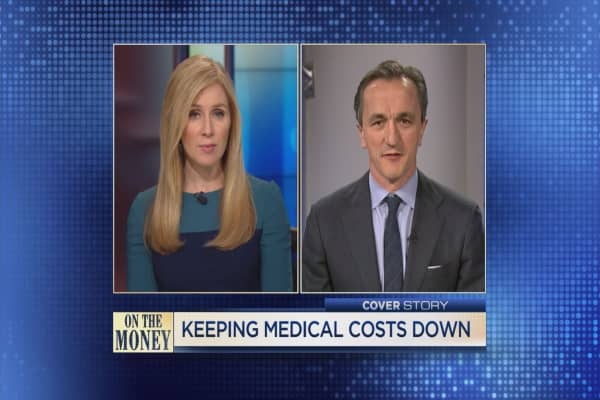
“There have been so many changes in the health care landscape in the United States that this news is not entirely surprising,” Cleveland Clinic president and CEO Tom Mihaljevic told CNBC’s “On the Money” in a recent interview. However, Mihaljevic warned that skipping visits or treatment can be counterproductive.

“One of most important consequences of skipping medical care or delaying care ultimately impacts the quality of care, impacts the outcome,” he said. “Untimely visits or delay of visits to the physician ultimately leads to the increased cost of care.”

However, the poll, conducted by the University of Chicago and the West Health Institute, found Americans fear large medical bills more than they do serious illness. The data showed 33 percent of those surveyed were “extremely afraid” or “very afraid” of getting seriously ill. About 40 percent said paying for health care is more frightening than the illness itself.

“Part of problem here is healthcare tends to be very complex, and every patient typically requires a number of procedures and tests to be done, so it’s really difficult to estimate the upfront cost of care, ” Mihaljevic told CNBC.

Additionally, the survey found 54 percent of those polled received one or more medical bills over the past year for something they thought was covered by their insurance. And 53 percent received a bill that was higher than they expected.

Mihaljevic acknowledged the range of different fees for the same services should be made clearer for consumers. “There is an absolute need for increased transparency when it comes to cost and this is one of mandates for our industry as a whole,” he said.

How technology can help

To combat rising health costs, Mihaljevic explained that the Cleveland Clinic is focused on the “standardization of care.”

“When we reduce the variability of the way we take care of patients, we manage to decrease the cost and at the same time improve the quality of care that we provide,” he added.

In addition, the health system is also pushing ahead with advances in medical technology, which may help bring down costs in the future. “We firmly believe digital technology is going to have a transformative effect,” Mihaljevic said. Among the initiatives is a partnership with IBM Watson to use big data to help clinical decision making.

And through the Cleveland Clinic’s Express Care Online, 25,000 virtual doctor visits were completed in 2017. Although virtual visits are billed as more cost effective,new data suggest otherwise.

“We are constantly looking how to make our care more accessible more affordable and of higher quality,” Mihaljevic added.

The politics of ACA rate hikes will be 2016 in reverse

https://www.axios.com/politics-aca-rate-hikes-2016-in-reverse-63e401ef-03b7-4c11-a2b3-7410e1322c63.html

Protester holds sign saying "ACA Saves Lives"

We are about to see a replay of the 2016 election fight over premium increases, but this time in reverse. Last time, it was the Republicans hammering Democrats for the rate hikes. This time, it will be Democrats accusing Republicans of driving up premiums by sabotaging the Affordable Care Act.

What to watch: It’s going to be a balancing act for the Democrats. They can (and will) score political points by blaming Republicans for the coming premium increases, but another campaign debate about rising premiums could also undermine the ACA by focusing on its continuing problems.

In 2016, fear of rising premiums jumped the individual market, and a majority of Americans came to believe that rising premiums were somehow affecting them when only a small share of the public was impacted. That undermined the ACA and may have affected the election.

This time, Democrats will be on the offensive, buttressed by polling that shows the public sees Republicans and President Trump owning the ACA’s problems. Democrats are sure to call out Republicans and the administration for steps they have taken to undermine the law.

These include:

  • Eliminating the penalty for not buying insurance.
  • Failing to pass stabilization legislation.
  • Developing regulations to allow the sale of short-term policies and the wider sale of association health plans.

Taken together, these actions provide more options for the healthy, but will drive up rates overall.

Reality check: Last year, far more Americans came to believe they were affected by premiums increases than the relatively small number of unsubsidized people in the non-group market who were actually affected.

Our August 2017 tracking poll showed that fully 60% of the American people believed they were negatively affected by the premium increases, when in reality, just a sliver of the public — the unsubsidized people in the individual health insurance market — were actually affected.

The numbers that matter, per Kaiser Family Foundation estimates:

  • Affected: 6.7 million
  • Unaffected: 319 million

No doubt the broader public’s fears about rising premiums fueled cynicism about the ACA. Some political scientists say it contributed to the Republican victory in 2016.  In fact, premiums for most Americans with private coverage have been growing at a 3% clip, a historically moderate level.

The bottom line: As the midterms approach, Republicans’ first impulse may be to attack the law to rev up their base as they have done before. The tradeoff they face is that they now own the ACA in the eyes of the public, including the problem of rising premiums which they will have helped to create.

And Democrats now have a chance to score political points on the ACA for the first time — but the risk is a disproportionate public reaction, much like in 2016, that undermines the law they worked so hard to pass.


State Regulation of Coverage Options Outside of the Affordable Care Act: Limiting the Risk to the Individual Market

http://www.commonwealthfund.org/publications/fund-reports/2018/mar/state-regulation-coverage-options-outside-aca?omnicid=EALERT1377329&mid=henrykotula@yahoo.com

Abstract

  • Issue: Certain forms of individual health coverage are not required to comply with the consumer protections of the Affordable Care Act (ACA). These “alternative coverage arrangements” — including transitional policies, short-term plans, health care sharing ministries, and association health plans — tend to have lower upfront costs and offer far fewer benefits than ACA-compliant insurance. While appealing to some healthy individuals, they are often unattractive, or unavailable, to people in less-than-perfect health. By leveraging their regulatory advantages to enroll healthy individuals, these alternatives to marketplace coverage may contribute to a smaller, sicker, and less stable ACA-compliant market. The Trump administration recently has acted to reduce federal barriers to these arrangements.
  • Goal: To understand how states regulate coverage arrangements that do not comply with the ACA’s individual health insurance market reforms.
  • Methods: Analysis of the applicable laws, regulations, and guidance of the 50 states and the District of Columbia.
  • Findings and Conclusions: No state’s regulatory framework fully protects the individual market from adverse selection by the alternative coverage arrangements studied. However, states have the authority to ensure a level playing field among coverage options to promote market stability.

Background

Recent federal actions have created the potential for instability in the individual health insurance market, through which approximately 18 million Americans currently purchase their health insurance coverage.1 In October 2017, President Trump issued an executive order to encourage the sale of health insurance products that do not comply with the consumer protections of the Affordable Care Act (ACA).2 In December, Congress repealed, effective in 2019, the tax penalty for individuals who can afford to maintain health insurance coverage but decline to do so (the individual mandate penalty).3

Prior to health reform, insurers in the individual market had wide latitude to deny coverage, charge an unaffordable premium, or limit benefits based on a person’s medical history. As a consequence, individual market health insurance routinely proved inadequate for consumers’ health and financial needs and was often inaccessible to those with even minor health problems.4 The ACA established numerous consumer protections designed to make it easier for consumers in the individual market to access affordable, adequate health insurance. The law requires insurers that sell individual health insurance to offer coverage to all individuals regardless of health status, requires coverage of preexisting conditions, and prohibits insurers from charging higher premiums based on a person’s medical history or gender. It also includes limits on cost-sharing and requires insurers to cover a minimum set of essential health benefits, including coverage for mental and behavioral health care, prescription drugs, and maternity services.

For these consumer protections to work as intended and to keep premiums affordable, they need to be paired with policies that encourage a broad and balanced risk pool. To promote continuous enrollment by the sick and healthy alike, the ACA imposes an individual mandate and provides financial assistance to make coverage more affordable for those with lower and moderate incomes. Importantly, the ACA also defines what types of coverage were sufficiently protective for purposes of satisfying the individual mandate. To prevent cherry-picking of individuals who are low health risks, it also requires all individual market insurers to play by the same rules.

In many ways, the ACA’s regulatory approach to the individual market has proven successful. During the most recent open enrollment period, approximately 11.7 million Americans signed up for coverage through the ACA marketplaces (also called exchanges), most of whom are eligible for subsidies to help with the cost of coverage.5 In turn, improved access to comprehensive individual health insurance under the ACA, along with the expansion of Medicaid, has helped to reduce the uninsured rate by a third, as of 2018, and lower consumers’ average out-of-pocket costs.6 And, despite insurers’ continued uncertainty over the possible repeal of the health law and the Trump administration’s approach to implementing the ACA, analysis showed that, on average, states’ individual markets were stabilizing, with some insurers reaching profitability.7

However, challenges remain. In the past two years, the individual market in most states has seen significant increases in premiums, coupled with decreases in the number of participating insurers.8 While the ACA’s premium subsidies insulate many consumers from these price hikes, many millions of consumers are not eligible for subsidies, and those individuals identify the cost of coverage as a significant barrier to care.9 And though marketplace sign-ups remain stable despite federal policy uncertainty and Trump administration actions seen as undermining the ACA, enrollment remains well below early expectations.10

These challenges are interrelated and can be attributed to many factors. Still, the availability of coverage options that are not compliant with the ACA’s rules, as well as confusion over them, likely has played an important contributing role.

Policy Implications

Although states’ approaches to implementing the ACA can sharply differ, the law’s consumer protections operate nationwide, and nearly all states have taken responsibility for enforcing these reforms in their jurisdictions. The insurance exchanges in most states have proven resilient in the face of significant change and uncertainty, with millions of Americans now able to depend on individual health insurance to protect them both medically and financially.

However, maintaining a stable individual market will become more challenging, thanks to an environment in which healthy consumers are not required to maintain insurance and federal regulations are loosened to promote coverage arrangements likely to weaken insurance risk pools and raise premiums. These developments may incline healthy individuals to look increasingly outside the compliant market for coverage, leaving those who remain to face higher costs and fewer plan choices.68

Based on our review of state laws and standards, it appears that no state maintains a regulatory environment that fully protects its individual health insurance market from being undermined by the alternative coverage options we have identified. However, states continue to be the primary regulators of private health insurance. Although the ACA set a federal floor of consumer protections for insurers that operate in the individual market, it did not curtail states’ power to regulate above these minimum standards and to exercise full authority over coverage arrangements that fall outside the scope of federal insurance law.

How We Conducted This Study

This analysis is based on a review of applicable laws, regulations, and guidance enacted or promulgated prior to February 1, 2018, by each of the 50 states and the District of Columbia. This review was supplemented by correspondence with state regulators in 48 states and the District of Columbia.

A number of states have taken steps to limit the availability of non-ACA-compliant products and protect against adverse selection. Massachusetts and New York promptly discontinued transitional coverage and effectively prohibit underwritten short-term policies, while several other states tightly restrict the duration of such plans. Significantly, Massachusetts also has its own individual mandate, requiring state residents to maintain coverage that meets minimum standards.69 Other states have begun to explore enactment of similar policies in anticipation of the federal mandate’s 2019 repeal.

On many fronts, states face a federal regulatory approach to the individual market that is significantly different from what was originally envisioned under the Affordable Care Act. In light of these changed circumstances, there may be value for states in considering regulatory options for protecting their individual insurance markets and their insured beneficiaries from the detrimental effects of non-ACA-compliant policies. The decisions states make will likely have a significant impact on their residents’ access to adequate and affordable coverage and on the stability of their individual health insurance markets.


Health Care and the 2018 Midterms, Attitudes Towards Proposed Changes to Medicaid

Kaiser Health Tracking Poll – February 2018: Health Care and the 2018 Midterms, Attitudes Towards Proposed Changes to Medicaid


KEY FINDINGS:
  • Medicaid continues to be seen favorably by a majority of the public (74 percent) and about half (52 percent) believe the Medicaid program is working well for most low-income people covered by the program.
  • When asked about proposed changes to the Medicaid program, attitudes are largely driven by party identification. A large majority of Democrats (84 percent) and most independents (64 percent) oppose lifetime limits for Medicaid benefits, while Republicans are more divided in their views with half (51 percent) believing Medicaid should only be available for a limited amount of time.

    Poll: Public split on whether adding work requirements for Medicaid beneficiaries aims at reducing spending (41%) or lifting people out of poverty (33%) 

  • Party identification also drives views on what individuals believe is the main reason behind some states imposing Medicaid work requirements. A larger share of Democrats and independents believe the main reason for these work requirements is to reduce government spending (42 percent and 45 percent, respectively) than believe it is to help lift people out of poverty (26 percent and 31 percent). On the other hand, a similar share of Republicans say it is to reduce government spending (40 percent) as say it is to help lift people out of poverty (42 percent). Individuals living in states pursuing Medicaid work requirements are also divided on the main reason for these limits, even when controlling for party identification.

    54% of the public now holds favorable views of the Affordable Care Act – the highest share in more than 80 tracking polls 

  • The February Kaiser Health Tracking Poll finds a slight increase in the share of the public who say they have a favorable view of the Affordable Care Act (ACA), from 50 percent in January 2018 to 54 percent this month. This is the highest level of favorability of the ACA measured in more than 80 Kaiser Health Tracking Polls since 2010. This change is largely driven by independents, with more than half (55 percent) now saying they have a favorable opinion of the law compared to 48 percent last month. Large majorities (83 percent) of Democrats continue to view the law favorably (including six in ten who now say they hold a “very favorable” view, up from 48 percent last month) while nearly eight in ten Republicans (78 percent) view the law unfavorably (unchanged from last month).
  • The majority of the public are either unaware that the ACA’s individual mandate has been repealed (40 percent) or are aware that it has been repealed but incorrectly think the requirement is not in effect in 2018 (21 percent). Few (13 percent) are aware the requirement has been repealed but is still in effect for 2018.
  • More than twice as many voters mention health care costs (22 percent) as mention repealing/opposing the ACA (7 percent) as the top health care issue they most want to hear 2018 candidates discuss in their campaigns. Health care costs are the top issue mentioned by Democratic voters (16 percent) and independent voters (25 percent), as well as one of the top issues mentioned by Republican voters (22 percent), followed by repealing or opposing the ACA (17 percent).

2018 Midterm Elections

With still a few months until the midterm elections are in full swing, the latest Kaiser Health Tracking Poll finds health care costs as the top health care issue mentioned by voters when asked what they want to hear 2018 candidates discuss. When asked to say in their own words what health care issue they most want to hear the candidates talk about during their upcoming campaigns, one-fifth (22 percent) of registered voters mention health care costs. This is followed by a series of other health care issues, such as Medicare/senior concerns (8 percent), repealing or opposition to the Affordable Care Act (7 percent), improve how health care is delivered (7 percent), increasing access/decreasing the number of uninsured (6 percent), or a single-payer system (5 percent). Health care costs is the top issue mentioned by Democratic voters (16 percent) and independent voters (25 percent), as well as one of the top issues mentioned by Republican voters (22 percent), followed by repealing or opposing the ACA (17 percent).

Figure 1: Health Care Costs Are Top Health Care Issue Voters Want 2018 Candidates to Talk About During Their Campaigns

Battleground Voters

Health care costs are also the top issue mentioned by voters living where there are competitive House, Senate, or Governor races. One-fourth (23 percent) of voters in areas with competitive elections mention health care costs when asked what health care issue they most want to hear candidates talk about. Fewer mention other health care issues such as improve how health care is delivered (9 percent) or increasing access/decreasing the number of uninsured (6 percent).

2018 Midterm Election Analysis

As part of Kaiser Family Foundation’s effort to examine the role of health care in the 2018 midterm elections, throughout the year we will be tracking the views of voters – paying special attention to those living in states or congressional districts in which both parties have a viable path to win the election. This group, referred to in our analysis as “voters in battlegrounds” is defined by the 2018 Senate, House, and Governor ratings provided by The Cook Political Report. Congressional and Governor races categorized as “toss-up” were included in this group. A complete list of the states and congressional districts included in the comparison group is available in Appendix A.

The Affordable Care Act

This month’s Kaiser Health Tracking Poll finds a slight increase in the share of the public who say they have a favorable view of the 2010 Affordable Care Act (ACA). The share of the public who say they hold a favorable view of the law has increased to 54 percent (from 50 percent in January 2018) while 42 percent currently say they hold an unfavorable view. This is the highest level of favorability of the ACA measured in more than 80 Kaiser Health Tracking Polls since 2010.  This change is largely driven by independents, with more than half (55 percent) now saying they have a favorable opinion of the law compared to 48 percent last month. Large majorities (83 percent) of Democrats continue to view the law favorably (including six in ten who now say they hold a “very favorable” view, up from 48 percent last month) while nearly eight in ten Republicans (78 percent) view the law unfavorably (unchanged from last month).

Figure 2: More of the Public Hold a Favorable View of the ACA

Public Awareness of the Repeal of the ACA’s Individual Mandate

The February Kaiser Health Tracking Poll finds a slight uptick (from 36 percent in January 2018 to 41 percent this month) in the share of the public who are aware that the ACA’s requirement that nearly all individuals have health insurance or else pay a fine, known commonly as the individual mandate, has been repealed. Yet, misunderstandings persist. The majority of the public (61 percent) are either unaware that this requirement has been repealed (40 percent) or are aware that it has been repealed but incorrectly think the requirement is not in effect in 2018 (21 percent of total). Few (13 percent) are aware the requirement has been repealed but is still in effect for 2018.

Figure 3: Confusion Remains on the Status of the ACA’s Individual Mandate

Medicaid

In recent months, President Trump’s administration has supported state efforts to make changes to their Medicaid programs, the government health insurance and long-term care program for low-income adults and children. Seven in ten Americans say they have ever had a connection to the Medicaid program either directly through their own health insurance coverage (32 percent) or their child being covered by the program (9 percent), or indirectly through a friend or family member covered by the program (29 percent).

Figure 4: Seven in Ten Americans Say They Have Ever Had A Connection to Medicaid

Majority of the Public Holds Favorable Views of Medicaid and Thinks the Program is Working Well

Overall, the majority of the public (74 percent) holds favorable views of Medicaid, including four in ten who have a “very favorable” view. About one-fifth of the public (21 percent) hold unfavorable views of the program. Unlike attitudes towards the ACA, opinions towards Medicaid are not drastically different among partisans and majorities across parties report favorable views. However, a larger share of Republicans do hold unfavorable views (29 percent) compared to independents (21 percent) or Democrats (13 percent).

Figure 5: Large Shares Across Parties Say They Have a Favorable Opinion of Medicaid

In addition, more believe the program is working well than not working well for most low-income people covered by the program. This holds true across partisans with about half saying the Medicaid program is “working well” and about one-third saying it is “not working well.”

Figure 6: Larger Shares Say Medicaid Is Currently Working Well for Most Low-Income People Covered by the Program

Support for Medicaid Expansion in Non-Expansion States

One of the major changes brought on by the ACA was the option for states to expand Medicaid to cover more low-income people. As of February 2018, 18 states have not expanded their Medicaid programs.

Figure 7: Status of Medicaid Expansion Among States

Among individuals living in states that have not expanded their Medicaid programs, most (56 percent) say they think their state should expand Medicaid to cover more low-income uninsured people while four in ten (37 percent) say their state should keep Medicaid as it is today. Slightly more than half of Republicans living in non-expansion states say their state should keep Medicaid as it is today (54 percent) while four in ten (39 percent) say their state should expand their Medicaid program. Majorities of Democrats (75 percent) and independents (57 percent) say their state should expand their Medicaid program.

Figure 8: Democrats and Independents Are More Likely to Want Their State to Expand Medicaid Than Republicans

Proposed Changes to Medicaid

SECTION 1115 WORK REQUIREMENT WAIVERS

In January, the Centers for Medicare and Medicaid Services (CMS) provided new guidance for Section 1115 waivers, which would allow states to impose work requirements for individuals to be covered by Medicaid benefits. As of February 21, CMS has approved work requirement waivers in two states (KY and IN) and eight other states have pending requests.1 When asked what they think the reasoning is behind these proposed changes to Medicaid, a larger share of the public (41 percent) believe the main reason is to reduce government spending by limiting the number of people on the program than say the main reason is to help lift people out of poverty (33 percent). There are differences among demographic groups with a larger share of Democrats and independents believing the main reason is to reduce government spending, while Republicans are more divided with similar shares saying the main reason is to lift people out of poverty (42 percent) as reduce government spending (40 percent).

Figure 9: Republicans Are Divided on the Main Reason Behind the Trump Administration Permitting Work Requirements

There are also differences between individuals living in states that have either filed a Medicaid waiver for a work requirement or have had a waiver approved and those living in states that do not have Medicaid work requirement waivers pending or approved.2 Individuals living in states with pending or approved Medicaid work requirements are divided on whether the main reason for these limits is to lift people out of poverty (37 percent) or reduce government spending (36 percent). This holds true even when controlling for other demographic variables such as party identification and income that may influence beliefs.

Figure 10: Those in States with Medicaid Work Requirements Are Divided on the Main Reason Behind Them

SECTION 1115 LIFETIME LIMIT WAIVERS

In addition to work requirement waivers, five states are currently seeking waivers from the Trump administration to impose Medicaid coverage limits. These “lifetime limits” would cap Medicaid health care benefits for non-disabled adults. When asked how they think Medicaid should work, two-thirds of the public say Medicaid should be available to low-income people for as long as they qualify, without a time limit, while one-third say it should only be available to low-income people for a limited amount of time in order to provide temporary help. The vast majority of Democrats (84 percent) and most independents (64 percent) say Medicaid should be available without lifetime limits, while Republicans are divided with similar shares saying they favor time limits (51 percent) as saying they do not favor such limits (47 percent). Seven in ten (71 percent) of individuals who have ever had a connection to Medicaid say they do not support lifetime limits compared to three in ten (28 percent) who say it should only be available for a limited amount of time in order to provide temporary help.

Figure 11: Majorities of Democrats and Independents Say Medicaid Should Be Available Without a Time Limit; Republicans Are Divided


Poll: 44% Of Americans Skip Doctor Visits Because Of Cost

https://www.forbes.com/sites/brucejapsen/2018/03/26/poll-44-of-americans-skip-doctor-visits-due-to-cost/#31398d56f57e

Because of the high cost of healthcare, 44% Americans didn’t go see a physician last year when they were sick or injured, according to a new survey.

The West Health Institute/NORC at the University of Chicago national poll comes as policymakers and health insurance companies are predicting a jump in health premiums and out-of-pocket costs, particularly for Americans with individual coverage under the Affordable Care Act. The $1.3 trillion spending bill signed into law last week by President Donald Trump didn’t include reinsurance programs and money to restore Obamacare funds to help Americans pay co-payments and deductibles despite bipartisan support in the Senate.

Cost continues to be a barrier to treatment with 40% of Americans who say they “skipped a recommended medical test or treatment in the last 12 months due to cost.” Another 32% were “unable to fill a prescription or took less of a medication because of the cost,” the West Health/NORC poll of more than 1,300 adults said.

“The high cost of healthcare has become a public health crisis that cuts across all ages as more Americans are delaying or going without recommended medical tests and treatments,” West Health Institute chief medical officer Dr. Zia Agha said in a statement accompanying the poll results. The survey is being released at this week’s American Society on Aging 2018 Aging in America Conference in San Francisco.

The West Health-NORC poll is the latest national survey showing Americans continued frustration with high healthcare costs even as the U.S. spends more than $3.3 trillion annually on healthcare.

Several recent polls have indicated healthcare is back on the top of voters’ concerns as they head to the polls this November for mid-term Congressional and statewide general elections. A Kaiser Health Tracking poll published earlier this month ranked “health care costs as the top health care issue mentioned by voters when asked what they want to hear 2018 candidates discuss.”


The ACA at Eight: Resilient but Still at Risk

http://www.commonwealthfund.org/publications/blog/2018/mar/aca-at-eight?omnicid=EALERT1374267&mid=henrykotula@yahoo.com

Image result for The ACA at Eight: Resilient but Still at Risk


It’s Obamacare’s birthday. After eight years of relentless pounding, the Affordable Care Act (ACA) is still the law of the land. Its resilience reflects the fundamental decency of the American people who — when faced with the reality of taking coverage away from millions of their neighbors — refused to let that happen. They filled town hall meetings, they flooded the corridors of Congress, and support for the law surged to its current 54 percent.

That is not to say that the law’s future is assured. As part of its recent tax reform legislation, Congress eliminated financial penalties for not having health insurance — the teeth of the so-called individual mandate. The Congressional Budget Office (CBO) predicts that this will raise health insurance premiums in individual private markets by an average of 10 percent, and 13 million Americans could lose their health insurance. If Congress fails to enact recent bipartisan market stabilization proposals, these numbers could go even higher.

The current administration is also using executive authority to weaken the law. The U.S. Department of Health and Human Services has encouraged states to impose a range of new restrictions on Medicaid recipients — work requirements, premiums, copays — that may reduce the number of poor and near-poor Americans who enroll in this program.

The administration has also proposed new rules that would allow health insurers to sell plans that evade the ACA’s standards regarding preexisting conditions and minimum benefits. For example, the administration would permit insurers to market short-term plans — coverage limited to a year in duration — without the requirement that they accept all comers, and with various restrictions on benefits. These cheaper, less generous plans would appeal to healthier individuals, who would then likely choose not to purchase the more expensive, comprehensive insurance sold in ACA marketplaces. Only sicker individuals would buy ACA plans, raising their costs and making them unaffordable to millions who have come to depend on them. The net effect is to add choices for healthy Americans, but reduce options for the sick.

Efforts to curtail the ACA will likely increase the number of Americans without insurance, now at a historic low of 14 percent of working-age adults, according to the Commonwealth Fund’s Affordable Care Act Tracking Survey. These efforts will also likely increase health disparities between states. A number of the restrictions sought by the administration will go into effect only if states embrace them. States must request waivers to limit Medicaid benefits. So far, only Republican-led states are doing so. Similarly, states have discretion about whether to permit the sale of short-term plans. Many blue states are considering banning or regulating them.

Despite these threats, however, fundamental elements of the ACA remain in effect. Federal financial assistance for purchase of health insurance in ACA marketplaces remains available for individuals with incomes below 400 percent of the federal poverty level. This is one reason why 11.8 million people had signed up for ACA plans through the marketplaces by the end of January. Federal support for states to expand Medicaid persists. Thirty-four states and the District of Columbia have done so, resulting in 15 million more beneficiaries of that program.

Recent legislative and executive restrictions on the ACA will not totally reverse these gains. Paradoxically, some states that refused previously to expand Medicaid may decide to do so now that they may be able to impose work requirements, premiums, and copays, and thus give expansion a conservative stamp. This could actually increase the total number of Americans with some Medicaid coverage.

In fact, the continuing struggle over the ACA fits a decades-old pattern of steady, if erratic, expansion of health insurance coverage in the United States. Since the creation of Medicare and Medicaid 53 years ago, the federal government has periodically extended insurance to new populations: the disabled, those with end-stage renal disease, children. The federal government also massively expanded Medicare benefits to cover drugs. Once provided, these benefits have proved politically difficult to peel back — in a recent poll, 92 percent of Americans said they felt all of us should have the right to health care.

What does this mean for the ACA? While it will not achieve all its supporters’ goals, it will survive, and provide a new foundation upon which Americans can build if they choose, as they have in the past, to help their vulnerable neighbors deal with the scourge of illness. To paraphrase Martin Luther King, one might even say that the arc of history is long, but it bends toward health coverage.


Drug prices are still skyrocketing

https://www.axios.com/newsletters/axios-vitals-60130f85-58f2-499f-abf8-271cf0d1c225.html

Falcon Heavy Rocket GIF - Find & Share on GIPHY

The Trump administration — primarily the president himself — has talked a lot about cracking down on prescription drug prices. But the pharmaceutical industry hasn’t changed its ways since Trump took office: 20 drugs have seen price hikes of 200% or more since January 2017, my colleague Bob Herman reports this morning.

  • The drugs to watch: High-cost, high-use prescriptions like Humira, Enbrel and Revlimid. AbbVie hiked the price of Humira, the highest-selling drug in the world, by 19% over the 14-month period, and Amgen did the same for Enbrel. Celgene raised the list price of Revlimid by 20%.
  • The big one: SynerDerm, a prescription skin cream, had the largest price hike. Phlight Pharma, the maker of SynerDerm, raised the list price by 1,468% over the past 14 months.
  • The runners-up: A total of 39 drugs saw price hikes of at least 100%, although many of them — like anti-venom extracts — are rarely used and don’t cost the health care system much overall.

The impact: These increases, which can be found in an analysis by Pharmacy Benefits Consultants, are in the drugs’ list prices, before rebates and discounts are applied. People with insurance don’t pay these full amounts, but price hikes still affect everyone.

  • Copays and deductibles are often based on drugs’ list prices, and uninsured patients can find themselves on the hook for a drug’s entire list price.


White House pitch to bolster Obamacare includes tough trade-offs for Democrats

https://www.politico.com/story/2018/03/06/obamacare-democrats-white-house-insurance-stable-388816

The White House is pictured. | Getty

The White House is seeking a package of conservative policy concessions — some of which are certain to antagonize Democrats — in return for backing a legislative package bolstering Obamacare markets, according to a document obtained by POLITICO.

The document indicates the administration will support congressional efforts to prop up the wobbly marketplaces, in exchange for significantly expanding short-term health plans and loosening other insurance regulations.

The document also makes severalreferences to abortion language that will be problematic for Democrats. A potential stumbling block in passing any stabilization package is whether conservatives will insist on including language prohibiting the use of government dollars to pay for abortions.

“Although congressional efforts to provide taxpayer money to prop up the exchanges is understandable, any such efforts must also provide relief to middle-class families harmed by the law and protect life,” the document states.

The source of the document provided to POLITICO isn’t identified and it isn’t dated. The White House declined to comment on the document but didn’t question its authenticity. A spokesperson for HHS said the department does not comment on leaked documents.

Two health policy experts who have been in contact with White House officials indicated that the document is consistent with ideas the administration has discussed for creating more stability and flexibility in the insurance markets.

“It’s legit,” said one former White House policy official.

Republican and Democratic lawmakers have been in delicate negotiations over a stabilization package that could clear the House and Senate. Democrats want to bolster the federal health care law after Republicans failed in their efforts to repeal it last year.

The list of White House policy requests includes allowing insurers to charge older enrollees up to five times as much as their younger counterparts, as opposed to the current three-to-one cap. That policy would require amending the Affordable Care Act.

The White House is also seeking to allow short-term plans — which offer skimpier benefits with lower premiums — to be renewed. Short-term plans, exempt from Obamacare rules, can deny people coverage or charge them more based on a health condition, in a process known as underwriting. The Trump administration recently proposed expanding the maximum length of these plans from three months to one year. However, the White House document envisions allowing people to renew this coverage “without those individuals going through health underwriting.”

The document doesn’t include support for reinsurance, which insurers have been pushing to shield them from the costs of particularly expensive customers.

The document also reiterates that the administration supports funding for cost-sharing reduction payments, which Trump cut off in October. The president’s budget proposal including funding for the payments, which help insurers reduce out-of-pocket costs for low-income Obamacare customers.

There is at least one item on the White House list that could garner bipartisan support: Expanding the use of health savings accounts. Last week, a bipartisan group of House members introduced a package of potential changes, and business groups have been pushing for HSA proposals to be part of the appropriations package Congress must pass by March 23.

Republicans fear another year of eye-popping premium increases will hit voters just before Election Day — and that they’ll get the blame this time since they’re now in charge.

But the White House asks could further unsettle those talks. In particular, the emphasis on abortion language tripped up earlier negotiations.

Democrats have been seeking a very different list of policies to boost the markets. They want to increase the subsidies provided to Obamacare customers, reinstate funding for outreach and marketing, and prevent the executive branch from expanding the availability of what they deride as “junk” insurance plans.

“People nationwide are looking at higher premiums and out-of-pocket costs as a direct result of the damage President Trump has done on health care,” said Sen. Patty Murray (D-Wash.), who has been in the middle of negotiations over a stabilization package, in a statement to POLITICO. “I certainly hope the president and Republican leaders won’t once again sabotage an opportunity to undo some of the damage they’ve done by choosing to play politics with women’s health and making last-minute, harmful demands that would raise families’ costs even more and place an age tax on seniors.”


The Price They Pay

https://features.propublica.org/drug-prices/high-cost-drugs-the-price-they-pay/


THE BURDEN of high drug costs weighs most heavily on the sickest Americans.

Drug makers have raised prices on treatments for life-threatening or chronic conditions like multiple sclerosis, diabetes and cancer. In turn, insurers have shifted more of those costs onto consumers. Saddled with high deductibles and other out-of-pocket costs that expose them to a drug’s rising list price, many people are paying thousands of dollars a month merely to survive.

For more than a year, President Donald Trump and Democrats in Congress have promised to take action on high drug prices, but despite a flurry of proposals, little has changed.

These are the stories of Americans living daily with the reality of high-cost drugs. And there are millions of others just like them.