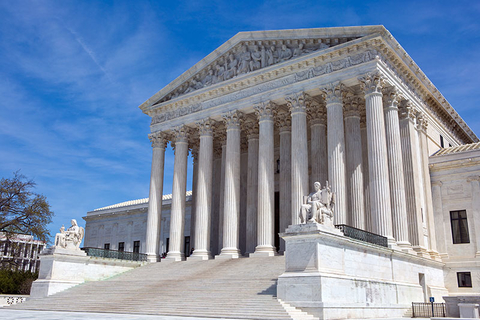
Is Obamacare Constitutional? The Battle Begins Again

http://www.thefiscaltimes.com/2018/09/05/Obamacare-Constitutional-Battle-Begins-Again


The debate over the Affordable Care Act entered a new phase Wednesday as a federal court in Texas began hearing oral arguments in a lawsuit brought by 20 Republican-led states challenging the constitutionality of the 2010 law.

Eighteen Republican state attorneys general and two GOP governors bringing the suit argue that the law’s individual mandate was rendered unconstitutional when Congress lowered the penalty for individuals who don’t buy coverage to zero.

The Supreme Court, in upholding the law in 2012, deemed that penalty a tax and thus a valid and legal exercise of Congress’ power of the purse. The lawsuit claims that the law is no longer constitutional because the zeroed-out penalty can no longer raise revenue. “It’s nothing but a hollow shell because its core has been invalidated,” said Misha Tseytlin, Wisconsin’s solicitor general.

The plaintiffs also claim that this means the entire ACA — and, in particular, its protections for patients with pre-existing conditions looking to buy insurance — must be struck down because the mandate can’t be severed from the rest of the law. The Trump Justice Department decided not to defend the ACA in the case.

What a Kavanaugh Confirmation Might Mean

The case, which legal experts see as a long shot, may still wind up before the Supreme Court — which is why Democrats have brought up Obamacare and its protections for patients with pre-existing conditions in this week’s confirmation hearing for Brett Kavanaugh, President Trump’s nominee to replace Justice Anthony Kennedy.

“Kavanaugh has signaled in private meetings with Senate Democrats that he is skeptical of some of the legal claims being asserted in the latest GOP-led effort to overturn the Affordable Care Act,” the Los Angeles Times’ Jennifer Haberkorn reported last week. Three Democrats in the meetings told the Times that Kavanaugh suggested that if one piece of the law is struck down, the rest of the law doesn’t necessarily have to fall with it.

But that may not be enough to assuage Democratic fears that Kavanaugh could be the deciding Supreme Court vote against Obamacare. “Democrats are more concerned about Kavanaugh’s past writings on expansive presidential powers, which they say could lead to his supporting efforts by the Trump administration to dismantle the health-care law without Congress,” The Washington Post’s Colby Itkowitz notes.

Where Public Opinion Stands

The political debate over Obamacare has shifted as public perception of the law has improved. The latest Kaiser Family Foundation tracking poll, released Wednesday, finds that 50 percent now view the law favorably while 40 percent see it unfavorably, with the divide still falling along partisan lines. Just under 80 percent of Democrats support the law, while a similar percentage of Republicans oppose it.

That may be why Republicans still view repealing the law as a potent issue with their base. Vice President Mike Pence, in Wisconsin last week to campaign for Senate candidate Leah Vukmir, said the GOP push to repeal and replace the health care law was still alive: “We made an effort to fully repeal and replace Obamacare and we’ll continue, with Leah Vukmir in the Senate, we’ll continue to go back to that,” he told reporters. With Sen. Jon Kyl (R-AZ) replacing John McCain, a critical vote against the GOP’s 2017 Obamacare repeal bill, there has been chatter about another potential repeal effort — though Senate Majority Leader Mitch McConnell effectively shot that down on Wednesday.

In the meantime, open enrollment on the ACA exchanges is set to begin on November 1, with the Trump administration once again providing reduced funding for outreach groups that help people enroll. A recent report by the nonpartisan Government Accountability Office criticized the administration’s management of Obamacare signup periods.

Why Protections for Pre-Existing Conditions Are Such a Potent Political Issue

http://www.thefiscaltimes.com/2018/09/05/Why-Protections-Pre-Existing-Conditions-Are-Such-Potent-Political-Issue


The Affordable Care Act provisions preventing insurers from discriminating against patients with pre-existing medical conditions have become a popular — and politically potent — element of the law, and the new Kaiser Family Foundation tracking poll shows why: Six in 10 Americans say that they or someone in their household suffers from a pre-existing condition such as asthma, diabetes or high blood pressure.

It’s no surprise then that the tracking poll also finds that 75 percent of Americans now say that it is “very important” to keep the provision prohibiting insurance companies from denying a person coverage because of his or her medical history. Another 15 percent say it is “somewhat important” this provision stays in place. Similarly, 72 percent say it is “very important” that the provision to keep insurance companies from charging sick people more remains law. Another 19 percent say it is “somewhat important.”

In addition, more than 60 percent of Americans are “very worried” or “somewhat worried” that they will lose insurance coverage if the Supreme Court overturns the Affordable Care Act’s protections for people with pre-existing conditions. And 75 percent are “very worried” or somewhat worried” that they or a family member will have to pay more for coverage.

Democrats have been hammering the administration and Republicans for their willingness to have a court invalidate protections for those with pre-existing conditions.

As part of their effort to push back on that line of attack, 10 Republican senators last month introduced new legislation that they say would prevent insurance companies from denying coverage to people with pre-existing conditions, or charging those people more, no matter what happens in the Texas court case. Critics have said that the GOP bill’s protections don’t go as far as Obamacare’s. Republicans have responded by saying they’d be willing to look at changes to make the legislation more comprehensive.


The ACA is back in court

https://www.axios.com/affordable-care-act-court-challenge-texas-kavanaugh-2dd66378-c046-44e8-9a4a-f660687c17d9.html

Image result for ACA in court

Today is all about the courts, the threats they might pose to the Affordable Care Act, and Democrats’ goal of using those threats to drive turnout in the midterm elections.

Driving the news: A federal district judge in Texas will hear oral arguments this morning on red states’ latest legal challenge to the ACA. At the same time, Brett Kavanaugh will be answering senators’ questions about his nomination to the Supreme Court.

Democrats’ strategy is to tie the two together — to frame the Texas lawsuit as an existential threat to the ACA’s most significant provisions and raise the prospect that a Justice Kavanaugh would cast the decisive vote to strike down the heart of President Obama’s signature achievement.

Reality check: The Texas lawsuit would indeed be devastating to the ACA if it succeeds — Texas wants the courts to invalidate the entire law, while the Justice Department is hoping to ax its protections for pre-existing conditions. But a lot of pieces would have to fall into place to get there.

  • Most of the legal experts I’ve talked to see this case as a long shot on the merits.
  • Even if Kavanaugh were to vote to strike down the ACA — which we can’t know for sure, based on his track recordwith the law — Chief Justice John Roberts would also have to do an about-face and vote to kill the ACA, after upholding it twice before, in order for this suit to ultimately succeed.

The big picture: If there are any tea leaves to read today about the ACA’s future, they’ll come from Judge Reed O’Connor in El Paso, not Judge Brett Kavanaugh in Washington.

  • Don’t expect Kavanaugh to say anything revealing about health care, much less to comment on this specific case.

Situational awareness: The Kavanaugh questioning starts at 9:30 a.m. ET. The district court arguments start an hour later.


KAVANAUGH CONFIRMATION HEARINGS COMMENCE: WHAT ARE THE HEALTHCARE STAKES?

https://www.healthleadersmedia.com/strategy/kavanaugh-confirmation-hearings-commence-what-are-healthcare-stakes

Image result for supreme court nomination healthcare

The nominee’s approach to politically charged healthcare topics, such as the ACA and abortion, are among the items at issue in the debate.

Confirmation hearings for U.S. Supreme Court nominee Judge Brett Kavanaugh began with fireworks Tuesday morning before the Senate Judiciary Committee.

Democrats and protestors alike interrupted Chairman Chuck Grassley, R-Iowa, repeatedly in apparent attempts to block the hearing from proceeding. The episode reflects a high-stakes and largely partisan debate that could dramatically impact U.S. healthcare for decades to come.

Kavanaugh, 53, would be the second-youngest member on the court if confirmed, resulting in a 5–4 reliably conservative majority, as NPR reported. His approach to hot-button healthcare topics, such as abortion and the Affordable Care Act, have received particular scrutiny.

On the presidential campaign trail, then-candidate Donald Trump promised to nominate only justices who would overturn Roe v. Wade. Kavanaugh reportedly told one senator that he views Roe as “settled law.” But that doesn’t necessarily mean he believes Roe can’t be overturned, as The Atlantic’s Garrett Epps wrote.

Kanaugh dissented in an opinion last year, writing that the government has “permissible interests in favoring fetal life, protecting the best interests of a minor, and refraining from facilitating an abortion,” and it “may further those interests so long as it does not impose an undue burden on a woman seeking an abortion.”

Another healthcare-related decision by Kavanaugh likely to come up is his 2011 dissent holding that the ACA’s individual mandate was legal as a tax authorized by the Commerce Clause.

Kavanaugh’s reading could come full circle, if a legal challenge launched by conservative states progresses to the Supreme Court. The states argue that the entire ACA was rendered unconstitutional when Congress zeroed out the tax penalty tied to the individual mandate, canceling its status as a tax. In response to the lawsuit, the Trump administration abandoned its defense of key ACA provisions.

It’s worth noting, though, as Bloomberg’s Sahil Kapur did, that Kavanaugh’s 2011 ACA ruling effectively “ducked the issue,” enabling him to avoid ruling on the ACA’s merits. That’s significant because some senators have said Kavanaugh’s views on the ACA will affect how they vote on his nomination.

While liberals fear that Kavanaugh could contribute to the ACA’s dismantling, some conservatives worry he’s too moderate on the ACA. Kavanaugh himself has reportedly signaled in private meetings with Democrats that that he’s skeptical of certain claims in the current Republican-led effort to overturn the Obama-era law.

Senators Consider Dueling Bills Over Texas Individual Mandate Litigation

https://www.healthaffairs.org/do/10.1377/hblog20180828.283008/full/?utm_term=Read%20More%20%2526gt%3B%2526gt%3B&utm_campaign=Health%20Affairs%20Sunday%20Update&utm_content=email&utm_source=Act-On_2018-08-05&utm_medium=Email&cm_mmc=Act-On%20Software-_-email-_-Individual%20Mandate%20Litigation%3B%20Housing%20And%20Equitable%20Health%20Outcomes%3B%20Simplifying%20The%20Medicare%20Plan%20Finder%20Tool-_-Read%20More%20%2526gt%3B%2526gt%3B

Litigation in Texas over the constitutionality of the individual mandate and, with it, the entire Affordable Care Act (ACA) is receiving more and more attention in Congress. On August 23, 2018, Republican Senators released new legislation that they believe would help blunt the impact of a ruling for the plaintiffs in Texas v. United States. The stated aim of the bill is to “guarantee” equal access to health care coverage regardless of health status or preexisting conditions. However, in the event that the court agrees with the plaintiffs—or even just the Trump administration—the legislation leaves significant gaps.

At the same time, Democratic Senators had their efforts to potentially intervene in the litigation rebuffed during the debate over a recent appropriations bill for the Departments of Labor, Health and Human Services (HHS), Education, and Defense. With a hearing on Texas scheduled for September 5, 2018—the same time as hearings are set to begin in Congress over the confirmation of D.C. Circuit Judge Brett Kavanaugh to the Supreme Court—attention on the case is only likely to increase.

Brief Background On Texas

In Texas, 20 Republican state attorneys general and two individual plaintiffs challenge the constitutionality of the individual mandate, which was zeroed out by Congress beginning in 2019. Without the penalty, the plaintiffs argue that the mandate is unconstitutional. Because the mandate cannot be severed from the rest of the law, they believe the entire ACA should also be struck down.

In June, the Department of Justice (DOJ) declined to defend the constitutionality of the individual mandate alongside the ACA’s provisions on guaranteed issue (42 U.S.C. §§ 300gg-1, 300gg-4(a)), community rating (42 U.S.C. §§ 300gg(a)(1), 300gg-4(b)), and the ban on preexisting condition exclusions and discrimination based on health status (42 U.S.C. § 300gg-3). These provisions collectively ensure that individuals with preexisting conditions cannot be charged more for their coverage or denied coverage or benefits based on health status or other factors.

The plaintiffs have asked Judge Reed O’Connor of the federal district court in the Northern District of Texas to enjoin HHS and the Internal Revenue Service (IRS) from enforcing the ACA and its implementing regulations—or, at a minimum, to strike down the law’s guaranteed issue and community rating provisions alongside the mandate. Judge O’Connor is considering ruling on the merits of the case (instead of issuing a preliminary injunction) and has scheduled a hearing on the motion for a preliminary injunction for September 5.

As noted above, the hearing will coincide with confirmation hearings for Judge Kavanaugh. Texas will likely be a focal point in the Kavanaugh proceedings because of the possibility that the case will reach the Supreme Court and because previous decisions suggest that Judge Kavanaugh believes that a President can decline to enforce laws that he or she believes to be unconstitutional.

The New Republican Legislation

Recognizing the potential impact of the Texas lawsuit, 10 Republican Senators released new legislation on August 23. The bill is sponsored by Senators Thom Tillis (NC), Lamar Alexander (TN), Chuck Grassley (IA), Dean Heller (NV), Bill Cassidy (LA), Lisa Murkowski (AK), Joni Ernst (IA), Lindsey Graham (SC), John Barrasso (WY), and Roger Wicker (MS). It is tied directly to the Texas litigation: Press releases acknowledge the September 5 hearing and state that “protections for patients with pre-existing conditions could be eliminated” if Judge O’Connor rules in favor of the plaintiffs.

The legislation would amend the Health Insurance Portability and Accountability Act of 1996 (HIPAA). Although HIPAA offered significant new protections at the time it was passed, these protections were limited in terms of ensuring that people with preexisting conditions could access affordable, comprehensive coverage, particularly in the individual market. HIPAA established a minimum set of federal protections for certain consumers—for example, those who lost their group coverage—facing certain situations, such as job lock because of a new preexisting condition exclusion period. HIPAA also required guaranteed issue in the small group market and guaranteed renewability in the individual and group markets.

As mentioned, the DOJ has declined to defend the ACA’s provisions on guaranteed issue (42 U.S.C. §§ 300gg-1, 300gg-4(a)) and community rating (42 U.S.C. §§ 300gg(a)(1), 300gg-4(b)), and the ban on preexisting condition exclusions and discrimination based on health status (42 U.S.C. § 300gg-3). Thus, their position in the lawsuit implicates parts of four provisions of federal law: 42 U.S.C. §§ 300gg, 300gg-1, 300gg-3, and 300gg-4.

The legislation introduced by Republican Senators would restore only two of the four provisions that stand to be invalidated in Texas: 42 U.S.C. § 300gg-1 (guaranteed issue) and most of § 300gg-4 (guaranteed issue and rating based on health status). So the bill would prohibit the denial of coverage and rating based on health status, but it would not prohibit preexisting condition exclusions or rating based on other factors, such as age, gender, tobacco use, or occupation. This means that many individuals, including those with preexisting conditions, could still face higher premiums, higher out-of-pocket costs, and the denial of benefits because of a preexisting condition even after paying premiums for many months.

Implications 

The protections offered by the restoration of the two provisions included in the Senate GOP bill, § 300gg-1 and most of § 300gg-4, are largely illusory without the other parts of the ACA—community rating and the ban on preexisting condition exclusions—that are at risk in the lawsuit. Assuming the at-risk provisions are struck down and the new legislation is adopted, consumers would still face significant gaps. For instance, a woman with a history of cancer could purchase a policy under the new bill, but she could be charged more based on her gender and age, potentially pricing her out of the market. In addition, her policy could have a preexisting condition exclusion, meaning that any recurrence of cancer—or any other health condition—might not be covered at all; this could lead to much higher out-of-pocket costs and far less financial protection.

If Congress were to enact this bill today, it would largely be duplicative of existing law (and would do nothing to disturb the ACA). If Congress were to enact this bill in response to the Texas litigation, its effect would depend on how (if at all) a court would invalidate the ACA provisions in Texas. Would a court strike the entire provisions, including what was adopted under HIPAA and other federal laws? Or would a court simply strike the amendments that were made by the ACA?

If the latter, the new legislation might do even less than its authors think, because much of the bill is, in fact, devoted to readopting existing federal law that may not be at issue in Texas. These provisions were adopted before the ACA and touch on, for instance, genetic information nondiscrimination and long-standing exceptions to guaranteed issue.

No Vote On Manchin Resolution To Potentially Intervene In Texas

In July, Democratic Senators led by Joe Manchin (WV) introduced a resolution with the goal of intervening in Texas to defend the ACA’s protections for people with preexisting conditions. The resolution would authorize the Senate Legal Counsel to move to intervene in the case on behalf of the Senate and defend the ACA. During last week’s debate over an HHS appropriations bill, Senate leadership blocked a vote on the amendment.


1 big thing: Pre-existing conditions as a political hammer

Mapping Pre-existing Conditions across the U.S.


The number of people with pre-existing medical conditions varies substantially between metropolitan areas, according to Kaiser Family Foundation data. That means even within a single state, different locations would see different results under legislation that erodes the Affordable Care Act’s protections, my colleague Caitlin Owens reports.

Why it matters: The more people who have a pre-existing condition, the more likely health care is to resonate as an issue in the midterm elections in that state or district.

  • Democrats have been making the case that Republicans threaten pre-existing conditions protections — through legislation, executive action and the courts — and have made this a dominant theme of the midterms.
  • Some of the areas with the highest number of people with pre-existing conditions are in states with competitive Senate races, such as West Virginia, Tennessee and Indiana.

The issue makes for absolutely brutal ads, and Democrats know it. They believe one of their most potent lines of attack against Brett Kavanaugh, President Trump’s Supreme Court nominee, is arguing he could be the deciding vote against these protections.

  • Protect Our Care has a new TV ad out today, provided to Axios, that depicts an imaginary broadcast in 2019 or 2020 announcing SCOTUS has struck down the ACA’s pre-existing conditions regulations.
  • The ad targets Sen. Susan Collins of Maine, who voted against the GOP health care bill last year. The pro-ACA group is airing radio ads tying Kavanaugh to pre-existing conditions in both Maine and Alaska.
  • Kavanaugh’s Senate hearing begins Sept. 4, the day before oral arguments in the court case that would strike down the ACA regulations.


Kavanaugh Supreme Court Fight Will Be All About Health Care

https://www.thefiscaltimes.com/2018/07/10/Kavanaugh-Supreme-Court-Fight-Will-Be-All-About-Health-Care

Image result for supreme court


he fight over President Trump’s pick of Appeals Court Judge Brett Kavanaugh to the Supreme Court is on, with Democrats launching what The Washington Post called “an all-out blitz” to defeat the nomination.

So get ready to hear a lot about health care in the coming days.

The Washington Post’s Dana Milbank notes that former Republican senator Jon Kyl, now a lobbyist for the pharmaceuticals industry, has been tapped to guide Kavanaugh’s path through the Senate. Why? Because by picking Kavanaugh, “Trump has guaranteed that health care will be at the center of the confirmation fight,” Milbank says.

Democrats welcome that fight, even if they have little chance of actually blocking the nomination. “The liberal base is fired up about abortion rights, but Senate Democratic Leader Charles Schumer (N.Y.) will seek to emphasize access to affordable health care as much as Roe v. Wade in the battle over the Supreme Court,” The Hill’s Alexander Bolton reports.

Focusing on health care might make sense for Democrats in a number of ways:

  • It reinforces the party’s preferred midterm election messaging in an area where voters say they trust Democrats more than Republicans.
  • Framing women’s reproductive rights as a matter of access to health care will be less polarizing in red states where seats are at stake in November, Bolton writes.
  • Playing up access to affordable health care may also put more pressure on Republican Sens. Susan Collins of Maine and Lisa Murkowski of Alaska, both of whom voted against Obamacare repeal last year.

If confirmed, Kavanaugh may get to weigh in on any of a number of cases with the potential to reshape health policy well beyond abortion rights. Despite his long legal record, “many of his health-related decisions are open to parsing from either side of the aisle and don’t actually provide a clear insight into where he’d stand on the Supreme Court,” The Washington Post’s Colby Itkowitz says.

Here are some key issues and cases that could be decided by the Supreme Court and Kavanaugh:

Obamacare’s protections for people with pre-existing medical conditions: Americans overwhelmingly support keeping these protections in place, according to a Kaiser Family Foundation poll from last month, but Trump’s Justice Department has asked a federal court to rule that those provisions of Obamacare are invalid. The case will soon be heard in a district court in Texas and could make its way to the Supreme Court before long. Sen. Joe Manchin of West Virginia, one of the few Democrats who might back Kavanaugh, said in a statement that he wants to hear where the judge stands on the ACA protections for those with pre-existing conditions before deciding whether to confirm him.

Medicaid: A federal court late last month blocked Kentucky’s plan to introduce work requirements for Medicaid recipients. The Trump administration is likely to appeal the ruling. Other states are also implementing work requirements. “As more states experiment with these programs and the cases wind their way through the courts, the Supreme Court may weigh in and shape how low-income Americans access Medicaid across the country,” Arielle Kane, director of health care at the Progressive Policy Institute, writes at the New York Daily News. The high court could also be asked to consider whether private health care providers can sue over Medicaid reimbursement rates, a question that could open the door to state funding cuts.

Risk adjustment payments to insurers: The Trump administration just froze billions of dollars of payments to insurers who enroll costlier-than-expected patients. The payments come from money collected from other insurers in the individual market. Legal challenges involving these payments are making their way through the courts. In the meantime, “the insurers in the individual market must manage uncertainty and constant change — resulting in higher prices for health care consumers,” Kane writes.

Industry consolidation: “Last year, four of the largest insurers tried, and failed, to merge into two. This year, CVS has proposed merging with Aetna, Amazon has acquired PillPack, and Walmart is seeking to combine with Humana,” Kane writes. “This so called ‘vertical integration’ raises questions about monopolies, competition and health-care pricing. It is likely that at some point courts will weigh in.”


About 30 New Lawsuits Await Supreme Court Input in High-Stakes DSH Payments Case

https://www.healthleadersmedia.com/finance/about-30-new-lawsuits-await-supreme-court-input-high-stakes-dsh-payments-case

Image result for supreme court

In latest filing, HHS argues there’s a broader principle at play than the potential reimbursements totaling up to $4 billion.

As the U.S. Supreme Court prepares to consider this fall whether to take up a case implicating potentially billions of dollars in Medicare payments, hospitals that provide high rates of uncompensated care are lining up to ask the federal government for their piece of the pie.

The D.C. Circuit Court ruled less than a year ago that Health and Human Services violated the Medicare statute by failing to conduct a notice-and-comment rulemaking process when it implemented a policy affecting disproportionate-share hospital (DSH) reimbursements. Since then, providers have filed about 30 lawsuits in the D.C. District Court raising similar claims, according to a filing submitted Thursday to the Supreme Court on HHS Secretary Alex Azar’s behalf.

Some of the suits include dozens of plaintiffs. Most of them have been stayed pending the Supreme Court’s next move.

“The monetary stakes and hospitals’ legal sophistication will likely lead to future cases raising similar issues being litigated in the District of Columbia, where the decision below constitutes binding precedent,” Solicitor General Noel J. Francisco wrote in the filing, arguing that the Supreme Court should take the case so HHS may argue that the appellate court’s decision should be overruled.


The respondents—who argued the Supreme Court should deny the HHS request and let the Circuit Court decision stand—include just nine hospitals, but their claims for a single year total $48.5 million in additional reimbursement. Considering that about 2,700 hospitals receive DSH payments, the financial stakes surrounding this case are clearly quite high.

Although the appellate court sided with the hospitals’ claim that HHS broke the law by skipping notice-and-comment rulemaking, the latest HHS filing argues that the ruling was faulty and that there’s a broader issue at play.

The respondents both “miss the point and are wrong” about the legal standard, the HHS filing states.

“They miss the point because the logic of the decision below would apply to any context in which the agency gives its contractors interpretive instructions about making initial reimbursement decisions,” the filing states, noting that providers have the option to challenge initial cost-reporting determinations.

In other words, if HHS is required to engage in notice-and-comment rulemaking to calculate DSH reimbursements, then it must be required to do the same in other matters that would make running Medicare and other programs unworkable, HHS argues.

The Supreme Court is set to consider in a conference September 24 whether to take up the case.


How Kennedy’s SCOTUS Replacement Could Open the Door to Medicaid Cuts

http://www.thefiscaltimes.com/2018/07/03/How-Kennedy-s-SCOTUS-Replacement-Could-Open-Door-Medicaid-Cuts

Image result for How Kennedy SCOTUS Replacement Could Open the Door to Medicaid Cuts

Axios’ Caitlin Owens says the next Supreme Court justice could give states more power to cut Medicaid. The legal issue in question is whether private health care providers can sue over Medicaid payment rates. The Supreme Court ruled in 1990 that they could, and Anthony Kennedy dissented in that case — but took less of a hard-line stance than other conservatives. He “was willing to leave the courthouse doors open in Medicaid cases, whereas the conservative majority is willing to shut it – I mean, really slam it,” Sara Rosenbaum, a George Washington University law professor, told Axios.

Kennedy’s replacement could provide a fifth vote to prevent private providers from suing, giving states plenty of leeway to make cuts to their Medicaid programs without the threat of legal action.

Owens notes that Kansas and Louisiana have asked the Supreme Court to consider whether they can exclude Planned Parenthood from their Medicaid programs, and whether the group can challenge that exclusion.


With Roe in the Balance, Two Republicans Hold High Court in Their Hands

Image result for supreme court

Justice Anthony M. Kennedy’s retirement announcement was less than a day old when liberal activists rallied on the steps of the Supreme Court on Thursday, invoking the names of two Republican senators who, they believe, hold the future of Roe v. Wade in their hands.

“Remember Susan Collins! Remember Lisa Murkowski!” Neera Tanden, president of the liberal Center for American Progress, exhorted the crowd. “If they claim to be pro-choice, choice is on the line with this decision.”

Ms. Collins, of Maine, and Ms. Murkowski, of Alaska, are powerful — and rare — creatures in Washington: moderate Republican women who favor abortion rights and are unafraid to break with their party. Their no votes helped sink the Republican repeal of the Affordable Care Act last year; both objected vociferously to a provision that would have stripped funding from Planned Parenthood Federation of America, the women’s health and reproductive rights organization.

Now, with President Trump’s pledge to nominate a “pro-life” jurist to replace the retiring Justice Kennedy, the senators are under pressure as never before. Much like Justice Kennedy, they are swing votes — not in a court case, but in a coming confirmation battle that will shape the Supreme Court, and American jurisprudence, for generations to come.

The math in the Senate tells the tale. With Senator John McCain, Republican of Arizona, undergoing cancer treatment, Republicans have the slimmest of majorities: 50-49. If every Democrat votes against a Trump nominee, it would take just one Republican defector to block confirmation. And with a filibuster no longer an option, Democrats are powerless to block a nominee on their own.

So within minutes of Justice Kennedy’s announcement on Wednesday, Democrats and their allies began looking toward Ms. Collins and Ms. Murkowski.

So did the White House. Ms. Collins and Ms. Murkowski were among a bipartisan group of six senators who met separately with Mr. Trump on Thursday night to talk about the court vacancy. Earlier Thursday, Ms. Collins said in an interview that she had taken a call from the White House counsel, Donald F. McGahn II, and that she urged him to look beyond the list of deeply conservative jurists that Mr. Trump has promised to pick from — a significant request, given that Senator Chuck Schumer of New York, the Democratic leader, has declared that Democrats will not back any nominee on that roster.

Mr. Schumer has also made clear that he will make the fate of Roe v. Wade, the 1973 landmark decision that established a constitutional right to abortion, the centerpiece of Democrats’ strategy to block any nominee they consider extreme. Ms. Collins, choosing her words carefully, suggested Roe would figure into her decision-making.

“I believe in precedent,” she said. “In my judgment, Roe v. Wade is settled law, and while I recognize that it is inappropriate to ask a nominee how he or she would rule in any future case, I would certainly ask what their view is on the role of precedent and whether they considered Roe v. Wade to be settled law.”

Both senators are well aware that, no matter how they vote, one side is going to be unhappy. Ms. Murkowski acknowledged feeling the weight of the moment.

“There’s pressure because of the gravity of such a nomination,” Ms. Murkowski told Politico. “I am not going to suggest that my opportunity as a senator in the advise-and-consent process is somehow or other short-cutted just because this is a Republican president and I’m a Republican.”

Senator Chris Murphy, Democrat of Connecticut, framed the situation for Ms. Murkowski and Ms. Collins this way: “This is a legacy vote. Very few people in the Senate, even those who’ve been here for a long time, will cast a more important vote than this.”

Liberal activists and Mr. Schumer have demanded that a nominee not be confirmed until after the November election, but Senator Mitch McConnell, the Republican leader, has promised a speedy process, with a confirmation vote by fall.

For Democrats, unified opposition will be difficult — especially in an election year when 10 Senate Democrats are up for re-election in states won by Mr. Trump. Three of those Democrats — Heidi Heitkamp of North Dakota, Joe Donnelly of Indiana and Joe Manchin of West Virginia — voted last year to confirm Justice Neil M. Gorsuch. So did Ms. Collins and Ms. Murkowski.

Since then, Justice Gorsuch has emerged as a consistent vote in the high court’s conservative bloc.

To say that tensions are high in the Senate around Supreme Court nominees would be an understatement. The wounds of 2016 remain raw and open. Democrats are still angry that Republicans, led by Mr. McConnell, blockaded President Barack Obama’s nominee, Judge Merrick B. Garland of the Federal Appeals Court here, by denying him a hearing — and giving Mr. Trump opportunity to put Justice Gorsuch on the court.

Ms. Murkowski sided with leadership then. But Ms. Collins broke ranks and called for Judge Garland to have a hearing — a moment she recalled on Thursday. “This is not a pleasant situation,” she said, referring to the Kennedy vacancy. “But it’s not strange to me.”

Neither Ms. Murkowski nor Ms. Collins face re-election this year, which gives them a measure of freedom in how they vote. Still, they are likely to face pressure back home. Eliza Townsend, executive director of the Maine Women’s Lobby, a women’s rights group, said her organization intended to step up its contacts with Ms. Collins.

“Maine people understand that this is for all the marbles,” she said. “This is a critical, critical moment.”

Both Ms. Murkowski and Ms. Collins have long been independent figures in the Senate. In 2010, when Ms. Murkowski ran for re-election, she lost in a primary to a Tea Party Republican. Instead of bowing out, she ran a write-in campaign — posing a challenge to voters who needed to know how to spell “Murkowski” — and won. The victory effectively freed her from party constraints.

Ms. Collins has a reputation for working across the aisle. In 2013, she led an effort among Senate women, including Ms. Murkowski, to put an end to that year’s government shutdown. As co-chairwoman of a bipartisan group called the “Common Sense Coalition,” she helped end this year’s shutdown as well.

Last week, she helped put together two ideological opposites, Senator Ted Cruz, Republican of Texas, and Senator Dianne Feinstein, Democrat of California, to work on immigration legislation.

Conservative advocates said Thursday that they were confident the two would confirm the president’s pick.

“We’ve seen from their statements that they both are very concerned about a judge that’s going to be fair, impartial and abide by the rule of law, and I think that’s exactly what we’re going to get: someone they both are just not comfortable with but very happy to vote for,” said Carrie Severino, chief counsel and policy director of Judicial Crisis Network, a conservative advocacy group.

With the Senate gone for its July 4 recess, Ms. Collins and Ms. Murkowski may get a little break. But once Mr. Trump names a nominee, the pressure will rise.

“These are two women who have been very clear, over many decades, that our constitutional right that protects women’s most important right of privacy — their right to reproductive rights — is important to them,” said Judith L. Lichtman, former president of the National Partnership for Women and Families, and a longtime Washington advocate for women’s rights. “And now they have a chance to prove it.”