Eleven ways MACRA will impact your business

http://managedhealthcareexecutive.modernmedicine.com/managed-healthcare-executive/news/eleven-ways-macra-will-impact-your-business?GUID=A13E56ED-9529-4BD1-98E9-318F5373C18F&rememberme=1&ts=24082016

The Medicare Access and CHIP Reauthorization Act, known as MACRA, is one of the most significant payment changes since Medicare’s inception in 1965.

“Physicians and other clinicians payments will be at risk, beginning with a plus or minus swing of 4% in 2019, that increases to plus or minus 9% by 2023,” says Chester A. Speed, JD, LLM, vice president, public policy, AMGA.

To be successful under MACRA, providers will have to consider the clinical, financial and cultural changes they need to make to do well under risk, according to Speed.

“And while providers can rightfully say they’ve seen this before in the 1990s, risk, or value-based payments are now written into law and they are here to stay,” he says.

What impact will MACRA have on your organization? We asked experts to tell us.

Presidential election: 4 things managed care should watch

http://managedhealthcareexecutive.modernmedicine.com/managed-healthcare-executive/news/presidential-election-4-things-managed-care-should-watch?GUID=A13E56ED-9529-4BD1-98E9-318F5373C18F&rememberme=1&ts=24082016

As the 2016 presidential election approaches, analysts and experts are advising healthcare executives to watch and monitor certain issues, such as pharmaceutical spending and healthcare reform, which will surely impact the health insurance industry. Here’s a look at what they recommend keeping a close eye on in particular.

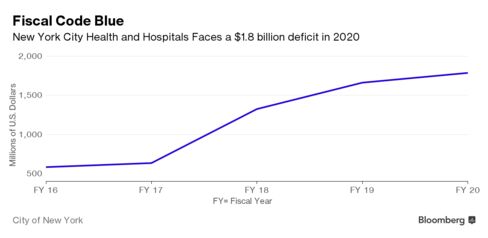
New York Hospitals Facing Fiscal Code Blue

http://www.bloomberg.com/politics/articles/2016-08-22/new-york-city-hospitals-seen-unwilling-to-take-stronger-medicine?utm_campaign=KHN%3A+Daily+Health+Policy+Report&utm_source=hs_email&utm_medium=email&utm_content=33278487&_hsenc=p2ANqtz–Ua5Q-PC5Hs3i1ni8bTaDNOfHhzF8R8meSEL9ZdWL6LejSQMUC3wLCDN9J_cuBB9IHRmZmF7BdmyqhMlNtFPa8KBOrzA&_hsmi=33278487

New York City’s public hospitals are in critical condition with rising costs and plummeting revenue. There’s no dispute about that diagnosis. The problem is with Mayor Bill de Blasio’s proposed cure, according to health policy makers, hospital administrators and budget watchdogs.

As NYC Health + Hospitals President Ram Raju describes it, the largest U.S. municipal-healthcare provider is an ailing system of 11 hospitals that’s losing revenue because of increased competition from non-profit hospitals for Medicaid patients and drastic cuts in federal and state aid for indigents.

His prescription: shift its 40,000-plus employees into a system of neighborhood clinics and transform campuses into affordable housing and long-term care, build enrollment of its MetroPlus insurance plan and persuade federal and state governments to spend more. That aid is projected to fall by almost $1 billion -– from $2.2 billion in FY16 to $1.4 billion in 2020.

Cut Healthcare Spending or Face the Public Option

http://www.healthleadersmedia.com/finance/cut-healthcare-spending-or-face-public-option?spMailingID=9394331&spUserID=MTMyMzQyMDQxMTkyS0&spJobID=981810720&spReportId=OTgxODEwNzIwS0#

“If we don’t get a handle on spending at some point, we will have a government-financed system,” predicts the head of the Pacific Business Group on Health.”

Why clinical documentation is the missing link to value-based reimbursement

http://www.beckershospitalreview.com/finance/why-clinical-documentation-is-the-missing-link-to-value-based-reimbursement.html

The key to successfully making the jump from the old era of healthcare — one where fee-for-service is king — to the new era of healthcare — one where transparency, consumerism and value dominate — may actually be as simple as improving clinical documentation, according to Anthony Oliva, DO, vice president and CMO of Nuance Healthcare.

“For those who thought, ‘Maybe we can just hold out and [value-based care] will all go away,’ it’s never going to go away; it’s only going to get worse,” Dr. Oliva said at the Becker’s 2nd annual CIO/HIT + Revenue Cycle Conference in Chicago.

Healthcare is a classic example of a model explained in Ian Morrison’s book The Second Curve, according to Dr. Oliva. This two-curve model posits that any market undergoing transformation has two curves: the old and the new. Companies must ride the first curve and learn how and when to jump to the second, Mr. Morrison explains in the book.

VIDEO: Healthcare Economist & Futurist Dr. Bill McGivney

http://healthcareexecutivesnetwork.org/mcgivney/

Healthcare Executives Network


Top 10 Takeaways from the HealthLeaders Media CFO Exchange

http://www.healthleadersmedia.com/finance/top-10-takeaways-healthleaders-media-cfo-exchange?spMailingID=9358582&spUserID=MTMyMzQyMDQxMTkyS0&spJobID=981233298&spReportId=OTgxMjMzMjk4S0#

Compass and Dollars

More than three dozen top healthcare finance executives share insight and strategies for tackling their toughest business challenges.

Participants at the 2017 HealthLeaders Media CFO Exchangein Coeur d’Alene, Idaho last week said they are generally optimistic about weathering the storm of regulatory changes, new payment models, and shifting market forces buffeting their organizations.

The finance executives at the invitation-only event also shared many mutual concerns such as offsetting traditional revenue-stream declines at hospitals and assessing the appetite to adopt value-based care models in their markets.

Here are 10 of the most insightful comments from the gathered finance leaders:

6 thoughts on the state of healthcare from Scripps’ Chris Van Gorder

http://www.beckershospitalreview.com/hospital-management-administration/6-thoughts-on-the-state-of-healthcare-from-scripps-chris-van-gorder.html

Self-DiscoverySelf-Discovery

Faced with ever-changing rules and regulations, hospital and health system CEOs must constantly keep a pulse on the healthcare industry and be ready to alter their organizational strategy any day of the week. Chris Van Gorder, president and CEO of San Diego-based Scripps Health, talked to Becker’s Hospital Review about some of the biggest challenges and successes that are currently top of mind.

Mr. Van Gorder has led Scripps, a $2.9 billion integrated health system, since 2000. He is a fellow of the American College of Healthcare Executives and served as the 2010 chairman of the association.

His exposure to healthcare began as a hospital patient when he was critically injured while responding to a family dispute. After a long recovery, Mr. Van Gorder started a new career in hospital security, eventually rising through the ranks of healthcare management. Today, in addition to serving as Scripps’ president and CEO, he is a reserve assistant sheriff to the San Diego County Sheriff’s Department, in charge of the Law Enforcement and Search and Rescue Reserves. He also is a licensed emergency medical technician (EMT) and an instructor for the American Red Cross.

Here, Mr. Van Gorder took the time to answer our six questions.

Seven healthcare industry trends to watch

http://managedhealthcareexecutive.modernmedicine.com/managed-healthcare-executive/news/seven-healthcare-industry-trends-watch


Five things that keep health execs up at night

http://managedhealthcareexecutive.modernmedicine.com/managed-healthcare-executive/news/five-things-keep-health-execs-night