Trump wants to bypass Congress on Medicaid plan

https://www.politico.com/story/2019/01/11/trump-bypass-congress-medicaid-plan-1078885?utm_source=Sailthru&utm_medium=email&utm_campaign=Newsletter%20Weekly%20Roundup:%20Healthcare%20Dive%2001-19-2019&utm_term=Healthcare%20Dive%20Weekender

Image result for medicaid block grant

Block grants for states would achieve conservative dream on health program for poor.

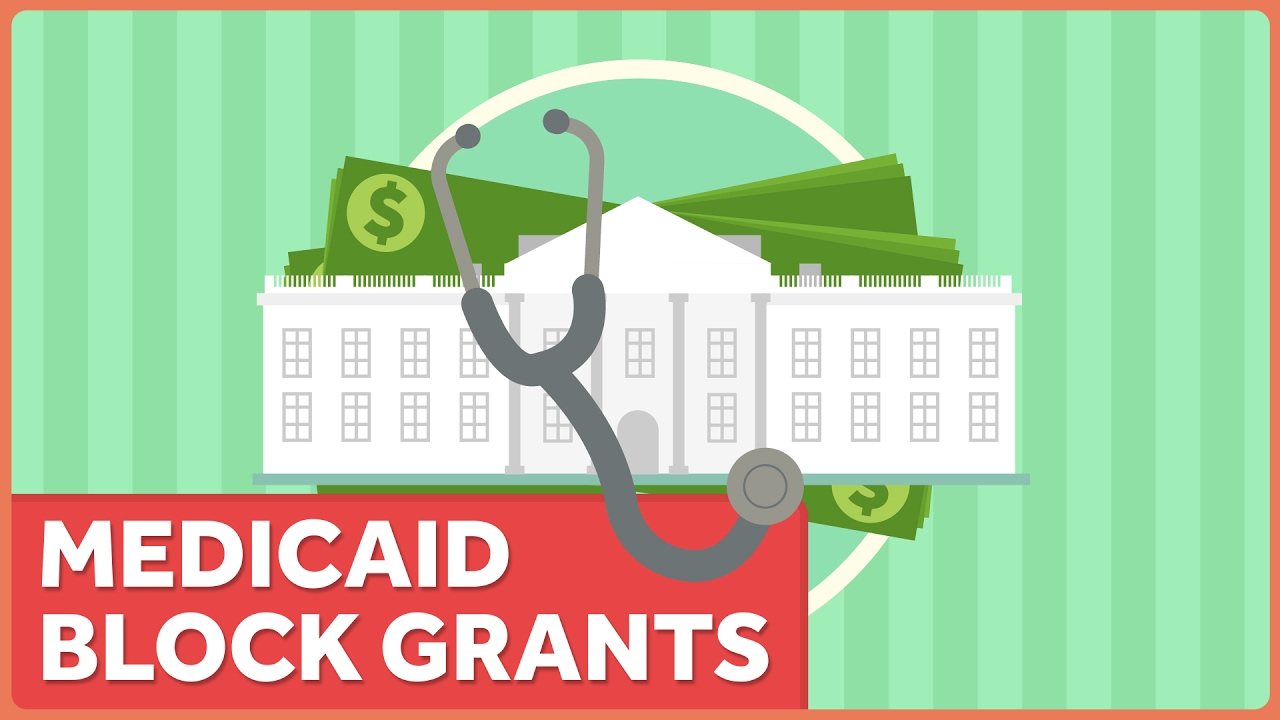
The Trump administration is quietly devising a plan bypassing Congress to give block grants to states for Medicaid, achieving a longstanding conservative dream of reining in spending on the health care safety net for the poor.

Three administration sources say the Trump administration is drawing up guidelines on what could be a major overhaul of Medicaid in some states. Instead of the traditional open-ended entitlement, states would get spending limits, along with more flexibility to run the low-income health program that serves nearly 75 million Americans, from poor children, to disabled people, to impoverished seniors in nursing homes.

Capping spending could mean fewer low-income people getting covered, or state-designated cutbacks in health benefits — although proponents of block grants argue that states would be able to spend the money smarter with fewer federal strings attached.

Aware of the political sensitivity, the administration has been deliberating and refining the plan for weeks, hoping to advance an idea that Republicans since the Reagan era have unsuccessfully championed in Congress against stiff opposition from Democrats and patient advocates. During the Obamacare repeal debate in 2017, Republican proposals to cap and shrink federal Medicaid spending helped galvanize public opposition, with projections showing millions would be forced off coverage.

In addition to potential legal obstacles presented by moving forward without Congress, the administration effort could face strong opposition from newly empowered House Democrats who’ve vowed to investigate the administration’s health care moves.

“Hell no,” Sen. Bob Casey (D-Pa.) wrote on Twitter on Friday evening, vowing to oppose the administration’s block grant plan “through legislation, in the courts, holding up Administration nominees, literally every means that a U.S. Senator has.”

The administration’s plan remains a work in progress, and sources said the scope is still unclear. It’s not yet known whether CMS would encourage states to seek strict block grants or softer spending caps, or if new limits could apply to all Medicaid populations — including nursing home patients — or just a smaller subset like working-age adults.

A spokesperson for CMS did not comment on the administration’s plans but indicated support for the concept of block grants.

“We believe strongly in the important role that states play in fostering innovation in program design and financing,” the spokesperson said. “We also believe that only when states are held accountable to a defined budget — can the federal government finally end our practice of micromanaging every administrative process.”

Republicans have sought to rein in Medicaid spending, especially as enrollment swelled under Obamacare’s expansion of the program to millions of low-income adults in recent years. CMS Administrator Seema Verma has warned increased spending on the Medicaid expansion population could force cutbacks on sicker, lower-income patients who rely on the program.

The administration wants to let states use waivers to reshape their Medicaid programs, but the effort could face legal challenges in the courts. Waivers approved by the Trump administration to allow the first-ever Medicaid work requirements for some enrollees, for example, are already being challenged in two states.

Also complicating the administration’s push: the newfound popularity of Medicaid, which has grown to cover about one in five Americans. Voters in three GOP-led states in November approved ballot measures to expand Medicaid, which has been adopted by about two-thirds of states. Newly elected Democratic governors in Kansas and Wisconsin are pushing their Republican-led legislatures to expand Medicaid this year.

Verma has been trying to insert block grant language into federal guidance for months but has encountered heave scrutiny from agency lawyers, two CMS staffers said. She mentioned interest in using her agency’s authority to pursue block grants during a meeting with state Medicaid directors in the fall but did not provide details, said two individuals who attended.

There is some precedent for the federal government capping its spending on the entitlement program. Former President George W. Bush’s health department approved Medicaid spending caps in Rhode Island and Vermont that would have made the states responsible for all costs over defined limits. However, those spending caps were set so high there was never really any risk of the states blowing through them.

In recent years, governors have complained about the rising costs of Medicaid, which is eating up a bigger share of their budgets. States jointly finance the program with the federal government, which on average covers 60 percent of the cost – though the federal government typically shoulders more of the burden in poorer states. The federal government covers a much higher share of the cost for Medicaid enrollees covered by the Obamacare expansion.

An official from a conservative state, speaking on background to discuss an effort not yet public, said states would consider a block grant as long as the federal government’s guidance isn’t overly prescriptive.

CMS is hoping to make an announcement early this year, but it could be further delayed by legal review, which has already been slowed by the prolonged government shutdown.

Some conservative experts said the administration’s plans ultimately may be limited by Medicaid statute, which requires the federal government to match state costs. However, they say the federal government can still try to stem costs by approving program caps.

“There’s no direct provision of authority to waive the way that the federal government pays the states,” said Joe Antos of the American Enterprise Institute, a right-leaning think tank. “However, that doesn’t mean that you can’t try to have some of the effects that people that like block grants would like to see, in terms of encouraging states to be more prudent with the ways they spend the money.”


Payer, provider trends to watch in 2019

https://www.healthcaredive.com/news/payer-provider-trends-to-watch-in-2019/545612/

Ripple effects from 2018 will continue well into the new year as players deal with some massive policy and business shifts.


Healthcare M&A now more about strategy than opportunity, Kaufman Hall says

https://www.healthcaredive.com/news/healthcare-ma-now-more-about-strategy-than-opportunity-kaufman-hall-says/545909/

Dive Brief:

  • The size of the companies involved in healthcare M&A continues to grow. The average size in revenue of sellers was $409 million last year, nearly 14% higher than a decade ago, Kaufman Hall said in a new report.
  • Kaufman Hall found that seven transactions in 2018 involved sellers with net revenues of at least $1 billion.
  • Healthcare M&A today is more of a strategic decision than one about opportunistic growth. Fewer deals last year involved financially distressed sellers, according to the report.

Dive Insight:

Healthcare M&A isn’t so much about saving a struggling hospital now. Instead, these deals often involve strong health systems looking to expand into new areas.

Nearly one-third of healthcare transactions last year involved companies with revenues of between $100 million and $500 million. About one-fifth of deals were at least $500 million.

Nearly half involved not-for-profit companies acquiring other nonprofits and about one-quarter were not-for-profits buying for-profits. Another nearly 25% involved a for-profit acquiring either another for-profit or nonprofit.

Kaufman Hall said M&A activity isn’t about taking advantage of a struggling competitor. A mere 20% of deals involved a distressed company. Instead, health systems want strategic advantages.

“Health system leaders are seeking to acquire organizations that bring embedded expertise and resources to the deal, making these transactions more of a strategic partnership than an asset acquisition,” according to the report.

Kaufman Hall said it has found that health systems with “strong operational or clinical capabilities” are looking beyond their local markets.

New competitors in the market are offering larger scale and resources, including annual revenues as much as nearly 10 times the levels of the biggest not-for-profit systems. The CVS Health-Aetna deal kicked off a trend that continued with Humana-Kindred Healthcare and Optum-DaVita Medical Group and goes on with Amazon’s efforts to enter healthcare.

“New combinations across healthcare verticals and new market entrants are creating competitors that dwarf the scale of even the largest health systems,” according to the analysis. “The forces that are reshaping the industry affect not-for-profit and for-profit health systems alike and are causing not-for-profit and for-profit strategies to converge.”

Kaufman Hall found that consolidation is happening faster in some states than others. Not surprisingly, Texas led with eight deals in 2018. Florida (seven), Pennsylvania (six) and Louisiana and Tennessee (five each) ranked next.

Texas ($6.8 billion) and Florida ($3.6 billion) led in terms of revenue of announced deals. Kaufman Hall said 16 states didn’t have any healthcare transactions. However, some of those states, such as Kentucky and Massachusetts, have seen a high volume or large deals in recent years.

One downside of M&A is consolidation that can limit competition. The Center for American Progress recently reported that provider consolidation has led to higher healthcare prices. That report also found that consolidation isn’t lowering costs and improving care coordination, which is a common argument in favor of M&A activity.


Universal Health Services finance chief Steve Filton on cost containment and challenges hospital CFOs face

https://www.beckershospitalreview.com/finance/universal-health-services-finance-chief-steve-filton-on-cost-containment-and-challenges-hospital-cfos-face.html?origin=cfoe&utm_source=cfoe

Image result for cfo challenges

As CFO of one of the nation’s largest hospital management companies, Steve Filton understands the challenges hospitals face.

Mr. Filton has served as executive vice president and CFO of King of Prussia, Pa.-based Universal Health Services since 2003.

He  joined the company in 1985 as director of corporate accounting and in 1991, he was promoted to vice president and controller.

Mr. Filton spoke with Becker’s about some of the challenges facing CFOs and his top cost-containment strategies.

Question: What is the greatest challenge hospital and health system CFOs faced in 2018? Do you expect this to be their biggest challenge in 2019 as well?

Steve Filton: I think effectively we’re in an environment where our payers have all concluded that costs and medical spending have to be reduced, and a lot of that burden ultimately falls on providers, like hospitals and doctors. As a [result], I think hospitals are tasked with the difficult goal of continuing to provide the highest quality care in more efficient ways. I think that was the biggest challenge last year and will be the biggest challenge this year. I think, frankly, for the foreseeable future, that’s the challenge of being a provider in today’s healthcare environment.

Q: How do you feel the CFO role has evolved in recent years?

SF: I think CFOs have a particularly challenging role in that our organizations explore the ways to deliver high quality care that’s best for our patients and try to create an environment that is satisfying for our employees. We as CFOs then say, ‘How do we accomplish these things and remain efficient and remain profitable?’ [That way organizations] can continue to do all the things we have to do as far as investing and reinvesting in the business and continuing to be competitive with our labor force and do all the things that allow us to continue to run high quality facilities, which in many cases involve significant expenditures.

Q: What are your top cost-containment strategies?

SF: I think a lot of our cost-containment strategies are focused on what I describe as driving the variability out of our business. I think so many other industries and businesses are accustomed to delivering their products and services in very standardized ways that are determined to be most efficient. I think healthcare has sort of long resisted that, and as a [result], we have lots of variability in the way that we deliver services in our various geographies. Various clinicians will deliver services differently. And I think we could benefit by following the lead of some of our peer industries and becoming much more focused on … delivering all our care and service in that standard way in accordance with best practice protocols. Driving out excess utilization and driving out rework and re-dos and errors — those things I think are a significant focus of getting the hospital industry to be more efficient and cost-efficient.

Question: During your tenure at UHS, what has been one of your proudest moments as CFO?

SF: What I take great pride in is the growth of the company. When I joined the company in the mid-1980s, it had maybe 35 [or] 40 hospitals around the country and maybe $500 million of consolidated revenues. This coming year we’ll have well over 300 domestic facilities and another 100 or so in the United Kingdom and over $11 billion of revenue.  And what I’m proud of is not just the growth of the company, but … the way the company has grown and yet really adhered to its core principles. When I joined the company 30 some odd years ago, it was very committed to high quality patient care and to the satisfaction to our employees. And honestly, if anything, I think the company has recommitted itself to those core principles over the years, and to be a much bigger company [and] not have abandoned our core principles, at least for me, is a source of great pride.

Q: If you could pass along one nugget of advice to another hospital CFO, what would it be?

SF: I tell the folks who work with me and for me all the time that it’s so important to behave every day with the highest level of integrity. I think at the end of the day you can’t replace that. People, I think, will give you a lot of leeway if they trust you, if they believe that you’re behaving transparently and with great honesty. And so I encourage everyone who works for me to do that, and I certainly endeavor to try to do that as best I can. And it’s tough. There are all kinds of pressures on folks in a financial role in this sort of environment. But I think if you behave with integrity, everything else will follow from that.


State Efforts to Protect Consumers from Balance Billing

https://www.commonwealthfund.org/blog/2019/state-efforts-protect-consumers-balance-billing?omnicid=EALERT1547609&mid=henrykotula@yahoo.com

Image result for balance billing

Health insurance rates for working-age Americans have improved over the past decade. But not everyone with health insurance today has adequate financial protection. About one-fourth of insured Americans are underinsured because they have significant coverage gaps or high out-of-pocket costs. And all consumers are vulnerable to surprise medical bills, or balance bills for out-of-network care. These balance bills arise when insurance covers out-of-network care, but the provider bills the consumer for amounts beyond what the insurer pays and beyond cost-sharing, as well as in situations where out-of-network care is not normally covered but the selection of provider is outside the consumer’s control.

Consumers are most likely to receive surprise medical bills from health providers outside their insurance plan’s network after receiving emergency care or medical procedures at in-network facilities. In the latter cases, for example, consumers may select a surgeon and facility in network, but discover that other providers, such as an anesthesiologist or surgical assistant, are out of network. These unexpected medical bills are a major concern for Americans, with two-thirds saying they are “very worried” or “somewhat worried” that they or a family member will receive a surprise bill. In fact, these bills are the most-cited concern related to health care costs and other household expenses.

While employers and insurers may voluntarily protect employees or enrollees from some types of balance billing, no federal law regulates charges submitted by out-of-network providers. States can help protect enrollees from unexpected balance bills. However, state protections are limited by federal law (ERISA), which exempts self-insured employer-sponsored plans, covering 61 percent of privately insured employees, from state regulation.

Despite Recent State Activity, Consumers in Most States Are Not Protected from Balance Billing

We conducted a study, published in June 2017, that found that 21 states had laws offering consumers at least some protections in a balance billing situation. But only six of those states — California, Connecticut, Florida, Illinois, Maryland, and New York — had laws meeting our standard for “comprehensive” protections.

Critical elements of state laws that offer “comprehensive” protections against balance billing:

  • Extend protections to both emergency department and in-network hospital settings
  • Apply laws to all types of insurance, including both HMOs and PPOs
  • Protect consumers both by holding them harmless from extra provider charges — meaning they are not responsible for the charges — and prohibiting providers from balance billing, and
  • Adopt an adequate payment standard — a rule to determine how much the insurer pays the provider — or a dispute-resolution process to resolve payment disputes between providers and insurers.

In 2017 and 2018, states continued taking steps to protect consumers. Four states — Arizona, Maine, Minnesota, and Oregon — created balance-billing consumer protections for the first time, and two states — New Hampshire and New Jersey — substantially expanded existing protections. We now classify New Hampshire, New Jersey, and Oregon as states offering comprehensive protections against balance billing. As of December 2018, 25 states have laws offering some balance-billing protection to their residents, and nine of them offer comprehensive protections.

New Jersey has met our criteria for comprehensive protection by creating a strong dispute-resolution process to establish a payment amount for the out-of-network service. Other states have recently acted to protect consumers from balance billing in a more limited way that does not meet our criteria. For example, Missouri’s protections against balance billing apply only if the provider and insurer voluntarily agree to participate in the process.

Interest in a Federal Solution to Balance Billing

At the same time, interest has grown in federal measures, in part, because only federal legislation can protect those in self-funded insurance plans that are exempt from state regulation. During the 115th Congress, proposals were released by Senator Bill Cassidy (R–La.)Senator Maggie Hassan (D–N.H.)Representative Lloyd Doggett (D–Texas), and Representative Michelle Lujan Grisham (D–N.M.). The Cassidy proposal has bipartisan support, with three Democrats and two other Republicans as cosponsors.

Federal approaches vary along some of the same lines as state laws. For example, the Hassan bill relies most heavily on a dispute-resolution approach. By contrast, the Cassidy proposal relies on a payment standard that is the greater of a) the median in-network rate paid by the insurer or b) 125 percent of the average allowed amount across payers. Several federal proposals make protections contingent on failure of providers to notify the consumer that they could be billed by an out-of-network provider. States that have enacted protections have mostly viewed such contingent protections as an insufficient means of protecting consumers. Federal proposals also vary in the degree to which they allow a state role in implementing protections.

Some federal proposals, like some state laws, have potential gaps. For example, some address balance bills only from hospital-based physicians such as anesthesiologists and radiologists. Also, state laws and federal proposals mostly do not address ground or air emergency transport providers.

Looking Forward

The bipartisan interest in the surprise billing issue offers the potential for federal action in the new Congress. States are frustrated by their inability to address all insurance plans. And states without laws have often faced opposition from stakeholder groups, even when there is a consensus around protecting consumers. A federal solution could offer a more comprehensive approach, while giving states appropriate flexibility to seek an approach fitting their particular market environments.


CMS cuts ACA exchange fees, floats proposal to end silver-loading

https://www.healthcaredive.com/news/cms-cuts-aca-exchange-fees-floats-proposal-to-end-silver-loading/546399/

Image result for silver

Dive Brief:

  • CMS proposed in its 2020 Payment Notice on Thursday a reduction to exchange user fees and is asking for feedback on a proposals to potentially eliminate auto-reenrollment and “silver-loading,” a strategy used by payers where they pack the ACA’s subsidy-rich silver tier plans in order to make up for losses incurred by the elimination of cost-sharing reduction (CSR) payments.
  • The agency is proposing to drop the exchange fee to 3% from 3.5% of premiums for plans sold on the federal exchange and to 2.5% from 3% for plans sold on state exchanges. If finalized as-is, the rule would also increase the annual cost-sharing limit for self-only coverage to $8,200 from $7,900 and to $16,400 from $15,800 for family coverage.
  • While rule’s intentions are to lower premiums, critics have argued it would trigger the opposite. Former CMS Administrator Andy Slavitt warned through a series of tweets that the rule is an “act of sabotage” that would cut coverage for 2 million Americans, “significantly increase premiums, and raise out of pocket costs.”

Dive Insight:

CMS has presented the rule as another step toward deregulating healthcare and lowering costs for consumers. Consumers, the agency argues, will ultimately save money on premiums, savings that will theoretically trickle down from insurers, who will pay less in exchange user fees once the proposal is finalized.

CMS Administrator Seema Verma said in a statement that the rule is aligned with the Trump administration’s healthcare goals, which include lowered premiums, reduced regulations, market stability, consumerism and protection for taxpayers.

While no regulations limiting or banning auto-enrollment and silver-loading are contained in the rule, CMS has requested public comment on the two issues for consideration in future rules before 2021.

The Administration supports a legislative solution that would appropriate CSR payments and end silver loading,” the proposed rule states. “There is a concern that automatic re-enrollment eliminates an opportunity for consumers to update their coverage and premium tax credit eligibility as their personal circumstances change, potentially leading to eligibility errors, tax credit miscalculations, unrecoverable federal spending on the credits, and general consumer confusion.”

Critics called it the latest act of “sabotage” on the ACA.

Ending auto-enrollment, a key feature of the ACA, would result in lost coverage for a number of Americans.

The end of silver-loading, a tactic many health plans resorted to in 2018 after the elimination of the law’s cost sharing reductions, could wreak havoc for insurers in the exchanges.

Opponents of the rule believe cracking down on silver-loading would do little more than boost premiums for consumers, as insurers would have no other mechanism to mitigate subsidy losses. 

President Trump, Senator Patty Murray, D-Wash., said in a statement. is “hurting families left and right.” Murray is the top Democrat on the Senate Health, Education, Labor, and Pensions Committee.

“Even 27 days into the shutdown he caused, President Trump has somehow found time to further sabotage health care for patients, families, and women —this time by proposing what would amount to a health care tax on patients and families across the country,” Murray said.

America’s Health Insurance Plans praised the reduced user fee, adding the proposed rule focuses on “stability in the individual market.” But it is unclear where the insurance lobby stands on the proposals to potentially end auto-reenrollment and the practice of silver-loading.

Public comments on the rule are due February 19. 


Health Care Costs 101: A Continuing Economic Threat

Click to access HealthCareCosts18.pdf

2018 Edition — Health Care Costs 101

Image result for california healthcare foundation

US health spending reached $3.3 trillion in 2016, or $10,348 per capita, and accounted for 17.9% of gross domestic product (GDP). Health spending slowed somewhat in 2016, following the coverage expansions of 2015 and 2014. National health spending increased 4.3% in 2016, down from 5.8% in 2015 and 5.1% in 2014. Despite this slowdown, 2016 health spending grew 1.5 percentage points faster than the economy (GDP grew at a rate of 2.8%).

Looking ahead, health spending is projected to grow at an average rate of 5.5% per year (1.0 points faster than the economy) between 2017 and 2026. At this rate, health care would consume a growing portion of the economy, totaling $5.7 trillion and accounting for one-fifth of GDP by 2026.

Health Care Costs 101: A Continuing Economic Threat (PDF), which relies on the most recent data available, details how much is spent on health care in the US, which services are purchased, and who pays.

Key findings include:

  • Per capita health spending increased 3.5% in 2016 and crossed the $10,000 per capita threshold for the first time.
  • Prescription drug spending declined dramatically from 8.9% in 2015 to 1.3% in 2016, driven in part by fewer new medications on the market, slower brand-name drug spending, and reduced spending on generic drugs.
  • Households and the federal government each accounted for 28% of health spending in 2016.
  • As ACA coverage expansion matured in 2016, the rate of increase in federal spending slowed to 3.9%, lower than private business (5.0%) or households (4.6%).
  • Federal subsidies for ACA marketplace (individual coverage) premiums and cost sharing totaled $33 billion, accounting for 3.5% of federal health spending and 3.0% of private health insurance spending.
  • Public health insurance, including Medicare and Medicaid, paid the largest share of spending (41%) in 2016. Private health insurance paid for a third of health spending and consumers’ out-of-pocket spending accounted for 11%.

The full report, a quick reference guide, and all of the charts found in the report are available under Related Materials. Also available are the datafiles and previous years’ reports.  These materials are part of CHCF’s California Health Care Almanac, an online clearinghouse for key data and analyses describing the state’s health care landscape.


US Health Care Spending: Who Pays?

Infographic — US Health Care Spending: Who Pays?

Image result for US Health Care Spending: Who Pays?

Over the past 56 years, there have been major shifts in how we pay for hospital care, physician services, long-term care, prescription drugs, and other health care services and products in the US. In 1960, Medicare and Medicaid did not yet exist. Only half of hospital care was covered by insurance, with the rest paid out of pocket and by a patchwork of sources, both private and public.

In 1960, almost all (96%) spending on prescription drugs came out of the consumer’s pocket, but a dramatic rise in private insurance, coupled with the implementation of Medicare drug coverage in 2006, dropped the out-of-pocket spending share to 14% in 2016.

This interactive graphic uses data from the Centers for Medicare & Medicaid Services (CMS) to show national spending trends from 1960 to 2016 for health care by payer. (Figures presented refer to personal health care, which, as defined by CMS, includes goods and services such as hospital care and eyeglasses but excludes administration, public health activity, and investment.)

The data visualization below is a companion to Health Care Costs 101, part of CHCF’s California Health Care Almanac.