



The CEO of North Tampa Behavioral Health did not meet the requirements to lead the Wesley Chapel, Fla.-based psychiatric hospital, according to a report cited by the Tampa Bay Times.
Bryon Coleman Jr., the former CEO of North Tampa Behavioral, is no longer leading the hospital. Instead, he is in another position within Acadia Healthcare, the Franklin, Tenn.-based parent company of North Tampa Behavioral.
In October, lawmakers called on federal officials to look into North Tampa Behavioral after the Tampa Bay Times published an investigative report that found Mr. Coleman had no healthcare experience. The report also raised quality concerns, claiming North Tampa Behavioral boosted revenues by using a loophole in Florida’s mental health law to hold some patients longer than a 72-hour limit. The hospital rejected the claims.
In November, federal inspectors discovered serious problems at the psychiatric hospital, according to the Tampa Bay Times. Inspectors said medical staff hadn’t been held accountable for poor care. Inspectors also found “no evidence” that Mr. Coleman “met the education or experience requirements defined in the position description” for the CEO role. Officials threatened to end the facility’s federal funding if the issues aren’t addressed by Feb. 19.
Mr. Coleman became CEO of Tampa Behavioral Health in 2018. Prior to that, he quarterbacked for the Green Bay Packers practice squad, managed sales for a trucking company and oversaw employee benefits at an insurance firm, according to the Tampa Bay Times.
In a statement to the Tampa Bay Times, a spokesperson from Acadia denied that federal officials threatened to cut public funding from the hospital and said officials didn’t find Mr. Coleman lacked requirements for his job.
Read the full article here.
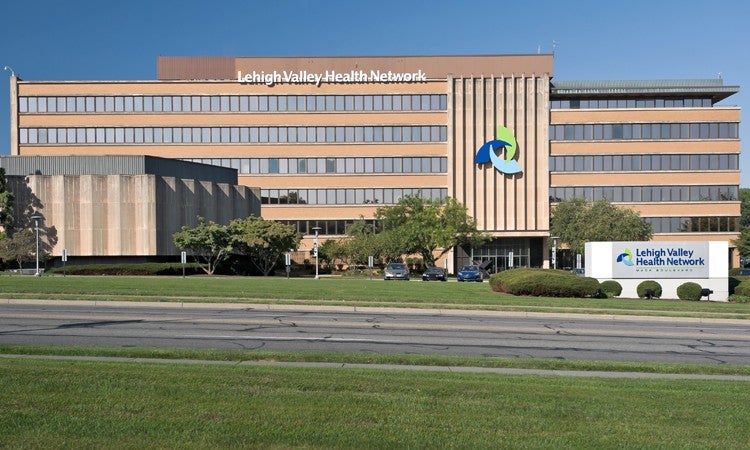
Allentown, Pa.-based Lehigh Valley Health Network saw its net income more than triple from $35.1 million in fiscal year 2018 to $115.3 million in fiscal year 2019, according to financial documents released Dec. 4.
The health system saw its revenue increase year over year to $2.96 billion in the 12 months ended June 30. In the same period in 2018, the system reported revenue of $2.73 billion.
In fiscal year 2019, Lehigh Valley Health reported expenses of $2.86 billion, up from $2.68 billion in 2018.
Expense growth resulted from several factors, including an increase in salaries and wages and supply costs.
Lehigh Valley Health System attributed the net income increase to cutting back on contract workers and overtime and reducing costs on readmissions and contracts, according to The Morning Call.
https://www.beckershospitalreview.com/finance/upmc-to-close-hospital-in-2020.html

Pittsburgh-based UPMC will close its hospital in Sunbury, Pa., on March 31, 2020, according to The Daily Item.
The health system cited dwindling patient volume as one of the reasons it is closing UPMC Susquehanna Sunbury.
“This decision was made with careful consideration and analysis of the use of hospital services in the region,” UPMC Susquehanna President Steven Johnson said, according to The Daily Item. “According to market data, patients are utilizing facilities other than UPMC Susquehanna Sunbury for their care. UPMC must prudently examine opportunities to integrate and consolidate functions balanced against the needs of the community.”
The hospital, previously named Sunbury Community Hospital, has been open for nearly 125 years. Jody Ocker, Sunbury city administrator, said she’s concerned local residents won’t have access to care after the hospital closes.
“I’m very concerned about our residents’ access to care,” she told TV station WNEP. “We have people that are getting around on their electric scooters and their bicycles. They don’t have access to reliable transportation.”
About 150 people will lose their jobs when UPMC Susquehanna Sunbury closes, according to WNEP. UPMC said it will try to relocate employees to other hospitals in the area.

More than 140,000 people died from measles last year as the number of cases around the world surged once again, official estimates suggest.
Most of the lives cut short were children aged under five.
The situation has been described by health experts as staggering, an outrage, a tragedy and easily preventable with vaccines.
Huge progress has been made since the year 2000, but there is concern that incidence of measles is now edging up.
In 2018, the UK – along with Albania, the Czech Republic and Greece, lost their measles elimination status.
And 2019 could be even worse.
The US is reporting its highest number of cases for 25 years, while there are large outbreaks in the Democratic Republic of Congo, Madagascar and Ukraine.
The Pacific nation of Samoa has declared a state of emergency and unvaccinated families are hanging red flags outside their homes to help medical teams find them.
The global estimates are calculated by the World Health Organization (WHO) and the US Centers for Diseases Control and Prevention.
They show:
Measles cases do not go down every year – there was an increase between 2012 and 2013, for example.
However, there is greater concern now that progress is being undone as the number of children vaccinated stalls around the world.
“The fact that any child dies from a vaccine-preventable disease like measles is frankly an outrage and a collective failure to protect the world’s most vulnerable children,” said Dr Tedros Ghebreysus, director-general of the WHO.
Every single case of measles cannot be counted. In 2018, only 353,236 cases were officially recorded (out of the 7.8 million estimated).
So scientists perform complex maths for each country.
They take reported cases, the population size, deaths rates, the proportion of children vaccinated and more to eventually produce a global estimate.
Dr Minal Patel, who performed the number-crunching, told the BBC: “We’ve had a general trajectory downwards for deaths, which is great. Everyone involved in vaccination programmes should be very proud.
“But we’ve been stagnating in numbers of deaths for about the past seven years, and what’s really concerning is from last year we’ve gone up, and it looks like we’ve gone backwards.”
In short, not enough children are being vaccinated.
In order to stop measles spreading, 95% of children need to get the two doses of the vaccine.
But the figures have been stubbornly stuck for years at around 86% for the first jab, and 69% for the second.
Why enough children are not being vaccinated is more complicated – and the reasons are not the same in every country.
The biggest problem is access to vaccines, particular in poor countries.
The five worst-affected countries in 2018 were Democratic Republic of Congo, Liberia, Madagascar, Somalia and Ukraine.
The Ebola outbreak in Liberia (2014-16) and plague in Madagascar (2017) have taken a toll on their healthcare systems.
“Democratic Republic of Congo, Somalia and Ukraine, the other countries hardest-hit by measles, each face conflicts, with DRC additionally battling a serious Ebola outbreak and rampant distrust,” Prof Heidi Larson, from the London School of Hygiene & Tropical Medicine, explained.
The other issue is people who do have access to vaccines choosing not to immunise their children.
It looks likely.
The number of reported cases by mid-November this year was 413,000 compared with 353,000 for the whole of last year.
Henrietta Fore, Unicef’s executive director, said: “The unacceptable number of children killed last year by a wholly preventable disease is proof that measles anywhere is a threat to children everywhere.”
Dr Seth Berkley, chief executive of Gavi, the Vaccine Alliance, said: “It is a tragedy that the world is seeing a rapid increase in cases and deaths from a disease that is easily preventable with a vaccine.
“While hesitancy and complacency are challenges to overcome, the largest measles outbreaks have hit countries with weak routine immunisation and health systems.”
Prof Larson said: “These numbers are staggering. Measles, the most contagious of all vaccine-preventable diseases, is the tip of the iceberg of other vaccine-preventable disease threats and should be a wake-up call.”

Sarah Macsalka had heard the stories about how expensive an emergency room visit can be, even for a minor complaint.
So when her 7-year-old son, Cameron, tripped and gashed his knee in the backyard, the ER was not where her family headed first. In fact, Macsalka did just about everything she could to avoid paying a big, fat bill to get Cameron’s knee stitched up.
Ultimately, she failed.
Her adventure raises a big question: In a system where consumers are encouraged to “shop” for the best deal in health care, why is it so hard to get simple information, like a price?
On this week’s episode of “An Arm and a Leg,” we get some answers.
Instead of taking her son to the local emergency room for stitches, Macsalka took him to an urgent care clinic, one that provides patients with prices ahead of the service. There, the staff said stitching up Cameron’s knee would cost $150.
But there was a problem. The clinic didn’t have the topical anesthetic the doctor would need to numb Cameron’s skin first.
“And Cameron is like screaming and crying,” Macsalka said. “He doesn’t take pain well.”
So, reluctantly, the family headed to the local emergency room.
Macsalka tried to be a smart shopper there, too. When a staff member came to take her insurance information, Macsalka grilled him about how much the visit would cost.
“He was like, ‘I don’t know. Just walking through the ER [door] costs $600,'” she said.
To Macsalka, that sounded like a “facility fee” — a cover charge of sorts, separate from any health care services. And it sounded pricey. But she was over a barrel.
“The kid is still screaming and crying,” she said. “His knee’s a mess.” She wasn’t about to drive him back to the urgent care place and start over again.
They got the stitches in the ER. And, as it happened, the anesthetic wasn’t very effective.
Macsalka said her son’s screams were ear-piercing. “Yeah, Cameron’s lungs did not give out,” she said. “Those are very healthy lungs.”
As it turned out, Macsalka’s attempts to figure out what the final price would be weren’t very effective either. A few weeks after the ER visit, she got a bill for the doctor’s services and paid it: $214 after insurance.
Then there was another bill from the hospital. One line: $2,824.
Macsalka went back into smart-consumer mode. She called the hospital billing department and asked if there had been a mistake.
Macsalka said the person she spoke with on the phone told her that “just walking through the doors” of the emergency room cost $4,200. That amount matches a number on her insurance statement — an amount before the insurance company’s negotiated discount.
After that discount, the bill was $2,824 – and because Macsalka’s family had a high deductible, they were responsible for paying it all.
Macsalka said she tried another tactic and asked the billing representative: What if I didn’t have insurance? She said the billing rep told her: In that case, the hospital would accept 10% of its total bill to make sure it collected something. Without a negotiated rate from insurance, the total would have been about $6,000, so 10% would have been about $600.
It was more than Macsalka had hoped to pay. But less than $3,000.
“So I was like, ‘Fine, cool, I’ll take it.’ And she’s like, ‘Oh no. You can’t because it’s already gone through your insurance company. So that’s not an option for you.'”
Having insurance — with a high deductible — meant Macsalka was on the hook for the $2,800 charge.
She wishes someone could have told her the price upfront.
“I would’ve said thank you very much. And walked out and gone back to our lovely urgent care and been like, Cameron, bite on this stick,” she said.
For Episode 4, we also rounded up a hospital consultant and a journalist to better understand the perspectives of the hospital and insurance company.
https://www.healthleadersmedia.com/finance/health-spending-grew-46-2018-outpaced-overall-economy

Healthcare spending in the U.S. grew by 4.6% in 2018, totaling $3.6 trillion, according to data released Thursday by the Centers for Medicare & Medicaid Services (CMS) Office of the Actuary.
Healthcare, as a share of the overall economy, slipped to 17.7% of gross domestic product (GDP) in 2018, down slightly from 17.9% in 2017.
The statistics, published in Health Affairs, show that healthcare spending averaged $11,172 per person in 2018, while the total personal healthcare spending growth rate held steady at 4.1%.
National healthcare spending increased faster in 2018 than it did in 2017, but it equaled the rate seen in 2016. CMS attributed the recent increase to acceleration in health insurance costs, which grew by 4.3% in 2017 and 13.2% in 2018. Another contributing factor was the reinstatement of the health insurance tax after a one-year moratorium.
For the second consecutive year, the total number of uninsured people rose by 1 million.
“Healthcare spending growth picked up across all major payers in 2018 as medical prices grew faster, due in part to the reinstatement of the health insurance tax on all health insurance providers,” Micah Hartman, a statistician in the CMS Office of the Actuary, said in a statement. “However, economic growth outpaced healthcare spending and the share of the economy devoted to health care fell.”
Rising medical prices accounted for an uptick in per capita healthcare spending last year. Hospital spending—which accounted for 33% of overall healthcare spending in 2018—led the way among goods and services spending growth, at 4.5%.
Growth in expenditures slipped slightly to 4.5%, though hospital prices rose from 1.7% in 2017 to 2.4% in 2018. Additionally, growth in total inpatient days slid from 1.7% in 2017 to 0.7% in 2018.
Physician and clinical services spending slowed to 4.1% in 2018, down from 4.7% in 2017, while retail prescription drug spending rose from 1.4% in 2017 to 2.5% in 2018.
CMS released projections in February for average healthcare spending growth rates of 5.5% annually between 2018 to 2027, totaling nearly $6 trillion.
The study projected an acceleration in hospital spending from 4.4% in 2018 to 5.1% in 2019, thanks to faster than expected growth in Medicare and Medicaid.
The study also attributed the growth in overall healthcare spending to more baby boomers entering Medicare and a 2.5% increase in medical goods and services through 2027.
On the payer side, private health insurance spending totaled $1.2 trillion, growing by 5.8% in 2018 compared to 4.9% in 2017.
Meanwhile, both Medicare and Medicaid experienced spending growth increases of 6.4% and 3%, respectively.
The federal government’s healthcare spending rose by 5.6% in 2018, doubling the rate from 2017, as growth in Medicare and Medicaid expenditures increased significantly.
The largest of portions of healthcare spending went to the federal government and households, each with 28%, private businesses at 20%, state and local governments at 17%, and “other private revenues” at 7%.

Hospitals sued the Trump administration yesterday over its requirement that they disclose their negotiated rates, the latest of the industry’s moves to protect itself from policy changes that could hurt its revenues.
Why it matters: Hospitals account for the largest portion of U.S. health costs — which patients are finding increasingly unaffordable.
The big picture: Hospitals are going to war against Trump’s price transparency push while simultaneously trying to kill Democrats’ effort to expand government-run health coverage.
Between the lines: The industry has a lot to lose; even non-for-profit systems are, as my colleague Bob Herman put it, “swimming in cash.”
Hospitals argue that the transparency measure could end up raising prices if providers with lower negotiated rates see what their competitors are getting. They also warn that Democrats’ plans could put hospitals and doctors out of business and threaten patients’ access to care.
The bottom line: Politicians are reacting to patients’ complaints about their health care costs, but the industry has historically been excellent at getting its way.
Go deeper: Hospitals winning big state battles

Spending levels for people in the traditional Medicare program are expected to rise by 4.5% in 2021, the Centers for Medicare & Medicaid Services said in a memo sent this week.
Why it matters: This growth rate is the key number government actuaries use when figuring out how much to pay Medicare Advantage plans, Bob writes.
Go deeper: The war over Medicare Advantage audits heats up

A five-day strike that was postponed last month after the sudden death of Kaiser Permanente Chairman and CEO Bernard J. Tyson is back on the calendar.
Thousands of psychologists, therapists, psychiatric nurses, and other healthcare professionals plan to strike December 16–20 at more than 100 Kaiser Permanente facilities across California, the National Union of Healthcare Workers (NUHW) said Wednesday.
“Mental health has been underserved and overlooked by the Kaiser system for too long,” said Ken Rogers, PsyD, MEd, a Kaiser Permanente clinical psychologist who serves as a vice president on the NUHW executive board, in a statement released by the union.
“We’re ready to work with Kaiser to create a new model for mental health care that doesn’t force patients to wait two months for appointments and leave clinicians with unsustainable caseloads,” Rogers said. “But Kaiser needs to show that it’s committed to fixing its system and treating patients and caregivers fairly.”
The union accuses Kaiser Permanente of refusing to negotiate unless mental health clinicians agree to “significantly poorer retirement and health benefits” than those received by its more than 120,000 other California employees.
Dennis Dabney, senior vice president of national labor relations and the Office of Labor Management Partnership at the Kaiser Foundation Health Plan and Hospitals, said the parties have been working together with an external mediator in pursuit of a collective bargaining agreement. The union rejected a compromise solution proposed last week by the mediator, Dabney said.
“The only issues actively in negotiation in Northern California are related to wage increases and the amount of administrative time that therapists have beyond patient time,” Dabney said. “We believe these issues are resolvable and there is no reason to strike.”
The mediator’s recommendation includes about 3% in annual wage increases for therapists in Northern California for four years, plus a $2,600 retroactive bonus, Dabney said
“In Southern California, the primary contract concern relates to wage increases and retirement benefits,” Dabney said.
The mediator’s recommendation includes about 3% in annual wage increases for therapists in Southern California for four years, plus a $2,600 retroactive bonus, even though the organization’s therapists in Southern California “are paid nearly 35% above market,” Dabney said.
“Rather than calling for a strike, NUHW’s leadership should continue to engage with the mediator and Kaiser Permanente to resolve these issues,” Dabney said.
 HENRY KOTULA