Rochester, Minn.-based Mayo Clinic was named the best smart hospital in the world in 2021 by Newsweek.
For the list, the magazine partnered with consumer research company Statista to find the 250 hospitals that best equip themselves for success with technology. Newsweek said the hospitals on the list are the ones to watch as they “lead in their use of [artificial intelligence], robotic surgery, digital imaging, telemedicine, smart buildings, information technology infrastructure and EHRs.”
The ranking, published June 9, is based on a survey that included recommendations from national and international sources in five categories: digital surgery, digital imaging, AI, telehealth and EHRs.
The goal of workplace wellness programs is twofold: improve employee health and lower health care costs for employers and insurers.
A workplace wellness program was implemented at a random subset of worksites within BJ’s Wholesale Club from 2015 to 2017. Zirui Song and Katherine Baicker looked into its effects.
While the program led to better self-reported health behaviors, notably active weight management, the authors found that it did not produce significant differences in clinical measures of health, health care spending and use, or employment outcomes between treatment and control.
“To the extent that these results are representative of other wellness programs, they temper expectations of substantial improvements in health outcomes or financial returns on investment from wellness programs,” wrote Song and Baicker.
“Noise” is unwanted variability in judgments that should be identical, and most senior executives underestimate just how loud it is within their organizations.
The term comes from three prominent professors: Nobel Prize-winning psychologist Daniel Kahneman, PhD, with Princeton University; Olivier Sibony, PhD, with HEC Paris and Oxford’s Saïd Business School; and Cass Sunstein, founder and director of the Program on Behavioral Economics and Public Policy at Harvard Law School. The premise is the thesis of their new 400-page book aptly titled, Noise: A Flaw in Human Judgment.
One example of noise the authors put forth is turning to three different physicians for consults and receiving three different opinions.
“So your three physicians made judgments about the same case, and we would expect them to give identical answers. The fact that they’re variable is an indication that something is wrong with the system,” Dr. Kahneman told WBUR.
Noise differs from bias. Dr. Sibony illustrates bias with an analogy of stepping on the scale each morning to receive a weight that is one pound lighter than you actually are, on average, every day. Noise is stepping on scale three times in rapid succession and receiving a different number each time — random variability of something that should be the same.
Ironically, noise is usually quiet and undetected in systems. When the professorial trio asked 828 senior executives in a variety of industries how much variation they expected to find in expert judgments, the median answer was 10 percent. In reality, the variation in expert judgments can be four to five times that.
The reason noise is easy to underestimate? We don’t anticipate people seeing the world differently from how we do.
“And therefore we can’t imagine that there is as much noise as there is,” Dr. Sibony told WBUR.
Furthermore, noise can only be identified in statistics, making it more difficult to think about and more likely to go undiscussed, Dr. Kahneman told nonprofit media outlet network, The Conversation.
Physicians and medicine are hardly the only profession with risk for noise. A noise audit for an insurance company found the median difference in the pricing determined by its underwriters for identical policies was 55 percent. The median difference in the payouts determined by its claims adjusters for identical claims was 43 percent. A senior executive estimated that the annual cost of this unwanted variability totaled hundreds of millions of dollars, according to strategy+business magazine. Noise exists in criminal sentencing, job interviewing, fingerprint examinations and employee performance reviews, among other fields and functions.
Human complexity and our cognitive flaws mean there is no straightforward way to eliminate noise, although the authors offer advice for curbing it in decision-making. Their recommendations include conducting noise audits to better understand the level of noise within organizations and practice decision-making hygiene in singular decisions, which involves sequencing information, resisting “premature intuition” (the feeling you “know” something even if you are not sure why) and dividing complex judgments into more digestible components.
Hospitals added 2,900 jobs in May, after four months of job losses this year, according to the latest jobs report from the U.S. Bureau of Labor Statistics.
Overall, healthcare added 22,500 jobs last month — compared to 4,100 jobs lost in April and 11,500 jobs added in March — and employment in the industry is down by 508,000 compared with February 2020.
Within healthcare, ambulatory healthcare services saw 22,000 added jobs in May, and nursing and residential care facilities lost 2,400 jobs in May.
Overall, the U.S. gained 559,000 jobs in May after gaining 266,000 in April. The unemployment rate was 5.8 percent last month, compared to 6.1 percent in April.
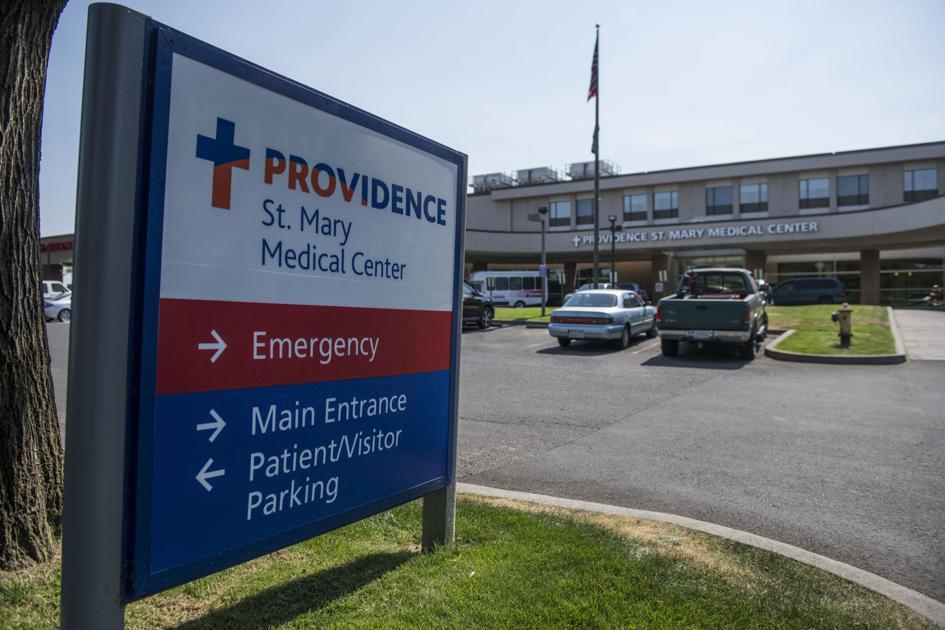
Kaiser Permanente and Providence Southern California are working together on a $750 million hospital to replace the aging Providence St. Mary Medical Center in Apple Valley, Calif., according to the Daily Press.
Under the partnership, 65-year-old Providence St. Mary will be closed and replaced with a 260-bed hospital in Victorville, Calif., the organizations said June 3. The hospital will be a full-service acute care facility and may include a medical office building and other ambulatory services. Providence would operate the hospital.
Providence St. Mary’s is closing because it doesn’t meet California’s new seismic requirements slated to take effect in 2030, according to the Daily Press. It would cost about the same to retrofit the hospital as it would to build a new one, hospital leaders told the newspaper.
Erik Wexler, Providence’s president of operations and strategy–South, outlined to the Daily Press what the Renton, Wash.-based health system’s affiliation with Oakland, Calif.-based Kaiser will look like.
“Health care delivery has become very complex, and Providence has found that affiliations truly benefit the communities we serve, particularly areas with significant rates of serious health risks,” he told the newspaper. He added that the partnership with Kaiser will allow the hospital to offer “more high-end acuity level types of care.”
The new hospital, which requires regulatory review and approval, is expected to open in 2026.
Google-backed One Medical is acquiring Medicare-focused primary healthcare chain Iora Health for $2.1 billion in an all-stock trade deal, the companies announced Monday.
The buy will give One Medical presence in 28 markets, covering about 40% of the U.S. population and is expected to generateannual revenue at $350 million by 2025. The deal will add about $700 billion in total addressable market, according to an investor presentation.
Under the terms of the deal, which is expected to close in the late third quarter or fourth quarter of this year, Iora stockholders will own about 27% of the combined company. One person from Iora will join One Medical’s board and Iora co-founder and CEO Rushika Fernandopulle will become One Medical’s chief innovation officer.
Dive Insight:
The acquisition aligns two key players in part of the value-based care movement that eschews traditional payer-provider arrangements in favor of a concierge membership model. Iora’s concentration in the Medicare population and related participation in CMS’ direct contracting model could be key reasons for coming under One Medical’s sights.
Jefferies analysts said they viewed the transaction as positive, particularly considering both companies’ tech and data capabilities. “Given tech orientation and emphasis on outcomes, we expect substantial derivative value from combining data and developing better treatment programs with superior outcomes across [longitudinal] care. We see this as a clear clinical and applied advantage,” they wrote.
Both companies base their business on value-based models, which some in the industry worry have suffered during the COVID-19 pandemic as cash-strapped providers avoid the risk of models not based on fee-for-service. The Biden administration’s director at the Center for Medicare and Medicaid Innovation said recently the movement is at “a critical juncture” and that more mandatory models are likely forthcoming.
One Medical has faced challenges as of late, after a first quarter that saw losses double what was expected and a controversy over COVID-19 vaccine distribution that sparked a congressional investigation. The company, however, has forged ahead in deals, including a new partnership with Baylor Scott & White.
And on the Q1 call with investors, executives highlighted a membership increase of 31% year over year.
One Medical, founded in 2007, lead the pack of recent healthcare IPOs, going public in January 2020.
The company touts its direct-to-consumer model buts also contracts directly with employers and partners with several health systems. CFO Bjorn Thaler told Healthcare Dive at the time of the IPO its pitch to investors focused on highlighting a differentiated model.
“[W]e provide the member with a very, very valuable service. They don’t have to wait 29 days to get care. They can get care oftentimes in an instant, digitally,” he said.
Boston-based Iora, which was founded in 2011, has raised nearly $350 million over seven funding rounds, according to Crunchbase. It has contracts with major payers including UnitedHealthcare, Cigna and Humana.
The deal extends One Medical into full-risk Medicare reimbursement. Iora began the direct contracting model in April across all its markets. The program ties reimbursement to spending and quality for all Medicare fee-for-service beneficiaries across a geographic region.
About 60% of Iora’s members are in the fast-growing Medicare Advantage program, which has now reached about 40% of the Medicare population.
Iora had expected revenue this year to reach nearly $300 million and as of the first quarter had 38,000 members, compared to nearly 600,000 members at One Medical, according to the investor presentation.
One Medical stock was trending slightly down in early morning trading Monday.










 HENRY KOTULA