Cartoon – What Thanksgiving is about


Houston physician Yolanda Hamilton, MD, was sentenced to 5 years in prison for her role in a $16-million Medicare fraud scheme, the Houston Chronicle reported.
The 57-year-old owner of HMS Health and Wellness Center was also ordered to pay $9.5 million in restitution for the scheme, according to the U.S. Department of Justice.
But while federal sentencing guidelines called for a prison term of 25 years, the judge overseeing the case decided she was “not as culpable as most offenders in Medicare fraud cases,” according to the Chronicle. “I do not think Dr. Hamilton knew what she was getting into,” the judge reportedly said in explaining the reduced sentence.
In October 2019, Hamilton was convicted by a federal jury on one count of conspiracy to commit healthcare fraud, one count of conspiracy to solicit and receive healthcare kickbacks, and two counts of making false statements.
Prosecutors said Hamilton made it look like patients qualified for and received home healthcare services when they didn’t. Hamilton also paid the patients to receive home healthcare services that were often medically unnecessary.
As well, Hamilton required home health agencies to pay her kickbacks, disguised as a co-pay, in order for her to certify or re-certify patients for their services. Hamilton allegedly collected over $300,000 in kickbacks this way.
The Justice Department said Hamilton’s co-conspirators, including other doctors and nurses, have also been either charged, found guilty, or pled guilty to conspiracy to commit healthcare fraud.


As we prepare to celebrate Thanksgiving, an election has left the country politically divided. A pandemic has left many families physically divided.
In fact, Thanksgiving as a national holiday springs from the most bitter of national divisions: the Civil War.
Before that, there were sporadic regional celebrations for many years. As all schoolchildren know, the Pilgrims and the Wampanoag shared a feast in Plymouth, Mass., in 1621. And there were even earlier feasts of thanksgiving in Florida, Texas, Virginia and Maine.
George Washington was the first president to proclaim a national day of thanksgiving, one time only on Oct. 3, 1789.
But it was Sarah Josepha Hale, a renowned 19th-century lady’s magazine editor, who first suggested an annual national holiday. For 17 years, she wrote to four presidents, dozens of governors and other elected officials suggesting a national holiday of gratitude to bring the country together. Few of them responded to her.
Finally, Abraham Lincoln received her letter in the middle of the Civil War, and he loved the idea.

The first page of Sarah Josepha Hale’s letter to President Abraham Lincoln, imploring him that a “day of our annual Thanksgiving [be] made a National and fixed Union Festival.” (The Papers of Abraham Lincoln/Library of Congress)
On Oct. 3, 1863, three score and 14 years to the day after Washington’s proclamation, he released one of his own, designating the fourth Thursday of November a national day of Thanksgiving. Though Lincoln was a poet and could certainly write a moving speech — he would deliver the Gettysburg Address six weeks later — the text of the proclamation was drafted by then-Secretary of State William Seward.
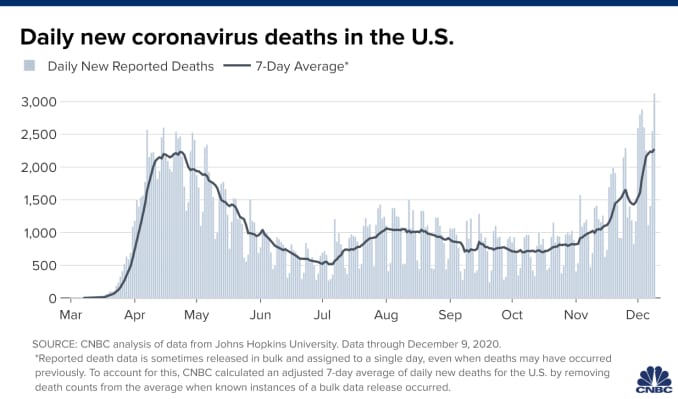
Between 600,000 to 850,000 Americans died in the Civil War — most of them of disease. This year, we live in divided times again, and more than 250,000 have died of covid-19, the disease caused by the coronavirus, in the United States. The words of the proclamation to “fervently implore the interposition of the Almighty Hand to heal the wounds of the nation” resonate anew.
Here is the proclamation in full. Paragraph breaks have been added for readability.
The year that is drawing towards its close, has been filled with the blessings of fruitful fields and healthful skies. To these bounties, which are so constantly enjoyed that we are prone to forget the source from which they come, others have been added, which are of so extraordinary a nature, that they cannot fail to penetrate and soften even the heart which is habitually insensible to the ever-watchful providence of Almighty God.
In the midst of a civil war of unequalled magnitude and severity, which has sometimes seemed to foreign States to invite and to provoke their aggression, peace has been preserved with all nations, order has been maintained, the laws have been respected and obeyed, and harmony has prevailed everywhere except in the theatre of military conflict; while that theatre has been greatly contracted by the advancing armies and navies of the Union.
Needful diversions of wealth and of strength from the fields of peaceful industry to the national defence, have not arrested the plough, the shuttle or the ship; the axe has enlarged the borders of our settlements, and the mines, as well of iron and coal as of the precious metals, have yielded even more abundantly than heretofore.
Population has steadily increased, notwithstanding the waste that has been made in the camp, the siege and the battle-field; and the country, rejoicing in the consciousness of augmented strength and vigor, is permitted to expect continuance of years with large increase of freedom.
No human counsel hath devised nor hath any mortal hand worked out these great things. They are the gracious gifts of the Most High God, who, while dealing with us in anger for our sins, hath nevertheless remembered mercy.
It has seemed to me fit and proper that they should be solemnly, reverently and gratefully acknowledged as with one heart and one voice by the whole American People. I do therefore invite my fellow citizens in every part of the United States, and also those who are at sea and those who are sojourning in foreign lands, to set apart and observe the last Thursday of November next, as a day of Thanksgiving and Praise to our beneficent Father who dwelleth in the Heavens.
And I recommend to them that while offering up the ascriptions justly due to Him for such singular deliverances and blessings, they do also, with humble penitence for our national perverseness and disobedience, commend to His tender care all those who have become widows, orphans, mourners or sufferers in the lamentable civil strife in which we are unavoidably engaged, and fervently implore the interposition of the Almighty Hand to heal the wounds of the nation and to restore it as soon as may be consistent with the Divine purposes to the full enjoyment of peace, harmony, tranquillity and Union.
In testimony whereof, I have hereunto set my hand and caused the Seal of the United States to be affixed.
Done at the City of Washington, this Third day of October, in the year of our Lord one thousand eight hundred and sixty-three, and of the Independence of the United States the Eighty-eighth.
By the President: Abraham Lincoln

Krabbenhoft, who has served as CEO since 1996, sent an internal memo to Sanford’s 50,000 employees on Wednesday arguing wearing a mask would defeat its purpose, as he’d already contracted COVID-19 and was therefore immune for at least seven months, as first reported by Forum News Service.
Experts dispute, however, that people previously infected with the novel coronavirus are entirely immune, as the data is not yet definitive. Other Sanford executives sent an email to employees Friday recommending mask wearing and contradicting Krabbenhoft’s claims.
On the heels of the news, Sanford’s board of trustees and Krabbenhoft have now “mutually agreed to part ways,” according to the release. The turnover comes at an acutely crucial time for the major Midwest health system, as it signed a letter of intent last month to merge with Salt Lake City-based Intermountain Healthcare.
If the deal closes, the two would operate 70 hospitals and 435 clinics — many of which will be located in rural communities across the country — and insure 1.1 million people. The merger would form one of the nation’s largest nonprofit health systems with more than $13 billion in combined annual revenue. It’s expected to close in 2021, pending regulatory approvals.
While Intermountain CEO Marc Harrison is slated to lead the combined organization, Krabbenhoft was poised to serve as president emeritus. It’s unclear what the plans are now after Krabbenhoft’s exit.
Sanford, which operates 46 hospitals in 26 states, did not reply to requests for comment by time of publication.

Purdue Pharma, the maker of OxyContin, pleaded guilty Tuesday to three federal criminal charges related to the company’s role in creating the nation’s opioid crisis. Purdue Pharma board chairman Steve Miller pleaded guilty on behalf of the company during a virtual federal court hearing in front of US District Judge Madeline Cox Arleo.
The counts include one of dual-object conspiracy to defraud the United States and to violate the Food, Drug, and Cosmetic Act, and two counts of conspiracy to violate the Federal Anti-Kickback Statute.
The plea deal announced in October includes the largest penalties ever levied against a pharmaceutical manufacturer, including a criminal fine of $3.544 billion and an additional $2 billion in criminal forfeiture, according to a Department of Justice press release.
The company, which declared bankruptcy last year, will be dissolved as a part of the plea agreement, and its assets will be used to create a new “public benefit company” controlled by a trust or similar entity designed for the benefit of the American public.
The Justice Department has said Purdue Pharma will function entirely in the public interest rather than to maximize profits. Its future earnings will go to paying the fines and penalties, which in turn will be used to combat the opioid crisis.
In pleading guilty to the criminal charges, the company is taking responsibility for past misconduct, Purdue Pharma said in a statement to CNN Tuesday.”Having our plea accepted in federal court, and taking responsibility for past misconduct, is an essential step to preserve billions of dollars of value for creditors and advance our goal of providing financial resources and lifesaving medicines to address the opioid crisis,” the statement said. “We continue to work tirelessly to build additional support for a proposed bankruptcy settlement, which would direct the overwhelming majority of the settlement funds to state, local and tribal governments for the purpose of abating the opioid crisis.”
According to the US Centers for Disease Control and Prevention, about 70,000 Americans died of drug overdoses in 2018, just one year of the opioid crisis, and about 70% of those deaths were caused by prescription or illicit opioids like OxyContin. In that year, an estimated 10.3 million Americans 12 and older misused opioids, including 9.9 million prescription pain reliever abusers and 808,000 heroin users, according to the US Department of Health and Human Services Substance Abuse and Mental Health Services Administration.
The Sackler family, and other current and former employees and owners of the company, still face the possibility that federal criminal charges will be filed against them. The court did not set a date for a sentencing hearing.


It was 5 a.m., not a hint of sun in the Houston sky, as Randy Young and his mom pulled into the line for a free Thanksgiving meal. They were three hours early. Hundreds of cars and trucks already idled in front of them outside NRG Stadium. This was where Young worked before the pandemic. He was a stadium cook. Now, after losing his job and struggling to get by, he and his 80-year-old mother hoped to get enough food for a holiday meal.
“It’s a lot of people out here,” said Young, 58. “I was just telling my mom, ‘You look at people pulling up in Mercedes and stuff, come on.’ If a person driving a Mercedes is in need of food, you know it’s bad.”
More Americans are going hungry now than at any point during the deadly coronavirus pandemic, according to a Post analysis of new federal data — a problem created by an economic downturn that has tightened its grip on millions of Americans and compounded by government relief programs that expired or will terminate at the end of the year. Experts say it is likely that there’s more hunger in the United States today than at any point since 1998, when the Census Bureau began collecting comparable data about households’ ability to get enough food.
One in 8 Americans reported they sometimes or often didn’t have enough food to eat in the past week, hitting nearly 26 million American adults, an increase several times greater than the most comparable pre-pandemic figure, according to Census Bureau survey data collected in late October and early November. That number climbed to more than 1 in 6 adults in households with children.
“It’s been driven by the virus and the unpredictable government response,” said Jeremy K. Everett, executive director of the Baylor Collaborative on Hunger and Poverty in Waco, Tex.
Nowhere has there been a hunger surge worse than in Houston, with a metro-area population of 7 million people. Houston was pulverized in summer when the coronavirus overwhelmed hospitals, and the local economy was been particularly hard hit by weak oil prices, making matters worse.
More than 1 in 5 adults in Houston reported going hungry recently, including 3 in 10 adults in households with children. The growth in hunger rates has hit Hispanic and Black households harder than White ones, a devastating consequence of a weak economy that has left so many people trying to secure food even during dangerous conditions.
On Saturday, these statistics manifested themselves in the thousands of cars waiting in multiple lines outside NRG Stadium. The people in these cars represented much of the country. Old. Young. Black. White. Asian. Hispanic. Families. Neighbors. People all alone.
Inside a maroon Hyundai Santa Fe was Neicie Chatman, 68, who had been waiting since 6:20 a.m., listening to recordings of a minister’s sermon piped into large earphones.
“I’ve been feeding my spirit,” she said.
Her hours at her job as an administrator have been unsteady since the pandemic began. Her sister was laid off. They both live with their mother, who has been sick for the past year. She planned to take the food home to feed her family and share with her older neighbors.

— Randy Young

— Adriana Contreras
Now, a new wave of coronavirus infections threatens more economic pain.
Yet the hunger crisis seems to have escaped widespread notice in a nation where millions of households have weathered the pandemic relatively untouched. The stock market fell sharply in March before roaring back and has recovered all of its losses. This gave the White House and some lawmakers optimism about the economy’s condition. Congress left for its Thanksgiving break without making any progress on a new pandemic aid deal even as food banks across the country report a crush of demand heading into the holidays.
“The hardship is incredibly widespread. Large parts of America are saying, ‘I couldn’t afford food for my family,’ ” said Stacy Dean, who focuses on food-assistance policy at the Center on Budget and Policy Priorities. “It’s disappointing this hasn’t broken through.”
No place has been spared. In one of the nation’s richest counties, not far from Trump National Golf Club in Virginia, Loudoun Hunger Relief provided food to a record 887 households in a single week recently. That’s three times the Leesburg, Va.-based group’s pre-pandemic normal.
“We are continuing to see people who have never used our services before,” said Jennifer Montgomery, the group’s executive director.
Hunger rates spiked nationwide after shutdowns in late March closed large chunks of the U.S. economy. The situation improved somewhat as businesses reopened and the benefits from a $2.2 trillion federal pandemic aid package flowed into people’s pockets, with beefed-up unemployment benefits, support for food programs and incentives for companies to keep workers on the payroll.
But those effects were short-lived. The bulk of the federal aid had faded by September. And more than 12 million workers stand to lose unemployment benefits before year’s end if Congress doesn’t extend key programs.
“Everything is a disaster,” said Northwestern University economist Diane Whitmore Schanzenbach, a leading expert on the economics of food insecurity. “I’m usually a pleasant person, but this is just crazy.”
Economic conditions are the main driver behind rising rates of hunger, but other factors play a role, Schanzenbach said. In the Great Recession that began in 2008, people received almost two years of unemployment aid — which helped reduce hunger rates. Some long-term unemployed workers qualified for even more help.
But the less-generous benefits from the pandemic unemployment assistance programs passed by Congress in March have already disappeared or soon will for millions of Americans.
Even programs that Congress agreed to extend have stumbled. A program giving families additional cash assistance to replace school meals missed by students learning at home was renewed for a year on Oct. 1. But the payments were delayed because many states still needed to get the U.S. Agriculture Department’s approval for their plans. The benefit works out to only about $6 per student for each missed school day. But experts say the program has been a lifeline for struggling families.
One program that has continued to provide expanded emergency benefits is the Supplemental Nutrition Assistance Program, or SNAP. The Agriculture Department issued an emergency order allowing states to provide more families the maximum benefit and to suspend the time limit on benefits for younger unemployed adults without children.
The sharpest rise in hunger was reported by groups who have long experienced the highest levels of it, particularly Black Americans. Twenty-two percent of Black U.S. households reported going hungry in the past week, nearly twice the rate faced by all American adults and more than two-and-a-half times the rate for White Americans.
The Houston area was posting some of its lowest hunger rates before the pandemic, thanks to a booming economy and a strong energy sector, Everett said. Then, the pandemic hit. Hunger surged, concentrated among the city’s sizable low-income population, in a state that still allows for the federally mandated minimum wage of $7.25 an hour. Houston’s hunger rates — like those nationwide — fell significantly after the $1,200 stimulus checks were mailed out in April and other pandemic aid plans took effect, Everett said.
But most of the effects of that aid are gone.
“Without sustained aid at the federal level, we’ll be hard pressed to keep up,” said Celia Call, chief executive of Feeding Texas, which advocates for 21 food banks in the state. “We’re just bracing for the worst.”
Schools are one of the most important sources of food for low-income families in Houston. The Houston Independent School District has 210,000 students — many of whom qualify for free or reduced-priced meals. But the pandemic closed schools in the spring. They reopened in the fall with less than half of the students choosing a hybrid model of in-school and at-home instruction. That has made feeding these children a difficult task.
“We’ve made an all-out effort to capture these kids and feed them,” said Betti Wiggins, the school district’s nutrition services officer.
The district provided curbside meal pickups outside schools. Anyone could come, not just schoolchildren. School staffers set up neighborhood distribution sites in the areas with the highest need. They started a program to serve meals to children living in apartment buildings. Sometimes the meal program required police escorts.
“I’m doing everything but serving in the gas station when they’re pumping the gas,” Wiggins said.
Wiggins said the normal school meals program she ran before the pandemic has been transformed into providing food for entire families far beyond a school’s walls. She has noticed unfamiliar faces in her meal lines. The “new poor,” she calls them, parents who might have worked in the airline or energy industries crushed by the pandemic.
“I’m seeing folks who don’t know how to handle the poverty thing,” she said, adding that it became her mission to make sure they had food.
The Houston Food Bank is the nation’s largest, serving 18 counties in Southeast Texas with help from 1,500 partner agencies. Last month, the food bank distributed 20.6 million pounds of food — down from the 27.8 million pounds handed out in May, but still 45 percent more than what it distributed in October 2019, with no end in sight.
The biggest worry for food banks right now is finding enough food, said Brian Greene, president of the Houston Food Bank. Food banks buy bulk food with donations. They take in donated food items, too. Food banks also benefited from an Agriculture Department program that purchased excess food from U.S. farmers hurt by the ongoing trade war with China, typically apples, milk and pork products. But funding for that program ended in September. Other federal pandemic programs are still buying hundreds of millions of dollars in food and donating it to food banks. But Greene said he worries about facing “a commodity cliff” even as demand grows.
Teresa Croft, who volunteers at a food distribution site at a church in the Houston suburb of Manvel, said the need is still overwhelming. She handles the paperwork for people visiting the food bank for the first time. They’re often embarrassed, she said. They never expected to be there. Sometimes, Croft tries to make them feel better by telling her own story — how she started at the food bank as a client, but got back on her feet financially more than a decade ago and is now a food bank volunteer.
“They feel so bad they’re having to ask for help. I tell them they shouldn’t feel bad. We’re all in this together,” Croft said. “If you need it, you need it.”
The pandemic changed how the Houston Food Bank runs. Everything is drive-through and walk-up. Items are preselected and bagged. The food bank has held several food distribution events in the parking lots outside NRG Stadium — a $325 million, retractable-roof temple to sports and home to the National Football League’s Houston Texans.
Last weekend, instead of holding the 71st annual Thanksgiving Day Parade in Houston, the city and H-E-B supermarkets decided to sponsor the food bank’s distribution event at NRG Stadium. The plan was to feed 5,000 families.
The first cars arrived at the stadium around 1 a.m. Saturday, long before the gates opened for the 8 a.m. event. By the time Young and his mother drove up, the line of vehicles stretched into the distance. Organizers opened the gates early. The cars and trucks began to slowly snake through the stadium’s parking lot toward a series of white tents, where the food was loaded into trunks by volunteers. The boxes contained enough food for multiple meals during the holiday week, with canned vegetables such as corn and sweet potatoes, a package of rolls, cranberry sauce and a box of masks. People picking up food were also given a bag of cereal and some resealable bags, a ham, a gallon of milk, and finally a turkey and pumpkin pie.
The food for 5,000 families ran out. The Houston Food Bank — knowing that would not be enough — was able to assemble more.
It provided food to 7,160 vehicles and 261 people who walked up to the event.
Troy Coakley, 56, came to the event looking for food to feed his family for the week. He still had his job breaking apart molds at a plant that makes parts for oil field and water companies. But his hours were cut when the economy took a hit in March. Coakley went from working overtime to three days a week.
He was struggling. Behind on rent. Unsure what was to come.
But for the moment, his trunk filled with food, he had one less thing to worry about.
“Other than [the pandemic], we were doing just fine,” Coakley said. “But now it’s getting worse and worse.”