Gilead says critical study of Covid-19 drug shows patients are responding to treatment

Critical study of Gilead’s Covid-19 drug shows patients are responding to treatment, NIH says

Gilead: Critical study of Covid-19 drug shows patients respond to ...

A government-run study of Gilead’s remdesivir, perhaps the most closely watched experimental drug to treat the novel coronavirus, showed that the medicine is effective against Covid-19, the disease caused by the virus.

Gilead made the announcement in a statement Wednesday, stating: “We understand that the trial has met its primary endpoint.” The company said that the National Institute of Allergy and Infectious Diseases, which is conducting the study, will provide data at an upcoming briefing.

The finding — although difficult to fully characterize without any data for the study — would represent the first treatment shown to improve outcomes in patients infected with the virus that put the global economy in a standstill and killed at least 218,000 people worldwide.

Over the past few weeks, there have been conflicting reports about the potential benefit of remdesivir, a drug that was previously tried in Ebola. As previously reported by STAT, an early peek at Gilead’s study in severe Covid-19 patients, based on data from a trial at a Chicago hospital, suggested patients were doing better than expected on remdesivir. Days later, a summary of results from a study in China showed that patients on the drug did not improve more than those in a control group.

Full results from the China study were also released Wednesday.

But the NIAID study, which was not expected to be released so soon, was by far the most important and rigorously designed test of remdesivir in Covid-19. The study compared remdesivir to placebo in 800 patients, with neither patients nor physicians knowing who got the drug instead of a placebo, meaning that unconscious biases will not affect the conclusions.

The main goal of the study is the time until patients improve, with different measures of improvement depending on how sick they were to begin with. While the result means that the drug helps patients improve faster, it is not possible to say how dramatic those improvements are.

Scott Gottlieb, the former commissioner of the Food and Drug Administration, said he expected there was enough evidence for the agency to issue an “emergency use authorization” for remdesivir.

“Remdesivir isn’t a home run but looks active and can be part of a toolbox of drugs and diagnostics that substantially lower our risk heading into the fall,” he said.

The FDA previously issued an emergency authorization for the malaria drug hydroxychloroquine to treat Covid-19, even though at least some studies suggesting the medicine was not effective. “If hydroxychloroquine met [the emergency] standard, then remdesivir would have seemed to cross that line a while ago, especially in the setting of treating critically ill patients,” Gottlieb said.

Remdesivir, which must be given intravenously, is likely to remain a treatment for patients who are hospitalized. But it is also likely that it will be most effective in patients who have been infected more recently, said Nahid Bhadelia, medical director of the special pathogens unit at Boston Medical Center.

“We know that with most antiviral medications the earlier you give it the better it is.” said Bhadelia, who had experience giving remdesivir as an experimental treatment for Ebola in Africa, where results are less encouraging. That means that better diagnostic testing will be essential to identifying patients who could benefit. “What will be important is that we find people on the outpatient side,” Bhadelia said. “Again, testing becomes important, we want to have them come to the hospital as soon as possible. “

Gilead also released results Wednesday from its own study of remdesivir in patients with severe Covid-19. This study showed similar rates of clinical improvement in patients treated with a five-day and 10-day course of remdesivir, the company said.

“Unlike traditional drug development, we are attempting to evaluate an investigational agent alongside an evolving global pandemic. Multiple concurrent studies are helping inform whether remdesivir is a safe and effective treatment for COVID-19 and how to best utilize the drug,” said Merdad Parsey, MD, PhD, Chief Medical Officer, Gilead Sciences, in a prepared statement.

Gilead said that its own study in severe patients showed that it may be possible to treat patients with a five-day treatment of remdesivir, not the 10-day course that was used in the NIAID trial.

The company’s study is enrolling approximately 6,000 participants from 152 different clinical trial sites all over the world. The data disclosed Thursday are from 397 patients, with a statistical comparison of patient improvement between the two remdesivir treatment arms — the five-day and 10-day treatment course. Improvement was measured using a seven-point numerical scale that encompasses death (at worst) and discharge from hospital (best outcome), with various degrees of supplemental oxygen and intubation in between.

The study design means that by itself it doesn’t reveal much about how well remdesivir is working, because there is no group of patients who were not treated with the drug. The conclusion is that the two durations of treatment are basically the same.

Peter Bach, the director of the Center for Health Policy and Outcomes at Memorial Sloan Kettering Medical Center, said he is eager to see the data from the NIAID study but renewed his criticism of Gilead’s severe study for lacking a control group of untreated patients. That would have allowed researchers to make important conclusions about how the drug works that are just not possible now, he said.

“They’ve squandered an unbelievable opportunity,” Bach said. “It’s not going to tell us what to do with 80-year-olds with multiple comorbidities compared to 30-year-olds who are otherwise healthy. We’re still going to be foundering around in the dark, or at least in a dim room, when we could have learned more.”

In the study, the median time to clinical improvement was 10 days in the five-day treatment group and 11 days in the 10-day treatment group. More than half of the patients in both groups were discharged from the hospital by day 14. At day 14, 64.5% of the patients in the five-day group and 53.8% of the patients in the 10-day group achieved clinical recovery.

Patients in the trial generally lived, though this may be because their illness was not that severe to begin with. For most of the study, patients already on ventilators were not enrolled.

Eight percent of the patients treated with five days of remdesivir died, compared to 11% of the patients treated for 10 days. Outside of Italy, where 77 patients were treated, the overall mortality rate across the entire study was 7%, Gilead said. Those mortality rates are lower than those seen in other studies, which have been in the teens and twenties.

Only 5% of patients in the five-day group and 10% in the 10-day group had side effects that led to a discontinuation. The most common bad effects — and it’s impossible to tell which were from the drug — were nausea and acute respiratory failure. High liver enzymes occurred in 7.3 percent of patients, with 3 percent of patients discontinuing the drug due to elevated liver tests.

A full evaluation of the results will have to wait until complete data are available.

In the China study, also published Wednesday in The Lancet, investigators found that remdesivir “did not significantly improve the time to clinical improvement, mortality, or time to clearance of virus in patients with serious COVID-19 compared with placebo.”

There was a 23% improvement in time to clinical improvement for remdesivir compared to placebo, but the difference was not statistically significant. At the median, remdesivir-treated patients improved in 20 days compared to 23 days for placebo patients. At one month, 14% of the remdesivir patients had died compared to 13% of the placebo-treated patients.

The China study enrolled patients with more severe Covid-19 than the study conducted by NIAID. The China study was also stopped early because of difficulties enrolling patients as the pandemic waned in China.
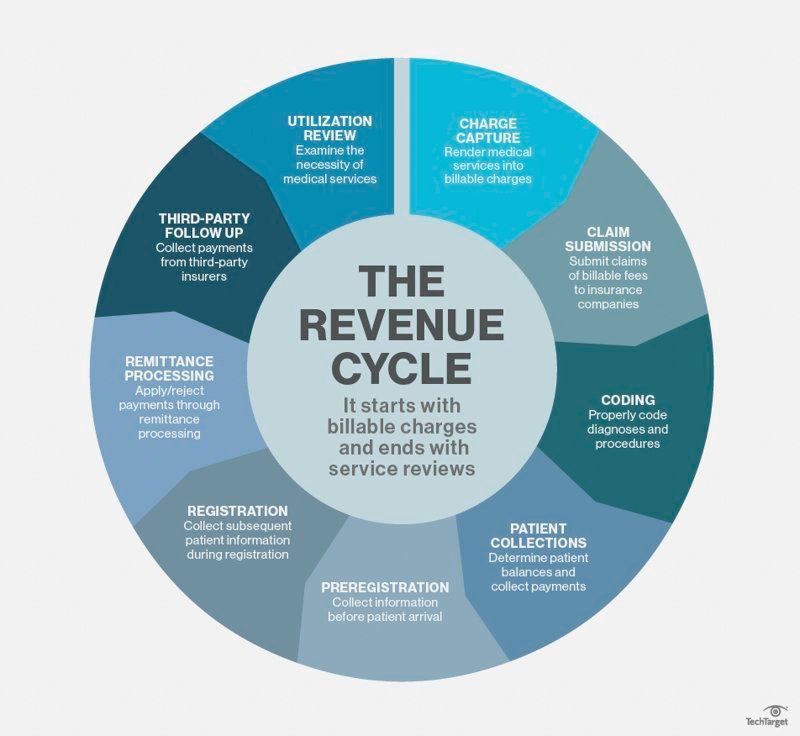


Five components of an intelligent middle revenue cycle

https://www.beckershospitalreview.com/healthcare-information-technology/five-components-of-an-intelligent-middle-revenue-cycle.html

What is revenue cycle management (RCM)? - Definition from WhatIs.com

Keys to achieving revenue integrity and compliance across your organization

It’s old news: Revenue cycle complexity continues to increase, exacerbating existing challenges. And as we tackle those, new ones arise to take their place.

Ever-changing regulations are a given, but adopting value-based reimbursement (VBR) models currently poses a major challenge. New payment models complicating revenue cycle activity become more difficult with additional quality reporting and other requirements. Add in the operational realities of siloed workflows, data proliferation, and disparate systems, and it’s clear why efficient collaboration can seem nearly impossible.  Intelligent middle revenue cycle operations that manage to these challenges are vital to achieving revenue integrity and financial stability.


Use the right solutions at the right time

Today’s environment requires sharpening the way you ensure revenue integrity. Providers need an easy, seamless way to manage middle revenue cycle operations, and there are several effective strategies to accomplish that. Of course, it’s important to recognize and make use of your EMR system’s capabilities. It’s also essential to leverage complementary technologies with specific core competencies that will improve revenue cycle performance. For example, a solution that continuously monitors records in real time enables timely auditing, coding adjustments and case completion to reduce billing turnaround and reimbursement delays.


Take a smart approach to enabling technology

Augmenting your core systems with complementary technologies or capabilities on a single, integrated platform makes it much easier to support internal collaboration between different departments or teams. An integrated platform also enables you to seamlessly deploy additional capabilities onto that platform, ensuring speed to value. Instead of using multiple disparate tools, a shared platform enables interdepartmental communication and helps minimize inefficiency.  A smart technology platform that crosses departmental siloes and brings transparency across teams is critical. Platforms that leverage clinically aware artificial intelligence and other automation enable staff to proactively focus on the areas where their expertise has the most impact. In addition, when leveraging an integrated platform, one expert team’s work will not get cancelled out by another team’s contributions.

Regardless of which core system you use, integrating technology with targeted competencies and connectivity adds value to the EMR. It can provide a depth of specialized expertise that drives better documentation, coding and real time audit interaction — keys to a high-performing revenue cycle.


Prioritize comprehensive, correct documentation and coding

Unfortunately, it seems the battle against claim denials is here to stay. You can’t overlook the importance of front-end data validation to eliminate rework and inefficiency. However, the ability to ensure complete and accurate clinical documentation for every case will significantly impact revenue capture and reduce the inefficiency of denials and rework.

Broaden the scope of your CDI program with technology that uses clinical intelligence to drive concurrent documentation review for all payers. Getting it right up front contributes to better coding, accurate reimbursement, and appropriate quality measures, all of which are vital to success under VBR.


Increase collaboration with payers

As long as payers and providers continue working at odds, the costly onslaught of denials will persist. In a perfect world, both sides would join forces to find mutually beneficial solutions for claim errors, denials and payment delays. Imagine the savings in administrative inefficiency alone. However, we’re not in that world yet. Therefore, it’s important to make a proactive effort to understand the specifics of each payer’s contract and adjust your internal processes and technology rules accordingly. As operating margins get smaller, organizations have no choice but to increase efficiency and accuracy, and working together with payers can contribute significantly to that goal.


Consolidate, collaborate, communicate

Industry pressures to improve performance are unrelenting, especially around smart solutions, innovation, and increasing both efficiency and the bottom line. Organizations are expected to improve these areas while, at the same time, enabling patient-centric operations. One way to achieve this is to leverage innovative, integrated tools to augment core systems and promote partnership, communication and efficiency across multiple related disciplines.

Consider clinical documentation, coding and auditing. Numerous departments need pieces of that information for different reasons, including utilization review, medical necessity determinations, chart audits and quality monitoring, in addition to bill preparation. A single repository containing up-to-date data in a real-time view driven by supporting workflow, rules and alerts provides consistent and reliable information when and where it’s needed.

As patient care becomes more complex, so does the middle revenue cycle. Seek solutions that will simplify and manage the complexity in an administratively efficient way. Consider your prospective vendor’s core competencies when evaluating solutions and look for integration and intelligent automation that will add the most value to your organization.


COVID-19 brings largest quarterly GDP drop since last recession

https://www.beckershospitalreview.com/finance/covid-19-brings-largest-quarterly-gdp-drop-since-last-recession.html?utm_medium=email

GDP sinks 4.8% in the first quarter, biggest drop since 2008 and ...

Gross domestic product in the U.S. fell 4.8 percent in the first quarter of 2020, the biggest drop the nation’s economy has seen since the last recession in 2008, according to The Wall Street Journal.

The downturn reflects how shutdowns of businesses and schools and social distancing, which started in the final three weeks of the first quarter, affected the U.S. economy. According to The Journal, many economists believe the U.S. is now in a recession, as layoffs and declines across industries hit unprecedented levels.

With the economy largely shut down in April, economists are expecting a bigger drop-off in economic activity in the second quarter of this year. A few states have started to slowly reopen their economies, but many still have social-distancing restrictions in place that extend through May.


US surpasses 1 million COVID-19 cases

https://thehill.com/policy/healthcare/494792-us-surpasses-1-million-covid-19-cases

Did the Trump Administration Overpromise 1 Million COVID-19 ...

More than a million people in the United States have tested positive for the coronavirus, a sobering milestone that experts say represents only the beginning of a months-long battle to end the pandemic.

The United States has now registered about a third of all confirmed cases of COVID-19 around the globe, according to data compiled by the Center for Systems Science and Engineering at Johns Hopkins University. More than 57,000 people have died in the United States, about a quarter of the known COVID-19 deaths around the globe.

The United States has now registered more confirmed cases than the next five countries suffering the largest outbreaks — Spain, Italy, France, Germany and the United Kingdom — combined.

Those numbers are partly a reflection of population, but there are troubling signs for the United States.

While those countries have reduced the pace of transmission and the growth in the number of new cases they are seeing on a daily basis, the United States has not similarly bent the curve.

Instead, it is stuck at a deadly plateau: In the last week, the U.S. has reported between 24,000 and 41,000 new cases a day, and between 1,200 and 2,600 deaths per day, according to The Covid Tracking Project, a group of researchers who keep tallies of case counts around the country.

Even as some states begin to relax orders that closed retail and service stores, experts warned the country is still at risk of a new rush of cases, and that the downslope of declining case counts will be much longer than the sudden surge the United States saw in April.

“We’re in the opening stages of this,” said Michael Osterholm, director of the Center for Infectious Disease Research and Prevention at the University of Minnesota. States “are not in the mountains, they’re in the foothills. The mountains are still to come.”

More than a quarter million residents of New York have tested positive for the virus, and commuter suburbs in New Jersey and Connecticut have reported tens of thousands of cases. More than 50,000 residents of Massachusetts have tested positive, and California, Illinois and Pennsylvania have all confirmed more than 40,000 cases.

There are growing signs that the virus is shifting into new, more rural territory. States like Arkansas, Kansas, Minnesota, Nebraska, New Mexico, Rhode Island, Tennessee and Virginia all recorded substantial growth in the number of new cases they had confirmed in the last few days.

That pattern of viral spread beginning in large urban cores and eventually making its way to rural areas is typical, experts said, given societal connections between urban areas, suburbs and more rural areas.

“Epidemiologists know that this pattern is a very expectable one, that rural areas are going to have lagged waves of cases. So we’ve been bracing for that,” said Nita Bharti, a biologist at the Center for Infectious Disease Dynamics at Penn State University. “What they’re experiencing now is what cities have been seeing. It’s the same, it’s just delayed, and we knew it would happen.”

About six months after the coronavirus outbreak was detected in Wuhan, China, and four months after the first case arrived on American shores, the United States still lags the world in testing capacity. States have bolstered their capacity in recent days, conducting more than 225,000 tests per day over four of the last five days, the capacity needed to ensure the virus can be brought under control lags substantially.

An analysis by Harvard researchers for the scientific publication STAT found more than half of states would have to significantly bolster their testing capacity in order to safely begin easing stay-at-home orders in May. The hardest-hit state, New York, will have to be able to test at least 100,000 more people every day than it is currently able to; New Jersey’s capacity would need to increase by 68,000 a day.

Smaller states and those that have yet to experience thousands of new cases — places like Mississippi, Idaho, Montana, Wyoming, Arizona and New Mexico — already have the testing capacity they need to identify and squelch any new viral hotspots. Even Washington state, the first state to confirm a positive case, has built its capacity to meet demand.

Public health experts say a robust testing program must be supplemented by armies of contact tracers who can track down those who are at risk of contracting the virus.

Already, Massachusetts has partnered with the nonprofit Partners In Health to deploy about 1,000 contact tracers across the state. Alaska has managed to trace the contacts of each of its 341 positive cases. New York City Mayor Bill de Blasio said Monday that the city would hire 1,000 contact tracers of its own, and former Mayor Mike Bloomberg has pledged $10 million to kick start a contact tracing program in the tri-state area.

On Monday, a bipartisan group of top public health experts led by President Trump‘s former FDA commissioner Scott Gottlieb and President Obama’s former Centers for Medicare and Medicaid Services administrator Andy Slavitt called on Congress to spend $46 billion to expand contact tracing capacity, including $12 billion to hire 180,000 new workers.

It is unclear how the outbreak in the United States compares with outbreaks in authoritarian countries like China, Russia and Iran, which do not report reliable numbers.

But even in the United States, where state and local governments are transparent about the data they collect, the actual number of cases and deaths are higher — likely significantly so. Early antibody tests in places like New York City and Miami show a significant number of people contract the virus without showing symptoms, and as studies show people who died inexplicably over the last several months tested positive for the virus.


Pennsylvania hospital to cease inpatient care

https://www.beckershospitalreview.com/patient-flow/pennsylvania-hospital-to-cease-inpatient-care.html?utm_medium=email

Front Page: April 25, 2020

Crozer-Keystone Health System is shutting down inpatient care and non-emergency services at its hospital in Springfield, Pa., until June, according to the Delaware County Daily Times

Springfield Hospital is temporarily shutting down services after seeing a significant decline in patient volume due to the COVID-19 pandemic and suspending elective surgeries.

Crozer-Keystone, a four-hospital system, is trying to find alternative assignments for staff affected by the changes, a spokesperson told the Delaware County Daily Times. If there’s a surge in COVID-19 patients, some employees may be called back to the 25-bed hospital to assist.

Springfield Hospital is experiencing many of the same issues as other hospitals in the state. A recent analysis by Health Management Associates revealed that even with an expected $3.1 billion in federal aid provided under the Coronavirus Aid, Relief and Economic Security Act, Pennsylvania hospitals could still lose about $7 billion this year, according to the report. 


COVID-19 vulnerability: A state-by-state analysis

https://www.beckershospitalreview.com/rankings-and-ratings/covid-19-vulnerability-a-state-by-state-analysis.html?utm_medium=email

To live and die in Dixie - Covid-19 is spreading to America's ...

Every state in the U.S. will be affected by COVID-19, but some are more vulnerable due to limited ability to mitigate and treat the virus, and to reduce its economic and social impacts, according to a COVID-19 vulnerability index created by the Surgo Foundation. 

The Surgo Foundation, a privately funded think tank, created an index that combines indicators specific to COVID-19 with the CDC’s social vulnerability index, which measures the expected negative impact of disasters of any type. The Surgo Foundation’s index takes into account factors that fall into one of several categories, including socioeconomic status, minority status, housing type, epidemiologic factors and health care system factors. Each state and the District of Columbia received a score in each category and an overall score, with a higher score indicating that the state is more vulnerable. Read more about the methodology here.

Here is each state’s ranking and composite score based on the vulnerability index: 

1. Mississippi: 1

2. Louisiana: 0.98

3. Arkansas: 0.96

4. Oklahoma: 0.94

5. Alabama: 0.92

6. West Virginia: 0.9

7. New Mexico: 0.88

8. Nevada: 0.86

9. North Carolina: 0.84

10. South Carolina: 0.82

11. Kentucky: 0.8

12. Hawaii: 0.78

13. Tennessee: 0.76

14. Missouri: 0.74

15. Kansas: 0.72

16. Indiana: 0.7

17. Georgia: 0.68

18. Oregon: 0.66

19. District of Columbia: 0.64

20. New York: 0.62

21. Alaska: 0.6

22. Delaware: 0.58

23. Michigan: 0.56

24. Arizona: 0.54

25. Illinois: 0.52

26. Iowa: 0.5

27. Texas: 0.48

28. New Jersey: 0.46

29. Idaho: 0.44

30. Maryland: 0.42

31. Ohio: 0.4

32. Massachusetts: 0.38

33. Nebraska: 0.36

34. Florida: 0.34

35. Washington: 0.32

36. Connecticut: 0.3

37. Pennsylvania: 0.28

38. Montana: 0.26

39. Rhode Island: 0.24

40. Virginia: 0.22

41. South Dakota: 0.2

42. Utah: 0.18

43. Wyoming: 0.16

44. California: 0.14

45. Minnesota: 0.12

46. Colorado: 0.1

47. Wisconsin: 0.08

48. North Dakota: 0.06

49. Maine: 0.04

50. Vermont: 0.02

51. New Hampshire: 0