Medical costs projected to increase 6% by 2020, says PwC

https://www.healthcarefinancenews.com/news/medical-costs-projected-increase-6-percent-2020-says-pwc?mkt_tok=eyJpIjoiWldZeVlXTm1aVEF6TVdKbSIsInQiOiJjbWFzeVA2TGlWZkNkXC9odGxcLzdLczFZSDYxd1hoYW04b0wxY0ljQ25zblpYN1VWc2FMWFFCQWpmc2tCYmE4d1Z3eVdMd2htY3JiSjZ3N2Urek43SHFJbWFsckdRbUNycFJoQjhzZm5VcGpJUUhKUDlBMWF2eGJzRUhmZGFlUUx0In0%3D

Utilization is still being dampened by high deductibles and other cost sharing, but at the expense of employee satisfaction.

Medical costs are rising, and by this time next year costs will likely show a modest increase of about 6% over the past two years, according to a new report from PwC, PricewaterhouseCoopers.

After figuring in health plan changes such as increased employee cost sharing and network and benefit changes, PwC’s Health Research Institute, which conducted the study, projects a net growth rate of 5 percent. Even with employers’ actions, market forces likely will still overrun the efforts to quell them.

Prices, not utilization, are continuing to fuel healthcare spending. Utilization is still being dampened by high deductibles and other cost sharing, but at the expense of employee satisfaction with their health plan. In response, employers are inserting themselves more forcefully into the healthcare delivery equation.

WHAT’S THE IMPACT

Beyond market forces, HRI identified three “inflators” that will, influence the medical cost trend.

One is that drug spending will grow faster. Between 2020 and 2027, retail drug spending under private health insurance is projected to increase at a rate of 3 percent to 6 percent a year as the impact of generics on spending plateaus, biosimilars continue to see slow uptake, and costly new therapies enter the market.

Chronic diseases will also be a major issue. Obesity and Type 2 diabetes continue to produce high rates of hypertension and cardiovascular disease. Sixty percent of adults have a chronic disease, with 40 percent managing two or more. For employers, per capita health spending on someone with a complex chronic illness is eight times that of a healthy person.

Lastly, employers are beginning to recognize the importance of helping their employees manage their mental health and wellbeing. Nearly 75 percent of employers offer mental health disease management programs, the report found. Anytime access is expanded, costs will go up in the short term, though it may have the opposite effect long-term.

And speaking of the opposite effect, there are a few “deflators” HRI recognized that will likely slow down the medical cost trend.

HRI predicts that in 2020, more companies will take action to make sure healthcare is accessible to their employees, opening and expanding clinics as a strategy to control the cost trend. Thirty-eight percent of large employers offered a worksite clinic in 2019, up from 27 percent in 2014.

Also, payers are designing plans to encourage members to choose free-standing facilities and in-home care rather than more expensive sites. How those benefits are designed, and how employees perceive the costs, will shape the effectiveness of site of care strategies. Payers and employers are aiming to grow the role of telemedicine as employees grow more comfortable with it, especially if out-of-pocket costs are lower and the quality doesn’t suffer.

WHAT ELSE YOU SHOULD KNOW

The trend has implications for employers, payers, providers and even pharmaceutical and life science companies.

For payers, it becomes important to  benchmark the prices paid commercially against a common reference point such as Medicare. With this information it’s possible to pursue value-based arrangements with high-performing and lower-cost providers, in addition to negotiating better contracted rates on existing fee-for-service arrangements.

For providers, a value line strategy is necessary as employers and consumers look for high quality care for a low cost. Providers armed with a value line strategy are more likely to be included in health plans’ high-performance networks, and are better positioned to directly contract with employers.

Providers should also understand what risk they can take on to guarantee a health outcome, and the cost structure needed to make them profitable in doing so. Providers should understand and manage both the risk inherent in their ability to deliver care and the risk of the population they’re managing — from health status to the social determinants impacting their health — to help them design appropriate clinical interventions and non-clinical support services.

For employers, it becomes imperative to understand their role as the purchaser of healthcare for employees and join the ranks of employer activists, pursuing new solutions to lower costs, improve access and enhance quality. Pharmaceutical and life science companies, meanwhile, should go beyond the basic outcomes-based arrangements currently in place and consider exploring and expanding alternative financing arrangements, such as subscription models for unlimited access to a product for a set period of time, or a mortgage model to finance expensive specialty drugs over time.

THE LARGER TREND

The PwC study loosely mirrors the findings of an October report from the Altarum Center for Value in Health Care, which found prices and spending in healthcare growing steadily, but at a moderate pace.

The country’s healthcare spending habits are at a level nearly double that of similar countries. Spending per capita in the U.S. is more than $9,000, compared to just over $5,000 in other Western nations, and because prices are growing slowly but steadily, spending is doing the same.



Purdue Pharma struggling amid lawsuits

https://www.axios.com/newsletters/axios-vitals-1b40c794-c913-4681-b2ac-7a6e9746718f.html?utm_source=newsletter&utm_medium=email&utm_campaign=newsletter_axiosvitals&stream=top

Related image

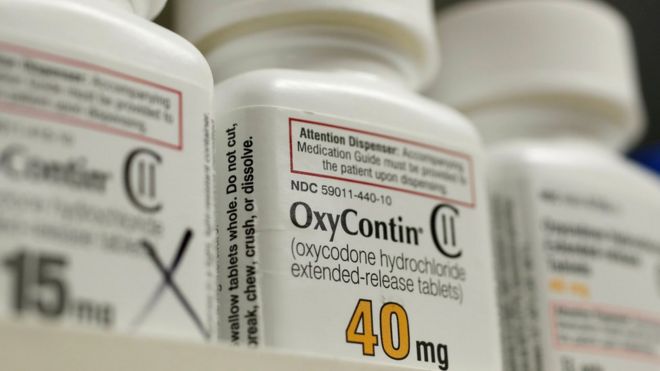
Purdue, the maker of OxyContin, is facing sluggish sales, a dwindling workforce and restructuring challenges as it fights a slew of lawsuits claiming that the company contributed to the opioid epidemic, WSJ reports.

  • The company’s revenue is expected to be less than $1 billion this year for the first time in a decade, and it has said it’s considering filing for bankruptcy.
  • Sales for OxyContin have been declining since 2010, as providers have changed their prescribing habits and the public has grown more aware of the threat of opioid addiction.

Purdue’s financial reliance on OxyContin was a result of business decisions made by the company and its board, including members of the Sackler family — which is also under legal scrutiny.

  • The company’s leaders are now more focused on dealing with the ongoing litigation than growing the business, sources told the WSJ.


When a hospital wields monopoly power

https://www.axios.com/newsletters/axios-vitals-1b40c794-c913-4681-b2ac-7a6e9746718f.html?utm_source=newsletter&utm_medium=email&utm_campaign=newsletter_axiosvitals&stream=top

Illustration of a giant health plus on top of a pile of cash, the ground underneath is cracking.

NorthBay Healthcare, a not-for-profit hospital system in California, recently gave a candid look into how it operates, telling investors it has used its negotiating clout to extract “very lucrative contracts” from health insurance companies.

Why it matters: This is a living example of the economic theories and research that suggest hospitals will charge whatever they want if they have little or no competition, Axios’ Bob Herman reports.

Details: NorthBay owns two hospitals and several clinics in California’s Solano County. Kaiser Permanente owns the only other full-service hospital in the county, and Sutter Health operates some medical offices. (A NorthBay spokesperson argued the system is “more akin to the David among two Goliaths.“)

Three health insurers have terminated their contracts with NorthBay over the past couple years. During a June 19 call with bondholders, executives explained why this has happened.

“We’ve been able to maintain very lucrative contracts without the competition. And what the payers are saying is, they would like us to be like 90% of the rest of the United States in terms of contract structure.”

Jim Strong, interim CFO, NorthBay Healthcare

Between the lines: NorthBay’s revenue has increased by 50% over the past few years, from $400 million in 2013 to $600 million in 2018, due in large part to its natural monopoly and oligopoly over hospital services.

  • This is exactly what we should expect to happen when sellers have the upper hand over buyers, economists say.

NorthBay also serves as a cautionary tale for price transparency, the policy fix du jour.

  • If the health care system is consolidated, consumers don’t have anywhere else to go,” said Sunita Desai, a health economist at NYU. “Even if they see the prices of a given hospital, they’re limited in terms of how much they can ‘shop’ across providers.”


Hospital price transparency push draws industry ire, but effects likely limited

https://www.healthcaredive.com/news/hospital-price-transparency-push-draws-industry-ire-but-effects-likely-lim/557536/

Image result for price transparency

Far-reaching rules mandating industry price transparency could mark a major shift, but experts are skeptical the efforts will meaningfully lower prices for patients without a more fundamental system overhaul.

President Donald Trump’s executive order signed Monday directs HHS and other federal departments to begin rulemaking to require hospitals and payers to release information based on their privately negotiated rates. Providers would also have to give patients estimates of their out-of-pocket costs before a procedure.

The moves come amid efforts from the federal government and Congress to push the healthcare industry to address patient anger over high prices, particularly regarding what medical bills they can expect to receive.

Many details must still be worked out as HHS and CMS craft their proposals, but providers and payers were quick to condemn any notion of making negotiated rates public. A legal challenge to the rules is also likely.

Many policy analysts and economists said that while price transparency is good in theory, current evidence shows patients don’t take advantage of pricing information now available, said Ateev Mehrotra, associate policy of healthcare policy and Harvard Medical School.

Patients are wary of going against a doctor’s advice to undergo a certain procedure or test, and to get it done at a certain facility. A difference in price may not be enough to sway them.

Also, the healthcare system has so many moving parts and unique elements that understanding a medical bill and how the price was calculated is daunting, to say the least.

“That complexity hinders the ability of people to effectively shop for care,” Mehrotra told Healthcare Dive “It’s not like going to Amazon and buying a toothbrush or whatever.”

What the order actual does

The executive order has two main directives:

  • Within 60 days, HHS must propose a regulation “to require hospitals to publicly post standard charge information, including charges and information based on negotiated rates and for common or shoppable items and services, in an easy-to-understand, consumer-friendly, and machine-readable format using consensus-based data standards that will meaningfully inform patients’ decision making and allow patients to compare prices across hospitals.”
  • Within 90 days, HHS and the Departments of Labor and Treasury must solicit comment on a proposal “to require healthcare providers, health insurance issuers, and self-insured group health plans to provide or facilitate access to information about expected out-of-pocket costs for items or services to patients before they receive care.”

The order also outlines smaller steps, including a report from HHS on how the federal government and private companies are impeding quality and price transparency in healthcare and another on measures the White House can take to deter surprise billing.

It also directs federal agencies to increase access to de-identified claims data (an idea strongly favored by policy analysts and researchers) and requires HHS to identify priority databases to be publicly released.

The order requests the Secretary of the Treasury expand coverage options for high-deductible health plans and health savings accounts. It specifically asks the department to explore using HSA funds for direct primary care, an idea Senate HELP Committee Chairman Lamar Alexander, R-Tenn., said he “especially like[d].”

Industry pushes back

The order itself wastes no time in pointing the finger at industry players for current patient frustrations with the system. “Opaque pricing structures may benefit powerful special interest groups, such as large hospital systems and insurance companies, but they generally leave patients and taxpayers worse off than would a more transparent system,” according to the document.

As expected, payer and provider groups slammed any attempt to force them to reveal the rates they negotiate behind closed doors, though they expressed appreciation for the general push toward more transparency.

The American Hospital Association shied away from strong language as details are still being worked out, but did say “publicly posting privately negotiated rates could, in fact, undermine the competitive forces of private market dynamics, and result in increased prices.”

The Federation of American Hospitals took a similar tone in a statement from CEO Chip Kahn. “If implementing regulations take the wrong course, however, it may undercut the way insurers pay for hospital services resulting in higher spending,” he said.

Both hospital groups highlighted more transparency for patient out-of-pocket costs and suggests the onus should be on payers to communicate information on cost-sharing and co-insurance.

Mollie Gelburd, associate director of government affairs at MGMA, which represents physician groups, said doctors don’t want to be in the position of explaining complex insurance terms and rules to a patient.

“While physicians should be encouraged to talk to patients about costs, to unnecessarily have them be doing all this education when they should be doing clinical care, that sort of gets concerning,” she said.

Practices are more concerned about payer provider directories and their accuracy, something not addressed in the executive order. Not having that type of information can be detrimental for a patient seeking care and further regulation in the area could help, Gelburd said.

Regardless, providers will likely view with frustration any regulations that increase their reporting and paperwork burdens, she said.

“I think the efficacy of pricing transparency and reducing healthcare costs, the jury is still out on that,” she said. “But if you have that onerous administrative requirement, that’s certainly going to drive up costs for those practices, especially those smaller practices.”

Payer lobby America’s Health Insurance Plans was quick to voice its opposition to the order.

CEO Matt Eyles said in a statement disclosing privately negotiated rates would “reduce incentives to offer lower rates, creating a floor — not a ceiling — for the prices that hospitals would be willing to accept.” He argued that current tools payers use to inform patients of cost expectations, such as cost calculators, are already offering meaningful help.

AHIP also said the order works against the industry’s efforts to shift to paying for quality instead of quantity. “Requiring price disclosure for thousands of hospital items, services and procedures perpetuates the old days of the American health care system paying for volume over value,” he said. “We know that is a formula for higher costs and worse care for everyone.”

Limited effects

One potential effect of making rates public is that prices would eventually trend toward equalization. That wouldn’t necessarily reduce costs, however, and could actually increase them for some patients. A payer able to negotiate a favorable rate for a specific patient population in a specific geographic area might lose that advantage, for example, Christopher Holt, director of healthcare policy at the conservative leaning American Action Forum, told Healthcare Dive.

John Nicolaou of PA Consulting told Healthcare Dive consumers will need help deciphering whatever information is made available however. Reams of data could offer the average patient little to no insight without payer or third-party tools to analyze and understand the information.

“It starts the process, just publishing that information and just making it available,” he said. “It’s got to be consumable and actionable, and that’s going to take a lot more time.”

The order does require the information being made public be “easy-to-understand” and able to “meaningfully inform patients’ decision making and allow patients to compare prices across hospitals.” That’s far easier said than done, however, Harvard’s Mehrotra said. “We haven’t seen anybody able to put this information in a usable way that patients are able to effectively act upon,” he said.

Holt said patients are also limited in their ability to shop around for healthcare, considering they often have little choice in what insurance company they use. People with employer-based plans typically don’t have the option to switch, and those in the individual market can only do so once a year.

Another aspect to consider is the limited reach of the federal government. CMS can require providers and payers in the Medicare Advantage program, for example, to meet price transparency requirements, but much of the licensing and regulations for payer and providers comes at the state level.

Waiting for details, lawsuits

One of the biggest questions for payers and providers in the wake of Monday’s announcement is how far exactly the rulemaking from HHS will go in mandating transparency. One one end, the requirements could stick close to giving patients information about their expected out-of-pocket costs without revealing the details of payer-provider negotiations. Full transparency, on the other hand, would mean publishing the now-secret negotiated rates for anyone to see.

“I think it’s the start of a much longer process,” Holt said. “It’s going to depend a lot on how much information is going to be required to be divulged and how that’s going to be collected.”

It’s almost certain that as soon as any concrete efforts at implementation are made, lawsuits will follow.

That’s what happened after Ohio passed a price transparency law in 2015 that required providers give patients information on out-of-pocket costs before a procedure — a proposal the executive order also puts forward.

The law still has not been enforced, as it has been caught up in the courts. The Ohio Hospital Association and Ohio State Medical Association sued over the law, arguing it was too vague and could lead to a delay in patient care.


The Lessons of Washington State’s Watered Down ‘Public Option’

Jay Inslee, the governor of Washington, signing a measure in May that puts the state on track to create the nation’s first “public option” health insurance.

Jay Inslee, the governor of Washington, signing a measure in May that puts the state on track to create the nation’s first “public option” health insurance.

A big health care experiment for Democrats shows how fiercely doctors and hospitals will fight.

For those who dream of universal health care, Washington State looks like a pioneer. As Gov. Jay Inslee pointed out in the first Democratic presidential debate on Wednesday, his state has created the country’s first “public option” — a government-run health plan that would compete with private insurance.

Ten years ago, the idea of a public option was so contentious that Obamacare became law only after the concept was discarded. Now it’s gaining support again, particularly among Democratic candidates like Joe Biden who see it as a more moderate alternative to a Bernie Sanders-style “Medicare for all.”

New Mexico and Colorado are exploring whether they can move faster than Congress and also introduce state-level, public health coverage open to all residents.

But a closer look at the Washington public option signed into law last month, and how it was watered down for passage, is a reminder of why the idea ultimately failed to make it into the Affordable Care Act and gives a preview of the tricky politics of extending the government’s reach into health care.

On one level, the law is a big milestone. It allows the state to regulate some health care prices, a crucial feature of congressional public option and single-payer plans.

But the law also made big compromises that experts say will make it less powerful. To gain enough political support to pass, health care prices were set significantly higher than drafters originally hoped.

“It started out as a very aggressive effort to push down prices to Medicare levels, and ended up something quite a bit more modest,” said Larry Levitt, senior vice president for health reform at the Kaiser Family Foundation.

So while Washington is on track to have a public option soon, it may not deliver the steep premium cuts that supporters want. The state estimates that individual market premiums will fall 5 percent to 10 percent when the new public plan begins.

“This bill is important, but it’s also relatively modest,” said David Frockt, the state senator who sponsored the bill. “When I see candidates talking about the public option, I don’t think they’re really grasping the level of opposition they’re going to face.”

During the Affordable Care Act debate, more liberal Democrats hoped a public option would reduce the uninsured rate by offering lower premiums and putting competitive pressure on private plans to do the same. President Obama backed it, saying in 2009 that such a policy would “keep the private sector honest.”

The public option came under fierce attack from the health care industry. Private health plans in particular did not look forward to competing against a new public insurer that offered lower rates, and fought against a government-run plan that they said “would significantly disrupt the coverage that people currently rely on.” The policy narrowly fell out of the health care law but never left the policy debate.

Congressional Democrats have started to revisit the idea in the past year, with health care as a top policy issue in the 2018 midterm elections.

“During the midterm elections, Medicare for all was gaining a lot of traction,” said Eileen Cody, the Washington state legislator who introduced the first version of the public option bill. “After the election, we had to decide, what do we want to do about it?”

Ms. Cody introduced a bill in January to create a public option that would pay hospitals and doctors the same prices as Medicare does, which is also how many congressional public option proposals would set fees. The Washington State Health Benefit Exchange, the marketplace that manages individual Affordable Care Act plans, estimates that private plans currently pay 174 percent of Medicare fees, making the proposed rates a steep payment cut.

“I felt that capping the rates was very important,” Ms. Cody said.“If we didn’t start somewhere, then the rates were going to keep going up.”

Doctors and hospitals in Washington lobbied against the rate regulation, arguing that they rely on private insurers’ higher payment rates to keep their doors open while still accepting patients from Medicaid, the public plan that covers lower-income Americans and generally pays lower rates.

“Politically, we were trying to be in every conversation,” says Jennifer Hanscom, executive director of the Washington State Medical Association, which lobbies on behalf of doctors. “We were trying to be in the room, saying rate setting doesn’t work for us — let’s consider some other options. As soon as it was put in the bill, that’s where our opposition started to solidify.”

Legislators were in a policy bind. The whole point of the public option was to reduce premiums by cutting health care prices. But if they cut the prices too much, they risked a revolt. Doctors and hospitals could snub the new plan, declining to participate in the network.

“The whole debate was about the rate mechanism,” said Mr. Frockt, the state senator. “With the original bill, with Medicare rates, there was strong opposition from all quarters. The insurers, the hospitals, the doctors, everybody.”

Mr. Frockt and his colleagues ultimately raised the fees for the public option up to 160 percent of Medicare rates.

“I don’t think the bill would have passed at Medicare rates,” Mr. Frockt said. “I think having the Medicare-plus rates was crucial to getting the final few votes.”

Other elements of the Washington State plan could further weaken the public option. Instead of starting an insurance company from scratch, the state decided to contract with private insurers to run the day-to-day operations of the new plan.

“It would have cost the state hundreds of millions of dollars just to operate the plan,” said Jason McGill, who recently served as a senior health policy adviser to Mr. Inslee. He noted that insurers were required to maintain large financial reserves, to ensure they don’t go bankrupt if a few patients have especially costly medical bills.

“Why would we do that when there are already insurers that do that? It just didn’t make financial sense. It may one day, and we’ll stay on top of this, but we’re not willing to totally mothball the health care system quite yet.”

Hospitals and doctors will also get to decide whether to participate in the new plan, which pays lower prices than private competitors. The state decided to make participation voluntary, although state officials say they will consider revisiting that if they’re unable to build a strong network of health care providers.

Most federal versions of the public option would give patients access to Medicare’s expansive network of doctors and hospitals.

Although Mr. Frockt is proud of the new bill, he’s also measured in describing how it will affect his state’s residents. After going through the process of passing the country’s first public option, he’s cautious in his expectations for what a future president and Democratic Congress might be able to achieve. But he does have a clearer sense of what the debate will be like, and where it will focus.

“This is a core debate in the Democratic Party: Do we build on the current system, or do we move to a universal system and how do we get there?” he said. “I think the rate-setting issue is going to be vital. It’s what this is all about.”


How much does Medicare spend on prescription drugs?

https://usafacts.org/reports/facts-in-focus/medicare-part-d-prescription-drug-cost?utm_source=EM&utm_medium=email&utm_campaign=medicaredive

Image result for drug spending

As of 2017, the government now spends more on prescription drugs than private insurers or individuals out-of-pocket. Medicare payments alone account for 30% of the $333 billion spent on prescription drugs. In 2005, Medicare was responsible for just 2% of prescription spending.

Medicare’s expanding role at the pharmacy came with the 2006 creation of Medicare Part D, a program that offers supplemental prescription drug coverage plans to Medicare enrollees. The federal government tracks all claims paid for through Medicare Part D.

Sifting through the data allows one to see how spending on drug brands and drug types has changed for Medicare.

The graphs below show how spending has changed. Spending per claim, or simply the cost of a prescription, have gone up in drugs used for cancer treatments or diabetes. Meanwhile, prescription costs have gone down for blood pressure drugs, even as total claims for those drugs go up.

During 2017, Medicare Part D beneficiaries took out 1.4 billion prescription drug claims on 2,878 different brands of prescription drugs. The total spend, before rebates and discounts kick in, was $152 billion.

All those figures are up from 2013, when Medicare prescription drug spending stood at $102 billion on 1.2 billion claims on 2,294 different drugs. Between 2013 and 2017, prescription drug spending increased 15%, claims increased 18% and spending per claim increased 29% from $81.02 per claim to $104.56 per claim

The Centers for Medicare & Medicaid Services documents drug spending for three programs: Medicare Part B (drugs administered by health professionals), Medicare Part D (prescription drugs patients generally administer themselves) and Medicaid (prescription drugs).

The interactive graphic below shows Part D total spending (combining out-of-pocket costs with Medicare payments) and claims from 2013 to 2017.


Why have Medicare costs per person slowed down?

https://usafacts.org/reports/medicare-cost-slowed-down-hospital-baby-boomers?utm_source=EM&utm_medium=email&utm_campaign=medicaredive

Image result for Why have Medicare costs per person slowed down? Baby boomers and fewer hospital stays

The 65+ population now makes up 16% of the US population, up from 11% in 1980. In response to an aging population, Medicare costs are going up. Benefits totaled $713 billion in 2018, 25% higher than in 2009, and Medicare spending accounts for a fifth of all healthcare spending as of the latest year of data.

However, while program costs are increasing, there is an interesting counter-trend – the per person cost for insuring someone through Medicare has actually decreased.

In 2018, the overall cost of Medicare per enrollee was $13,339 per year, about $30 less than it was in 2009, adjusting for inflation. That’s even as benefits across Medicare totaled $713.4 billion, $144.4 billion more than in 2009.

Why are the costs of insuring someone through Medicare going down? A combination of demographics and policy changes may point to an answer.

THE AVERAGE MEDICARE BENEFICIARY IS GETTING YOUNGER

The average age fell from 76 to 75 between 2007 and 2017Enrollment in all types of Medicare increased 29% during that period from 44.4 million to 58.5 million.

That one year drop in average age is significant for Medicare costs.

An influx of Baby Boomers enrolling in Medicare is playing a role in slowing down an increase in costs for Medicare Part A, which funds hospital stays, skilled nurse facilities, hospice and parts of home health care. In 2008, the share of Original Medicare (Part A or B) beneficiaries who were 65 to 74 years old was 43%. In 2017, 65- to 74-year-olds made up 48% of beneficiaries, the group’s highest share in the 21st century.

A 2015 Congressional Budget Office study showed that we spend 73% more on an enrollee in the 75 to 84 bracket than we do on those in the 65 to 74 bracket.

Our analysis below show how demographics factor into Medicare costs, especially age.

In 2017, there were 38,347,556 Medicare Part A enrollees, making up 100.0% of total enrollees. The federal government spent $188,093,274,340 on program payments for this group, 100.0% of the total Total Part A program payments for this type of enrollee changed from $5,052 in 2013 to $4,905 in 2017, a -2.9% change.

With Medicare Part B there were 33,562,359 enrollees, making up 100.0% of total enrollees. The federal government spent $188,886,121,627 on program payments for this group, 100.0% of the total Total Part B program payments for this type of enrollee changed from $5,287 in 2013 to $5,628 in 2017, a 6.4% change.


Hospitals as medical debt litigators

https://www.axios.com/newsletters/axios-vitals-71839597-afb8-4809-895b-f601b1990f15.html?utm_source=newsletter&utm_medium=email&utm_campaign=newsletter_axiosvitals&stream=top

Illustration of rope lassoing a hospital bill.

Tax-exempt hospitals are again raising eyebrows over how they harass patients, often the poorest, in court by trying to recoup medical debts, my colleague Bob Herman writes.

Driving the news: ProPublica and MLK50 published a deep dive yesterday on Methodist Le Bonheur Healthcare, a $2 billion not-for-profit and faith-based hospital system in Tennessee that has filed more than 8,300 lawsuits against patients over the past 5 years.

  • One of the patients featured in the story made less than $14,000 last year, and Methodist is suing her for more than $33,000. The hospital operates in the second-poorest large metropolitan area in the nation.
  • Methodist obtained wage garnishment orders in almost half of the cases it filed between 2014 and 2018, meaning that the debtor’s employer was required to send the court a portion of the worker’s after-tax income.

Between the lines: As we wrote this week, hospitals taking patients to court is both common and longstanding.

The bottom line: Not-for-profit hospitals market themselves as charities, but they act more like for-profit peers — renewing questions of whether those organizations’ tax exemptions are justified.

  • Coincidentally, the American Hospital Association released a paper Thursday touting hospitals’ community benefits, but the paper has some of the same flaws as prior analyses.

What we’re watching: These practices have drawn the ire of Sen. Chuck Grassley, who is now chairman of the powerful Finance Committee.

  • “Such hospitals seem to forget that tax exemption is a privilege, not a right. In addition to withholding financial assistance to low-income patients, they give top executives salaries on par with their for-profit counterparts,” Grassley wrote in a 2017 op-ed.