

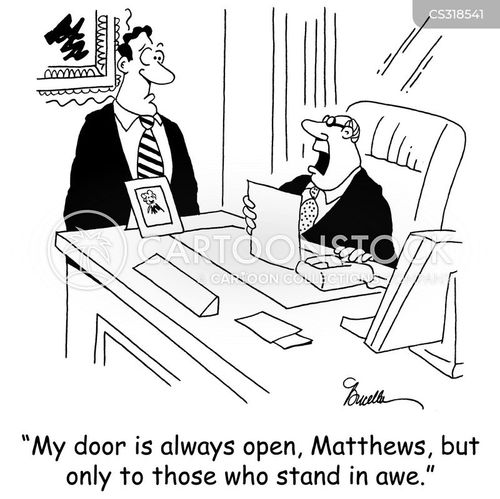
Cartoon – Open Door Governance

Unlike other portions of the relief for American businesses, however, this aid will be exempt from rules passed by Congress requiring recipients to limit dividends, executive compensation and stock buybacks and does not direct the companies to maintain certain employment levels.
Critics say the program could allow large companies that take the federal help to reward shareholders and executives without saving any jobs. The program was set up jointly by the Federal Reserve and the Treasury Department.
“I am struck that the administration is relying on the good will of the companies receiving this assistance,” said Eswar Prasad, a former official at the International Monetary Fund and economist at Cornell University. “A few months down the road, after the government purchases its debt, the company can turn around and issue a bunch of dividends to shareholders or fire its workers, and there’s no clear path to get it back.”
Treasury Secretary Steven Mnuchin defended the corporate aid program, saying that the lack of restrictions on recipients had been discussed and agreed to by Congress. “This was highly discussed on a bipartisan basis. This was thought through carefully,” he said in an interview with The Washington Post. “What we agreed upon was direct loans would carry the restrictions, and the capital markets transactions would not carry the restrictions.”
Democrats asked for restrictions on how companies can use the money from the central bank’s bond purchases but were rebuffed by the administration during negotiations about the Cares Act, said a spokesman for Senate Minority Leader Charles E. Schumer (D-N.Y.). The spokesman said Democrats won meaningful concessions from the administration on reporting transparency in the final agreement. (Transparency requirements do not apply to the small-business loans, the biggest business aid program rolled out to date.)
Mnuchin also said the program had already bolstered investor confidence in U.S. capital markets, which in turn helped firms raise capital they used to avoid layoffs.
“The mere announcement of these facilities, quite frankly, led to a reopening of a lot of these capital markets,” Mnuchin said in an interview. “Even before these facilities are up and running, they’ve had their desired impact of having stability in the markets. Stability in the markets allows companies to function, and raise money and allows them to keep and retain workers and get back to work.”
The corporate debt purchases by the Fed stand in stark contrast with other portions of the federal aid for U.S. businesses that come with requirements to protect jobs or limit spending.
The Paycheck Protection Program, which offers $659 billion for small businesses, requires companies to certify that the money will be used to “retain workers and maintain payroll or make mortgage payments, lease payments, and utility payments.”
The “Main Street” program offering up to $600 billion to “midsize” businesses — with 500 to 10,000 employees — forbids companies from issuing dividends and places limits on executive compensation, according to a term sheet issued by the Fed. Those restrictions are in effect until 12 months after the loan is no longer outstanding. The companies must also “make reasonable efforts” to maintain payroll and retain employees.
Likewise, the $46 billion program for airlines, air cargo companies and national security forbids dividends and limits executive pay. Its requirement on retaining employment is more rigorous, however. Companies are supposed retain at least 90 percent of their employees.
The first version of the Fed program to buy bonds from large companies, known as the Primary Market Corporate Credit Facility, probably would have compelled recipients of the aid to limit executive pay and dividends. That version of the program, described in a March 23 term sheet issued by the Fed, offered direct loans and bond purchases to companies. Under the Cares Act, the federal programs offering direct loans must set restrictions on company dividends and CEO pay; those that buy only corporate bonds do not. Both are forms of lending, although bonds are more easily resold.
But on April 9, the Fed altered the design of the program to exclude direct corporate lending. The Fed program will still essentially lend money to large companies — by buying their bonds — but the Fed will not be compelled by the Cares Act to ensure that companies abide by the divided and CEO pay rules.
“The change to the term sheet between March and April is the smoking gun on the Fed’s own culpability here,” said Gregg Gelzinis, a senior policy analyst at the Center for American Progress, a left-leaning think tank. “The basic principle of the Cares Act was that if we’re going to provide taxpayer funding to private industry, we need conditions to make sure it is in the public interest. This violates that principle.”
Bharat Ramamurti, an aide to Sen. Elizabeth Warren (D-Mass.) who was appointed to the board overseeing the bailout, said in a statement: “Big corporations have shown time and again that they will put their shareholders and executives ahead of their workers if given the choice. That’s why I’m so concerned that the Treasury and the Fed have chosen to direct hundreds of billions of dollars to big companies with no strings attached.”
A spokesman for the Federal Reserve declined to comment. The Fed’s board of governors unanimously approved the new bond purchasing program on March 22. The Fed has said it will purchase only the bonds of firms above a certain grade. The issuer of the bond also must meet the conflicts-of-interest requirements in the Cares Act, which preclude federal lawmakers or their relatives from benefiting financially from the government bailout.
In the interview, Mnuchin also said many companies are ceasing stock buybacks and are likely to use the additional capital to retain workers.
“A lot of companies have stopped their share buybacks and slashed their dividends, because they need that capital to invest in their business. Even though these restrictions don’t necessarily apply, that’s already happening,” he said.
Some experts disputed that assertion. “Some companies have ceased buybacks and dividends and some haven’t. We shouldn’t have to keep our fingers crossed,” Gelzinis said.
It is unknown what the terms will be for the Fed lending under the program, or how favorable they will be for recipients. The term sheet says only that they will depend on the company and be “informed” by market conditions.
Companies selling their bonds to the central bank are expected to be primarily investment grade, publicly traded firms and therefore subject to more disclosure and oversight than those that are privately held. Patricia C. Mosser, a former senior official at the Federal Reserve Bank of New York, said these corporations are scrutinized by the U.S. Securities and Exchange Commission, private investors and the credit rating agencies.
“It’s true that there’s nothing stopping these companies from continuing to pay stock dividends. You may not like that, and I have sympathy for that position,” said Mosser, now a professor at Columbia University. “But it’s easier to unmask bad behavior in public companies. Large companies certainly don’t do everything right, but they have to admit publicly how they pay top executives, where their profits go and how they use them. That history of disclosure and oversight means the risk of not being repaid is lower.”
The weaker restrictions on recipients of the Fed’s lending program may be partly justified, said Nathan Tankus, research director at the Modern Money Network, which studies monetary policy. The corporate bonds that the Fed is purchasing from companies can be resold, whereas direct loans establish an agreement between the company and the government that makes the asset less valuable to the central bank, he said.
“Purchases of debt are a slightly more arm’s-length transaction than the loan, which is forming a bilateral relationship,” Tankus said. “But this is really just the fig leaf the Fed can use to justify lifting the restrictions.”
As Iowa prepares to partially reopen on Friday, the state has told furloughed workers that they will lose their unemployment benefits if they refuse to return to work.
The Des Moines Register reported that businesses like restaurants, bars, retail stores, and fitness centers would be allowed to reopen at half capacity starting on May 1. Gov. Kim Reynolds said the 77 reopening counties either have no cases or are on a downward trend.
Iowa Workforce Development, a state agency that provides employment services for individual workers, said an employee’s refusal return to work out of fear would be considered a “voluntary quit” — which would mean they could no longer receive unemployment benefits. The announcement applies to workers across the state.
Ryan West, the deputy director of Iowa Workforce Development, told Radio Iowa that there were some exceptions, such as workers diagnosed with COVID-19.
The Iowa Workforce Development website prompts employers to fill out what it calls a Job Offer Decline Form for employees who refuse to return to work. The governor has said that opting not to go back to work could disqualify employees from future unemployment benefits.
Business Insider’s Andy Kiersz reported that 232,913 Iowans filed for unemployment between March 15 and April 18, which is 13.5% of the state’s labor force.
Last week, seven epidemiology and biostatistics professors from the University of Iowa advised the governor not to loosen social-distancing restrictions, KWWL reported. They wrote a research paper for the governor after they were commissioned by the Iowa Department of Public Health.
“We observe a huge range of possible outcomes, from relatively low fatalities to catastrophic loss of life,” the paper said.
The scientists said there was still “considerable uncertainty” over how many deaths the state may eventually have; the projections range from 150 to over 10,000 deaths.
“We have found evidence of a slowdown in infection and mortality rates due to social distancing policies, but not that a peak has been reached,” the paper said. The professors said that did not mean measures should be eased: “Therefore, prevention measures should remain in place. Without such measures being continued, a second wave of infections is likely.”
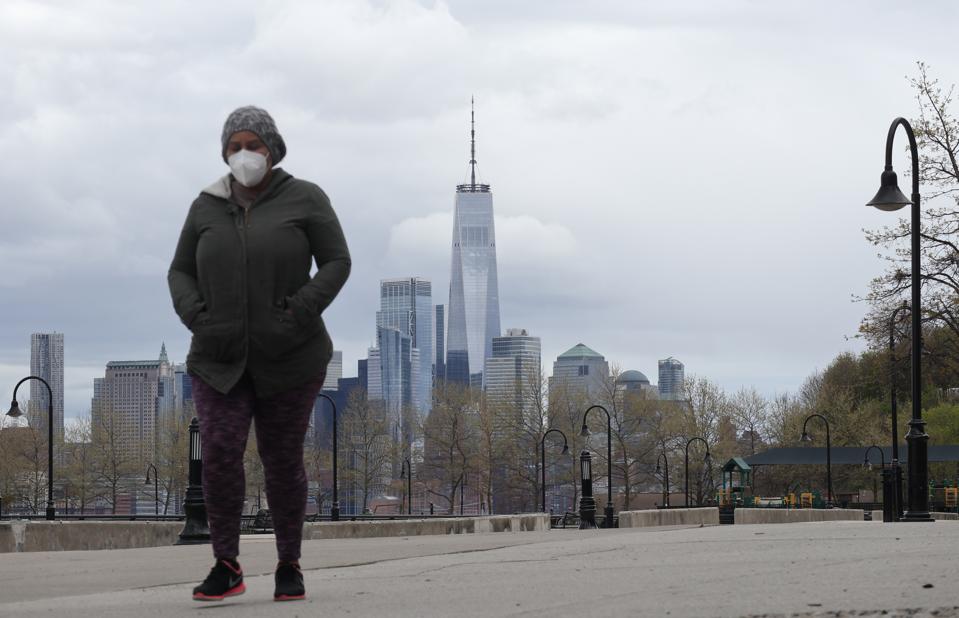
Confirmed cases of the COVID-19 coronavirus passed 1 million in the United States Tuesday, making up a third of all global cases, according to data compiled by Johns Hopkins University.
Of the 1,002,498 Americans who have been confirmed to have contracted the disease, 57,266 have died while 112,315 have recovered.
The new milestone comes as some states announce plans for reopening, something President Trump has been adamantly pushing for as 26 million Americans lose their jobs during the pandemic.
New York, the epicenter of the outbreak with 295,106 cases, saw its hospital admittance number drop below 1,000 for the first time in a month on Monday, with Governor Andrew Cuomo detailing a plan to start easing stay-at-home restrictions in parts of the state starting as early as May 15.
Georgia Governor Brian Kemp, however, with the state’s 24,604 cases, has drawn criticism from health officials and even Trump for allowing businesses like restaurants, hair salons and gyms to reopen before seeing a sustained reduction in cases.
Around 5.6 million people, or about 1.7% of the population, have been tested for the coronavirus, but researchers at Harvard Global Health Institute report that the country will need to perform 3.5 million tests per week at minimum before reopening.
Dr. Anthony Fauci, the country’s top infectious disease doctor, warned Tuesday during an interview that “it’s inevitable that we will have a return of the virus,” and that states reopening prematurely could cause “a rebound to get us right back in the same boat that we were in a few weeks ago.”
87%. That’s how many Americans support current social distancing restrictions, or even want stronger measures in place, according to an Associated Press-NORC Center for Public Affairs Research survey conducted from April 16-20.
The U.S. reached 500,000 cases on April 10 and 100,000 on March 27. The model prefered by the federal government increased the projected death count from the coronavirus for the second time in a week on Tuesday, now projecting 74,000 total deaths from the virus.
Germany has been a leader in mitigating the spread of the coronavirus, but after easing some lockdown restrictions this past week, the country saw an uptick in infection rate.

Gross domestic product in the U.S. fell 4.8 percent in the first quarter of 2020, the biggest drop the nation’s economy has seen since the last recession in 2008, according to The Wall Street Journal.
The downturn reflects how shutdowns of businesses and schools and social distancing, which started in the final three weeks of the first quarter, affected the U.S. economy. According to The Journal, many economists believe the U.S. is now in a recession, as layoffs and declines across industries hit unprecedented levels.
With the economy largely shut down in April, economists are expecting a bigger drop-off in economic activity in the second quarter of this year. A few states have started to slowly reopen their economies, but many still have social-distancing restrictions in place that extend through May.

https://thehill.com/policy/healthcare/494792-us-surpasses-1-million-covid-19-cases
More than a million people in the United States have tested positive for the coronavirus, a sobering milestone that experts say represents only the beginning of a months-long battle to end the pandemic.
The United States has now registered about a third of all confirmed cases of COVID-19 around the globe, according to data compiled by the Center for Systems Science and Engineering at Johns Hopkins University. More than 57,000 people have died in the United States, about a quarter of the known COVID-19 deaths around the globe.
The United States has now registered more confirmed cases than the next five countries suffering the largest outbreaks — Spain, Italy, France, Germany and the United Kingdom — combined.
Those numbers are partly a reflection of population, but there are troubling signs for the United States.
While those countries have reduced the pace of transmission and the growth in the number of new cases they are seeing on a daily basis, the United States has not similarly bent the curve.
Instead, it is stuck at a deadly plateau: In the last week, the U.S. has reported between 24,000 and 41,000 new cases a day, and between 1,200 and 2,600 deaths per day, according to The Covid Tracking Project, a group of researchers who keep tallies of case counts around the country.

Even as some states begin to relax orders that closed retail and service stores, experts warned the country is still at risk of a new rush of cases, and that the downslope of declining case counts will be much longer than the sudden surge the United States saw in April.
“We’re in the opening stages of this,” said Michael Osterholm, director of the Center for Infectious Disease Research and Prevention at the University of Minnesota. States “are not in the mountains, they’re in the foothills. The mountains are still to come.”
More than a quarter million residents of New York have tested positive for the virus, and commuter suburbs in New Jersey and Connecticut have reported tens of thousands of cases. More than 50,000 residents of Massachusetts have tested positive, and California, Illinois and Pennsylvania have all confirmed more than 40,000 cases.
There are growing signs that the virus is shifting into new, more rural territory. States like Arkansas, Kansas, Minnesota, Nebraska, New Mexico, Rhode Island, Tennessee and Virginia all recorded substantial growth in the number of new cases they had confirmed in the last few days.
That pattern of viral spread beginning in large urban cores and eventually making its way to rural areas is typical, experts said, given societal connections between urban areas, suburbs and more rural areas.
“Epidemiologists know that this pattern is a very expectable one, that rural areas are going to have lagged waves of cases. So we’ve been bracing for that,” said Nita Bharti, a biologist at the Center for Infectious Disease Dynamics at Penn State University. “What they’re experiencing now is what cities have been seeing. It’s the same, it’s just delayed, and we knew it would happen.”
About six months after the coronavirus outbreak was detected in Wuhan, China, and four months after the first case arrived on American shores, the United States still lags the world in testing capacity. States have bolstered their capacity in recent days, conducting more than 225,000 tests per day over four of the last five days, the capacity needed to ensure the virus can be brought under control lags substantially.
An analysis by Harvard researchers for the scientific publication STAT found more than half of states would have to significantly bolster their testing capacity in order to safely begin easing stay-at-home orders in May. The hardest-hit state, New York, will have to be able to test at least 100,000 more people every day than it is currently able to; New Jersey’s capacity would need to increase by 68,000 a day.
Smaller states and those that have yet to experience thousands of new cases — places like Mississippi, Idaho, Montana, Wyoming, Arizona and New Mexico — already have the testing capacity they need to identify and squelch any new viral hotspots. Even Washington state, the first state to confirm a positive case, has built its capacity to meet demand.
Public health experts say a robust testing program must be supplemented by armies of contact tracers who can track down those who are at risk of contracting the virus.
Already, Massachusetts has partnered with the nonprofit Partners In Health to deploy about 1,000 contact tracers across the state. Alaska has managed to trace the contacts of each of its 341 positive cases. New York City Mayor Bill de Blasio said Monday that the city would hire 1,000 contact tracers of its own, and former Mayor Mike Bloomberg has pledged $10 million to kick start a contact tracing program in the tri-state area.
On Monday, a bipartisan group of top public health experts led by President Trump‘s former FDA commissioner Scott Gottlieb and President Obama’s former Centers for Medicare and Medicaid Services administrator Andy Slavitt called on Congress to spend $46 billion to expand contact tracing capacity, including $12 billion to hire 180,000 new workers.
It is unclear how the outbreak in the United States compares with outbreaks in authoritarian countries like China, Russia and Iran, which do not report reliable numbers.
But even in the United States, where state and local governments are transparent about the data they collect, the actual number of cases and deaths are higher — likely significantly so. Early antibody tests in places like New York City and Miami show a significant number of people contract the virus without showing symptoms, and as studies show people who died inexplicably over the last several months tested positive for the virus.

 HENRY KOTULA