

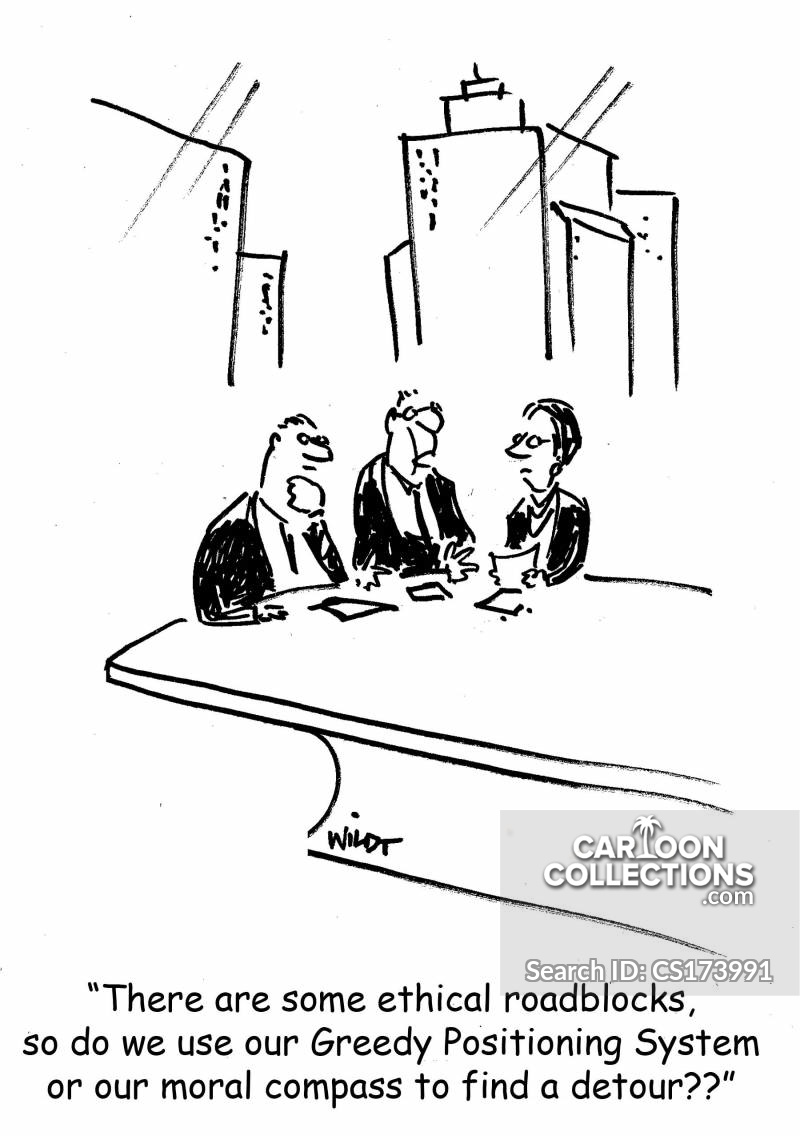
Cartoon – Some Ethical Roadblocks

Research suggests most people who recovered from covid-19 are immune for at least eight months. Yet epidemiologists are largely still urging this population to get the vaccine if it’s their turn in line.
That’s per the Centers for Disease Control and Prevention, which also says the vaccine is safe for people who have had a prior infection. Former CDC director Thomas Frieden said he’d advise most people to get the vaccine, even if they’ve had covid-19.
But Frieden added that he doesn’t think it’s wrong for someone in a low-risk group who’d already had the illness to defer if they thought someone else could use the dose.
As administration of the vaccine bottlenecks across the country, the pressure is on to get the shots in as many arms as quickly as possible.
Researchers at the University of Colorado Boulder found that prioritizing people who don’t already have natural immunity could allow health officials to get more impact from limited supplies, especially in areas where many people have already been infected, according to a modeling study that has not been peer reviewed.
The researchers found that you would need to vaccinate 1 in 5 elderly people in New York to bring death rates down by 73 percent. But you can get the same result vaccinating only 1 in 6 people if you prioritize people who don’t already have antibodies to the virus, according to Kate Bubar, a PhD student in applied mathematics and quantitative biology, who co-authored the study.
And although a previous covid-19 infection isn’t a guarantee of immunity, it’s pretty good protection on its own.Researchers have found that eight months after infection, about 90 percent of patients show lingering, stable immunity.
Still, risk can vary from person to person.
“If I were over 70 or otherwise ill, I would certainly take the vaccine even if I’d had [covid-19]. If I were 30 and healthy, I should not be getting it now (unless a health care worker), but if for some reason I did get offered it I would probably decline,” Marc Lipsitch, an infectious-disease specialist at the Harvard T.H. Chan School of Public Health, said in an email.
It could complicate the process as health providers are already struggling to get the vaccine distributed quickly. So far around 6.7 million people have been vaccinated, even though 22.1 million doses have been distributed, according to a Washington Post analysis.
Eleanor Murray, an assistant professor of epidemiology at Boston University School of Public Health, worried that trying to verify someone’s past illness would add bureaucratic hurdles.
“Confirming whether or not someone has had COVID already adds an unnecessary layer of red tape onto vaccine prioritization. Given that the prioritization is designed to get vaccine first to those people who are most likely to get infected and/or get very sick from infection, it makes sense to reduce the barriers to vaccinating this group as much as possible,” Murray said.
Murray also cautioned that we don’t know how long people’s natural immunity lasts and that it could vary from person to person. This uncertainty may be an added reason to encourage people to get the vaccine.
There’s also a risk that telling people who had covid-19 to hold off on getting the vaccine could end up feeding into anti-vaxxer narratives. Some experts are reluctant to discourage anyone from getting the vaccine if they are eligible, especially given that vaccine hesitancy is widespread.
In Santa Rosa County, Fla., only about 40 percent of emergency responders who are eligible to get the vaccine have gotten it or signed up to do so soon. In New York, where around 30 percent of health care workers have declined the vaccine, the state’s Gov. Andrew Cuomo (D) has threatened that anyone who skips a dose now won’t be eligible for a priority vaccine later.
The low participation rate is concerning, especially at long-term care centers.

But not everyone who turns down a vaccine is a hardcore anti-vaxxer, Frieden cautions. He says that there is a “movable middle” of people. They aren’t going to be camping out overnight to get an early vaccine, but they may be convincible if costs and other barriers are low. Frieden says it’s crucial to keep a door open for those people, for instance, seeing whether they might be willing to schedule a shot three weeks from now instead of immediately.
A vocal group of experts has pushed for officials to consider giving as many people as possible the first dose of the two-shot regimen, even if it means risking a delayed second dose. President-elect Joe Biden has announced his incoming administration will take this approach, sending all doses out the door as quickly as possible instead of holding half back.
“The plan, announced Friday by the Biden transition team, pivots sharply from the Trump administration’s strategy of holding in reserve roughly half the doses to ensure sufficient supply for people to get a required second shot,” our colleagues reported.
But some epidemiologists, including Frieden, argue that distribution is a bigger problem than supply at this point. Although he said he supports releasing most vaccines, he worries that some of the debates about how to stretch supply are “distractions” from the real obstacles of administration, which he blames in part on a lack of a coordinated federal plan for getting shots into arms.
“What Operation Warp Speed has generally done is said, ‘We’re responsible for getting the drugs to the states, and after that, it’s their problem,’ ” Frieden said. “That’s a way to facilitate finger pointing; that’s neither a plan nor a solution.”

The Centers for Disease Control and Prevention reported on Monday that 2.1 million doses of coronavirus vaccines have been administered in two weeks. While this might sound like an impressive number, it should set off alarms.
Let’s start with the math. Anthony S. Fauci, the government’s top infectious-disease doctor, estimates that 80 to 85 percent of Americans need to be vaccinated to reach herd immunity. Both the Pfizer and Moderna vaccines require two doses. Eighty percent of the American population is around 264 million people, so we need to administer 528 million doses to achieve herd immunity.
At the current rate, it would take the United States approximately 10 years to reach that level of inoculation. That’s right — 10 years. Contrast that with the Trump administration’s rosy projections: Earlier this month, Health and Human Services Secretary Alex Azar predicted that every American will be able to get the vaccine by the second quarter of 2021 (which would be the end of June). The speed needed to do that is 3.5 million vaccinations a day.
There’s reason to believe the administration won’t be able to ramp up vaccination rates anywhere close to those levels. Yes, as vaccine production increases, more will be available to the states. And Brett Giroir, assistant secretary for health at HHS, argued on Sunday that the 2.1 million administered vaccines figure was an underestimate due to delayed reporting. So let’s be generous and say the administration actually administered 4 million doses over the first two weeks.
But even that would still fall far short of the 3.5 million vaccinations needed per day. In fact, it falls far short of what the administration had promised to accomplish by the end of 2020 — enough doses for 20 million people. And remember, the first group of vaccinations was supposed to be the easiest: It’s hospitals and nursing homes inoculating their own workers and residents. If we can’t get this right, it doesn’t bode well for the rest of the country.
Here’s what concerns me most: Instead of identifying barriers to meeting the goal, officials are backtracking on their promises. When states learned they would receive fewer doses than they had been told, the administration said its end-of-year goal was not for vaccinations but vaccine distribution. It also halved the number of doses that would be available to people, from 40 million to 20 million. (Perhaps they hoped no one would notice that their initial pledge was to vaccinate 20 million people, which is 40 million doses, or that President Trump had at one point vowed to have 100 million doses by the end of the year.) And there’s more fancy wordplay that’s cause for concern: Instead of vaccine distribution, the administration promises “allocation” in December. Actual delivery for millions of doses wouldn’t take place until January, to say nothing of the logistics of vaccine administration.
The vaccine rollout is giving me flashbacks to the administration’s testing debacle. Think back to all the times Trump pledged that “everyone who wants a test can get one.” Every time this was fact-checked, it came up false. Instead of admitting that there wasn’t enough testing, administration officials followed a playbook to confuse and obfuscate: They first attempted to play up the number of tests done. Just like 2 million vaccines in two weeks, 1 million tests a week looked good on paper — until they were compared to the 30 million a day that some experts say are needed. The administration then tried to justify why more tests weren’t needed. Remember Trump saying that “tests create cases” or the CDC issuing nonsensical testing guidance?
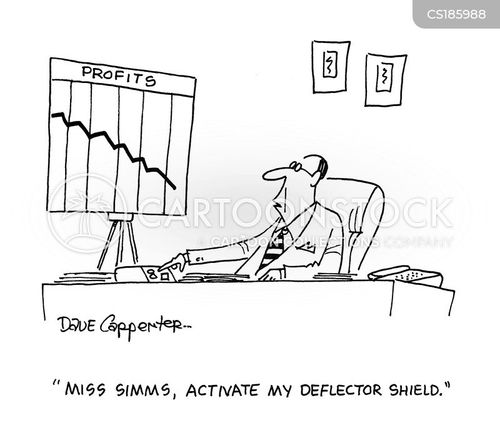
When that didn’t work, Trump officials deflected blame to the states. Never mind that there should have been a national strategy or that states didn’t have the resources to ramp up testing on their own. It was easier to find excuses than to admit that they were falling short and do the hard work to remedy it.
Instead of muddying the waters, the federal government needs to take three urgent steps. First, set up a real-time public dashboard to track vaccine distribution. The public needs to know exactly how many doses are being delivered, distributed and administered. Transparency will help hold the right officials accountable, as well as target additional resources where they are most needed.
Second, publicize the plan for how vaccination will scale up so dramatically. States have submitted their individual plans to the CDC, but we need to see a national strategy that sets ambitious but realistic goals.
Third, acknowledge the challenges and end the defensiveness. The public will understand if initial goals need to be revised, but there must be willingness to learn from missteps and immediately course-correct.
I remain optimistic that vaccines will one day end this horrific pandemic that has taken far too many lives. To get there, we must approach the next several months with urgency, transparency and humility.


https://www.axios.com/science-politics-norms-cracking-f67bcff2-b399-44f4-8827-085573f5ae52.html

Crafting successful public health measures depends on the ability of top scientists to gather data and report their findings unrestricted to policymakers.
State of play: But concern has spiked among health experts and physicians over what they see as an assault on key science protections, particularly during a raging pandemic. And a move last week by President Trump, via an executive order, is triggering even more worries.
What’s happening: If implemented, the order creates a “Schedule F” class of federal employees who are policymakers from certain agencies who would no longer have protection against being easily fired— and would likely include some veteran civil service scientists who offer key guidance to Congress and the White House.
What they’re saying: Several medical associations, including the Infectious Diseases Society of America, strongly condemned the action, and Democrats on the House oversight panel demanded the administration “immediately cease” implementation.
Between the lines: Politics plays some role in science, via funding, policymaking and national security issues.
Yes, but: The norm is to have a robust discussion — and what has been happening under the Trump administration is not the norm, some say.
The big picture: Public trust in scientists,which tends to be high, is taking a hit, not only due to messaging from the administration but also from public confusion over changes in guidance, which vacillated over masks and other suggestions.
What’s next: The scientific community is going to need to be proactive on rebuilding public trust in how the scientific process works and being clear when guidance changes and why it has changed, Fischer says.
https://www.leadershipnow.com/leadingblog/2020/08/five_frequencies_that_are_driv.html
IS YOUR CULTURE holding you back? Are the signals you are broadcasting as a leader, creating the culture you want—you need?
Culture experts Jeff Grimshaw, Tanya Mann, Lynne Viscio, and Jennifer Landis say in Five Frequencies that to make a good culture great, leaders must deliberately transmit strong and steady signals. Leaders create culture for better or worse, through the signals they are consciously or unconsciously broadcasting over five frequencies. To change a culture, you need to broadcast a strong, steady signal on each of these frequencies:
Their Decisions and Actions
Example is everything—especially when it is inconvenient and costs you something. If it is truly a “value,” what are you willing to pay for it? Think in the long-term. “Go long-term greedy.” “This can mean avoiding ethical shortcuts, hiring people smarter than you, delegating more, and helping prepare high performers for success beyond your team.”
What They Reward and Recognize
Reward the behaviors you want to see more of. “You are responsible for the dysfunctional behaviors that so bother you.” Everyone brings their emotions to work. “Understand and leverage the emotional algorithms that motivate your people.” Understand that it is all relative, scarcity and timing matter, and everyone appreciates being appreciated.
What They Tolerate (Or Don’t)
“Leaders are ultimately defined by what they tolerate.” Be sure the boundaries are clearly defined as well as the consequences. And don’t make excuses because you don’t want to feel bad or you can’t hold a particular star performer accountable, or because it’s really no big deal. It’s all-important, and consistency is vital.
What you tolerate or don’t tolerate is a balance. “When you decide to become more tolerant of some things (like where people work), you must become, if anything, less tolerant of other things (like the work not getting done). As Harvard professor Gary P. Pisano puts it:”
A tolerance for failure requires an intolerance for incompetence. A willingness to experiment requires rigorous discipline. Psychological safety requires comfort with brutal candor. Collaboration must be balanced with individual accountability.
How They Show Up Informally
When you show up, you “bring the weather.” People notice a leader’s tone, mood, and focus. They are weather in any organization. What do kind of weather do you bring?
When considering how you show up, the authors advise you to relinquish your raft. They introduce the concept with a story:
A traveler on an important journey comes to a raging river. It seems there’s no way to cross. And that’s terrible news because this is an important journey. Fortunately, she spots a rickety old raft on the bank, off in the brush. With trepidation, she pushes the raft into the water, hops on, and amazingly, uses it to reach the other side. She’s able to continue her important journey. She thinks: I may encounter other raging rivers down the path, so I must keep this raft. So she carries the raft on her back as she continues her journey. It’s a heavy raft, and it slows her down. When fellow travelers point this out, she’s incredulous: “You don’t understand,” she says. “If it wasn’t for this raft, I wouldn’t be where I am today!” And she’s right. That’s literally true. The problem is: If she doesn’t put down the raft, she may not get to where she needs to go on her important journey.
It’s your baggage. It’s your reactive tendencies that may have worked for you in the past that are no longer getting you where you need to be. Reactive tendencies like going with the flow, control, the need to be the hero, or being overly protective of your ego, eventually bring you diminishing returns.
Their Formal Communications
Formal communications don’t work on their own, but they serve to reinforce the other four frequencies. Approach your communications as a story to make it memorable. And say it over and over. “Go past the puke point because that’s often the turning point where employees are just starting to truly get it.”
Have a backstory. Know where you came from. “Look for stories of people demonstrating the behavior you want to see more of, especially when it’s not easy for them to do so.” Fill the communication vacuums. “Don’t push your people to the black market.”
Know, Feel, Do
To establish a reliable culture, you need to measure where you are and where you need to go. The authors call it Know, Feel, Do: what employees know, what they feel, and what they do.
The authors advise us to work backward and forwards. Looking forward, they ask, “What is the culture that makes this outcome possible and probable? What will employees consistently KNOW? FEEL? DO?” Looking at each of the five signals, what will you need to broadcast to your employees in each of the five signal areas?
It is also necessary to look backward and see where your current culture came from. What did each of the signals contribute to your current culture? It will help you to know what to change in order to close the gap from where to are to where you want to be.

 HENRY KOTULA